


Pool Cleaning Robot Cable | High-Flex Underwater Cable for Automatic Pool Cleaners
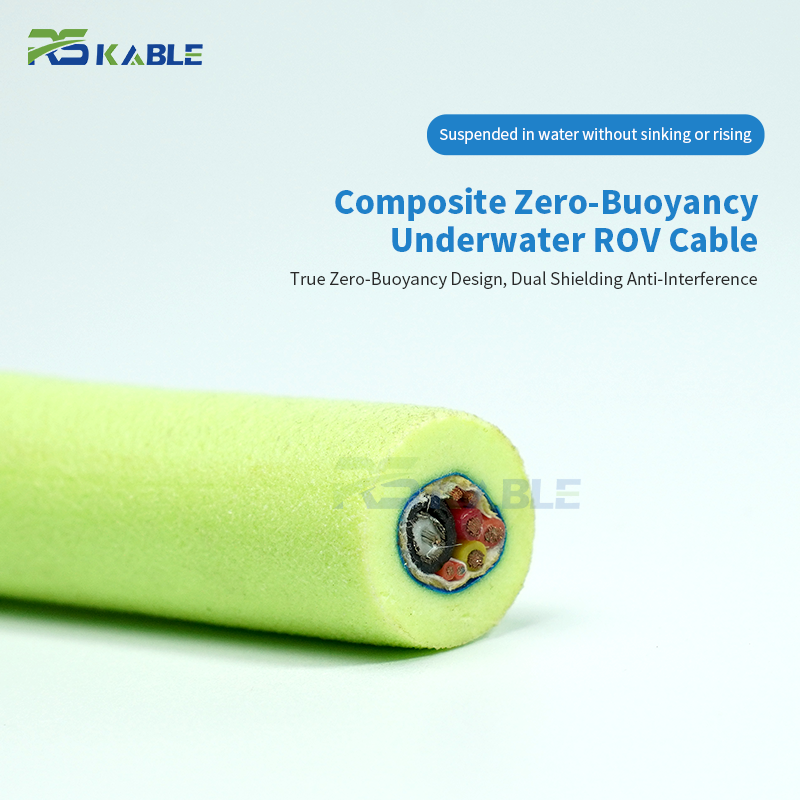
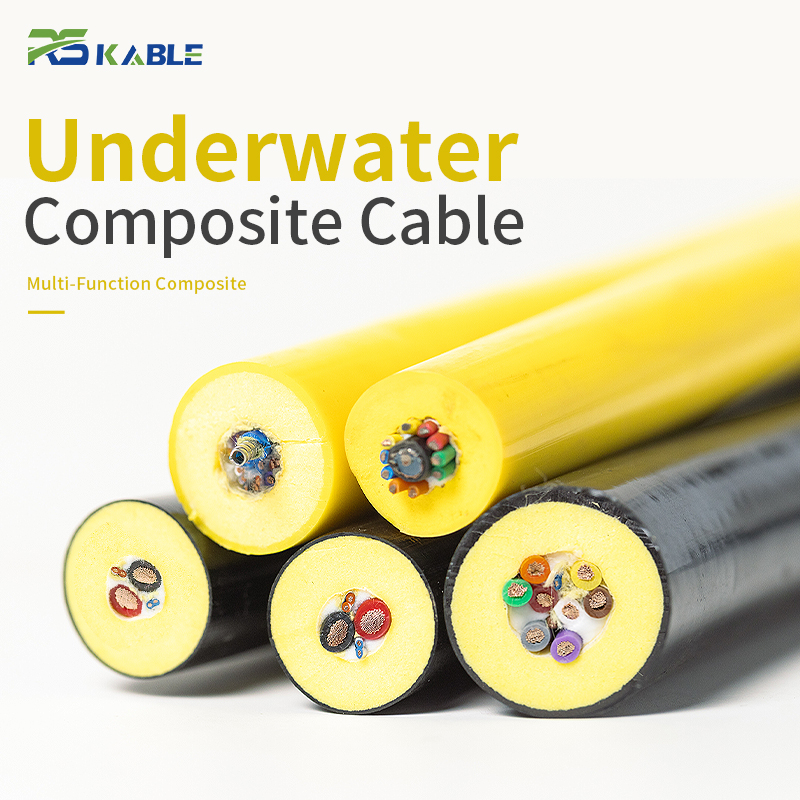
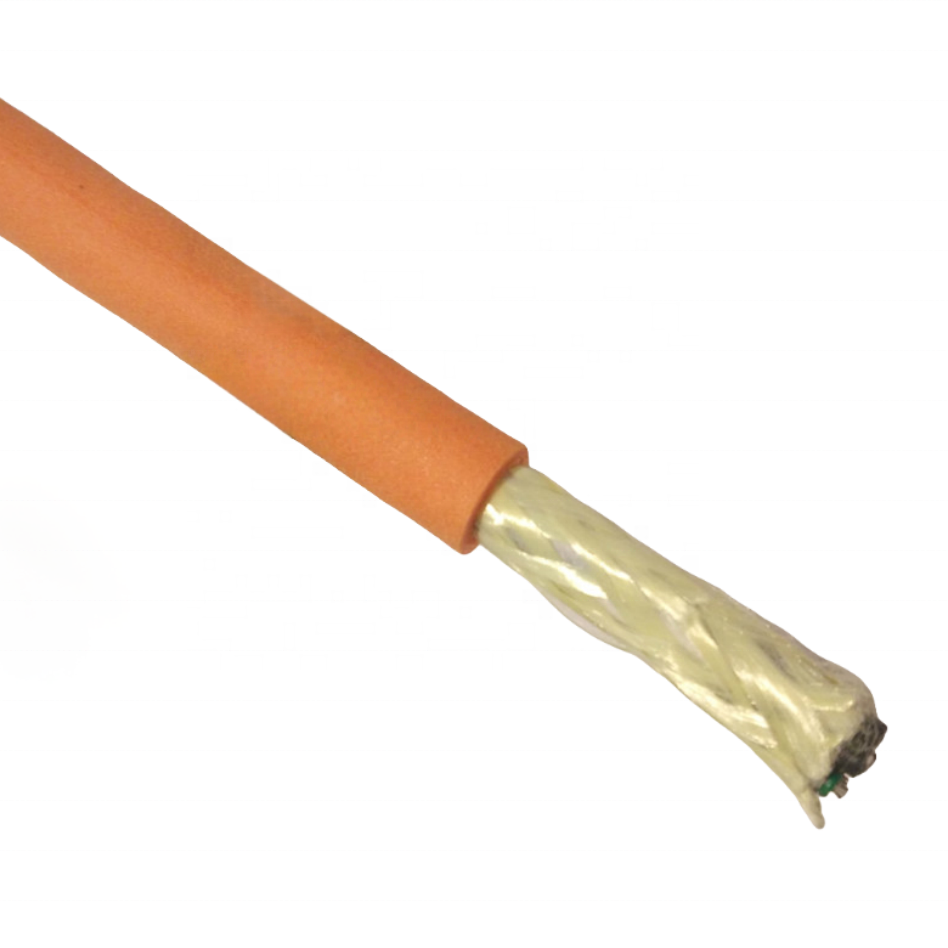
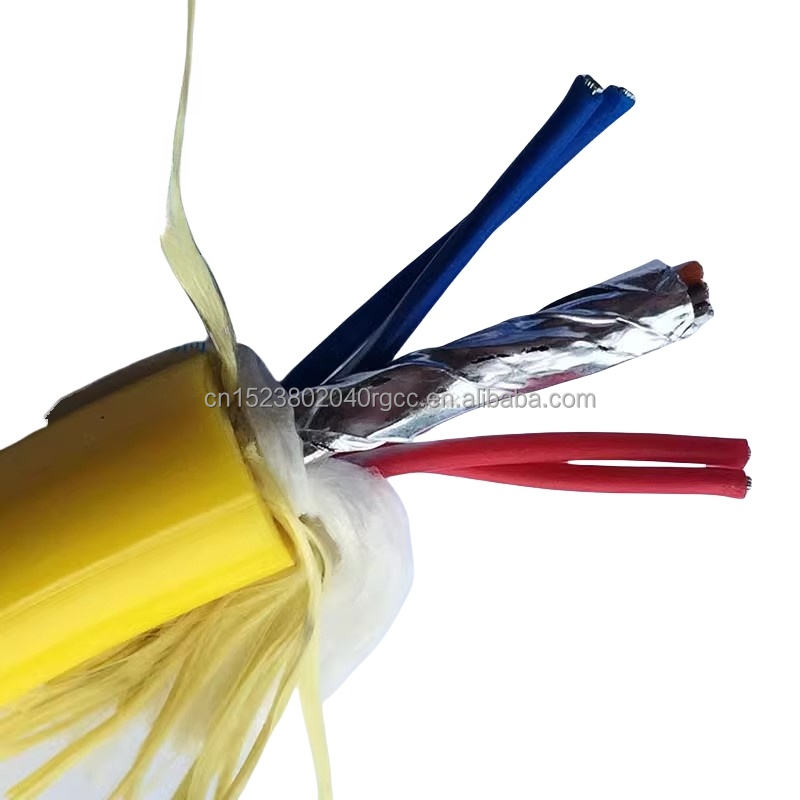
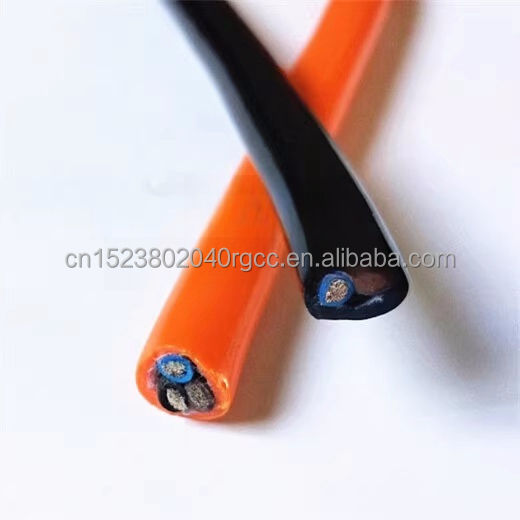
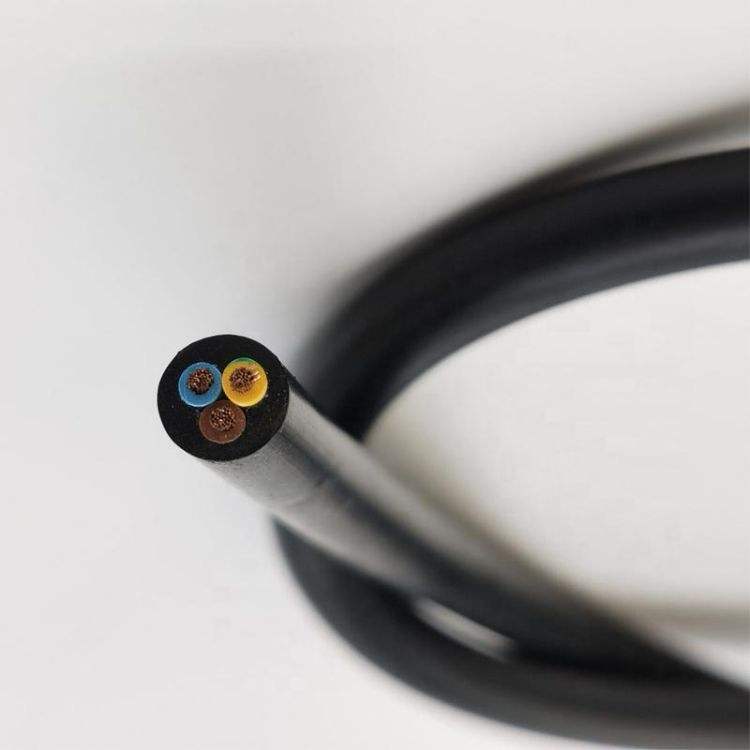
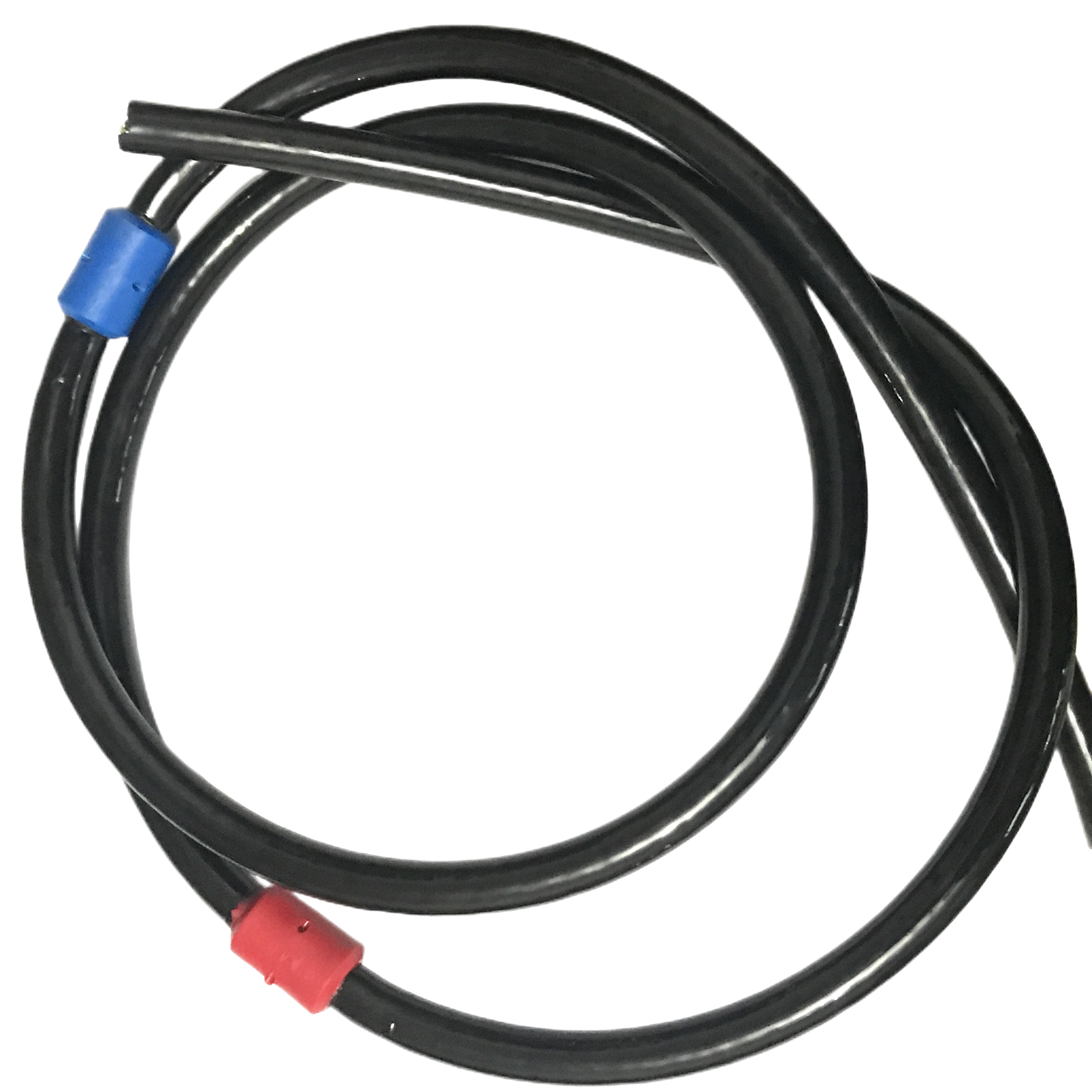
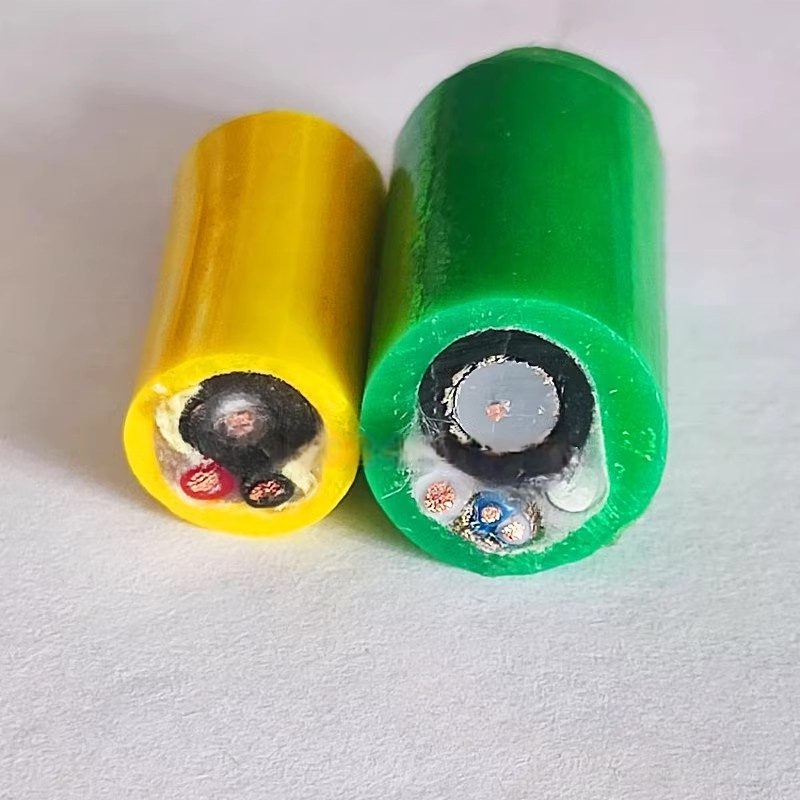
The RST-PLC series is a high-flex floating cable designed for automatic and robotic pool cleaners, spa cleaning robots, and submerged pool maintenance equipment. Its floating jacket construction keeps the cable clear of the cleaning path to reduce drag and tangling, while the chlorine- and saltwater-resistant compound supports long-term submersion in treated pool water. This cable is engineered for pool service operators and robot manufacturers who need consistent, tangle-free performance across full pool seasons, not a cable that sinks and stiffens after a few months.
Key benefits:
Pool Cleaning Robot Cable: High-Flex Floating Cable for Automatic Pool Cleaners
Automatic pool cleaning robots are tethered by design — the cable carries power (and, on many models, control signals) while the robot works its way across the pool floor, walls, and waterline. That tether is also usually the retrieval line an owner pulls to bring the robot back to the deck. A cable built for this role has to do three things a generic submersible cable was never asked to do: stay near the surface instead of sinking into the robot’s path, tolerate years of chlorine or salt exposure without swelling, and survive continuous flex cycling rather than the occasional bend a fixed installation sees.
Where Standard Submersible Cable Falls Short
Most submersible power cable is built for equipment that stays in one place — a sump pump, a fountain light, a fixed sensor. It is rated for water contact, but not for constant movement, and its jacket compound is rarely optimized for sustained chlorine exposure at the concentration and temperature found in a maintained residential or commercial pool. Two field patterns show up repeatedly when this type of cable is substituted into a pool robot application: the cable settles to the pool floor over the first few weeks of use and starts trailing behind the robot, and the jacket gradually stiffens and develops surface cracking after one to two pool seasons of chlorine exposure, well before the robot’s own motor or drive system needs replacement.
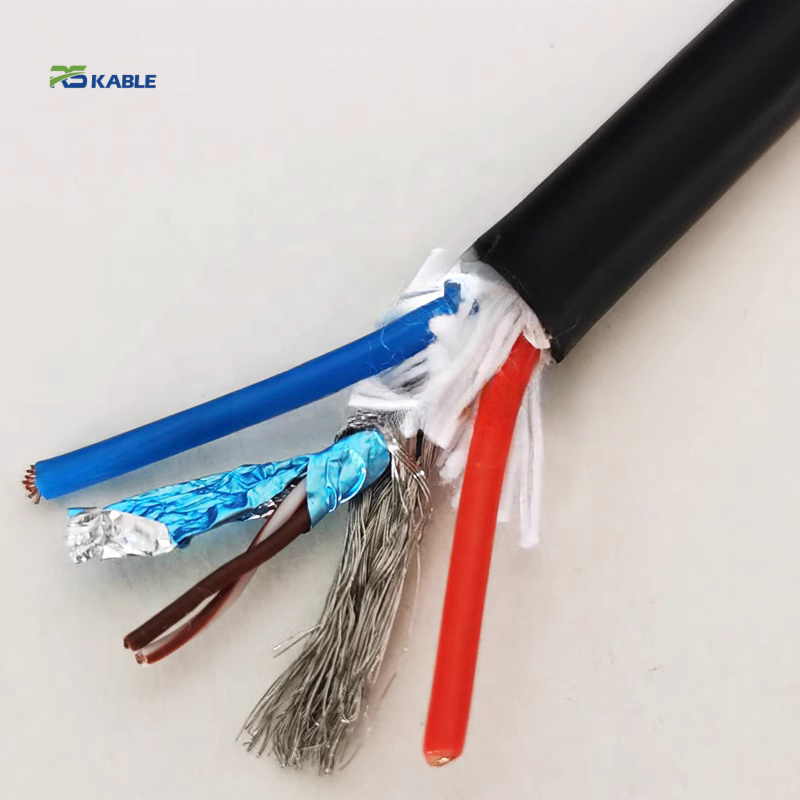
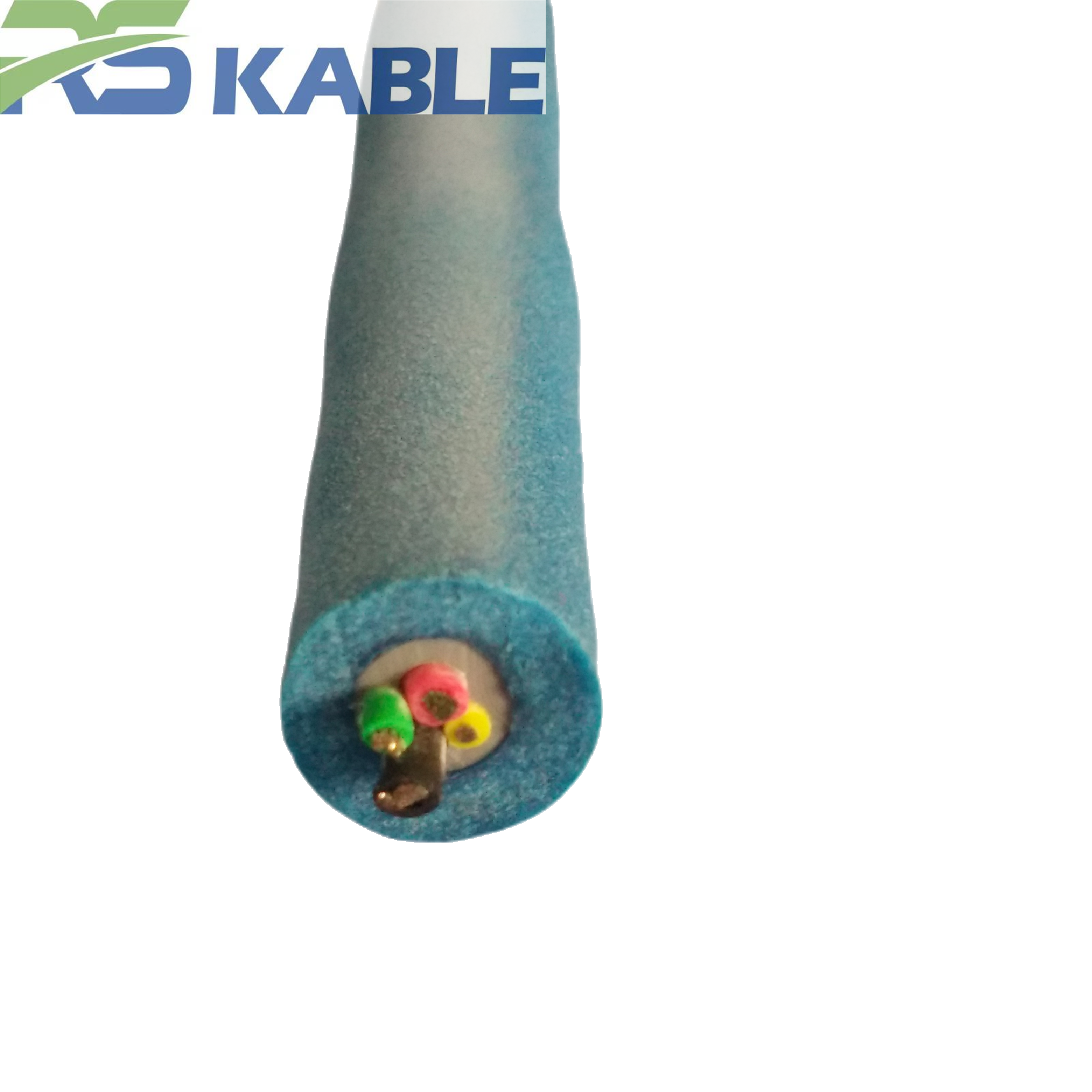
Construction and Performance Data
| Property | Typical Value |
|---|---|
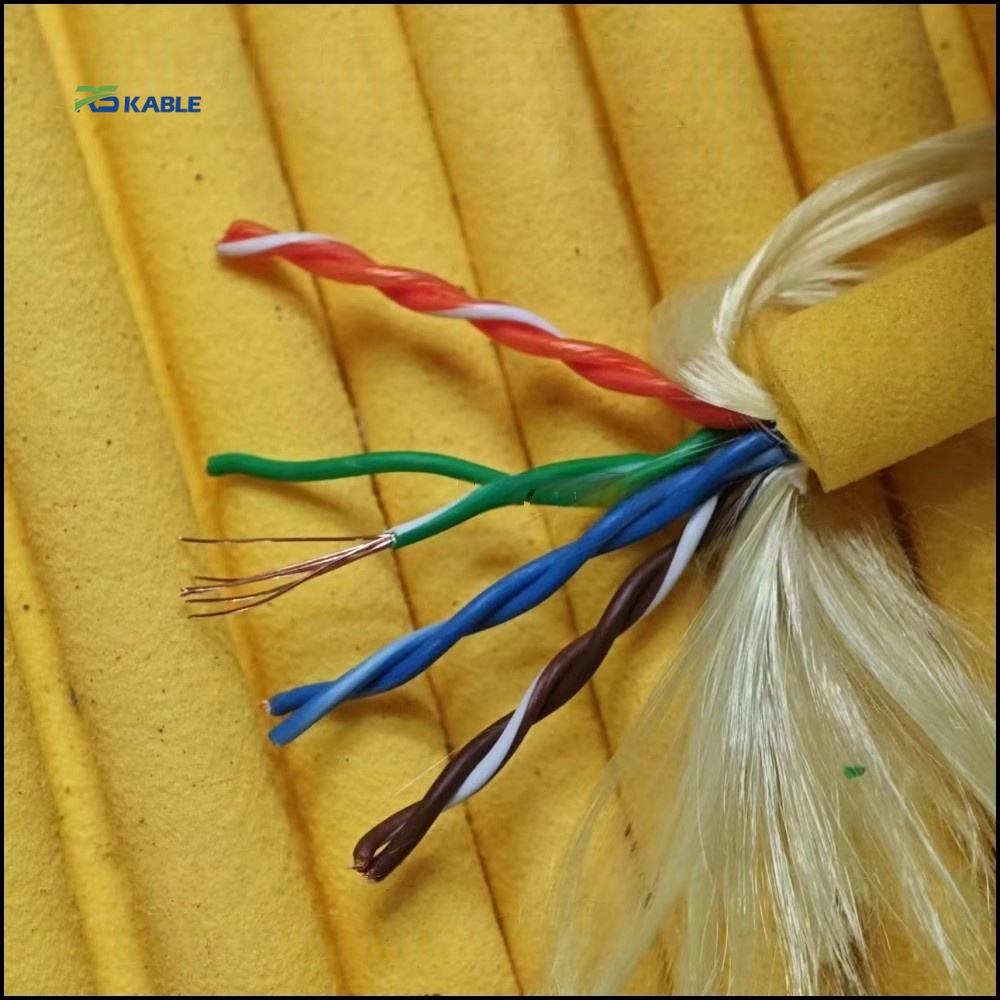
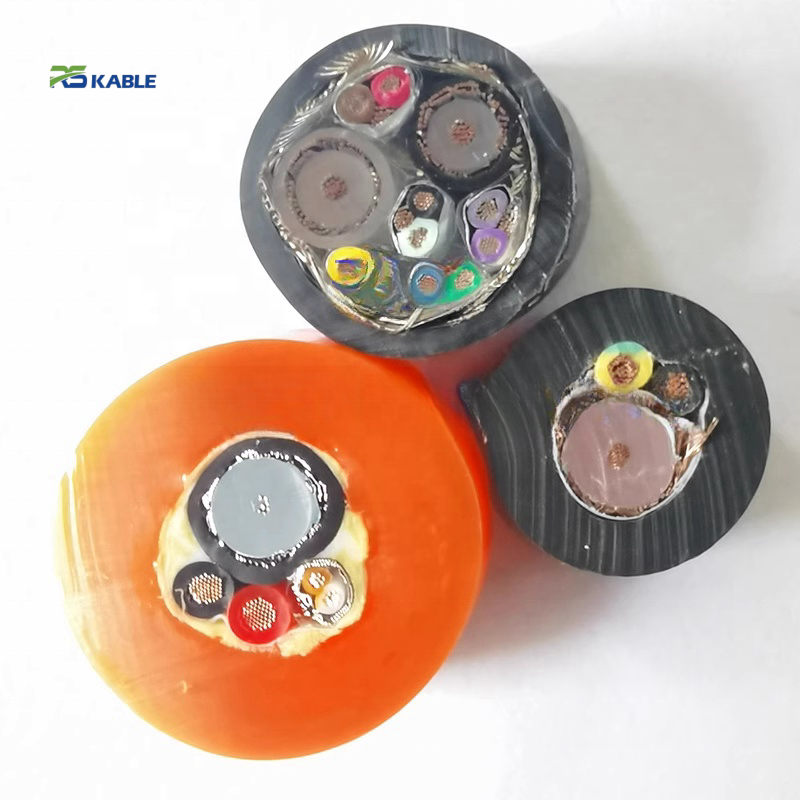
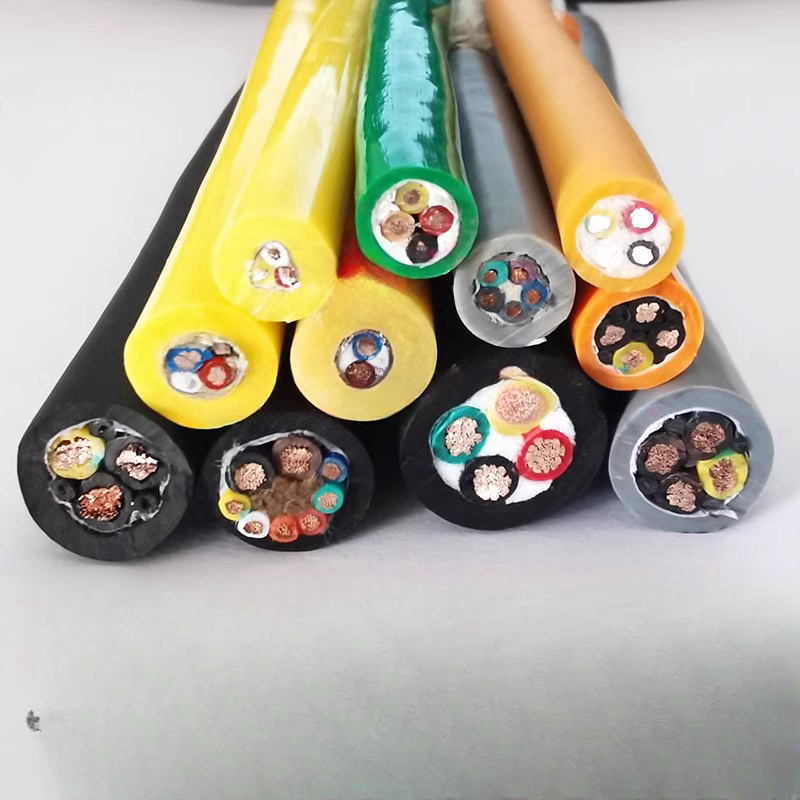
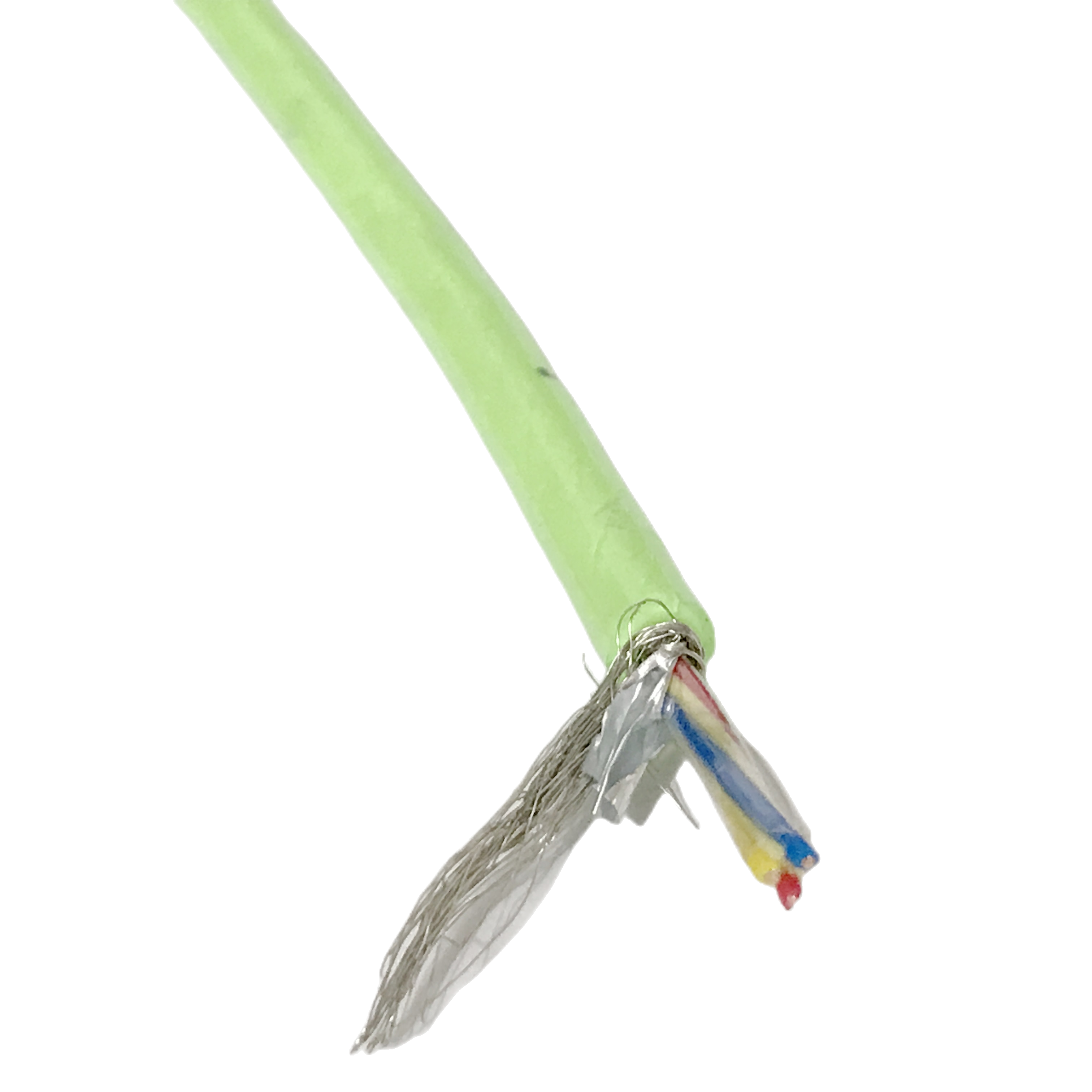
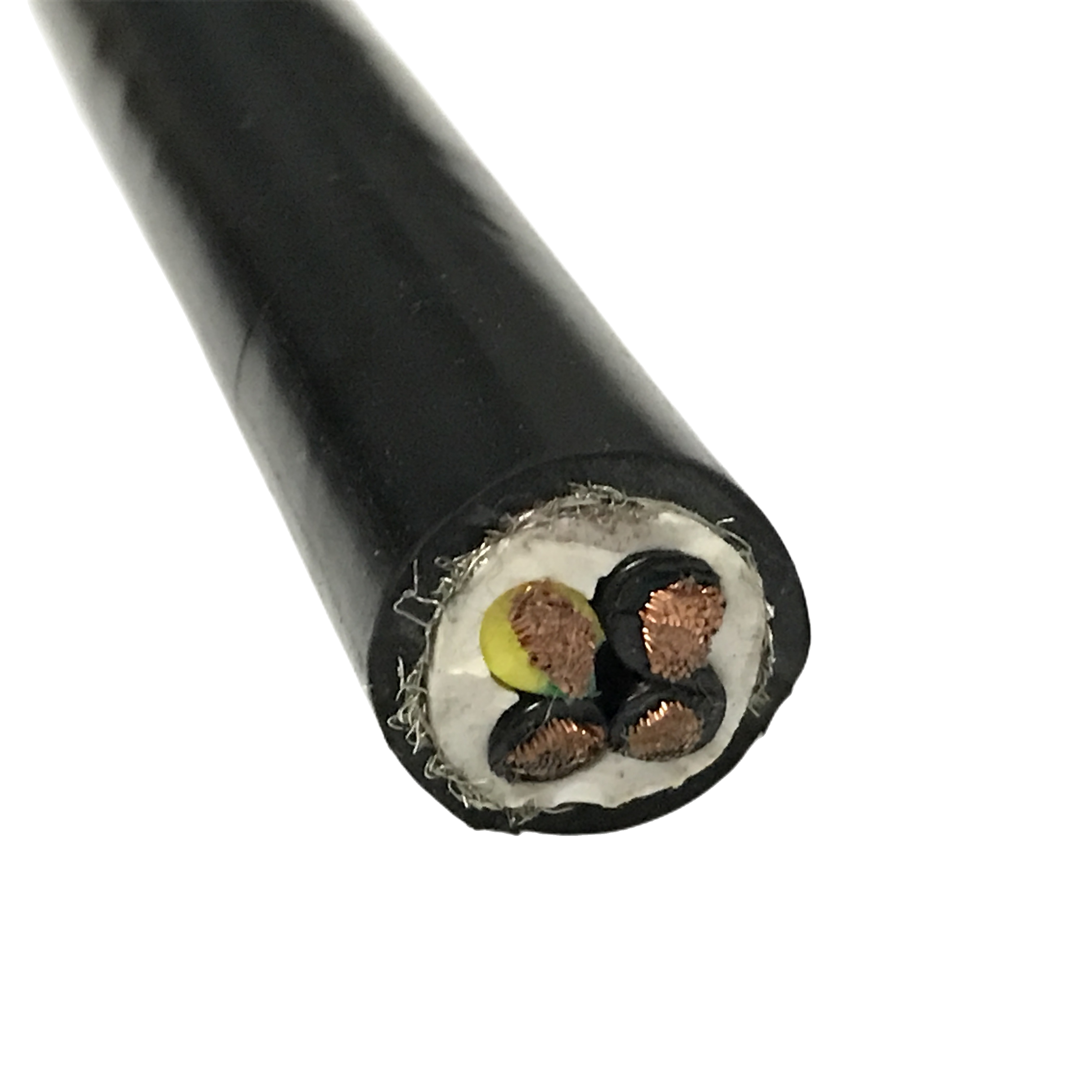
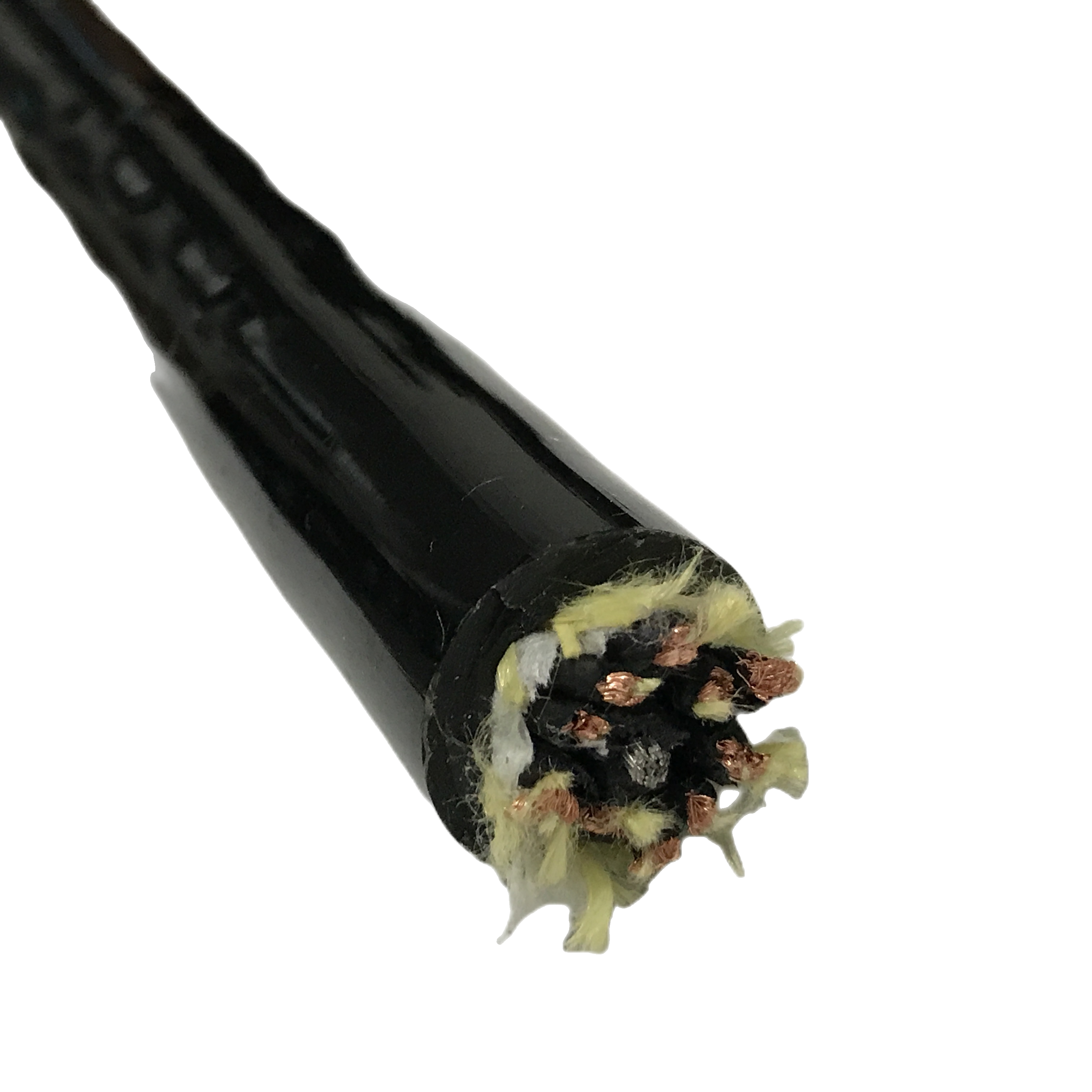
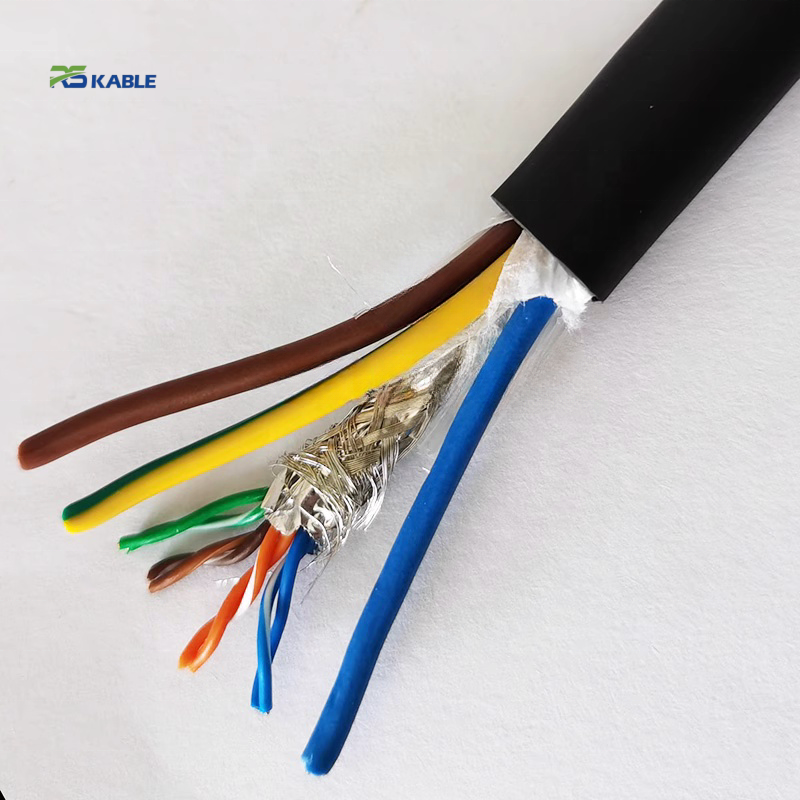
| Conductor | Tinned copper, fine-stranded |
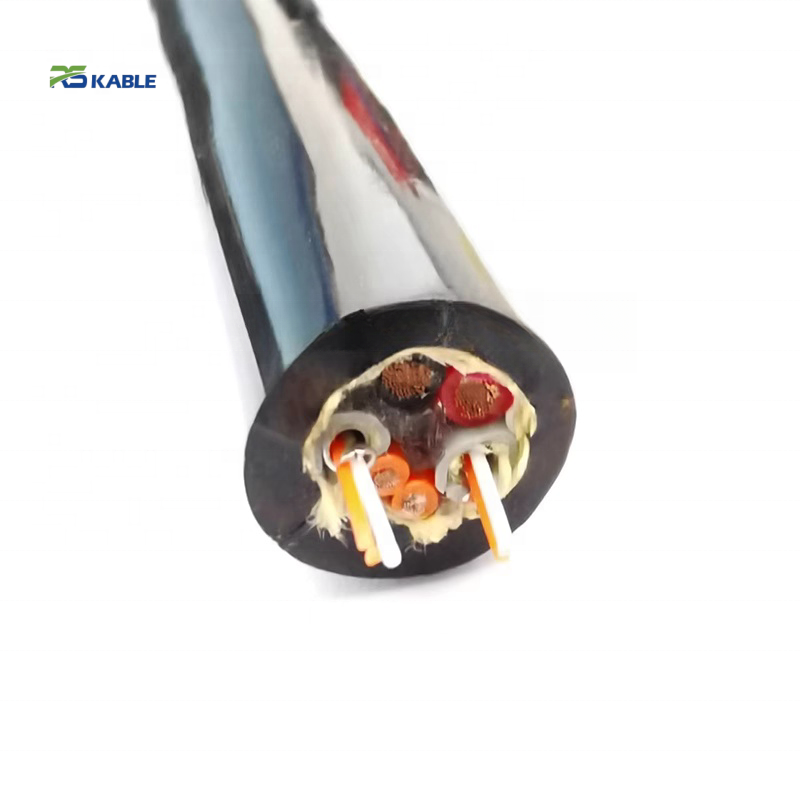
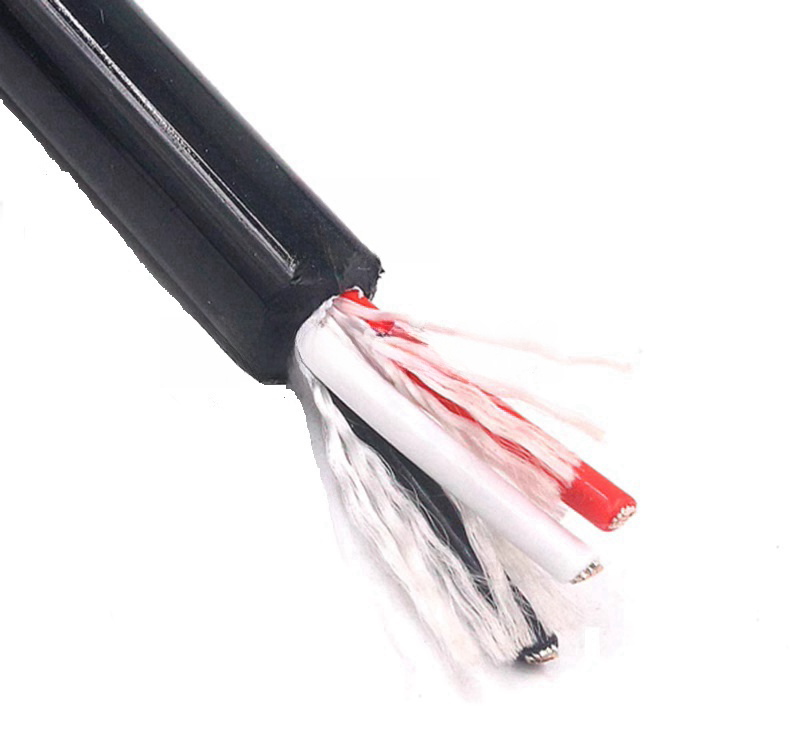
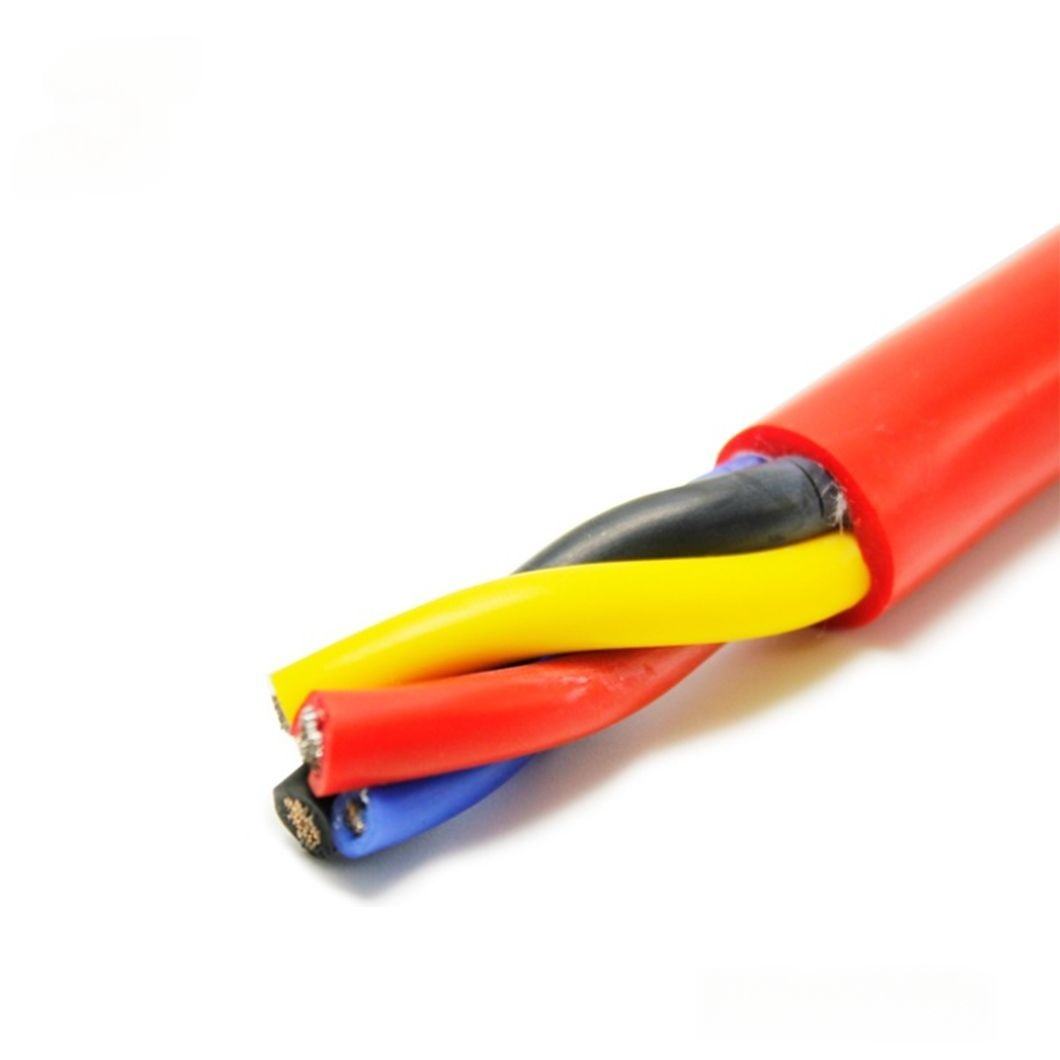
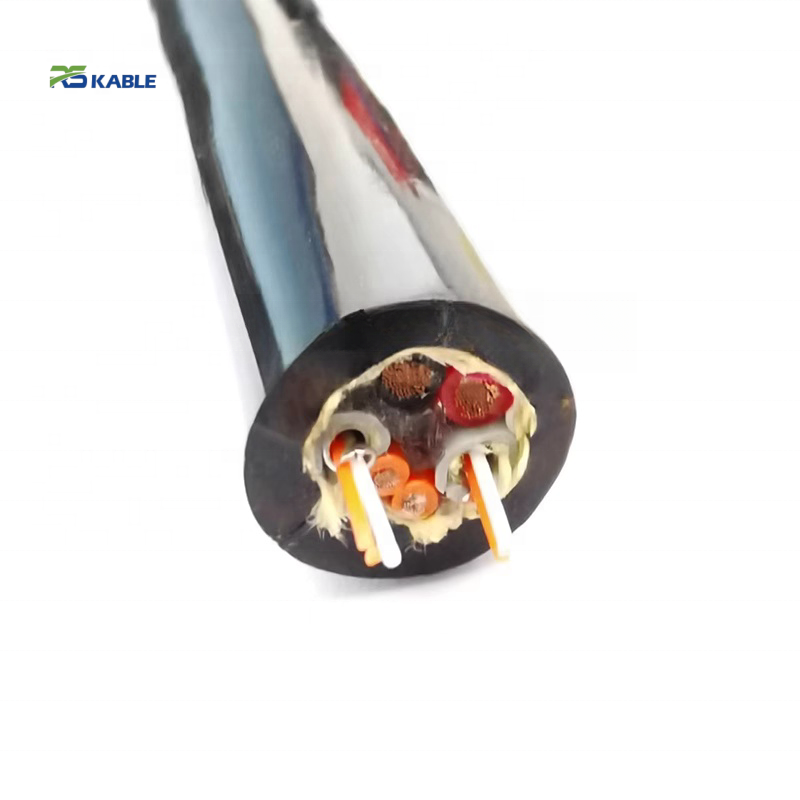
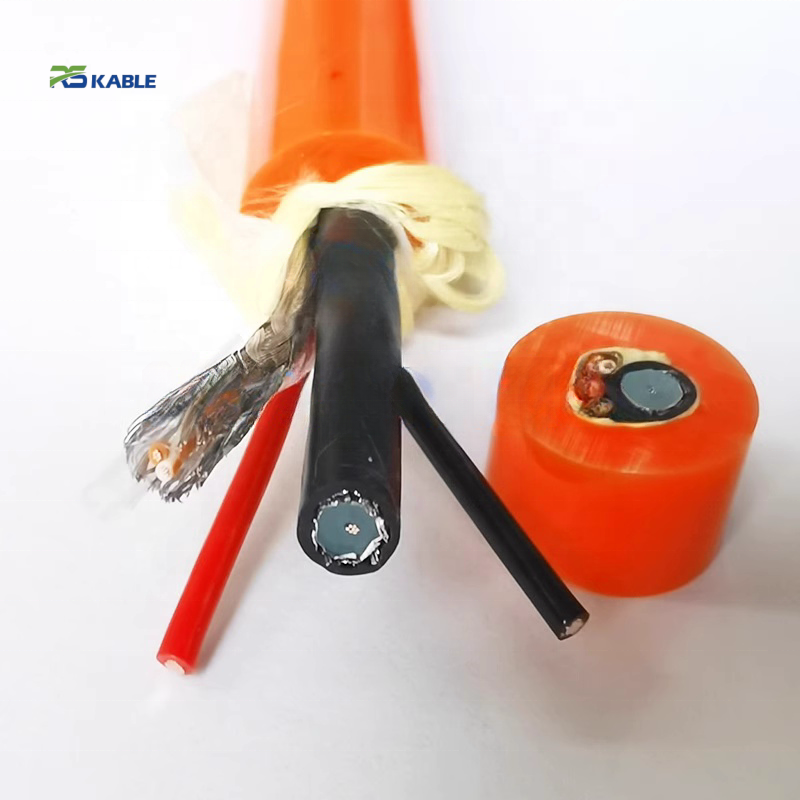
| Core count | 2-core (power only) or 4-core (power + control) |
| Conductor size | 0.75 mm² standard, 1.0 mm² for longer runs |
| Insulation | PVC, water-contact grade |
| Jacket | Floating-compound PVC, chlorine and salt resistant |
| Outer diameter | ≈ 8.5 mm |
| Net buoyancy | +1.5 to +2.5 g/m (positive — cable floats) |
| Flex fatigue rating | 500,000 bend cycles in coil/uncoil fatigue testing |
| Chlorine immersion test | 90 days continuous, 3–5 ppm free chlorine, 40°C, jacket mass change < 3% |
| UV exposure reference | Tested to ISO 4892-2 weathering methodology for surface-stored sections |
| Breaking load (as retrieval line) | > 80 kgf typical, sufficient for manual robot retrieval |
| Operating temperature | -5°C to 60°C water/ambient |
| Swivel connector compatibility | Standard barrel and bayonet swivel interfaces |
Figures represent typical performance for this construction and testing methodology; batch-specific certificates should be requested when the cable will also serve as the primary retrieval line for a commercial-grade robot.
Length and Reach Options
| Model | Length | Recommended Pool Size | Typical Application |
|---|---|---|---|
| RST-PLC-15 | 15 m | Up to 8 m x 4 m residential pools | Standard residential robots |
| RST-PLC-18 | 18 m | Up to 10 m x 5 m residential/small commercial | Larger residential pools |
| RST-PLC-21 | 21 m | Up to 12 m x 6 m commercial pools | Commercial cleaning robots |
| RST-PLC-24 | 24 m | 15 m+ commercial or lap pools | Extended-reach commercial robots |
| RST-PLC-C | Custom | Project-specific | Non-standard pool geometry or deep-end reach |
Length should be measured from the planned power supply location to the farthest point the robot is expected to reach, with roughly 1–2 m of slack allowance rather than a straight-line minimum.
Compatibility Notes
Most robotic pool cleaners use either a barrel-style or bayonet-style swivel at the cable-to-robot connection, and a simpler strain-relief fitting at the power-supply end. The cable structure above is prepared for both common swivel types; a project-specific adapter is only needed when a robot manufacturer uses a proprietary connector geometry, which is more common on commercial-grade units than residential ones. Core count matters here too — control-signal-equipped robots need the 4-core version even if only two conductors carry meaningful current, since the remaining pair is reserved for the swivel’s rotation-sensing or fault-detection circuit on models that include one.
Field Reliability Note
In a small operator survey covering coastal saltwater residential pools — an environment that is harder on cable jackets than standard chlorinated fresh water — cables using a floating chlorine-resistant jacket were commonly still in service after two full pool seasons, while operators reported that generic (non-floating, non-chlorine-rated) replacement cables sourced locally needed replacement within a single season due to jacket stiffening and sinking behavior. This reflects a general pattern reported anecdotally by pool service operators rather than a controlled comparative study, and actual results depend on local water chemistry, sun exposure, and storage practices between uses.
Suitability
This cable is a good fit for residential and commercial robotic pool cleaners operating in standard chlorinated or saltwater pools, for spa and hot tub cleaning robots with similar duty cycles, and for applications where the cable doubles as the manual retrieval line.
It is not the right starting point for advanced-oxidation or ozone-treated pools without a chemistry review, for cables that will be permanently fixed rather than repeatedly flexed, or for any application requiring a voltage rating above standard low-voltage robot power supplies — these cases call for a project-specific material and rating review before an order is placed.
Benchmark vs Generic Submersible Power Cable
| Metric | Pool Cleaning Robot Cable | Generic Submersible Power Cable |
|---|---|---|
| Buoyancy | Positive (+1.5 to +2.5 g/m) | Typically negative, sinks |
| Chlorine resistance (90-day immersion) | Mass change < 3% | Often > 8–10%, jacket softening reported |
| Flex fatigue rating | 500,000 cycles | Not typically rated for continuous flex |
| Reported field service life (chlorinated pool) | Commonly 2+ pool seasons | Commonly 1 season or less |
| Doubles as retrieval line | Yes, > 80 kgf breaking load | Not recommended without separate testing |
Ordering Specification
| Field | What to Provide |
|---|---|
| Robot type | Residential, commercial, or spa cleaning robot |
| Core count | 2-core (power only) or 4-core (power + control) |
| Required length | Measured reach plus 1–2 m slack allowance |
| Connector interface | Barrel swivel, bayonet swivel, or proprietary (specify manufacturer) |
| Water chemistry | Chlorine, bromine, salt, or ozone/advanced oxidation |
| Retrieval-line use | Confirm if the cable will be used to manually pull the robot to the deck |
Warranty and Service Alignment
Cable service life in a maintained pool typically outlasts a single robot-manufacturer warranty period; even so, matching the cable’s expected service interval to the robot’s own service schedule — commonly 12–24 months for consumer units — avoids a mismatched replacement cycle where the cable becomes the limiting component ahead of the robot itself. This is a planning consideration rather than a guaranteed cable lifespan, since actual service life depends on water chemistry, sun exposure, and handling between uses.
Frequently Confirmed Technical Points
Does a floating cable actually float once connectors and end fittings are attached? Net buoyancy is measured on the finished assembly, not the bare cable, since connector weight can offset a small positive buoyancy margin. This is worth confirming on the exact connector configuration ordered rather than assuming the bare-cable figure applies unchanged.
Can this cable be used as the sole retrieval line, or does the robot still need a separate rope? The typical breaking load given above is sufficient for manual retrieval of most residential and light commercial units. Heavier commercial robots, or installations where the cable is pulled at an angle over a coping edge rather than straight up, should confirm load rating against the specific robot weight before relying on the cable alone.
How does salt water exposure compare to standard chlorine exposure for jacket life? Salt systems generate chlorine electrolytically at generally lower sustained concentrations than manually dosed pools, but salt residue and crystallization at the waterline can add abrasive wear that chlorine alone does not. Both exposure types are covered by the jacket compound’s resistance rating, but salt installations benefit from more frequent visual inspection at the waterline contact point.
Is a 4-core cable needed if the robot has no control signal feature? No — a 2-core power-only cable is the standard and lower-cost choice for robots without a swivel-integrated control or fault-sensing circuit. Ordering the 4-core version for a power-only robot adds cost and stiffness without functional benefit.
What happens if the pool uses an ozone or advanced oxidation system instead of standard chlorine? The chlorine-immersion data above does not directly extend to ozone exposure, which affects some polymer jackets differently than chlorine does. This condition is flagged above as requiring a separate material review rather than being covered by the standard specification.
Technical content reviewed by the cable engineering team prior to publication. Figures represent typical performance for this construction and testing methodology; request a batch-specific test report for commercial or safety-relevant installations.