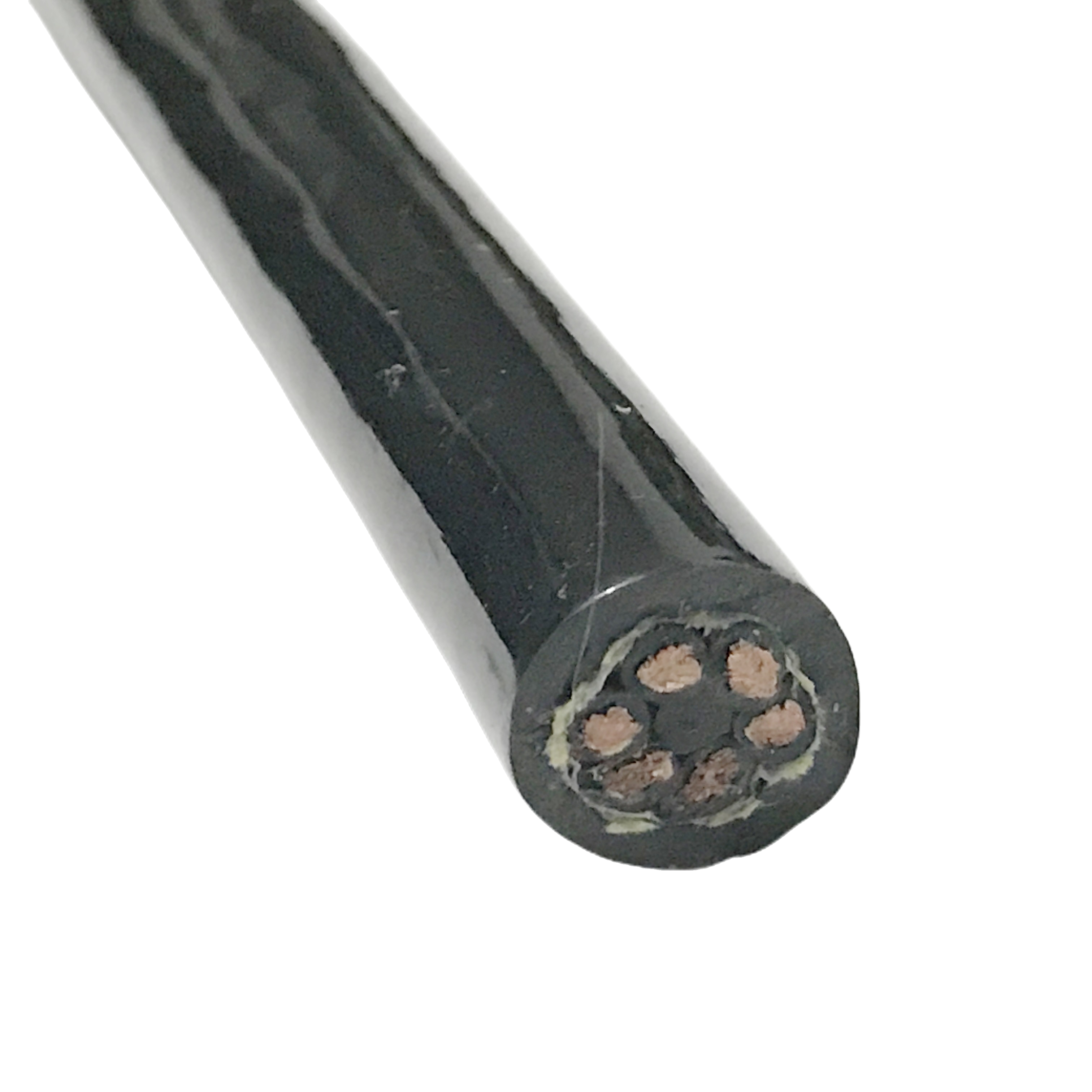


What Is Robot Cable? Types, Features, Applications and Selection Guide
If you’ve ever pulled a “regular” flexible cable out of a robot arm after a few months of service and found it cracked at the same joint every time, you’ve already discovered the reason robot cable exists as its own category. It isn’t marketing language for “cable that happens to be used on robots” — it’s a genuinely different engineering answer to a problem that fixed and lightly-moving cable was never asked to solve: millions of repeated bends at the same flex point, for years, without the conductor or jacket giving out first.
This guide covers what actually makes robot cable different, the main types you’ll encounter, the properties worth checking before you specify one, where each type gets used, and a practical framework for choosing between them.
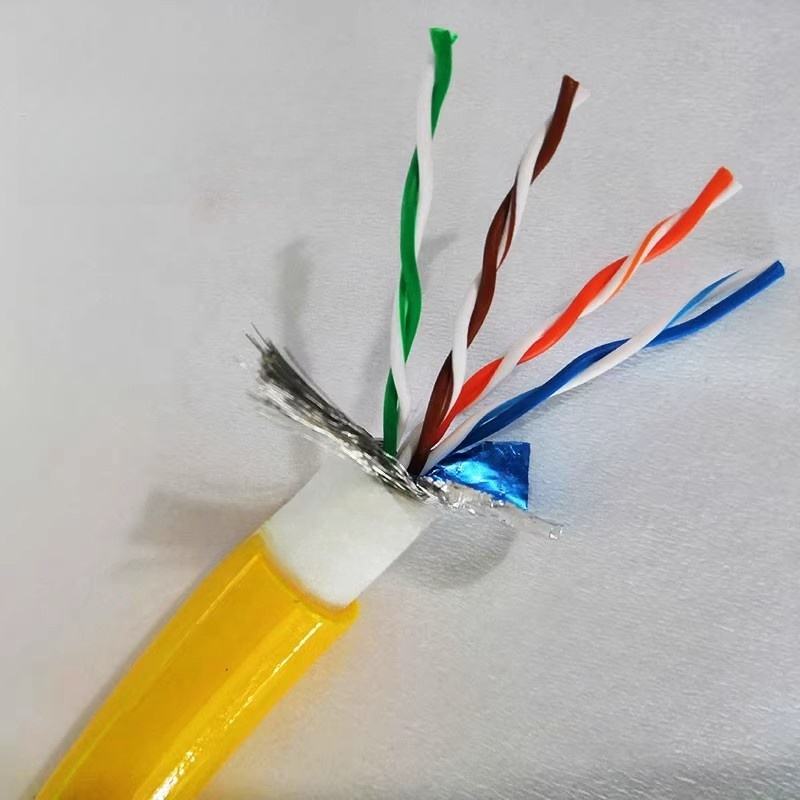
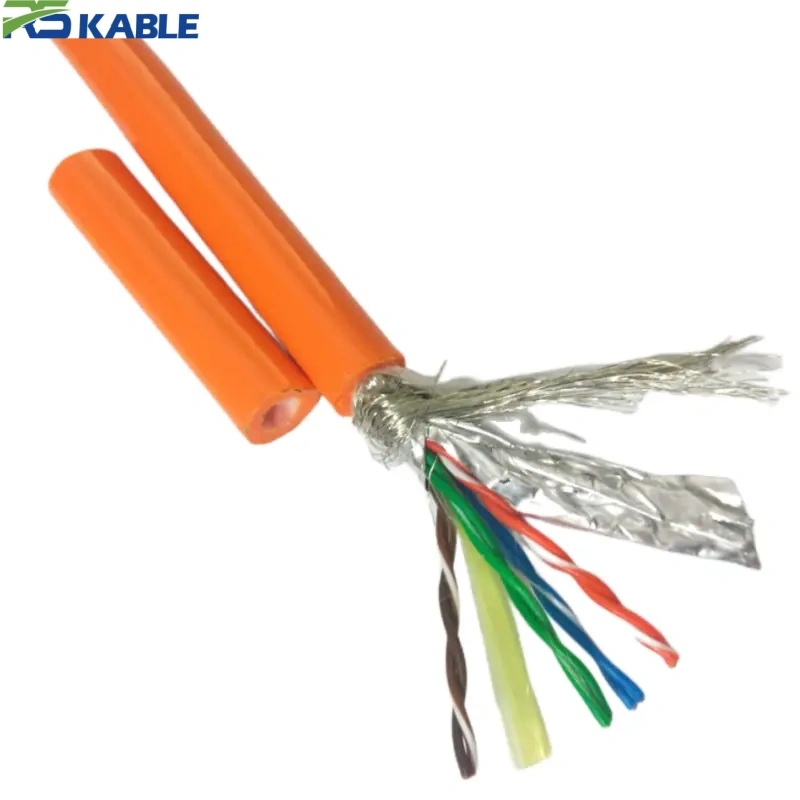
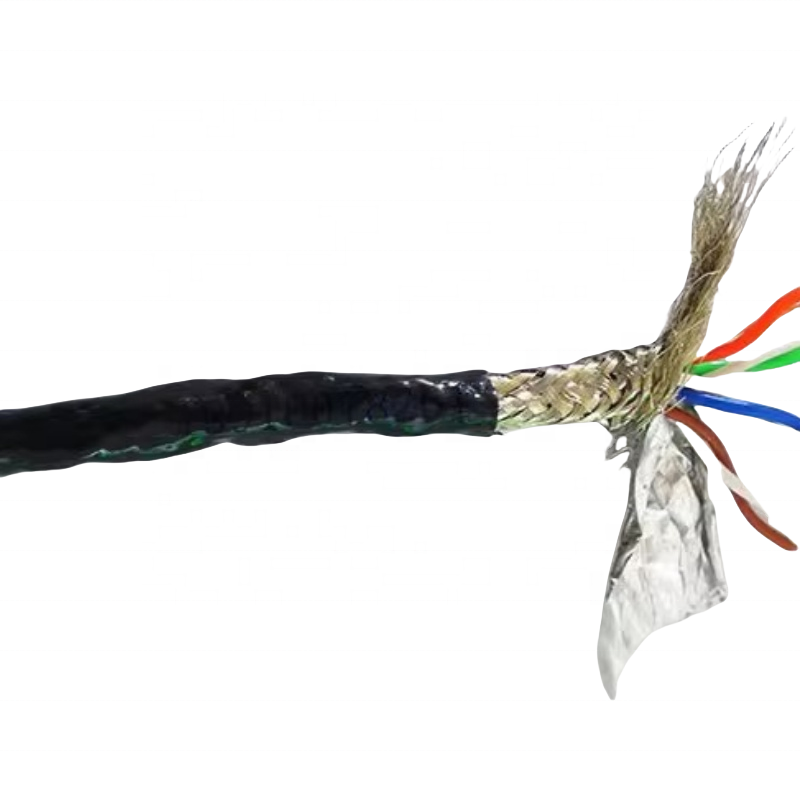
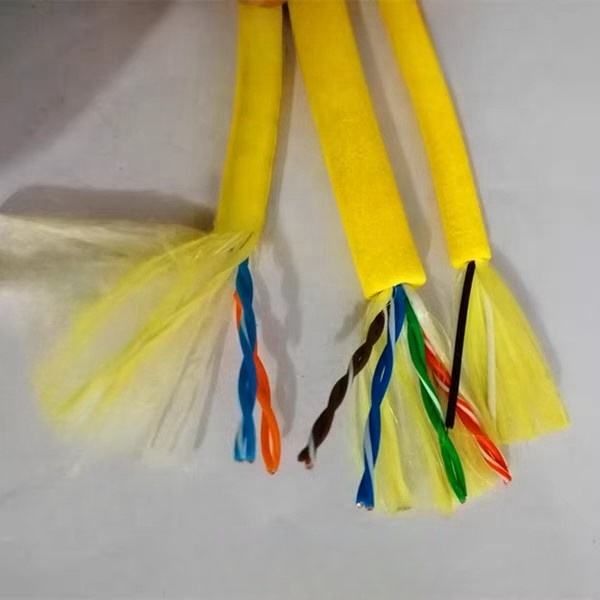
PUR Twisted Pair Robot Cable for Data Transmission with Low Crosstalk and High Flexibility
This PUR twisted pair robot cable is designed for reliable data transmission in industrial robots, automation systems and other continuous-motion applications. Its twisted-pair construction helps reduce signal crosstalk, while the flexible PUR jacket provides excellent resistance to bending, abrasion and mechanical stress during repeated movement.
What Is Robot Cable?
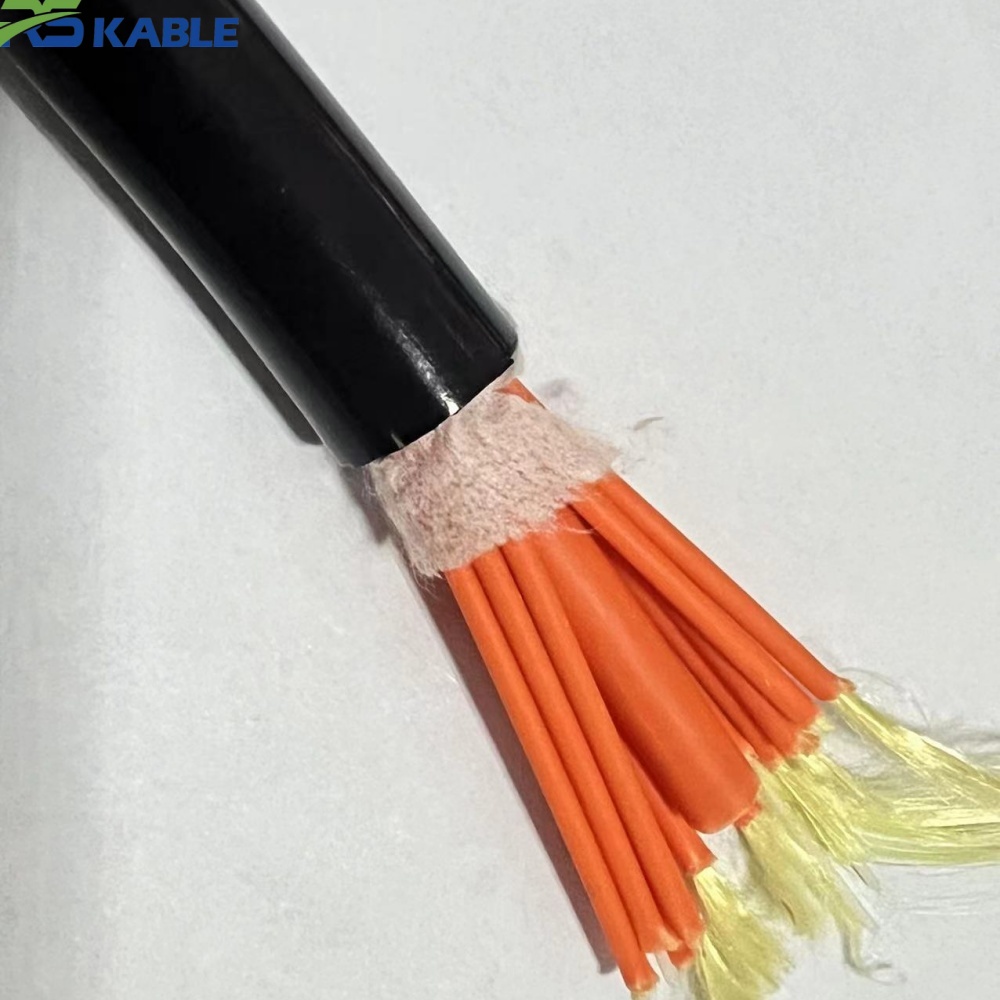
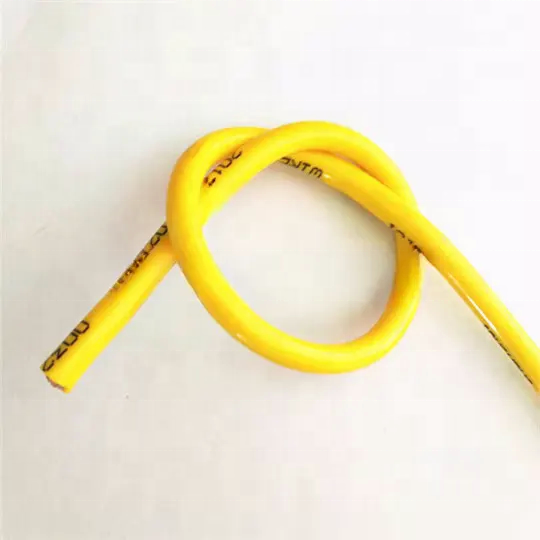
Robot cable is a category of flexible electrical cable engineered specifically for continuous dynamic motion — the kind of repeated, high-cycle bending and twisting that happens at a robot arm’s joints, along a moving axis, or through a cable carrier. The defining difference from standard flexible cable isn’t the jacket material alone; it’s the combination of fine, high-strand-count conductors, a core structure designed to distribute flex stress evenly, and a jacket compound chosen for long-term flex-fatigue resistance rather than just general flexibility.
The distinction matters because “flexible” and “flex-life rated” are not the same claim. A cable can bend easily during installation and still fail within weeks of continuous robotic motion, because installation flexing and continuous duty-cycle flexing put fundamentally different fatigue loads on a conductor. Robot cable is built around the second requirement specifically.
Types of Robot Cable
Robot cable isn’t a single product — it splits into several categories based on what it carries and how it’s built.
By Circuit Type
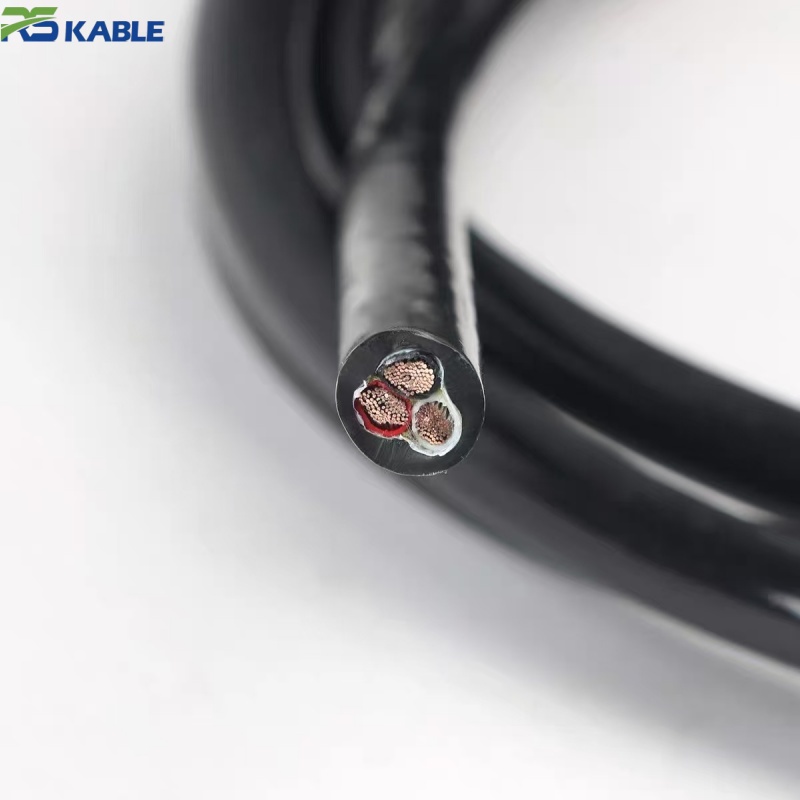
Power cable carries the current driving the robot’s motors and actuators. These are typically sized with fewer, larger-gauge conductors and prioritize current-carrying capacity alongside flex life.
Signal and control cable carries sensor feedback, encoder signals, and low-voltage control circuits. These typically have more, finer conductors, often in shielded twisted pairs, prioritizing signal integrity over current capacity.
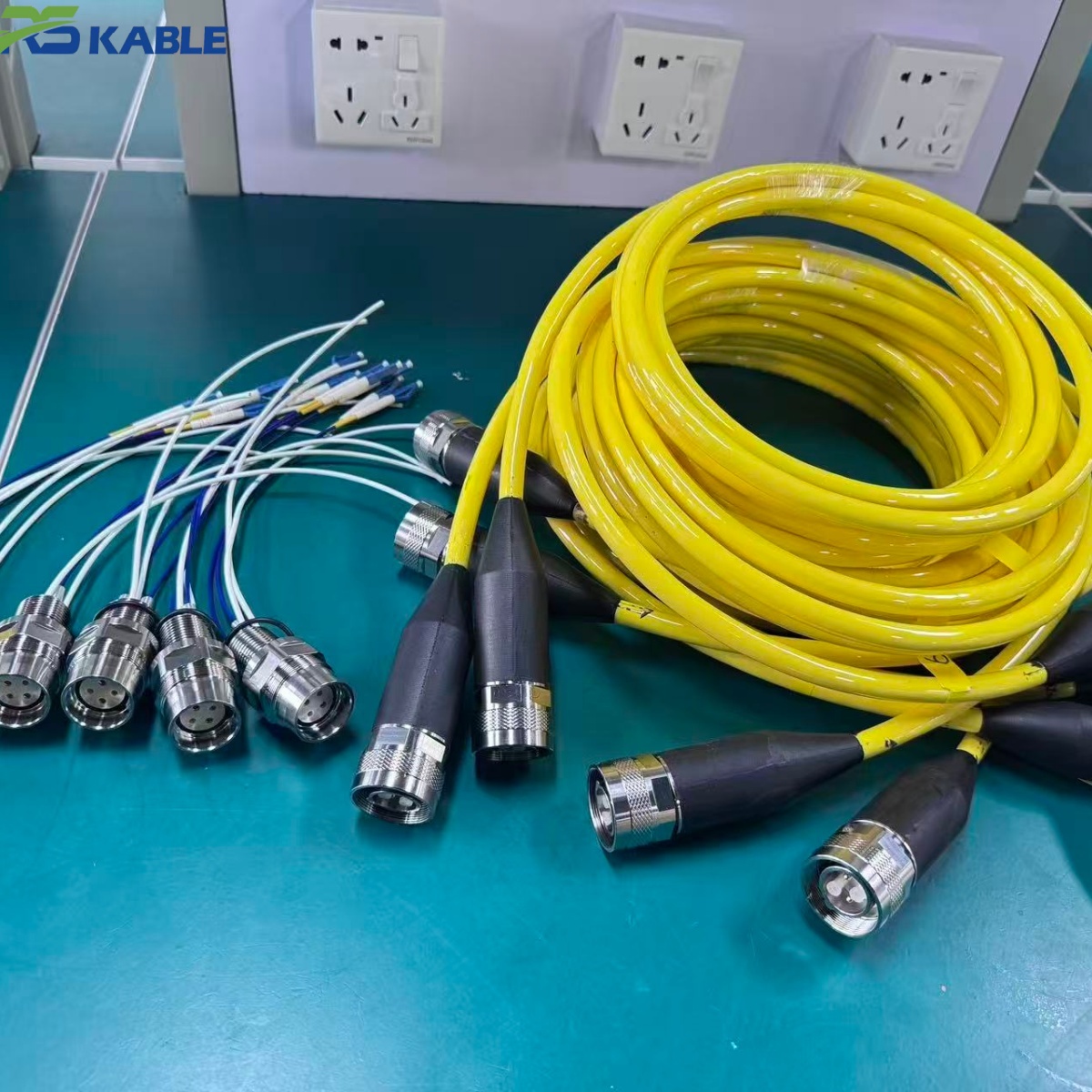
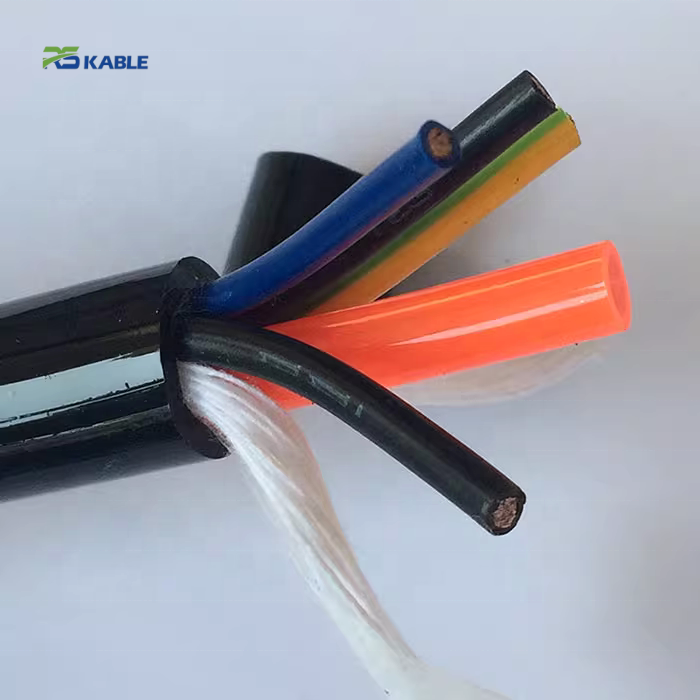
Hybrid cable combines power and signal — sometimes even pneumatic tube — within a single jacket, common on compact robot arms and end-effectors where routing space is limited and a single connector point is preferred over several.
By Jacket Material
PUR (polyurethane) jacketed cable is the most common choice for general robotic applications — good abrasion resistance, reasonable flex life, and moderate cost.
TPE (thermoplastic elastomer) jacketed cable offers different flexibility and cold-temperature characteristics than PUR, and is often chosen where very low ambient temperatures or specific chemical exposure profiles favor it over PUR.
Silicone-jacketed cable is used where temperature extremes — either sustained heat near motor housings or cold-climate installation — exceed what PUR or TPE can reliably handle.
By Shielding
Unshielded construction is adequate for circuits isolated from significant electromagnetic interference.
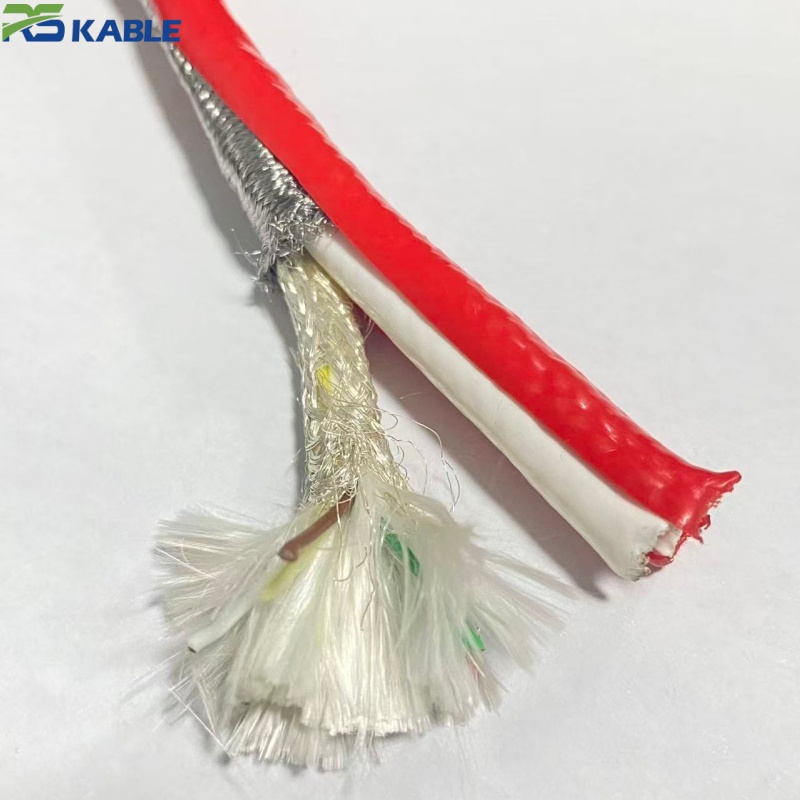
Shielded construction — braided, foil, or both — protects signal integrity where the cable runs near servo drives, VFDs, or other EMI-generating equipment, which describes most real robot cell environments to some degree.
By Robot Configuration
Cable requirements differ meaningfully between a six-axis articulated arm (multiple joints, each with its own flex zone and rotation), a SCARA robot (fewer axes, often faster cycle rates), and a collaborative robot or cobot (typically lower current, tighter routing space, and more emphasis on cable diameter and weight since cobots often have less internal routing room than industrial arms).
Key Features and Properties That Actually Matter
Not every spec on a robot cable datasheet carries equal weight for a given application. These are the ones worth checking first.
Conductor Stranding (Flex Class)
Conductor flexibility is defined by stranding class under IEC 60228 — commonly Class 5 or Class 6 for robot cable, referring to progressively finer, more numerous strands. This single spec has more influence on real-world flex life than almost anything else on the sheet, because it determines how the conductor itself handles millions of bend cycles, independent of the jacket.
Minimum Bend Radius — At the Right Condition
A published bend radius (often expressed as a multiple of outer diameter) matters less than whether that figure was measured under conditions matching your actual installation. A robot joint routing cable at a tighter radius than rated, even briefly during full range of motion, concentrates fatigue at that exact point.
Torsion Rating, If the Application Involves Twisting
Straight reciprocating flex and flex-plus-torsion (common on rotating joints, not just hinge-style ones) are different fatigue problems. A cable rated for one isn’t automatically rated for the other — this is one of the more commonly overlooked specification gaps in robot cable selection.
Flex Cycle Rating
Where available, a stated cycle life (often given at a specific bend radius and travel distance) is the most direct indicator of expected service life — though it’s worth checking whether the figure comes from the manufacturer’s own testing or a general industry reference, since these can differ meaningfully.
Jacket Abrasion Resistance
Cable inside a cable carrier or dragging against structure accumulates surface wear at predictable contact points over time. Jacket compound abrasion resistance affects how long the cable survives that wear before the jacket — and eventually the conductors beneath it — is compromised.
Applications
Robot cable shows up wherever equipment moves continuously and repeatedly, not just on robot arms in the literal sense:
- Six-axis industrial robot arms — welding, painting, material handling, palletizing
- SCARA and delta robots — high-speed pick-and-place operations
- Collaborative robots (cobots) — assembly, quality inspection, packaging
- Cable carriers and drag chains — CNC machine axes, gantry systems, automated storage and retrieval
- Robotic end-effectors and grippers — often combining power, signal, and sometimes pneumatic lines
- Automated welding cells — where high-EMI welding equipment makes shielding as important as flex life
Robot Cable vs. Standard Flexible Cable
| Comparison Item | Robot Cable | Standard Flexible Cable |
|---|---|---|
| Conductor stranding | Fine, high-strand-count (IEC 60228 Class 5/6) | Coarser stranding, adequate for occasional flexing |
| Flex life | Rated for millions of continuous cycles | Rated for installation flexing, not continuous duty |
| Torsion tolerance | Available for combined flex-and-twist applications | Not typically rated for combined loading |
| Jacket compound | Selected specifically for long-term flex-fatigue resistance | Selected for general flexibility and cost |
| Typical failure mode if misapplied | N/A — built for the duty | Premature conductor fatigue at the flex point |
A Practical Selection Framework
Rather than starting from a spec sheet, start from these questions:
1. What does the cable actually carry? Power, signal, or both — this determines conductor count, gauge, and whether shielding is relevant from the start.
2. What’s the actual motion pattern? Simple reciprocating flex, or flex combined with rotation/torsion? This determines whether a standard flex-rated cable is sufficient or a torsion-rated construction is needed.
3. What’s the real installed bend radius, not just the theoretical minimum? Check this against the tightest point in the actual joint’s range of motion, not an idealized routing path.
4. Is there a meaningful EMI source nearby? Servo drives, VFDs, or welding equipment in close proximity generally justify shielded construction even if the circuit itself wouldn’t otherwise need it.
5. What’s the ambient and process temperature at the routing point? Near a motor housing or in a cold-storage environment, standard PUR jacket assumptions may not hold, and TPE or silicone construction may be worth the added cost.
6. What cycle life does the application actually need? A cable rated for millions of cycles is unnecessary spend for a low-duty-cycle application, just as an under-rated cable is a false economy for a high-cycle production line.
Frequently Asked Questions
Is all “flexible cable” suitable for robot use?
No. Flexible cable rated for occasional bending during installation and robot cable rated for millions of continuous flex cycles are different engineering categories, even though both are described as “flexible.” Using general flexible cable on a continuously moving robot joint typically results in premature conductor fatigue.
What’s the difference between flex-rated and torsion-rated robot cable?
Flex-rated cable is built for repeated bending in one general plane of motion. Torsion-rated cable is built to also tolerate twisting, which happens on rotating joints. A cable rated only for flex, used on an application involving real torsional load, will generally fail earlier than its flex-cycle rating would suggest.
How do I know if I need shielded robot cable?
If the cable is routed near servo drives, variable frequency drives, or other significant EMI sources — which describes a large share of real industrial robot cells — shielded construction is generally worth specifying for signal circuits, even if the immediate application seems low-risk.
Does robot cable cost significantly more than standard cable?
Yes, generally, due to the finer conductor stranding and specialized jacket compounds. The cost is justified specifically by the flex-life requirement — for a genuinely continuously-moving application, the cost difference is typically much smaller than the cost of unplanned downtime from premature cable failure.
Can the same robot cable be used for both articulated arms and cable carriers?
Not always without confirmation. Articulated robot joints often involve combined flex-and-torsion loading, while cable carriers typically involve straight reciprocating travel along a guided path. These are different fatigue patterns, and a cable optimized for one should be checked against the other’s specific requirements before assuming interchangeability.
Choosing the right robot cable comes down to matching conductor construction, jacket material, and shielding to your actual motion pattern and environment — not defaulting to the highest-rated option available. If you’re specifying cable for a new robot cell or replacing cable that’s failing earlier than expected, our engineering team can help confirm the right construction for your specific application before you order.
[Request a Quotation] · [Ask an Engineer Before You Spec It]