

PTFE Cable: Complete Guide to Properties, Specifications, and Applications
PTFE cable shows up in some of the most demanding electrical environments in industry — aerospace wiring harnesses, semiconductor process tools, nuclear facility instrumentation, military electronics. If you’ve been pointed toward PTFE cable for a project and want to understand what you’re actually specifying before you order, this guide covers the material properties, the specs worth checking, and where PTFE cable genuinely earns its cost over more common alternatives.
What Is PTFE Cable Made Of?
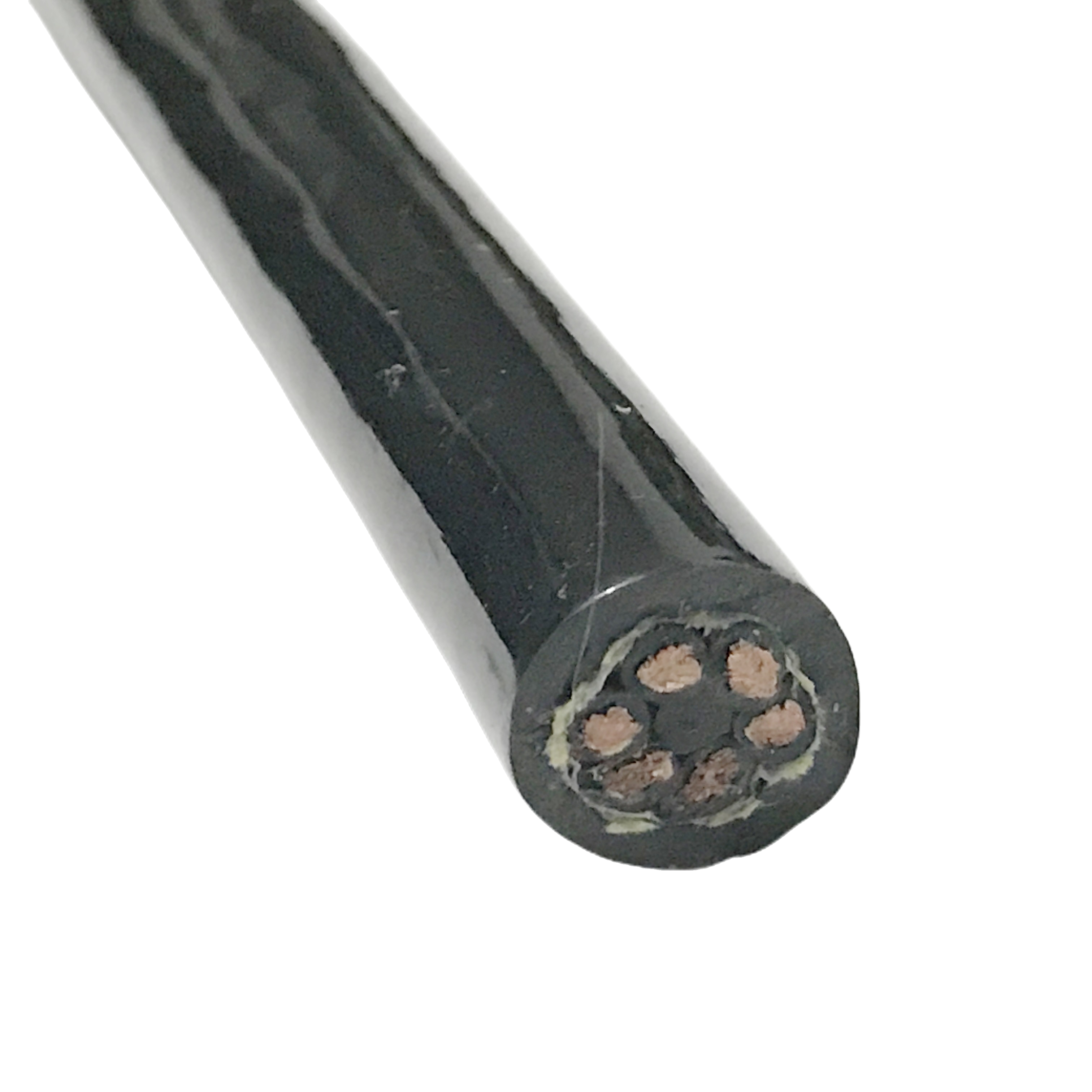
PTFE cable uses polytetrafluoroethylene — commonly known by DuPont’s brand name Teflon — as the primary insulation material around the conductor. PTFE is a fluoropolymer: a long carbon-fluorine chain molecule that gives the material its defining characteristics — chemical inertness, low friction, and an unusually high tolerance for heat.
Unlike most cable insulation materials, PTFE can’t be melted and pushed through a conventional extruder the way PVC, polyethylene, or even its close chemical relative FEP can be. Instead, PTFE insulation is typically built through one of two processes: sintering a fine PTFE powder coating onto the conductor, or — more commonly for cable construction — wrapping thin layers of PTFE tape around the conductor and heat-treating the assembly to fuse the layers together. This manufacturing difference is a big part of why PTFE cable costs more than most alternatives, and it’s also directly responsible for PTFE’s standout thermal performance.
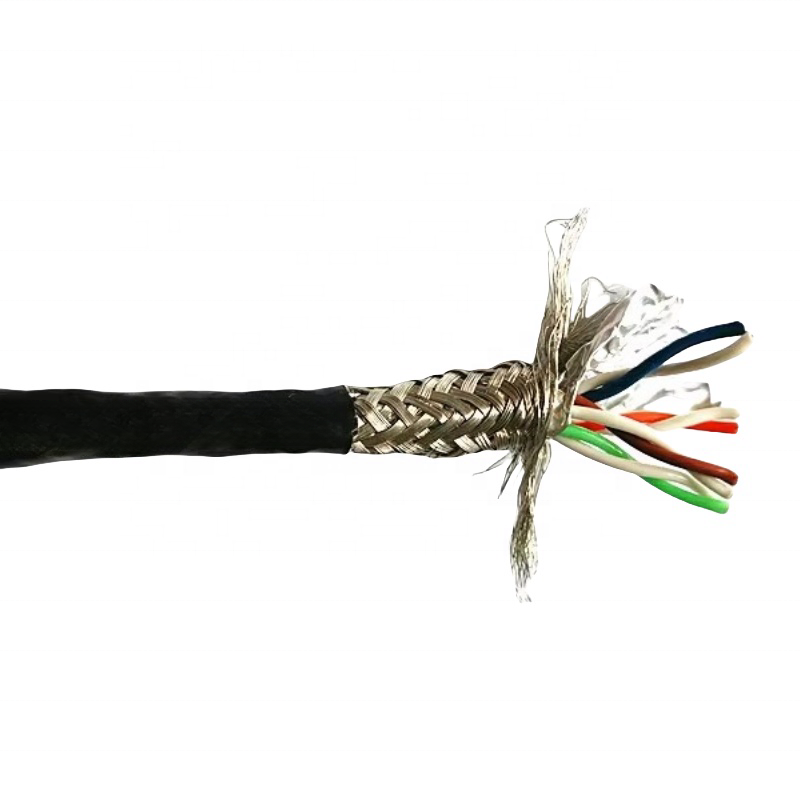
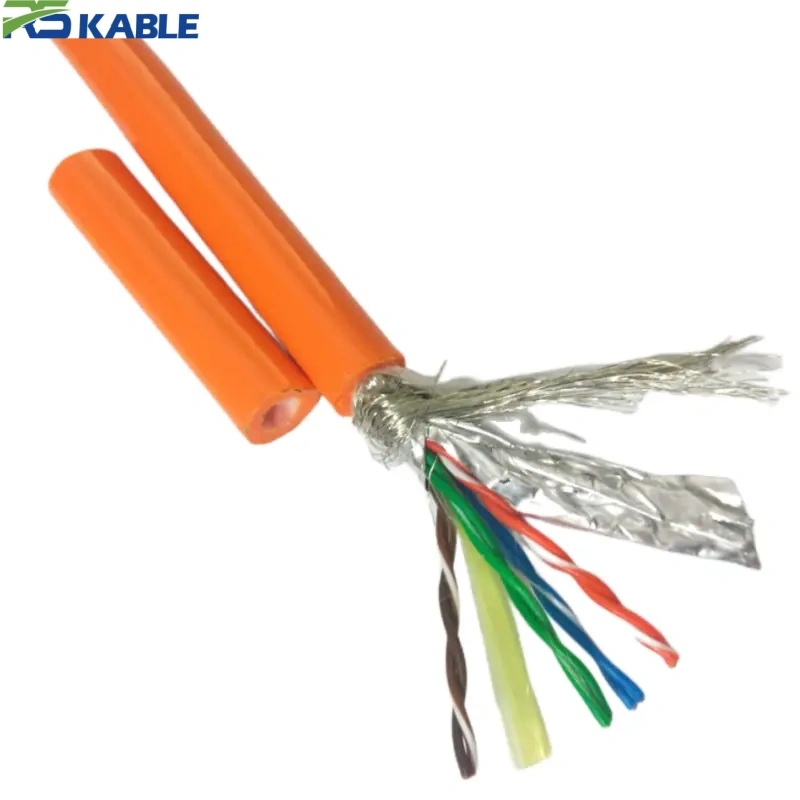
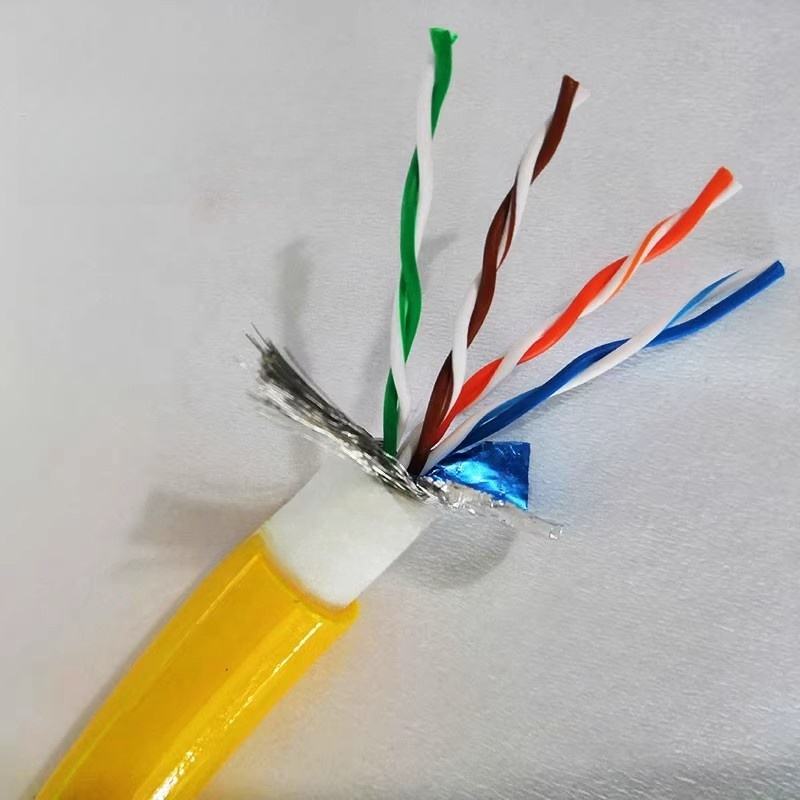
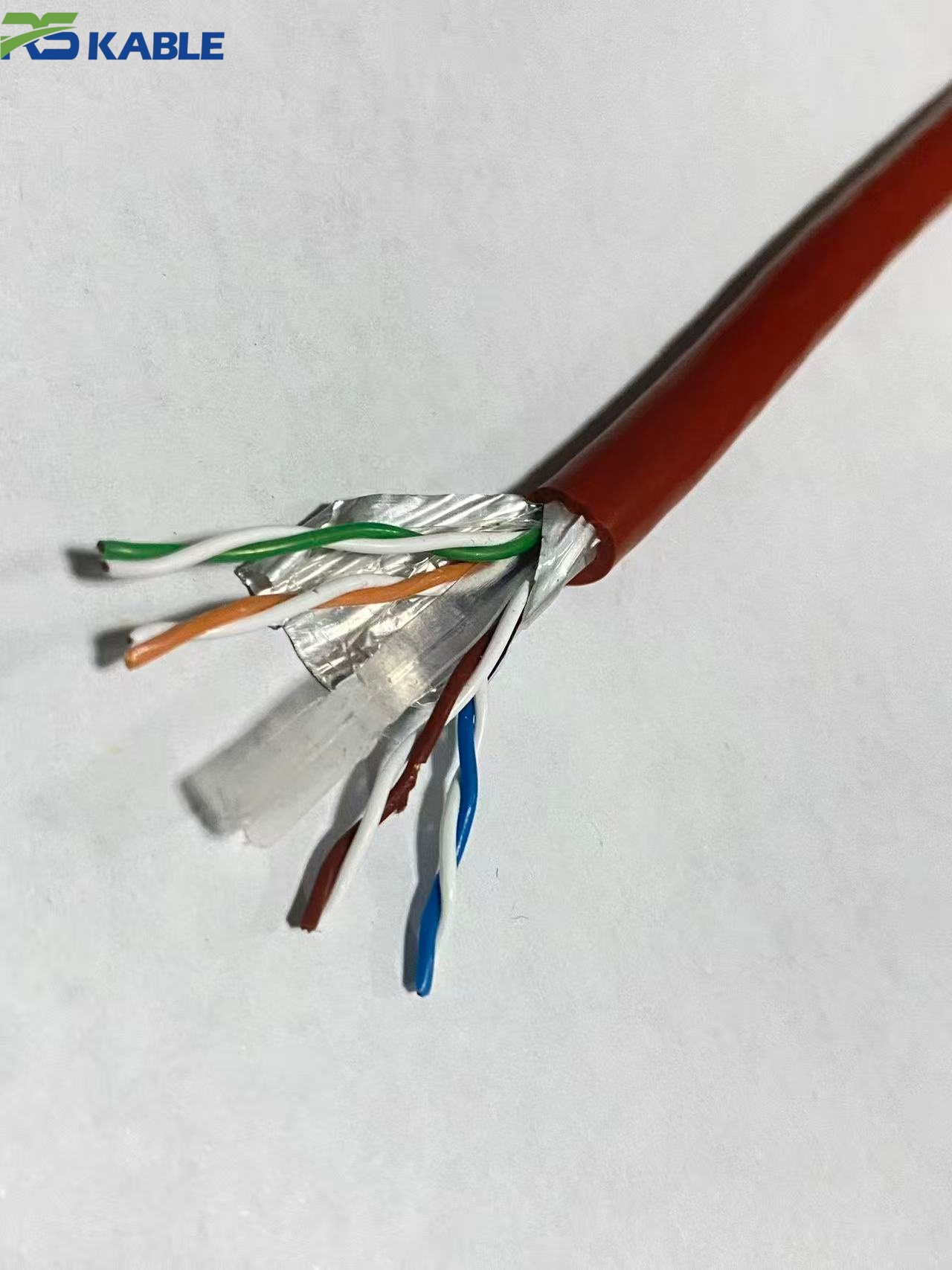
200°C PTFE Ethernet Cable – Custom Length, Industrial Applications
200°C PTFE Ethernet Cable is designed for reliable high-speed data transmission in demanding industrial environments where high temperature resistance and electrical stability are required. Featuring PTFE insulation, this industrial Ethernet cable provides excellent thermal stability, chemical resistance, and reliable performance for high-temperature machinery, automation equipment, furnaces, and other harsh industrial applications.
PTFE Cable Temperature Rating Explained
PTFE cable is commonly rated for continuous service around 260°C, which sits at or near the top of what any standard cable insulation material can sustain. This high-temperature capability, combined with a stable low-temperature performance well below freezing, gives PTFE cable one of the widest practical operating temperature windows of any insulation material commercially available.
It’s worth being precise about what “rated” means here: a continuous temperature rating describes sustained operating conditions, not a brief peak exposure. Installations near engines, furnace walls, or other radiant heat sources should be evaluated against actual sustained temperature at the cable’s location — not just the ambient temperature of the room — since routing proximity to a heat source can put the cable well above general ambient conditions.
Key Properties of PTFE Cable
Beyond temperature resistance, several other properties explain why PTFE remains a go-to choice for demanding electrical environments:
Chemical resistance — PTFE resists nearly all industrial solvents, acids, and bases, making it a common choice in chemical processing and laboratory environments where cable will contact aggressive substances.
Low dielectric constant — PTFE’s electrical properties make it well suited to high-frequency and precision signal applications where insulation performance affects signal integrity.
Low friction surface — PTFE has one of the lowest coefficients of friction of any solid material, which simplifies pulling cable through conduit and reduces wear where cable contacts other surfaces.
Non-flammability — PTFE is inherently flame-resistant and doesn’t easily support combustion, an important property in aerospace and military specifications.
UV and weathering resistance — PTFE holds up well to prolonged outdoor and UV exposure without the degradation many polymer jackets experience over time.
PTFE Cable Specifications: What to Check Before Ordering
A handful of specification details matter more than the headline temperature rating alone:
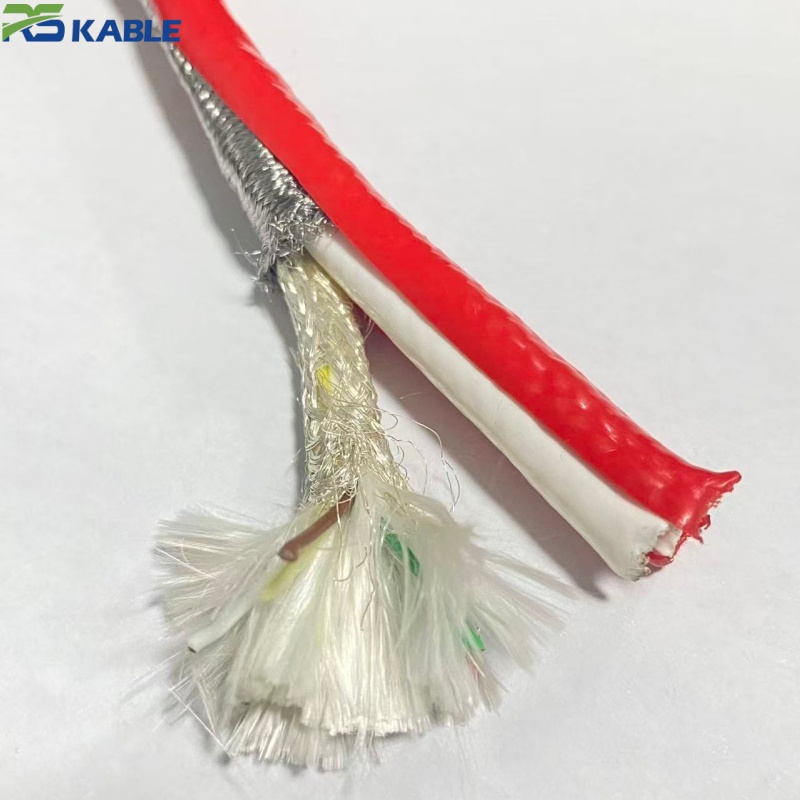
Conductor finish — PTFE cable is available with bare, tinned, nickel-plated, or silver-plated copper conductors. Nickel plating is generally used for the highest-temperature constructions, since standard tin plating has a lower practical service ceiling than PTFE insulation itself — meaning a mismatched conductor finish can become the limiting factor in an otherwise high-temperature-rated cable.
Insulation construction — extruded PTFE (used for lower-demand, simpler builds) versus tape-wrapped PTFE (used for the highest continuous-temperature requirements) behave somewhat differently, particularly in flex characteristics.
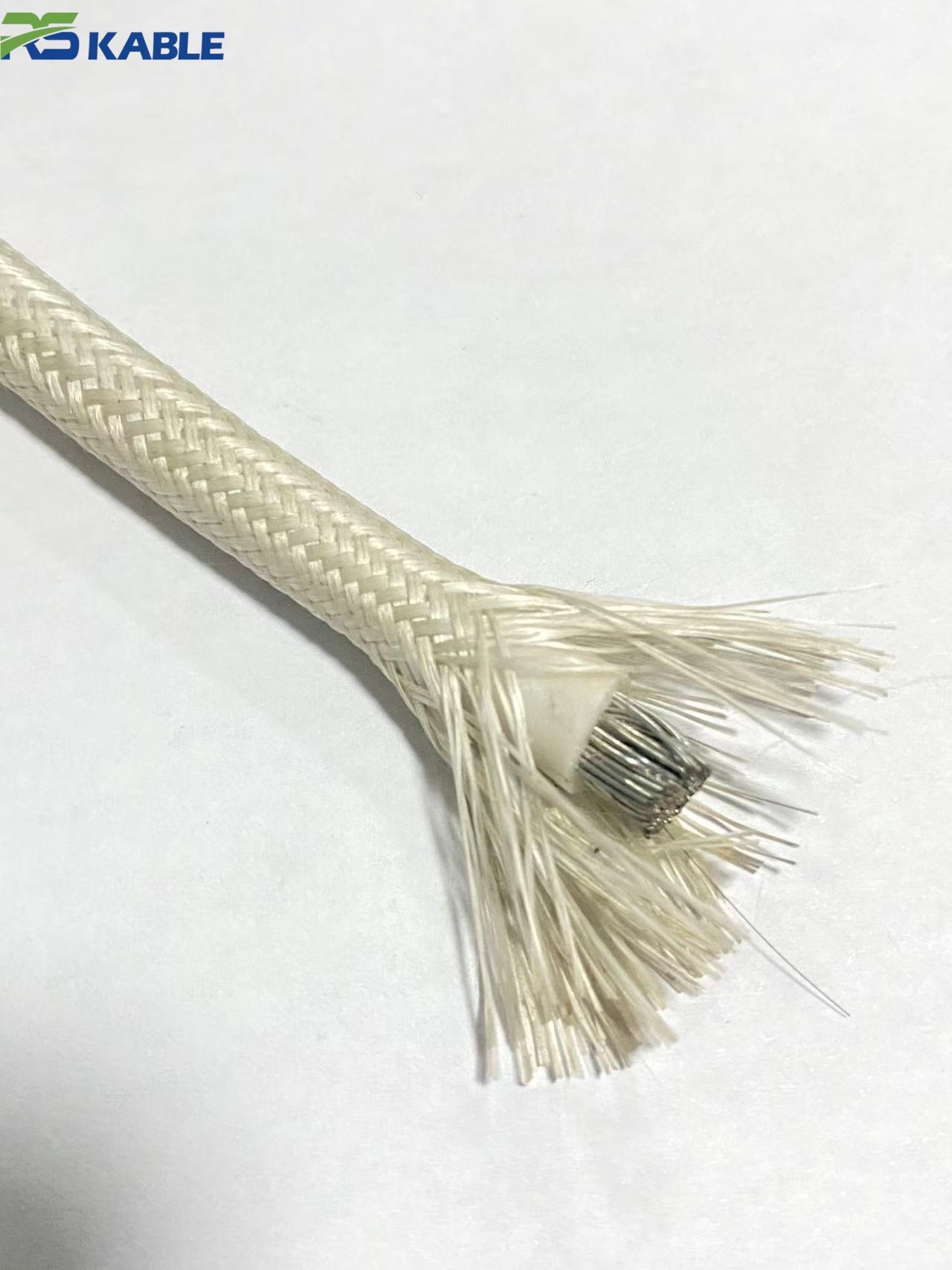
Shielding — for PTFE cable used in EMI-sensitive signal applications, shield material matters: standard tinned copper braid isn’t always suitable for the highest-temperature PTFE constructions, and nickel- or silver-plated braid is typically specified to match the insulation’s thermal capability.
Voltage rating — like any cable, PTFE cable carries a specific voltage rating that should be checked against your circuit’s actual requirements, separate from its temperature and chemical resistance properties.
Where Is PTFE Cable Used?
- Aerospace wiring — engine bay harnesses, avionics, and systems operating at temperature extremes
- Semiconductor manufacturing — process tool wiring exposed to high heat and aggressive chemicals
- Nuclear facility instrumentation — control and signal wiring in radiation-controlled areas, where PTFE’s chemical stability is a documented advantage
- Military and defense electronics — applications requiring maximum environmental resistance and flame safety
- Medical and laboratory equipment — chemical-resistant wiring in autoclaves and analytical instruments
- High-temperature test and measurement equipment — thermocouple extension wire and sensor cabling
PTFE Cable vs. Other High-Temperature Insulation
PTFE isn’t the only high-temperature insulation option, and it isn’t always the right one. FEP, a chemically related fluoropolymer, offers a lower but still substantial temperature ceiling at a meaningfully lower cost, and is often the more practical choice when an application’s temperature and chemical exposure don’t push all the way to PTFE’s upper limit. Silicone rubber, meanwhile, offers excellent flexibility and a wide temperature range but doesn’t match PTFE’s chemical resistance or dielectric performance.
The short version: PTFE earns its cost specifically at the extreme edge of temperature, chemical exposure, or radiation resistance requirements. For the details on exactly how PTFE and FEP differ — and how to tell which one your project actually needs — see our dedicated comparison, PTFE vs FEP Teflon Cable: What’s Actually the Difference?
Is PTFE Cable Worth the Cost?
PTFE cable typically carries a significant price premium over standard insulated wire, driven mainly by its labor- and equipment-intensive tape-wrapping manufacturing process. That premium is justified when your application genuinely requires PTFE’s specific combination of properties — sustained extreme heat, aggressive chemical exposure, radiation resistance, or precision dielectric performance.
It’s not worth the cost for general industrial wiring within standard temperature ranges, where PVC, standard rubber, or even FEP construction will perform adequately at meaningfully lower cost. The most common specification mistake with PTFE cable isn’t choosing the wrong grade — it’s specifying PTFE by default for anything described as “extreme,” without checking whether the actual operating conditions justify it.
Frequently Asked Questions
What is the maximum temperature for PTFE cable?
PTFE cable is commonly rated for continuous service around 260°C, among the highest continuous-service temperatures of any standard cable insulation material.
Is PTFE cable waterproof?
PTFE itself is highly water-resistant and doesn’t absorb moisture, but whether a specific PTFE cable construction is rated for submersion or direct burial depends on the overall cable design, including any jacket and sealing details — this should be confirmed for the specific product rather than assumed from the insulation material alone.
Can PTFE cable be used outdoors?
Yes. PTFE has excellent UV and weathering resistance, making it well suited to prolonged outdoor exposure without the degradation many other insulation materials experience over time.
Is PTFE cable flexible?
This depends on the specific construction. Tape-wrapped PTFE, commonly used for the highest-temperature applications, can have different flex characteristics than extruded PTFE or other flexible cable types, and dynamic flexing applications should confirm the specific construction’s flex rating rather than assuming general flexibility.
Why is PTFE cable more expensive than PVC or FEP cable?
Primarily because PTFE can’t be melt-extruded the way PVC and FEP can. Its manufacturing typically requires tape-wrapping or sintering, a slower and more labor-intensive process, which is directly reflected in the material’s higher cost.
What’s the difference between PTFE cable and Teflon cable?
They’re generally the same thing — Teflon is DuPont’s brand name, and PTFE is the technical name for the underlying polymer. In cable insulation specifically, “Teflon cable” is sometimes used loosely to refer to either PTFE or FEP, which are related but distinct materials with different temperature ceilings and manufacturing processes.
Does PTFE cable need special connectors or termination methods?
For high-temperature PTFE constructions, standard tin-plated connectors and shield materials may not match the insulation’s thermal capability. Nickel- or silver-plated hardware is generally recommended for the highest-temperature applications to avoid the termination becoming the weak point in an otherwise high-temperature-rated assembly.
PTFE cable is a genuine specialist material — the right choice when your application sits at the true extreme of temperature, chemical exposure, or radiation resistance, and an unnecessary expense when it doesn’t. If you’re not sure which side of that line your project falls on, our engineering team can help confirm the right construction before you order. Explore our Custom PTFE Cable line, built to project specification for nuclear, aerospace, and specialized industrial applications.
[Request a Quotation] · [Ask an Engineer Before You Spec It]