

Yes, some drones use fiber optic cables, but most still fly on radio. Two kinds rely on a cable: spool-fed fiber optic FPV drones, which unwind a hair-thin glass fiber in flight so their control and video links cannot be jammed, and tethered drones, whose cable carries power—and often data—up from the ground.
We manufacture tethered drone cables and fiber optic ROV tethers, so this guide answers the question from the cable side: which drones use fiber, why, whether they can be jammed, and which cable fits which job.
Quick facts
-
- Spool-fed fiber optic drones typically carry 5–20 km of fiber, and their range ends where the fiber ends.
- A battery drone flies about 20–30 minutes; a tethered drone on ground power can stay up for hours (Gore white paper).
- Tethered drones usually work on 50–100 m of cable, and some systems reach the FAA’s 122 m (400 ft) altitude limit (open-source tether study, PMC).
- Fiber optic links are immune to radio jamming, but the fiber can still be cut.
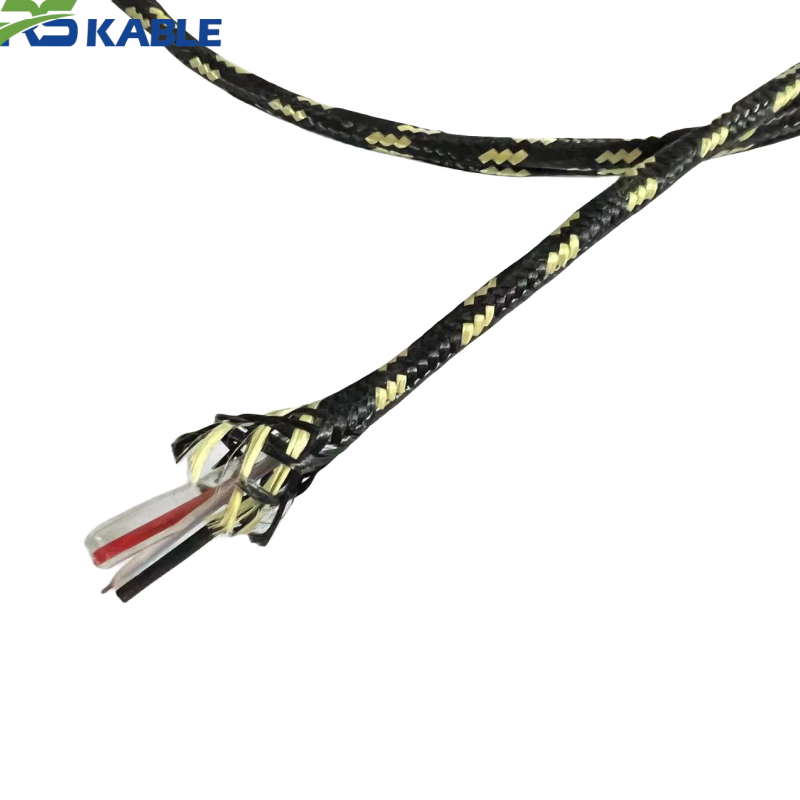
Tethered Drone Cable: High-Flex Power and Data Cable for UAV Systems
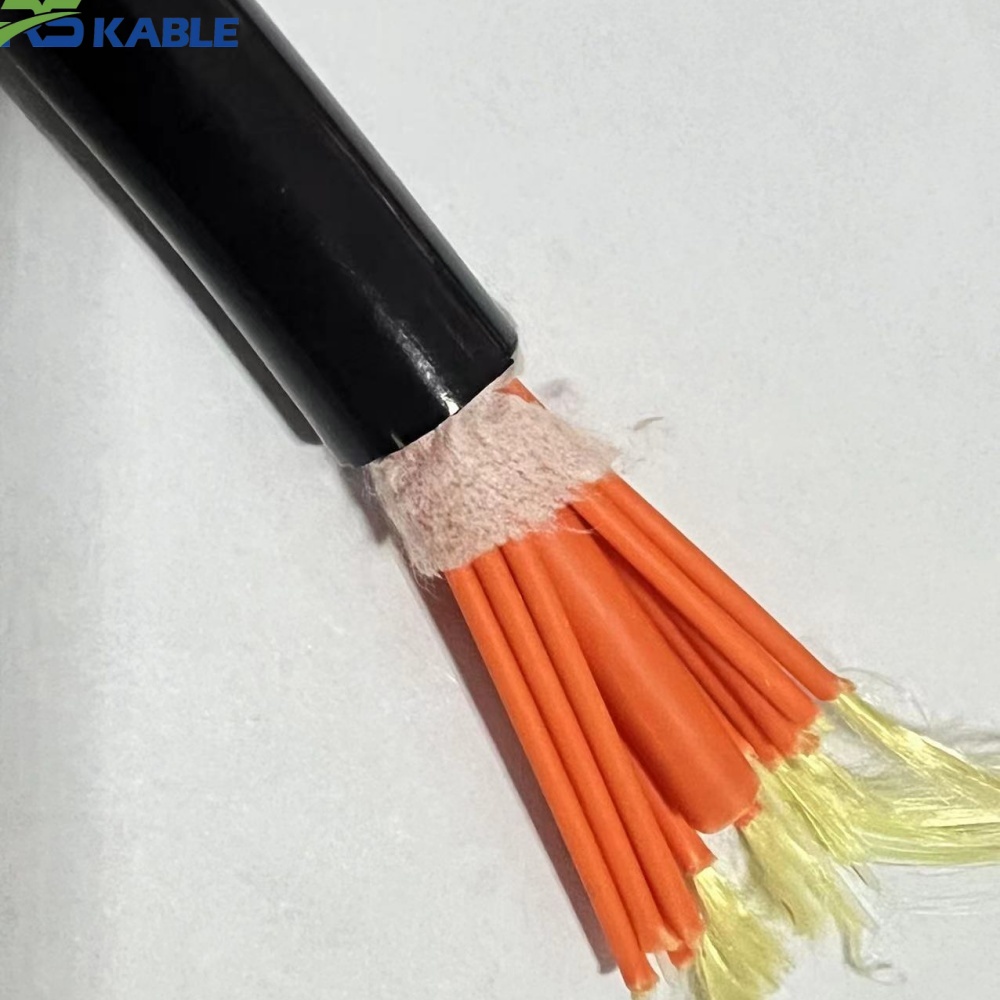
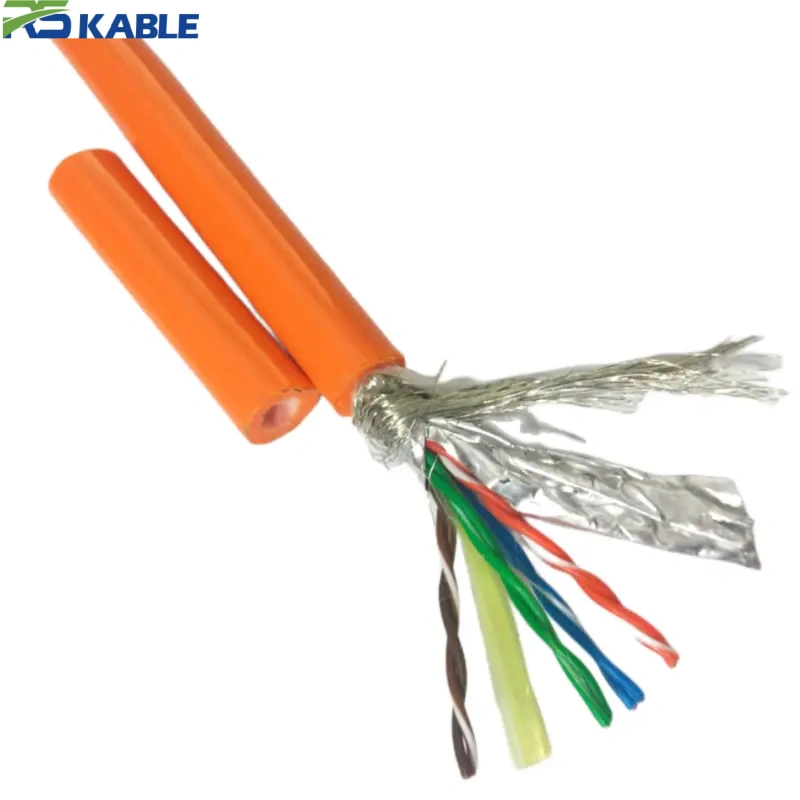
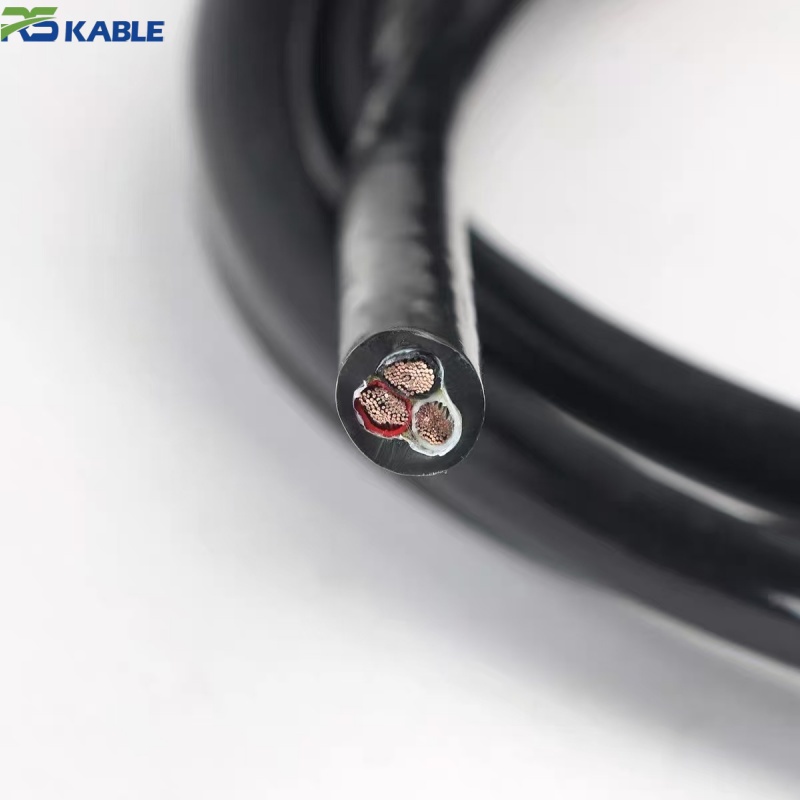
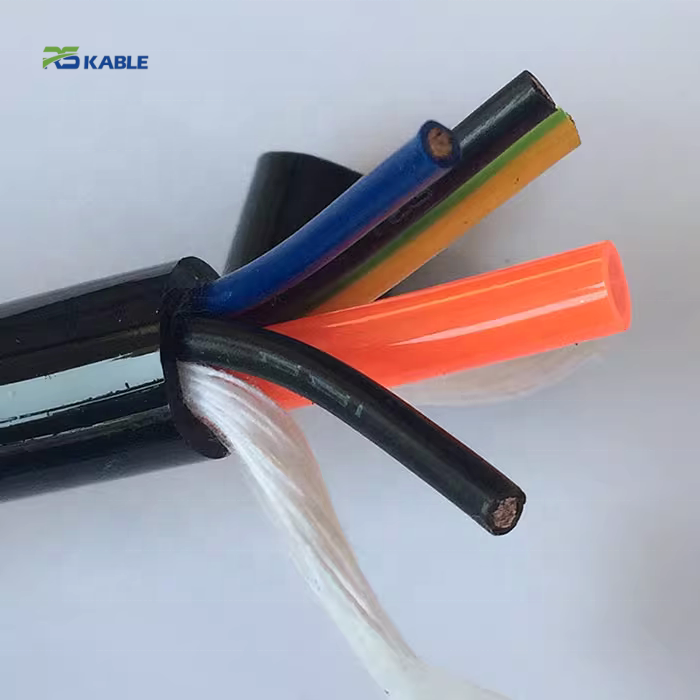
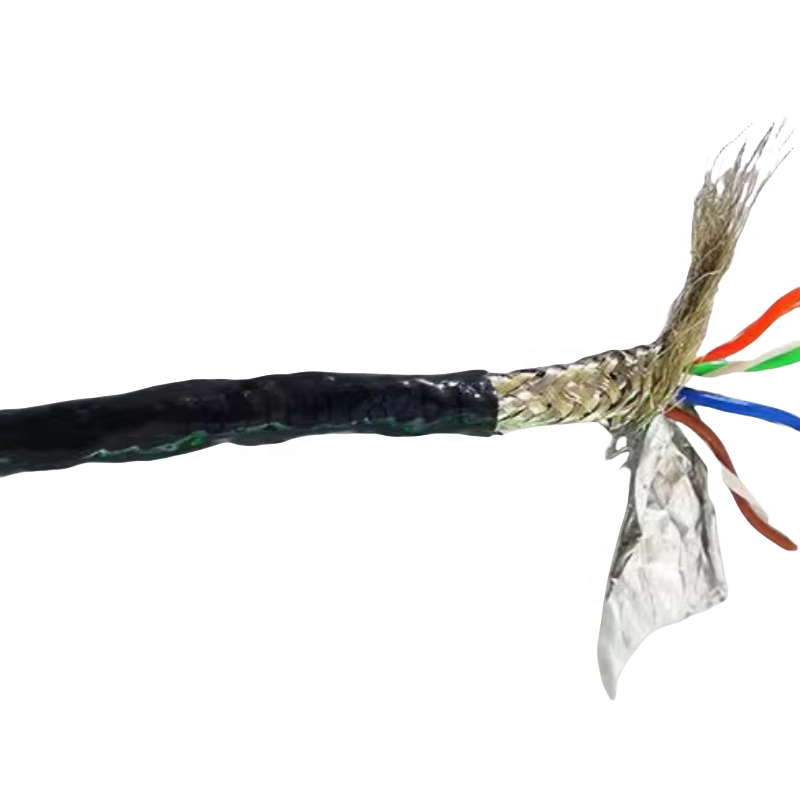
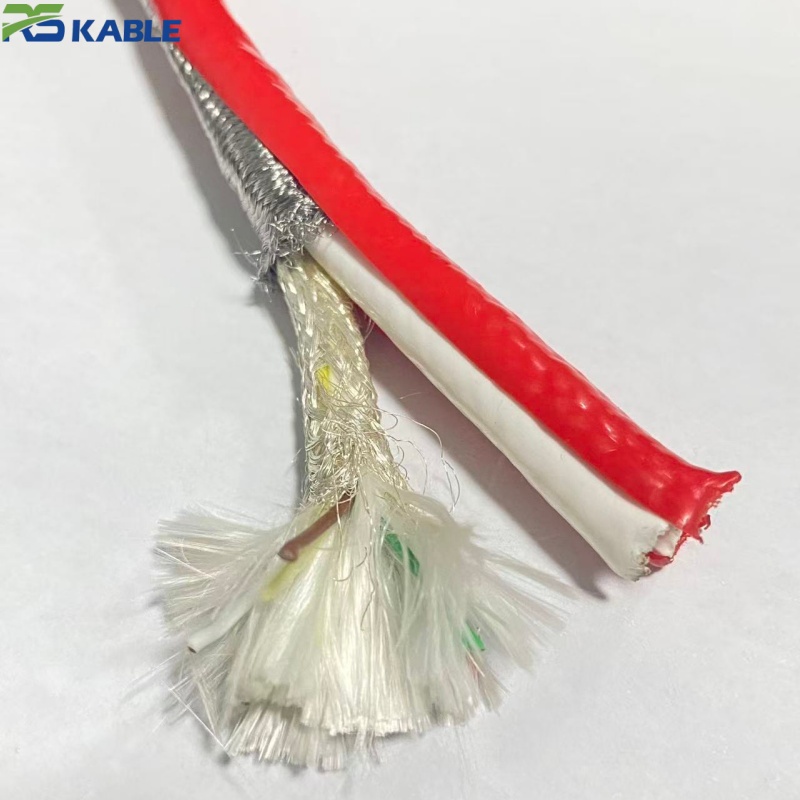
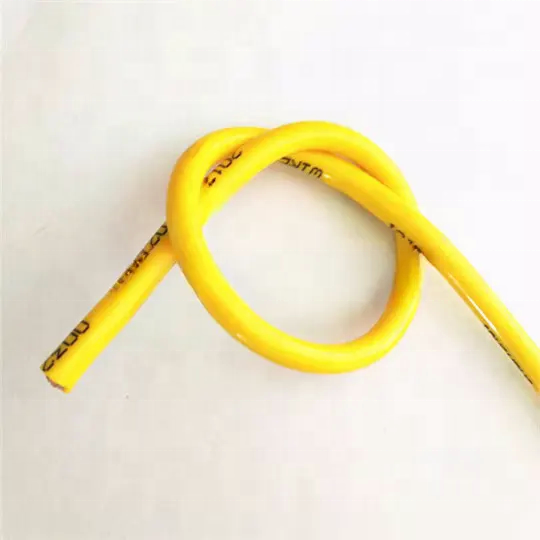
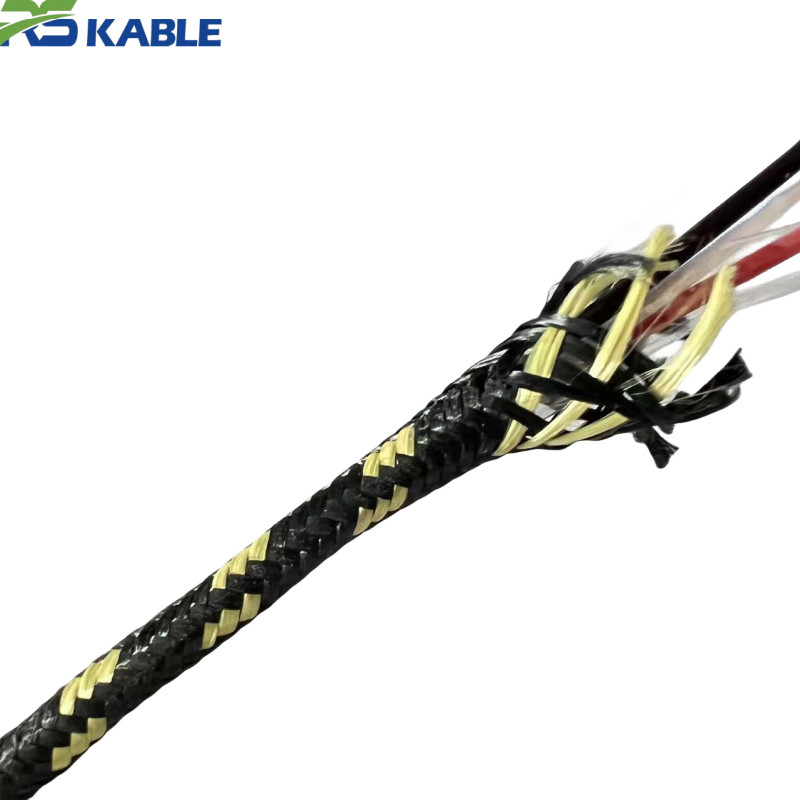
Delivers ground power and Ethernet, RS-485 or video data to tethered drones in one lightweight cable. Isolated cores keep power noise out of the data and video lines, an aramid strength member takes the tension, and the jacket is built for repeated reel winding. Available in copper and electro-optical hybrid versions.
Which Drones Use Fiber Optic Cables?
Three kinds of drones use cables: spool-fed fiber optic drones, tethered drones and underwater drones (ROVs). Only the first one depends on fiber alone; the other two use the cable mainly to deliver power, with fiber or copper for data.
| Spool-fed fiber optic drone | Tethered drone | Underwater drone (ROV) | |
|---|---|---|---|
| What the cable carries | Control signals and video only | Power, plus data over fiber or copper | Power, plus data over fiber or copper |
| Power source | Onboard battery | Ground station | Surface vessel or ground station |
| Typical cable length | 5–20 km of bare fiber | 50–100 m | Hundreds of meters or more |
| How it moves | Flies freely; fiber unwinds behind it | Hovers above one spot | Moves within the tether’s reach |
| Flight or dive time | Limited by battery | Hours on ground power | Continuous on surface power |
| Main uses | FPV missions where radio is jammed or blocked | Surveillance, broadcasting, temporary cell towers, site monitoring | Subsea inspection, offshore wind, oil and gas, aquaculture |
Do FPV drones use fiber optic cable? Most FPV drones use 2.4 GHz and 5.8 GHz radio, but a fast-growing share now fly on fiber. A fiber kit adds a spool and two optical converters to an otherwise normal FPV airframe. For the full signal path, see What Is a Fiber Optic Drone and How Does It Work?
Why Do Drones Use Fiber Optic Cable?
Drones use fiber optic cable because a glass fiber carries control and video signals that radio jammers cannot block, that give off no radio signal, and that stay clear where radio fails. Those three properties explain almost every fiber optic drone in use today.
- It cannot be jammed. Radio jammers flood the frequencies drones use. Light inside a fiber is unaffected, so the pilot keeps control and video all the way to the end of the flight.
- It has no radio signature. A radio drone can be located by direction finding the moment it transmits. A fiber optic drone emits nothing over the air; the U.S. Army’s Center for Army Lessons Learned describes these drones as difficult to detect in the electromagnetic spectrum (army.mil).
- It works where radio cannot. Tunnels, mines, dense forest, low-altitude flight behind hills and buildings all block radio. A fiber link does not need line of sight.
- It gives stable, high-bandwidth video. One single-mode fiber carries HD video and telemetry with almost no added latency and no breakup.
Why do military drones use fiber optic cable? Because modern battlefields are saturated with electronic warfare. When jammers stop most radio-controlled FPV drones, a fiber link is often the only control channel that still works.
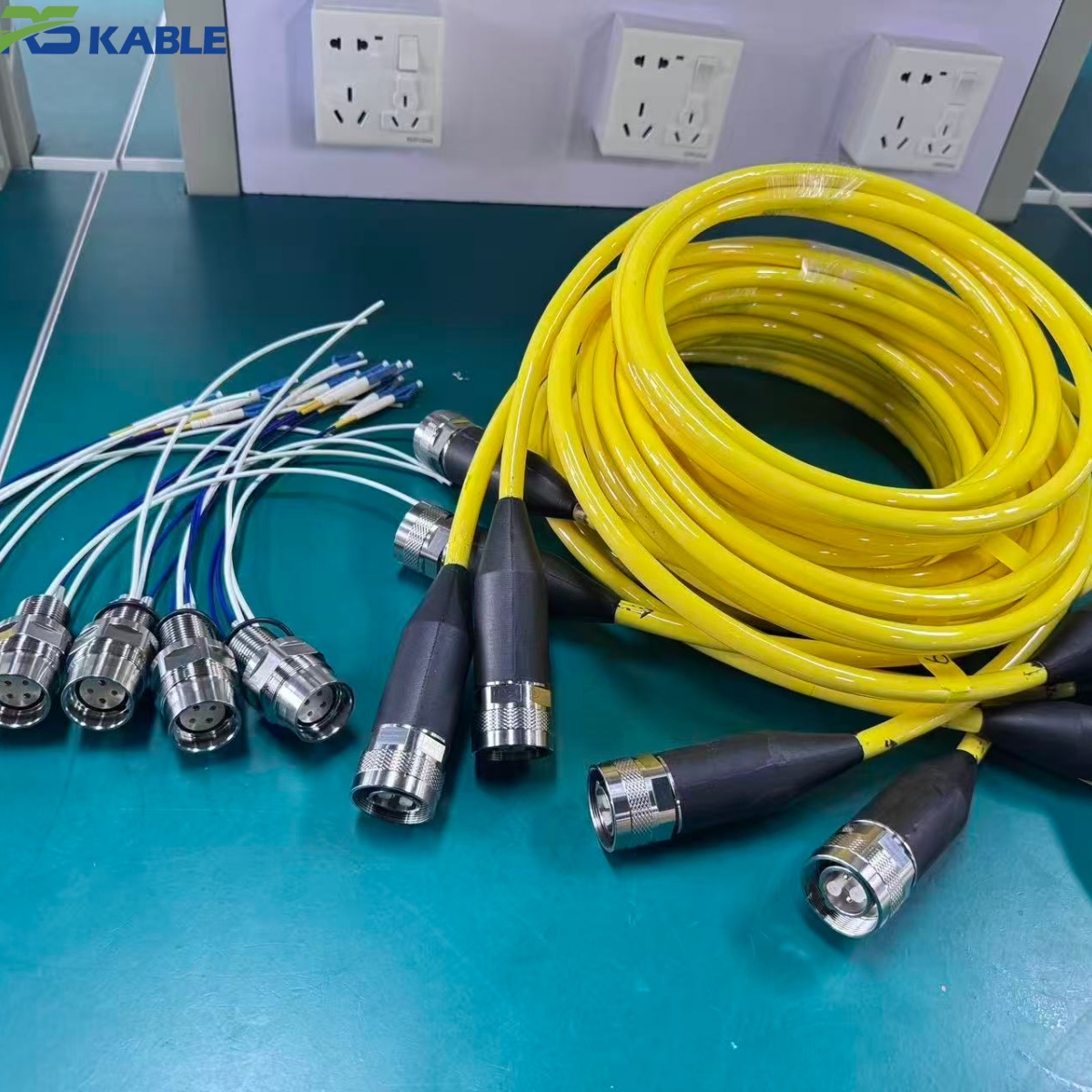
From the cable side: fiber also wins on distance. A copper RS-485 data pair is good for about 1,200 m at 100 kbps; a single-mode fiber carries far more data over many kilometers, weighs less per meter and picks up no electrical noise. That is why we use fiber for long ROV tethers and offer tethered drone cables in both copper and electro-optical hybrid versions.
Can Fiber Optic Drones Be Jammed?
No, a fiber optic drone cannot be jammed through its control link, because radio jammers have no effect on light traveling inside a glass fiber. It can still be stopped in other ways.
- Cutting or snagging the fiber. The fiber is thinner than a human hair. Trees, wires, vehicles and deliberate obstacles can break it, and when it breaks the pilot loses control and video at once. Wire and other obstacles strung across a route are now used specifically to catch and break the fiber.
- Physical barriers. Nets and screens stop the drone itself, whatever its link.
- Non-radio detection. Since there is no signal to intercept, defenders turn to radar, acoustic and optical sensors to spot fiber optic drones.
- GPS jamming does not matter much. Most fiber optic FPV drones are flown manually through the video feed, so they do not depend on satellite navigation.
In short, jamming immunity moves the weak point from the radio link to the cable itself—which is why fiber strength, coating and payout quality matter so much.
Why Do Drones Leave Fiber Optic Cable Behind?
Fiber optic drones leave cable behind because the spool rides on the drone and pays the fiber out as it flies; winding kilometers of fiber back in during flight is not practical. Once laid, the fiber stays where it fell.
Three design choices make this the normal outcome:
- The spool is on the aircraft. Releasing fiber from the drone, rather than pulling it from the ground, means the drone never drags the full length through trees or over rough ground.
- Rewinding adds weight and risk. A powered rewind mechanism would cost payload, and reeling fiber back in over terrain would snag it.
- Many missions are one-way. For short single-use flights, the fiber is treated as a consumable, much like fuel.
The result is kilometers of fine glass fiber left on the ground after each flight. That raises cost and cleanup concerns, while tethered systems avoid it by keeping the reel on the ground and recovering the cable after every flight.
Fiber Optic Drone vs Tethered Drone: Which Cable for Which Job?
Choose a fiber optic drone when the aircraft must travel kilometers through jammed or blocked radio; choose a tethered drone when it must hover over one spot for hours. The cable decides the mission.
Choose a spool-fed fiber optic drone when:
- the drone must fly several kilometers away from the pilot;
- radio is jammed, crowded or blocked by terrain;
- a battery-length flight is enough.
Choose a tethered drone when:
- you need persistent overhead coverage for hours, such as security, events, broadcasting or a temporary cell tower;
- the drone stays within roughly 100 m of its ground station;
- the cable must carry power as well as data.
What a tethered drone cable has to do
A tethered drone cable—sometimes searched as a tension cable for drones—must deliver power, carry data and survive constant pulling, all while staying light enough to lift.
- High-voltage DC power. Tethered systems typically run high-voltage DC so the conductors can stay thin and light. The math is simple: delivering 600 W at 300 V takes 2 A, while the same power at 24 V takes 25 A and far thicker, heavier copper.
- Low weight. Every gram per meter matters: at 20 g/m, 100 m of tether adds 2 kg that the drone has to lift.
- A data path. Fiber for high-bandwidth video, or shielded twisted pair or coax where copper is enough.
- A strength member. Aramid takes the tension so the conductors do not.
- Flex life. The cable is wound on and off a reel and moves in the wind on every flight.
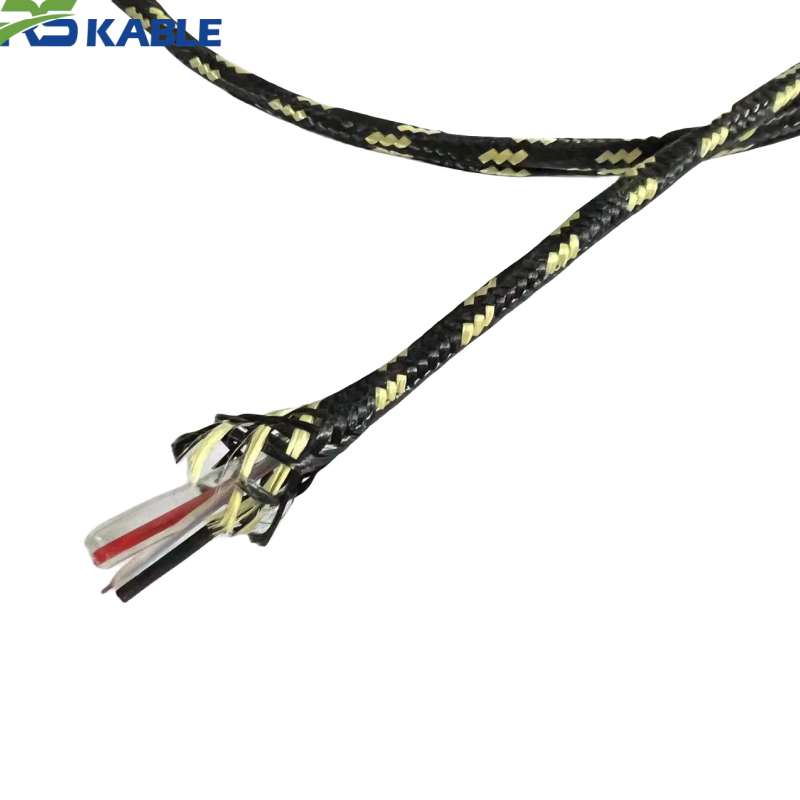
Our tethered drone cable (RST-TDC-UAV series) comes in two builds. The copper version combines fine-stranded tinned copper power cores with a shielded twisted pair for Ethernet or RS-485, or a coax for video. The electro-optical hybrid version adds optical fiber for high-bandwidth video and data alongside the power cores. Both are built around an aramid strength member sized to your load. Conductor size is set by a voltage-drop calculation for your length, current and voltage.
Building a tethered UAV system? See the tethered drone cable or request a quotation with your tether length, power and data needs, copper or fiber.
FAQ
Do all drones use fiber optic cables?
No. Most consumer, commercial and FPV drones use radio. Fiber optic cable is used only where radio is jammed, blocked or not allowed, or where a tether must carry high-bandwidth data.
Do fiber optic drones have cables?
Yes. A fiber optic drone stays connected to its pilot through one hair-thin optical fiber for the whole flight. The fiber carries signals only; the drone still runs on its own battery.
Why are drones using fiber optic cable now?
Electronic warfare has made radio links unreliable on modern battlefields since 2024, and bend-insensitive fiber is now light and cheap enough to carry kilometers of it on a small drone.
How long are drone fiber optic cables?
Spools for fiber optic FPV drones commonly hold 5–20 km of fiber. Tethered drone cables are much shorter, usually 50–100 m, because they carry power and the drone hovers near its ground station.
Can a tethered drone use fiber optic cable?
Yes. Many tethered systems combine copper power conductors with optical fiber for video and data in a single hybrid cable. Our RST-TDC-UAV series is available in this electro-optical hybrid version.
The Bottom Line
Some drones do use fiber optic cables. Spool-fed fiber optic drones use them to fly beyond the reach of radio jammers, while tethered drones use cables to stay in the air for hours on ground power. Either way, the cable is what makes the mission possible—and its weight, strength and flex life decide how well the drone performs.
If you are designing a tethered UAV or need a custom power-and-data tether, talk to our cable engineers.
Last updated: November 2026