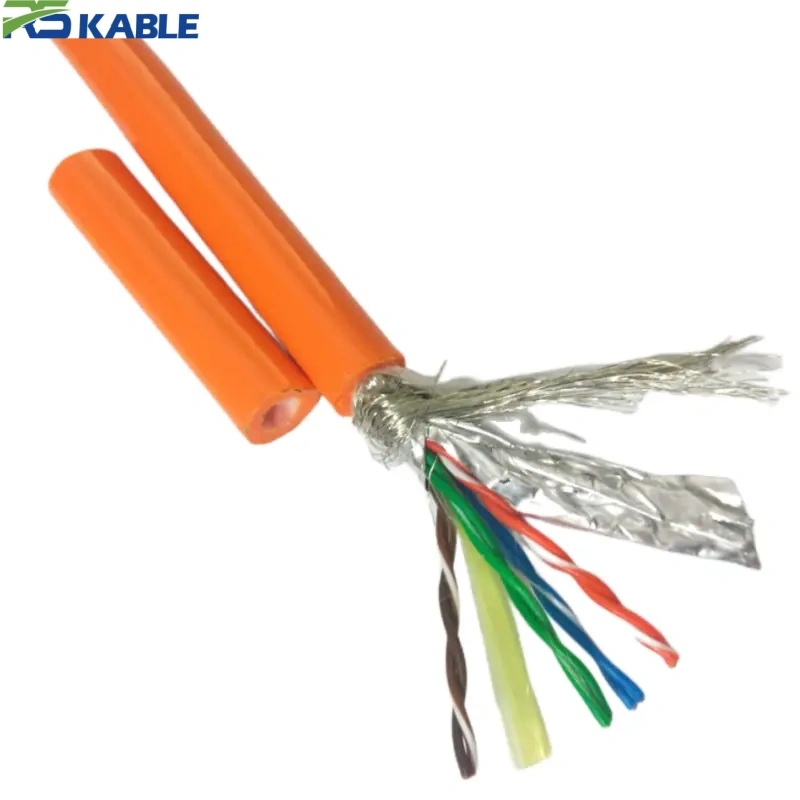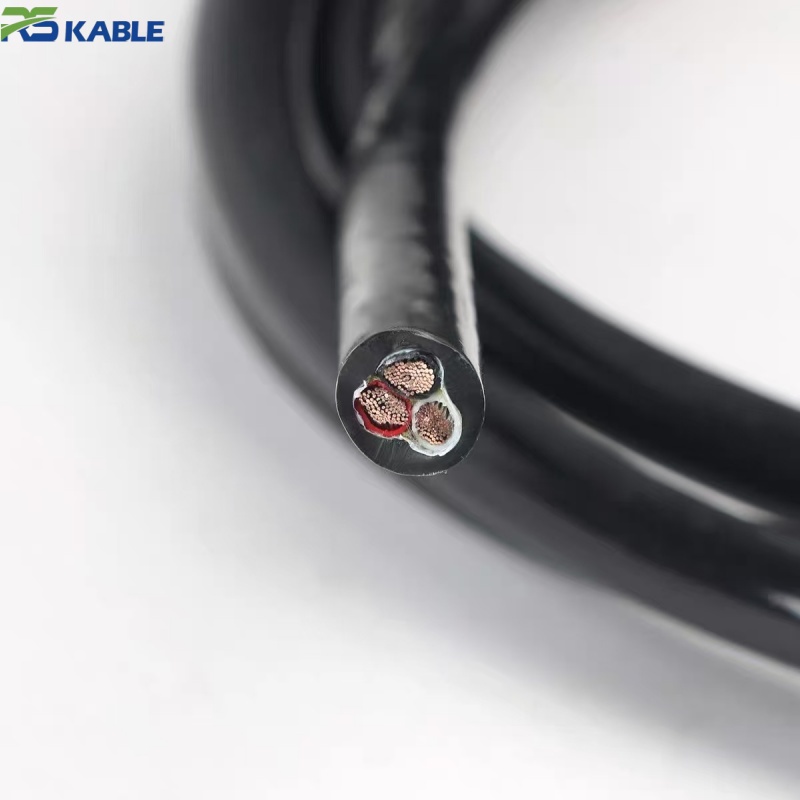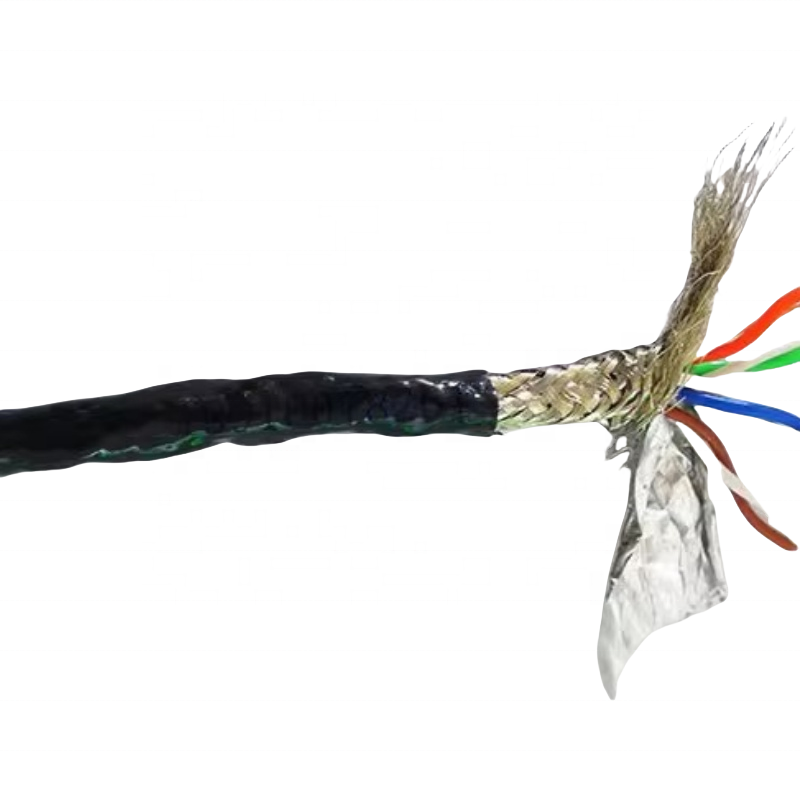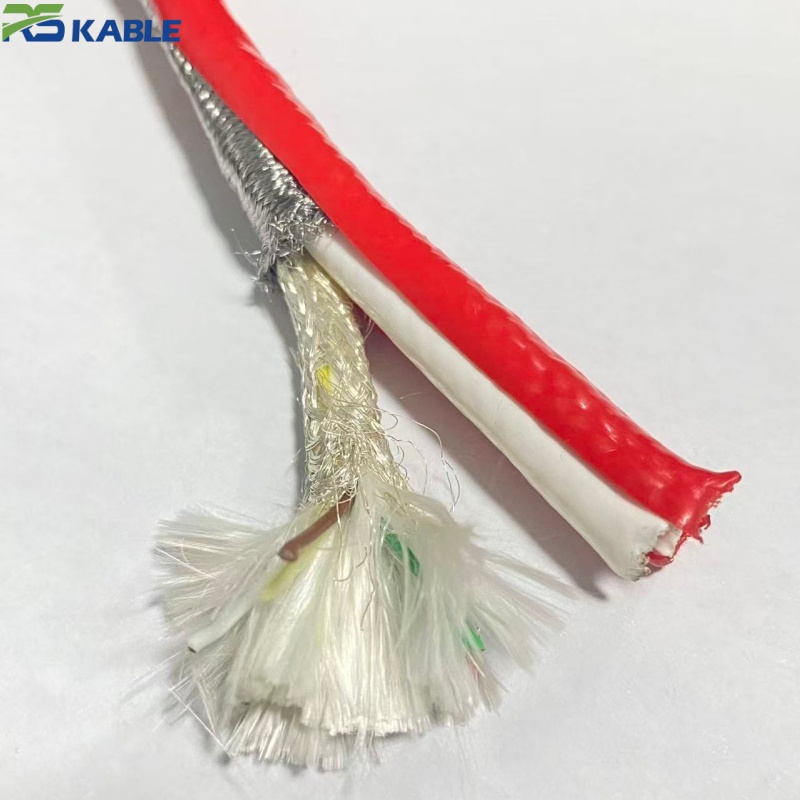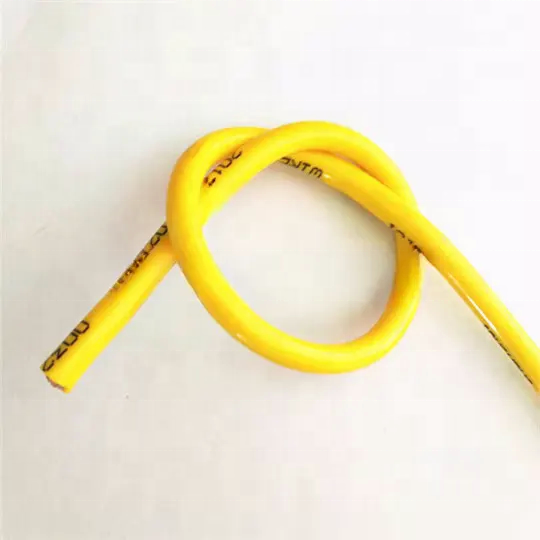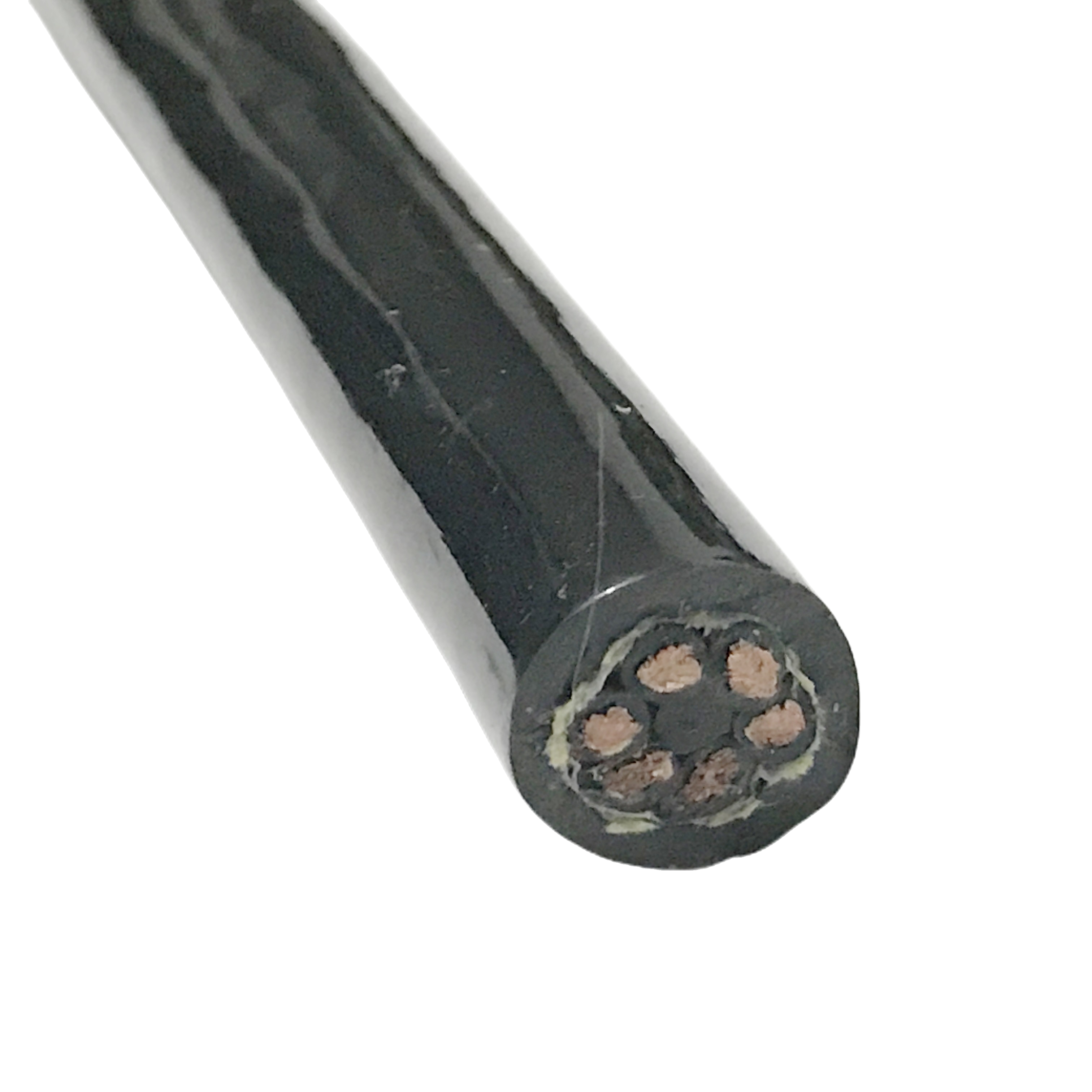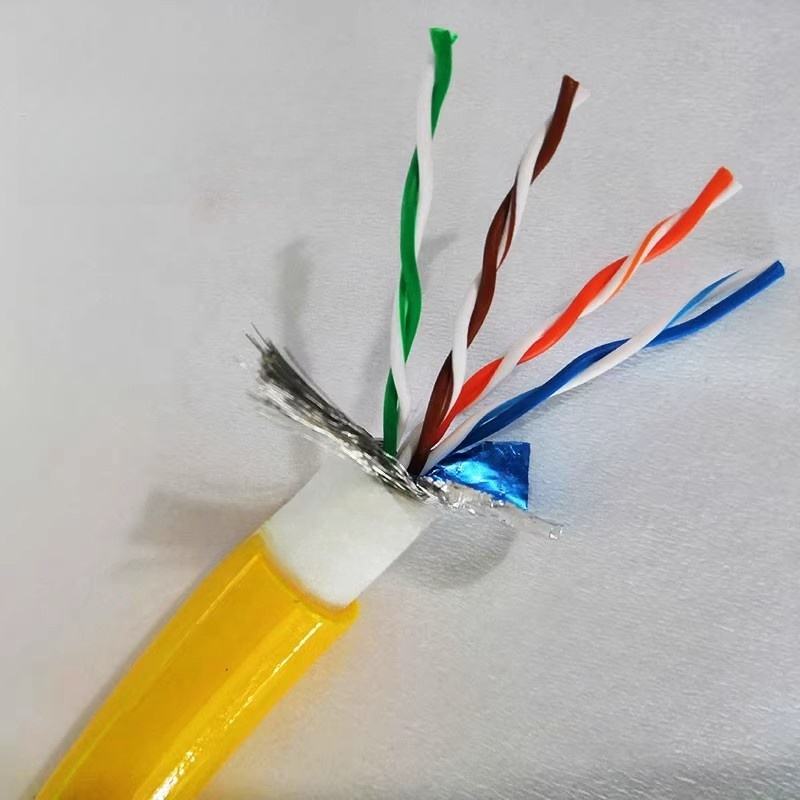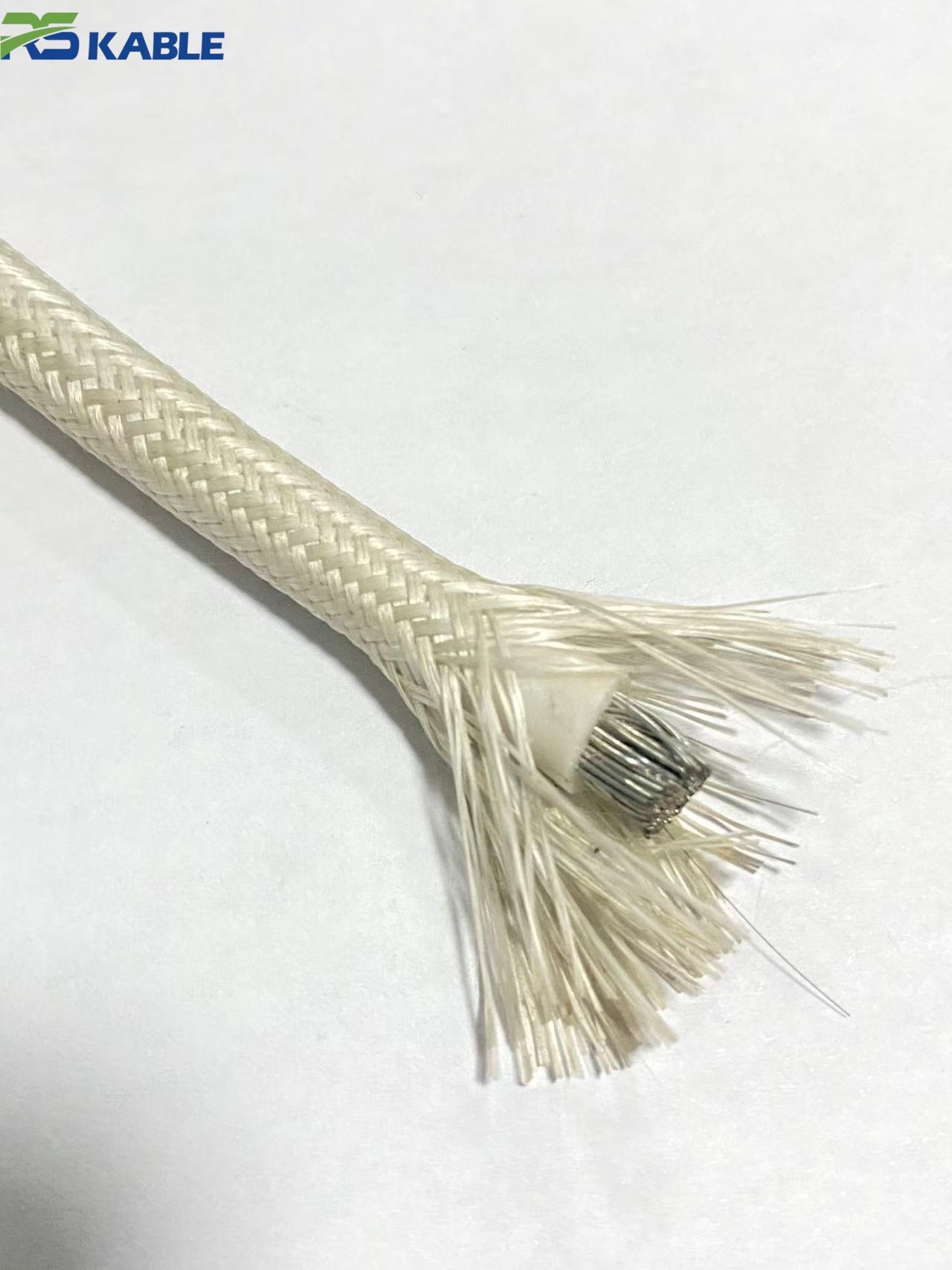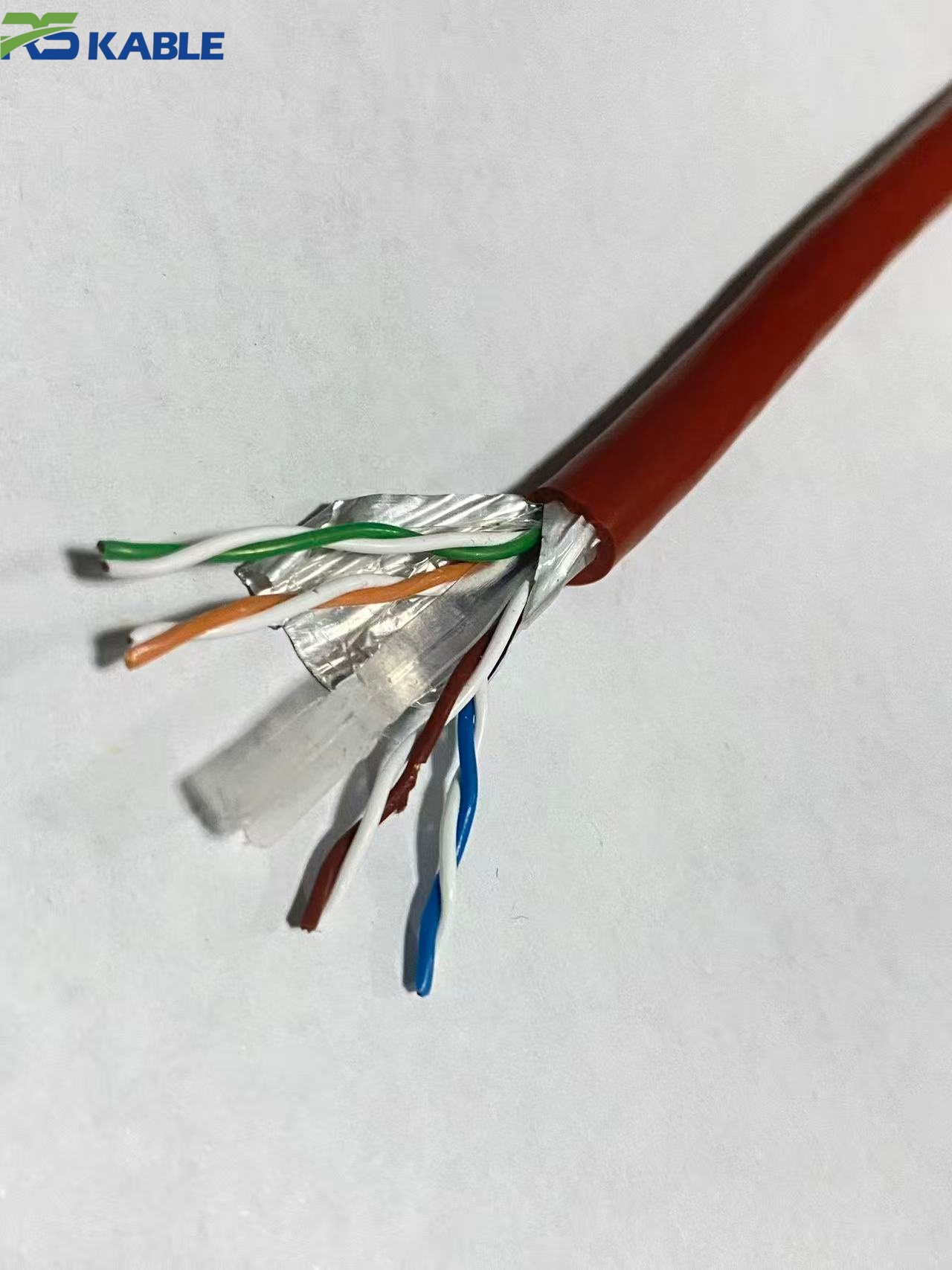


A cable with air tube combines electrical conductors and one or more pneumatic tubes inside a shared cable construction. It can carry power, control signals, sensor data and compressed air through one managed connection. This can simplify routing on automated machinery, robot end effectors, handling systems, process equipment and other installations where electrical and pneumatic services move together.
The correct design cannot be selected from conductor size or tube diameter alone. The electrical load, airflow, working pressure, temperature, motion, bend radius, chemical exposure and termination method all affect reliability. A purpose-designed hybrid cable should therefore be specified as one electromechanical and pneumatic system.
Engineering note: The values required for a final design must come from the actual equipment, tube and cable data. Pressure ratings, conductor ampacity, bend radius and compliance cannot be assumed from a generic construction. The machine designer, cable manufacturer and pneumatic-system engineer should approve the final specification.
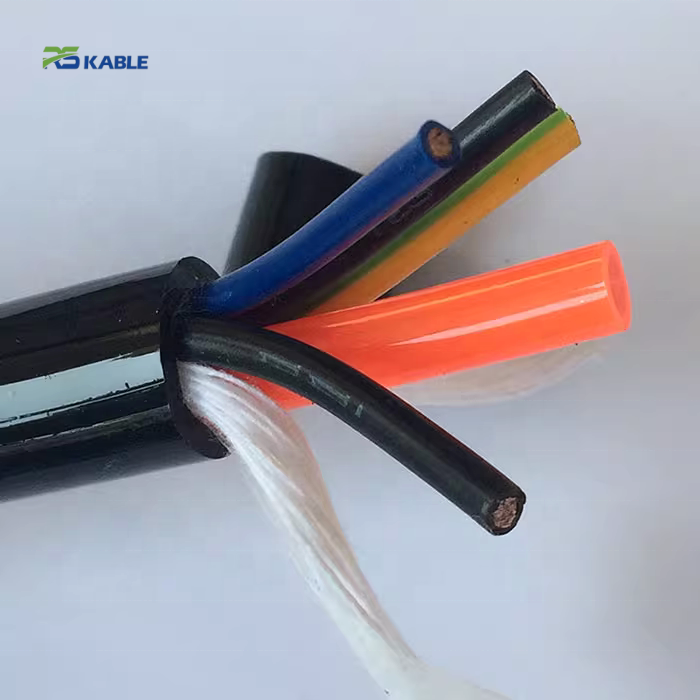
What Is a Cable with Air Tube?
A hybrid electrical and pneumatic cable normally contains some combination of:
- power conductors for motors, valves, heaters or other loads;
- control conductors for solenoids, switches and actuators;
- twisted pairs for sensors or low-level signals;
- shielding for electromagnetic compatibility;
- one or more tubes for compressed air, vacuum or another approved medium;
- fillers, tensile members and separator layers;
- an outer jacket selected for the mechanical and environmental duty.
The pneumatic tube remains a separate pressure path inside the cable. It should not share its internal space with the conductors. At each end, a controlled breakout separates the electrical elements from the tube so that suitable electrical connectors and pneumatic fittings can be installed.
This construction may also be described as a cable with air hose, pneumatic hybrid cable, composite cable with pneumatic tube or electrical-pneumatic umbilical. The terminology varies by industry, so a technical specification is more reliable than a product name alone.
When Does a Cable with Air Tube Make Sense?
A cable with an integrated air tube is useful when electrical and pneumatic services follow the same route and experience the same movement. Common applications include:
- automated assembly and packaging machines;
- pick-and-place systems and robot grippers;
- pneumatic cylinders and valve manifolds;
- welding and material-handling equipment;
- sensor heads and air-purge instruments;
- level-measurement or pressure-sensing equipment;
- drag chains, gantries and linear axes;
- mobile tools and customized machine umbilicals.
Combining services can reduce the number of separate components, improve cable management and make installation more repeatable. It may also reduce snagging and uncontrolled rubbing between a cable and a separate hose.
However, an integrated construction is not automatically the best option. Separate components can be preferable when the air line needs frequent replacement, the electrical and pneumatic routes differ, the tube must have a very large bore, or maintenance teams require independent disconnection. The decision should consider total installation and maintenance cost, not cable price alone.
Nine Parameters That Determine the Correct Design
1. Electrical functions and load
List every electrical circuit before choosing the cable construction. Record the operating voltage, continuous current, peak or inrush current, number of conductors, grounding requirements and allowable voltage drop.
For a two-conductor DC circuit, both the outgoing and return conductors contribute to voltage drop:
Vdrop = I x Rloop
Rloop = 2 x rho x L / A
where L is the one-way length and A is conductor cross-sectional area. Final sizing should use the cable manufacturer’s conductor resistance at the expected operating temperature. AC, motor and converter-fed systems may also require impedance, power factor, harmonics and starting-current analysis.
Ampacity and voltage drop are separate checks. A conductor can remain below its thermal limit and still deliver insufficient voltage to the load.
2. Signal integrity and shielding
Identify analog, digital, encoder, Ethernet or fieldbus signals separately from ordinary control wiring. Low-level signals may require twisted pairs, individual shields or an overall braid. High-current and variable-frequency-drive circuits can generate interference that affects nearby data channels.
The presence of a nonmetallic air tube does not provide electrical shielding. Pair geometry, shield coverage, drain-wire design, grounding and the separation between power and signal elements must be engineered for the application.
3. Pneumatic medium
State exactly what the tube will carry. Clean, dry compressed air is common, but some systems use vacuum, inert gas or another process medium. Tube compatibility must be checked against:
- the conveyed medium;
- compressor oil or lubricants;
- moisture and cleaning chemicals;
- ambient temperature;
- required cleanliness and permeability.
A tube approved for compressed air is not automatically suitable for oxygen, aggressive chemicals, food contact, medical service or safety-critical gas. These applications require material-specific approval.
4. Working pressure, surge pressure and vacuum
Specify normal working pressure, maximum regulator setting, possible surge pressure and the required design margin. Tube pressure capability usually decreases as temperature increases and may also be affected by repeated bending, fittings and ageing.
Working pressure and burst pressure are not interchangeable. The final rating should follow the tube manufacturer’s pressure-temperature data and the safety rules applicable to the pneumatic system. For vacuum service, verify resistance to collapse as well as fitting integrity.
5. Tube inside diameter and airflow
The tube outside diameter helps determine cable size, but the inside diameter controls flow capacity. A tube can have an adequate pressure rating and still be too restrictive for the required actuator speed.
Airflow and pressure loss depend on:
- tube inside diameter and length;
- supply pressure and required downstream pressure;
- air consumption and peak flow;
- valves, fittings, bends and restrictions;
- temperature and acceptable response time.
Use verified pneumatic sizing data or calculation software for the complete circuit. Do not select a tube solely by matching the port thread or nominal outside diameter.
6. Tube material
The tube material influences pressure rating, flexibility, chemical resistance and minimum bend radius.
| Tube material | Typical strengths | Points to verify |
|---|---|---|
| Polyurethane (PU) | Flexible, abrasion resistant and suitable for compact moving assemblies | Pressure derating at elevated temperature, hydrolysis resistance and medium compatibility |
| Polyamide (PA/nylon) | Good pressure capability, low gas permeability and dimensional stability | Greater stiffness, larger dynamic bend requirement and low-temperature behavior |
| PTFE or PFA | Broad chemical and temperature capability | Higher cost, bend behavior, fitting selection and suitability for repeated motion |
| TPE-based tube | Flexible and adaptable to special environments | Exact compound, pressure data and long-term flex performance |
Material names alone are not enough. Two compounds in the same family can have different pressure and flex ratings.
7. Motion profile
Classify the installation accurately:
- fixed installation;
- occasional flexing;
- continuous drag-chain travel;
- torsional robot motion;
- reeling or winding;
- suspended or tensile service.
A standard flexible cable is not necessarily a continuous-flex cable. For moving applications, provide travel distance, speed, acceleration, cycles, bend direction, minimum bend radius and whether the cable slides or runs unsupported. Torsion and bending should not be treated as the same motion.
The tube must remain open through the tightest dynamic bend. A construction that electrically survives repeated motion can still fail if the tube kinks, migrates or pulls out of the breakout fitting.
8. Jacket and environmental exposure
The outer jacket protects both the conductors and pneumatic tube. Common choices include:
- PVC for many indoor and cost-sensitive installations;
- PUR or TPU where abrasion, oil exposure and dynamic movement are important;
- TPE compounds for selected flex, temperature or environmental requirements;
- halogen-free compounds where smoke and corrosive-gas requirements apply.
Document exposure to oil, coolant, UV, ozone, water, cleaning agents, welding spatter, low temperature, high temperature and outdoor weathering. Terms such as “oil resistant” or “water resistant” should be tied to a defined material, test method and exposure condition.
9. Breakout, fittings and strain relief
Most field failures occur at interfaces rather than in the middle of a cable. The breakout should prevent pulling, crushing and repeated bending from reaching conductor terminations or pneumatic fittings.
Confirm:
- breakout length at both ends;
- electrical connector or flying-lead arrangement;
- pneumatic fitting type and tube preparation;
- strain-relief and clamp position;
- sealing or ingress-protection requirement;
- minimum distance from the dynamic bend zone;
- replaceability and maintenance access.
The tube should not be pinched by a cable gland designed only for electrical conductors. Likewise, the conductors should not carry the mechanical load of the pneumatic fitting.
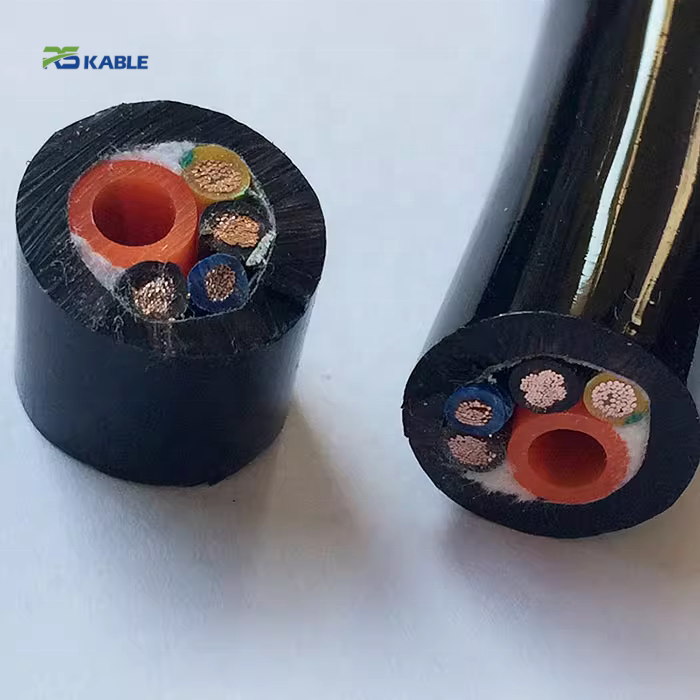
Choosing the Outer Cable Construction
The internal layout should keep the cable balanced during motion. Conductors, pairs and tubes of very different diameters can create an asymmetric construction that twists or bends unevenly. Fillers, separators and a suitable lay length help maintain a round profile and reduce internal movement.
For dynamic applications, the design may also require:
- fine-stranded conductors;
- low-friction wrapping layers;
- tensile or anti-torsion elements;
- pressure-resistant tube positioning;
- optimized conductor and tube lay;
- a tightly controlled jacket extrusion process.
These details cannot be confirmed from an external photograph. A cross-sectional drawing, material specification and qualification test plan are more useful purchasing documents.
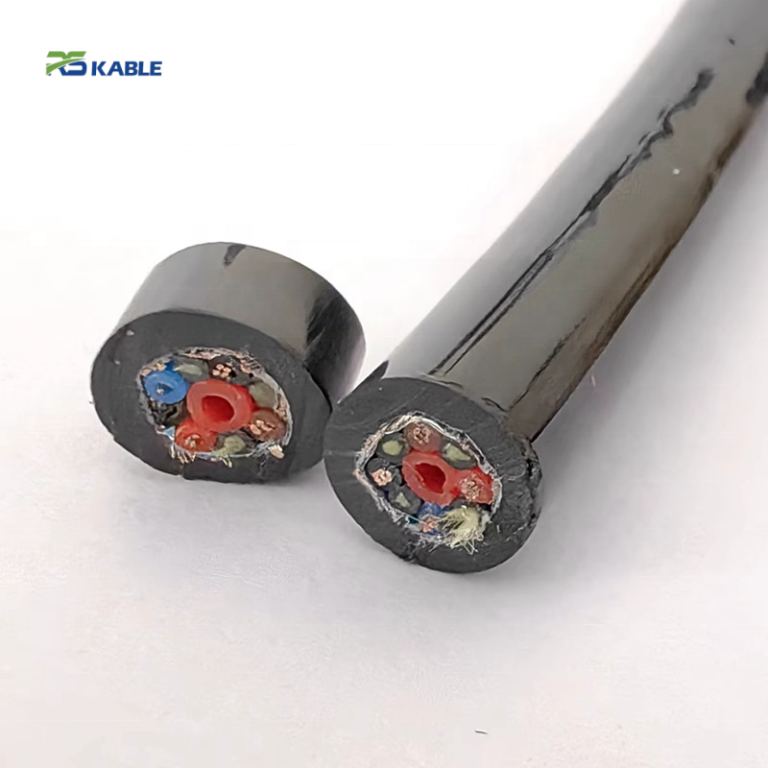
Cable with Air Tube vs. Separate Cable and Hose
| Decision factor | Integrated hybrid cable | Separate cable and hose |
|---|---|---|
| Routing | One managed path | More routing components |
| Installation | Faster when the assembly is pre-engineered | Easier to source individual components |
| Dynamic behavior | Components move as one engineered system | Cable and hose may rub or move differently |
| Replacement | Entire assembly may need replacement | Individual component can be replaced |
| Customization | High; construction can match the machine | High flexibility during field installation |
| Termination | Requires a controlled breakout | Standard fittings and connectors may be simpler |
| Space | Often compact and organized | Can require a larger carrier or more clamps |
Neither arrangement is universally better. The correct choice follows the machine architecture and maintenance strategy.
Minimum Information for a Custom Cable Specification
Use the following checklist when requesting a quotation:
| Category | Required information |
|---|---|
| Application | Machine type, function and installation environment |
| Length | Finished length, tolerance and quantity |
| Electrical power | Voltage, continuous current, peak current and conductor size |
| Control and data | Core count, pair count, signal type, impedance and shielding |
| Pneumatics | Medium, normal pressure, maximum pressure and peak flow |
| Tube | Quantity, inside diameter, outside diameter and preferred material |
| Motion | Fixed, flexing, drag chain, torsion or reeling |
| Dynamic data | Travel, speed, acceleration, bend radius and target cycles |
| Environment | Temperature, oil, coolant, chemicals, UV, water and abrasion |
| Mechanical | Tensile load, crush risk, available installation space and target diameter |
| Termination | Connector, fitting, breakout, gland and strain-relief requirements |
| Compliance | Market, machine standard, flame test and documentation required |
Providing this information early prevents a supplier from proposing a construction that fits physically but fails electrically, pneumatically or mechanically.
Validation Tests to Request
Qualification should reflect the real duty. Depending on the design, useful checks can include:
- conductor resistance, insulation resistance and high-voltage testing;
- shield continuity and signal-performance testing;
- tube proof-pressure and leakage testing;
- flow or pressure-drop verification at the specified length;
- dynamic bending or torsion testing at the required radius;
- dimensional, jacket and conductor inspection;
- tensile, crush, abrasion or chemical-resistance testing;
- complete-assembly inspection after termination.
For a moving cable, a flex-cycle number is meaningful only when the test radius, travel, speed, acceleration, load, temperature and failure criteria are also stated.
Applicable Standards and Documentation
Standards depend on the machine, market and cable construction. Relevant references may include IEC 60228 for conductor classes, ISO 4414 for general pneumatic-system safety principles, NFPA 79 for industrial machinery in applicable North American projects, and product-specific IEC or UL requirements for flame, wiring and cable performance.
These references do not automatically certify a finished hybrid cable. Ask the supplier to identify which exact standard, edition, test method and product scope apply. Where certification is required, verify the certificate or file number against the proposed construction rather than relying on a logo or a general statement.
Common Specification Mistakes
- Selecting the tube by outside diameter only. Flow depends primarily on the available inside diameter and complete circuit restriction.
- Using burst pressure as the working rating. A safe continuous rating must include temperature and application conditions.
- Treating a flexible cable as a drag-chain cable. Continuous motion requires a purpose-designed and tested construction.
- Ignoring voltage drop. Long runs can reduce voltage at valves, sensors and actuators even when ampacity is adequate.
- Mixing power and sensitive signals without an EMC plan. The pneumatic tube does not provide electrical separation or shielding.
- Leaving the breakout undefined. Incorrect strain relief can cause tube leakage and conductor fatigue.
- Requesting “oil resistant” without naming the oil and exposure. Material compatibility depends on the actual chemical and temperature.
- Comparing cycle-life claims without test conditions. The number alone does not describe real performance.
Frequently Asked Questions
Can electrical wires and an air tube be placed in the same cable?
Yes, when the assembly is designed so the pneumatic tube remains a separate pressure path and the electrical elements meet the required insulation, temperature and mechanical conditions. The complete construction and its terminations must be evaluated for the intended machine and market.
Can a cable with air tube be used in a drag chain?
Yes, but only if the conductor stranding, tube material, internal lay, jacket and breakout are designed for continuous motion. The required travel, speed, bend radius and cycle target must be provided to the manufacturer.
Which tube material is best for a pneumatic hybrid cable?
There is no universal best material. PU is often selected for flexibility and abrasion resistance, while PA can provide higher stiffness and low permeability. PTFE or PFA may be appropriate for certain chemicals or temperatures. Actual pressure-temperature and flex data should control the choice.
How is the correct air-tube size calculated?
Start with required flow, tube length, supply pressure, minimum downstream pressure, actuator demand and all fittings or valves. Use verified pneumatic sizing data for the complete circuit. Port size alone is not enough.
Can the same construction carry vacuum or liquids?
Possibly, but only after checking tube collapse resistance, chemical compatibility, permeability, cleanliness, fittings and regulatory requirements. A compressed-air rating should not be assumed to cover vacuum or liquid service.
What causes premature failure?
Common causes include an undersized bend radius, tube kinking, poor strain relief, incompatible chemicals, excessive pressure at temperature, conductor fatigue, abrasion and uncontrolled movement at the breakout.
Final Selection Advice
A reliable cable with air tube should be selected from the complete duty cycle, not from a catalog image or a short description. Define the electrical circuits, air demand, pressure, tube material, motion, environment and termination method first. Then ask the manufacturer to document the construction, ratings and validation plan.
To request a custom hybrid electrical and pneumatic cable quotation, provide the specification checklist above together with a machine drawing or routing sketch. Clear operating data allows the supplier to propose a cable that is practical to manufacture, install, terminate and maintain.