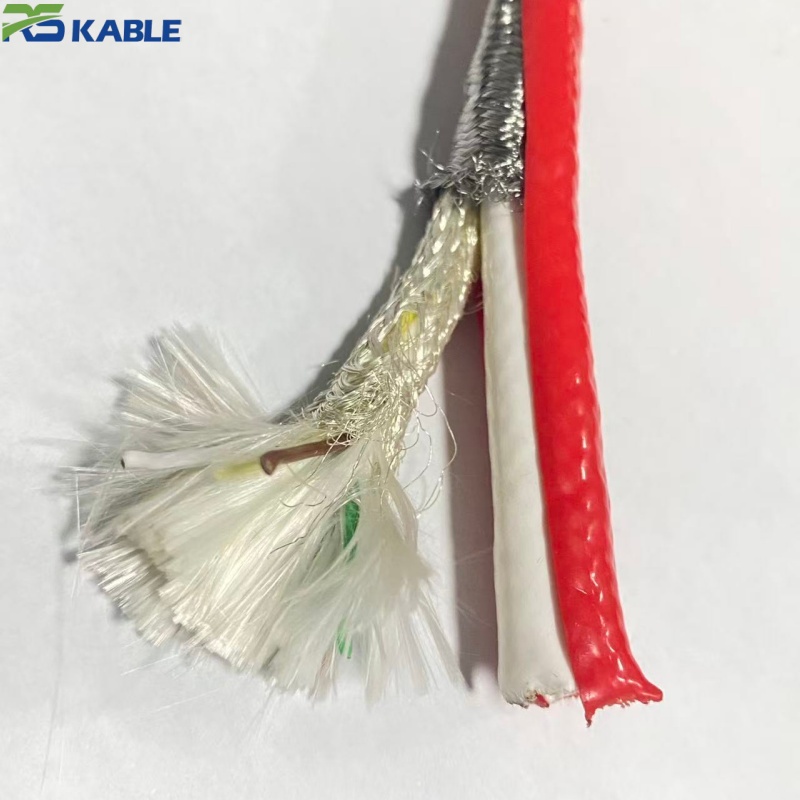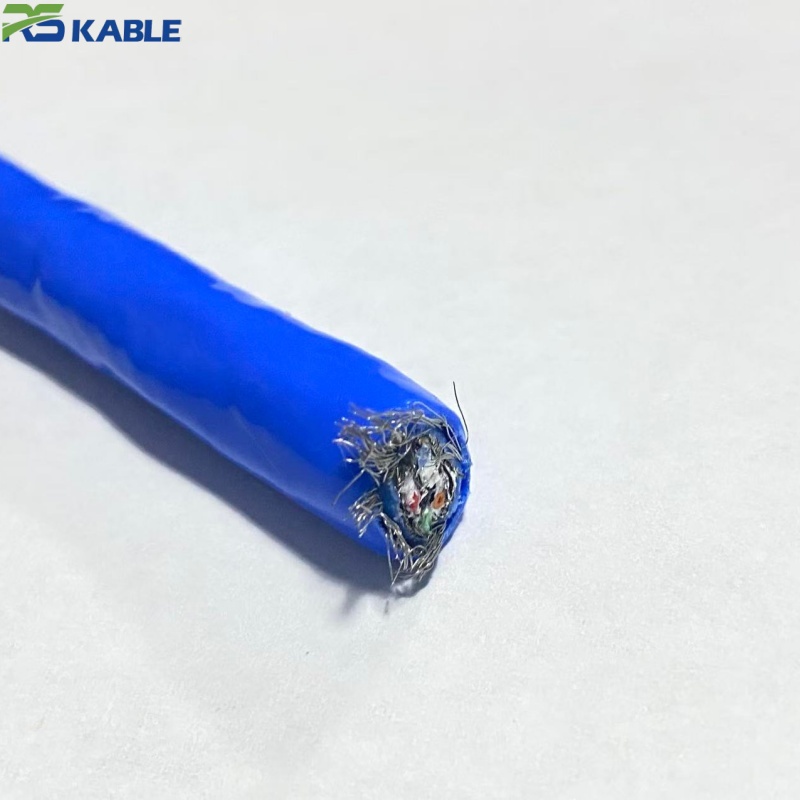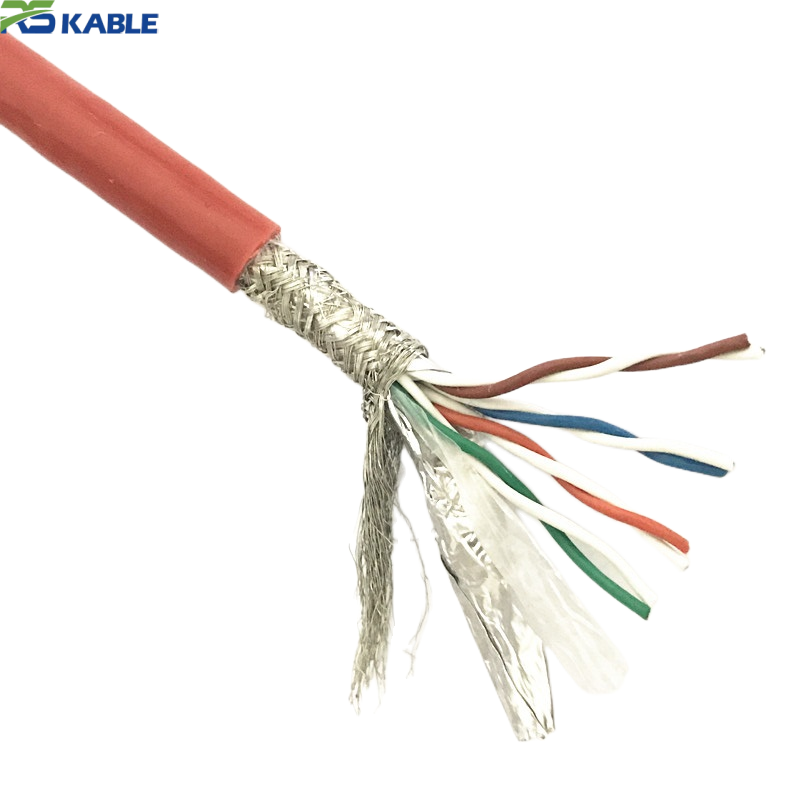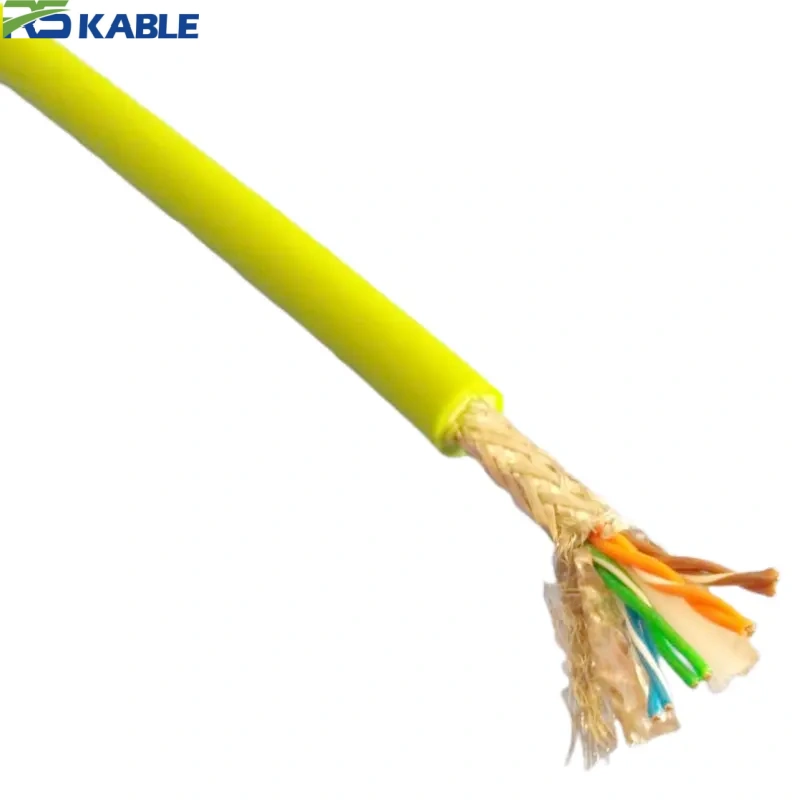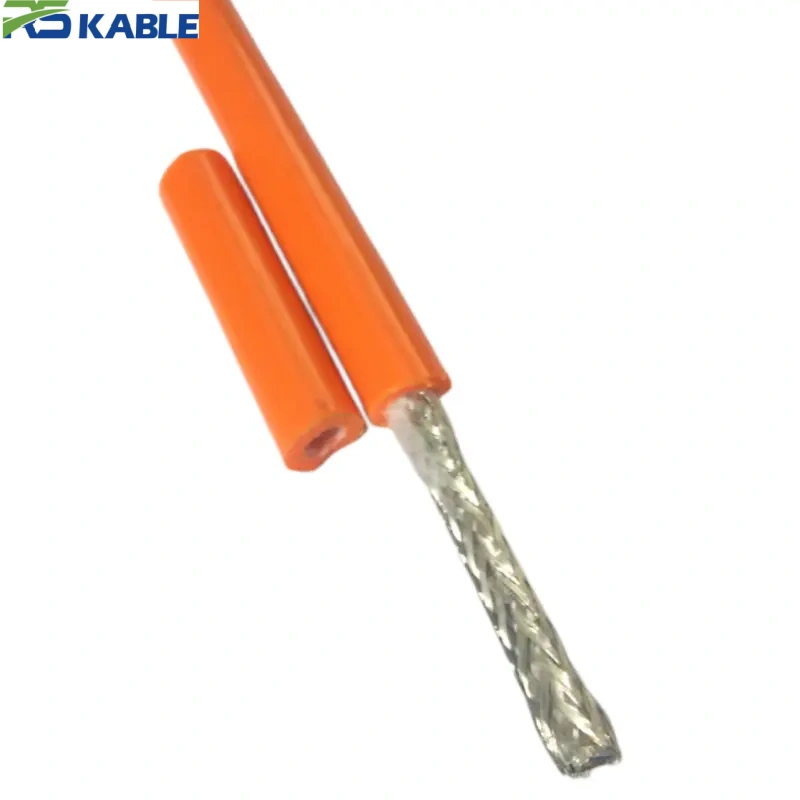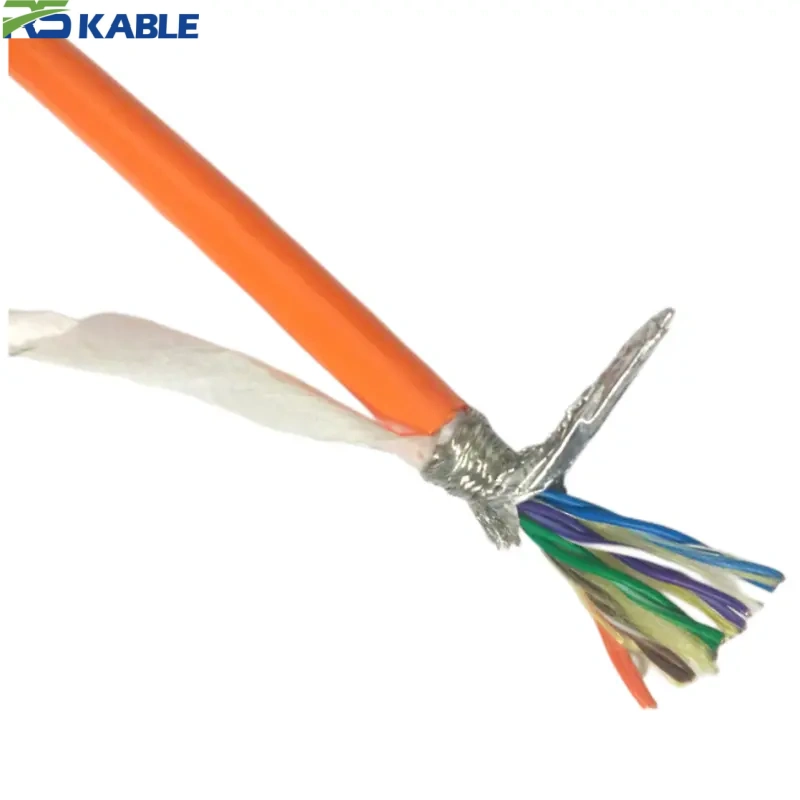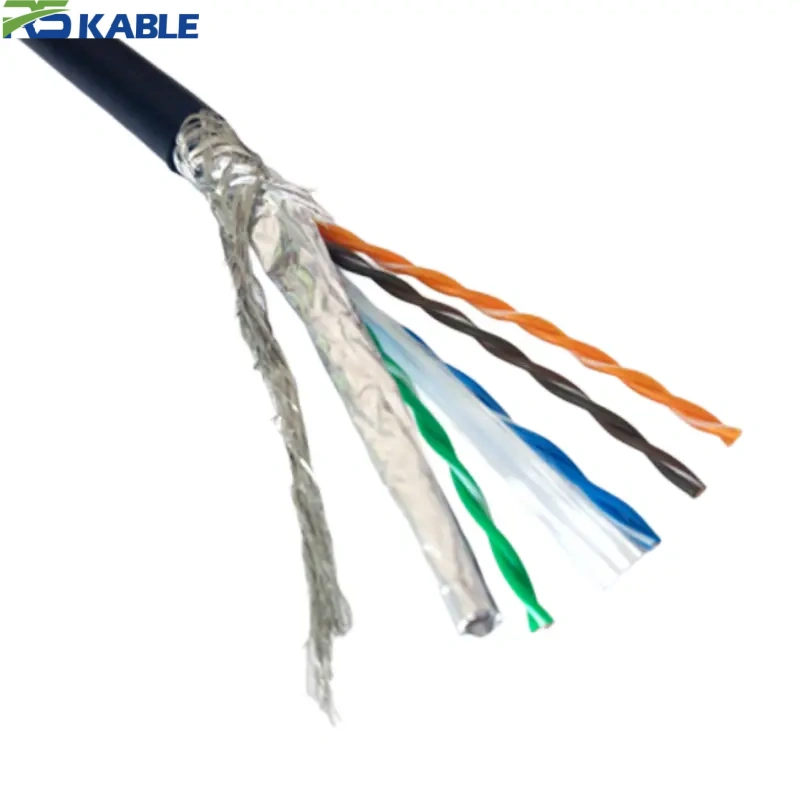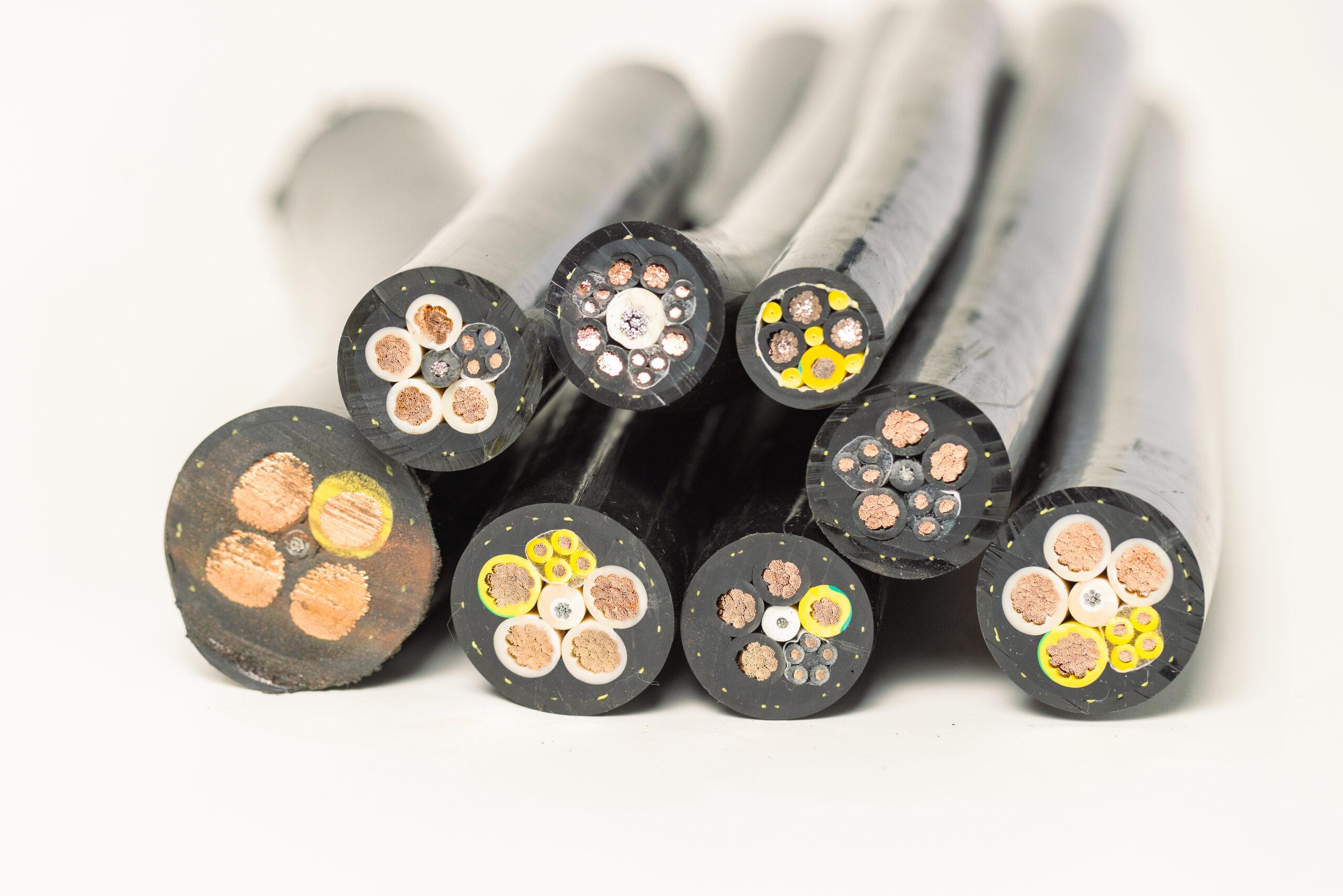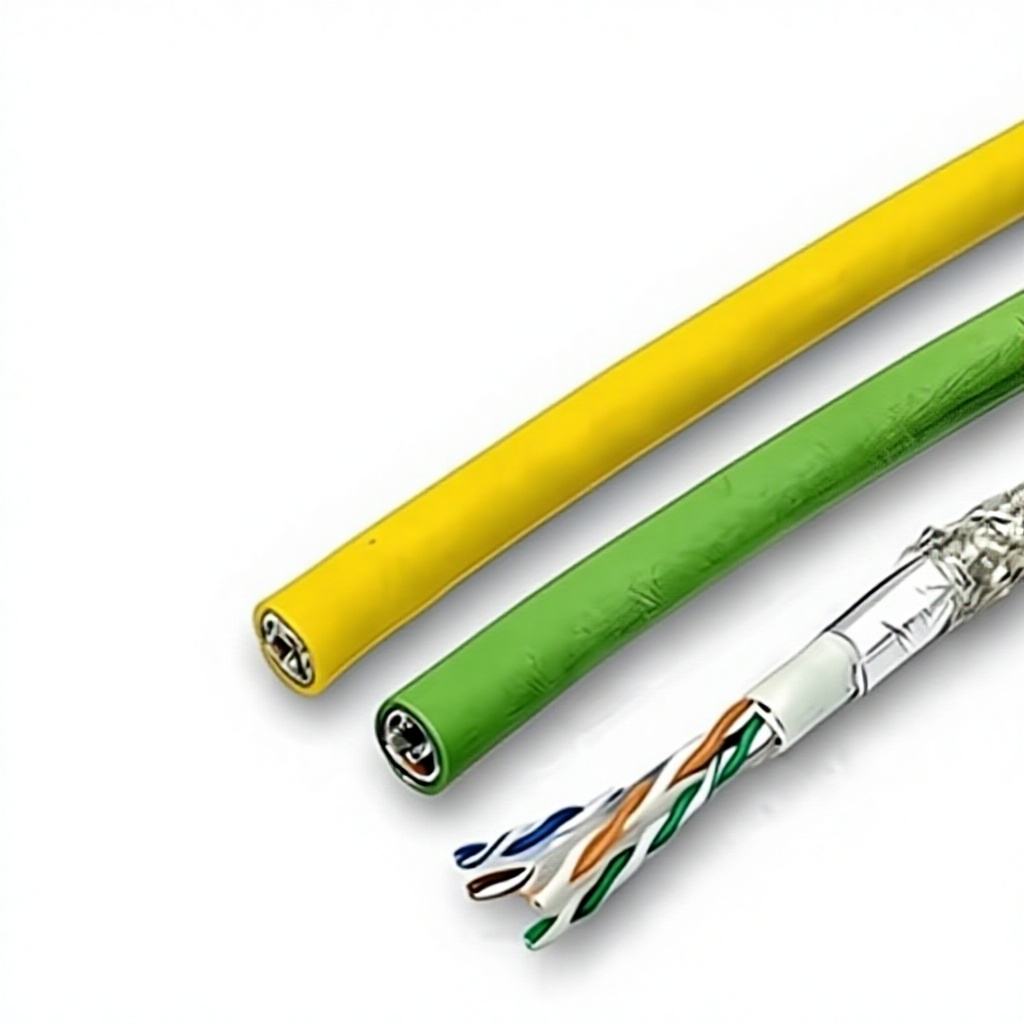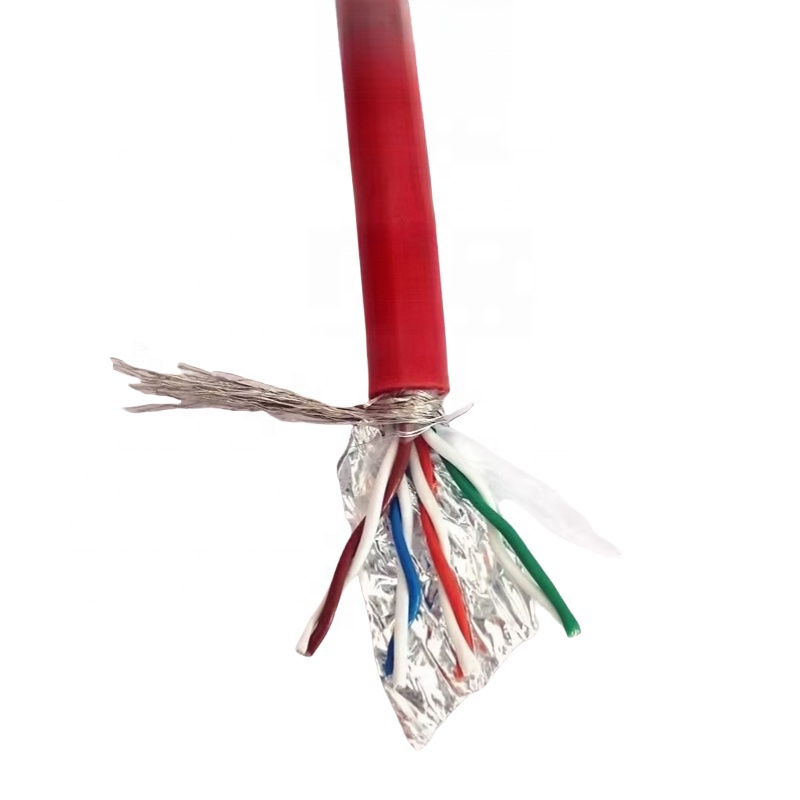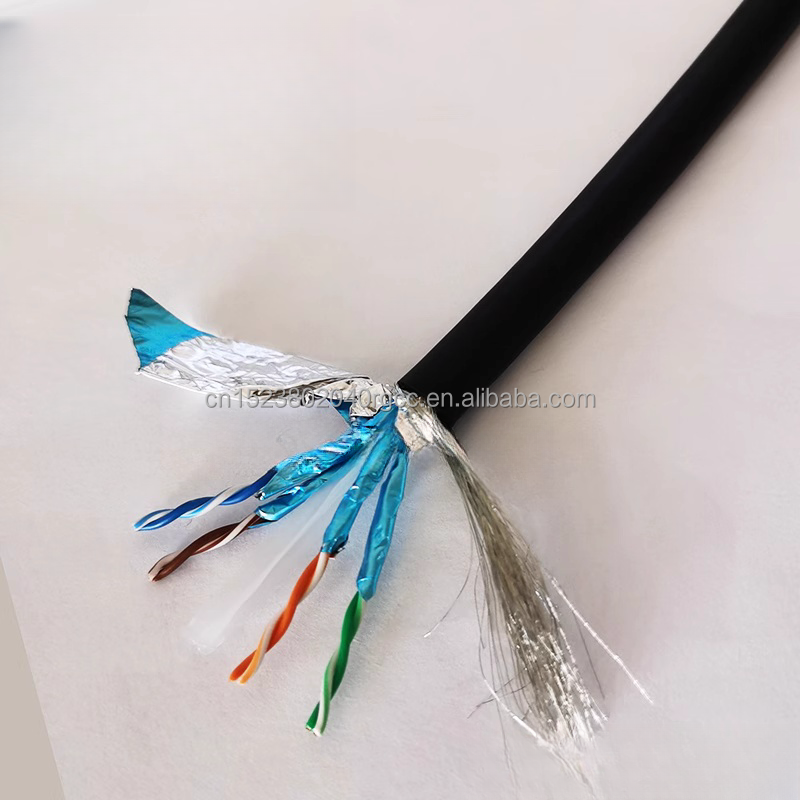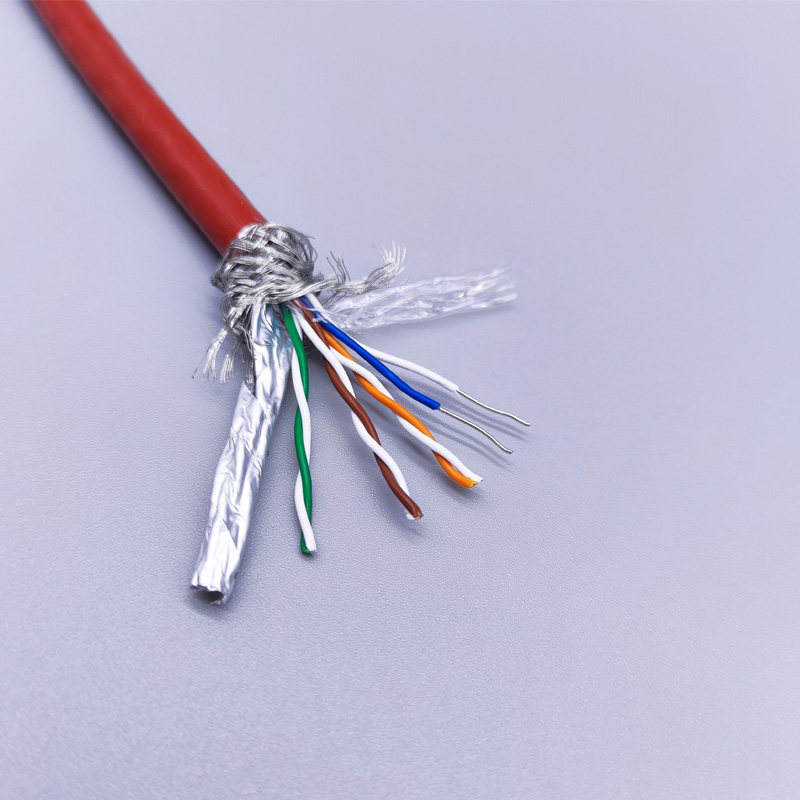



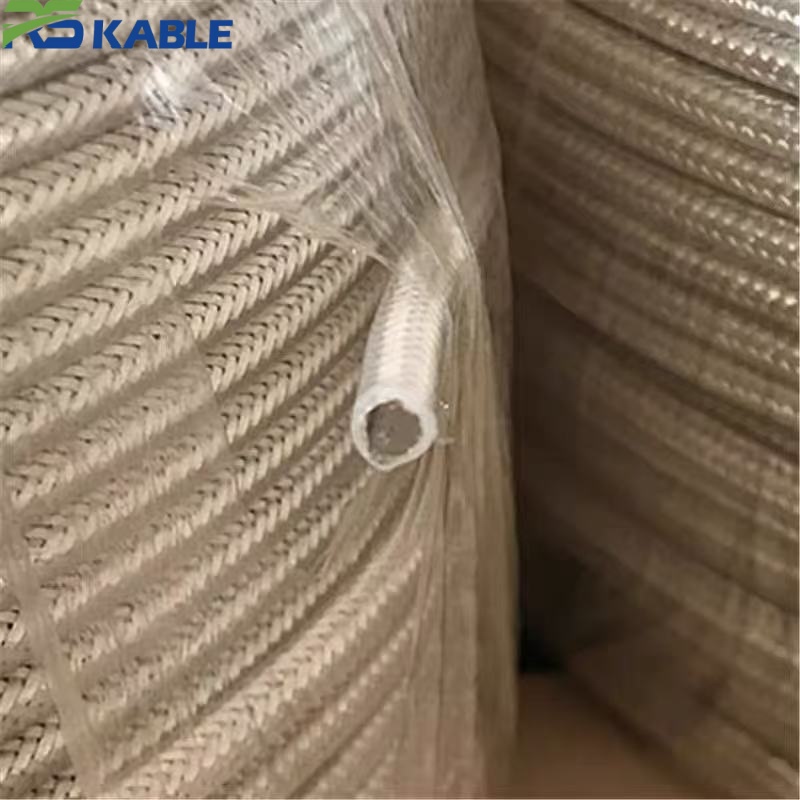
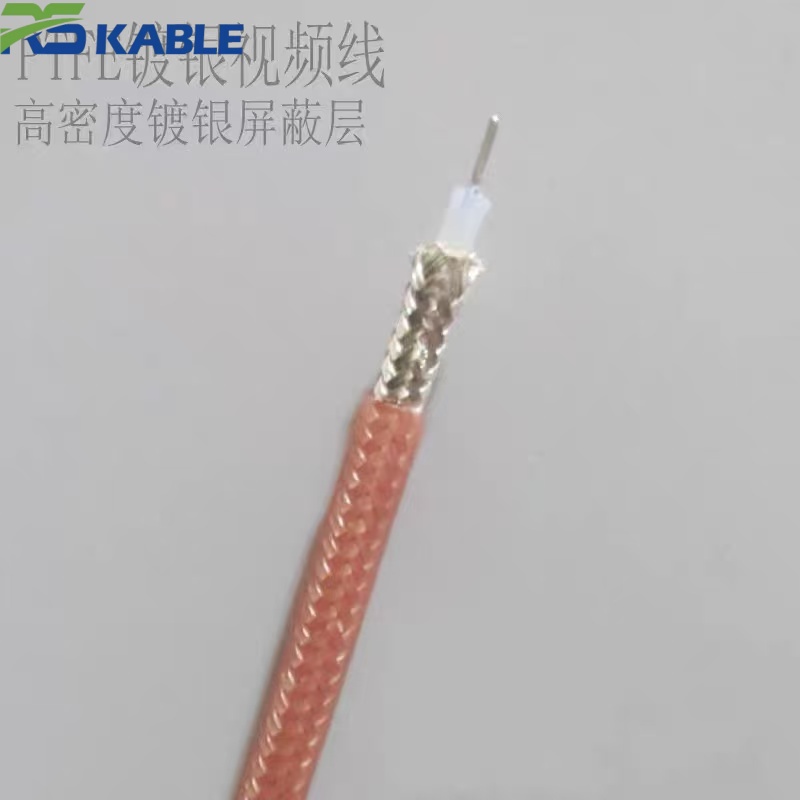
SFF75-5 Silver-Plated PTFE Coaxial Video Cable | High Temperature Shielded Signal Cable
SFF75-5 Silver-Plated PTFE Coaxial Video Cable is a high temperature shielded signal cable built for video, RF, and precision signal transmission in aerospace, military, and industrial thermal process environments. Its silver-plated copper conductor and PTFE dielectric maintain stable 75Ω impedance under sustained heat, while the braided shield protects signal integrity from EMI.
Key Benefits:
✅ PTFE dielectric resists impedance drift under sustained high temperature
✅ Silver-plated conductor reduces high-frequency signal loss and oxidation
✅ Stable 75Ω impedance across a wide operating temperature range
✅ Shielded construction protects video/RF signal from EMI interference
SFF75-5 Silver-Plated PTFE Coaxial Video Cable | High Temperature Shielded Signal Cable
The SFF75-5 Silver-Plated PTFE Coaxial Video Cable is developed for video, RF, and precision signal transmission in high-temperature environments where standard PVC or polyethylene-insulated coaxial cable would degrade or fail. It is intended for 75Ω impedance-matched applications in aerospace systems, military equipment, industrial thermal process instrumentation, and other installations where sustained heat exposure is a defining condition of the routing environment.
In high-temperature coaxial applications, signal degradation usually traces back to one of three problems: dielectric deformation from sustained heat causing impedance drift, conductor oxidation reducing high-frequency signal quality over time, or shield degradation reducing EMI rejection as the cable ages under thermal cycling. This cable is designed to reduce those risks through a PTFE dielectric selected specifically for thermal and impedance stability, a silver-plated conductor that resists oxidation-related signal loss, and a braided shield construction suited to sustained high-temperature service.
The result is a silver-plated PTFE coaxial cable better suited to high-temperature signal environments than standard coaxial video cable, especially in applications where signal integrity, impedance stability, and cable service life are directly affected by sustained thermal exposure.
SFF75-5 Silver-Plated PTFE Coaxial Video Cable
Designed For
This cable is intended for:
- video and RF signal transmission in sustained high-temperature environments
- aerospace, avionics, and military equipment requiring high-temperature-rated coaxial cable
- industrial thermal process instrumentation and monitoring systems
- applications requiring stable 75Ω impedance across a wide operating temperature range
- installations where standard PVC/PE coaxial cable’s thermal ceiling is a limiting factor
This cable should be evaluated separately for:
- continuous dynamic flexing in drag chains or robotic joints — this is a fixed or lightly-moving installation cable, not a dynamic-flex construction
- high-power RF transmission requiring larger conductor gauge and different power handling characteristics
- direct burial or continuous submersion applications
- cost-sensitive, moderate-temperature applications where standard PE-dielectric coaxial cable is a more economical fit
Product Summary
| Item | Description |
|---|---|
| Product Type | Silver-plated PTFE coaxial video/signal cable |
| Main Use | High-temperature video, RF, and precision signal transmission |
| Typical Installations | Aerospace systems, military equipment, industrial thermal process instrumentation, high-temperature test equipment |
| Impedance | 75Ω |
| Conductor Type | Silver-plated copper or silver-plated copper-clad steel |
| Dielectric | Solid or tape-wrapped PTFE |
| Shield Type | Silver-plated copper braid |
| Jacket Type | High-temperature-rated FEP or PTFE jacket |
| Supply Form | Cut length, coil, reel |
Typical Product Series
Series Name: RST-SFF75 Series Category: Silver-plated PTFE coaxial cable for high-temperature signal transmission
| Product Model | Product Name | Center Conductor | Typical Use | Shield | Jacket |
|---|---|---|---|---|---|
| RST-SFF75-2 | Miniature high-temp coaxial cable | Silver-plated copper, fine gauge | Compact instrumentation routing | Single braid | FEP |
| RST-SFF75-5 | Standard high-temp video coaxial cable | Silver-plated copper | Video/RF signal transmission | Single braid | FEP |
| RST-SFF75-5-D | Double-shielded high-temp coaxial cable | Silver-plated copper | High-EMI environments | Double braid | FEP |
| RST-SFF75-9 | Larger-gauge high-temp coaxial cable | Silver-plated copper | Longer runs, lower attenuation | Single or double braid | FEP/PTFE |
| RST-SFF75-C | Custom high-temp coaxial cable | Custom | Project-specific aerospace/military applications | Custom | Custom |
Technical Parameters
The values below are typical selection items. Final design should be confirmed according to frequency requirement, cable length, temperature exposure, and shielding requirement.
| Parameter | Typical Range / Description |
|---|---|
| Impedance | 75Ω ±3Ω |
| Center Conductor | Silver-plated copper or silver-plated copper-clad steel |
| Dielectric Material | PTFE (solid or tape-wrapped) |
| Shield Construction | Silver-plated copper braid, single or double layer |
| Jacket Material | FEP or PTFE, high-temperature rated |
| Temperature Rating | Confirmed according to dielectric and jacket construction — PTFE-based builds are selected specifically for high-temperature stability |
| Attenuation | Frequency and length dependent — confirmed per project requirement |
| Velocity of Propagation | Dependent on dielectric construction (solid vs tape-wrapped PTFE) |
| Minimum Bend Radius | Confirmed according to cable diameter and installation type |
| Outer Diameter | Depends on conductor gauge, dielectric thickness, and shield/jacket construction |
| Application Scope | Video, RF, and precision signal transmission in high-temperature environments |
| Supply Format | Cut length, coil, reel, project supply |
SFF75-5 Silver-Plated PTFE Coaxial Video Cable
Cable Construction
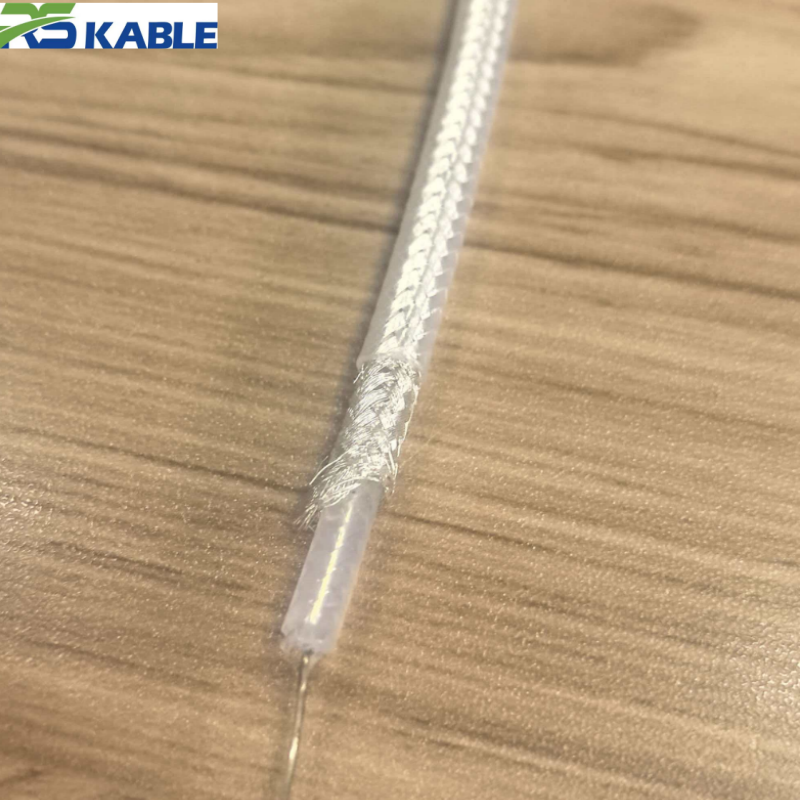
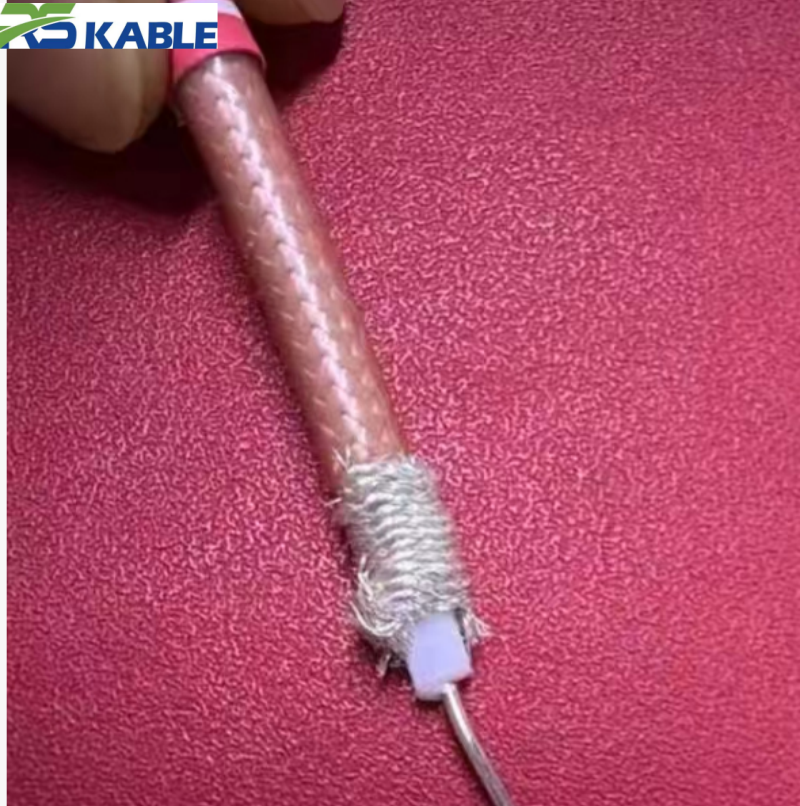
Silver-Plated Copper Center Conductor
Silver plating on the copper conductor reduces high-frequency signal loss (a result of the skin effect, where high-frequency current travels predominantly near the conductor surface) and resists the oxidation that would otherwise degrade signal quality over the cable’s service life, particularly under sustained thermal cycling.
PTFE Dielectric
PTFE is selected specifically for its dielectric stability across a wide temperature range — unlike polyethylene, which can deform and shift impedance under sustained heat, PTFE maintains more consistent electrical properties, which is the core reason this construction exists as a distinct product from standard PE-dielectric coaxial cable.
Silver-Plated Copper Braid Shield
The braided shield provides EMI/RFI protection for the center conductor’s signal, with silver plating applied for the same oxidation-resistance and high-frequency conductivity reasons as the center conductor. Braid coverage percentage affects shielding effectiveness and is selected based on the installation’s EMI environment.
High-Temperature Jacket
FEP or PTFE jacket material is selected to match the dielectric’s temperature capability — pairing a high-temperature dielectric with a standard PVC jacket would create a mismatched construction where the jacket becomes the limiting factor rather than the dielectric.
Why This Construction Matters for High-Temperature Signal Applications
Signal integrity in a coaxial cable is not defined by conductor quality alone. Performance depends on how the whole structure — conductor, dielectric, shield, and jacket — behaves together under the actual thermal and electrical conditions of the installation.
Reduced Impedance Drift Under Heat
Because PTFE resists deformation under sustained heat, impedance stays closer to the nominal 75Ω rating across the operating temperature range, reducing signal reflection issues that occur when impedance shifts from its design value.
Lower High-Frequency Signal Loss
Silver plating on both the center conductor and shield reduces resistive losses at high frequencies, which matters more as signal frequency increases and as cable runs get longer.
Better Long-Term Stability in Thermal Cycling Environments
Repeated heating and cooling cycles can degrade standard coaxial constructions faster than a PTFE/silver-plated build, since oxidation and dielectric deformation both accelerate under thermal cycling rather than constant temperature alone.
Better Fit for Aerospace and Military Qualification Requirements
Many aerospace and military specifications call for PTFE-dielectric, silver-plated coaxial construction specifically because of its documented performance under the temperature extremes and long service life requirements common in those applications.
High-Temperature Signal Application Boundary
This cable is suitable for:
- sustained high-temperature routing near engines, avionics bays, or thermal process equipment
- applications requiring stable 75Ω impedance across a wide temperature range
- video, RF, and precision signal transmission with EMI shielding requirements
- fixed or lightly-moving installation routing
This cable requires separate confirmation for:
- continuous dynamic flexing applications — a different conductor stranding and jacket flexibility profile is needed for repeated bending duty
- high-power RF transmission beyond standard signal-level power handling
- moderate-temperature, cost-sensitive applications where PE-dielectric coaxial cable is a more economical choice
- direct burial or submersion use
This boundary matters because PTFE/silver-plated construction solves a specific thermal and signal-integrity problem — it is not a universal upgrade over standard coaxial cable for every application.
Typical Applications
The SFF75-5 Silver-Plated PTFE Coaxial Video Cable is commonly used in:
- aerospace avionics and sensor signal transmission
- military communications and radar systems
- industrial furnace and thermal process instrumentation
- high-temperature test and measurement equipment
- precision video transmission in high-heat industrial environments
- RF signal transmission in aerospace ground support equipment
Typical Working Conditions
- sustained high ambient or radiant heat exposure
- fixed or lightly-moving installation routing
- EMI-sensitive signal environments
- long-term thermal cycling
- aerospace and military qualification environments
Silver-Plated PTFE Coaxial Cable vs Standard PE Coaxial Cable
| Comparison Item | Silver-Plated PTFE Coaxial | Standard PE Coaxial |
|---|---|---|
| Temperature Stability | High — PTFE resists deformation under sustained heat | Limited — PE can deform and shift impedance at elevated temperatures |
| High-Frequency Signal Loss | Lower, due to silver plating | Higher at comparable frequencies |
| Oxidation Resistance | Higher | Standard copper conductor, more susceptible to oxidation over time |
| Cost | Higher | Lower |
| Best Use | High-temperature, high-reliability signal applications | General-purpose, moderate-temperature video/RF transmission |
For moderate-temperature applications without stringent long-term impedance stability requirements, standard PE-dielectric coaxial cable is often the more cost-effective choice.
Single Braid Shield vs Double Braid Shield
| Comparison Item | Single Braid Shield | Double Braid Shield |
|---|---|---|
| EMI Rejection | Good for moderate-noise environments | Better for high-EMI environments |
| Flexibility | Slightly better | Slightly reduced due to added shield layer |
| Cost | Lower | Higher |
| Recommended Use | Standard signal routing | Near high-power equipment, aerospace/military high-EMI zones |
Double braid construction is generally recommended when the installation routes near high-power equipment or has stringent EMI rejection requirements.
SFF75-5 Silver-Plated PTFE Coaxial Video Cable
Selection Guide
Correct selection depends on the actual thermal environment and signal requirement, not impedance rating alone.
1. Confirm Function
Identify whether the cable carries video, RF, or precision instrumentation signal.
2. Confirm Temperature Exposure
Sustained ambient or radiant heat exposure along the routing path determines whether PTFE dielectric and jacket construction are necessary versus a standard PE-based coaxial cable.
3. Confirm Frequency and Attenuation Requirement
Signal frequency and cable run length together determine conductor gauge and dielectric construction needed to keep attenuation within acceptable limits.
4. Confirm Shielding Requirement
EMI environment near the installation (motors, power equipment, RF sources) determines single or double braid shield selection.
5. Confirm Routing Space and Bend Requirements
Minimum bend radius and overall diameter limits should be checked before final model confirmation.
6. Confirm Qualification Requirements
Aerospace and military applications may require specific qualification standards — confirm these requirements before final specification.
7. Confirm Installation Type
This is a fixed or lightly-moving installation cable; continuous dynamic flexing applications should be evaluated against a different construction.
Customization and Supply
Custom construction is available for project-based high-temperature signal applications.
Available Options
- conductor gauge
- dielectric construction (solid vs tape-wrapped PTFE)
- shield structure (single or double braid)
- jacket material and color
- cable marking
- cut length, coil, or reel supply
Supply Support
- model matching based on temperature exposure and signal requirement
- sample supply for evaluation
- drawing and structure confirmation before production
- OEM and project supply
- industrial batch production
Ordering Information
For faster quotation and model selection, provide:
- signal type (video, RF, instrumentation)
- frequency requirement
- cable length
- temperature exposure along the routing path
- shielding requirement
- quantity demand
Inquiry Example
SFF75-5, silver-plated copper conductor, PTFE dielectric, single braid shield, FEP jacket, 100 meters, avionics bay routing near engine heat source
Call to Action
Request a Quote for SFF75-5 Silver-Plated PTFE Coaxial Video Cable Send the application details for model selection, structure confirmation, and pricing.
FAQ
What is SFF75-5 coaxial cable used for?
It is used for video, RF, and precision signal transmission in high-temperature environments, particularly in aerospace, military, and industrial thermal process applications where standard PVC/PE coaxial cable cannot withstand the thermal exposure.
Why is PTFE used instead of standard polyethylene dielectric?
PTFE maintains more stable dielectric properties under sustained heat, resisting the deformation that causes impedance drift in polyethylene-dielectric cable at elevated temperatures.
Does silver plating actually improve signal quality?
Yes, primarily at higher frequencies, where the skin effect causes current to travel near the conductor surface. Silver plating reduces resistive loss at the surface and resists oxidation that would otherwise degrade this benefit over time.
Is this cable suitable for dynamic flexing applications?
Not as a standard construction. This cable is designed for fixed or lightly-moving installations. Continuous dynamic flexing applications require a different conductor stranding and jacket flexibility profile.
What temperature range can this cable handle?
Temperature capability depends on the specific dielectric and jacket construction selected. PTFE-based builds are chosen specifically for high-temperature stability, and the exact rating should be confirmed against the project’s specific construction and qualification requirements.
When is double braid shielding necessary versus single braid?
Double braid is generally recommended in high-EMI environments or near high-power equipment, while single braid is typically sufficient for standard signal routing with moderate EMI exposure.
Is custom construction available for aerospace/military qualification requirements?
Yes. Conductor gauge, dielectric construction, shielding, and jacket material can be matched to specific qualification and project requirements.
Is this cable a cost-effective choice for general-purpose video transmission?
Not typically. For moderate-temperature, general-purpose applications without stringent thermal or long-term impedance stability requirements, standard PE-dielectric coaxial cable is usually the more economical choice.
Other Related Products
(For related coaxial and signal cable products, please refer to our CCTV Underwater Video Cable and Custom Special Cable category pages.)
[Request a Quotation] · [Ask an Engineer Before You Spec It] · [Download Technical Datasheet]