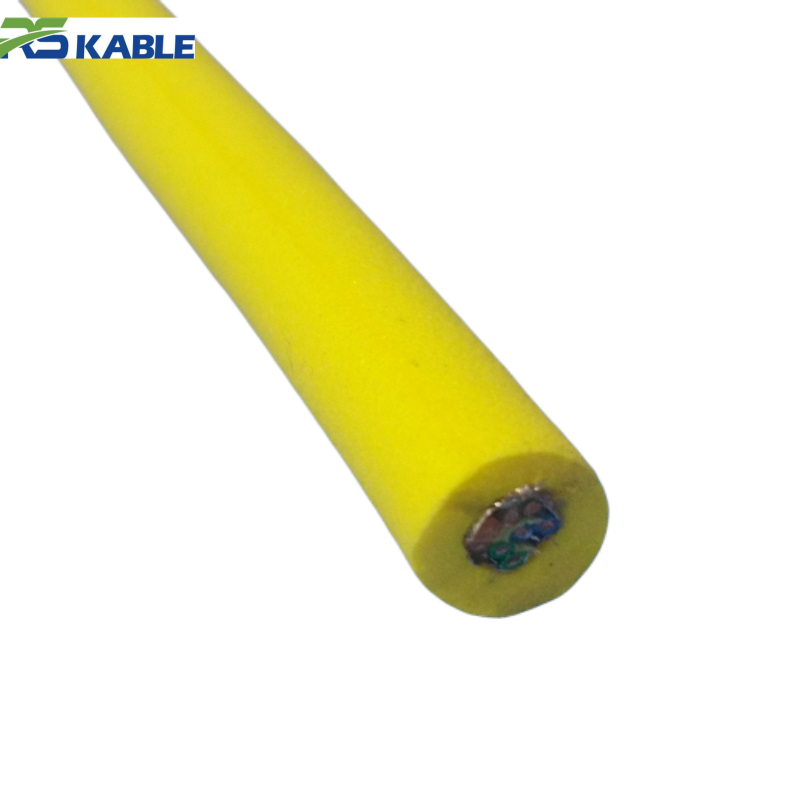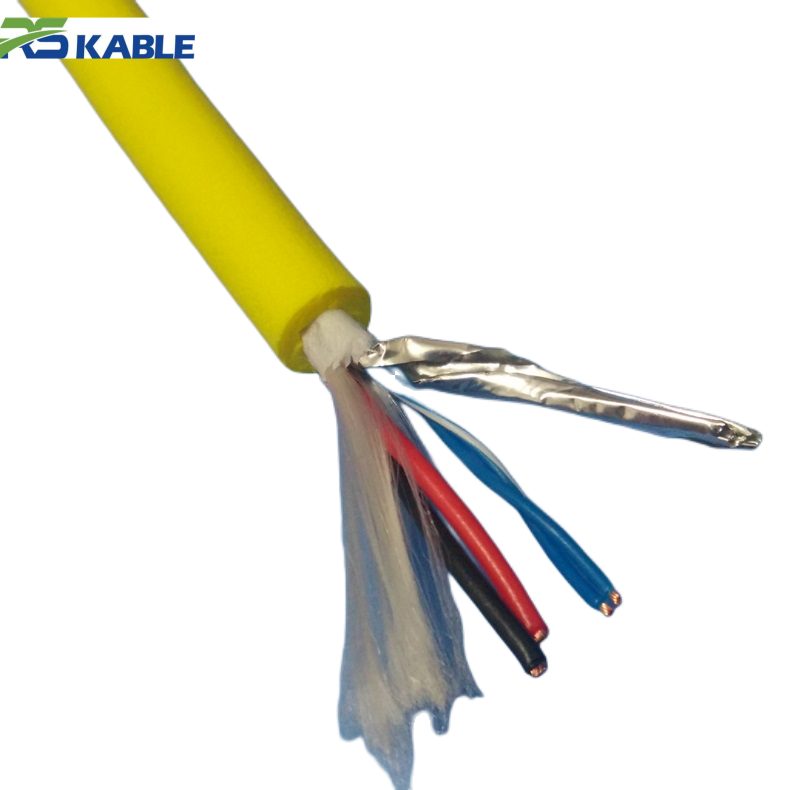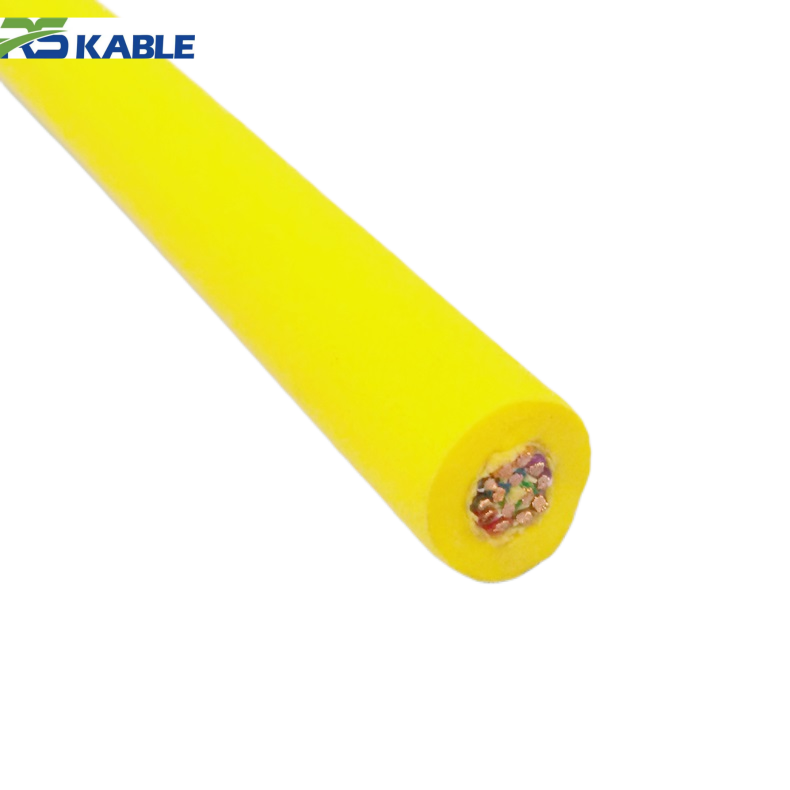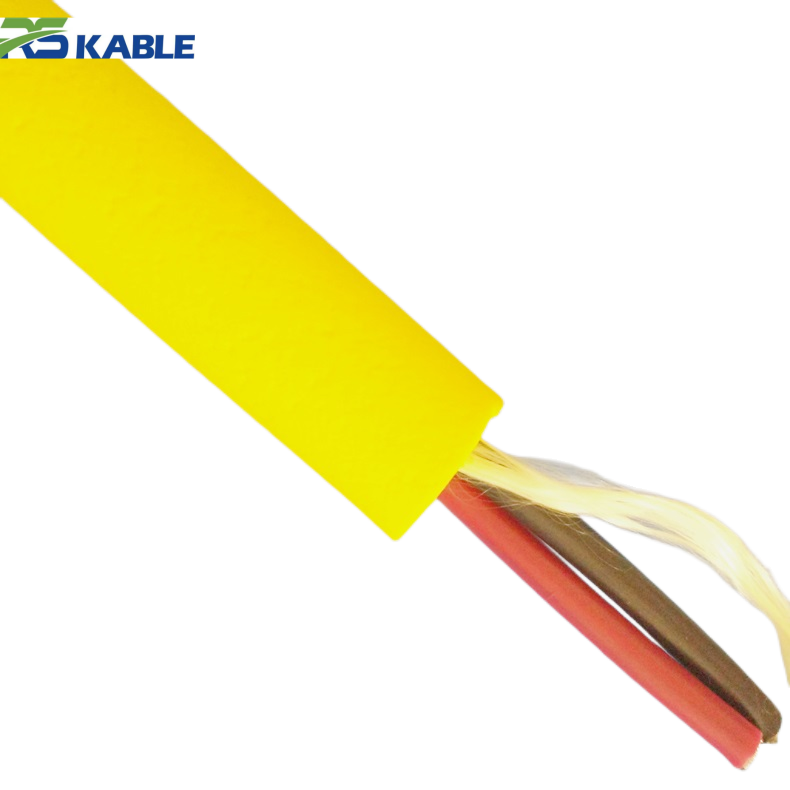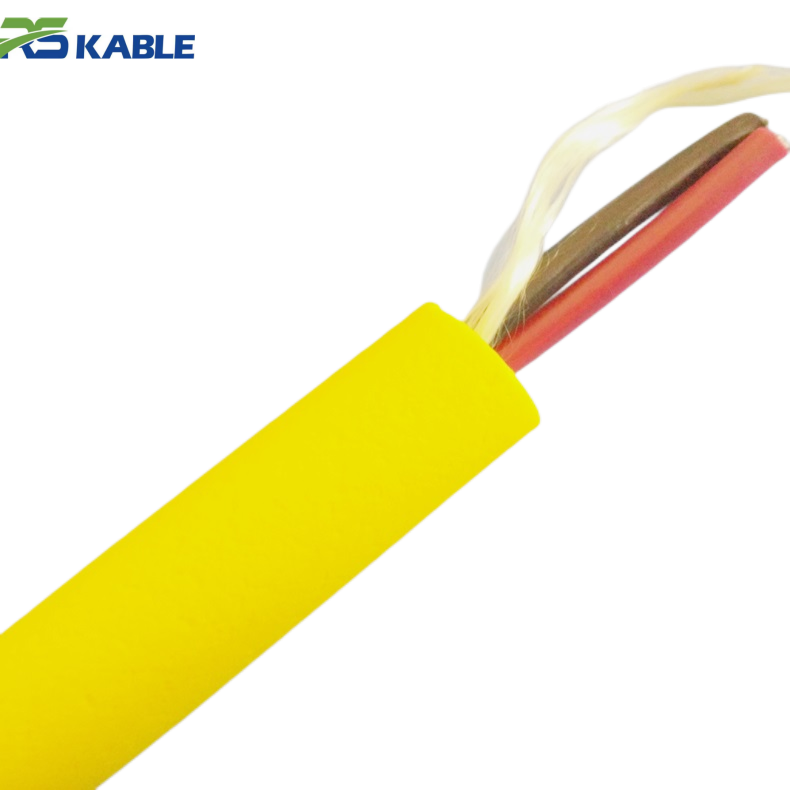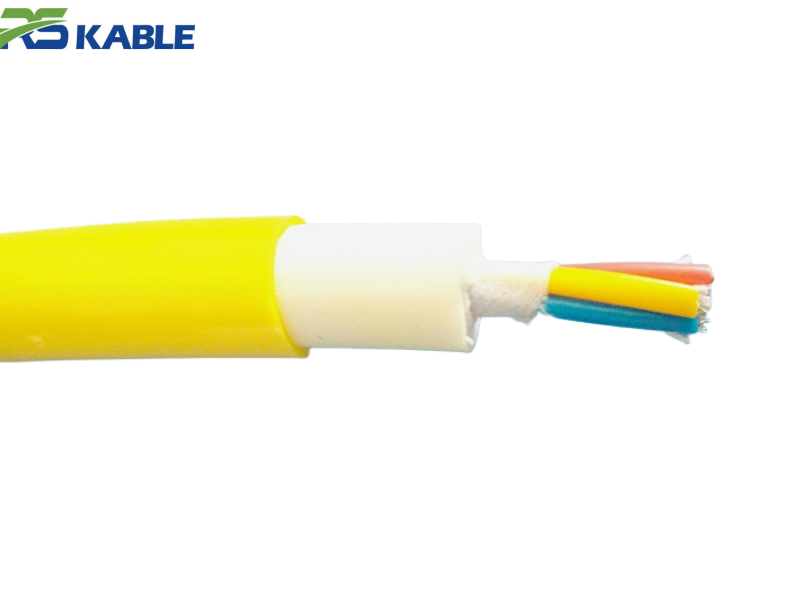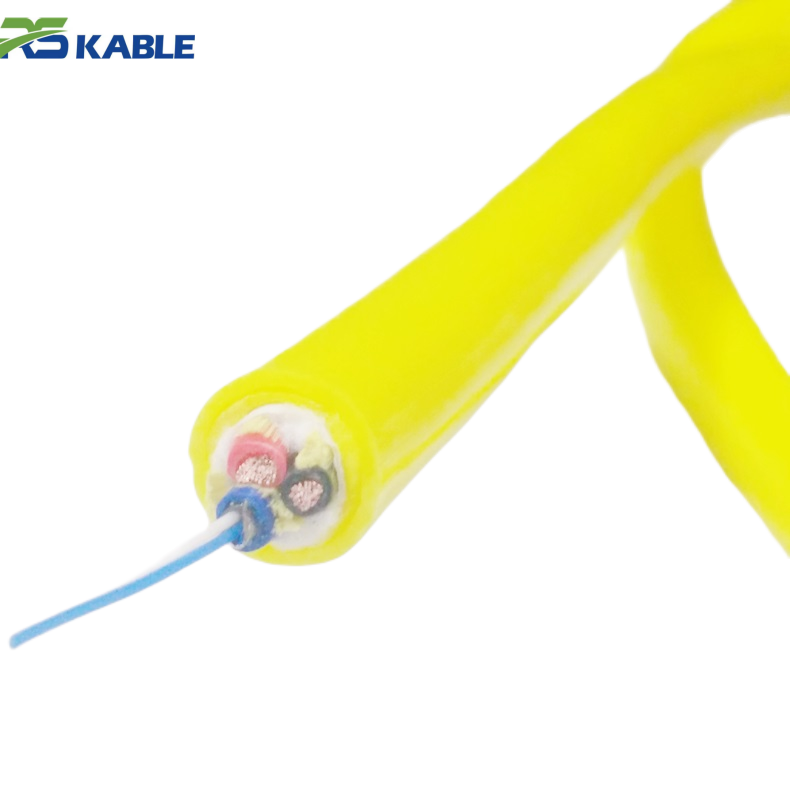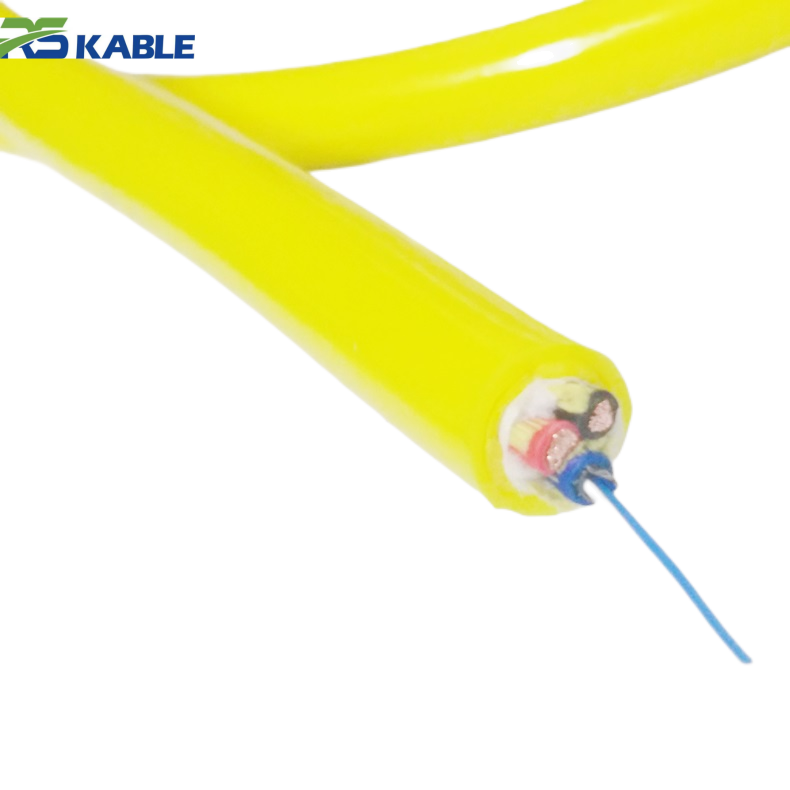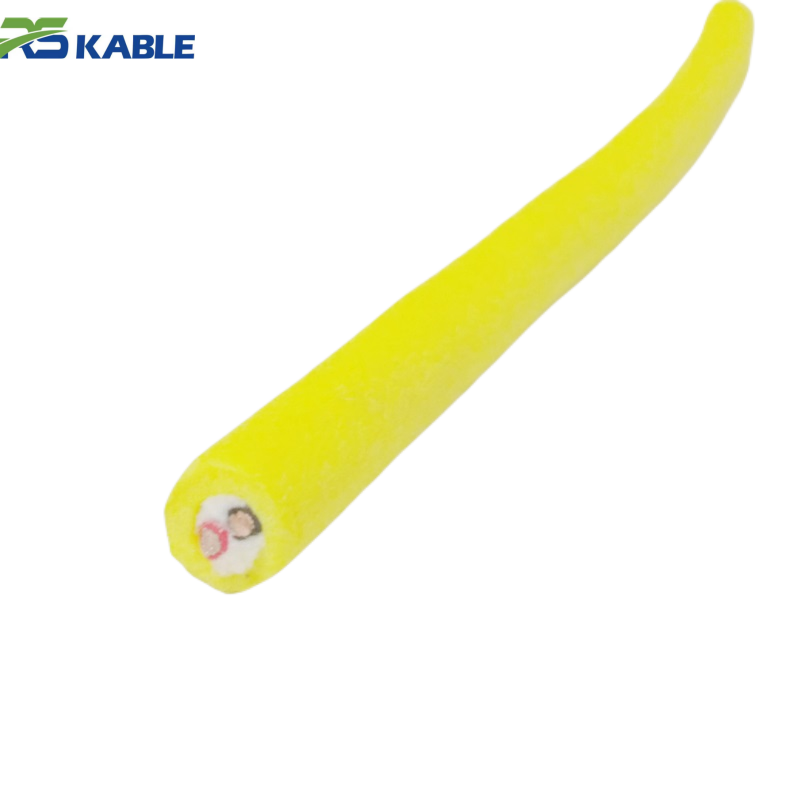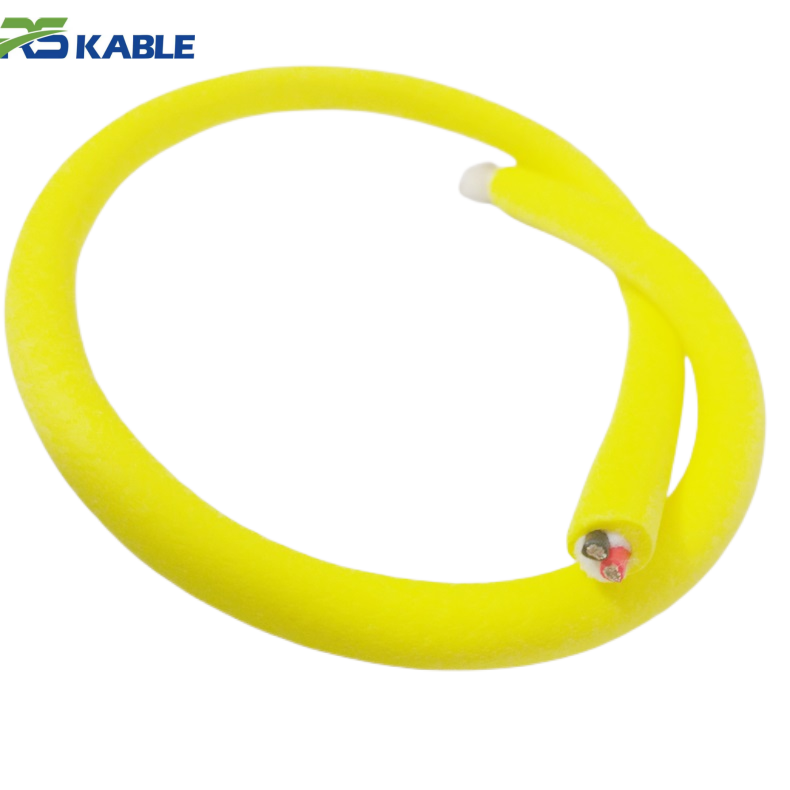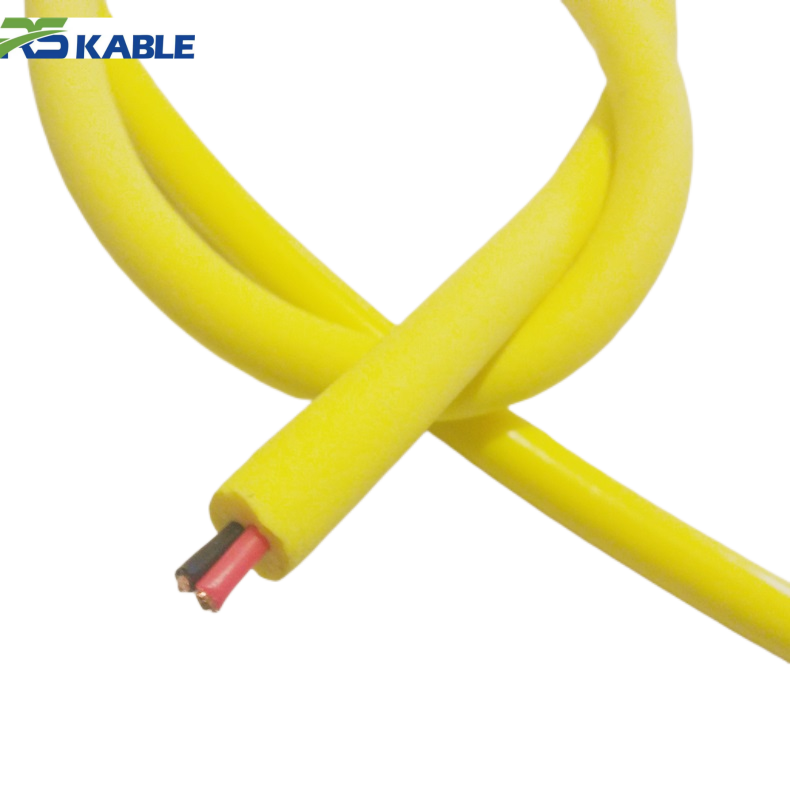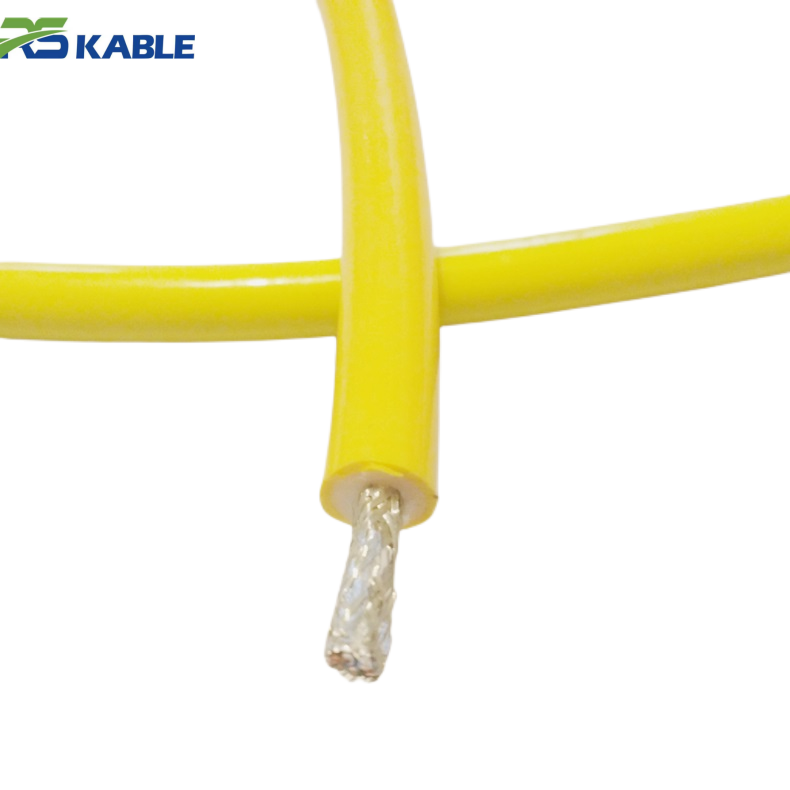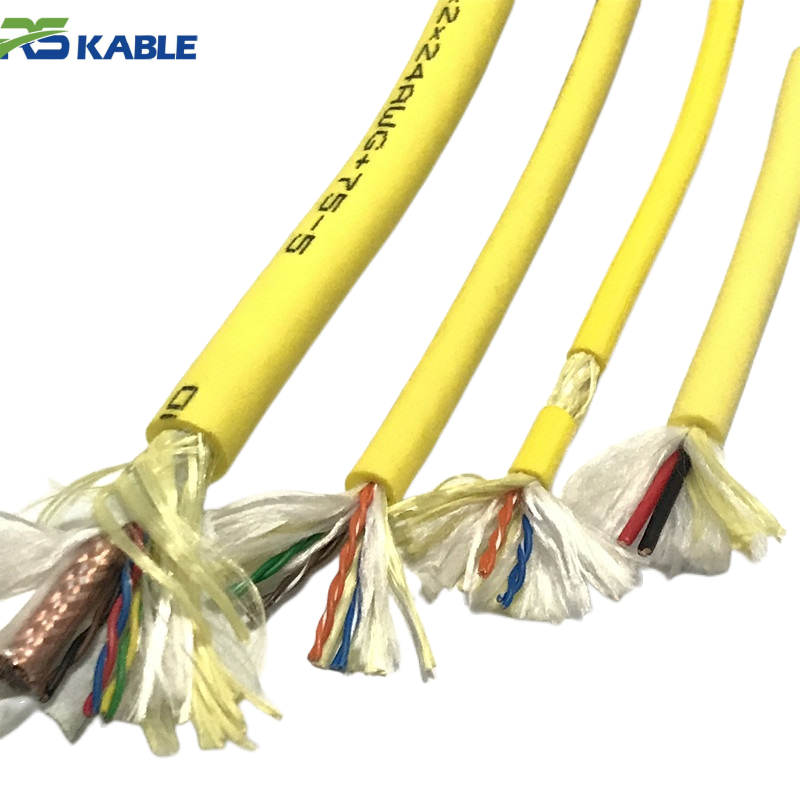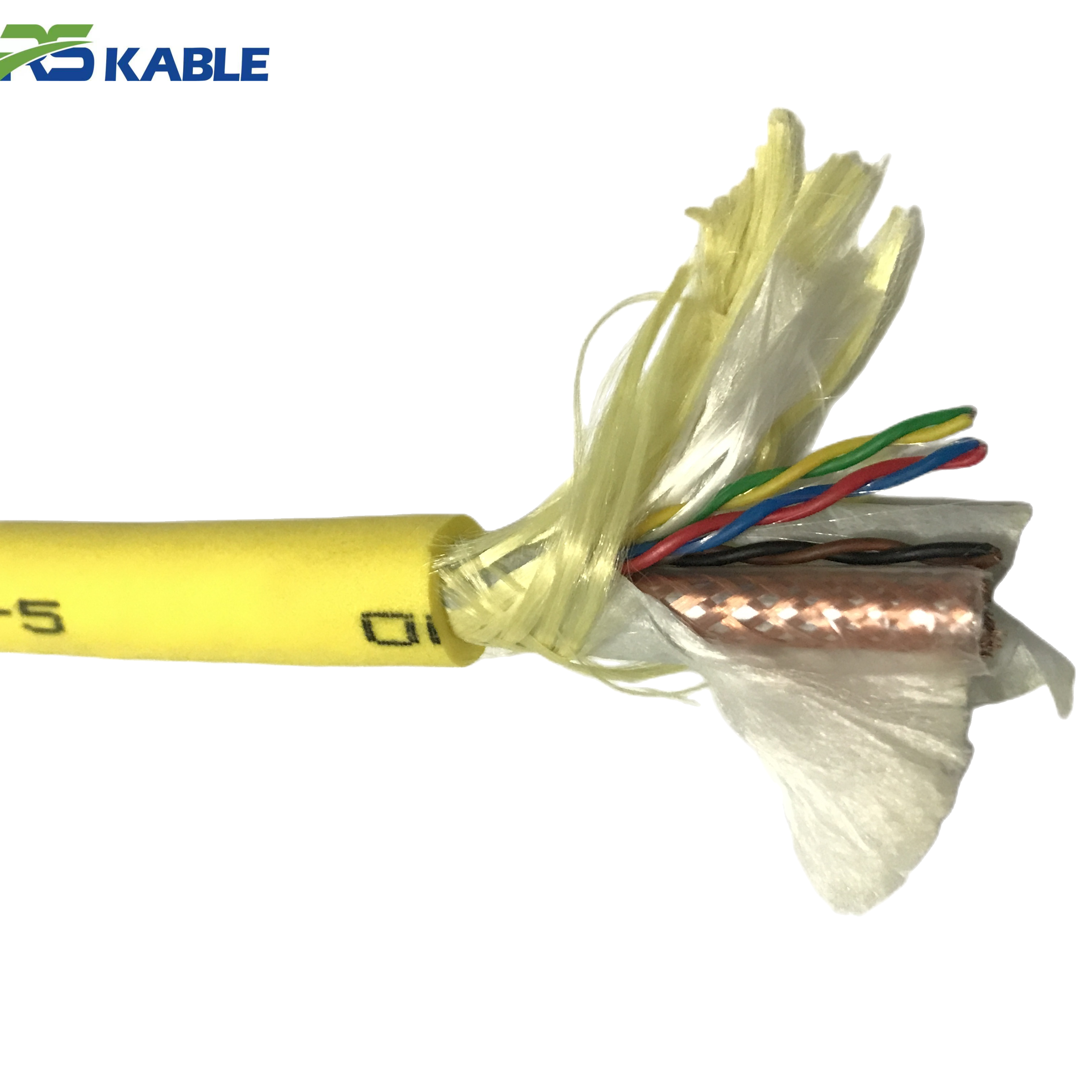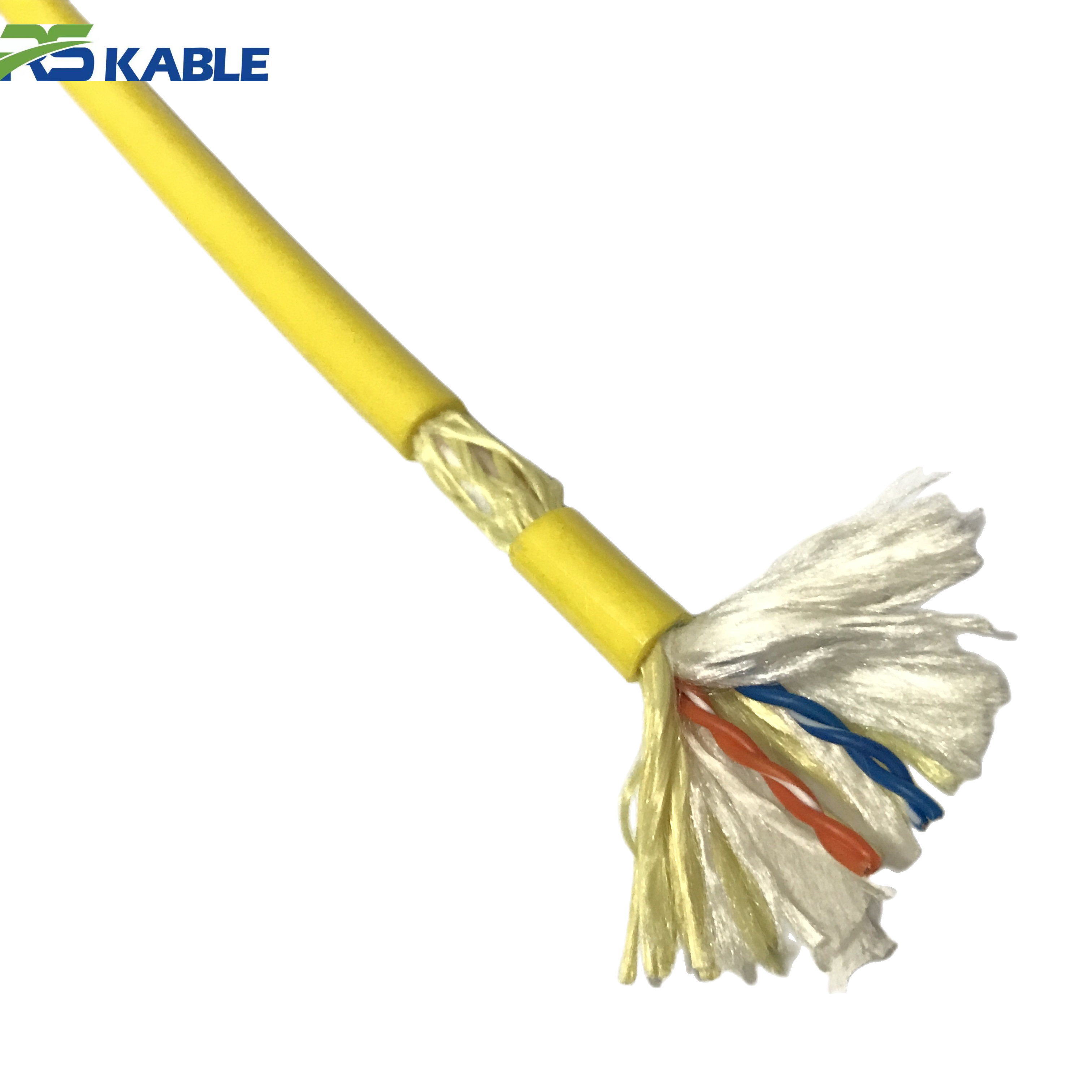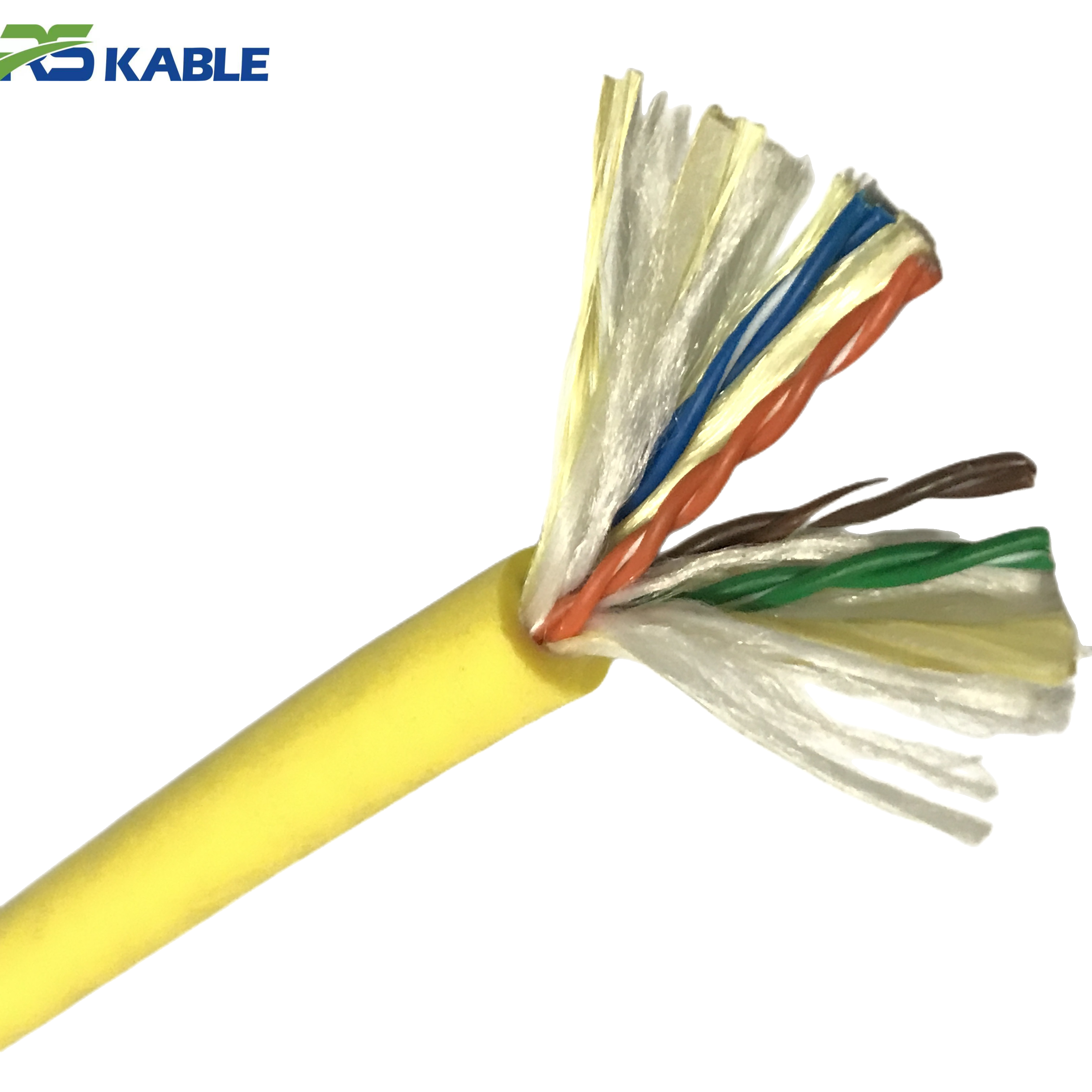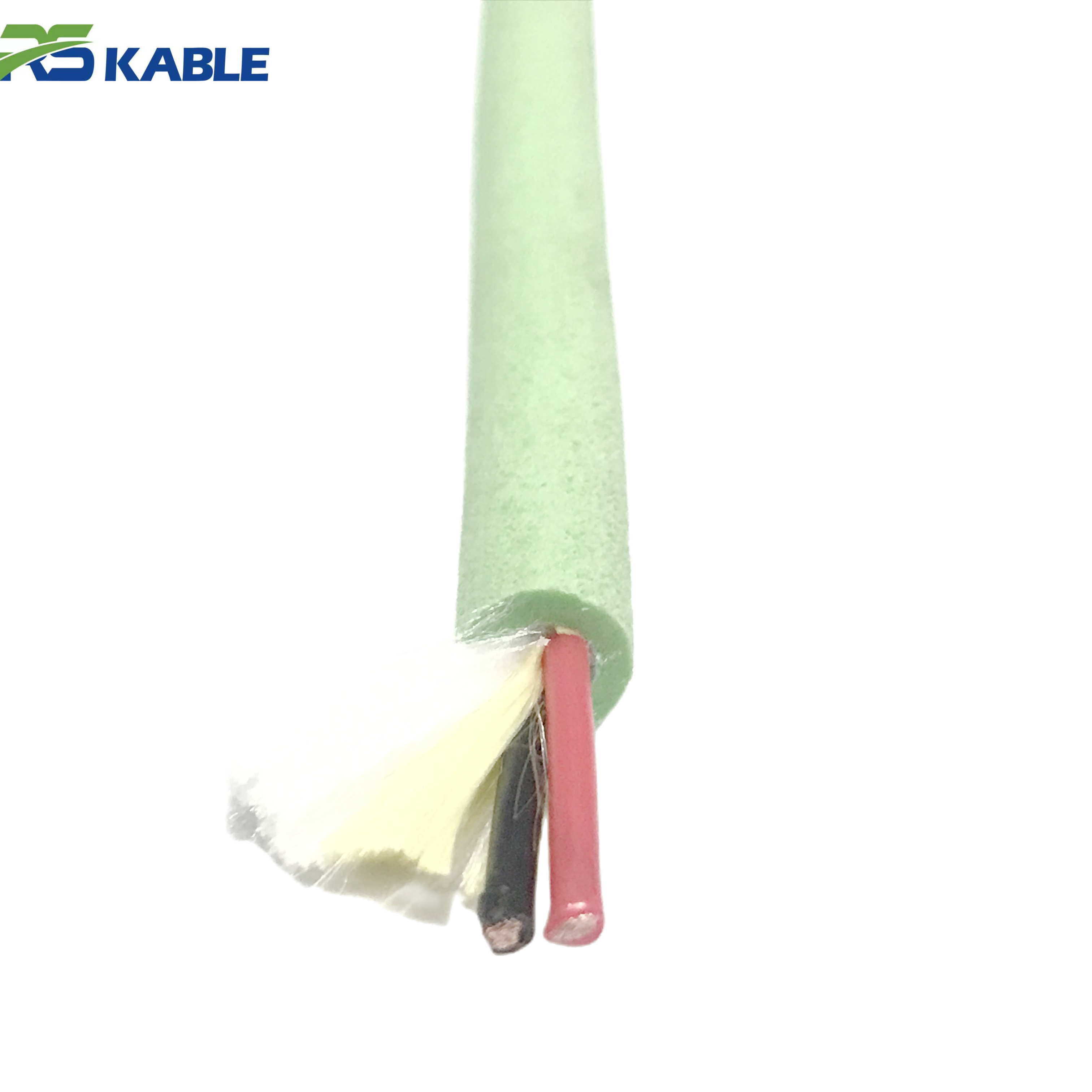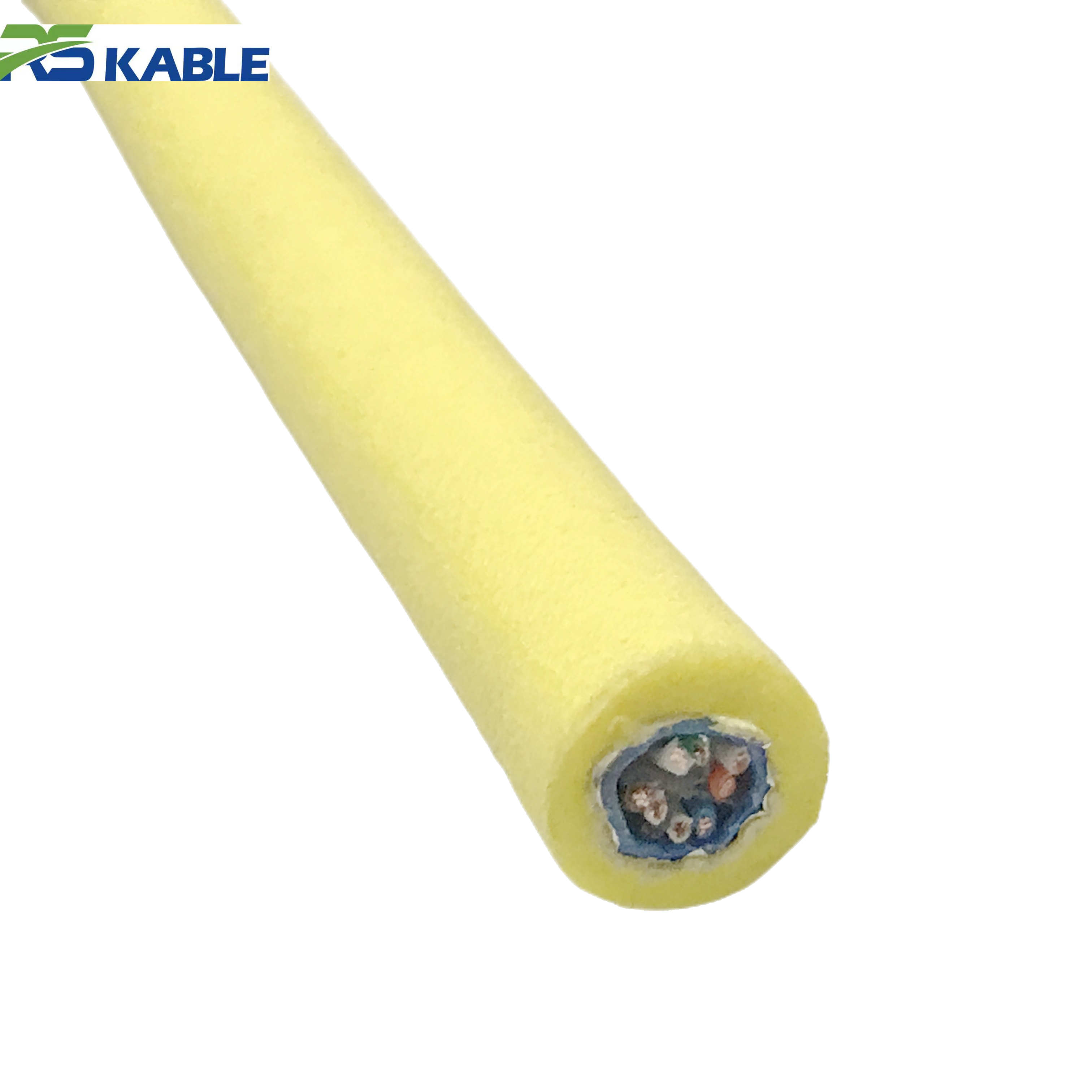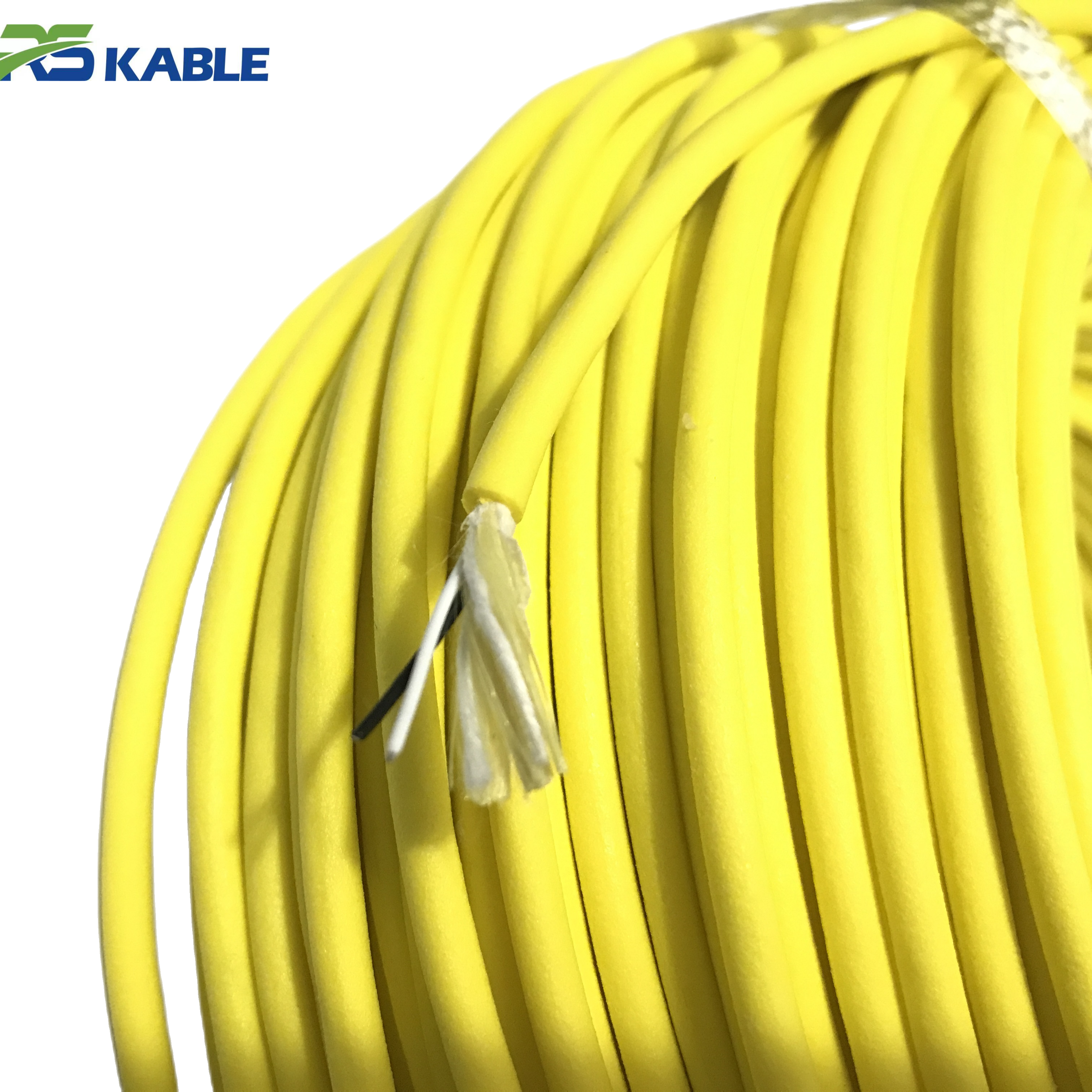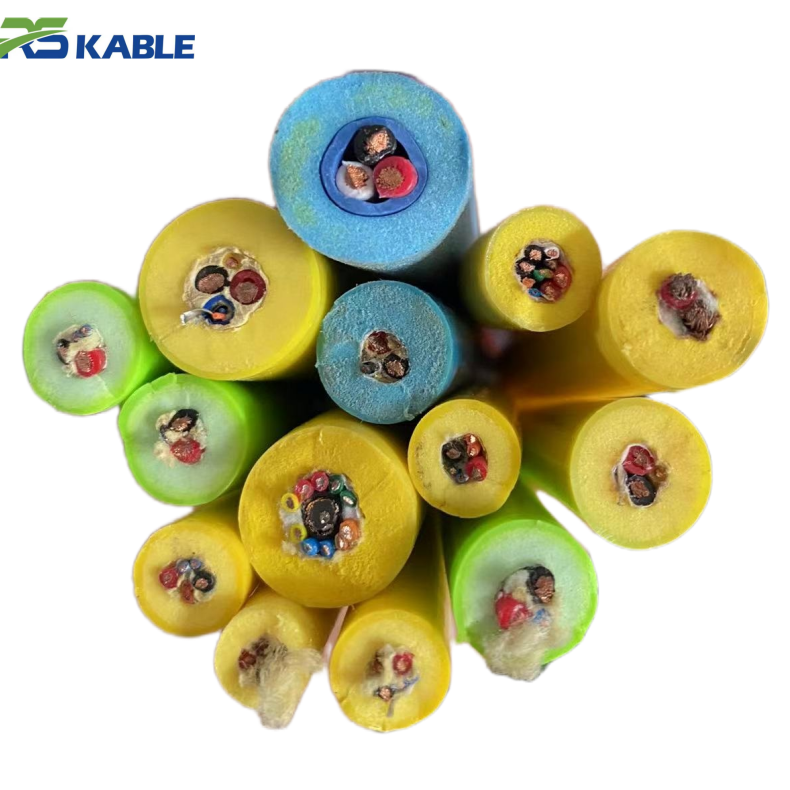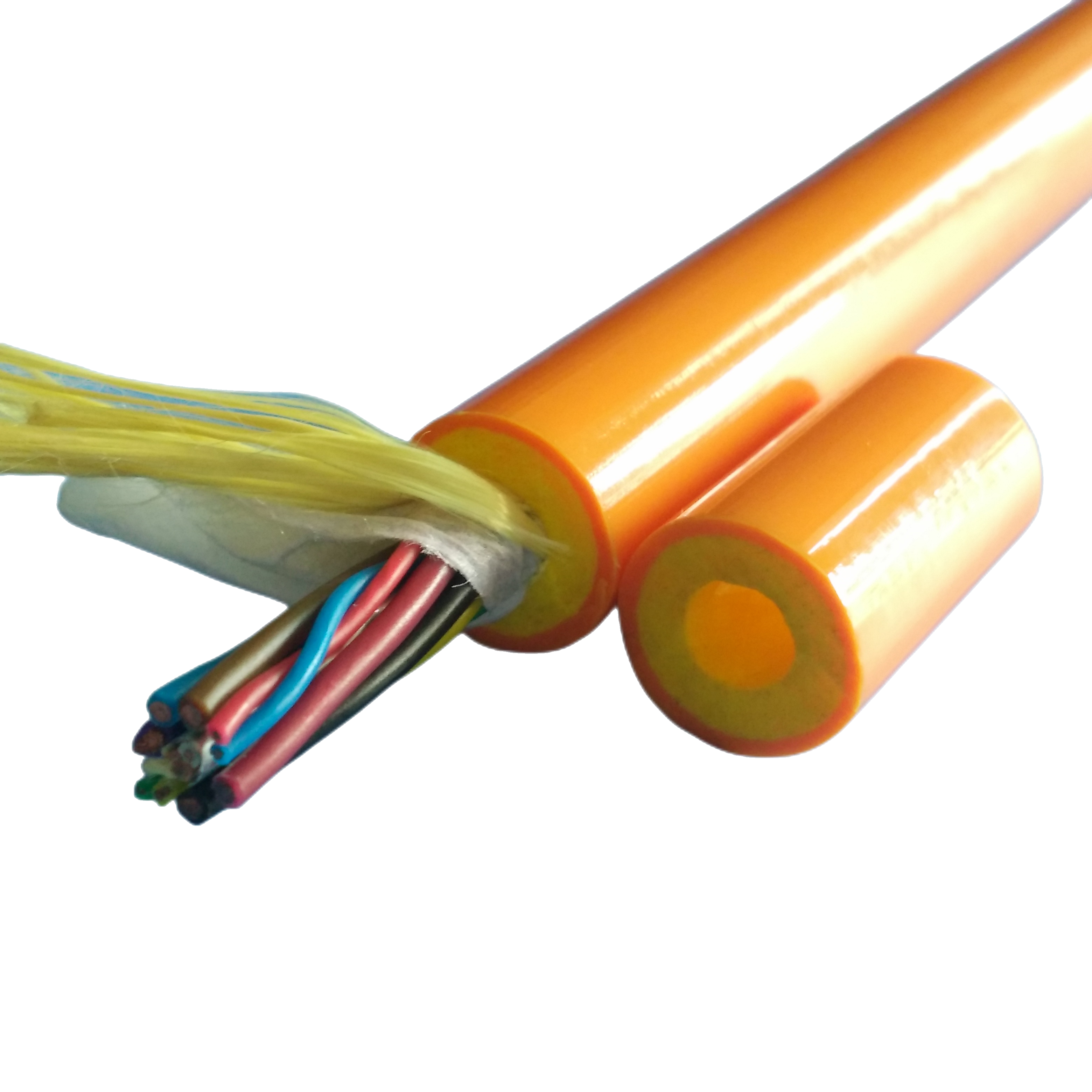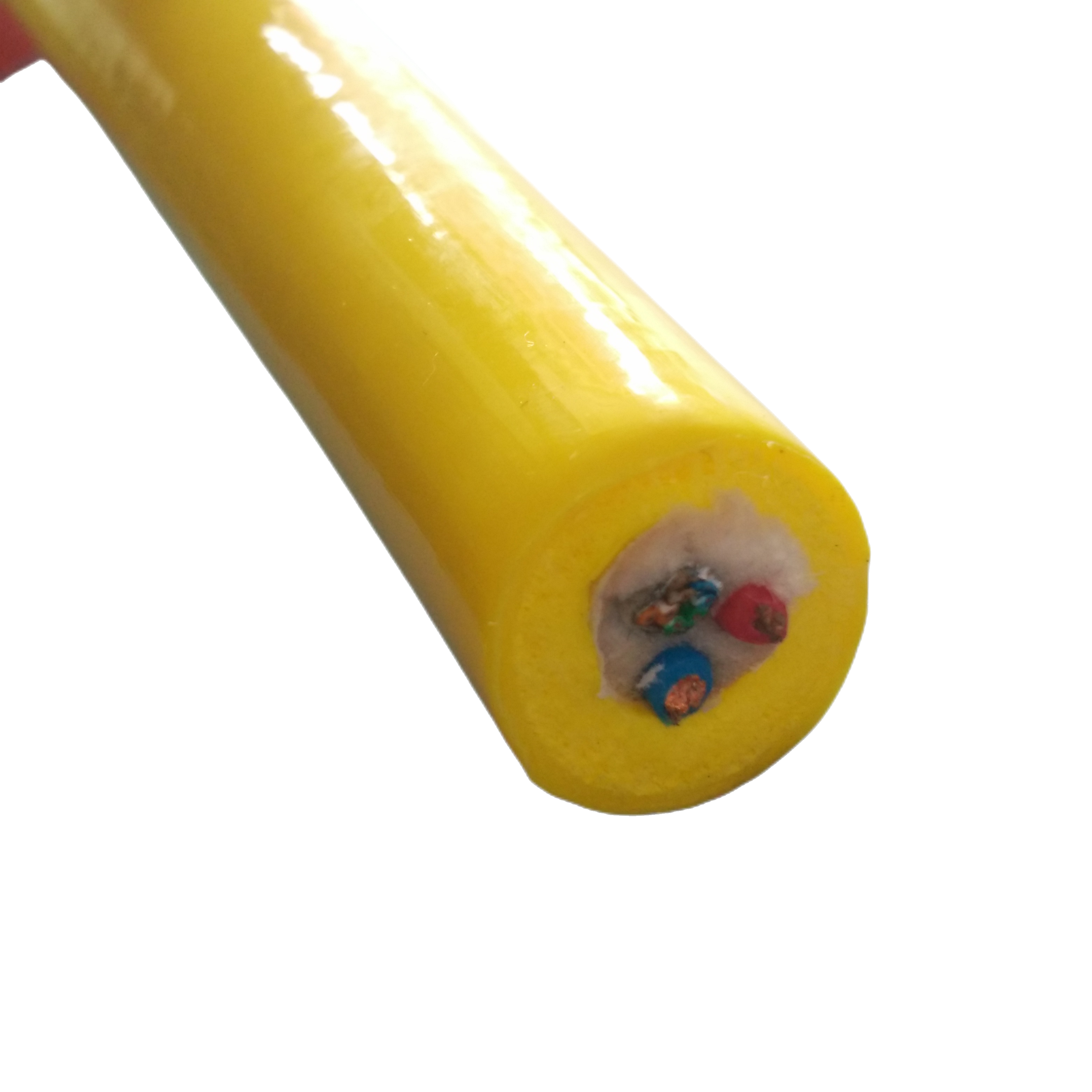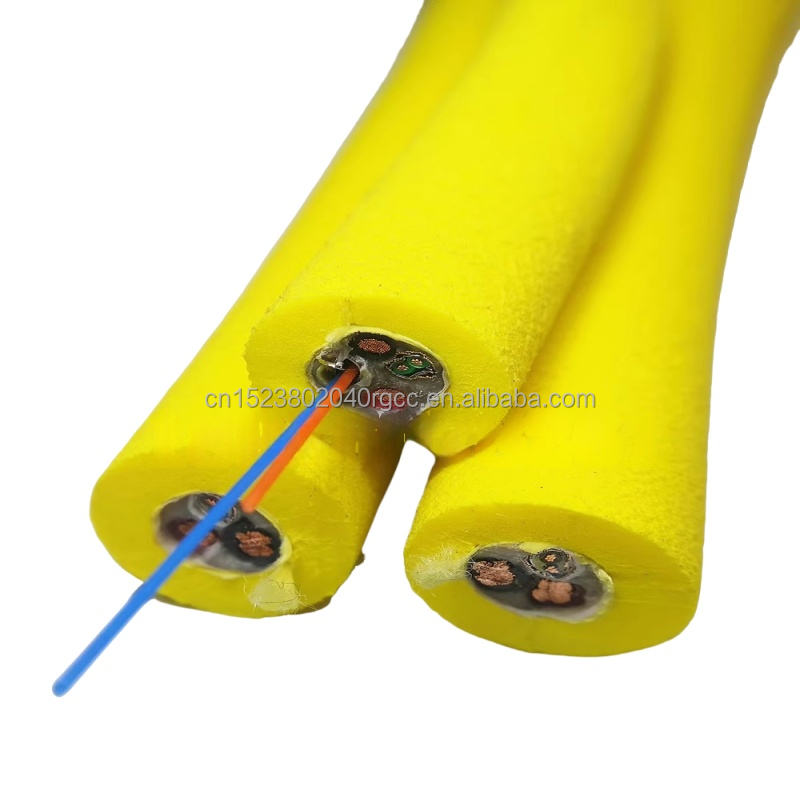



Armored Neutral Buoyancy Fiber Optic Cable for ROV and Underwater Robotics
The RST-AFO-NB series is an armored neutral buoyancy fiber optic cable built for ROV and underwater robotics links where copper Ethernet hits a distance or EMI limit. Its steel-wire or aramid-armored core protects the optical fibers against crush and impact, while the neutral-buoyancy jacket keeps the cable clear of the vehicle’s operating path.
Key benefits:
Armored Neutral Buoyancy Fiber Optic Cable for ROV and Underwater Robotics
The Armored Neutral Buoyancy Fiber Optic Cable is a subsea optical cable built for ROV, AUV, and underwater robotics links where copper Ethernet runs into either a distance limit or an EMI problem. Its steel-wire or aramid-armored core protects the optical fibers against crush and impact during handling and seabed contact, while the neutral-buoyancy outer jacket keeps the cable clear of the vehicle’s operating path. This construction is intended for high-bandwidth video, sensor, and telemetry links where fiber’s distance and interference advantages over copper justify the added construction complexity.
Why Fiber Instead of Copper for This Link
Copper Ethernet tethers hit two limits that fiber does not: usable data rate drops off with cable length long before a typical ROV tether length is reached, and copper pairs are vulnerable to electromagnetic noise from nearby thruster motor drives. A fiber link avoids both problems — attenuation over a single-mode fiber is low enough that tether length is rarely the limiting factor, and light-based transmission is immune to the electrical noise that can degrade a copper Ethernet signal running alongside high-current thruster wiring. The trade-off is mechanical: bare optical fiber is far more fragile under crush and bend stress than copper conductors, which is why this construction pairs the fiber core with steel-wire or aramid armor rather than relying on a jacket alone.
Product Series and Core Attributes
| Model | Fiber Configuration | Armor Type | Buffer Construction | Jacket / Buoyancy | Typical Use |
|---|---|---|---|---|---|
| RST-AFO-NB-04SM | 4-core single-mode | Non-metallic aramid armor | Loose tube, gel-filled | Neutral-buoyancy PU | EMI-sensitive links near thruster wiring |
| RST-AFO-NB-08SM | 8-core single-mode | Single-layer galvanized steel wire armor | Loose tube, gel-filled | Neutral-buoyancy PU | Standard high-bandwidth ROV telemetry |
| RST-AFO-NB-12MM | 12-core multi-mode | Single-layer galvanized steel wire armor | Tight-buffered 900 µm | Neutral-buoyancy PU | Shorter-run, high-fiber-count video links |
| RST-AFO-NB-C | Custom fiber count/type | Project-specified | Project-specified | Project-matched | Non-standard ROV or subsea vehicle integration |
Applications and Use Scenarios
The Armored Neutral Buoyancy Fiber Optic Cable is used wherever an ROV, AUV, or fixed subsea system needs a high-bandwidth optical link that also has to survive continuous submersion, tensile handling, and crush exposure at the seabed:
- ROV high-definition video and telemetry backbone
- AUV internal payload-to-controller fiber links
- Offshore survey and inspection data transmission
- Permanent subsea observatory fiber links
- Deep-sea scientific research instrumentation
- Underwater robotics fiber backbone where EMI immunity is required near thruster drives
In each case, the cable is selected specifically because copper Ethernet either cannot reach the required distance at full bandwidth or is too exposed to electrical noise from nearby power circuits.
Technical Parameters
| Parameter | Specification |
|---|---|
| Fiber type | Single-mode (G.652D-equivalent) or multi-mode (OM3-equivalent), model-dependent |
| Fiber count | 4, 8, or 12 cores standard; custom counts available |
| Buffer construction | Loose tube with gel water-blocking fill, or tight-buffered 900 µm |
| Central strength member | GRP (glass-reinforced plastic) rod |
| Armor | Single-layer galvanized steel wire armor, or non-metallic aramid armor for EMI-sensitive/weight-sensitive applications |
| Jacket material | Neutral-buoyancy polyurethane compound |
| Net buoyancy | Approximately neutral (0 ± 1 g/m), tunable by jacket formulation |
| Tensile breaking load | Approximately 500–800 kgf for steel-wire-armored variants, model-dependent |
| Crush resistance | Rated to withstand standard seabed-contact crush testing without fiber attenuation increase |
| Attenuation (single-mode) | ≈ 0.36 dB/km at 1310 nm, ≈ 0.22 dB/km at 1550 nm, typical for G.652D-equivalent fiber |
| Operating temperature | -20°C to 60°C |
| Depth rating | Confirmed according to armor type, jacket thickness, and project depth class |
Attenuation figures represent typical values for standard single-mode telecom-grade fiber under this buffer construction; a shipment-specific test report should be requested for long-run or precision-timing applications.
Construction Detail
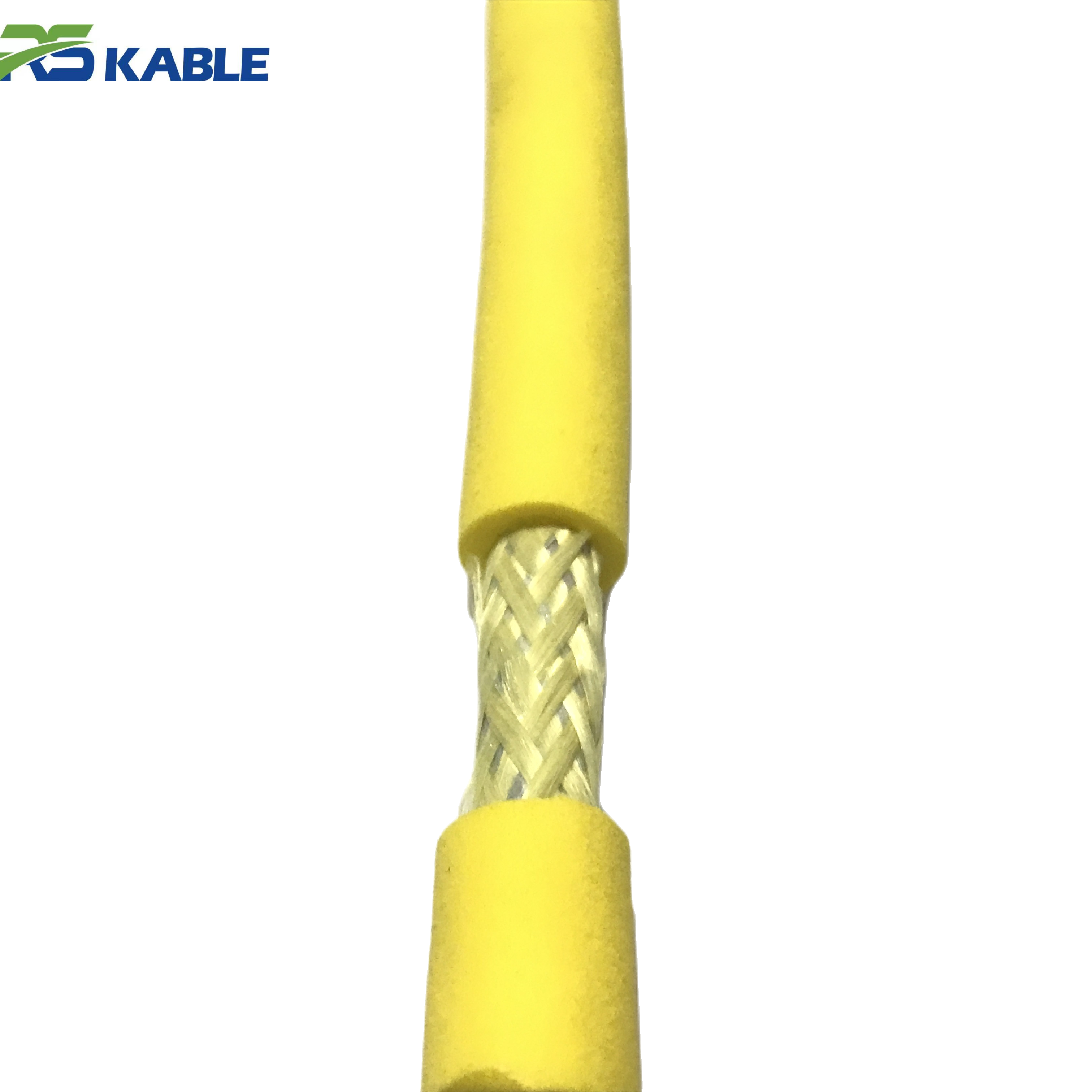
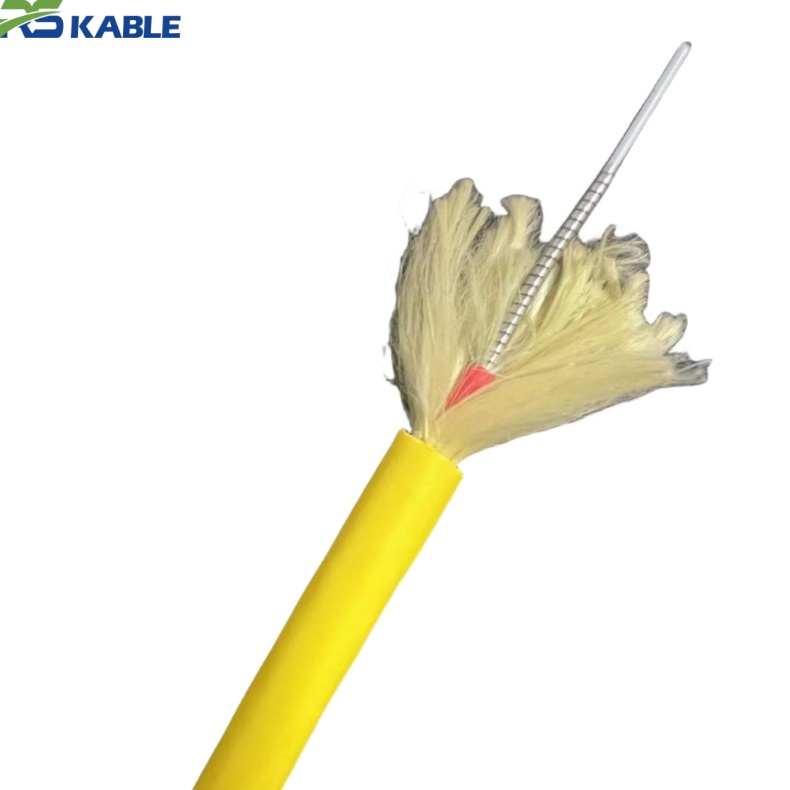
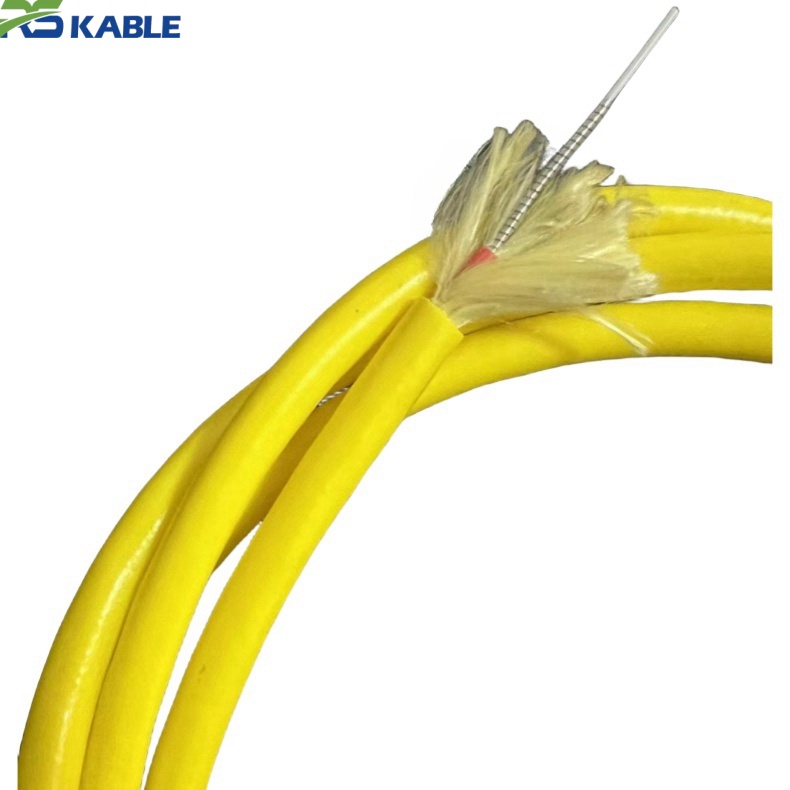
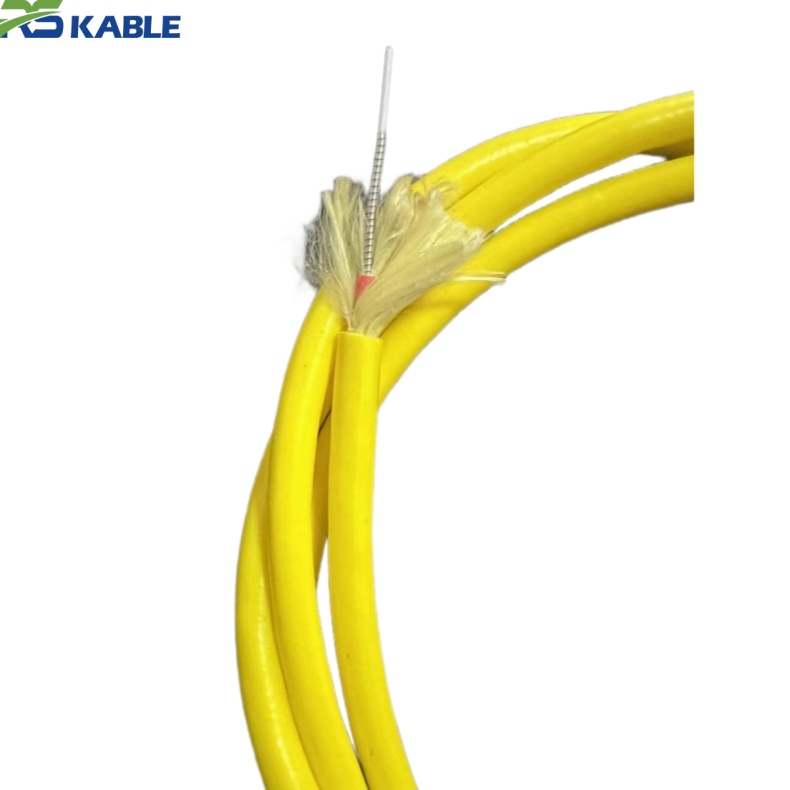
At the center, a GRP rod carries the primary compressive and bending load, keeping the surrounding fiber buffer tubes from bearing that stress directly. Optical fibers sit inside gel-filled loose buffer tubes (or, on the tight-buffered variant, individually coated to 900 µm) to prevent water migration along the fiber path if the outer construction is locally breached. Around this core, a layer of aramid yarn adds tensile capacity before the armor layer — either galvanized steel wire for maximum crush and impact resistance, or non-metallic aramid armor where EMI immunity or reduced weight matters more than absolute crush rating. The outer neutral-buoyancy polyurethane jacket brings the finished, armored assembly close to the density of seawater despite the added weight of the armor layer, which is a meaningfully harder buoyancy target to hit than on an unarmored copper cable of similar diameter.
Standards Framework
Fiber selection and attenuation qualification follow the general parameters of ITU-T G.652 for single-mode optical fiber and the test methodology philosophy of IEC 60793 for optical fiber measurement. Jacket and sheath material qualification follows the general testing approach of IEC 60092-350 for offshore and shipboard cable materials. These references describe the engineering framework the construction is built against; a project-specific type approval or test certificate should be requested separately where a classification society or client specification requires it.
Armored vs Unarmored Fiber Optic Cable for ROV Use
| Metric | Armored Neutral Buoyancy Fiber Optic Cable | Unarmored Fiber Optic Cable |
|---|---|---|
| Crush resistance | Rated for seabed-contact crush exposure | Limited, jacket-dependent only |
| Tensile breaking load | ≈ 500–800 kgf (steel-wire variant) | Typically well below 200 kgf |
| Suitable for direct seabed contact | Yes, within rated depth and handling limits | Not recommended |
| Weight and diameter | Higher, offset by neutral-buoyancy jacket tuning | Lower |
| Recommended use | ROV/AUV tethers, towed systems, seabed-adjacent routing | Protected internal routing only |
Fiber Optic vs Copper Ethernet for ROV Telemetry
| Metric | Armored Fiber Optic Cable | Copper Ethernet Cable (4×2×26AWG) |
|---|---|---|
| Bandwidth over long tether lengths | Maintained with minimal loss | Degrades with length, especially at gigabit rates |
| EMI immunity near thruster drives | Immune, optical transmission | Susceptible without shielding |
| Mechanical fragility of the core | Higher (fiber is crush-sensitive without armor) | Lower (copper conductors tolerate more crush) |
| Best use | Long-run, high-bandwidth, EMI-heavy installations | Shorter runs, lower bandwidth requirement, lower cost |
Ordering and Specification Guide
| Field | What to Provide |
|---|---|
| Fiber type and count | Single-mode or multi-mode, number of fiber cores required |
| Armor type | Steel-wire armor (maximum crush resistance) or non-metallic aramid armor (EMI-sensitive/weight-sensitive) |
| Required cable length | Measured from control pod to the farthest connection point |
| Depth/pressure class | Confirmed operating depth for jacket, armor, and pressure-handling selection |
| Connector interface | Underwater-mateable optical connector or dry-mate termination |
| Tensile handling profile | Expected load during launch, recovery, and general handling |
Inquiry Example
8-core single-mode, single-layer steel wire armor, neutral-buoyancy PU jacket, underwater-mateable optical connector, 50 meters, ROV HD video telemetry backbone
Request a Quote
Send the application details above — fiber type, armor requirement, and length — for model matching, structure confirmation, and pricing on the Armored Neutral Buoyancy Fiber Optic Cable.
FAQ
Why does this fiber optic cable need armor if fiber is already inside a jacket?
Bare optical fiber is far more sensitive to crush and point-load stress than copper conductors. A jacket alone protects against abrasion and water contact but not against the kind of crush force a cable can experience from seabed contact or being pinched during handling — the armor layer is what actually protects fiber continuity under those loads.
Should I choose single-mode or multi-mode fiber for an ROV link?
Single-mode fiber is the standard choice for longer tether lengths and higher-bandwidth links because it maintains signal quality over greater distances. Multi-mode fiber can be a reasonable choice for shorter runs where connector and transceiver cost is a bigger factor than maximum achievable distance.
When should I choose steel wire armor over non-metallic aramid armor?
Steel wire armor gives the highest crush resistance and is the standard choice for direct seabed-contact routing. Non-metallic aramid armor is preferred where electromagnetic interference immunity or reduced overall cable weight matters more than maximum crush rating, since it removes the metallic layer entirely.
Does armor affect the cable’s neutral buoyancy?
Yes — armor adds weight that the outer jacket has to offset to maintain neutral buoyancy, which is why the jacket formulation on armored variants is tuned specifically for the added armor weight rather than reused directly from an unarmored cable’s jacket recipe.
What depth rating does this cable support?
Depth rating is confirmed according to armor type and jacket thickness rather than a single fixed figure across all variants — steel-wire-armored constructions generally support greater working depth and crush exposure than non-metallic armor of similar diameter.
Is custom fiber count or armor type available?
Yes. Fiber type, fiber count, armor type, and connector interface can all be matched to the specific ROV or subsea vehicle integration.
Technical content reviewed by the cable engineering team prior to publication. Figures represent typical specifications for this construction class; request a project-specific test certificate for classification-society submissions or long-distance precision links.