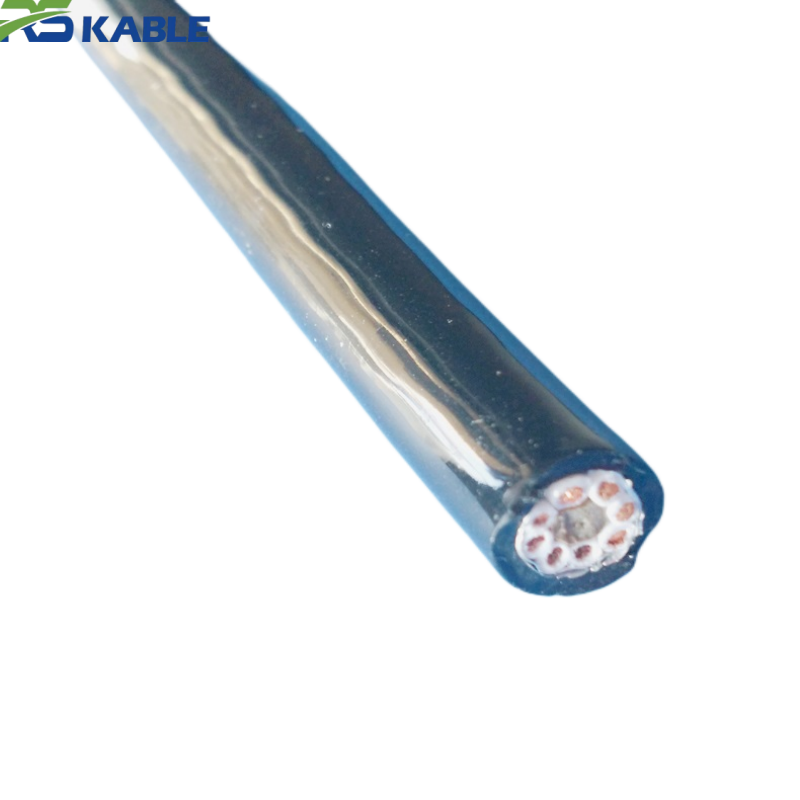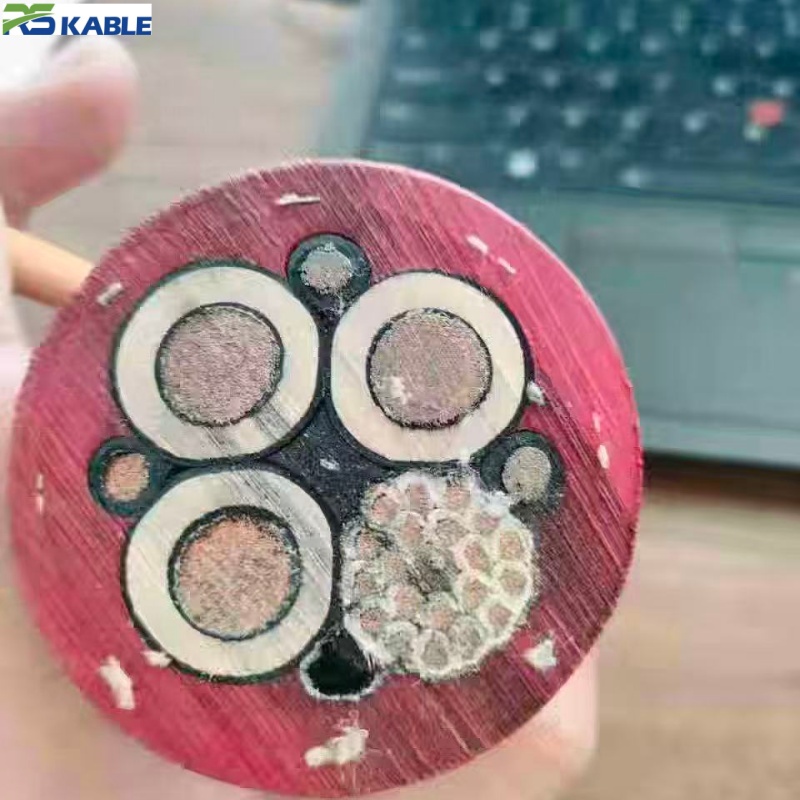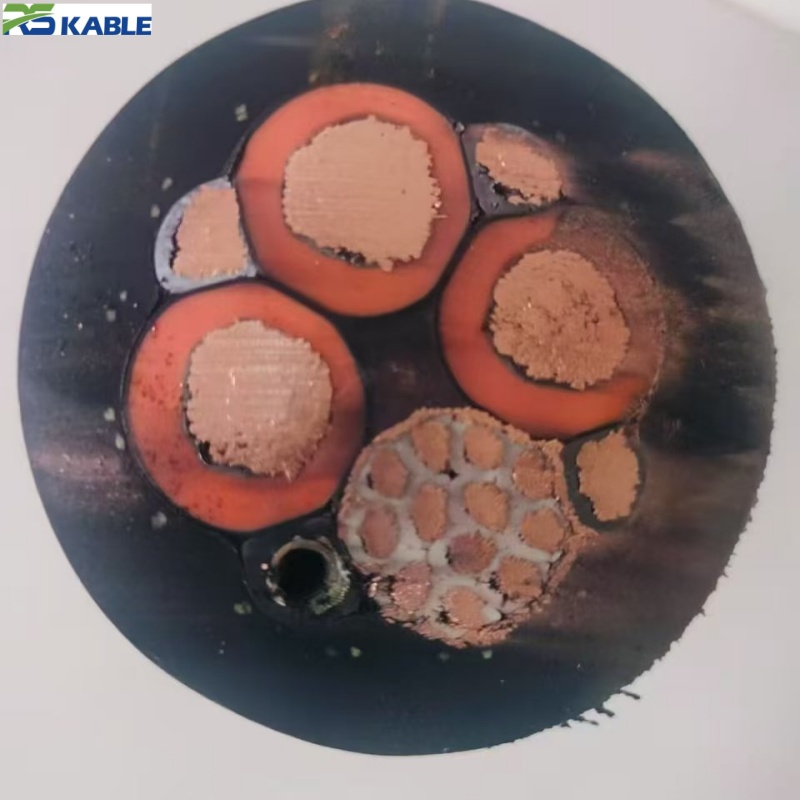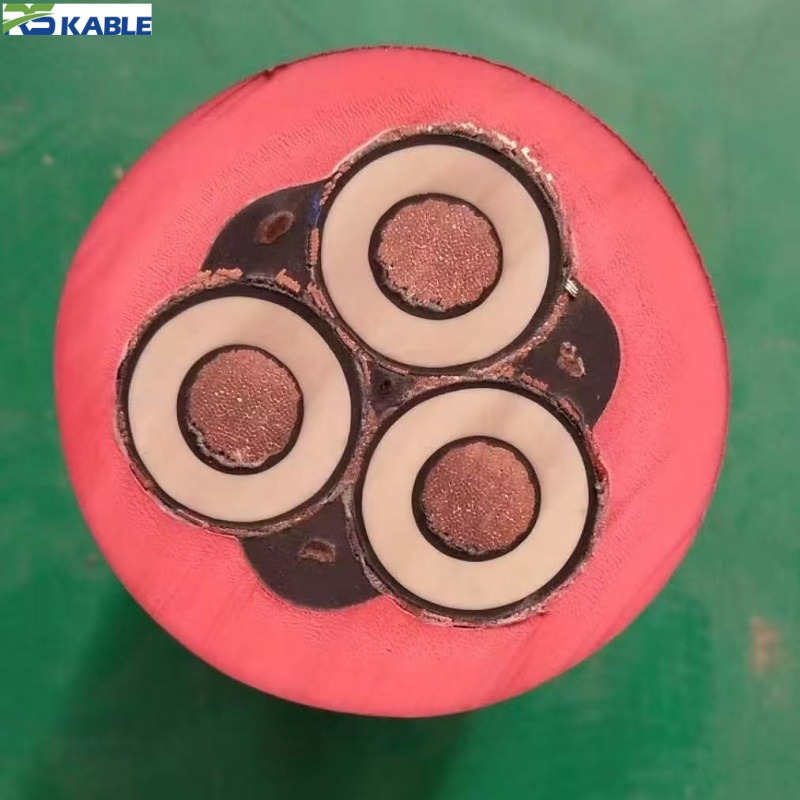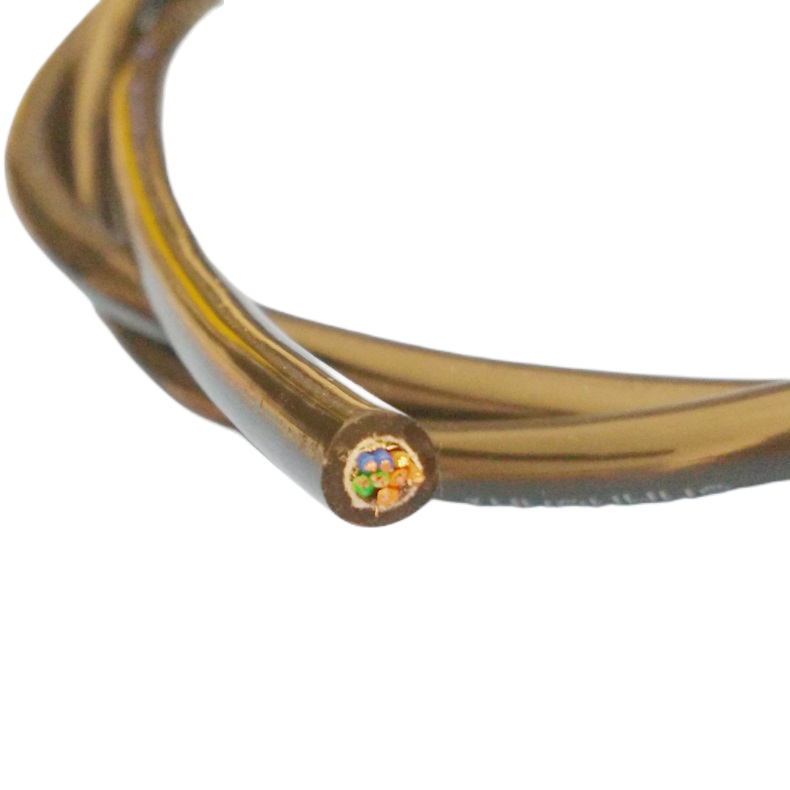



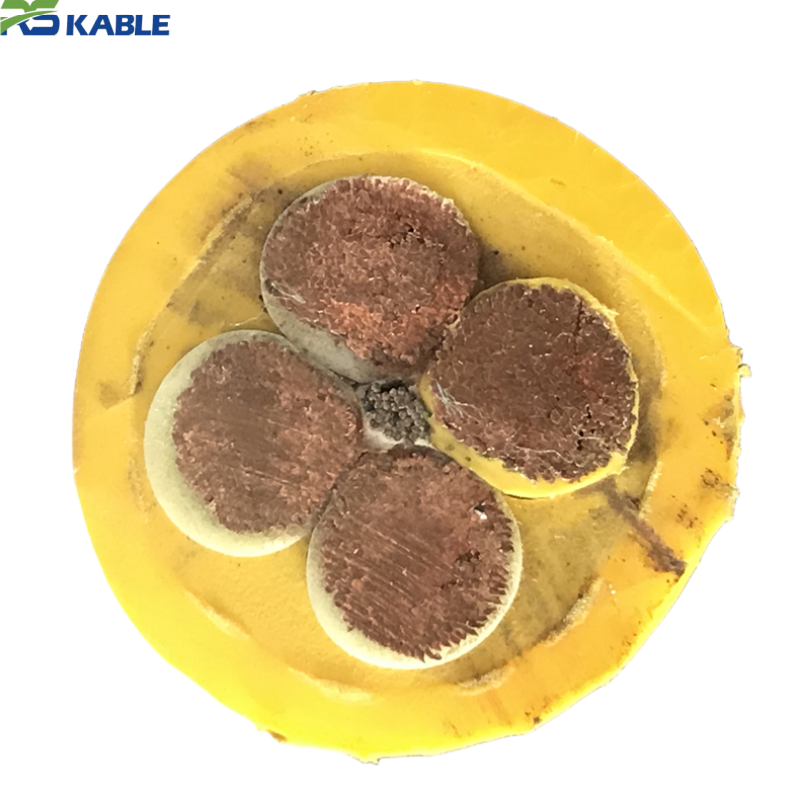
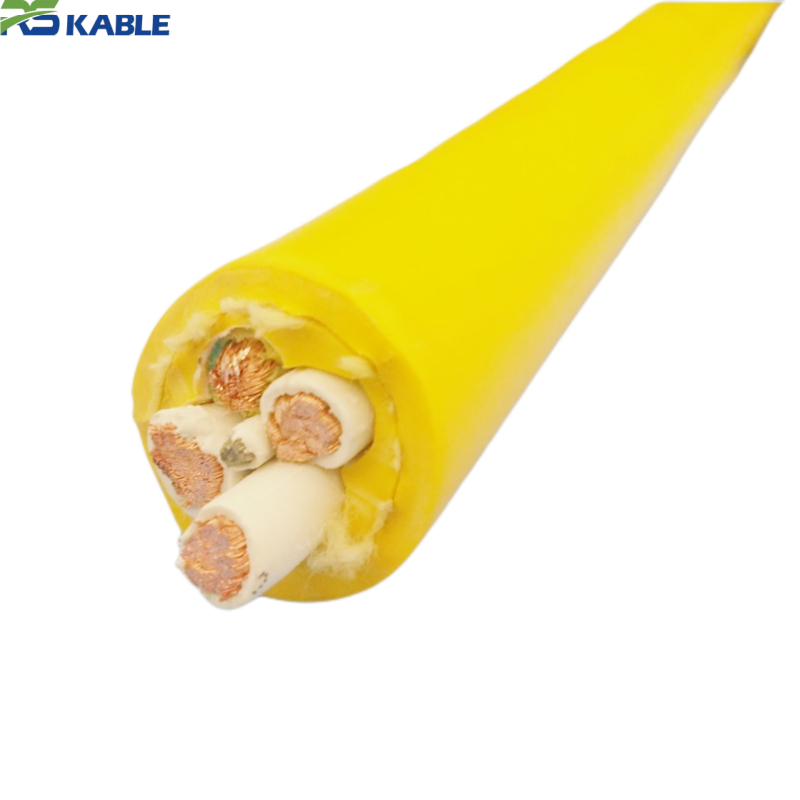
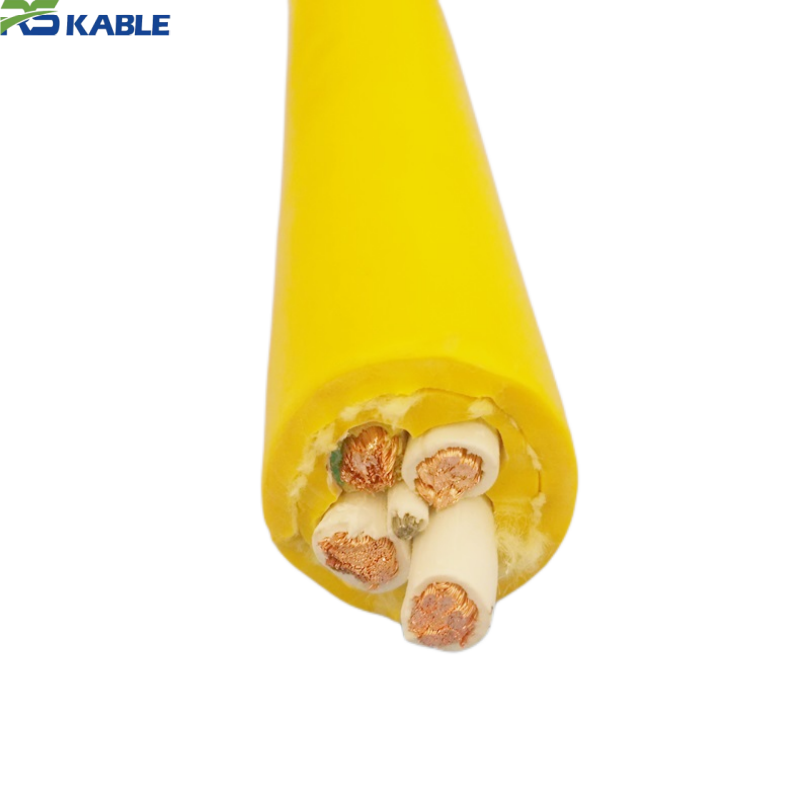
Shipboard Grab Cable 4×16mm² / 4×25mm² | Flexible Power Cable for Marine Cranes
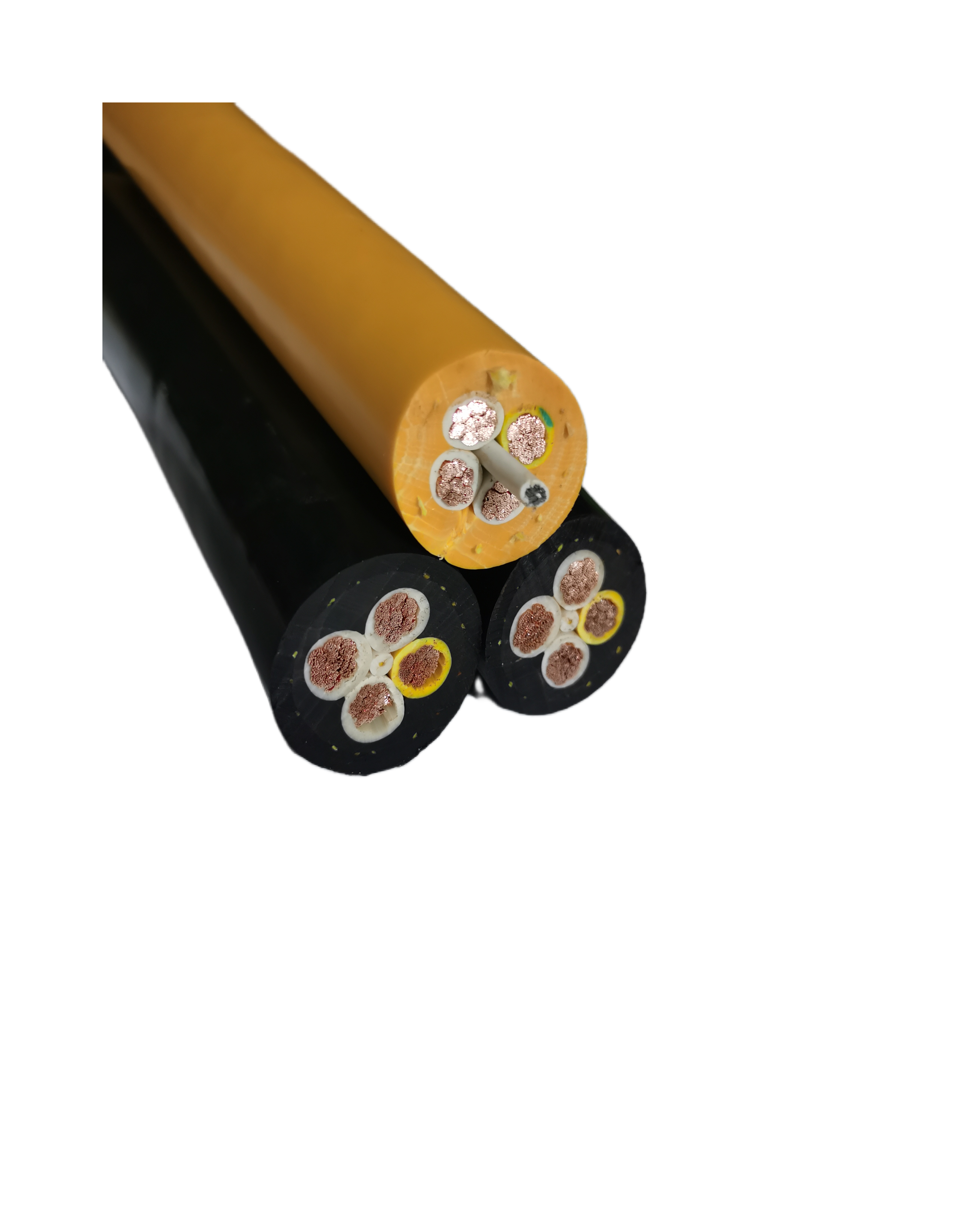
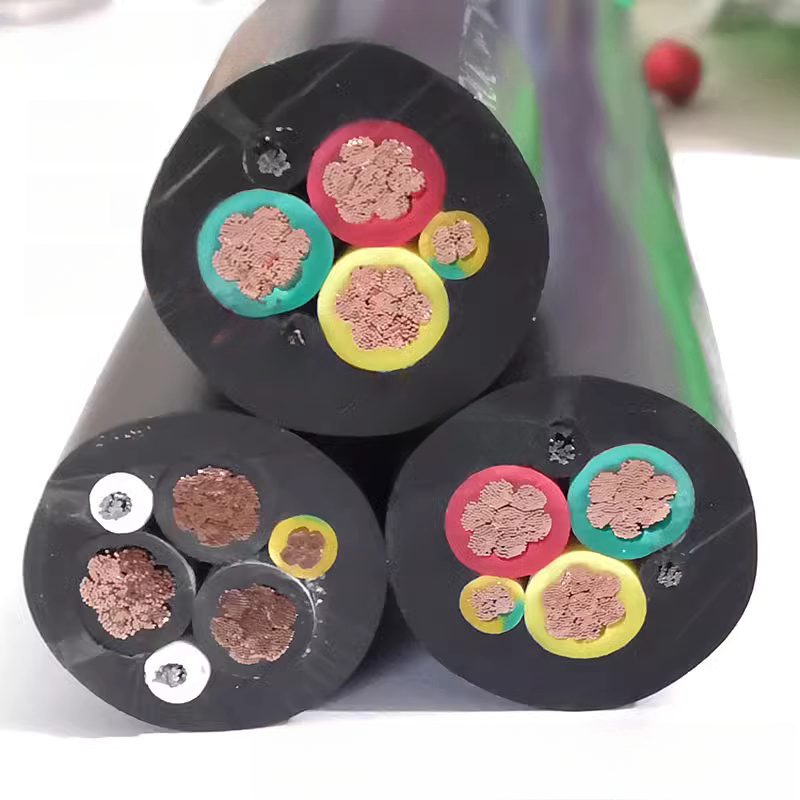
The RST-SGC series is a 4-core flexible power cable built for the reeling and festoon systems on shipboard and port grab cranes. Its EPR-insulated, CR/CPE-sheathed construction resists oil, ozone, UV, and salt exposure on an open deck, while the Class 5 flexible conductor tolerates continuous flexing through reeling-drum service without early fatigue.
Key benefits:
Shipboard Grab Cable 4×16mm² / 4×25mm² | Flexible Power Cable for Marine Cranes
This 4-core flexible rubber power cable is built for the reeling and festoon systems on shipboard and port grab cranes, where the cable spools continuously in and out as the grab travels along the boom and must tolerate constant flexing, self-weight tension, and sustained exposure to salt air, oil, and UV on an open deck. Sizing starts with matching conductor cross-section to the crane motor’s load — the table below covers both standard sizes before the electrical, mechanical, and standards detail that follows.
Conductor Sizing and Load Capacity
| Cross-Section | Typical Ampacity (free air, 4-core) | Typical Suitable Motor Load Range | Model |
|---|---|---|---|
| 4×16 mm² | ≈ 87 A | Small to mid-size grab crane hoist/luffing motors | RST-SGC-416 |
| 4×25 mm² | ≈ 114 A | Larger grab crane hoist motors, higher-duty bulk handling cranes | RST-SGC-425 |
| Custom | Project-specified | Non-standard crane motor ratings | RST-SGC-C |
Ampacity figures are typical values for this construction in free-air reeling drum service; actual permissible current should be confirmed against the specific crane motor’s rated current and the installation’s ambient temperature and reeling drum ventilation, since drum-wound sections run hotter than free-hanging sections of the same cable.
Electrical and Material Specification
| Parameter | Typical Value |
|---|---|
| Rated voltage | 0.6/1 kV (U0/U) |
| Conductor | Flexible stranded copper, IEC 60228 Class 5 |
| Insulation | EPR (ethylene propylene rubber), 90°C conductor rating |
| Outer sheath | CR/CPE (polychloroprene/chlorinated polyethylene rubber) |
| Sheath resistance | Oil, ozone, UV, and seawater resistant |
| Core count | 4 (typically 3 phase + earth, or 3 phase + neutral per project) |
| Insulation resistance | ≥ 100 MΩ·km at 500 V DC |
Mechanical and Flex Performance
| Metric | Typical Value |
|---|---|
| Flex fatigue rating | Rated for continuous reeling-drum duty over the cable’s designed service life |
| Minimum bend radius (dynamic, reeling) | 6× overall diameter |
| Minimum bend radius (static) | 4× overall diameter |
| Tensile handling | Sized to support the cable’s own weight across the festoon or reeling span without conductor strain, not for use as a load-bearing lifting element |
| Operating temperature | -25°C to 90°C (conductor), sheath rated for continuous outdoor marine exposure |
This cable is not a lifting or load-bearing element — the crane’s own hoist wire rope carries the grab and cargo load, and the power cable should be routed and supported so it only carries its own weight across spans, not additional tension from crane movement.
Construction
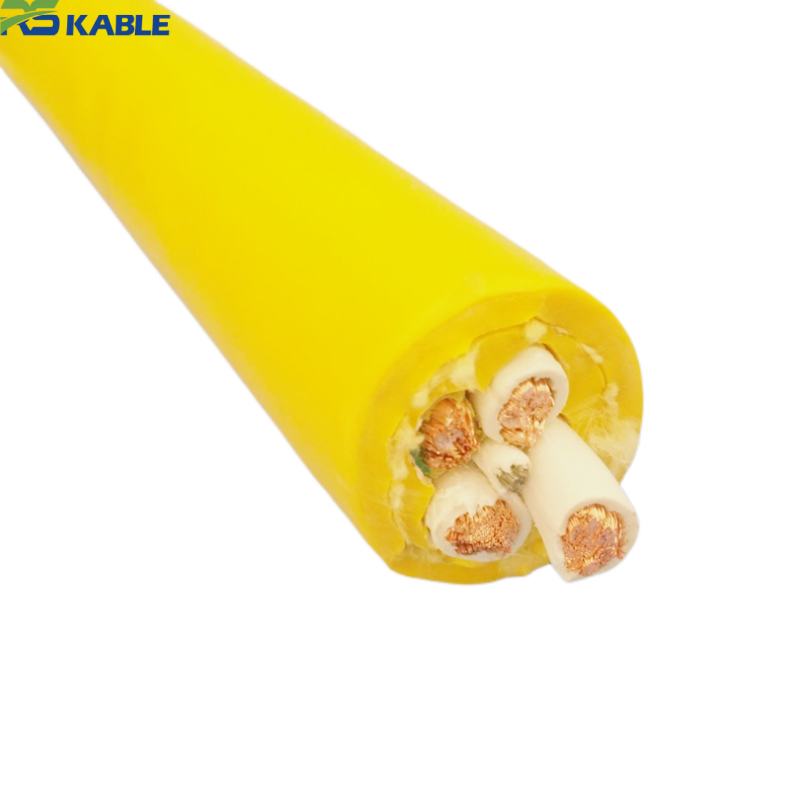
Each conductor uses IEC 60228 Class 5 fine-stranded flexible copper to tolerate the constant flexing of reeling-drum service, insulated with EPR for its combination of flexibility and thermal stability under sustained motor load. The four cores are cabled together with fillers as needed to maintain a round, stable cross-section, then covered by a CR/CPE outer sheath selected specifically for the combination of oil exposure (common on deck near hydraulic and lubrication points), ozone and UV exposure from sustained outdoor sunlight, and salt air common to shipboard and port crane environments — a sheath compound suited to only one of these conditions tends to degrade faster than one engineered for all three together.
Standards Framework
Conductor stranding follows IEC 60228 Class 5 flexible conductor requirements, and the rubber insulation and sheath construction follows the general testing philosophy of IEC 60245-3 for EPR-insulated flexible cables. Shipboard-specific material and installation qualification follows the general framework of IEC 60092-350 and IEC 60092-376 for shipboard power cable materials and construction. These references describe the engineering approach the cable is built against; a project-specific type approval or classification society certificate should be requested separately where a vessel’s flag state or class notation requires it.
Field Note: Bulk Terminal Grab Crane Retrofit
A bulk cargo terminal operating grab cranes on continuous reeling drums reported that standard PVC-sheathed power cables in the same service developed visible sheath cracking and required replacement roughly every 12–18 months, attributed to combined UV, oil, and salt exposure at the drum and festoon sections. After switching to a CR/CPE-sheathed cable of this type in the same installations, reported sheath-related replacements dropped to roughly once every 3–4 years across the terminal’s logged maintenance records. This reflects one operator’s reported maintenance pattern rather than a controlled comparative trial, and actual service life depends on local climate, duty cycle, and reeling drum design.
CR/CPE Marine Sheath vs Standard PVC Power Cable Sheath
| Metric | CR/CPE Sheath (this product) | Standard PVC Sheath |
|---|---|---|
| Oil resistance | Better | Lower, softens with prolonged oil contact |
| Ozone/UV resistance in outdoor deck exposure | Better | Lower, prone to surface cracking |
| Flexibility retention in continuous reeling service | Better at low and high temperature extremes | Stiffens more at low temperature |
| Reported sheath service life in this duty (bulk terminal data)* | ≈ 3–4 years | ≈ 12–18 months |
| Recommended use | Shipboard/port crane reeling and festoon systems | Fixed indoor or low-exposure power wiring |
*Based on the field note above and general reporting for this cable class; not a guaranteed replacement interval for every installation and climate.
Ordering Matrix
| If your application involves… | Then specify… |
|---|---|
| A specific crane motor’s rated current | Confirm against the ampacity table above, accounting for reeling-drum ventilation |
| Continuous reeling-drum duty | Confirm expected duty cycle and drum diameter against the minimum dynamic bend radius |
| A 3-phase + neutral vs 3-phase + earth configuration | Specify core function assignment at the ordering stage |
| A vessel classification society requirement | Confirm the flag state or class notation your installation must be certified against |
| Sustained high oil or chemical exposure beyond standard deck conditions | A project-specific sheath compound review |
FAQ
How do I know whether I need 4×16mm² or 4×25mm²?
Match the cable’s ampacity to your crane motor’s rated current, with margin for the fact that drum-wound sections of the cable run hotter than free-hanging sections. If the motor’s rated current is close to the 16mm² cable’s ampacity limit, the 25mm² size is the safer specification rather than running at the edge of rating.
Can this cable be used as a lifting or load-bearing element?
No. The crane’s hoist wire rope must carry the grab and cargo load; this power cable is sized only to support its own weight across the festoon or reeling span and should never be relied upon for structural or lifting duty.
Why does the sheath material matter this much for a shipboard crane cable?
Deck-mounted crane cables face oil exposure near hydraulic points, sustained UV and ozone exposure from continuous outdoor use, and salt air — a sheath compound optimized for only one of these conditions tends to fail faster than one engineered for the combination, which is the specific reasoning behind the CR/CPE sheath choice over standard PVC.
What is the difference between the dynamic and static minimum bend radius figures?
The dynamic figure (6× diameter) applies to sections that flex repeatedly, such as at the reeling drum or festoon trolley. The static figure (4× diameter) applies to fixed termination points that are bent once during installation and not flexed again in service.
Does this cable require classification society certification?
Not by default — it is built to the general engineering framework of the referenced IEC standards. Where a specific vessel’s flag state or class notation requires formal type approval, that should be confirmed and arranged as a project-specific service tied to the exact construction ordered.
Is a custom cross-section or core configuration available?
Yes. Cross-section, core count and function assignment (3-phase + neutral vs 3-phase + earth), and sheath compound can be matched to specific crane motor and vessel requirements beyond the two standard sizes.
Technical content reviewed by the cable engineering team prior to publication. Figures represent typical performance for this construction class; request a project-specific test certificate for classification-society submissions or high-duty-cycle installations.