

What Type of Coaxial Cable Is Used for CCTV?
If you want the short technical answer first, here it is: RG59 is the most common coaxial cable used for CCTV, while RG6 is often chosen for longer runs or installations where lower signal loss is important. In many practical analog and HD-over-coax camera projects, installers use RG59 in a Coaxial + Power Cable format because it carries video and camera power in one run, making installation easier and more organized.
That simple answer solves the basic question, but in real CCTV projects, cable selection is not only about naming the cable type. The right cable depends on camera format, transmission distance, power requirements, installation environment, and whether the project is a fresh install or an upgrade of an older analog system. A cable that works well in one job may create voltage drop, signal instability, or premature failure in another.
That is why understanding CCTV coaxial cable properly matters. This guide explains what type of coaxial cable is used for CCTV, why RG59 is still the standard in many surveillance systems, when RG6 is a better option, how Coaxial + Power Cable fits real installation work, and which common mistakes are most likely to cause signal or power problems later. Whether you are a distributor, installer, contractor, security integrator, or end user comparing cable options, this article is designed to answer the question clearly and practically.
Why Coaxial Cable Still Matters in CCTV
Even though IP cameras and Ethernet-based systems are now common, coaxial cable is still highly relevant in the CCTV world. Many analog systems remain in service, and many upgrade projects continue to use coax-based wiring because it is already installed, familiar to technicians, and fully compatible with formats such as AHD, TVI, and CVI.
In these systems, the cable affects more than just “whether the image appears.” It directly influences:
-
video stability
-
image clarity over distance
-
resistance to interference
-
power delivery to the camera
-
installation speed
-
maintenance efficiency
-
overall project reliability
A low-grade or poorly matched cable can cause fuzzy images, rolling lines, night-time camera resets, weak infrared performance, or repeated service calls. A good cable, by contrast, supports stable surveillance performance over the long term.
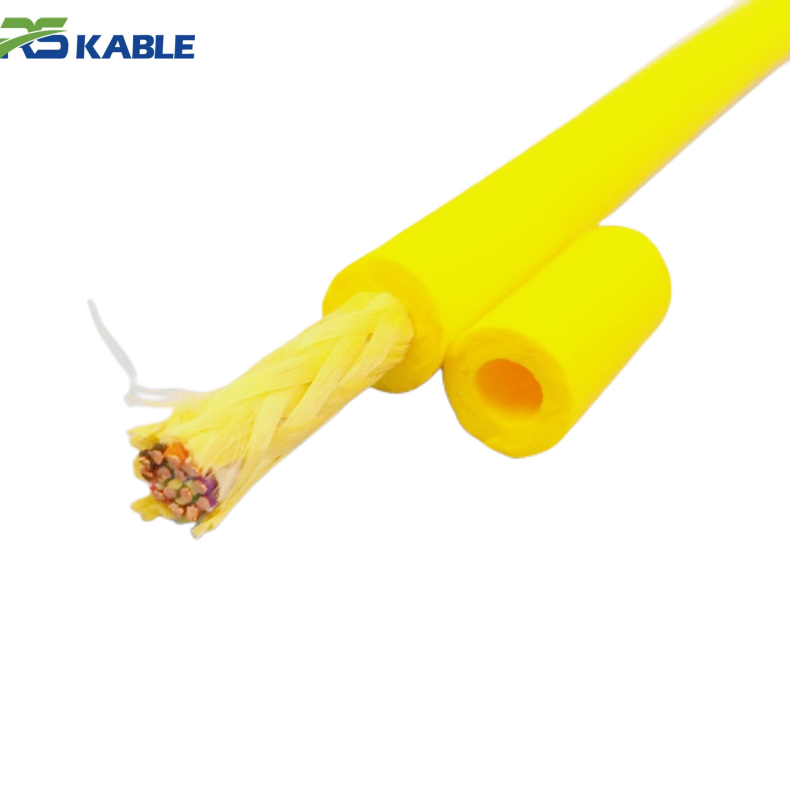
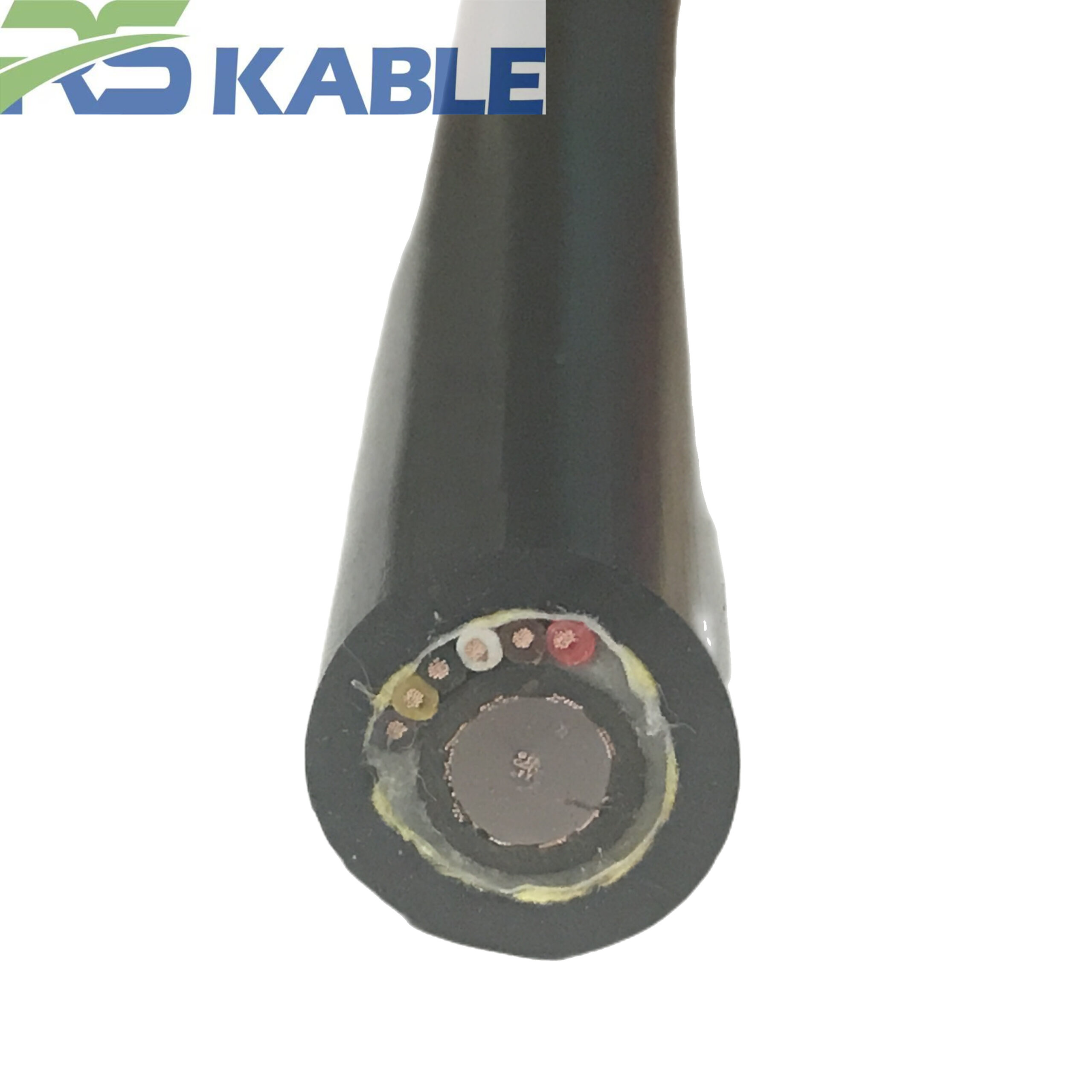
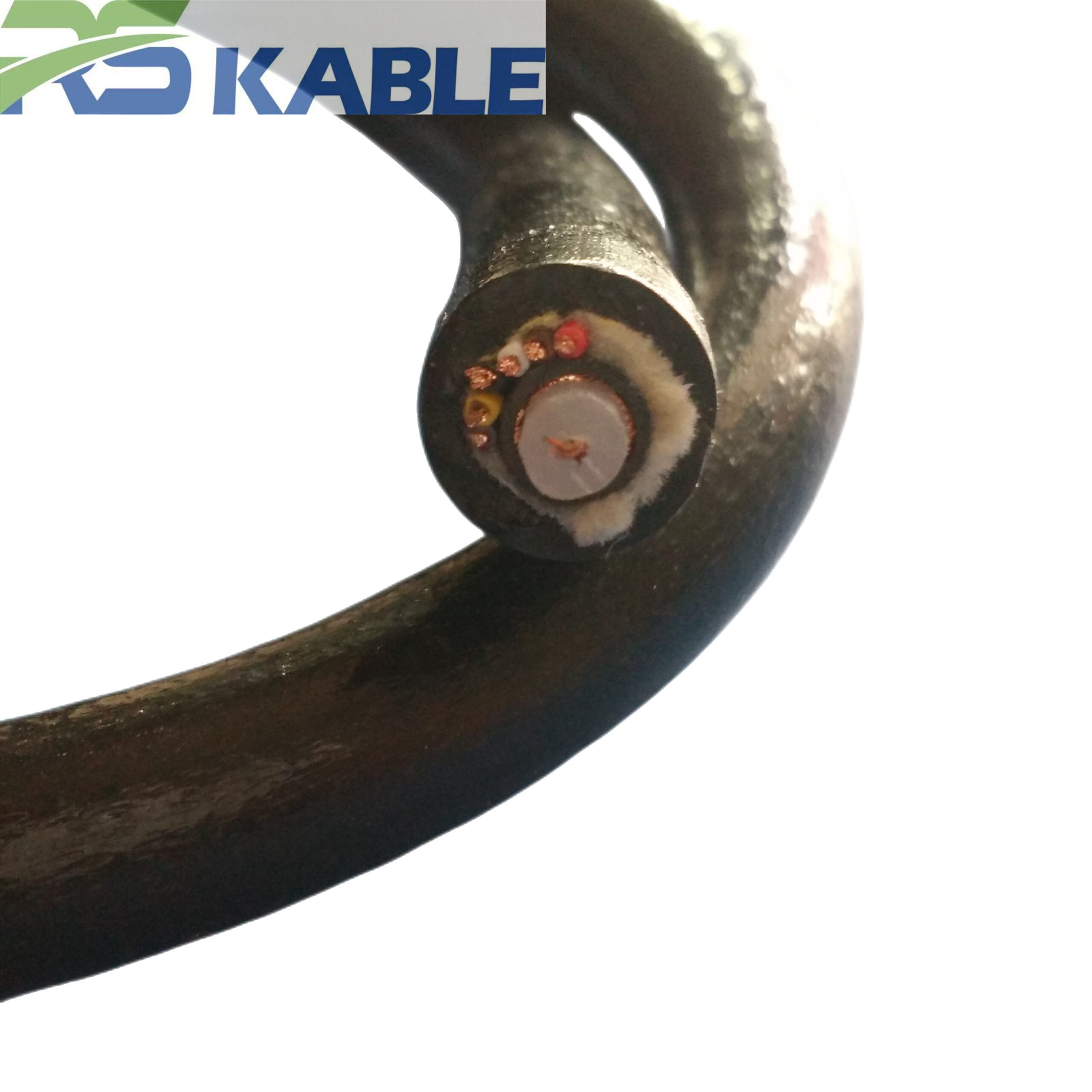
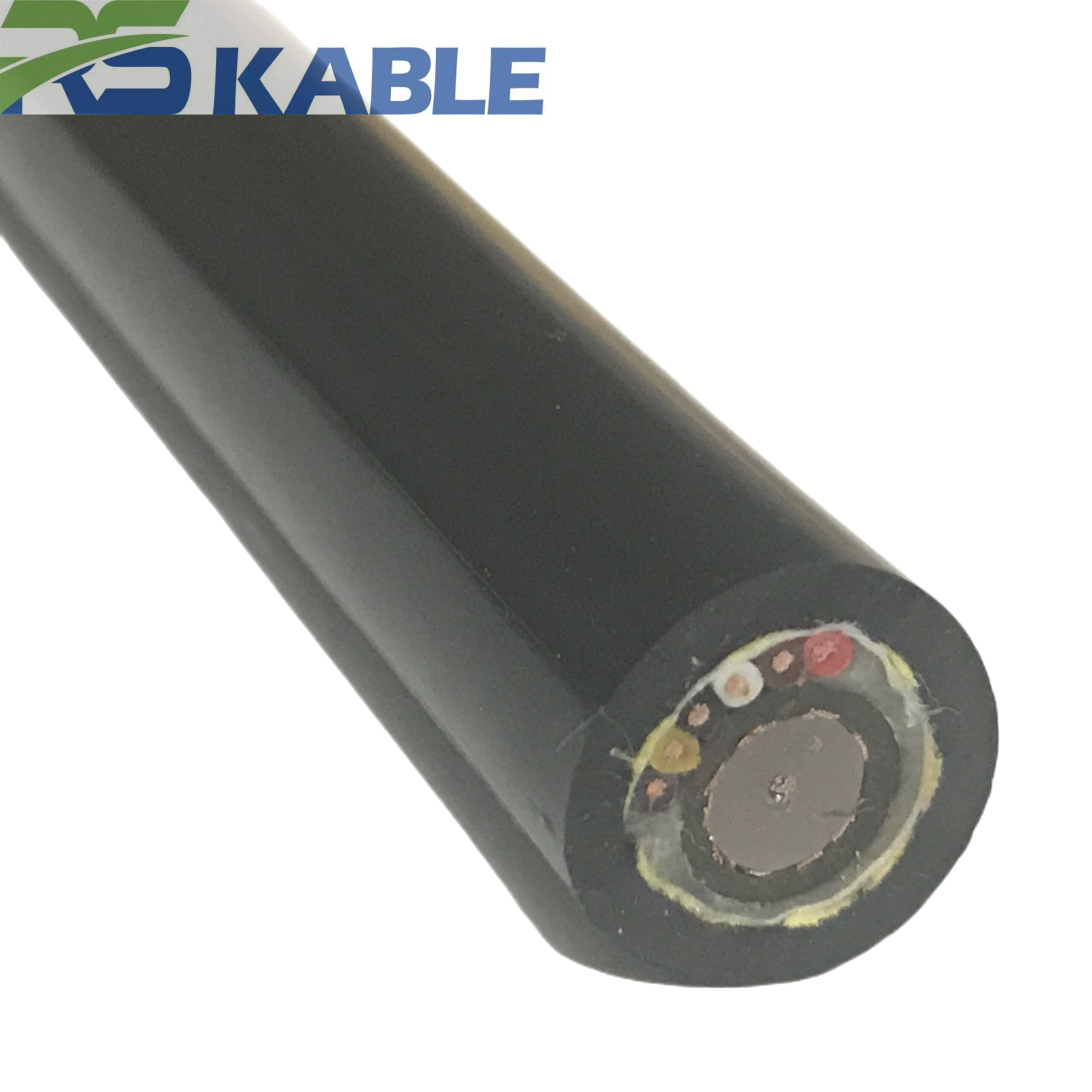
Subsea Data Transmission – Neutral Buoyancy Cable – Signal Integrity – Shielded & Low Noise
This neutral buoyancy cable is engineered for **subsea data transmission**, featuring **shielded low-noise signal pairs**, **optimized conductor geometry**, and a **balanced hybrid structure** to ensure strong signal integrity, reduced EMI, and reliable underwater communication in demanding subsea environments.
The Most Common CCTV Coaxial Cable Types
When people ask what type of coaxial cable is used for CCTV, the answer usually comes down to three names: RG59, RG6, and occasionally RG11. Among them, RG59 is by far the most common in standard CCTV work.
RG59: The Standard Choice for Most CCTV Installations
RG59 is the cable most often associated with CCTV. It has been used for years in analog surveillance and remains widely used in HD-over-coax camera systems.
Why RG59 is so common
RG59 is popular because it offers a practical balance of:
-
correct 75-ohm impedance for CCTV video
-
manageable cable size
-
good installation flexibility
-
solid performance in short to medium runs
-
broad compatibility with BNC-based camera systems
For homes, shops, offices, schools, clinics, and many commercial buildings, RG59 is often the default answer to the question “what type of coaxial cable is used for CCTV?”
Where RG59 works best
RG59 is usually the strongest fit for:
-
residential CCTV systems
-
small retail surveillance
-
office camera systems
-
standard DVR-based analog camera projects
-
HD-over-coax upgrades
-
short to medium distance camera runs
Because it is thinner and easier to route than larger coaxial types, it is especially installer-friendly in everyday surveillance work.
RG6: Better for Longer Runs in Some CCTV Projects
RG6 is also used in CCTV, though less often than RG59 in ordinary installations. It is typically chosen when longer cable runs make lower attenuation more important.
Why RG6 may be preferred
Compared with RG59, RG6 generally has:
-
a larger conductor
-
lower signal loss over distance
-
stronger performance in some longer cable runs
-
thicker overall construction
This makes RG6 useful when the installer expects longer distances between camera and recorder, especially in larger buildings or wider sites.
Where RG6 makes sense
RG6 is often considered for:
-
longer commercial cable runs
-
warehouses with more distant camera positions
-
perimeter surveillance over larger properties
-
projects where lower attenuation matters more than routing convenience
That said, RG6 is thicker and often less flexible than RG59. In smaller installations or tight routing paths, that can become a disadvantage.
RG11: A Special Option for Very Long Distance Runs
RG11 is rarely the standard choice in everyday CCTV work, but it can be used in special situations where transmission distance is unusually long.
Why RG11 is not common
Although RG11 offers lower attenuation than both RG59 and RG6, it also brings tradeoffs:
-
it is thicker
-
it is stiffer
-
it is harder to install
-
it is less convenient for ordinary building routes
For that reason, RG11 is usually reserved for niche long-distance applications rather than normal residential or commercial CCTV jobs.
So Which Type Is Actually Used Most Often?
If the question is asked in the most practical way, the answer is:
RG59 is the most commonly used coaxial cable for CCTV.
And in many real camera installations, it is used as a Coaxial + Power Cable so that video and power can be run together.
That second part is important, because many buyers are not just choosing a coaxial type. They are choosing an installation format.
What Is a Coaxial + Power Cable for CCTV?
A Coaxial + Power Cable is a combined cable construction that includes one coaxial line for video and one pair of power wires for camera power. In the security market, this is often called siamese cable.
This design is popular because it lets one cable run do two jobs:
-
carry video from the camera to the DVR
-
deliver power from the power supply to the camera
Instead of pulling one coaxial cable and then a separate power cable, the installer can pull a single integrated assembly.
Why this format is so popular
Installers often prefer Coaxial + Power Cable because it offers:
-
faster installation
-
cleaner cable routing
-
easier labeling
-
simpler troubleshooting
-
lower labor complexity in multi-camera jobs
In analog and HD-over-coax CCTV systems, this is one of the most practical wiring formats available.
When to Choose Coaxial + Power Cable for CCTV
This is where the selection question becomes more realistic. It is not enough to ask whether RG59 or RG6 is used. You also need to ask whether separate power wiring is necessary.
A Coaxial + Power Cable is often the better choice when:
-
the system uses analog or HD-over-coax cameras
-
each camera needs local low-voltage power
-
the installer wants one organized cable run
-
the project is residential, commercial, or light industrial
-
the site uses DVR architecture with BNC connections
-
installation speed matters
For many standard surveillance jobs, this is the most efficient solution.
When separate runs may still make sense
Separate video and power runs may still be used when:
-
the project has unusual power routing needs
-
camera power is handled differently at each location
-
there are special conduit or pathway limits
-
the designer wants different cable types for different functions
Even so, for a large percentage of standard analog CCTV installations, Coaxial + Power Cable remains the preferred field option.
RG59 vs RG6 for CCTV: Which One Should You Choose?
This is one of the most useful sub-questions for SEO and for real buyers.
Choose RG59 when:
-
the cable run is short to medium
-
installation flexibility matters
-
the project is residential or standard commercial
-
the cameras are analog or HD-over-coax
-
you want easier routing through walls, ceilings, or conduit
-
a siamese format is preferred
For most common camera jobs, RG59 is enough.
Choose RG6 when:
-
the cable run is longer
-
signal attenuation is a bigger concern
-
the building or site is larger
-
routing space is less restrictive
-
you want stronger performance over distance
In other words, RG59 is usually the practical standard, while RG6 is the upgrade choice for certain longer runs.
Real-world installer logic
A lot of buyers assume RG6 is automatically “better” because it is thicker. In reality, that is not always true. If the run is not very long, and the installer values easier routing and faster termination, RG59 may still be the smarter choice. The best cable is not always the biggest one. It is the one that fits the job.
What Matters More Than the Cable Name
Many problems in CCTV installations happen because buyers focus only on the label “RG59” or “RG6” and ignore the actual build quality.
Here are the factors that matter just as much as the cable type itself.
1. Conductor Material
This is one of the most important quality differences.
Solid bare copper
Solid copper is usually preferred because it offers:
-
better conductivity
-
more reliable signal transmission
-
better power performance in siamese cable
-
stronger overall long-term reliability
Copper-clad steel or other low-cost substitutes
These may reduce upfront cost, but they may also reduce real performance, especially when power delivery matters.
Real-world problem to watch for
One of the most common field mistakes is buying low-cost cable that looks like standard CCTV coax but uses lower-grade conductor material. The system may work at first, but problems show up later as weak power, unstable image quality, or night-time camera issues.
2. Shielding Quality
Shielding protects the video signal from interference. In CCTV work, that matters especially in buildings with motors, elevators, electrical panels, air-conditioning equipment, or industrial machinery nearby.
Better shielding usually means:
-
more stable image transmission
-
lower risk of noise
-
better performance in electrically noisy environments
A low-grade cable with weak shielding can create problems even if the conductor is technically acceptable.
3. Power Conductor Size in Siamese Cable
When using Coaxial + Power Cable, the power pair deserves just as much attention as the coax section.
Why this matters
A camera may work normally during the day, then fail or become unstable at night when infrared LEDs switch on and power draw rises. In many cases, the real cause is not the camera. It is voltage drop in the power conductors.
This is especially important when:
-
runs are longer
-
IR cameras are used
-
multiple accessories are powered
-
low-voltage supply is already near its limit
This is one of the most common real-world CCTV cable selection mistakes.
4. Indoor vs Outdoor Jacket
This is another major source of failure.
Indoor cable
Suitable for protected indoor spaces, wall cavities, and indoor conduits.
Outdoor cable
Needed for:
-
direct sunlight exposure
-
damp conditions
-
rooftop routes
-
exterior wall runs
-
temperature variation
One of the most common mistakes in CCTV projects is using indoor-rated siamese cable outside. It may work temporarily, but long-term exposure often causes jacket cracking, weathering, and premature replacement.
5. Connector Quality and Termination
Even the right cable type performs badly if the terminations are poor. Bad BNC connectors, weak crimping, or sloppy power connections can cause video loss and unstable power.
That means a complete CCTV cable decision should consider:
-
cable type
-
conductor quality
-
shielding
-
power conductor size
-
jacket type
-
connector quality
Common CCTV Cable Selection Mistakes
To make the article more practical, here are the mistakes that most often lead to service issues.
Mistake 1: Choosing only by price
The lowest-cost cable often becomes expensive later through poor signal performance, voltage drop, and repeated service calls.
Mistake 2: Assuming all RG59 is the same
It is not. Two cables can both be called RG59 and still differ a lot in conductor quality, shielding, jacket, and power pair performance.
Mistake 3: Ignoring voltage drop in siamese cable
This is one of the most common reasons cameras behave poorly at night.
Mistake 4: Using indoor cable outdoors
Very common in low-budget installs, and one of the fastest ways to shorten service life.
Mistake 5: Upgrading cameras without checking the old cable
When older analog systems are upgraded to HD-over-coax, the new cameras may expose the limitations of poor-quality existing cable.
Common Failure Symptoms Caused by the Wrong Cable
This is where bad selection turns into visible problems.
A poorly matched CCTV coax cable may lead to:
-
fuzzy or noisy image
-
signal instability
-
rolling lines or interference
-
camera rebooting at night
-
weak IR performance
-
inconsistent power delivery
-
outdoor jacket cracking
-
more difficult troubleshooting
In many sites, the camera gets blamed first. But the cable is often the real issue.
How to Choose the Right CCTV Coaxial Cable
A practical buying framework looks like this:
For homes and small shops
Use good-quality RG59, often in Coaxial + Power Cable format.
For longer runs
Consider RG6 where lower attenuation is more important.
For outdoor installations
Use outdoor-rated cable with suitable jacket protection.
For analog-to-HD upgrades
Check existing cable quality before assuming it will support the new cameras well.
For better long-term reliability
Choose solid copper, good shielding, and correctly sized power conductors.
Final Answer
So, what type of coaxial cable is used for CCTV?
The practical answer is:
-
RG59 is the most common CCTV coaxial cable
-
RG6 is often used for longer runs
-
and in many real installations, the preferred format is Coaxial + Power Cable, because it combines video and power in one clean cable run
That is the combination most installers and project buyers should understand first.
FAQ
Is RG59 or RG6 better for CCTV?
RG59 is better for most short to medium CCTV runs. RG6 is often better for longer runs where lower attenuation matters more.
Can I use RG6 for CCTV cameras?
Yes. RG6 can be used for CCTV, especially when cable distance is longer and you want lower signal loss.
What is the best cable for analog CCTV with power?
In many standard analog and HD-over-coax systems, a good-quality Coaxial + Power Cable based on RG59 is one of the most practical choices.
Why does my CCTV camera lose power at night?
A common reason is voltage drop. IR cameras draw more power at night, and undersized power conductors in siamese cable can cause unstable performance.
Can I use indoor siamese cable outdoors?
It is not recommended. Outdoor CCTV installations should use a jacket rated for UV, weather, and temperature exposure.