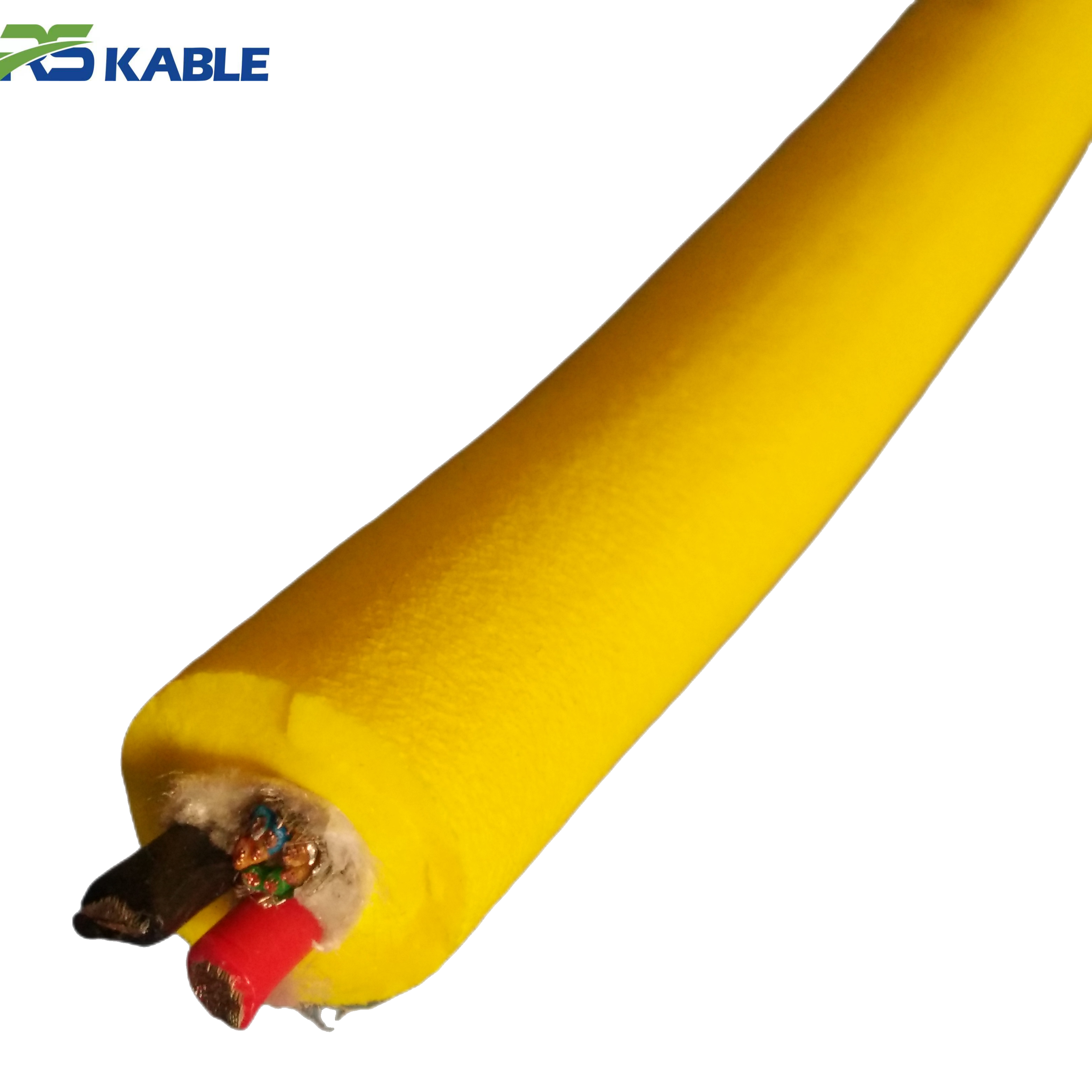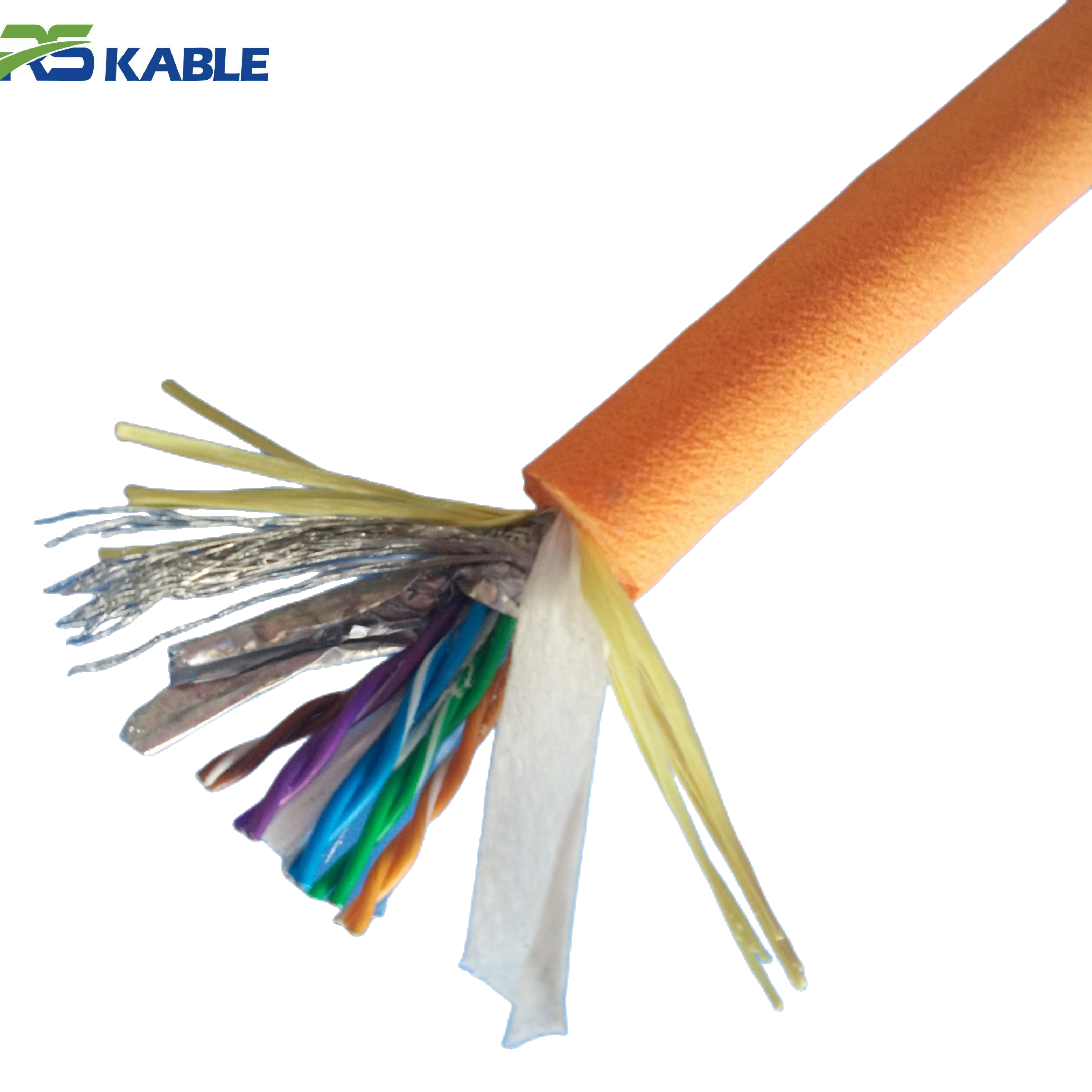


ROV Cable Jacket Materials: Polyurethane vs Rubber for Abrasion and Seawater Resistance
Most subsea cable problems don’t begin with a failed conductor or a broken fiber. They begin with the jacket. A small cut becomes an ingress path. A repeat rub point becomes thinning. A hard recovery leaves a barely visible nick that grows into a crack after enough reel cycles. That is why jacket material selection is not a branding preference—it is one of the most direct drivers of service life.
Polyurethane (PU) and rubber jackets are both widely used on tethers, and both can be excellent when matched correctly. The right choice depends on how abrasion happens on your jobs, how the tether is routed and reeled, how cold the environment gets, and what contaminants (oil, mud, chemicals) the tether sees. This guide compares PU and rubber through the lens that matters offshore: failure patterns, risk triggers, and selection rules you can apply in an RFQ.
A well-chosen jacket turns an ROV Cable into a predictable asset instead of a recurring maintenance story.
Three jacket failures you see offshore (and what they usually mean)
Scenario 1: “The same spot wears every time”
The tether looks fine overall, but one section keeps scuffing through. This is often not a “bad material” problem. It’s a routing/contact problem:
-
a fairlead edge
-
a sheave pinch zone
-
a repeated structure contact point caused by sweep
Lesson: abrasion resistance matters, but identifying and protecting repeated contact zones matters more.
Scenario 2: “Cracking near the end”
Small cracks appear near the termination or at a repeated bend point. This is commonly linked to:
-
repeated tight bending at the same location
-
cold temperature reducing flexibility
-
a stiff transition at strain relief concentrating stress
Lesson: flexibility and bend management can be the deciding factor, not only abrasion toughness.
Scenario 3: “A tiny cut becomes a fault weeks later”
A minor cut is ignored because everything still works. Then insulation readings trend down or intermittent faults appear after wet recovery.
Lesson: seawater exposure doesn’t “dissolve” most jackets—it exploits damage pathways.
These three scenarios are why jacket choice must match both environment and handling.
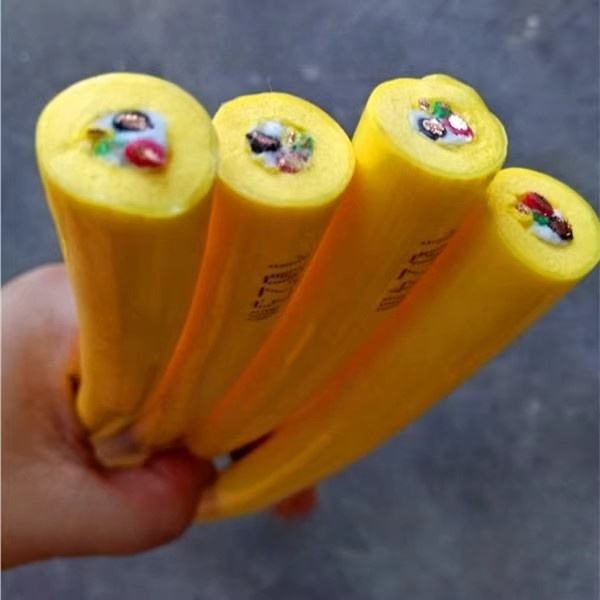
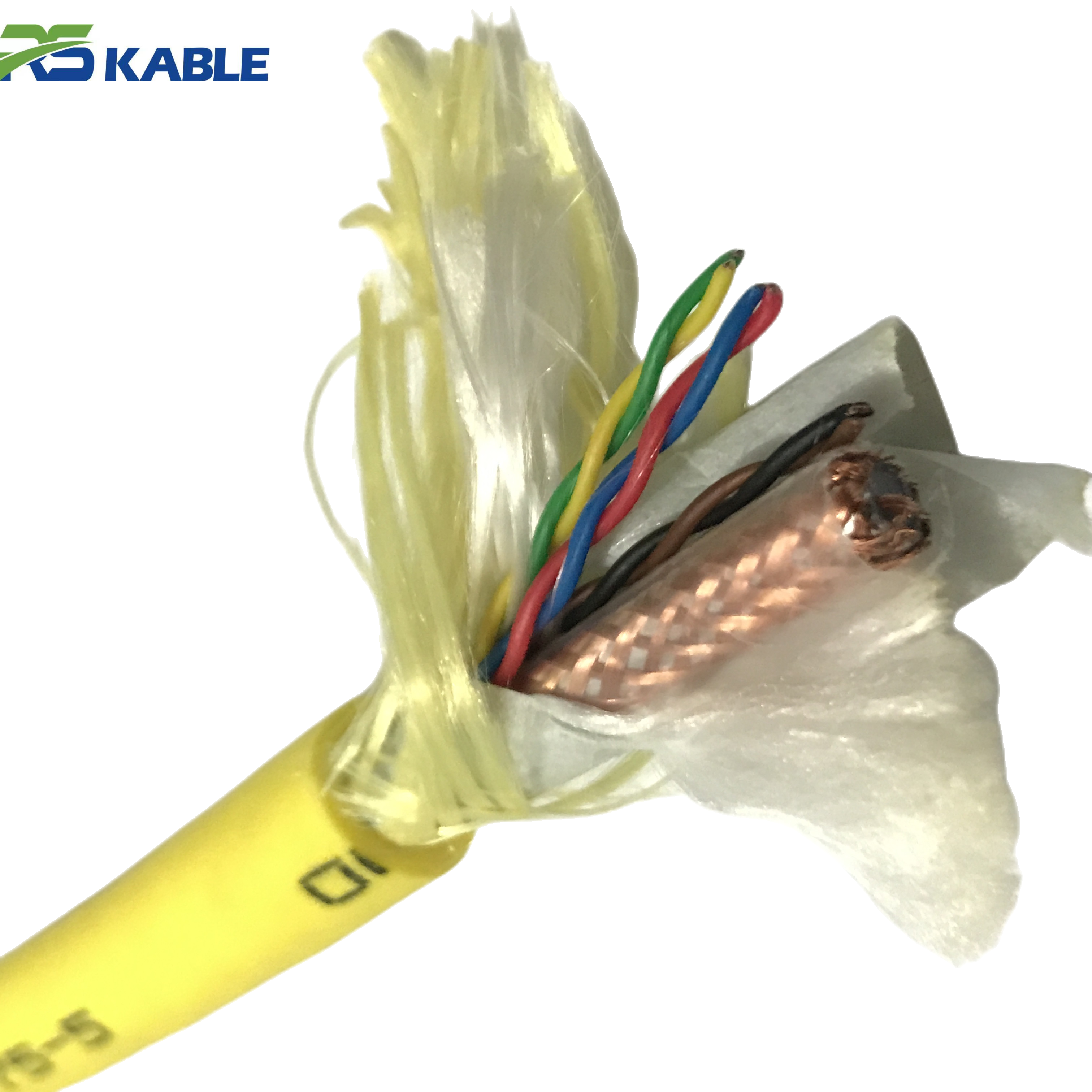
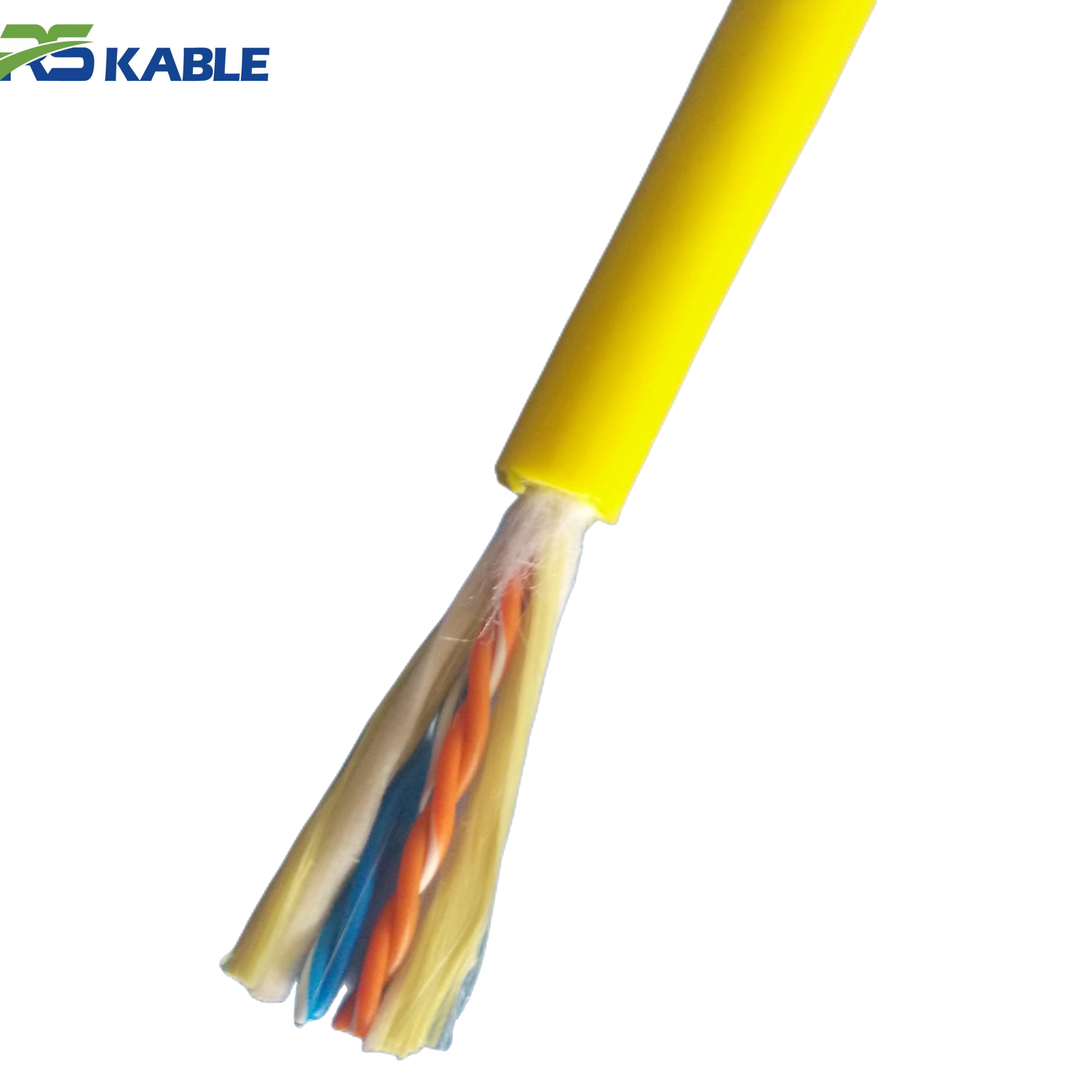
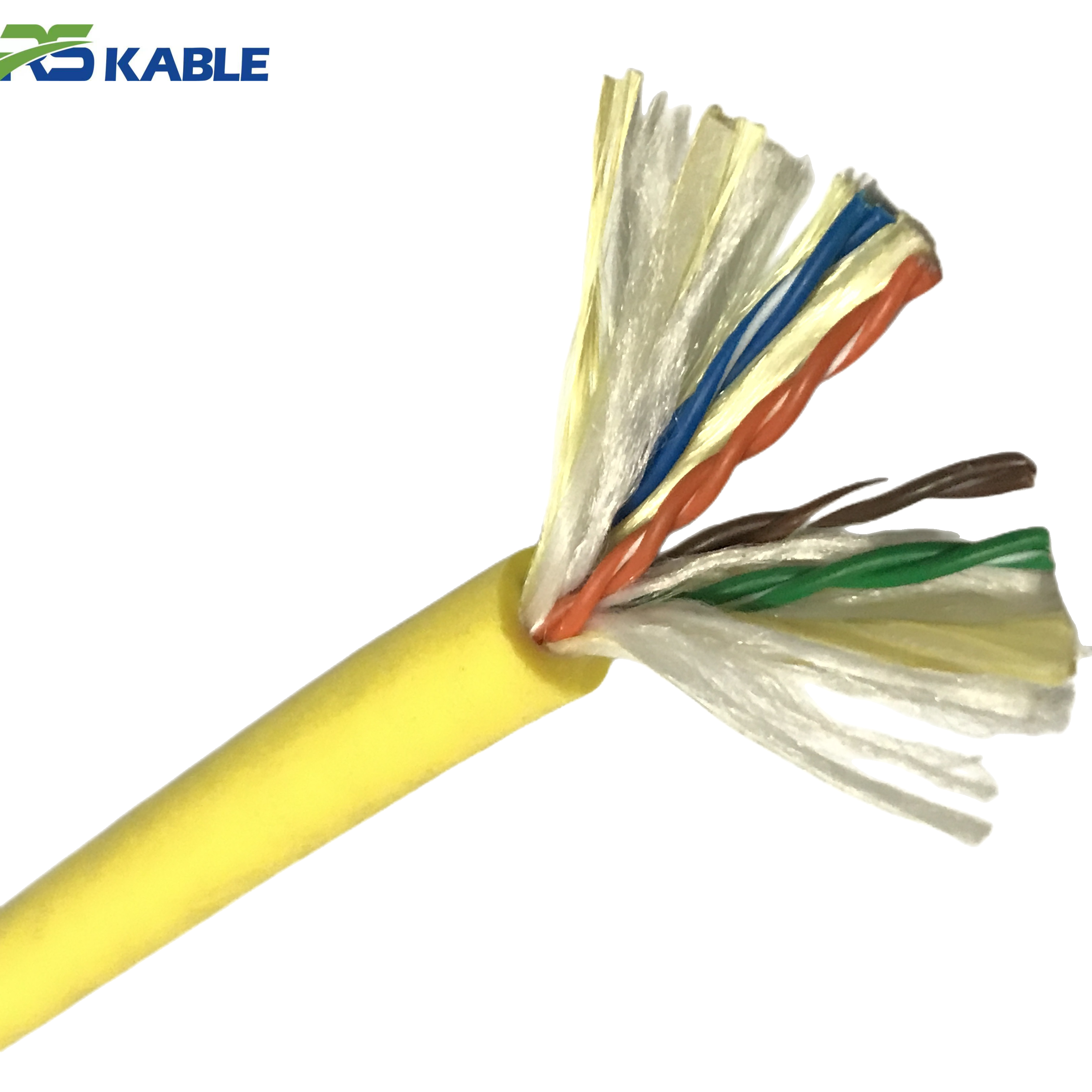
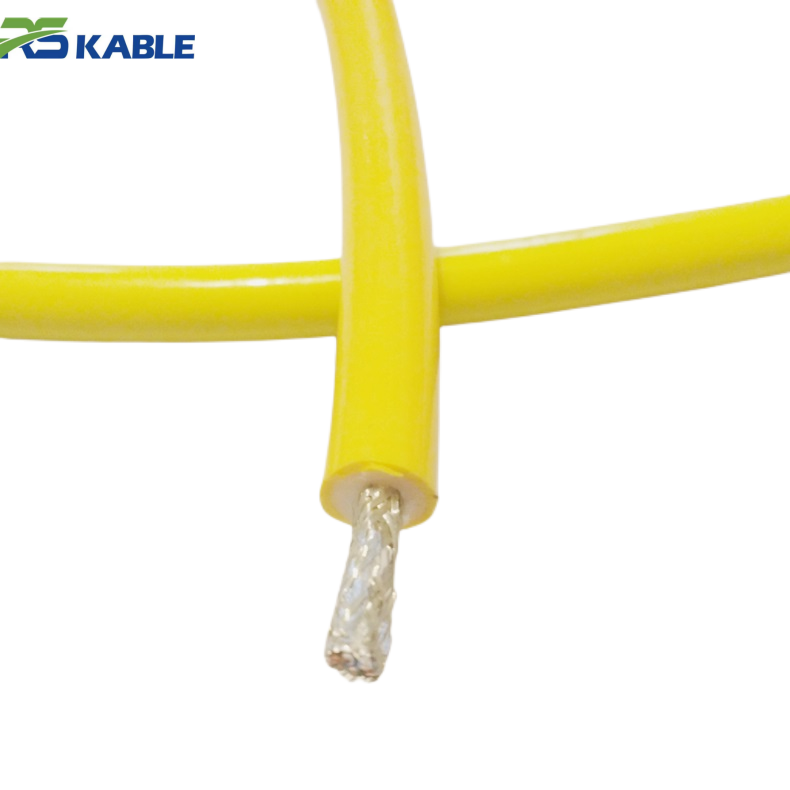
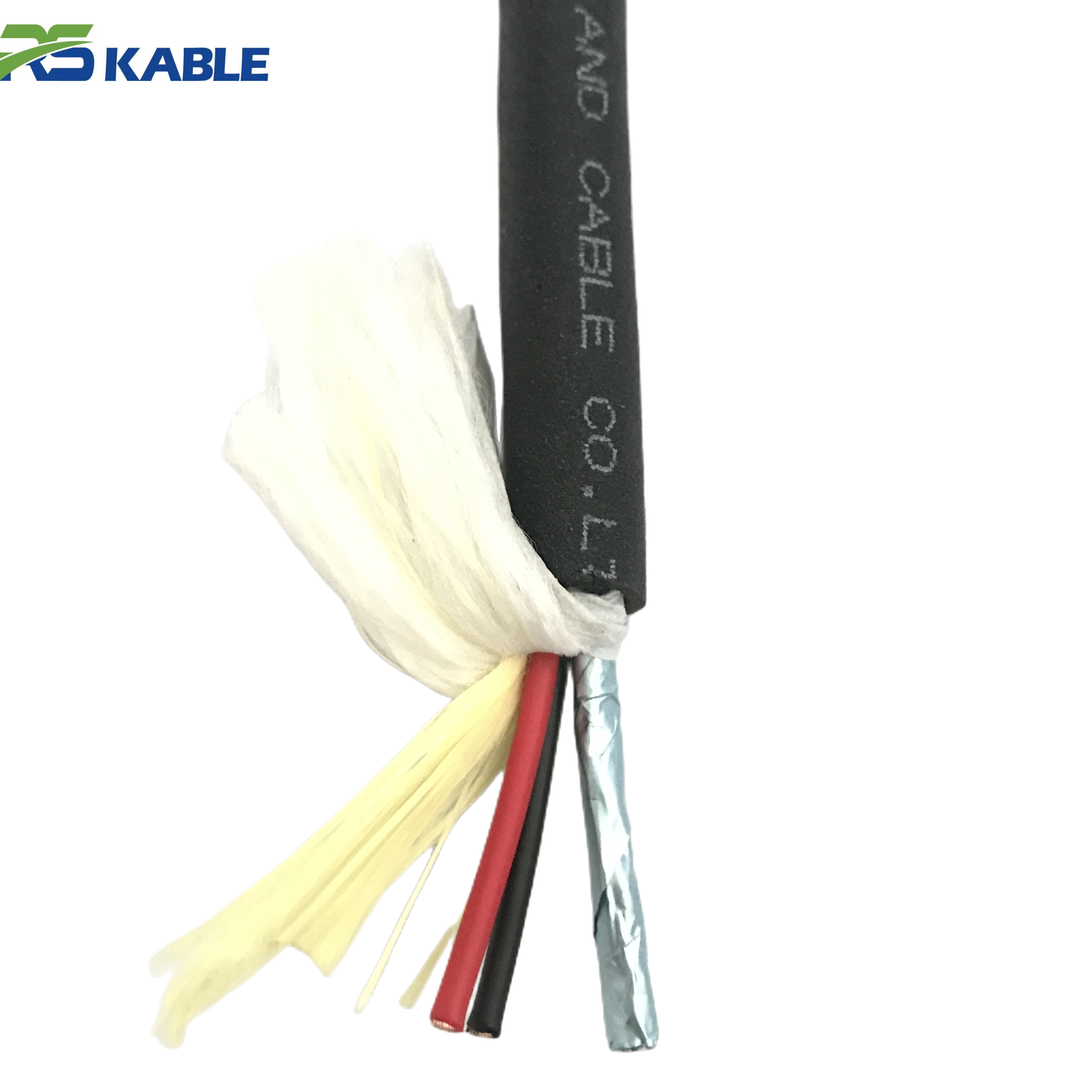
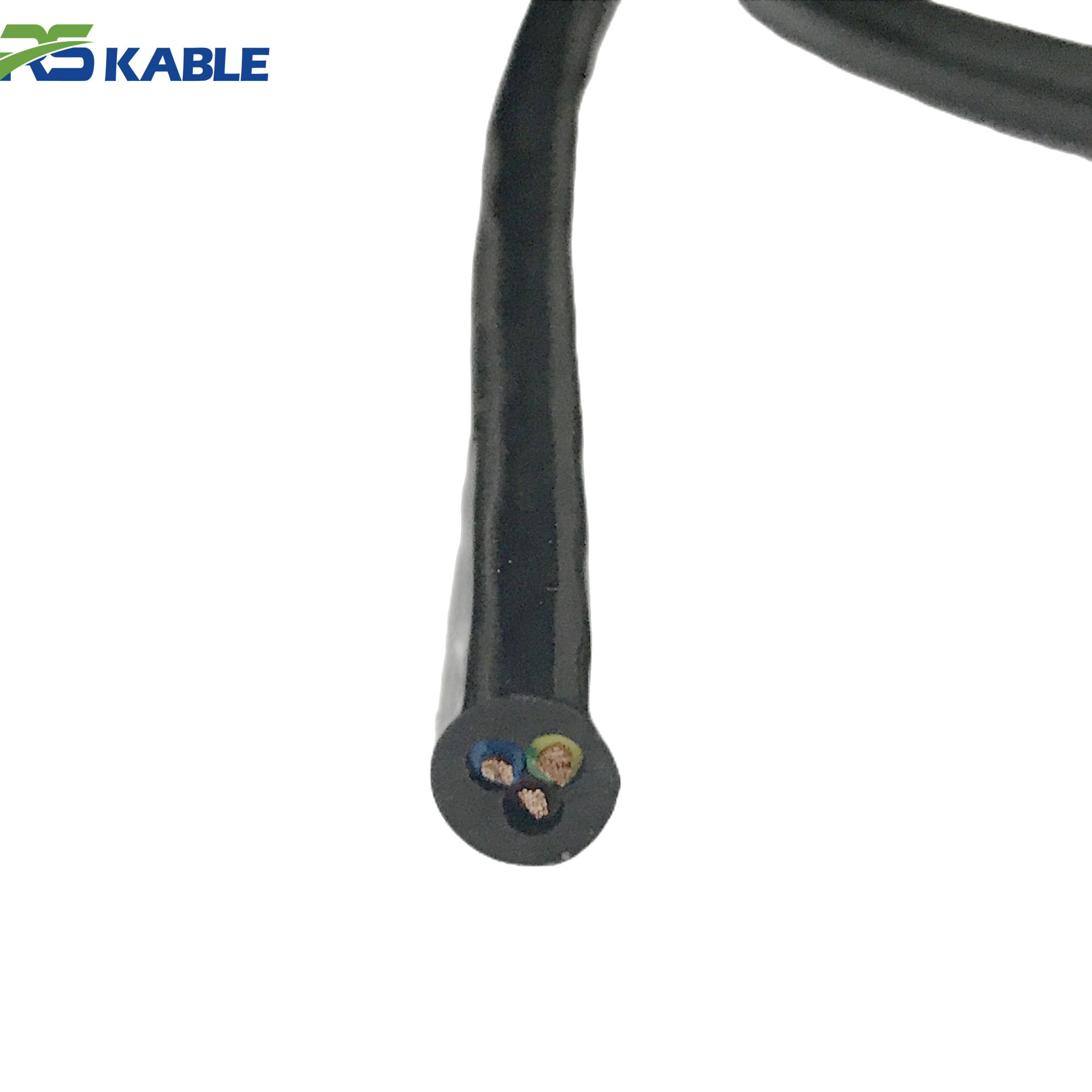
ROV Underwater Robot Network Zero Buoyancy Cable | Twisted Copper & Seawater Resistant Shielded Cable
Optimized for high-speed data transmission, this **zero buoyancy network cable** is designed for **ROVs and underwater robots**. It features **finely stranded twisted copper conductors**, high-grade **PE insulation**, and a **seawater-resistant shielded structure**, ensuring stable network connectivity and interference protection in demanding marine environments.
PU vs rubber: what you’re really choosing
Instead of asking “which is better,” ask what you’re optimizing for:
-
Abrasion-dominant missions: repeated rubbing and dragging risk
-
Flex-dominant missions: high reel cycles, repeated bending, tight routing
-
Contaminant-dominant missions: oil, mud, hydraulic fluids, chemical exposure
-
Temperature-dominant missions: cold-weather flexibility and handling safety
Polyurethane often wins abrasion-dominant missions. Rubber often wins flex-dominant missions. But both depend on compound selection, thickness, and the handling system.
Polyurethane (PU) jackets: where they perform best
What PU does well
In many subsea inspection operations, PU is selected because it typically provides:
-
strong abrasion resistance under repeated rubbing
-
good toughness against scuffing in structure-heavy work
-
stable surface durability for long service life when contact is common
PU is often the practical choice when your wear pattern looks like:
-
seabed drag scuffs
-
repeated rub against frames/pipeline supports
-
scraping through debris zones
-
“contact happens” and you need the jacket to survive it
Where PU can disappoint
PU is not a shield against poor routing or sharp edges. PU can still:
-
cut on sharp structure edges
-
develop damage at repeated tight bend points
-
become less forgiving if the environment is very cold and bend radius is not respected (compound dependent)
PU is a strong abrasion strategy, not a substitute for bend control.
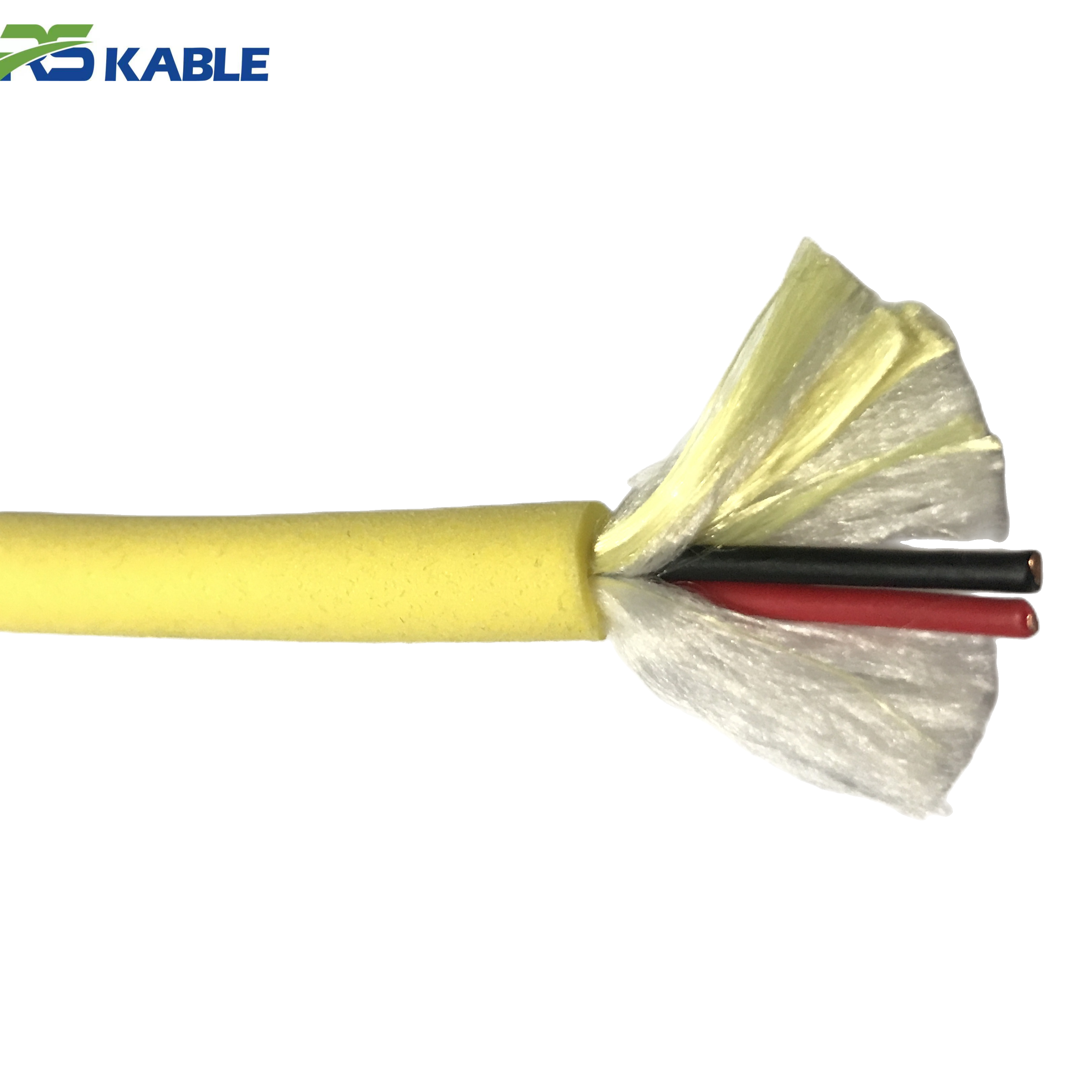
Rubber jackets: where they perform best
What rubber does well
Rubber jackets (various elastomers) are commonly chosen when the operation is handling-heavy:
-
frequent reeling/unreeling
-
repeated routing around deck hardware
-
high bend-cycle duty where flexibility reduces local stress concentration
-
situations where grip and handling comfort matter on deck
Rubber is often the practical choice when your damage pattern looks like:
-
cracks near repeated bend zones
-
stiffness-driven routing violations
-
fatigue-related issues that correlate with handling cycles rather than contact wear
Where rubber can disappoint
In abrasive seabed and debris environments, rubber can wear faster than PU depending on compound and conditions. If contact is frequent and harsh, rubber may need:
-
additional protective sleeves in contact zones
-
tighter payout discipline to reduce dragging
-
routing changes to eliminate high-friction points
Rubber is a flexibility strategy; if abrasion dominates, you must manage contact more aggressively.
Abrasion: four patterns that decide material choice
Abrasion is not a single condition. Identify which pattern you have:
-
Long rubbing (drag abrasion): seabed contact over distance
-
Edge abrasion: sharp transitions and corners
-
Hardware abrasion: fairleads, sheaves, and deck routing friction
-
Random abrasion: debris and unexpected contact points
General guidance:
-
drag abrasion tends to favor PU
-
bend-cycle and handling stress tends to favor rubber
-
edge abrasion requires protection regardless of material (sleeves, routing, edge guards)
A mission-fit ROV Cable uses jacket selection and contact control together.
Seawater resistance: the real failure chain crews see
Most seawater-related “jacket problems” follow a predictable chain:
jacket nick → micro-path → moisture ingress → insulation decline → intermittent faults
This is why seawater resistance isn’t just chemistry—it’s durability under damage.
Early signs that a jacket is becoming an ingress risk
-
whitening or surface “crazing” near a bend point
-
recurring small cuts in the same location
-
jacket thinning that reveals texture changes underneath
-
new hard spots after reeling events
The right response is not to wait for an electrical fault. The right response is to protect, sleeve, reroute, or cut back before ingress becomes a system problem.
Decision table: choose PU, rubber, or a hybrid protection strategy
Use this table as a quick selection tool.
High abrasion + structure contact frequent
-
Recommended: PU jacket
-
Add-on: sleeves at known rub points
High reel cycles + repeated tight routing points
-
Recommended: rubber jacket (or flexible PU compound)
-
Add-on: enforce bend radius and protect termination exit
Strong current + wide sweep zone near structures
-
Recommended: PU often preferred for abrasion tolerance
-
Add-on: reduce sweep by controlling OD/drag and payout discipline
Cold environment + handling safety priority
-
Recommended: rubber (or cold-rated flexible compound)
-
Add-on: verify flexibility at operating temperature
Mixed environment (abrasion hotspots but high-cycle handling)
-
Recommended: hybrid strategy
-
flexible jacket selection + targeted sleeves/guards at contact zones
-
routing changes to eliminate repeat wear bands
-
This is how many teams get the best outcome: not “one perfect material,” but the right combination of jacket + protection where the mission actually damages the tether.
What to include in your RFQ (so the jacket is specified correctly)
If you simply request “PU jacket” or “rubber jacket,” you may get a generic compound. Better RFQs describe the operating reality:
-
seabed type: sand / rock / debris / structure density
-
contact pattern: frequent drag / occasional rub / rare contact
-
current profile and sweep risk
-
reel cycle frequency per shift/week
-
deck routing: sheaves/fairleads, known pinch points, minimum bend radius
-
temperature range and contaminant exposure
-
preference: PU vs rubber, and why (abrasion vs flexibility priority)
-
requirement for protective sleeves in known contact zones (if applicable)
This produces better, more mission-fit recommendations than a one-line material request.
Acceptance checks: how to confirm you received a jacket that will last
Before deployment, confirm:
-
jacket surface is uniform with no transport cuts
-
no hard spots or crushed sections exist
-
termination strain relief transitions smoothly (no sharp stiffness hinge)
-
routing plan can maintain bend radius under real deck layout
-
protective sleeves/guards installed in planned contact zones
-
logging plan exists to track repeat wear locations
Repeat wear patterns are predictable. The fastest way to extend jacket life is to record where damage starts and remove the cause.
FAQ
Is polyurethane always the best choice for abrasion?
In many abrasion-dominant missions, PU performs very well. But edge contact and poor routing can defeat any material, so protection and routing still matter.
When is rubber a better option than PU?
When frequent reeling, high bend-cycle duty, and handling flexibility are dominant drivers of damage—especially near repeated routing points.
Why do electrical faults appear weeks after a jacket cut?
Because small cuts become moisture ingress pathways over time, leading to insulation decline and intermittent faults.
Can I use rubber and still handle rough seabed work?
Yes, but you may need sleeves, better payout discipline, and routing control to reduce dragging and rub wear.
What is the simplest way to extend jacket life?
Identify repeat wear zones, protect them (sleeves/guards), improve routing, and maintain bend radius compliance.
Meta description (≤150 chars): Compare PU vs rubber ROV cable jackets for abrasion and seawater resistance, with failure patterns, a decision table, and RFQ tips.