


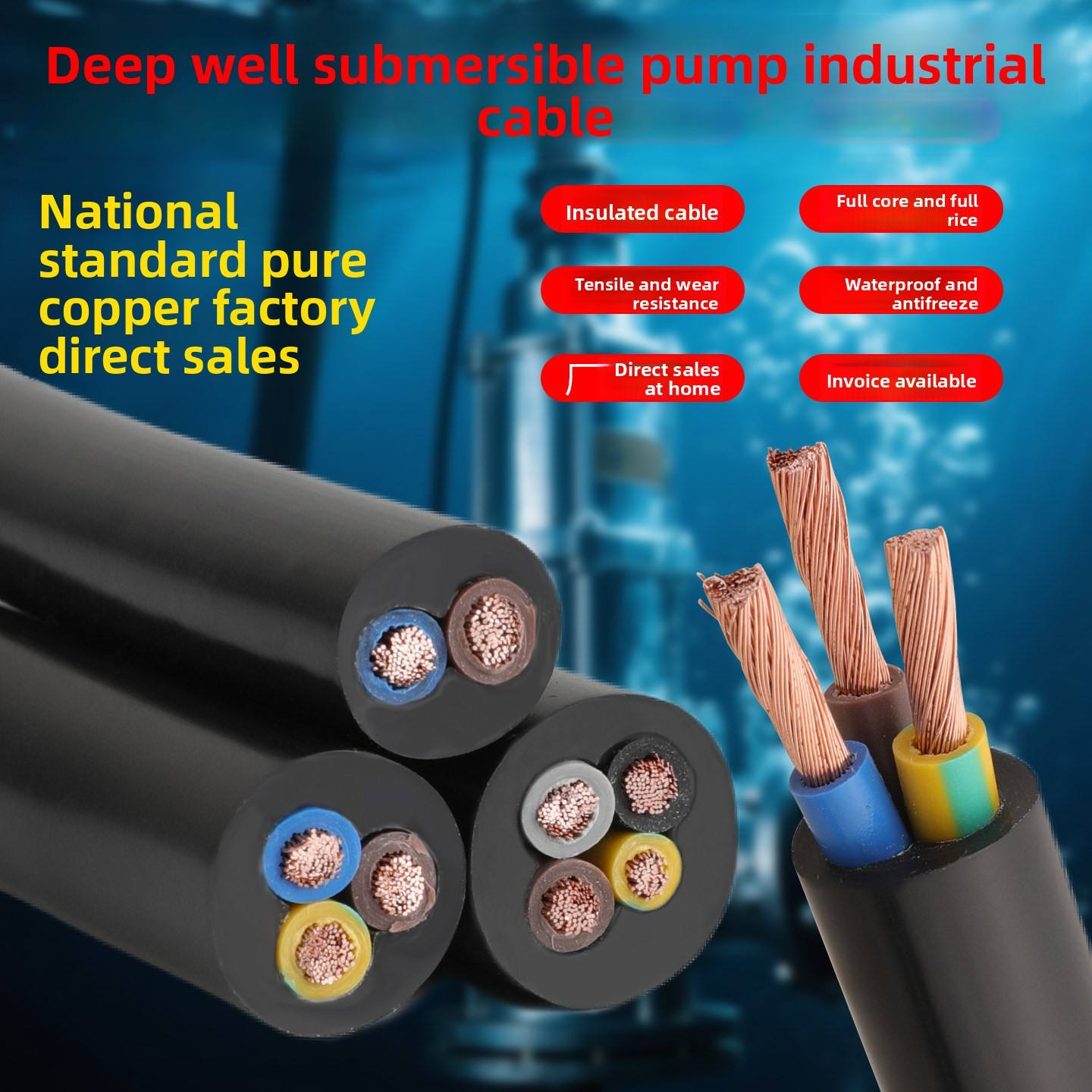
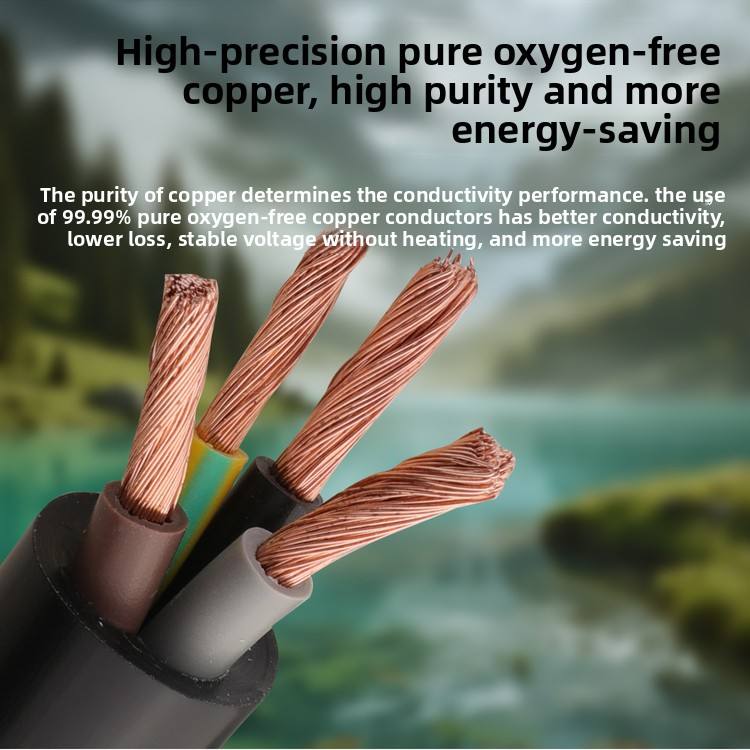
Submersible Pump Cable – Custom Voltage, Core Count & Length
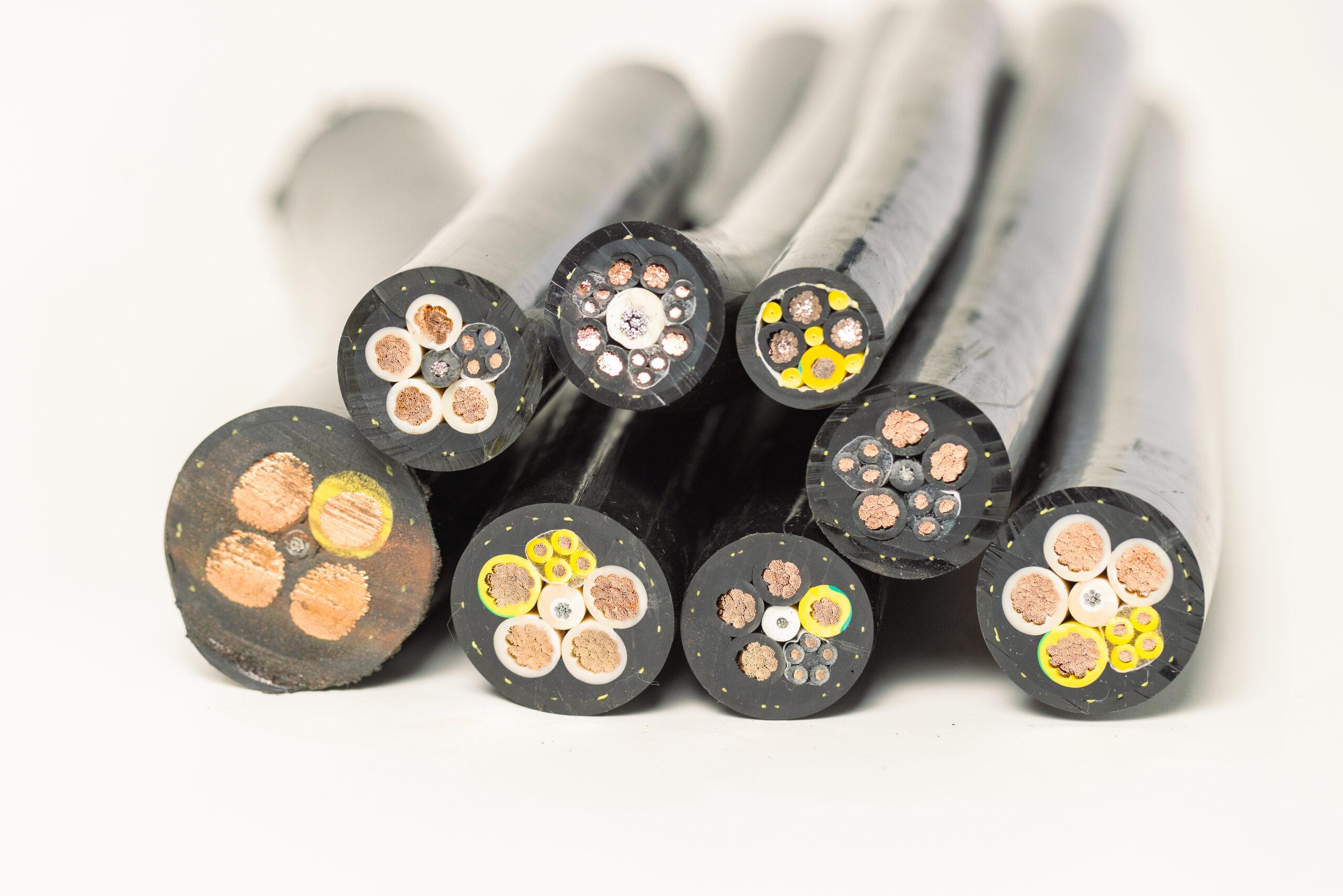
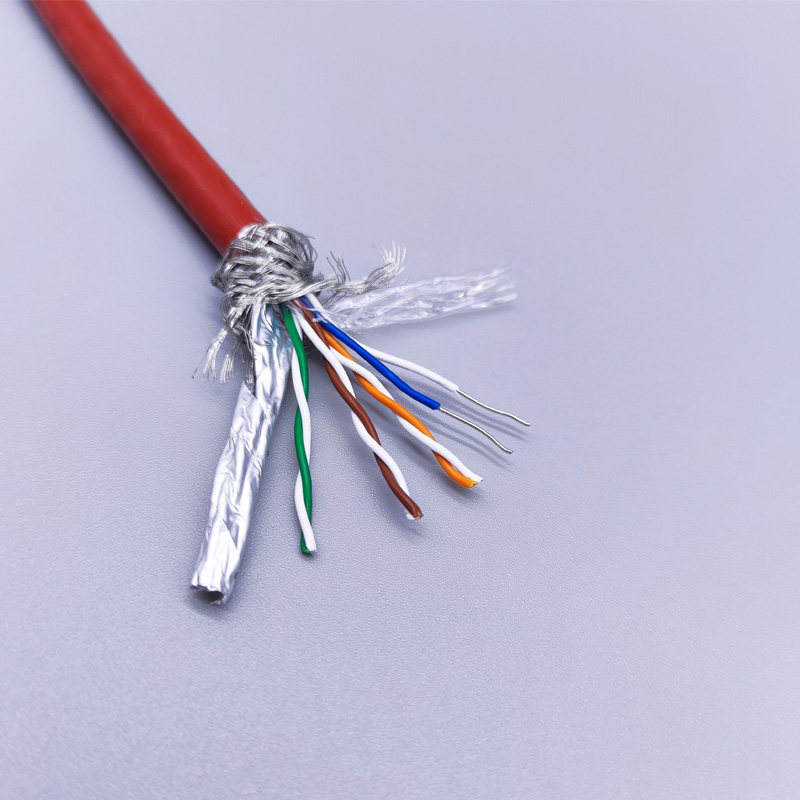
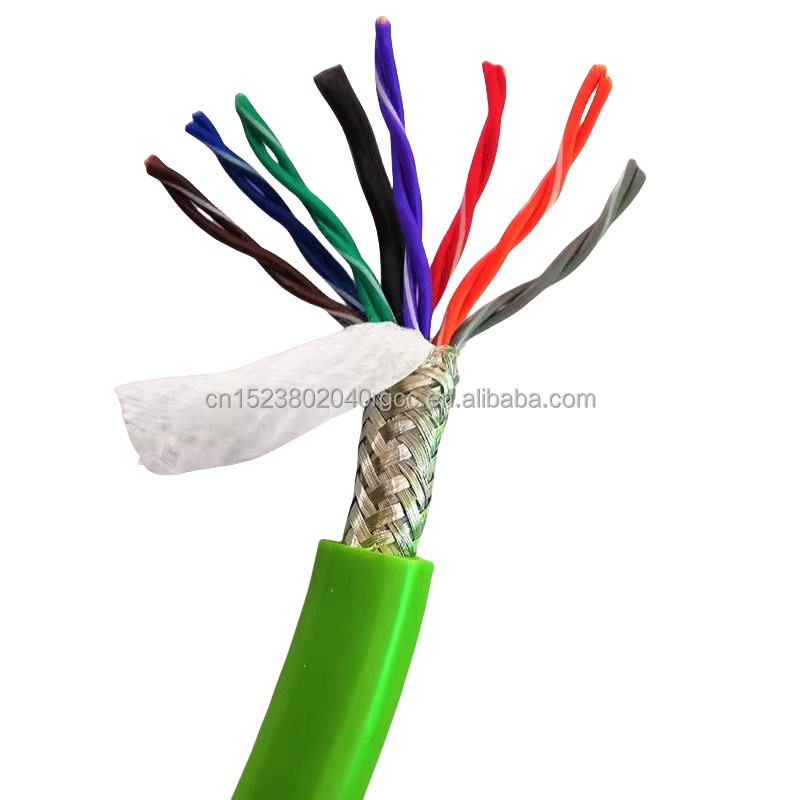
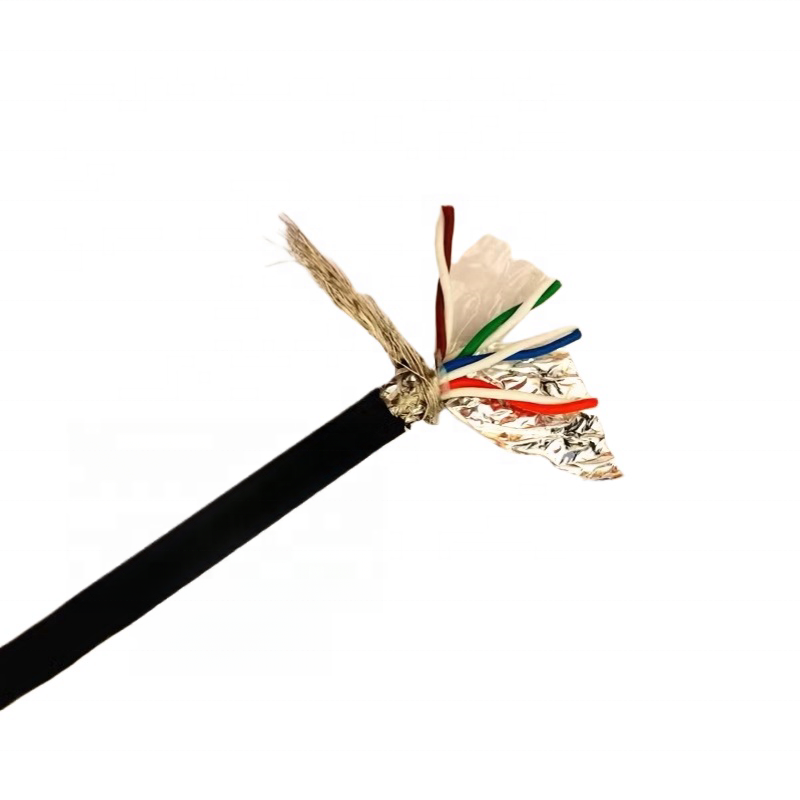
The RST-SPC series is Rousheng’s purpose-built submersible pump cable range, manufactured to order in any voltage class from 300/500 V to 1.8/3 kV, in 2-core through 5-core configurations, and in any cut length from 10 m. The cable is built around class-5 fine-stranded tinned copper conductors insulated with ethylene propylene rubber (EPR) or cross-linked polyethylene (XLPE) — both materials chosen for their proven resistance to continuous water immersion, thermal stability at 90°C, and ability to retain dielectric strength after decades of wet service. An extruded chlorinated polyethylene (CPE) or chlorosulfonated polyethylene (CSP) inner sheath provides the first line of chemical and mechanical defence, with optional galvanised flat-wire or stainless-steel wire armour added for bore-casing installations, mine dewatering, and other high-mechanical-risk deployments. The outer jacket compound — CPE for fresh water and general immersion, CSP for sewage and hydrogen-sulphide environments, or nitrile rubber for light hydrocarbon contact — is selected to match the specific pumped medium rather than applied as a generic solution.
Submersible Pump Cable – Custom Voltage, Core Count & Length
Every pumping installation has a different depth, motor rating, and power-supply arrangement. Off-the-shelf cable lengths and fixed voltage grades rarely align with what the site actually needs. Rousheng manufactures submersible pump cable to order: choose the voltage class (300/500 V through 1.8/3 kV), the number of conductors (2- to 5-core), the exact cut length, and the outer jacket compound that suits your medium—fresh water, brine, sewage, or light chemicals. Every reel ships with a factory test report and full compliance documentation.
Product Snapshot — RST-SPC Series
|
Attribute |
RST-SPC — Submersible Pump Cable |
|
Series name / model |
RST-SPC (Standard) • RST-SPC-HV (Medium Voltage) • RST-SPC-F (Flat) |
|
Conductor |
Class 5 fine-stranded tinned copper (IEC 60228), 1.5–95 mm² |
|
Core count options |
2-core, 3-core, 4-core, 5-core; custom multi-core on request |
|
Voltage grades |
300/500 V • 450/750 V • 0.6/1 kV • 1.8/3 kV |
|
Insulation |
EPR (ethylene propylene rubber) or XLPE; per IEC 60502-1 |
|
Inner sheath |
Chlorinated polyethylene (CPE) or CSP; oil- and abrasion-resistant |
|
Armour (optional) |
Galvanised flat-steel wire braid or stainless-steel wire armour |
|
Outer jacket |
CPE, CSP, or nitrile-rubber compound; seawater / sewage resistant |
|
Temperature rating |
−40°C to +90°C (EPR); −30°C to +90°C (XLPE) |
|
Water resistance |
Full submersion; pressure-tested to 10 bar (100 m head) as standard |
|
Flame rating |
IEC 60332-1 self-extinguishing; IEC 60332-3 bundle-test on request |
|
Certifications |
CE • RoHS • ISO 9001:2015 • REACH compliant |
|
Cut length |
Any length from 10 m; reel stock in 100 m / 200 m / 500 m |
|
Delivery |
Standard sizes: 7–12 working days; non-standard: 15–25 working days |
Why Standard Cable Fails Underground or Underwater
General-purpose PVC-jacketed cables were not designed for continuous immersion. Within months of installation below a water table or inside a pump sump, PVC compounds swell, lose dielectric strength, and admit moisture to the conductor bundle. The result is ground faults, nuisance tripping, and early motor failure. A purpose-built submersed pump lead uses materials selected specifically for wet, pressurised, and chemically aggressive conditions:
- EPR or XLPE insulation — both are inherently moisture-resistant and maintain stable dielectric properties across the full operating temperature range, unlike PVC which softens above 70°C.
- CPE or CSP jacket — chlorinated compounds resist oils, mild acids, ozone, and UV; they do not crack or harden in cold-water bore applications.
- Tinned conductors — tin plating on the fine copper strands resists oxidation when trace moisture penetrates a damaged jacket, extending fault-free service life significantly.
- Flat-wire or stainless armour — protects the cable during installation down a bore casing and resists abrasion against concrete sump walls in wastewater lift stations.
- Factory hydraulic pressure test — every reel is subjected to 10 bar for one hour before shipment; no competitor standard test stops at a simple IP-rating declaration.
Where This Pump Lead Is Installed
Water Supply & Irrigation
Deep borehole pumps serving municipal water supply, agricultural irrigation, and rural communities draw cable lengths of 50–300 m from the wellhead to the surface control panel. The RST-SPC’s 0.6/1 kV grade accommodates motor ratings from 0.75 kW to 75 kW at these lengths without excessive voltage drop. For bore diameters below 4 inches, the flat RST-SPC-F variant fits inside the annulus alongside the riser pipe.
Sewage & Wastewater Lift Stations
Submersible sewage pumps operate in sumps containing hydrogen sulphide, fatty acids, and cleaning chemicals. The CSP outer jacket on the RST-SPC resists H₂S concentrations found in municipal wastewater and food-processing effluent. A 4-core cable version supplies three-phase power plus a separate earth, eliminating the need for an external earth conductor run inside conduit.
Fountain & Decorative Water Features
Continuous-duty fountain pumps in chlorinated or salt-water pools require a flexible, UV-stable cable that survives repeated surface exposure and pool-chemical contact. The RST-SPC in 300/500 V 2-core or 3-core configuration handles single-phase fountain motors up to 4 kW without armour, keeping the cable bundle slim enough for concealed routing through feature stonework.
Mining Dewatering
Dewatering pumps in underground mines face abrasive slurry, acidic groundwater (pH 3–5), and the mechanical risk of cable pinching between rock and equipment. The medium-voltage RST-SPC-HV (1.8/3 kV) permits long runs of 500–1,000 m from the surface substation to the pump without installing an intermediate transformer underground. Stainless-steel wire armour is specified for this application to resist acid corrosion.
Industrial Process & Chemical Plant
Vertical-shaft process pumps transferring corrosive liquids in chemical plants and refineries require a pump lead rated for the specific liquid temperature and chemistry. The RST-SPC can be specified with a nitrile-rubber outer jacket when the pumped medium includes aliphatic hydrocarbons or light mineral acids, and with XLPE insulation for process fluid temperatures up to 90°C.
How to Specify the Right Pump Cable
Five parameters define every RST-SPC order. Providing all five up front allows our engineers to issue a firm quotation within 24 hours and eliminates the back-and-forth that delays most cable procurement.
- VOLTAGE CLASS — Match the motor nameplate: 300/500 V for single-phase domestic pumps; 0.6/1 kV for three-phase submersibles to 75 kW; 1.8/3 kV for long-run mining dewatering.
2. CORE COUNT — 2-core: single-phase without separate earth. 3-core: three-phase or single-phase + earth. 4-core: three-phase + dedicated earth. 5-core: three-phase + earth + pilot/control.
3. CONDUCTOR CROSS-SECTION — Calculated from motor full-load current plus the voltage-drop limit for the installed length. Send us the motor kW rating and cable length; we will confirm the minimum cross-section.
4. INSTALLED DEPTH / LENGTH — Add 15–20% to the pump setting depth to allow for routing slack, surface connection, and panel termination. Specify whether a factory-fitted end seal is required.
5. JACKET COMPOUND & ARMOUR — CPE for fresh water and light chemicals. CSP for sewage and H₂S. Nitrile for hydrocarbons. Add galvanised flat-wire armour for bore casing installations; stainless-wire for acidic mine water.
Technical Parameters — RST-SPC Series
|
Parameter |
Standard (RST-SPC) |
Medium Voltage (RST-SPC-HV) |
Flat (RST-SPC-F) |
|
Rated voltage U₀/U |
300/500 V to 0.6/1 kV |
1.8/3 kV |
300/500 V or 0.6/1 kV |
|
Test voltage (U + 2,000 V, 5 min) |
2,500–4,000 V AC |
6,500 V AC |
2,500–4,000 V AC |
|
Conductor cross-section |
1.5 / 2.5 / 4 / 6 / 10 / 16 / 25 / 35 / 50 / 70 / 95 mm² |
10 – 95 mm² |
1.5 – 16 mm² |
|
Conductor class (IEC 60228) |
Class 5 fine-stranded |
Class 5 fine-stranded |
Class 5 fine-stranded |
|
Insulation material |
EPR or XLPE |
EPR (cross-linked) |
EPR or PVC |
|
Insulation thickness |
Per IEC 60502-1 table |
Per IEC 60502-1 table |
Per IEC 60502-1 table |
|
Inner sheath |
CPE or CSP extruded |
CPE compound |
CPE or CSP extruded |
|
Armour |
Optional: GFW braid or SSW |
Mandatory: SSW or GFW |
None (designed for close-fit bores) |
|
Outer jacket thickness |
≥ 1.8 mm (round); ≥ 1.5 mm (flat) |
≥ 2.2 mm |
≥ 1.5 mm per side |
|
Insulation resistance @ 20°C |
≥ 100 MΩ · km (new) |
≥ 500 MΩ · km (new) |
≥ 100 MΩ · km (new) |
|
Continuous operating temp. |
−40 to +90°C (EPR); −30 to +90°C (XLPE) |
−40 to +90°C |
−30 to +75°C |
|
Min. installation temp. |
−25°C |
−25°C |
−25°C |
|
Min. bend radius (static) |
6 × OD |
8 × OD |
4 × short-side OD |
|
Water immersion test |
10 bar / 1 h, then IR ≥ 100 MΩ·km |
10 bar / 1 h |
5 bar / 1 h |
|
Flame test standard |
IEC 60332-1 |
IEC 60332-1 |
IEC 60332-1 |
|
Outer jacket colour |
Black (standard); red / grey on request |
Black |
Black or flat-grey |
Construction Detail — Layer by Layer
Understanding what goes into each layer helps engineers confirm suitability for site conditions without waiting for a full data sheet. The standard RST-SPC round cable is assembled as follows:
- Conductor — Class-5 fine-stranded bare or tinned copper. Tinning is recommended (and standard above 35 mm²) for installations where jacket integrity cannot be visually inspected after laying.
- Core insulation — EPR compound extruded directly onto the conductor to IEC 60502-1 minimum wall thickness. EPR is chosen over PVC because it retains its dielectric properties when wet and does not become brittle at low temperatures.
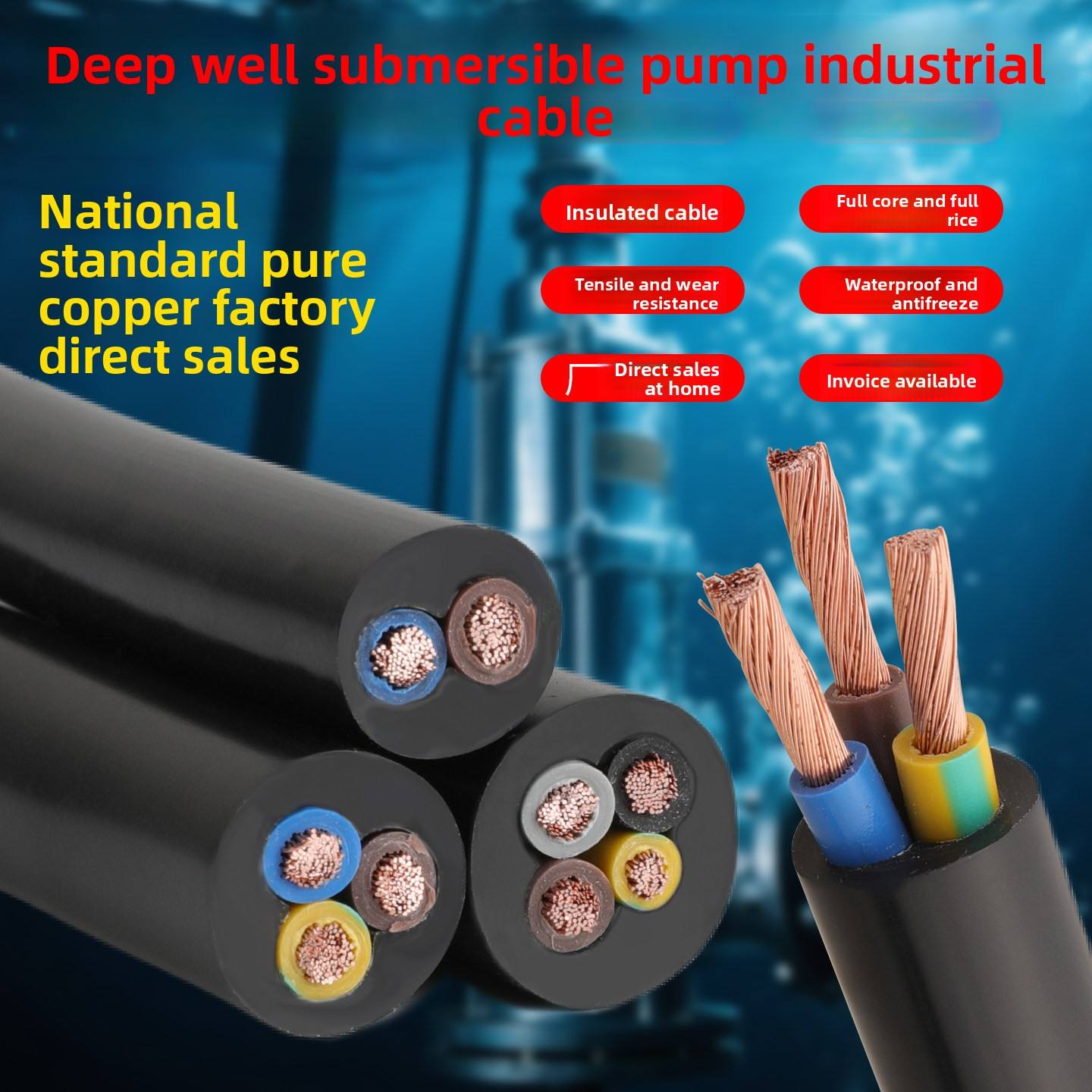
- Core identification — Colour-coded to IEC 60446 (brown, black, grey for phases; green-yellow for earth; blue for neutral). Numbered core identification is available for 5-core and above.
- Cabling and filling — Cores are laid up with a thermoplastic elastomer filler to maintain a true circular cross-section. A helical binder tape prevents the assembly from loosening during installation down a bore casing.
- Inner sheath — Extruded CPE or CSP over the complete cable assembly. This layer provides the primary mechanical protection and acts as the first chemical barrier. Wall thickness is a minimum of 1.0 mm regardless of cable OD.
- Armour (where specified) — Galvanised flat-steel wire braid for standard water applications. Stainless-steel wire armour (SSWA) for acidic, saline, or marine environments. The armour is applied with a defined pitch to maintain flexibility without opening gaps under bending.
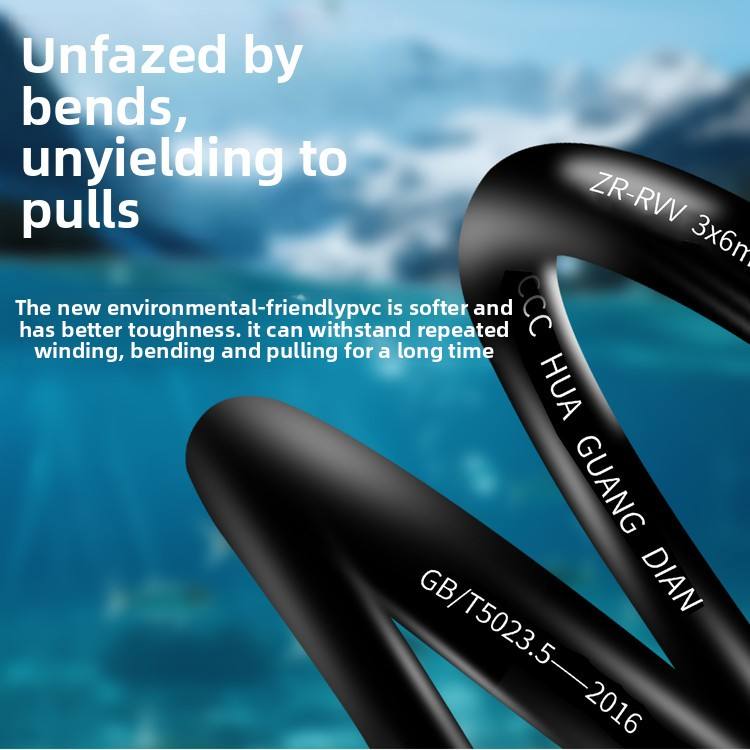
- Outer jacket — CPE for fresh-water bore applications; CSP for sewage and H₂S-containing media; nitrile-rubber compound for oil or hydrocarbon contact. Minimum wall thickness 1.8 mm for cables up to 35 mm², scaled up for larger sizes. Print-marked with voltage class, conductor size, and metre counting.
Quality Assurance & Company Background
Shanghai Rousheng Wire and Cable Co., Ltd. has produced specialty and performance cables from its dedicated Fengxian District, Shanghai facility for more than ten years. The RST-SPC series is manufactured on continuous-vulcanisation (CV) lines equipped with real-time OD measurement and online spark testing at 4 kV (standard) or 8 kV (medium-voltage). The following verifications are documented in the factory test report that ships with every order:
- Conductor resistance per IEC 60228 — measured on 100% of delivered length and recorded metre by metre
- High-voltage immersion withstand — coiled sample submerged in water for 1 hour, then AC withstand at rated test voltage for 5 minutes
- Insulation resistance after immersion — minimum 100 MΩ·km on standard range; 500 MΩ·km on medium-voltage
- Hydraulic pressure test — completed cable assembly pressurised to 10 bar for 1 hour with no jacket deformation or water ingress
- Outer diameter and jacket wall thickness — measured at three points per reel, results in test report
- Flame propagation test to IEC 60332-1 — one sample per production run, pass/fail certificate included
Certifications current at time of publication: ISO 9001:2015 Quality Management System • CE Declaration of Conformity • RoHS Directive compliance • REACH SVHC declaration available on request • AAA Credit Enterprise rating (China).
Frequently Asked Questions
Q1 — How do I calculate the correct conductor cross-section for my pump depth?
The two controlling factors are full-load current and permissible voltage drop. As a starting point, limit voltage drop to 5% of supply voltage at full load. For a 7.5 kW three-phase motor at 400 V drawing approximately 15 A, a 100 m cable run in 2.5 mm² copper gives around 7% drop — borderline. Stepping up to 4 mm² brings drop to approximately 4.4% — within limits. Send us the motor kW rating, supply voltage, full-load current if known, and the installed cable length; our engineers will confirm the recommended cross-section with a written voltage-drop calculation at no cost.
Q2 — Is armour always necessary for submersible installations?
Not always. Armour is specified primarily for mechanical protection during laying (especially down steel bore casings) and for installations where the cable rests against abrasive surfaces such as concrete sump walls. For pump chambers with smooth HDPE liners, or where the cable is pulled on a support rope and never contacts the casing wall, unarmoured RST-SPC is acceptable. For mine dewatering at depth, or any bore where the cable might be pinched during pump retrieval, flat-wire armour should always be specified.
Q3 — Can you supply the cable with the motor connection already made?
Yes. Factory-terminated assemblies are available with epoxy-sealed motor-end boots, crimped lugs, and heat-shrink identification sleeves per core. This eliminates field jointing in wet conditions — a common source of premature failures in bore applications. At the panel end, we can fit cable glands, crimped ferrules, or bare stripped ends. Specify the motor manufacturer and frame size when ordering so we can confirm the correct boot dimensions.
Q4 — What is the difference between EPR and XLPE insulation for pump cables?
Both are cross-linked compounds with excellent moisture resistance and a 90°C continuous rating. EPR (ethylene propylene rubber) has better flexibility at low temperatures and superior resistance to partial discharge — important in medium-voltage cables. XLPE (cross-linked polyethylene) has a slightly higher dielectric strength, lower capacitance per unit length, and is preferred where the pumped liquid is a light hydrocarbon or solvent. For standard fresh-water and sewage applications, either insulation performs equally well; EPR is our default because it is more tolerant of imperfect factory jointing in the field.
Q5 — What is the maximum continuous submersion depth?
The standard RST-SPC jacket is hydraulically tested to 10 bar, equivalent to 100 m of water head. For bore depths beyond 100 m, specify the RST-SPC-HV medium-voltage variant, which is pressure-tested to 15 bar (150 m head), or request a special jacket wall thickness increase for the standard-voltage range. Note that cable pressure rating and motor pressure rating are independent — always verify both.
Q6 — How should the cable be stored before installation?
Store reels on their flanges in a dry, shaded area. Avoid stacking reels flat, as this deforms the jacket under sustained point load. Do not uncoil more cable than the installed length requires — recoiling a pump lead into a tight drum damages the EPR insulation at the point of kinking. Minimum storage temperature is −25°C; below this, bring the reel to above 0°C before unspooling to prevent jacket cracking.