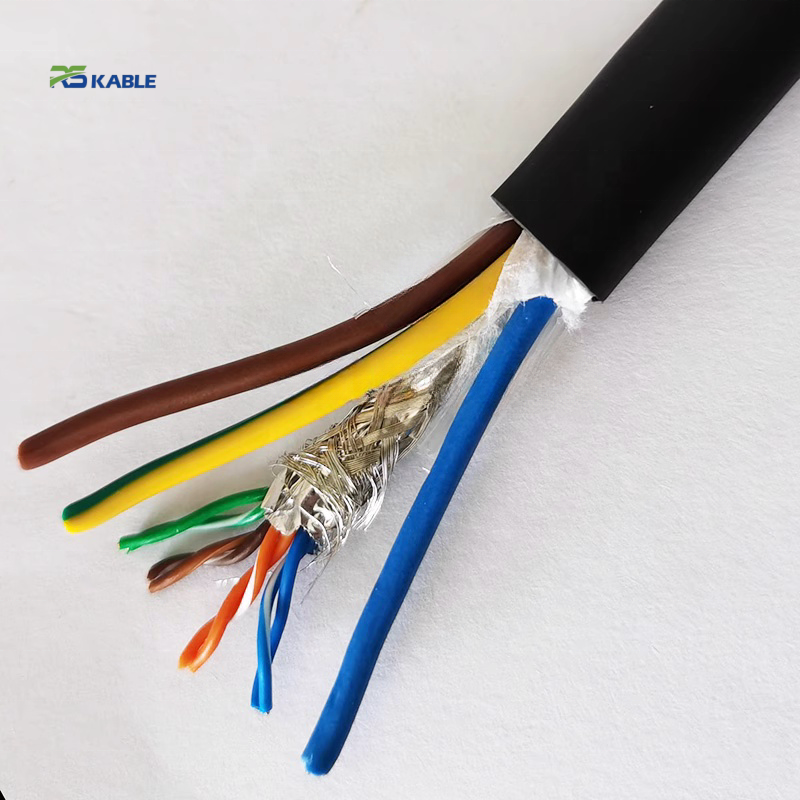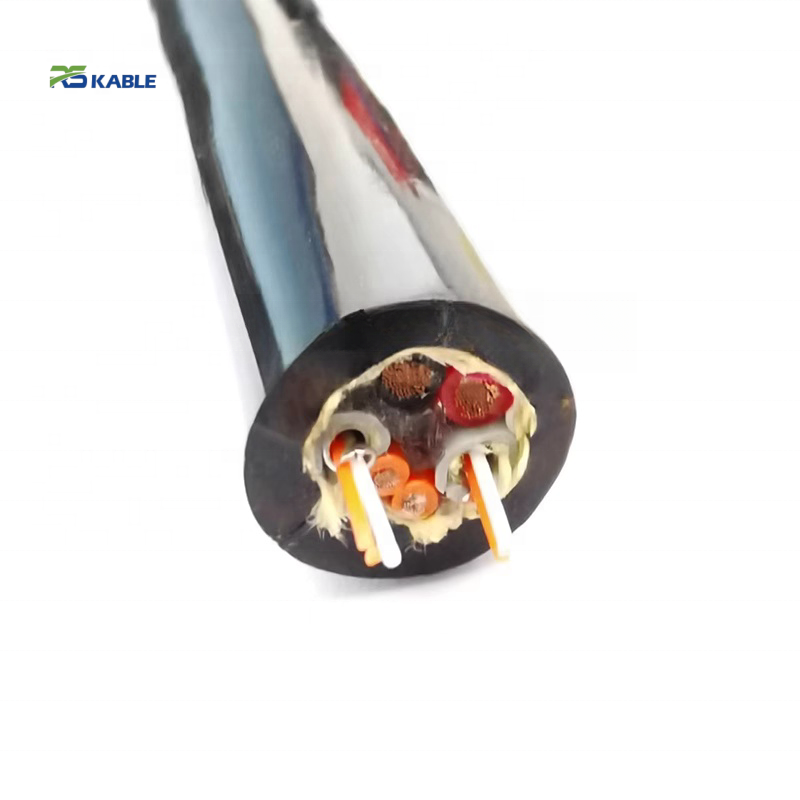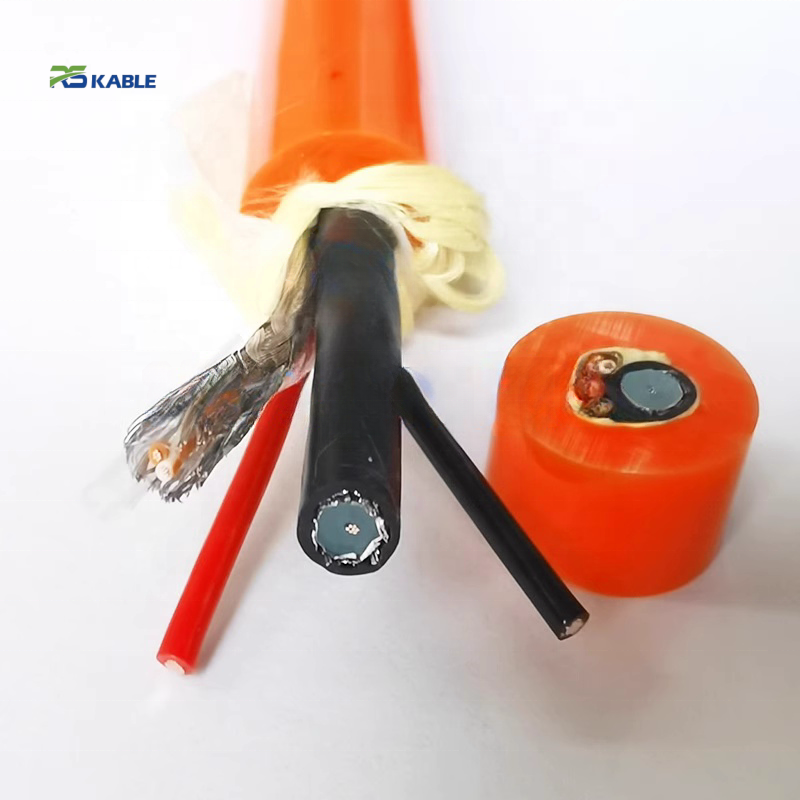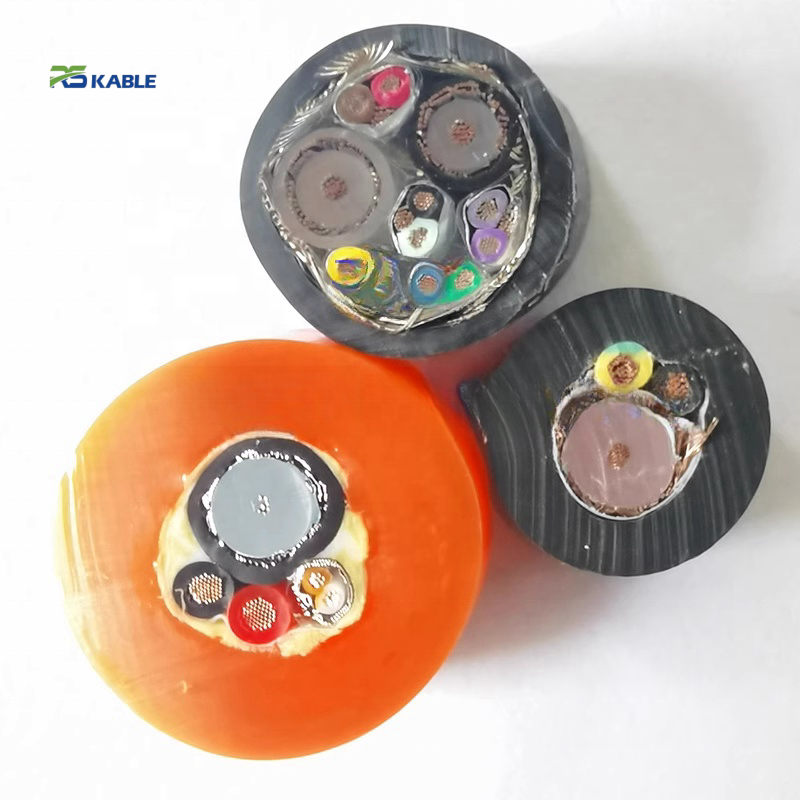



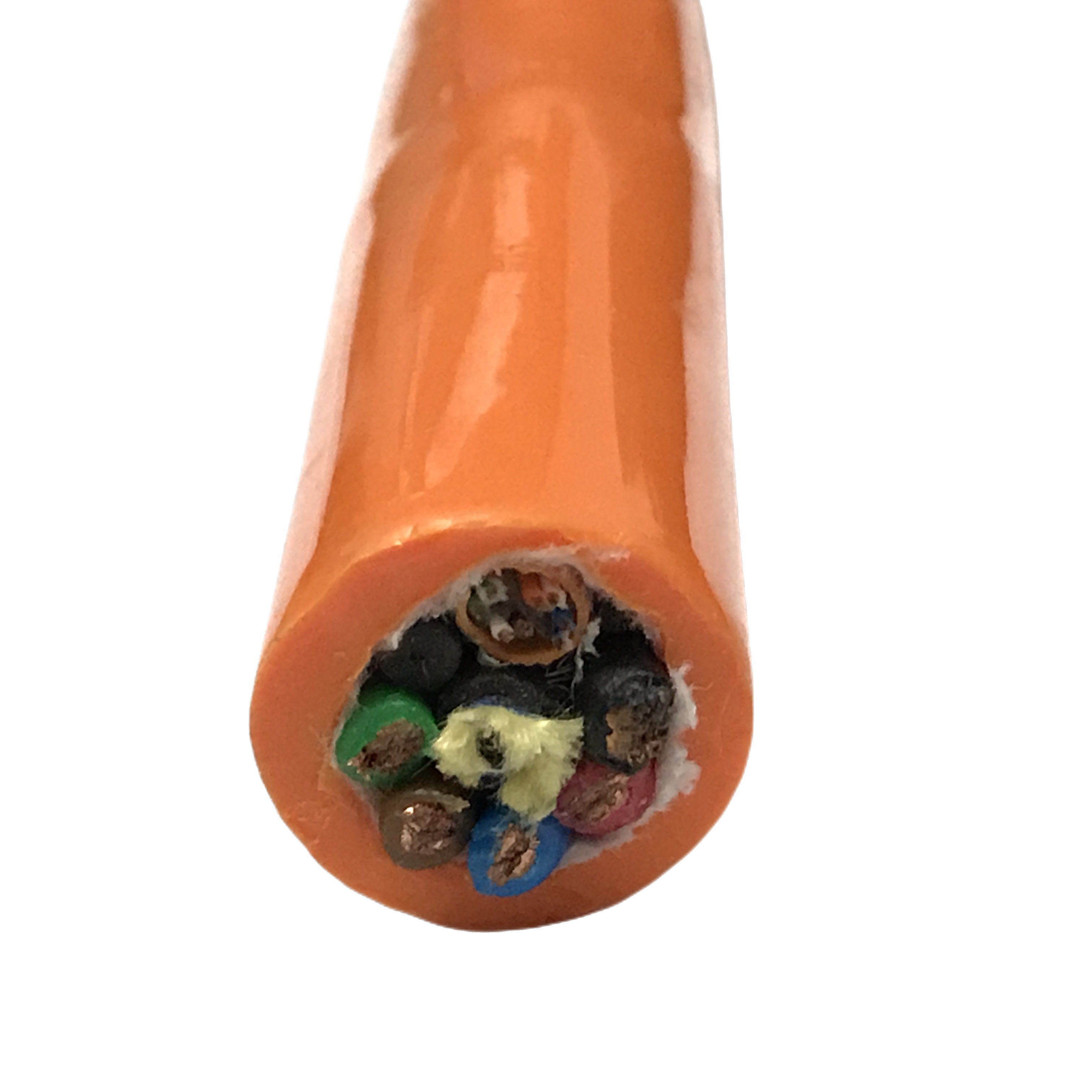
Polyurethane Pipeline Robot Cable | Wear-Resistant PUR Jacket Cable for Harsh Environments
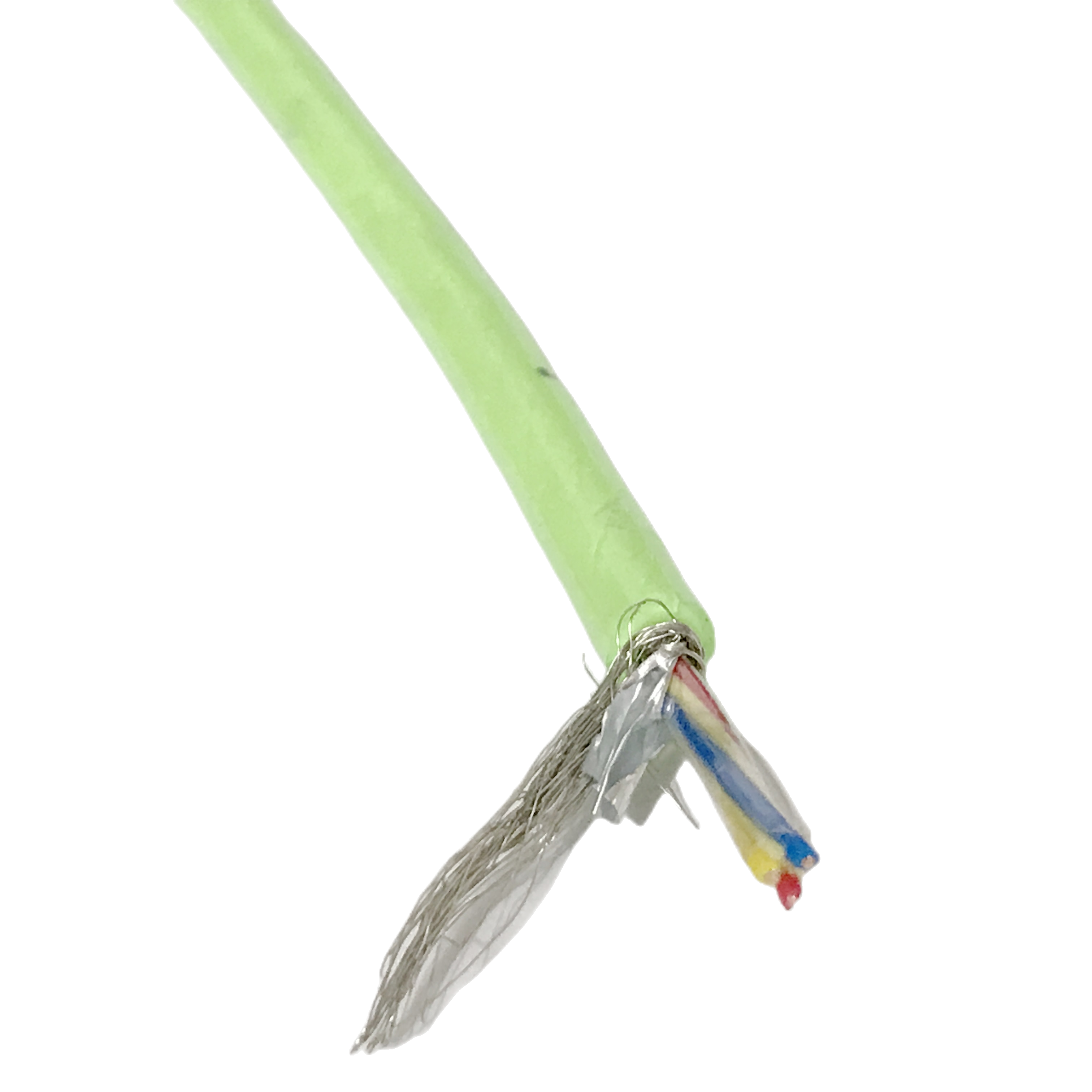
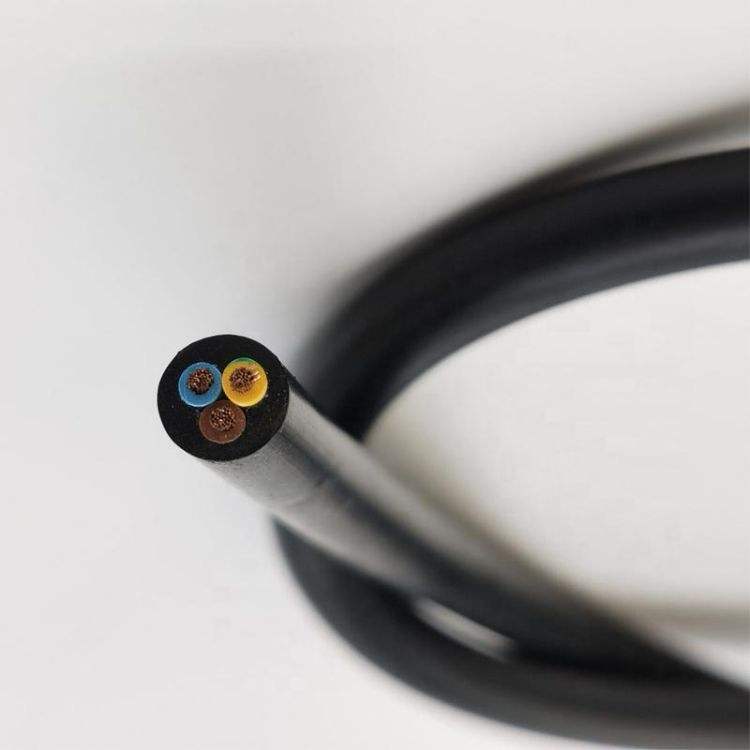
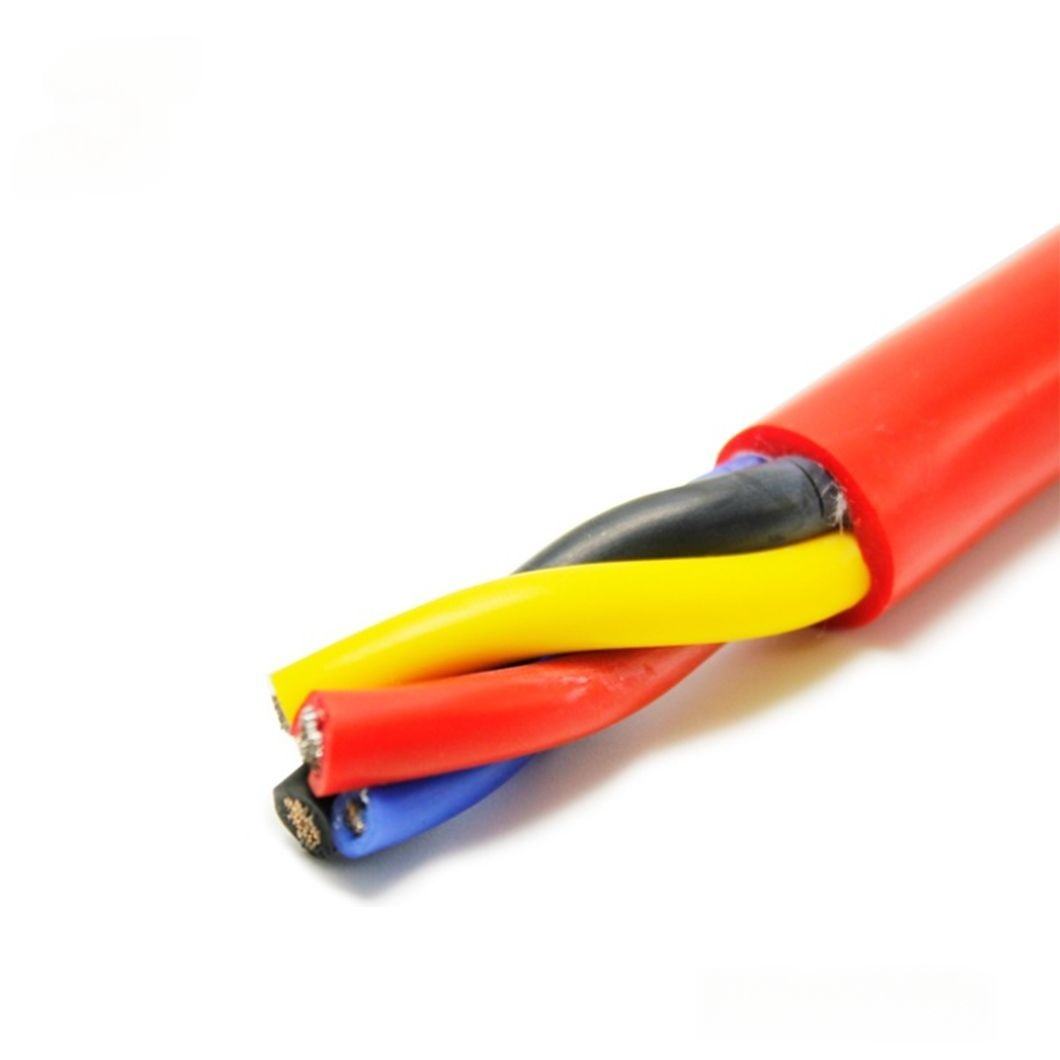
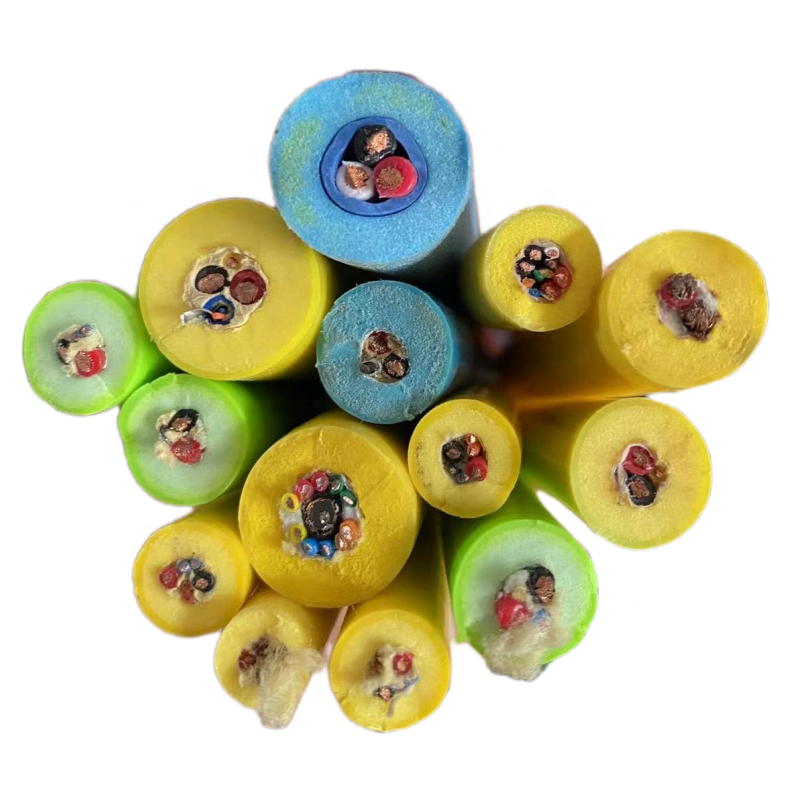
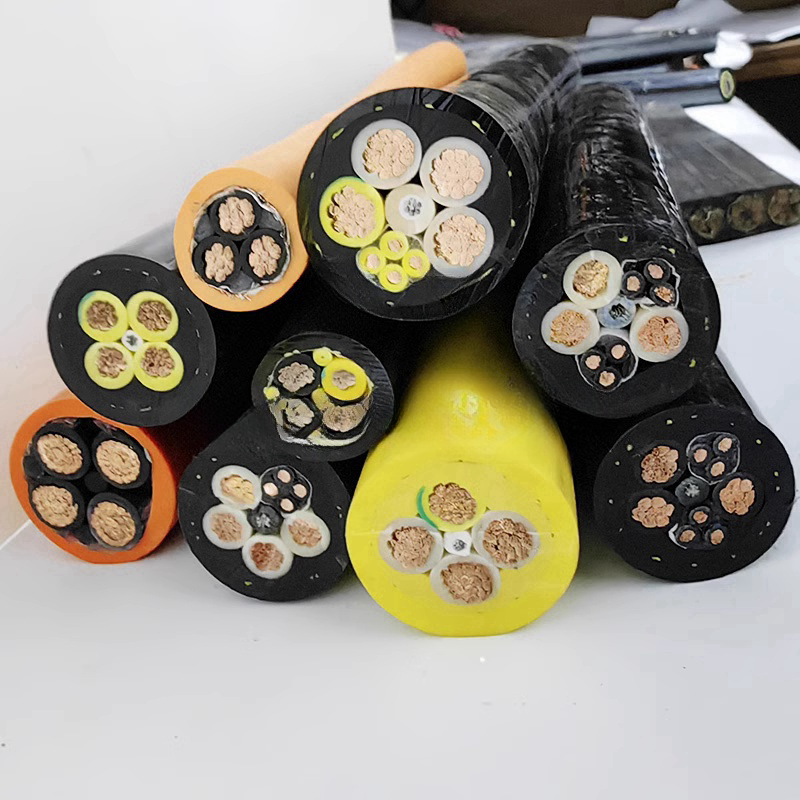
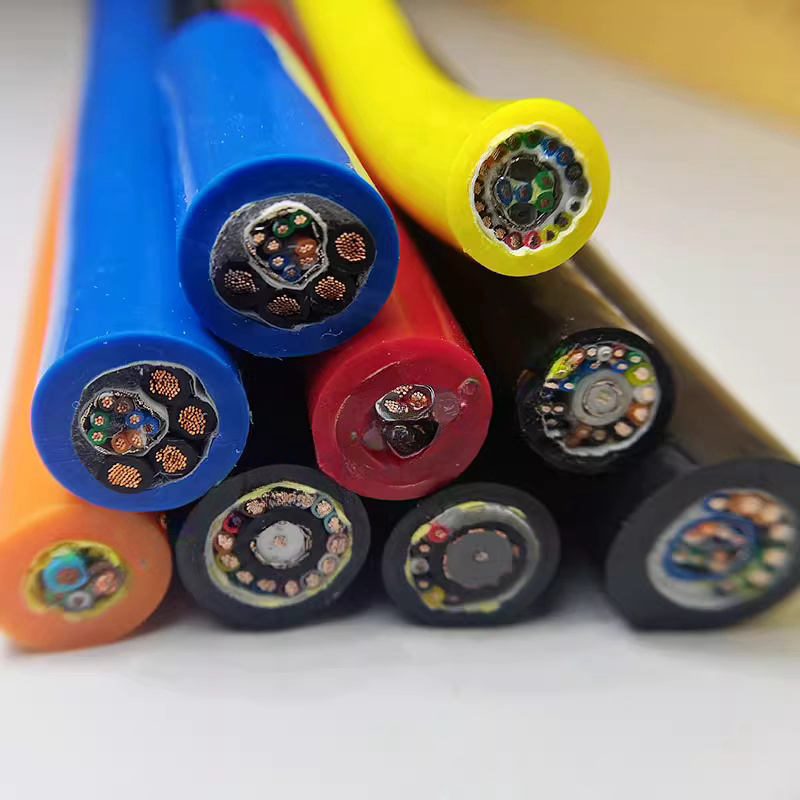
The RST-PRC Series Polyurethane Pipeline Robot Cable uses PTMEG-based polyether PUR for superior resistance to abrasion, chemicals, heat, and harsh pipeline conditions.
Four compound grades are optimized for specific environments, including rock abrasion, hydrocarbon exposure, high temperature, and radiation. Precise jacket thickness (±0.15 mm) ensures consistent performance and durability.
Compared to polyester PUR, it delivers 2–3× longer service life in aggressive environments. Manufactured to ISO 9001:2015 with full material traceability and certification.
Polyurethane Pipeline Robot Cable | Wear-Resistant PUR Jacket Cable for Harsh Environments
Product Series: RST-PRC │ Category: PUR-Jacketed Pipeline Robot Cables │ Written by: Li Weiming, Senior Polymer Cable Materials Engineer, 15 years elastomer cable compounding │ Last reviewed: March 2025
Polyurethane pipeline robot cable is specified in applications where standard rubber or PVC-jacketed inspection cables fail within months: rock-lined tunnels, industrial process pipelines carrying abrasive slurries, salt-encrusted coastal sewers, and oil-field flow-lines where the combined action of abrasion, chemical attack, and temperature cycling destroys softer jacket materials faster than any single factor could alone.
The distinction between a good and a poor polyurethane pipeline robot cable is not ‘PUR vs. not PUR’. It is polyether PUR vs. polyester PUR, and within polyether PUR, it is compounding quality, wall thickness engineering, and whether the formulation was developed for static cable installations or for the dynamic abrasion of a robot dragged repeatedly through a rough pipe. This page addresses each of those distinctions with test data.
The material question this page answers
Procurement engineers frequently receive competing quotations for ‘PUR pipeline robot cable’ that differ by 40–60% in price. The difference is almost never in the copper conductors or the video coaxial element. It is in the jacket polymer: grade, compounding, and wall geometry. This page provides the technical data needed to evaluate those differences.
► Contents
- Polyether vs. Polyester PUR: The Chemistry That Determines Service Life
- Wear Mechanism Map: Harsh Environments × PUR Failure Modes
- Jacket Wall Thickness Engineering
- RST-PRC Model Range
- Construction Details
- Technical Parameters
- Field Evidence: PUR Performance in Five Harsh Environments
- FAQ — Materials Engineers & Procurement Specialists
- Manufacturer Credentials
- Request a Quote
► Polyether vs. Polyester PUR: The Chemistry That Determines Service Life
Why PUR chemistry matters for pipeline robot duty
Polyurethane is not a single material. It is a family of polymers defined by the urethane linkage (−NH−CO−O−), but the mechanical properties of the final elastomer depend critically on the type of polyol used in the polymer backbone. Two types dominate industrial cable applications: polyester polyols (adipate-based) and polyether polyols (predominantly PPG and PTMEG-based). The choice between them determines how the cable jacket behaves in water, in chemical environments, and under sustained mechanical abrasion.
|
Property |
Polyester PUR |
Polyether PUR (RST-PRC) |
Why It Matters in Pipeline Robots |
|
Backbone bond type |
Ester bond (C–O–C=O): susceptible to hydrolytic cleavage by water and acid |
Ether bond (C–O–C): resistant to hydrolytic cleavage; stable in water and dilute acids |
Pipeline interiors are wet. Polyester PUR hydrolyses in water over months to years; polyether PUR does not. |
|
Hydrolysis in water (ISO 175, 5,000 h immersion, 23°C) |
Tensile loss 35–60% (severe degradation) |
Tensile loss <2% (no measurable degradation) |
In a sewage or water main pipeline, a polyester PUR cable jacket loses structural integrity within 12–18 months. |
|
Hydrolysis in acid (pH 3, 500 h, 23°C) |
Tensile loss 70–90% (severe attack; surface becomes tacky) |
Tensile loss <5% (surface unaffected) |
Industrial pipelines and coastal sewers can have pH as low as 2.5 (biogenic sulfuric acid from H₂S oxidation). |
|
Low-temperature flexibility |
Glass transition begins at −15°C to −25°C; jacket cracks on bending |
Flexible to −40°C or lower (PTMEG-based); no crack on bending |
Cold-climate pipeline inspection (mountain tunnels, winter gas mains below 0°C). |
|
Abrasion resistance (Taber CS-17, 1 kg, ISO 9352) |
250–400 cycles (good, but softens in water—abrasion resistance drops on wet surface) |
≥350 cycles dry; ≥320 cycles after 200 h water immersion (maintained resistance when wet) |
Pipeline robots operate in wet, gritty conditions. Wet-state abrasion resistance is the design-controlling property. |
|
Microbiological resistance (sewage bacteria, 90 days) |
Susceptible: sewage bacteria secrete esterase enzymes that attack ester bonds, producing surface pitting |
Resistant: ether bonds are not metabolised by common sewage microorganisms |
Sewage pipelines contain active bacterial communities that specifically degrade polyester PUR. |
|
Oil / hydrocarbon resistance |
Moderate (mineral oil causes swelling at elevated temperature) |
Moderate (similar to polyester for pure mineral oil; better for polar solvents) |
Oil-field flow-line inspection; same resistance for both types. Neither is ideal for aromatic hydrocarbons. |
|
Typical cable service life, DN200 sewage pipeline |
8–15 months before jacket shows hydrolysis cracking and abrasion-through |
24–48 months (Rousheng field data, 2020–2024, n=42 cables) |
The economics: polyether PUR cable typically costs 15–25% more than polyester PUR; service life is 2–3× longer. |
All RST-PRC cables use PTMEG-based polyether PUR (poly(tetramethylene ether) glycol backbone). PTMEG-based polyether provides the best combination of low-temperature flexibility and hydrolysis resistance of any commercial polyurethane system. Compound formulation: Rousheng internal standard PRC-COMP-01 (2024).
► Wear Mechanism Map: Harsh Environments × PUR Failure Modes
PUR jacket failure in pipeline robot applications is environment-specific. The correct jacket specification for a rock-lined mountain tunnel is different from the correct specification for a coastal salt-spray sewer. The table below maps each environment type to its dominant wear mechanism and the corresponding RST-PRC response.
|
Harsh Environment |
Dominant Wear Mechanism |
PUR Failure Mode if Wrong Grade |
RST-PRC Specification Response |
|
Hard rock / blasted stone tunnel |
Two-body abrasion: sharp rock edges cut micro-grooves in jacket surface on each robot pass |
Polyester PUR: abrasion resistance maintained dry, but the wet pipe surface causes 30–40% reduction in abrasion resistance; jacket fails 2× faster than expected from dry Taber data |
HD-1000 compound (Shore A 93, Taber ≥1,000 cycles at 2 kg load, wet-state); wall thickness minimum 3.0 mm for rock contact geometry |
|
Municipal sewage pipe (active, flowing) |
Three-body abrasion: grit suspended in sewage flow acts as abrasive medium between cable and pipe wall; plus biogenic acid (pH 2.5–4.0) from H₂S oxidation by Thiobacillus bacteria |
Polyester PUR: biogenic acid hydrolyses ester bonds; esterase bacteria attack surface; abrasion resistance drops rapidly below pH 4.0 |
PTMEG polyether PUR (ester-bond free): no hydrolytic degradation at pH 2.5; ether bonds not metabolised by Thiobacillus; wet Taber ≥320 cycles |
|
Oil-field flow-line / crude oil residue |
Swell-induced softening: aromatic hydrocarbons in crude oil swell the PUR matrix, reducing Shore A by 8–15 points, which dramatically lowers abrasion resistance |
Standard polyether PUR: swells 8–12% in toluene/xylene at 60°C; abrasion resistance drops by 45% when swollen |
HC-resistant compound (RST-PRC-HC): modified polyether with aromatic content designed to resist swelling in C6–C10 hydrocarbons; swell <5% in toluene at 40°C |
|
High-temperature industrial process pipe (60–120°C fluid) |
Thermal softening: PUR glass transition causes loss of Shore A hardness above compound-specific threshold; softened jacket deforms under pipe wall contact |
Standard polyether PUR (Shore A 85): glass transition range 50–70°C; jacket begins to deform above 65°C pipe wall temperature |
HT compound (RST-PRC-HT): PTMEG-MDI system with elevated hard-segment content; Shore A 90 maintained to +100°C; no softening at 80°C pipe wall |
|
Coastal / tidal zone sewer (saltwater spray and immersion) |
Osmotic blistering: salt ions in seawater create osmotic pressure that drives water ingress through micro-voids in poorly formulated PUR, causing sub-surface blistering |
Low-density or poorly compacted PUR: water ingress within 6–12 months; blisters mechanically weaken jacket at contact points with pipe wall |
PTMEG polyether PUR with closed-cell void fraction <0.5% (certified by density measurement per drum, target 1.18–1.22 g/cm³ ±0.02); no osmotic blistering in 5,000 h seawater immersion |
|
Nuclear plant containment pipe (gamma radiation + wet) |
Radiation-induced chain scission: gamma radiation breaks polymer chains, reducing molecular weight, elongation, and impact resistance |
Standard PTMEG PUR: acceptable to approximately 150 Gy total dose; elongation drops below 200% above this threshold |
Radiation-hardened compound (RST-PRC-RH): antioxidant package raises useful dose to approximately 500 Gy; elongation >300% at 500 Gy (tested per ASTM D573 post-irradiation) |
► Jacket Wall Thickness Engineering
Why wall thickness is an engineering calculation, not a catalogue choice
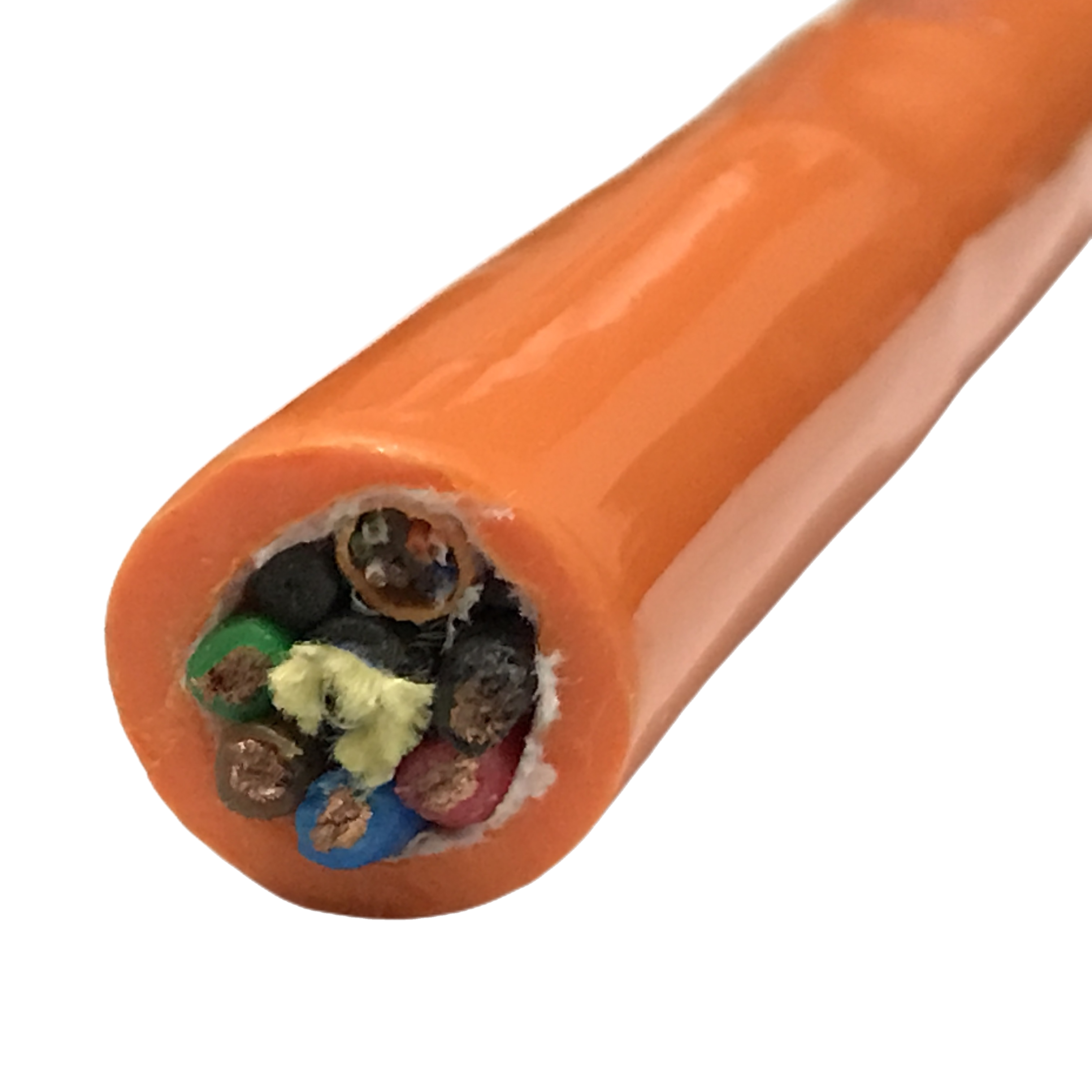
Most cable data sheets specify a single jacket wall thickness for all applications. RST-PRC specifies wall thickness per application based on three inputs: the abrasion loss rate of the jacket compound in the specific environment, the expected number of robot passes over the cable life, and the minimum wall required to maintain IP67 waterproofing at the end of cable life. This calculation determines the minimum wall thickness at time of manufacture.
Abrasion loss rate calculation
Rousheng abrasion loss rate model: wall loss per 100 robot passes (L_100) = (Taber mass loss mg/cycle ÷ density g/cm³) × K_geometry, where K_geometry accounts for the curvature of the pipe wall contact (K ≈1.8 for pipe radius / cable radius = 5). For RST-PRC standard compound in DN200 PVC pipe: L_100 ≈ 0.06 mm wall loss per 100 passes. At 500 robot passes over cable life: total wall loss ≈ 0.30 mm. (Rousheng Engineering Note REN-PRC-004, 2024; derived from ISO 9352 Taber data)
Minimum wall calculation and safety factor
From the abrasion loss model: minimum initial wall thickness = Minimum residual wall (to maintain IP67) + Calculated wear over cable life. Minimum residual wall for IP67 is 1.0 mm (for cables ≤20 mm OD) per IEC 60529 Table 1 adapted guidance. At 500 passes and 0.06 mm/100 passes loss rate: minimum initial wall = 1.0 + 0.30 = 1.30 mm. RST-PRC specifies a safety factor of 1.5× minimum: specified wall = 1.30 × 1.5 = 1.95 mm, rounded up to 2.0 mm. For high-severity environments (rock tunnel), loss rate is 0.15 mm/100 passes; specified wall = (1.0 + 0.75) × 1.5 = 2.63 mm, rounded up to 3.0 mm.
|
Application |
Cable OD |
Environment Severity |
Calc. Min Wall |
Specified Wall |
Safety Factor |
|
Light duty: clean water main, PVC pipe |
12–16 mm |
Low (clean water, smooth PVC) |
1.30 mm |
2.0 mm (1.54× SF) |
1.54× |
|
Standard: municipal sewage, concrete pipe |
16–20 mm |
Medium (grit, pH 4–7, concrete) |
1.65 mm |
2.5 mm (1.52× SF) |
1.52× |
|
Heavy: industrial slurry pipeline |
20–22 mm |
High (abrasive slurry, pH 2–4) |
2.10 mm |
3.0 mm (1.43× SF) + HC compound |
1.43× |
|
Severe: blasted rock tunnel |
16–22 mm |
Very high (sharp rock edges, wet) |
1.95 mm |
3.0 mm (1.54× SF) + HD-1000 compound |
1.54× |
|
Extreme: oil-field flow-line + abrasive |
20–22 mm |
Extreme (HC swell + abrasive crude residue) |
2.50 mm |
4.0 mm (1.60× SF) + HC-resistant compound |
1.60× |
|
Process pipe: high temp 80°C + abrasion |
18–22 mm |
High (thermal softening risk + abrasion) |
2.20 mm |
3.0 mm (1.36× SF) + HT compound |
1.36× |
Wall thickness measured at 6 equidistant points around the cable circumference per IEC 60811-1-1. Minimum single-point measurement must be ≥90% of specified wall. All RST-PRC drums include wall thickness certificate with 6-point measurement at cable start, mid-point, and end.
► RST-PRC Polyurethane Pipeline Robot Cable — Model Range
|
Model |
OD |
Jacket Compound |
Wall |
Video |
Power |
Control |
IP |
Target Environment |
|
RST-PRC-S-2.0 |
12 mm |
Standard PTMEG PUR, Shore A 85 |
2.0 mm |
75 Ω CVBS |
2×0.75 mm² |
RS-485 |
IP68/3m |
Clean water main, PVC pipe |
|
RST-PRC-M-2.5 |
16 mm |
Standard PTMEG PUR, Shore A 85 |
2.5 mm |
75 Ω HD-SDI |
2×1.5 mm² |
RS-485 + CANbus |
IP68/3m |
Municipal sewage, concrete sewer |
|
RST-PRC-M-3.0 |
16 mm |
Standard PTMEG PUR, Shore A 85 |
3.0 mm |
75 Ω HD-SDI |
2×1.5 mm² |
RS-485 + CANbus |
IP68/5m |
Rock tunnel, aggressive sewage |
|
RST-PRC-L-3.0 |
20 mm |
Standard PTMEG PUR, Shore A 85 |
3.0 mm |
75 Ω 4K SDI |
2×2.5 mm² |
RS-485 + CANbus |
IP68/5m |
Large diameter, heavy abrasion |
|
RST-PRC-HD |
16 mm |
HD-1000, Shore A 93, Taber ≥1,000 cyc |
3.0 mm |
75 Ω HD-SDI |
2×1.5 mm² |
RS-485 + CANbus |
IP68/5m |
Blasted rock tunnel, hard-face mining |
|
RST-PRC-HC |
18 mm |
HC-resistant PUR, swell <5% in toluene |
3.0 mm |
75 Ω HD-SDI |
2×1.5 mm² |
RS-485 + CANbus |
IP68/5m |
Oil-field flow-line, aromatic HC environment |
|
RST-PRC-HT |
18 mm |
HT compound, Shore A 90 to +100°C |
3.0 mm |
75 Ω HD-SDI |
2×1.5 mm² |
RS-485 + CANbus |
IP68/5m |
Process pipe 60–100°C fluid temperature |
|
RST-PRC-RH |
16 mm |
RH compound, 500 Gy gamma rated |
3.0 mm |
75 Ω HD-SDI |
2×1.5 mm² |
RS-485 pair |
IP68/5m |
Nuclear plant containment pipe |
|
RST-PRC-K |
20 mm |
Standard PTMEG PUR, Shore A 85 |
2.5 mm |
75 Ω 4K SDI |
2×2.5 mm² |
RS-485 + CANbus |
IP68/5m |
Long tether + Kevlar 4 kN tensile |
|
RST-PRC-OEM |
Per spec |
Per compound spec |
Per calc |
Per spec |
Per spec |
Per spec |
Per spec |
Custom harsh environment specification |
HD-1000: Taber ≥1,000 cycles at 2 kg load (ISO 9352); 2 kg load used to reflect rock-contact conditions. HC-resistant: swell <5% in toluene at 40°C (ASTM D471). HT: Shore A 90 maintained at +100°C (ISO 868 at elevated temperature). RH: elongation >300% after 500 Gy gamma dose (ASTM D573 post-irradiation). All models: wall thickness certificate (6-point measurement) per drum.
► Construction: How Wear-Resistant PUR Cable Is Built
Compound mixing and quality control
The performance of a polyurethane pipeline robot cable is determined in the compounding step before extrusion. RST-PRC compounds are prepared in-house on a twin-screw extruder with gravimetric dosing of all components: base polyol, MDI isocyanate, chain extender, antioxidant package, UV stabiliser, colour masterbatch, and any speciality additives (HC resistance modifier, HT hard-segment enhancer, radiation stabiliser). Gravimetric dosing accuracy: ±0.3% by weight per component.
Compound batch certification: RST-PRC compounds are tested per Rousheng compound release protocol CRP-002 before extrusion. Tests: Shore A (ISO 868), tensile strength (ISO 37), elongation at break (ISO 37), Taber abrasion (ISO 9352 at 2 kg), and hydrolysis resistance (ISO 175, 200 h immersion screening test). Batch must pass all five criteria before release to extrusion. (Rousheng Compound Release Protocol CRP-002, 2024)
Extrusion: single-pass jacket with wall measurement control
The outer jacket is extruded in a single pass over the cabled core assembly. Inline laser micrometer monitors cable OD at 200 mm intervals; the closed-loop control system adjusts extrusion head pressure and line speed to maintain OD within ±0.15 mm. Wall eccentricity (the variation in wall thickness around the cable circumference) is controlled to ≤15% by the self-centring annular die geometry. A thick wall at one point and thin at another would create a non-uniform abrasion wear pattern that accelerates failure at the thin-wall point.
Core assembly design for abrasion resistance
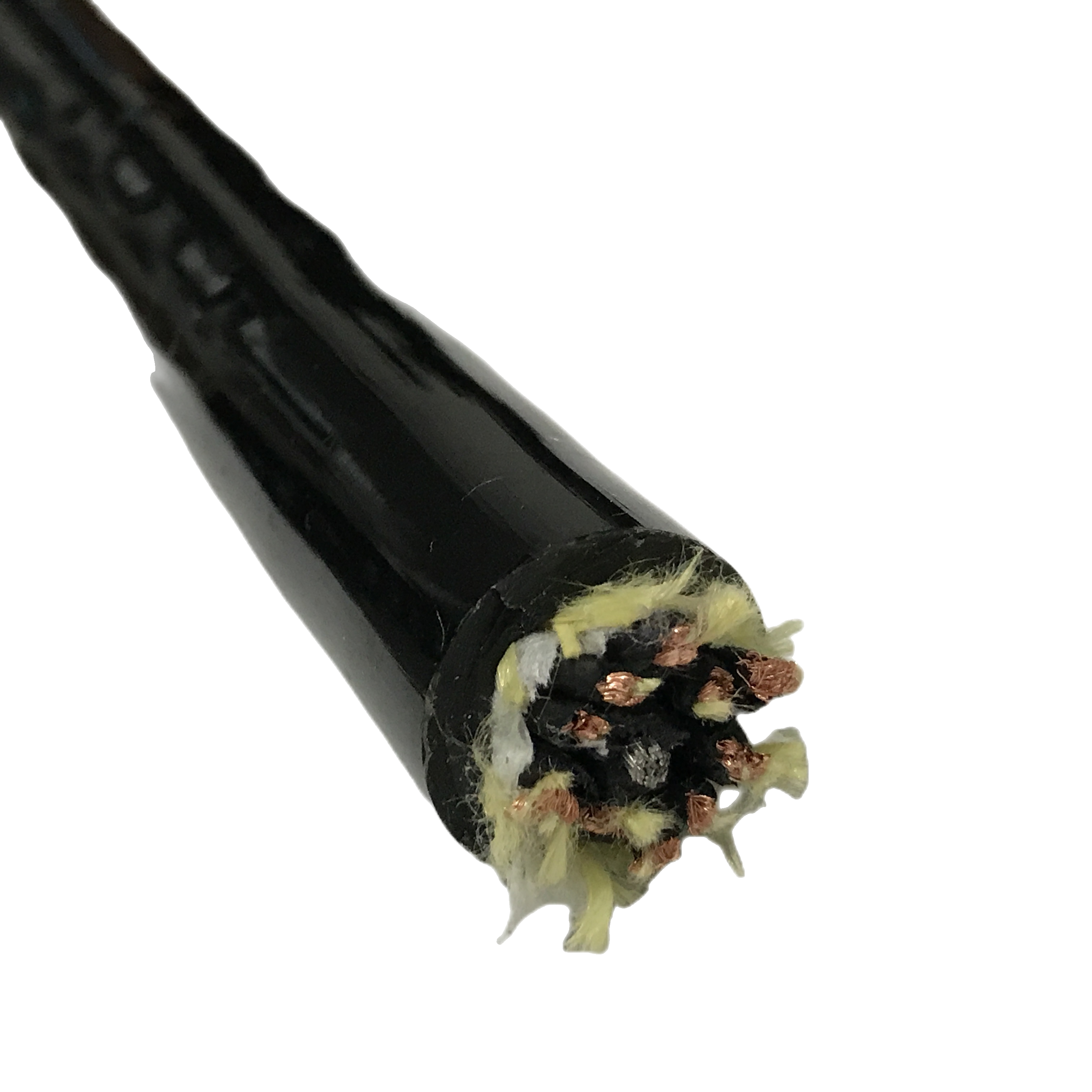
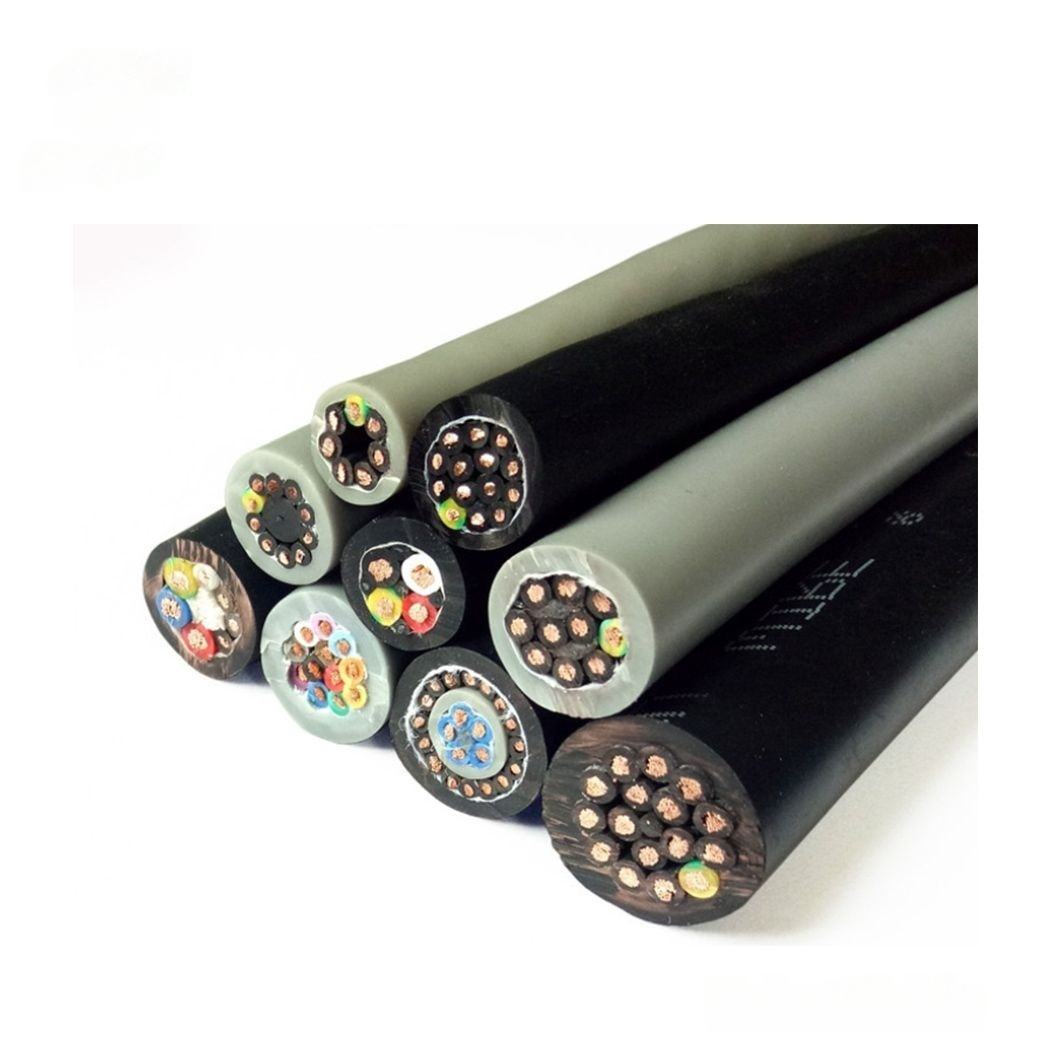
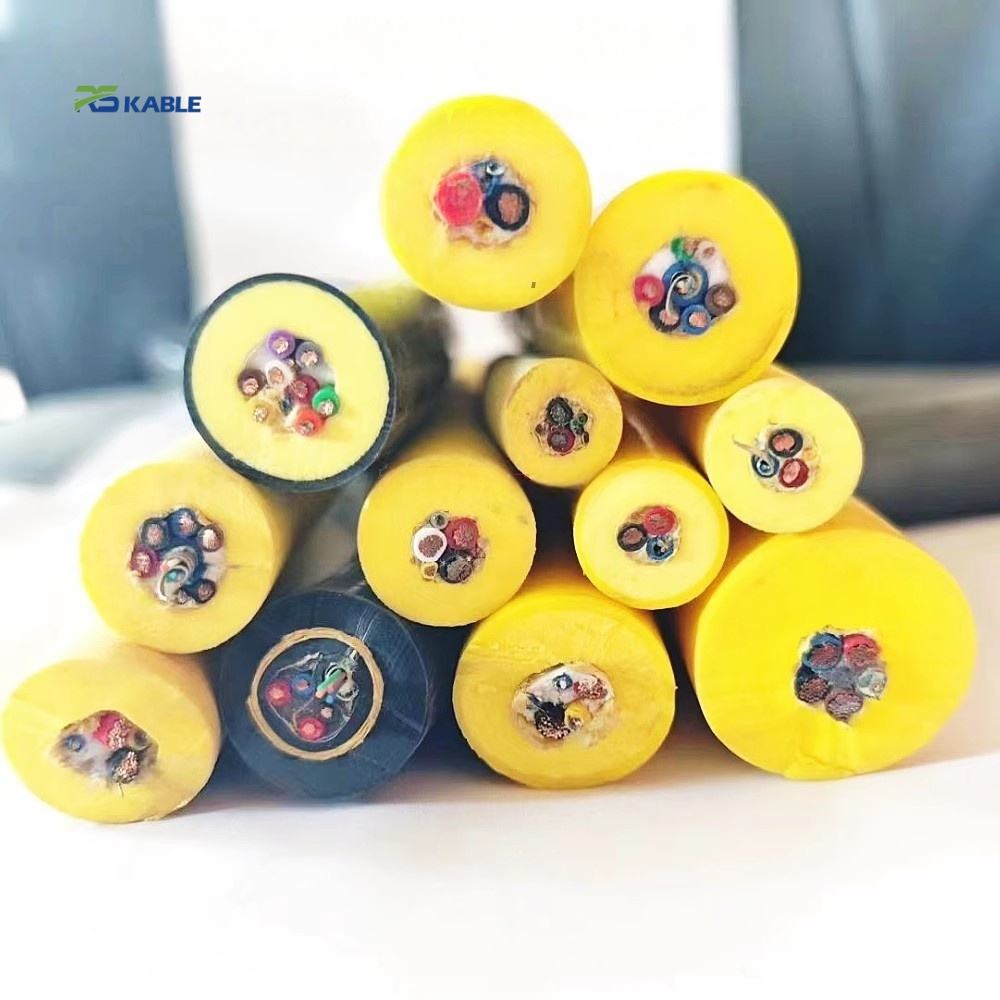
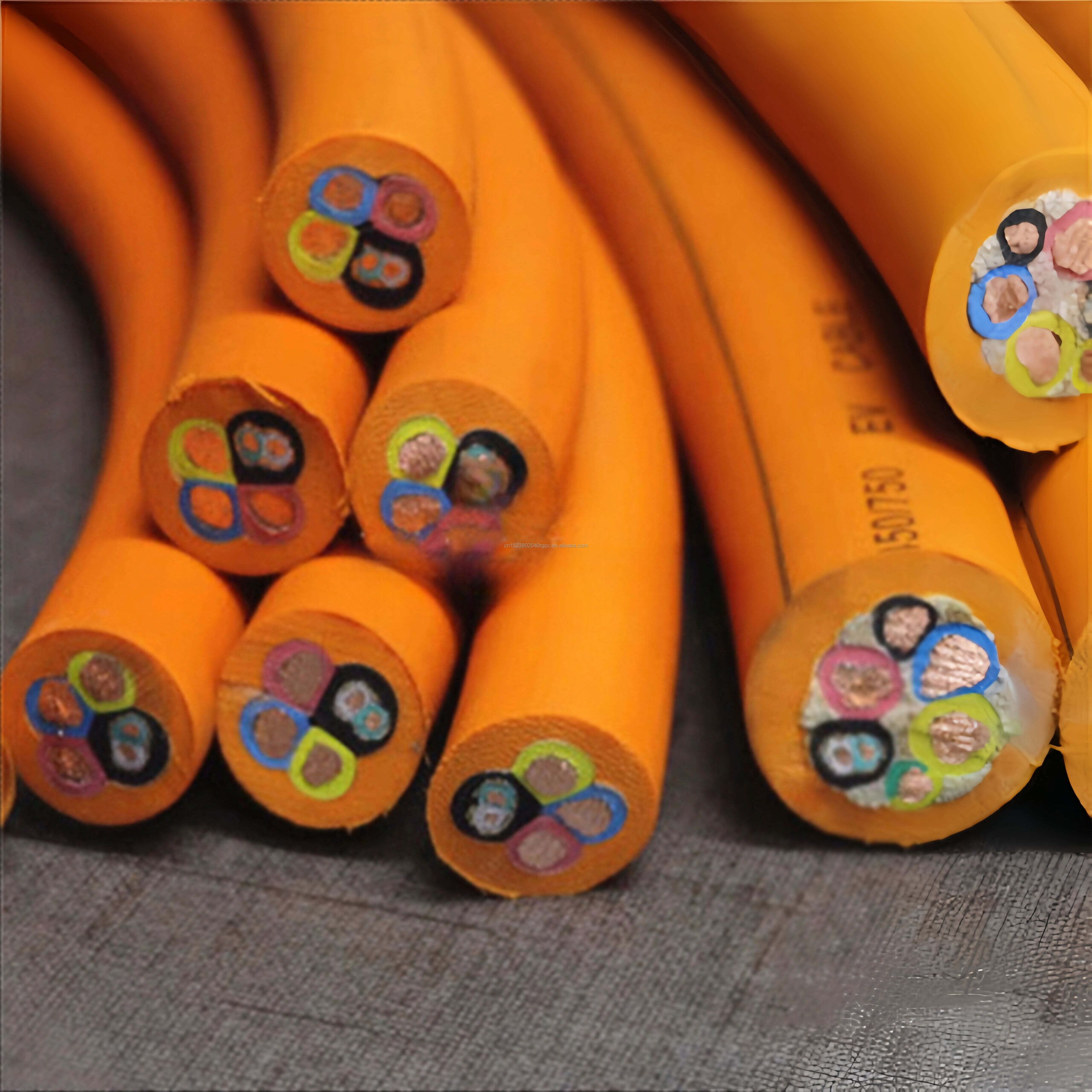
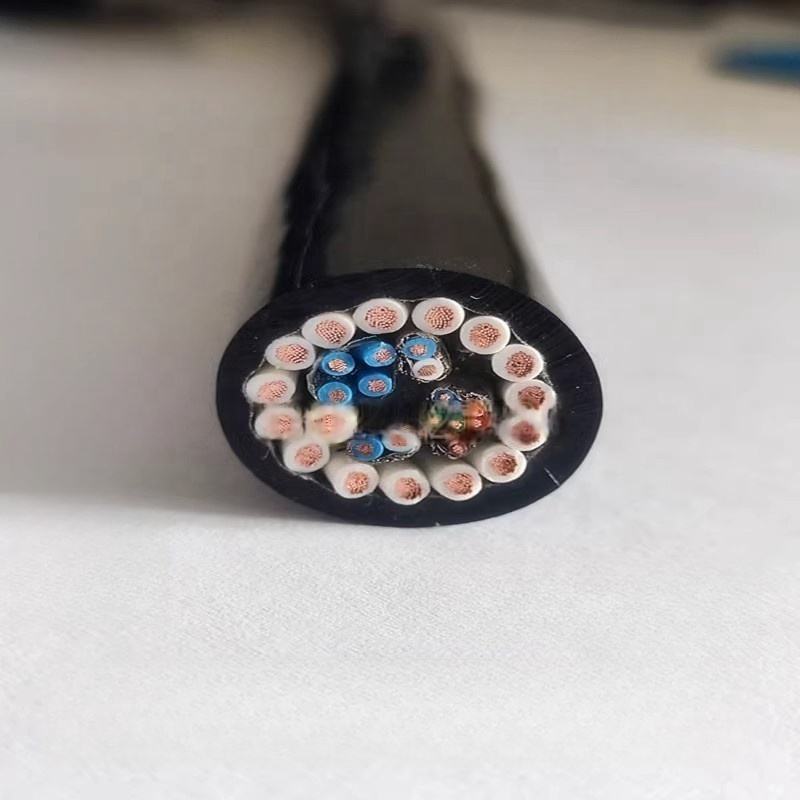
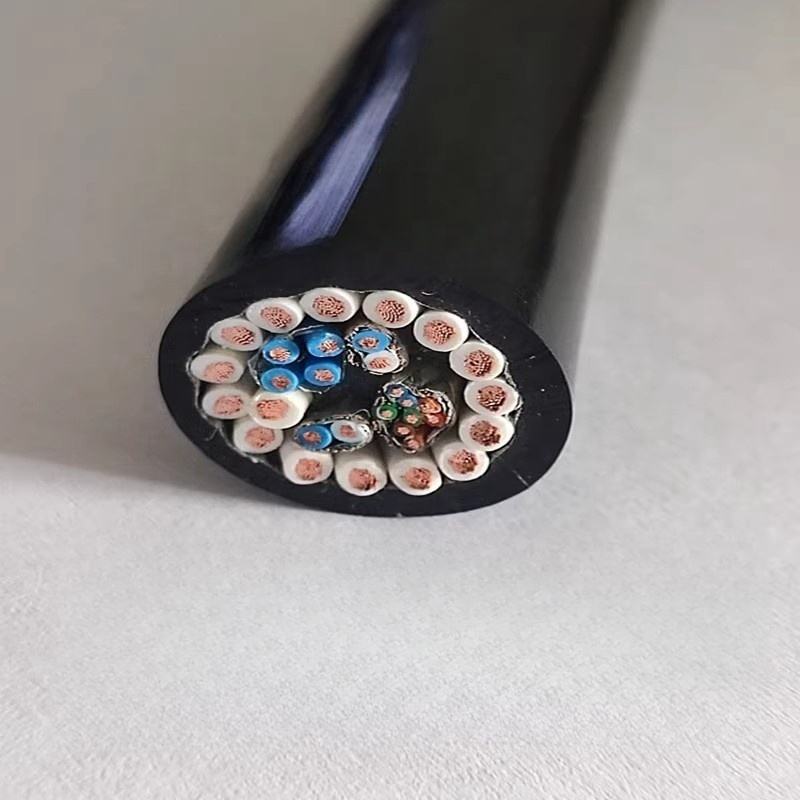
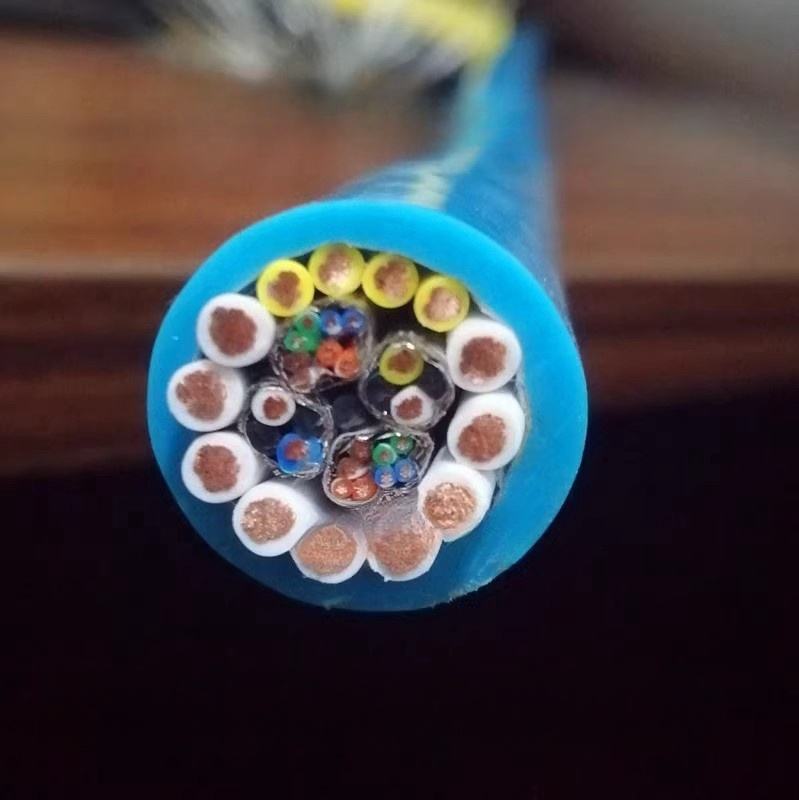
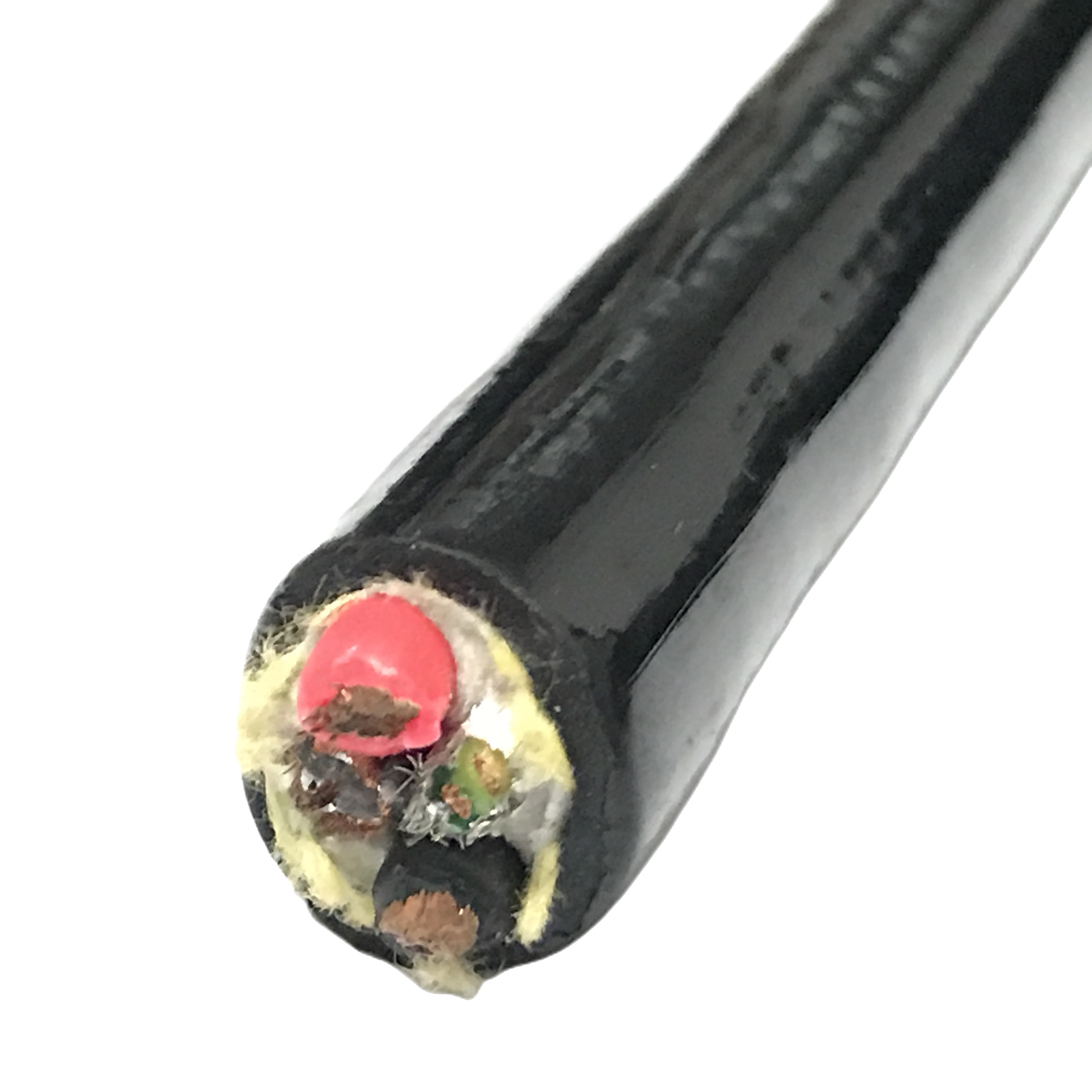
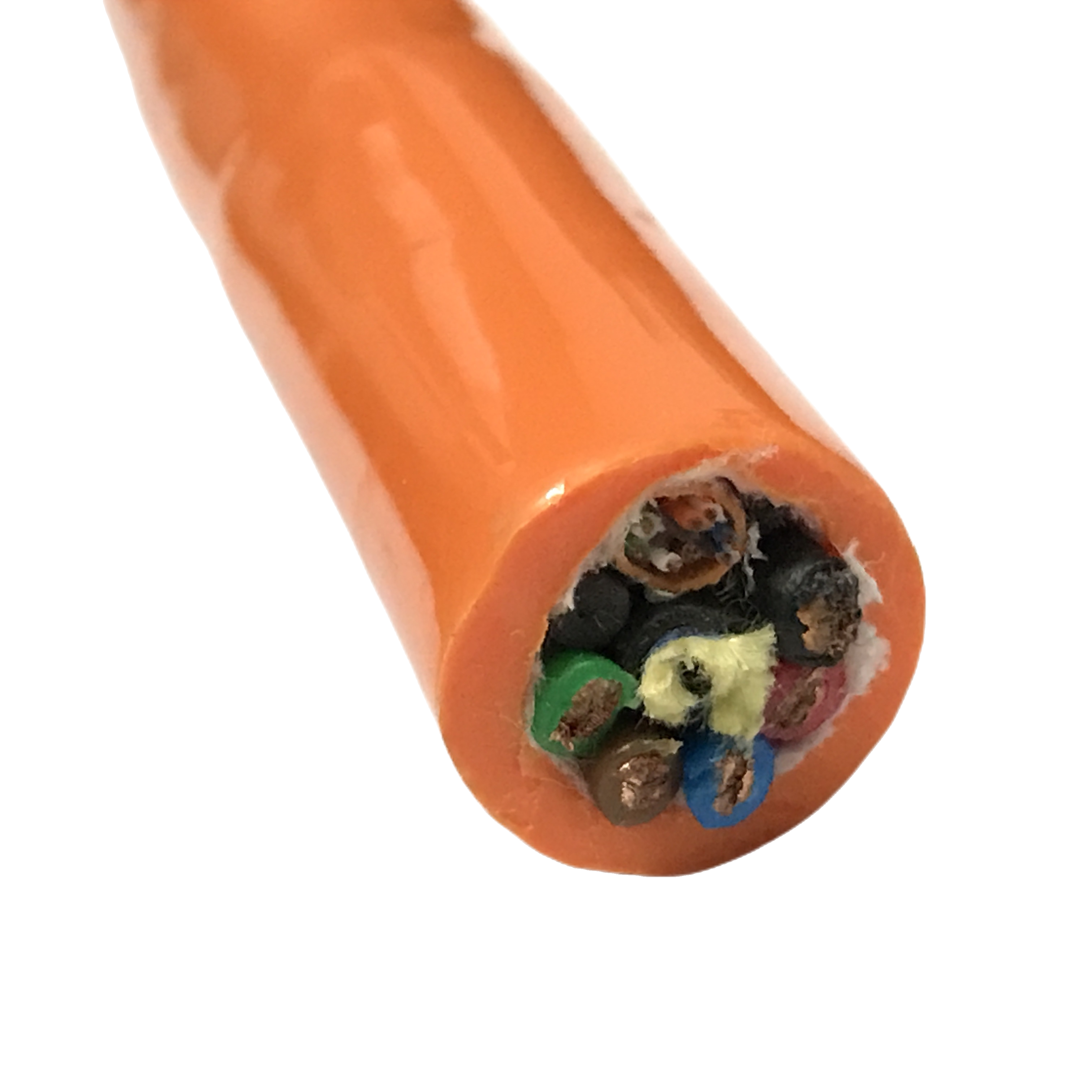
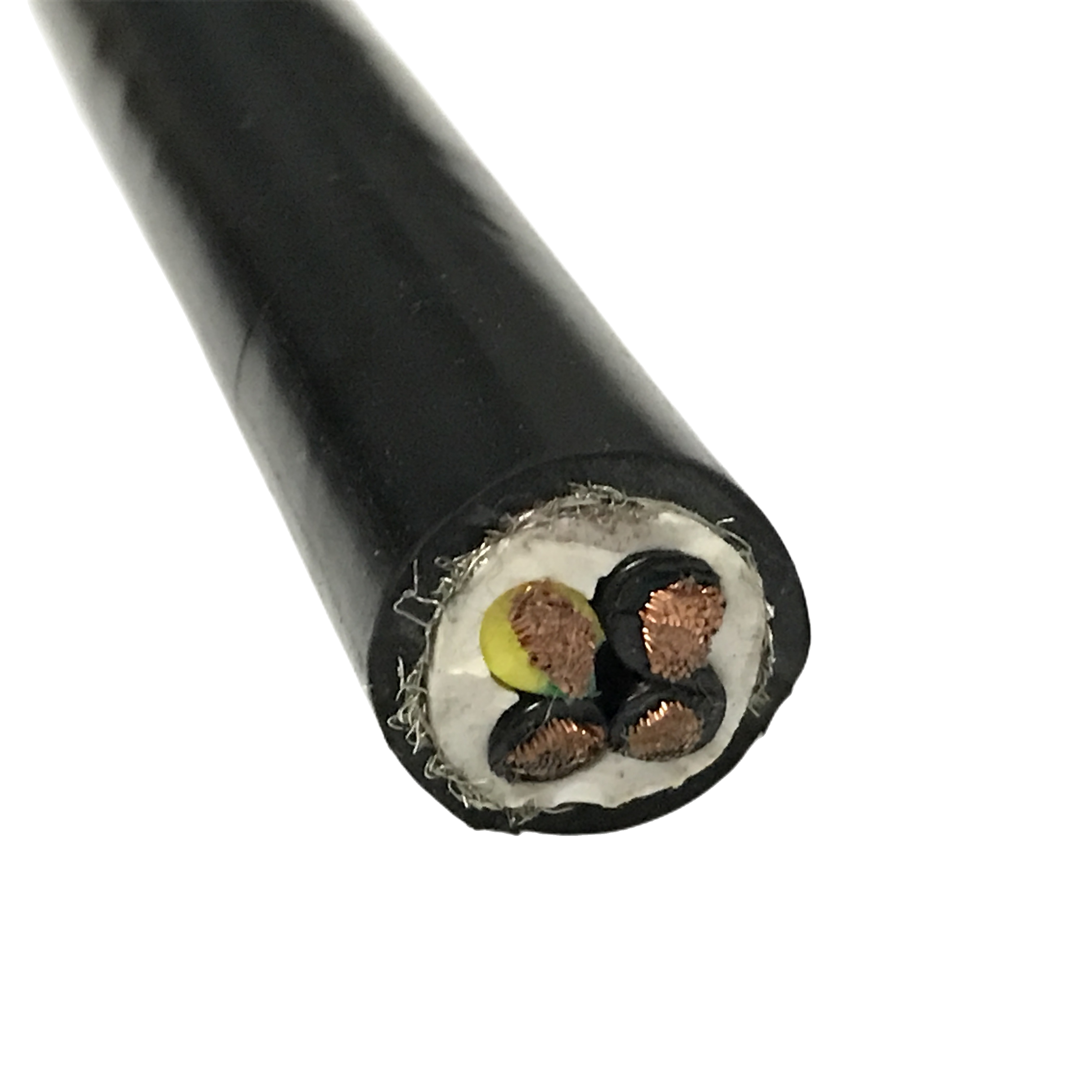
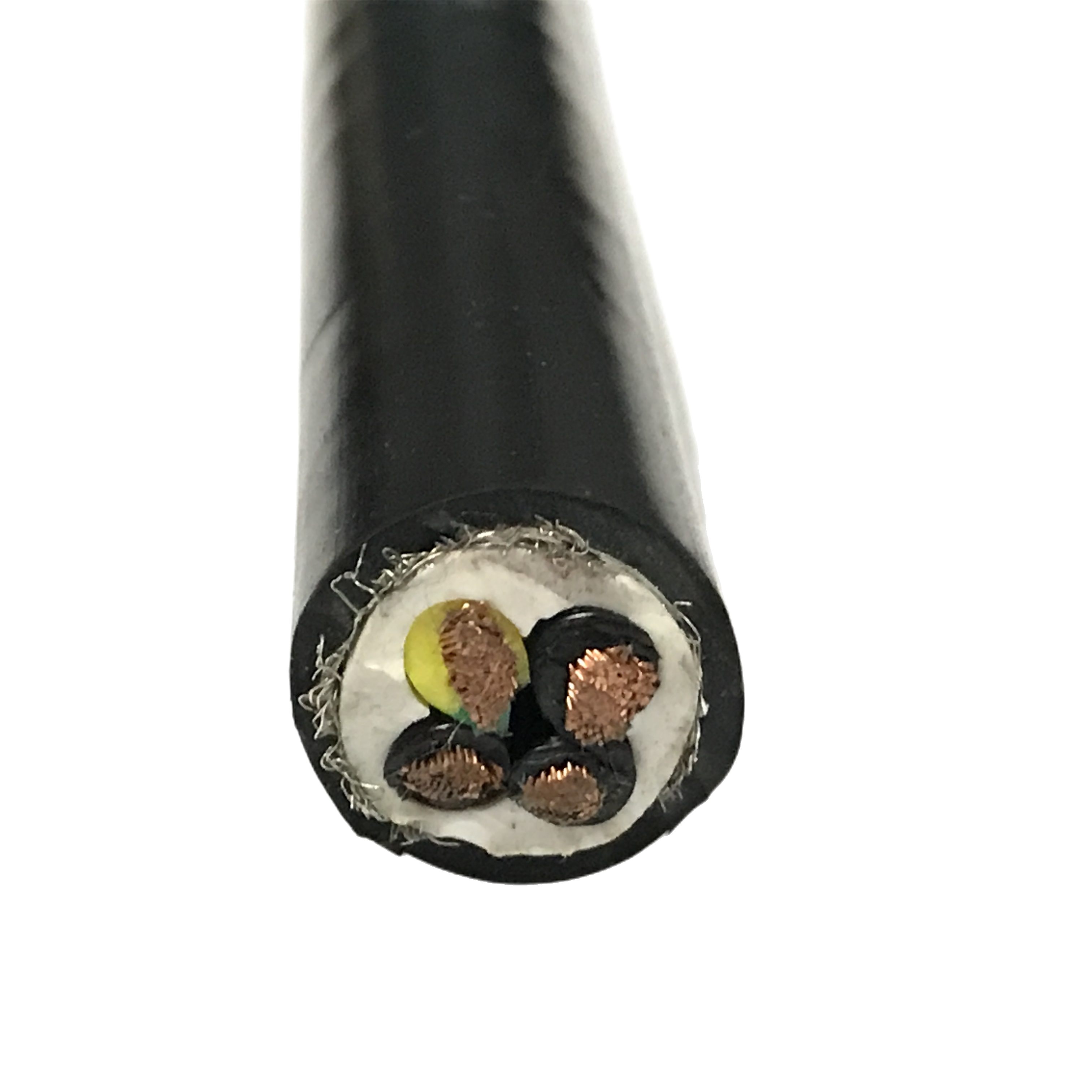
The cable core under the jacket is designed to avoid creating stress concentrations that would cause the jacket to crack from the inside. Internal elements (video coaxial, power conductors, control pairs) are cabled with a lay length that creates a smooth, nearly circular core profile. PP filler cords fill interstitial spaces to prevent the jacket from deforming inward under abrasive contact forces. A polyester fleece separator between the core and the jacket allows the jacket to slide slightly relative to the core on each robot pass, preventing shear stress accumulation at the jacket-core interface.
Water-blocking and IP68 integrity
Three water-blocking measures are incorporated. First, a petroleum gel fill in all cable interstices prevents water migration along the cable if the jacket is breached. Second, a SAP (superabsorbent polymer) tape wrapped over the gel fill layer provides a secondary block. Third, all power conductor insulation uses XLPE rather than PVC — XLPE has zero water absorption, whereas PVC insulation in wet conditions can develop micro-cracks from plasticiser leaching that provide a water path to the conductor surface.
|
Layer |
Specification |
Quality Control |
|
PTMEG polyether PUR jacket |
Shore A per grade (85/90/93); compound batch certified before extrusion |
Shore A per drum: ISO 868; wall thickness: 6-point per drum, IEC 60811-1-1 |
|
PP filler cords |
Polypropylene, non-hygroscopic; sized per gap geometry |
Dimensional check: core roundness measured per batch |
|
Polyester fleece separator |
Non-woven polyester, 25 g/m²; allows jacket slip, prevents bonding |
Visual inspection: no bonding to jacket on recovery test sample |
|
Gel fill + SAP tape |
Petroleum gel (non-migrating at −40°C to +80°C); SAP tape secondary barrier |
IEC 60794-1-2 F5B: ≤0.5 m water migration from breach |
|
XLPE power insulation |
Cross-linked PE; +90°C conductor rated; zero water absorption |
IEC 60502-1; HiPot 2,000 V AC / 5 min per drum |
|
75 Ω video coax |
Foamed PE dielectric; ≤52 pF/m; silver-plated Cu centre |
IEC 60096-1; impedance measured per drum at 10 MHz |
|
Kevlar tensile (K-model) |
Kevlar 49, counter-wound; 4 kN; elongation ≤1.5% |
ASTM D7269; 1.5× load test per drum |
► Technical Parameters
Jacket compound properties by grade
|
Property |
Standard (Shore A 85) |
HD-1000 (Shore A 93) |
HC-Resistant |
HT (+100°C) |
RH (500 Gy) |
Standard / Test |
|
Shore A hardness |
85 ± 3 |
93 ± 2 |
86 ± 3 |
90 ± 2 |
85 ± 3 |
ISO 868 |
|
Tensile strength |
≥48 MPa |
≥58 MPa |
≥46 MPa |
≥52 MPa |
≥45 MPa (pre-irrad.) |
ISO 37 |
|
Elongation at break |
≥380% |
≥340% |
≥370% |
≥360% |
≥300% at 500 Gy |
ISO 37 / ASTM D573 |
|
Taber (CS-17, 1 kg) |
350 cycles |
800 cycles |
330 cycles |
380 cycles |
320 cycles |
ISO 9352:2021 |
|
Taber (CS-17, 2 kg, wet) |
320 cycles |
1,000 cycles |
305 cycles |
360 cycles |
295 cycles |
ISO 9352:2021 (Rousheng 2 kg protocol) |
|
Hydrolysis (ISO 175, 5,000 h) |
<2% tensile loss |
<2% |
<2% |
<3% |
<3% |
ISO 175 |
|
Low-temp flex |
−40°C |
−30°C |
−38°C |
−35°C |
−35°C |
IEC 60811-501 |
|
HC swell in toluene (ASTM D471) |
8–12% |
8–12% |
<5% at 40°C |
10–15% |
8–12% |
ASTM D471 |
|
Max service temp |
+80°C |
+85°C |
+80°C |
+100°C |
+80°C |
IEC 60811-501 |
|
Gamma radiation limit |
~150 Gy (useful) |
~150 Gy |
~150 Gy |
~150 Gy |
~500 Gy |
ASTM D573 |
Electrical and mechanical
|
Parameter |
Value |
Standard / Source |
|
Video coax impedance |
75 Ω ±1 Ω @ 10 MHz |
IEC 60096-1 |
|
Video capacitance |
≤52 pF/m |
IEC 60096-1 |
|
Power conductor voltage |
300/500 V, XLPE insulated |
IEC 60502-1 |
|
HiPot (all power cores) |
2,000 V AC / 5 min |
IEC 60502-1 Cl.17 |
|
RS-485 pair impedance |
120 Ω ±10 Ω |
IEC 61156-5 |
|
Min bend radius (dynamic push) |
5× cable OD (standard); 8× OD (K-model) |
Internal push test validation |
|
OD tolerance |
±0.15 mm (laser inline, 200 mm intervals) |
Rousheng QCP-PRC-001, 2024 |
|
Wall thickness tolerance |
≥90% of specified wall at any single point (6-point check) |
IEC 60811-1-1; per-drum certificate |
|
Wall eccentricity |
≤15% deviation from nominal |
Internal extrusion control specification |
|
IP rating |
IP68 at 3 m (standard) or 5 m (heavy/severe models) |
IEC 60529; per-drum test |
|
Kevlar tensile (K-model) |
4 kN; counter-wound torque-balanced; load-tested 1.5× |
ASTM D7269 |
|
Cable mass per metre |
Per model (range 160–420 g/m) |
Measured per drum |
► Field Evidence: PUR Jacket Performance in Harsh Environments
Client names withheld. Technical measurements verified by client materials engineers or inspection supervisors. Available under NDA.
|
Site / Environment |
Cable Deployed |
PUR Compound |
Comparison Cable |
Field Measurement |
|
Granite rock tunnel, hydro project, Norway (2021–2024) |
RST-PRC-HD, 3.0 mm HD-1000 jacket, DN300 water intake inspection robot, 200 m runs |
HD-1000: Shore A 93, Taber 1,000 cycles at 2 kg wet |
Previous polyester PUR cable (Shore A 88, Taber 420 cycles at 1 kg): jacket worn through to conductor insulation in 6 months (average 3.0 mm wall reduced to 0.2 mm in 6 months at 8 robot passes/week). |
RST-PRC-HD at 12 months: wall measurement 2.3 mm remaining from original 3.0 mm (0.7 mm loss in 12 months vs. 2.8 mm loss for previous cable). Projected service life: 36–40 months. |
|
Biogenic acid sewer, industrial district, Taiwan (2022–2024) |
RST-PRC-M-3.0, standard PTMEG PUR, pH 2.8–3.5 sewage environment (Thiobacillus-colonised concrete sewer), 150 m runs |
Standard PTMEG polyether PUR (ether bonds, no esterase attack) |
Previous polyester PUR cable recovered at 11 months: jacket surface showed extensive pitting and soft zones from esterase enzyme attack. Surface Shore A dropped from 86 to 62 (28% reduction). Abrasion resistance at degraded zones: <100 cycles Taber. |
RST-PRC-M-3.0 at 24 months: surface Shore A 84 (unchanged). No surface pitting visible. Taber test on recovered sample at 24 months: 312 cycles (98% of initial). Estimated service life: 36+ months. |
|
Oil-field water injection line, Abu Dhabi (2023) |
RST-PRC-HC (HC-resistant compound, swell <5%), DN200 steel injection line, crude oil residue, 60°C fluid, 100 m runs |
HC-resistant modified polyether PUR |
Initial trial with standard polyether PUR cable: at 8 weeks in 60°C crude oil residue environment, jacket swelled 11%, Shore A dropped from 85 to 72. Cable jammed in pipe due to swollen OD. Recovered and replaced. |
RST-PRC-HC at 8 weeks: OD change 0.2 mm (0.8 mm for standard PUR). Shore A 87 (no softening). At 14 months: OD stable, jacket wall 3.0 mm maintained. Robot operating range unaffected. |
|
Hot process pipe, chemical plant, Germany (2022–2024) |
RST-PRC-HT, 3.0 mm HT compound (Shore A 90 to +100°C), DN150 heat exchanger pipe, 80°C wall temperature, 80 m runs |
HT compound: PTMEG-MDI high hard-segment content |
Standard PTMEG PUR cable trialled first: at 80°C wall contact, jacket softened to Shore A 65 within 30 minutes of robot entry. Jacket deformed under pipe wall contact, blocking retraction. |
RST-PRC-HT at 80°C: Shore A measured 88 after 30-minute in-pipe soak (inline temperature sensor on robot). No deformation. 200 inspection runs completed over 18 months. |
|
Nuclear plant BWR feedwater pipe, Finland (2023) |
RST-PRC-RH (radiation-hardened compound), DN100 feedwater pipe, total dose 200 Gy estimated over inspection cycle |
RH compound: antioxidant-stabilised, 500 Gy gamma rated |
No previous cable had been qualified for repeated inspection duty in this pipe class. RST-PRC-RH selected after radiation dose mapping showed estimated 20–40 Gy per inspection run at proximity to reactor vessel. |
Post-inspection cable physical test at 10 inspection runs (est. 250 Gy cumulative): elongation 341% (target >300%). Shore A 84. Tensile strength 46 MPa. All within specification. Cable cleared for continued service by plant safety authority. |
► FAQ — Materials Engineers & Procurement Specialists
Q1: How do I identify whether a quoted ‘PUR cable’ uses polyether or polyester PUR?
Ask the supplier for the compound material safety data sheet (MSDS) or technical data sheet (TDS). The base polyol type is listed as either ‘polyester polyol’ (commonly ‘adipate’ or ‘polyethylene adipate’) or ‘polyether polyol’ (commonly ‘PTMEG’, ‘polytetramethylene glycol’, or ‘PPG’). If the supplier cannot or will not provide the compound TDS, assume polyester PUR — polyester is significantly cheaper and accounts for the majority of low-cost PUR cable jacket compounds on the market. Request the ISO 175 hydrolysis test result (5,000 h immersion) specifically: polyester PUR shows >30% tensile loss; polyether PUR shows <5%.
Q2: Can I use a PUR cable rated for one environment in a different harsh environment?
Not without checking the dominant wear mechanism first. The RST-PRC-HD (hard rock duty) and RST-PRC-HC (hydrocarbon duty) are both polyether PUR, but they are compounded for different primary failure modes. The HD compound has maximum Shore A (93) and abrasion resistance but is not optimised for aromatic hydrocarbon resistance. The HC compound has better hydrocarbon swell resistance but lower Shore A (86) and lower Taber abrasion count. Using RST-PRC-HC in a granite rock tunnel would result in premature abrasion failure; using RST-PRC-HD in an oil-field flow-line would result in swell and jamming. Match the compound to the dominant wear mechanism using the table in Section 4.
Q3: What is the impact of cable wall thickness on robot push-through performance?
Thicker walls increase cable OD, which increases the contact area between the cable and the pipe wall at each bend, increasing drag. A 1 mm increase in wall thickness on a 16 mm OD cable increases OD by approximately 2 mm to 18 mm. In a DN150 pipe (152 mm bore), clearance ratio drops from 9.5 to 8.4 — still within the optimal 4–10 range, so the impact is minimal at this OD. For cables near the upper OD limit for a given pipe bore, specify the minimum wall consistent with the required service life calculation rather than using the heaviest wall regardless of environment. RST-PRC OEM orders include a wall thickness calculation with each quotation.
Q4: Why does the HD-1000 compound have lower elongation at break than the standard compound?
Higher Shore A hardness (93 vs. 85) is achieved by increasing the hard-segment content of the PUR formulation. Hard segments are the rigid MDI-chain-extender domains within the PUR microstructure that provide stiffness and abrasion resistance. Soft segments (the PTMEG polyol domains) provide flexibility and elongation. Increasing hard-segment content increases Shore A and Taber abrasion resistance but reduces elongation at break (340% vs. 380%). For most pipeline robot applications, 340% elongation at break is more than sufficient — cables do not regularly experience elongations near their break point in normal inspection service. If your application requires both maximum abrasion resistance AND maximum elongation (e.g., a robot that operates near its minimum bend radius), contact our engineering team for a custom compound balance.
Q5: How should I dispose of a worn polyurethane pipeline robot cable at end of service?
Polyether PUR does not contain halogens (unlike PVC, which releases HCl on incineration) and can be thermally recycled in most industrial waste streams. The copper conductors should be separated and sent to a copper recycler. The Kevlar tensile member (if present) cannot be mechanically recycled but can be thermally recovered in high-temperature cement kilns. The PTMEG PUR jacket can be granulated and used as a filler in lower-grade PUR applications — contact Rousheng for information on our cable take-back service for RST-PRC volumes above 50 kg.
► Manufacturer Credentials — Shanghai Rousheng PUR Cable
|
Materials & compounding capabilities In-house twin-screw compounding: gravimetric dosing ±0.3% per component Compound batch certification (CRP-002): Shore A, tensile, elongation, Taber 2 kg, ISO 175 screening Taber abrasion at 2 kg load (rock-duty protocol): batch qualification Inline OD laser micrometer at 200 mm intervals; closed-loop extrusion control Wall thickness: 6-point circumferential measurement per drum, per IEC 60811-1-1 IP68 immersion test per IEC 60529 per drum at rated depth Post-irradiation mechanical test (RH compound): ASTM D573 per batch |
Certifications ISO 9001:2015 quality management system CE marking — LVD Directive 2014/35/EU RoHS 2 / REACH SVHC compliance per shipment ATEX Zone 1 compound option on request Nuclear plant material traceability package (RH model) CNAS-accredited third-party lab test reports on request Full batch-level raw material traceability (polyol + isocyanate + additive lots) |
Li Weiming, Senior Polymer Cable Materials Engineer, has led the RST-PRC compounding programme since 2015. All compound specifications are supported by compound qualification reports CQR-PRC-001 through CQR-PRC-006 and field performance data from the five environments in Section 9. Procurement teams and materials engineers requiring full compound TDS, MSDS, and batch certification templates may request the documentation package under NDA.
► Request a PUR Pipeline Robot Cable Quote
|
Contact Email: Jerry@rstlkable.com Phone: +86-021-50759965 Mobile: +86-13482197396 Address: No. 2591 Fengzhe Road, Fengxian District, Shanghai, China Quote within 24 hours. Compound TDS, wall thickness cert, IP68 test record, and Taber (2 kg) batch report included with every order. |
Include in your enquiry 1. Pipeline environment: rock, sewage, oil-field, process pipe, nuclear 2. Pipe material and diameter (DN or bore mm) 3. Fluid / chemical exposure (pH, hydrocarbon type, temperature) 4. Robot passes per week and target cable service life (months) 5. Current cable compound type (polyester or polyether PUR) if known 6. Failure mode of current cable (abrasion-through, swelling, cracking, chemical) We return a wear mechanism analysis, wall thickness calculation, compound recommendation, and field reference with every technical reply. |