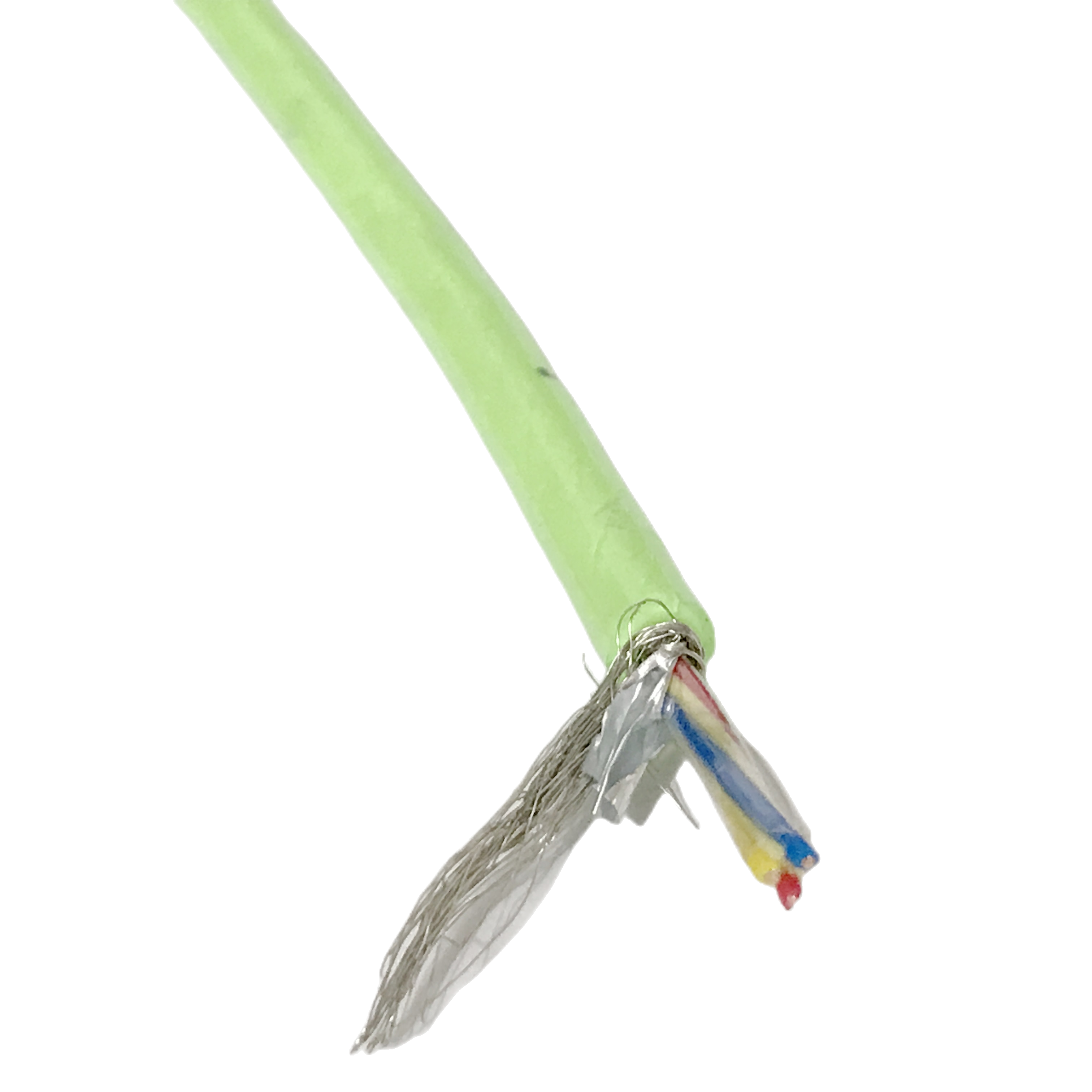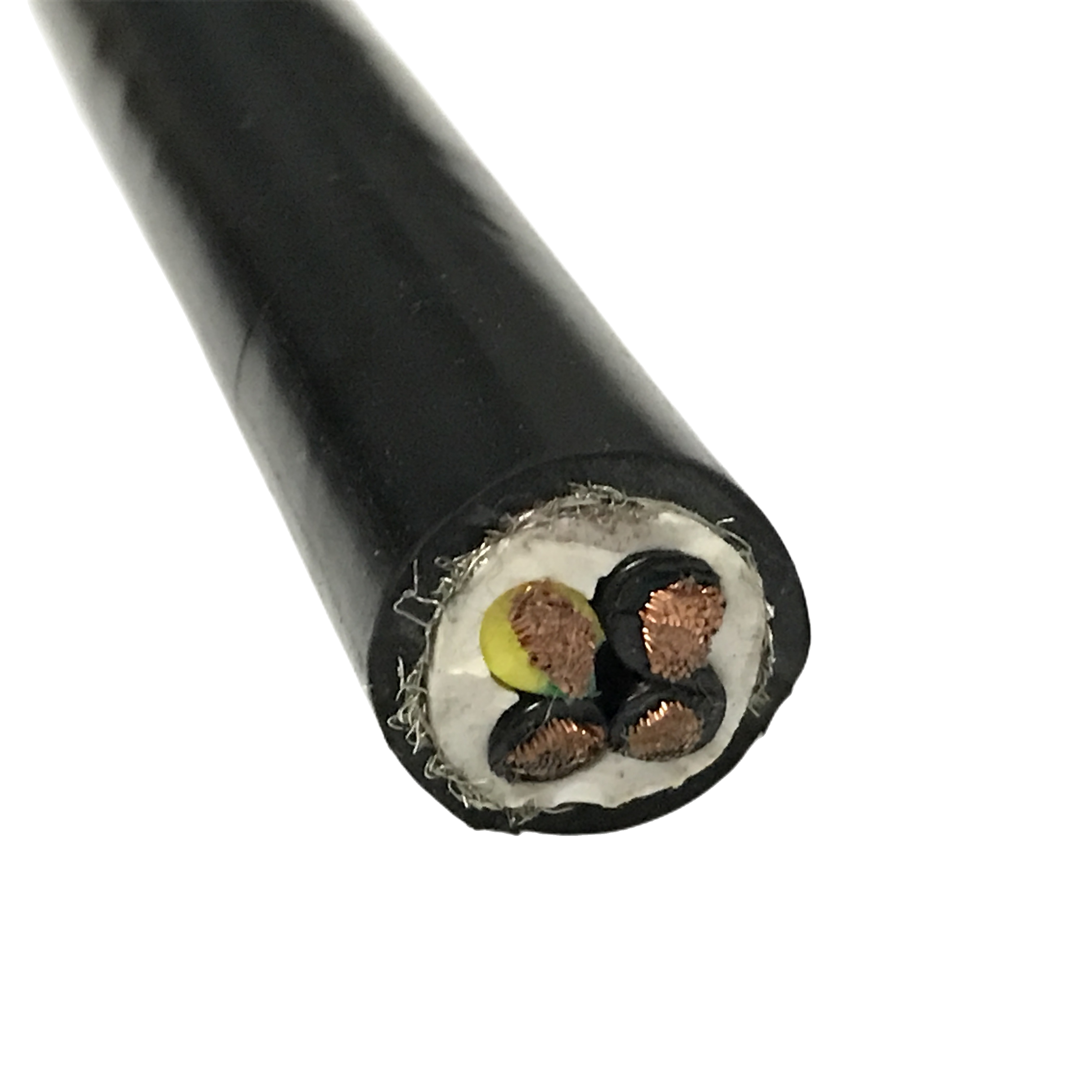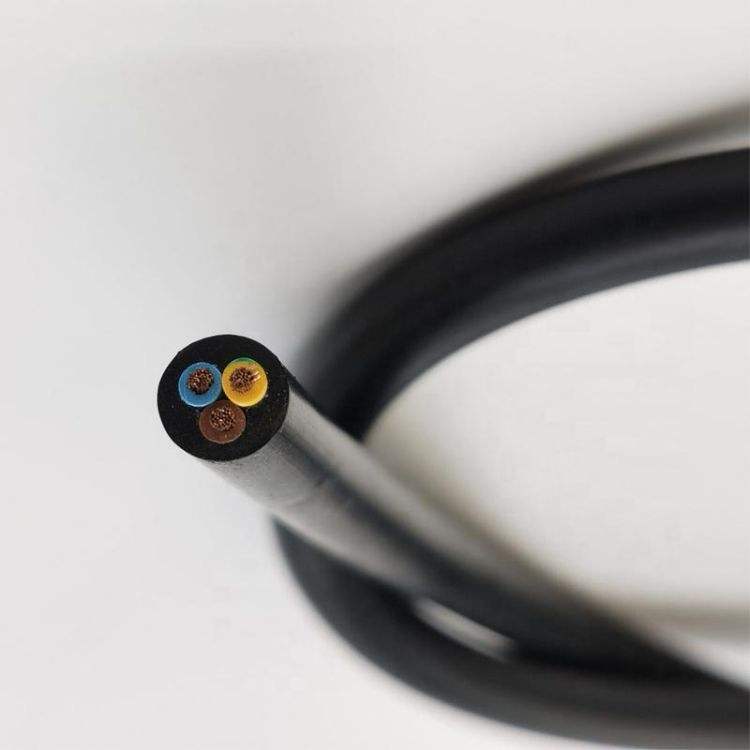



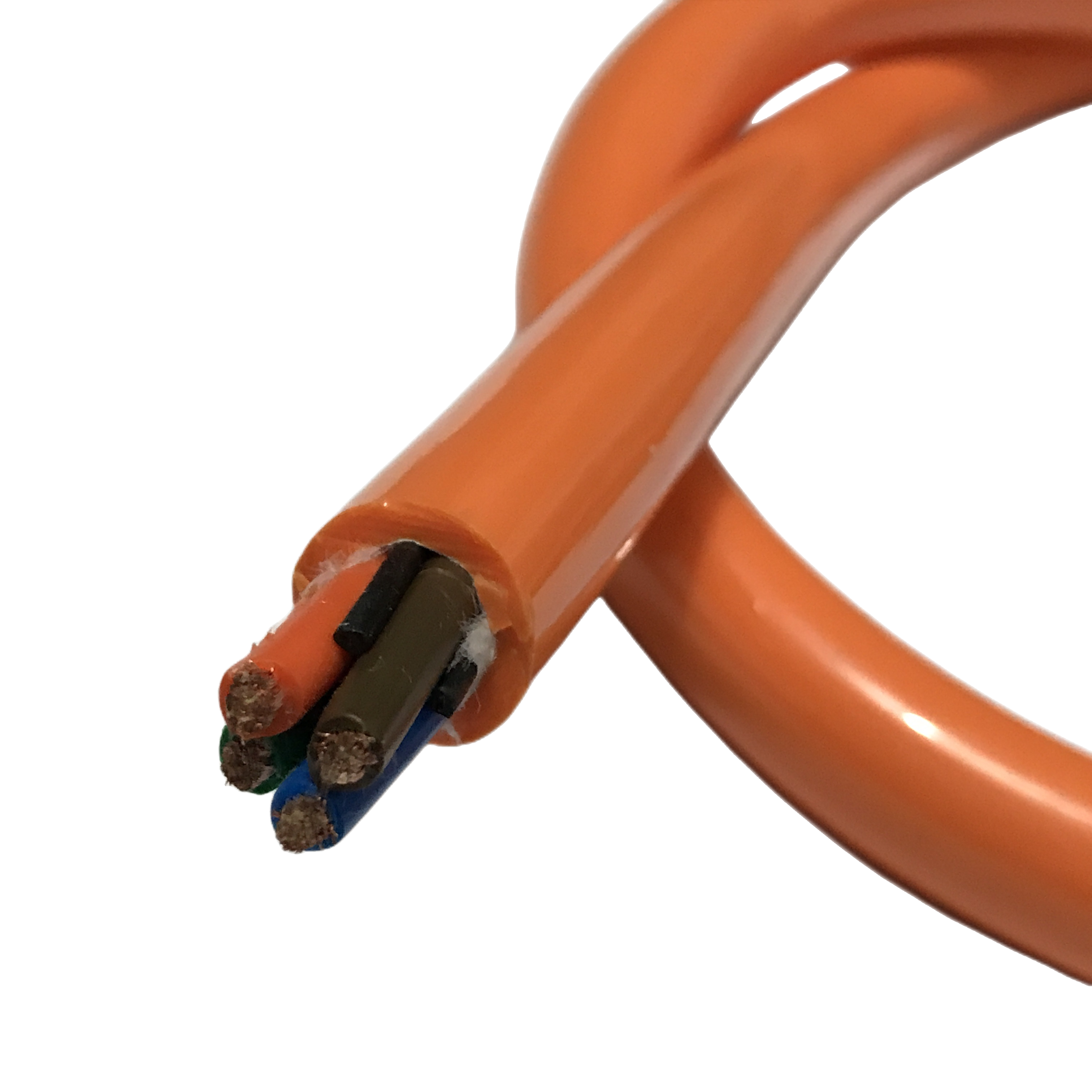
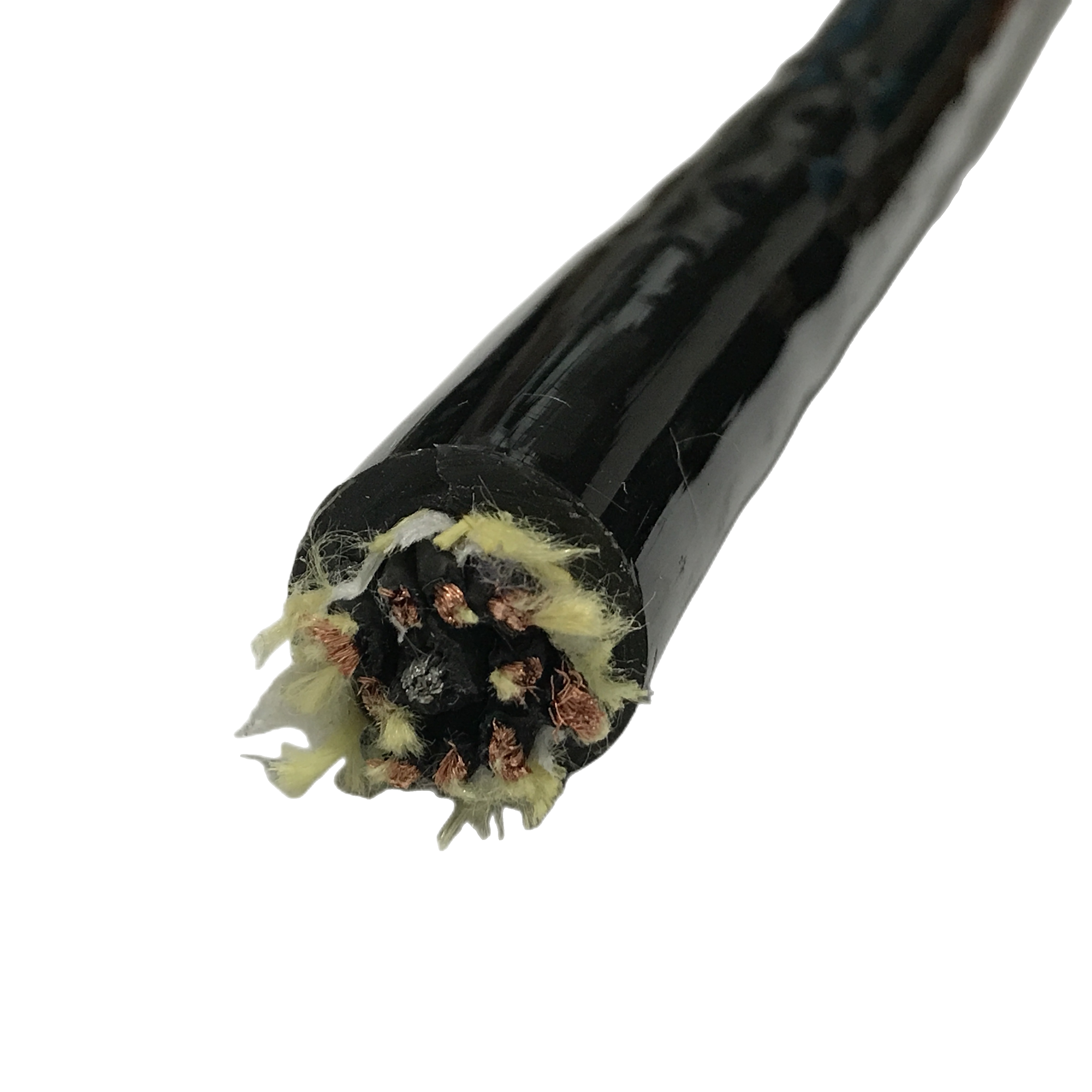
Pipeline Crawler Robot Cable | High-Tensile Flexible Cable for Inspection Robots
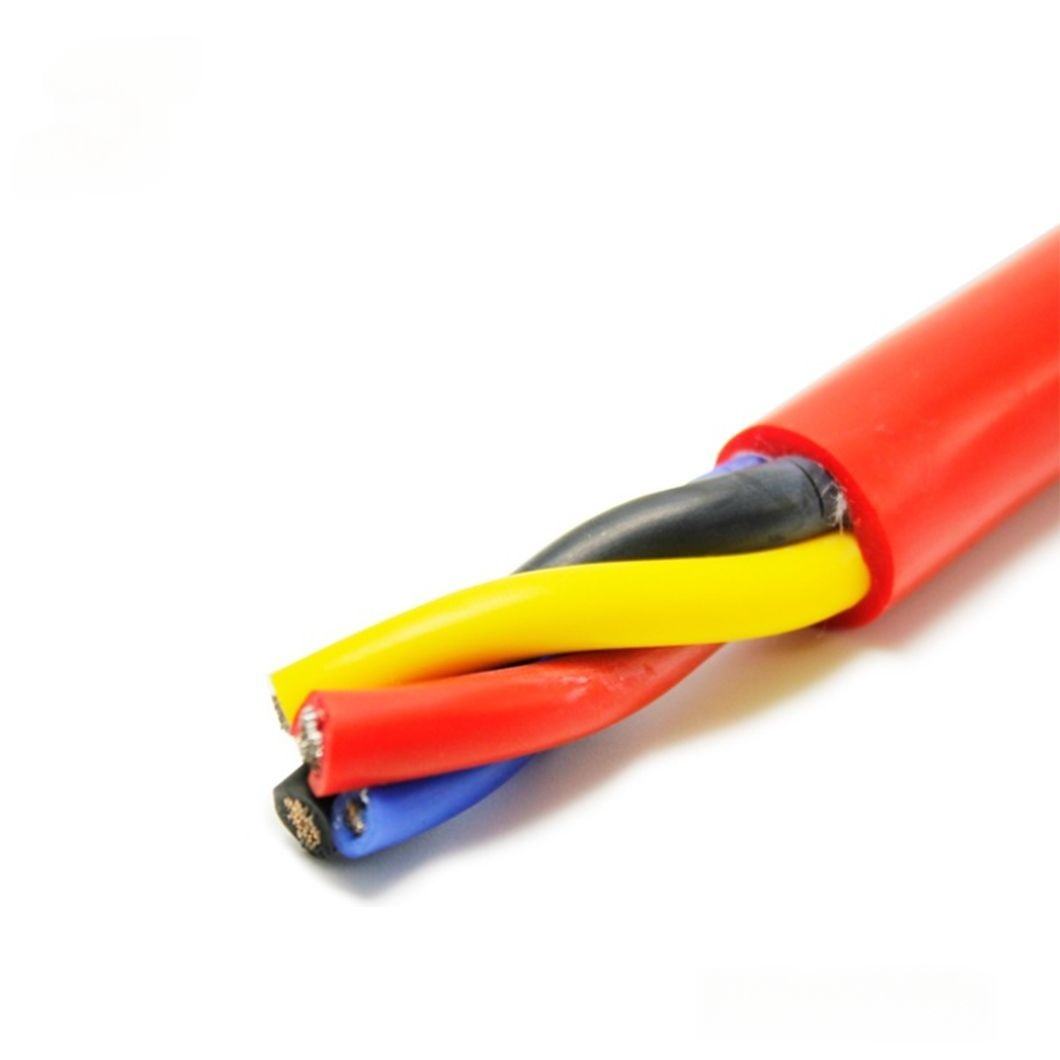
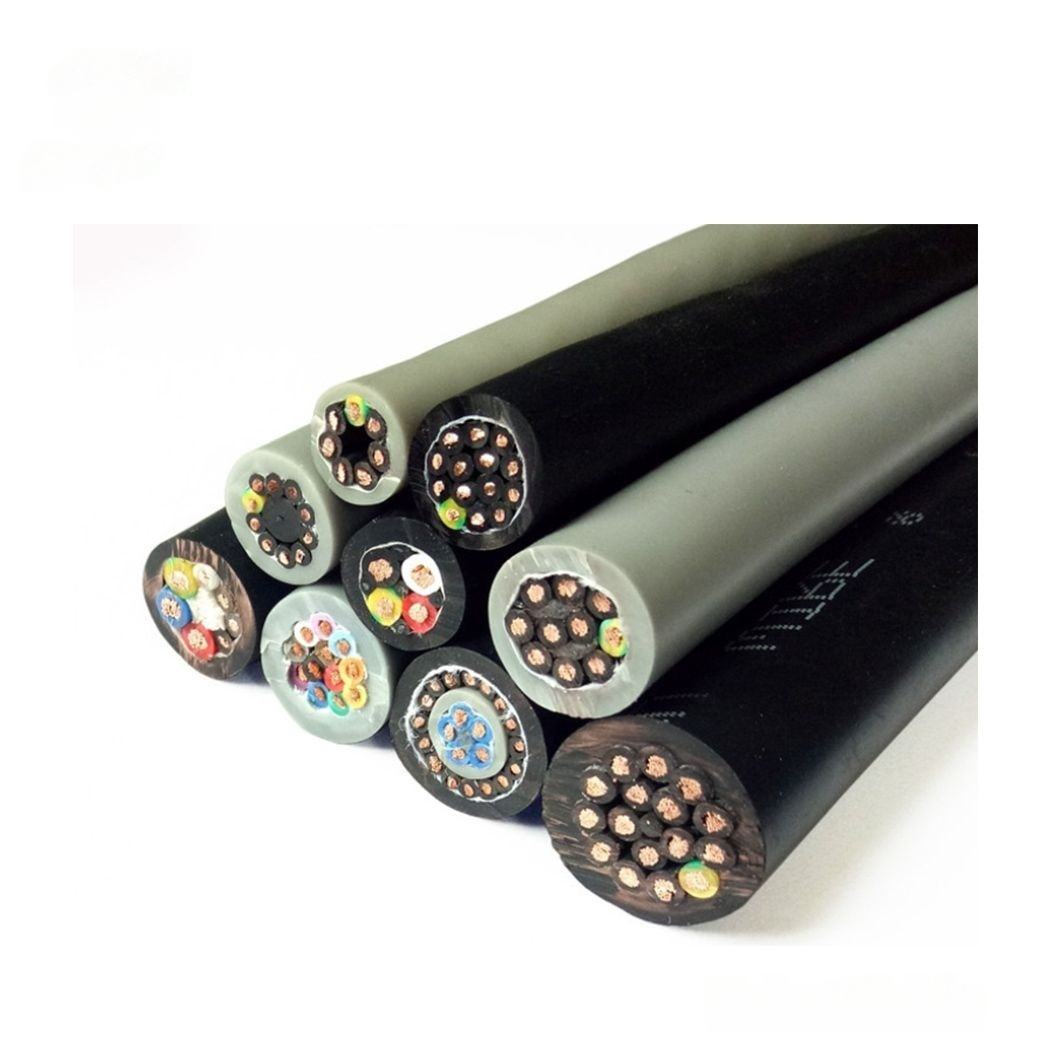
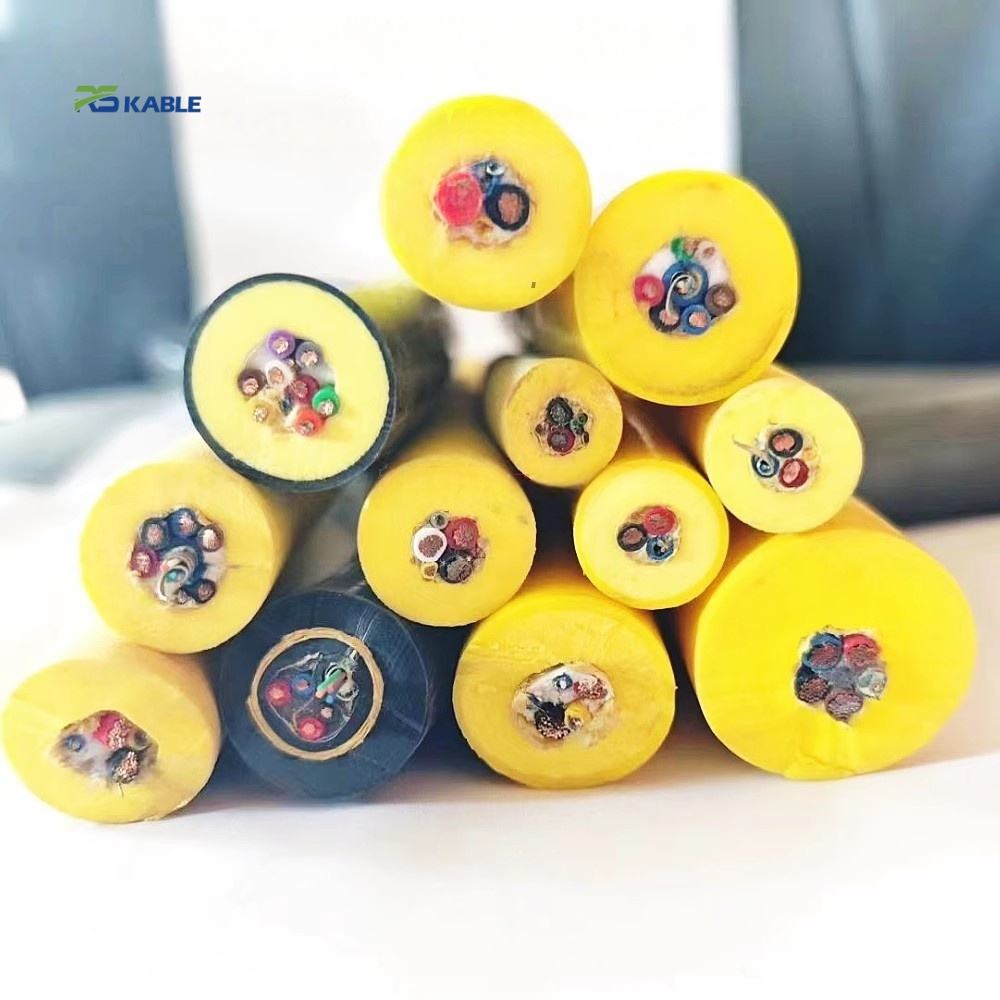
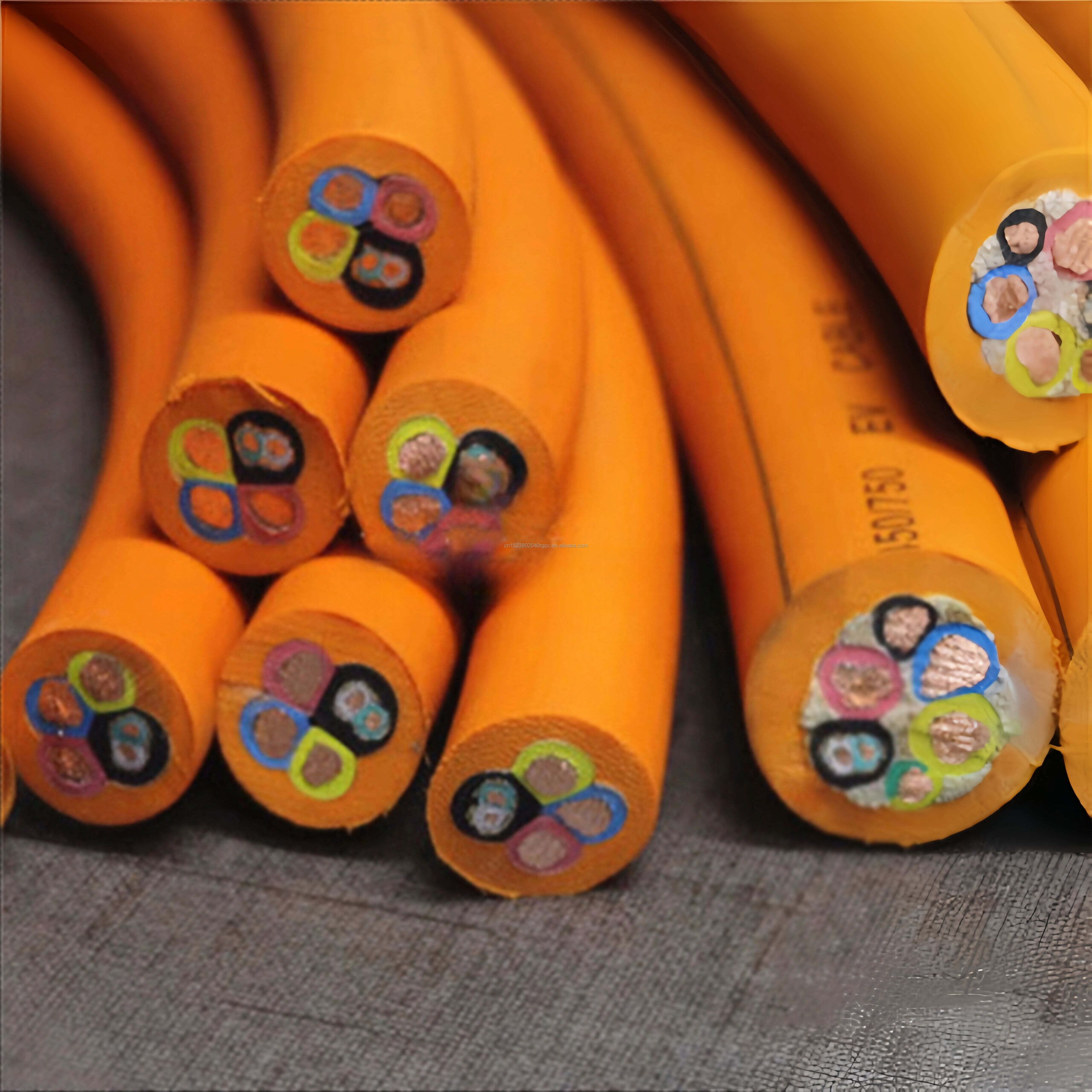
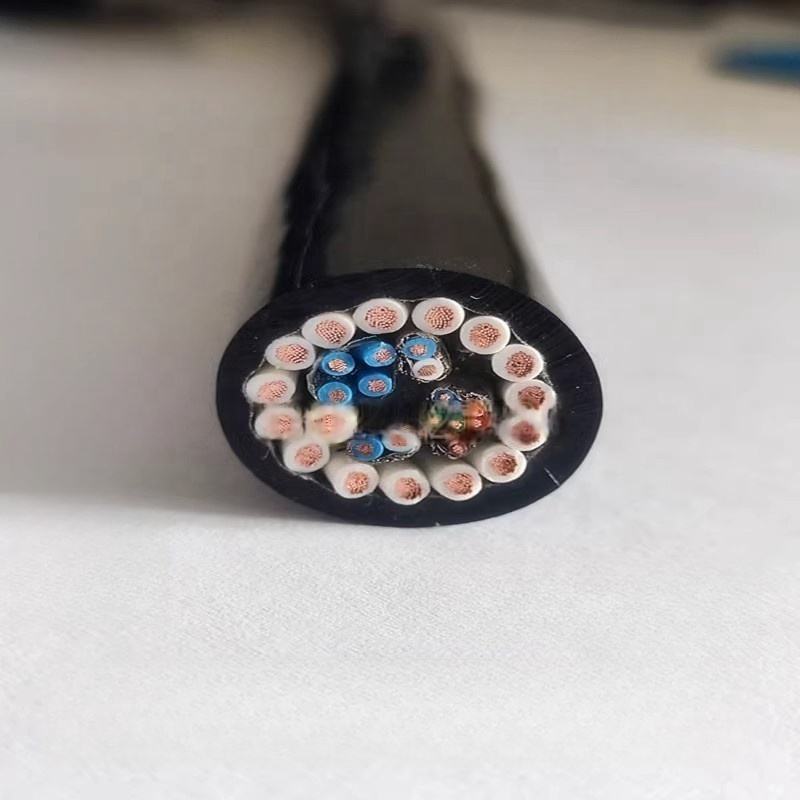
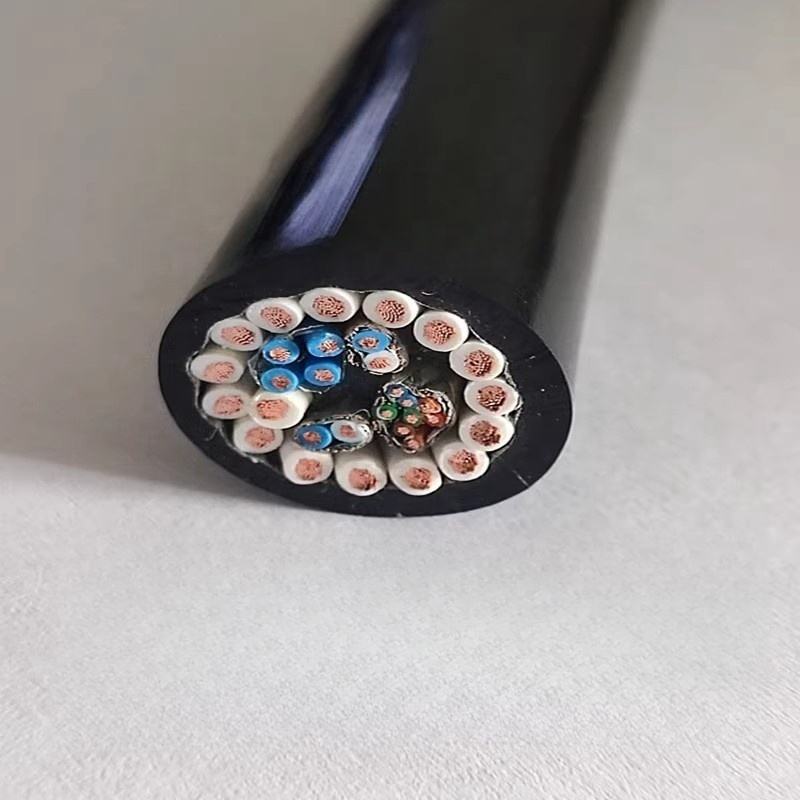
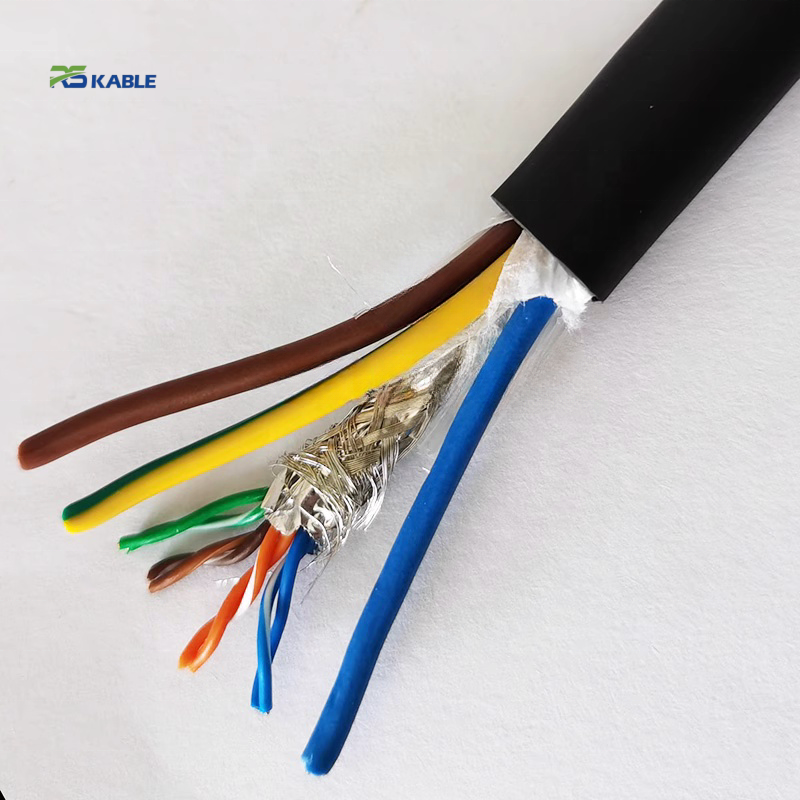
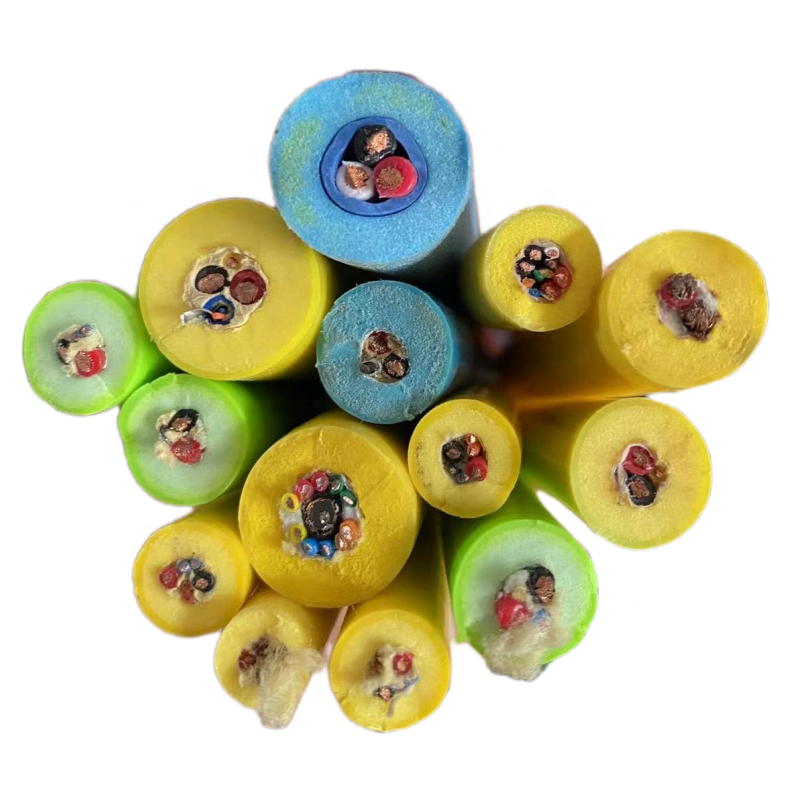
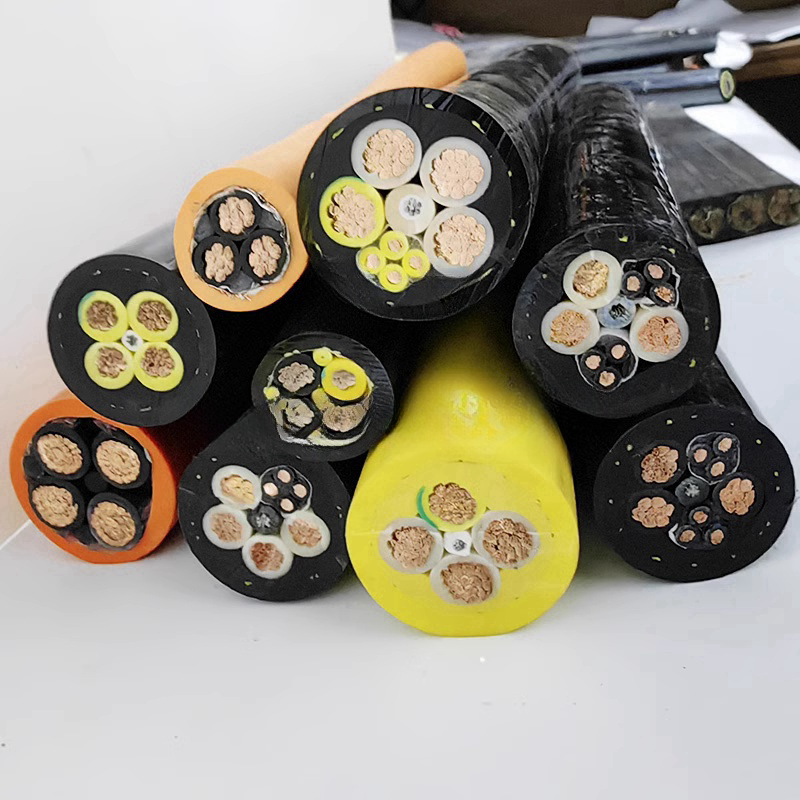
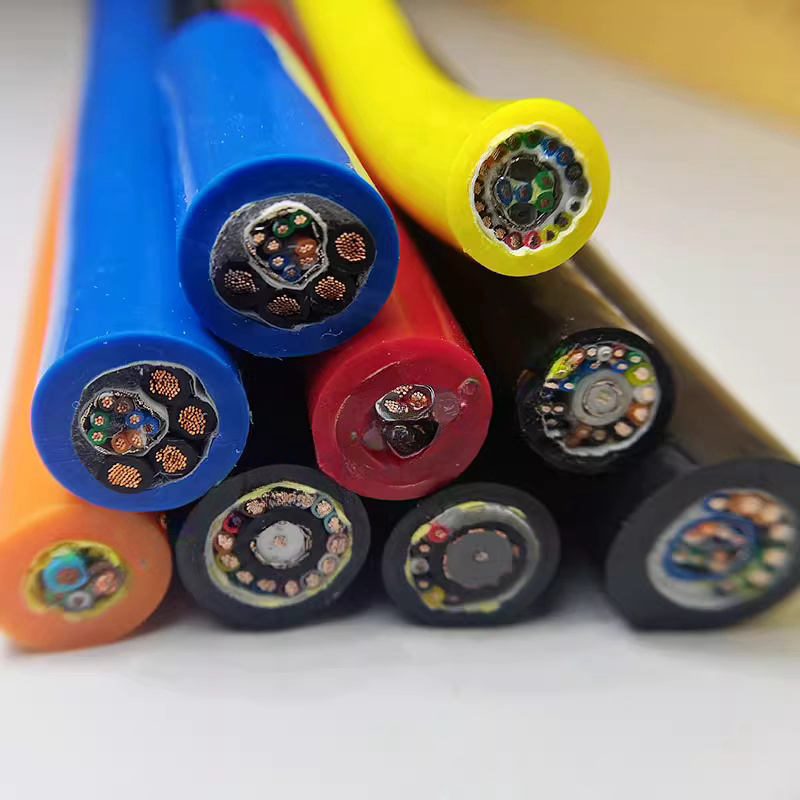
The RST-CRC Series Pipeline Crawler Robot Cable is designed for the complex mechanical stresses of pipeline robot operation, including tension, bending, torsion, and compression.
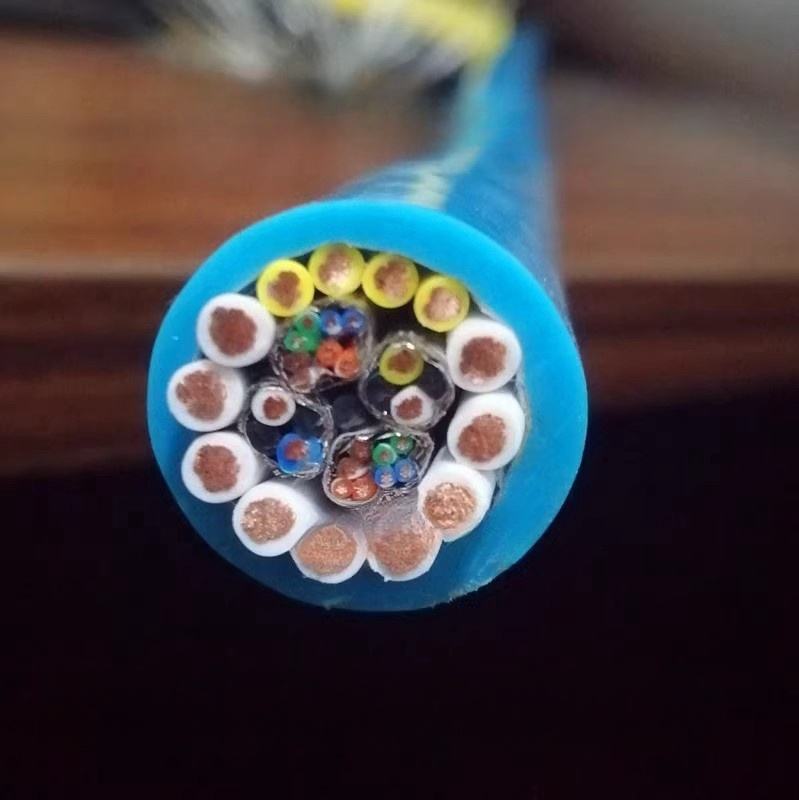
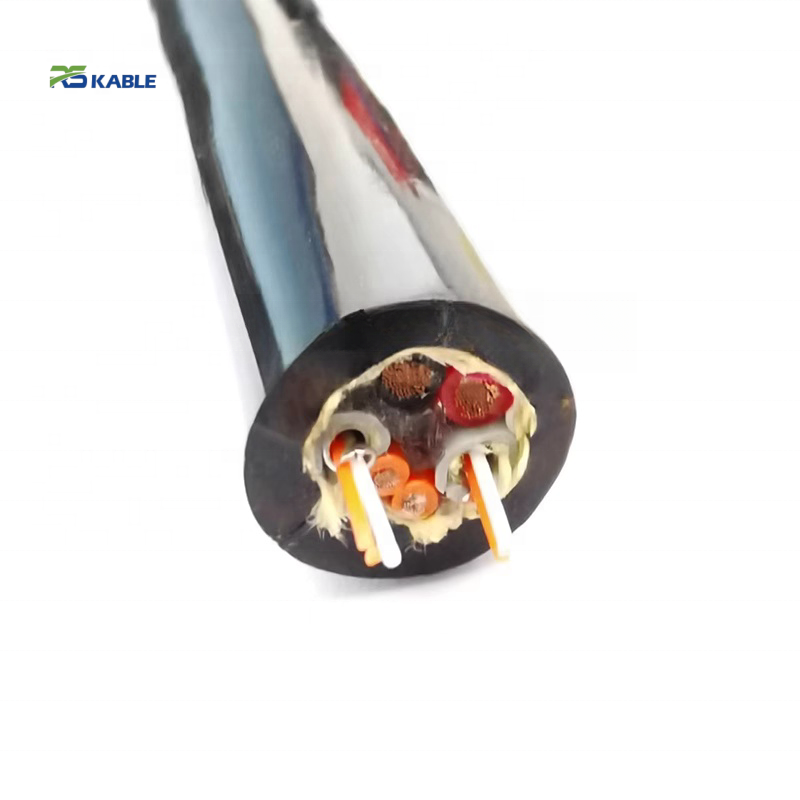
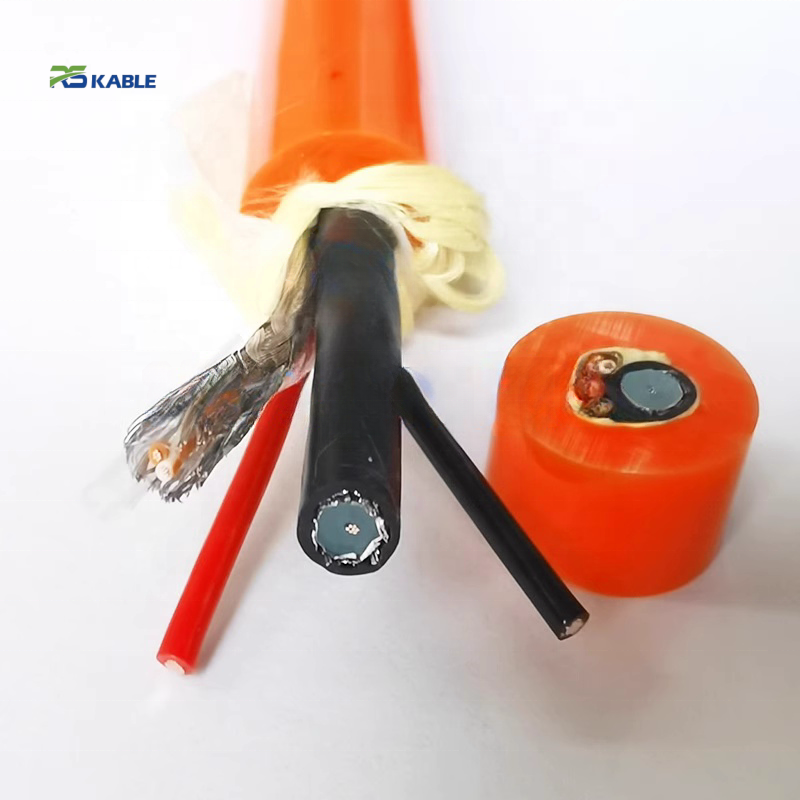
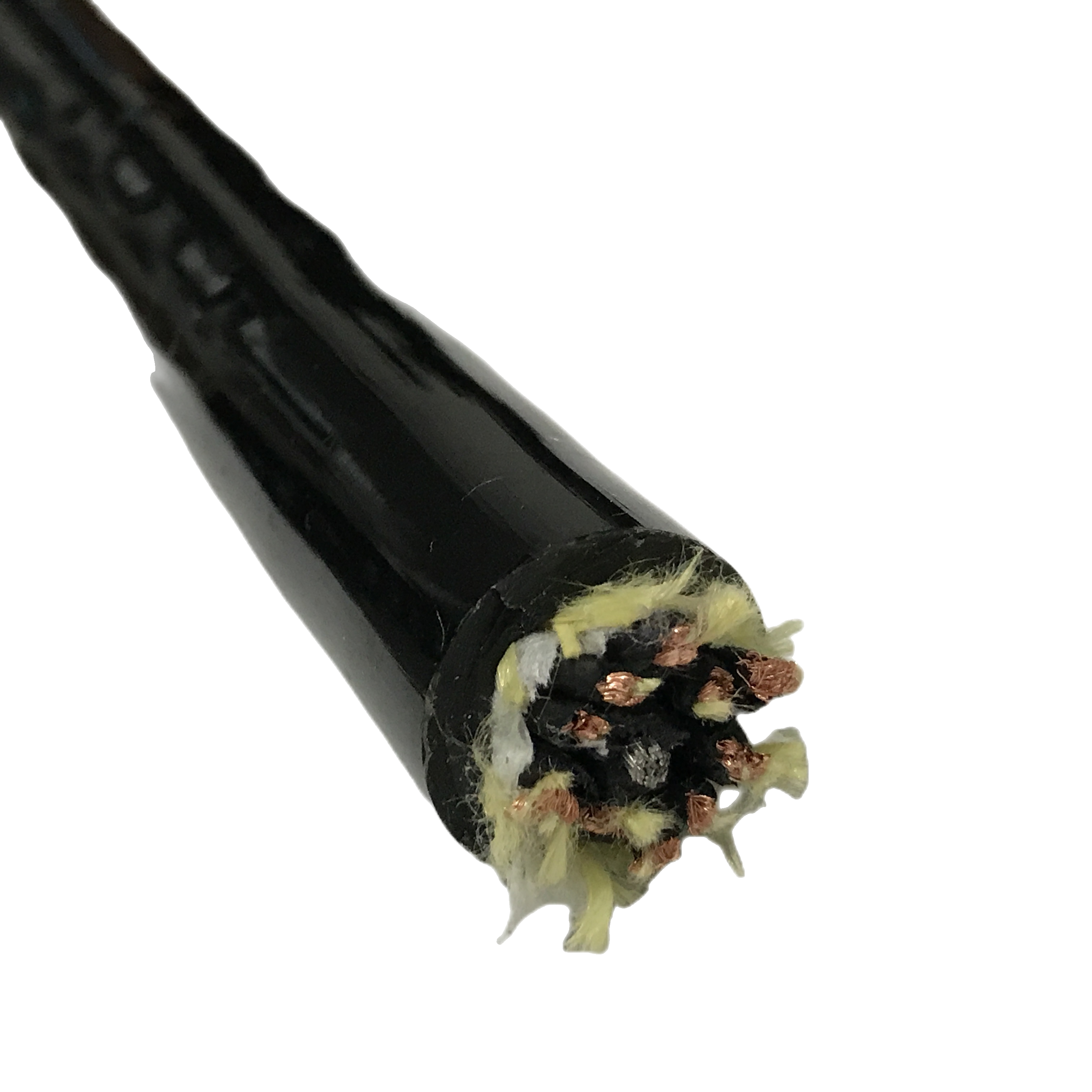
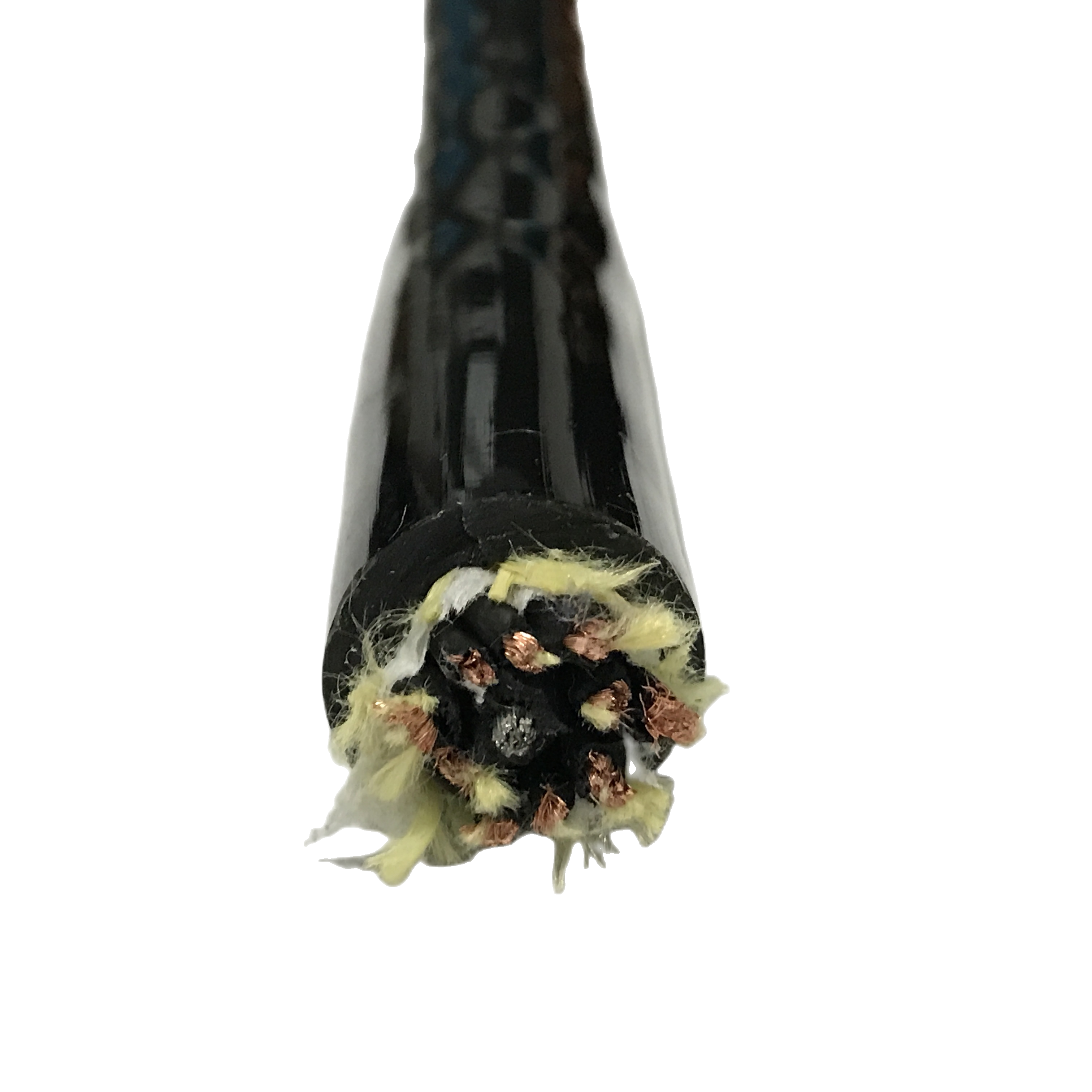
A torque-balanced Kevlar structure (≤0.3°/m rotation) ensures stable movement without steering deviation. The 75 Ω video coax supports reliable HD and 4K transmission, while the flexible jacket provides long service life under continuous motion.
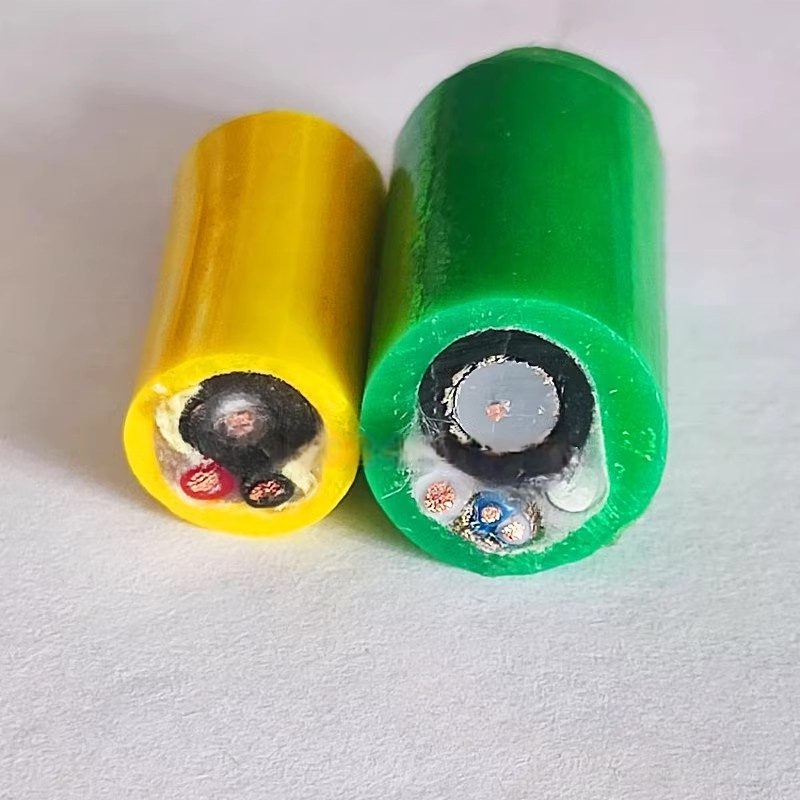
A buoyant version is available for flooded pipelines, with optional ATEX and radiation-resistant designs. Manufactured to ISO 9001:2015, each cable is supplied with full mechanical and performance test certification.
Pipeline Crawler Robot Cable | High-Tensile Flexible Cable for Inspection Robots
Product Series: RST-CRC │ Category: Robotic Inspection Cables │ Written by: Xu Dongliang, Senior Robot Cable Engineer, 9 years mobile robot cable application │ Last reviewed: March 2025
The cable on a pipeline crawler robot experiences five different mechanical loads simultaneously — one for each axis of robot motion:
|
Drive (longitudinal) |
Steering (lateral) |
Tilt (pitch) |
Arm extension |
Reel rewind |
|
Tensile pull Conductor elongation |
Lateral flex Insulation cracking |
Bending at reel exit Shield break at bend |
Torsion Lay pitch distortion |
Compression + abrasion Jacket oval deformation |
Pipeline crawler robot cable must satisfy the requirements of all five of these load axes simultaneously, in an environment — inside a pipe — where there is no operator access to reposition a kinked cable, no way to reduce load on a jammed tether mid-inspection, and no safe way to recover a robot whose cable has failed without specialized extraction equipment.
The previous article in this series covered CCTV pipeline inspection cable for push-rod camera systems. This product is fundamentally different: where a CCTV cable is pushed through the pipe with the camera, a crawler robot cable is paid out from a surface reel while the robot drives independently. The cable must resist the robot’s traction load when the crawler pulls away from the reel, flex through every pipe bend without snagging on the pipe wall, and survive the rewind cycle when the robot returns. These are the requirements this page addresses.
Engineers who specify crawler robot cable
Primary users are pipeline inspection robot manufacturers, inspection contractors operating wheeled or tracked pipeline robots in water mains, gas distribution pipes, industrial process pipework, and nuclear plant containment pipes. Secondary users are academic and defence robotics teams deploying tethered robots in confined spaces.
Contents
- Traction Force vs. Cable Drag: Why Cable OD Determines Robot Range
- Flex Life by Crawler Motion Type
- RST-CRC Model Range & Specifications
- Construction Engineering
- Material and Grade Comparison
- Technical Parameters
- Verified Robot Deployments
- FAQ — Robot Engineers & Inspection Contractors
- Manufacturer Credentials
- Request a Technical Proposal
Traction Force vs. Cable Drag: Why Cable OD Determines Robot Range
How cable drag limits inspection distance
Every metre of pipeline crawler robot cable paid out inside a pipe exerts a drag force on the robot. In a pipe with standing water or silt, this drag comes from both buoyancy effects and friction against the pipe wall at every bend. In a clean dry gas main, the drag is almost entirely from cable-to-pipe friction at bends. As the cable pay-out increases, the cumulative drag force approaches and eventually exceeds the robot’s maximum traction force — at which point the robot stalls.
Rousheng traction-drag field measurements (2023, 3 robot platforms, DN200 pipe, 3 bends): cable drag per 100 m pay-out ranged from 18 N (12 mm OD cable, dry pipe) to 47 N (22 mm OD cable, 15 mm water depth). Robot stall distance ranged from 68 m (22 mm cable, 120 N traction) to 210 m (12 mm cable, 180 N traction). (Rousheng Robot Cable Performance Study RCPS-001, 2023)
Cable OD and drag force calculation
Cable drag per bend in a pipe is approximately proportional to the cable OD and the coefficient of friction between the cable jacket and the pipe wall. A higher-OD cable makes more contact with the pipe wall at each bend, generating more drag per bend. For equal cable materials, reducing cable OD from 20 mm to 14 mm typically reduces per-bend drag by 30–40%, directly extending the robot’s operational range by a proportional amount.
|
Drag per bend formula (simplified): F_drag (N) = μ × T × (1 − e^⁻ʰ) per bend, where μ is the jacket-pipe friction coefficient (0.3–0.6 for PUR on PVC pipe), T is the tensile load in the cable at that bend, and θ is the bend angle in radians. This is the capstan equation applied to cable-in-pipe geometry. Practical result: A 90° bend with μ = 0.4 and 80 N cable tension adds 36 N of drag to the upstream tension. Three such bends accumulate to 108 N additional drag — consuming 60% of a 180 N traction robot’s available thrust before any forward progress resistance is counted. Source: Capstan equation (Euler-Eytelwein); applied to pipeline robot cable by Rousheng Engineering Note REN-CRC-003, 2023. |
Traction force vs drag: robot-specific selection table
|
Robot Model / Wheel Drive |
Max Traction Force |
Cable Drag (per 100 m) |
Net Thrust at 100 m |
Thrust Margin |
RST-CRC OD Selection |
|
Mini wheeled robot (DN80–150) |
80–120 N |
8–12 N / 100 m (12 mm OD cable, dry) |
68–112 N at 100 m |
Marginal — limit to 80 m |
RST-CRC-XS (OD 10 mm) |
|
Compact wheeled robot (DN100–200) |
120–180 N |
12–18 N / 100 m (14 mm OD cable, dry) |
102–168 N at 100 m |
Good to 150 m |
RST-CRC-S (OD 12 mm) |
|
Standard wheeled robot (DN150–300) |
180–250 N |
18–26 N / 100 m (16 mm OD cable, dry) |
154–232 N at 100 m |
Good to 200 m |
RST-CRC-M (OD 16 mm) |
|
Heavy wheeled robot (DN200–500) |
250–400 N |
26–40 N / 100 m (20 mm OD cable, dry) |
210–374 N at 100 m |
Good to 250 m |
RST-CRC-L (OD 20 mm) |
|
Tracked robot (DN250–600) |
350–600 N |
30–50 N / 100 m (22 mm OD cable, dry) |
300–570 N at 100 m |
Good to 300+ m |
RST-CRC-XL (OD 22 mm) |
|
Amphibious robot (flooded pipe) |
200–350 N |
35–65 N / 100 m (16 mm, 100% flooded) |
135–315 N at 100 m |
Range reduced 30–40% vs dry pipe |
RST-CRC-M + buoyant jacket option |
Drag values from Rousheng RCPS-001, 2023; DN200 pipe, mild steel, 3×90° bends per 100 m. Values are approximations; actual drag depends on pipe material, water level, debris, and bend geometry. Add 25% safety margin to drag values before calculating stall distance.
Flex Life by Crawler Motion Type
A pipeline crawler robot cable does not experience a single repeating flex motion. It experiences different flex cycles for each segment of a typical inspection mission: entry, pipe traverse, bend negotiation, camera pan, and reel rewind. Specifying cable flex life requires understanding which of these motions generates the most damaging cycles over the cable’s service life.
|
Crawler Motion Type |
Cable Motion Profile |
Cycles per Shift |
5-Year Total Cycles |
Min Required Flex Life |
RST-CRC Grade |
|
Entry / exit at reel |
Bend at reel exit guide: fixed-radius bending, 1 cycle per robot deployment |
2 cycles/shift (entry + exit) |
3,650 cycles (5 yr, 365 shifts) |
5 M (fatigue-dominated) |
Standard |
|
Straight pipe traverse |
Cable drapes on pipe floor, minimal bending |
Continuous low-stress |
N/A |
Not flex-limited |
Any grade |
|
90° pipe bend negotiation |
Cable is forced around pipe bend: dynamic bending at variable radius (1.5×DN to 3×DN) |
4–10 per inspection run |
7,300–18,250 (5 yr) |
5 M cycles at min DN bend radius |
Standard or HD |
|
Camera pan-tilt arm flex |
Short-section cable at camera arm joint: high-frequency flex, small-radius cycling |
200–600 per run |
365,000–1,095,000 (5 yr) |
5 M cycles at 5× OD |
HD flex grade |
|
Reel rewind (cable retrieval) |
Cable is wound onto drum: radial compression + torsion, 1 cycle per reel revolution |
Full reel rewind at end of each run |
365 full rewinds (5 yr) |
Not flex-limited; drum-compression limited |
Drum-grade compound |
|
Emergency extract (cable under tension) |
Robot stuck: cable pulled under 1.5× rated tensile load |
Rare (1–5 per year) |
5–25 over 5 yr |
Single-event: not cycle-limited; rated to 1.5× static load |
Kevlar tensile option |
Camera arm flex is the highest-cycle motion and typically determines cable grade. If the camera arm flex cable is separated from the main tether (two-cable system), the main tether only needs standard grade. In single-cable systems, specify HD flex grade throughout.
RST-CRC Crawler Robot Cable — Model Range
|
Model |
OD |
Tensile Rating |
Video |
Power |
Control |
Flex Life |
Jacket Grade |
Best For |
|
RST-CRC-XS |
10 mm |
0.5 kN |
75 Ω CVBS coax |
2×0.75 mm² |
RS-485 pair |
5 M @ 5× OD |
Standard PUR |
Mini robot, DN80–150 |
|
RST-CRC-S |
12 mm |
1.0 kN |
75 Ω HD-SDI coax |
2×1.0 mm² |
RS-485 + aux pair |
5 M @ 5× OD |
Standard PUR |
Compact robot, DN100–200 |
|
RST-CRC-M |
16 mm |
2.0 kN |
75 Ω HD-SDI + spare coax |
2×1.5 mm² |
RS-485 + CANbus pair |
5 M @ 7.5× OD |
Standard PUR |
Standard wheeled robot, DN150–300 |
|
RST-CRC-M-HD |
16 mm |
2.0 kN |
75 Ω HD-SDI |
2×1.5 mm² |
RS-485 + CANbus |
10 M @ 5× OD |
HD flex PUR |
High-cycle camera arm cable |
|
RST-CRC-L |
20 mm |
3.0 kN |
75 Ω 4K SDI coax |
2×2.5 mm² |
RS-485 + CANbus + power |
5 M @ 7.5× OD |
Standard PUR |
Heavy wheeled robot, DN200–500 |
|
RST-CRC-XL |
22 mm |
4.0 kN |
75 Ω 4K SDI + Ethernet pair |
2×2.5 mm² |
RS-485 + CANbus |
5 M @ 10× OD |
Standard PUR |
Tracked robot, DN250–600 |
|
RST-CRC-K |
18 mm |
6.0 kN Kevlar |
75 Ω HD-SDI |
2×1.5 mm² |
RS-485 pair |
5 M @ 10× OD |
Standard PUR |
Shaft sinking, vertical drop, high tensile |
|
RST-CRC-FB |
16 mm |
2.0 kN |
SM fibre ×2 + 75 Ω coax |
2×1.5 mm² |
EtherCAT pair |
5 M @ 7.5× OD |
Standard PUR |
Fibre-backbone robot, long-range 4K |
|
RST-CRC-AQ |
16 mm |
2.0 kN |
75 Ω HD-SDI |
2×1.5 mm² |
RS-485 + CANbus |
5 M @ 7.5× OD |
Buoyant PUR (0.92 g/cm³) |
Amphibious / flooded pipe robot |
|
RST-CRC-OEM |
Per spec |
Per spec |
Per spec |
Per spec |
Per spec |
Per spec |
Per spec |
Nuclear, gas, custom robot OEM |
Tensile rating = Kevlar member rating (all models except RST-CRC-K use 0.5–4.0 kN Kevlar; RST-CRC-K uses 6.0 kN Kevlar 49 counter-wound torque-balanced). HD flex grade = Shore A 78 ±2, elongation ≥420%, validated for 10 M cycles at 5× OD. Buoyant variant (RST-CRC-AQ) = target density 0.92 g/cm³ in water, verified per drum by immersion test.
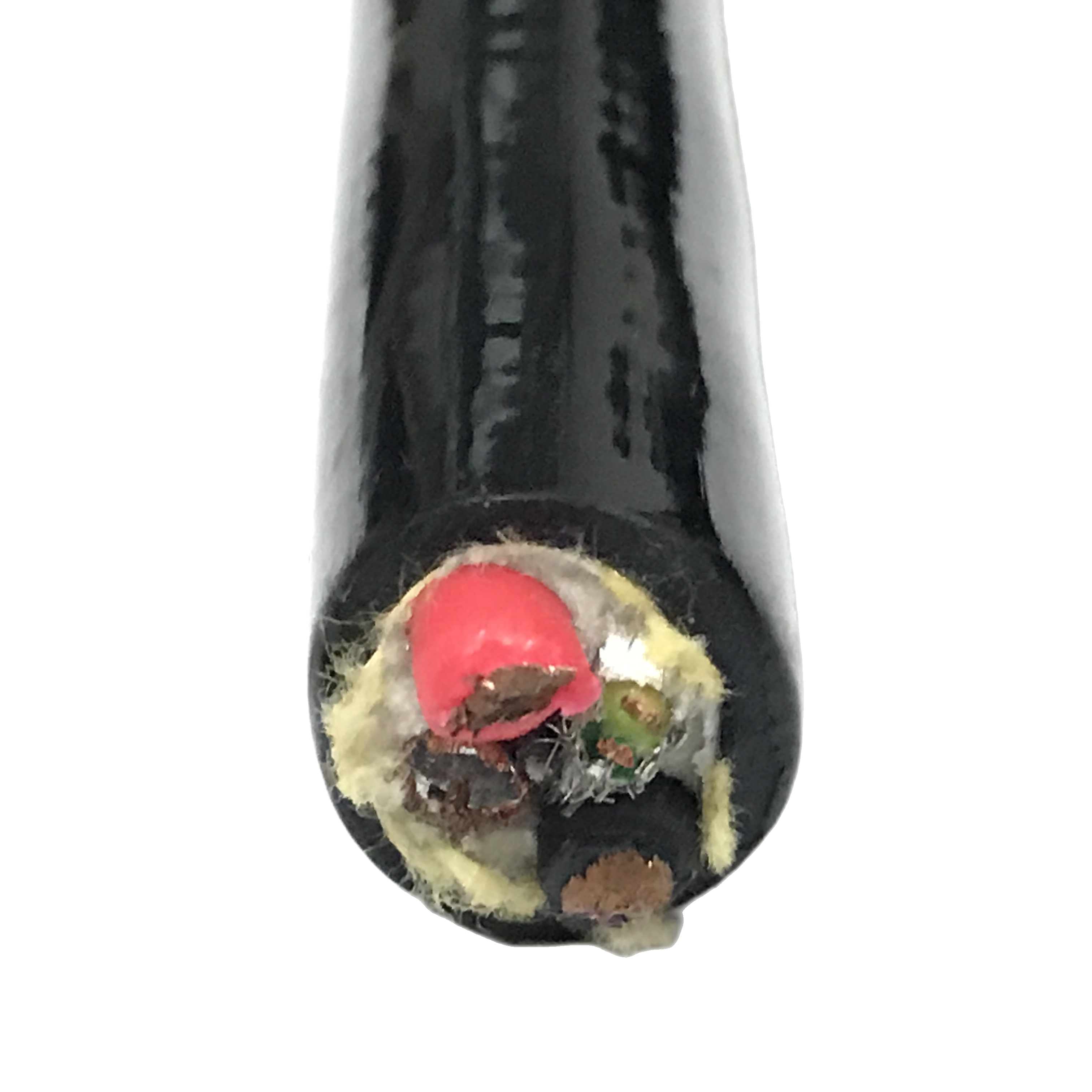
Construction Engineering: Inspection Robot Cable Design
Kevlar tensile member: torque balance for robot navigation
The tensile member in a pipeline crawler robot cable must do more than bear tensile load. As the robot drives forward and the cable unspools, any self-rotation in the tether applies torque to the robot’s tail end — causing the robot to steer involuntarily to one side. In narrow pipes this can wedge the robot against the pipe wall. The RST-CRC series uses counter-wound Kevlar 49 in two layers of equal and opposite helix angle, producing a torque-balanced cable that does not rotate under tensile load.
RST-CRC-M torque balance test: 10 m sample, 2.0 kN tensile load, measured rotation ≤0.3°/m at the free end. Comparison: single-layer Kevlar braid cable (same load): 2.1°/m. Robot steering deviation at 50 m cable length: RST-CRC ≤1.5° cumulative; single-layer cable: 10.5° cumulative (equivalent to the robot pressing against the pipe wall in DN200 at 120 m distance). (Rousheng Robot Cable Torque Test RCTT-001, 2023)
Video coaxial element: low capacitance for long-range HD
Long-range pipeline robot deployments at 200–400 m require high-definition video with minimal signal degradation. RST-CRC video coaxial elements use foamed polyethylene dielectric (εr ≈1.5, capacitance ≤52 pF/m) rather than solid PE (εr ≈2.3, capacitance ≤75 pF/m). The lower capacitance extends the −3 dB bandwidth from 8 MHz (solid PE) to 14 MHz (foamed PE), maintaining HD-SDI signal quality to 300 m and 4K SDI (12G-SDI) to 80 m.
Power conductor sizing for motor drive current
Crawler robot motor currents are intermittent and highly variable: low current during free travel, high current (2–3× rated) during a stall against pipe debris or an obstruction. Cable voltage drop during stall must not reduce the motor terminal voltage below the minimum for restart. For a 24 V system with a 5 A rated motor at 200 m cable run using 1.5 mm² conductors: VD at 5 A = 14.8 V (62% of supply). Motor stalls at 15 A: VD = 44.4 V — impossible at 24 V supply. This is why RST-CRC-L and XL use 2.5 mm² power conductors.
HD flex compound for camera arm cable
The camera pan-tilt arm on a pipeline robot generates the highest flex cycle count of any cable segment (200–600 cycles per inspection run). The HD flex grade PUR used in RST-CRC-M-HD has two differences from standard grade: Shore A 78 (vs. 85 standard) provides a softer compound with higher elongation at break (≥420% vs. ≥380%), and the plasticiser-free polyether base resists fatigue micro-cracking at the extreme flex reversal points. At 5× OD dynamic bend radius, HD flex grade achieves 10 million cycles vs. 5 million for standard grade.
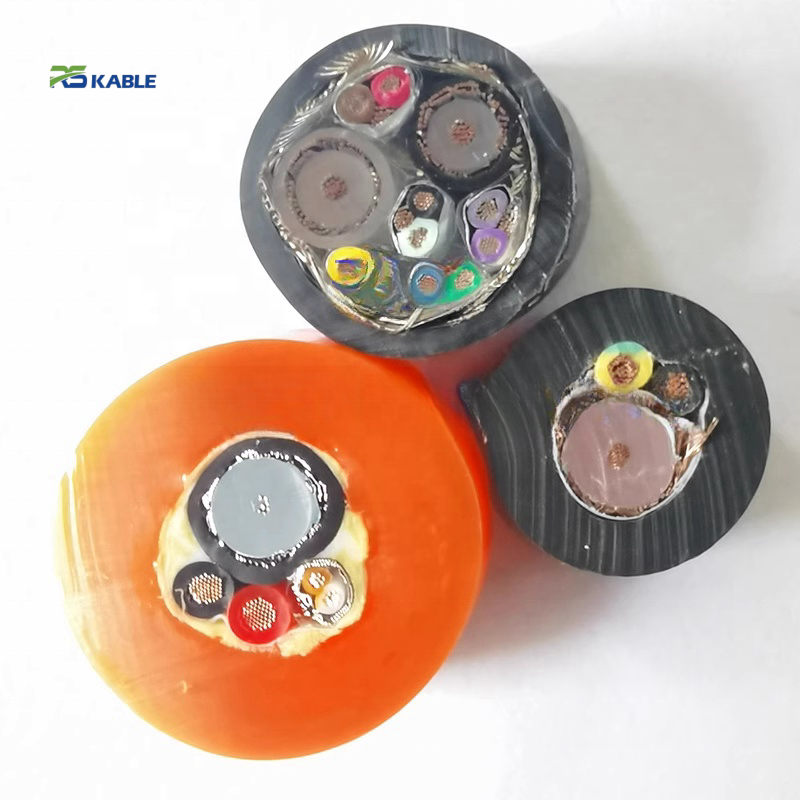
|
Layer |
RST-CRC-M (standard) |
RST-CRC-M-HD (camera arm) |
RST-CRC-K (high tensile) |
|
Tensile member |
Kevlar 49, counter-wound, 2.0 kN |
Kevlar 49, counter-wound, 2.0 kN |
Kevlar 49, counter-wound, 6.0 kN |
|
Video coax |
75 Ω, foamed PE, ≤52 pF/m |
75 Ω, foamed PE, ≤52 pF/m |
75 Ω, foamed PE, ≤52 pF/m |
|
Power conductors |
2×1.5 mm² OFC, XLPE |
2×1.5 mm² OFC, XLPE |
2×1.5 mm² OFC, XLPE |
|
Control pairs |
RS-485 + CANbus screened pairs |
RS-485 + CANbus screened pairs |
RS-485 screened pair |
|
Outer jacket compound |
Standard PUR, Shore A 85±3 |
HD flex PUR, Shore A 78±2 |
Standard PUR, Shore A 85±3 |
|
Min bend radius |
7.5× OD (dynamic) |
5× OD (dynamic) |
10× OD (dynamic) |
|
Flex life |
5 M cycles at 7.5× OD |
10 M cycles at 5× OD |
5 M cycles at 10× OD |
|
OD |
16±0.15 mm |
16±0.15 mm |
18±0.15 mm |
Material and Grade Comparison for Robot Cable
Three jacket material grades are available for pipeline crawler robot cable. The selection depends on the dominant cable motion in the specific robot design. This comparison covers the properties that differentiate performance in crawler applications specifically.
|
Property |
Standard PUR (RST-CRC) |
HD Flex PUR (RST-CRC-HD) |
Buoyant PUR (RST-CRC-AQ) |
|
Shore A hardness |
85 ± 3 |
78 ± 2 |
82 ± 3 |
|
Elongation at break |
≥380% (ISO 37) |
≥420% (ISO 37) |
≥370% (ISO 37) |
|
Tensile strength |
≥48 MPa |
≥42 MPa |
≥45 MPa |
|
Flex life (5× OD dynamic) |
5 M cycles |
10 M cycles |
5 M cycles |
|
Flex life (7.5× OD dynamic) |
10 M cycles |
Not tested (overkill at 7.5×) |
8 M cycles |
|
Cable density |
1.18–1.22 g/cm³ |
1.16–1.20 g/cm³ |
0.90–0.95 g/cm³ (target 0.92) |
|
Buoyancy in water |
Negative (sinks) |
Negative (sinks) |
Slightly positive (floats) |
|
Pipe wall drag (20 mm OD, dry PVC) |
Taber ≥300 cycles; drag coeff 0.35–0.45 |
Taber ≥250 cycles; drag coeff 0.30–0.40 (softer = lower friction) |
Taber ≥280 cycles; drag coeff 0.32–0.42 |
|
Best for |
Main tether, standard deployment |
Camera arm, tight-bend flexible section |
Amphibious robot, flooded pipe inspection |
|
Service life estimate |
5–8 years (standard pipeline inspection) |
3–5 years (camera arm: higher wear) |
5–7 years |
Flex life data from Rousheng internal test protocol CRC-FL-001 (2023). Service life estimates based on replacement data from 8 inspection contractors (2020–2024). Buoyant density verified by per-drum immersion test in fresh water and seawater. HD Flex tensile strength is lower than standard grade — do not use HD Flex for high-tensile applications.
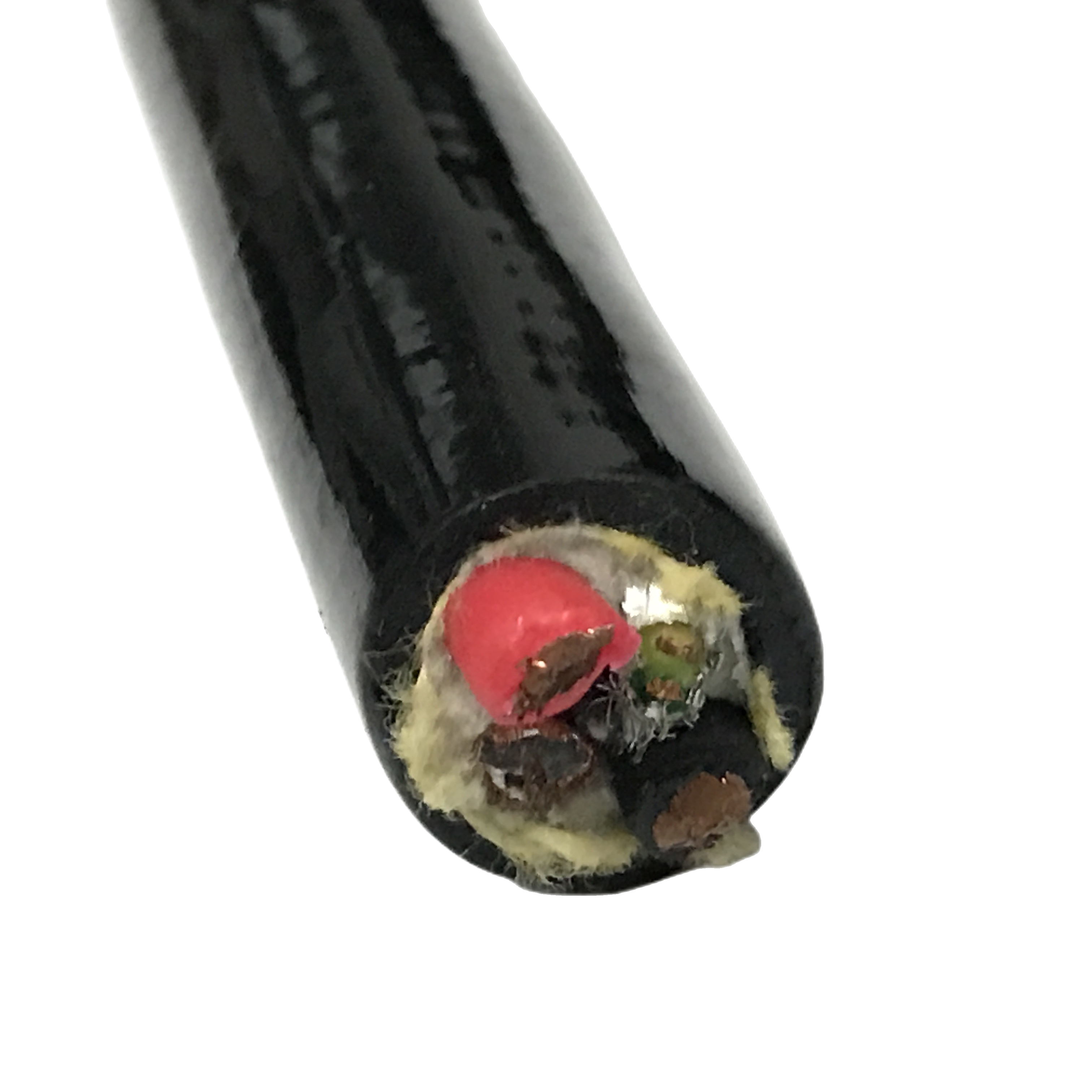
Technical Parameters
Tensile and mechanical
|
Parameter |
Value |
Standard / Source |
|
Kevlar tensile rating |
0.5 kN (XS) / 1.0 kN (S) / 2.0 kN (M) / 3.0 kN (L) / 4.0 kN (XL) / 6.0 kN (K) |
ASTM D7269; load-cell certified per drum to 1.5× rated |
|
Self-rotation under load |
≤0.3°/m at rated tensile load (torque-balanced Kevlar) |
Rousheng RCTT-001, 2023; 10 m hanging test |
|
Emergency extraction load |
1.5× rated Kevlar load (single pull, no cycle) |
ASTM D7269 |
|
Min bend radius (standard grade) |
S: 120 mm; M/M-HD: 5× OD (M-HD) or 7.5× OD (M); L: 8× OD; XL: 10× OD |
IEC 60794-1-2 Method E10 adapted |
|
Flex life (standard grade, 7.5× OD) |
5 M cycles (standard); 10 M cycles (HD flex grade at 5× OD) |
Rousheng CRC-FL-001, 2023 |
|
Torsion rating (full cable) |
±180°/m of free cable; no conductor break |
IEC 60794-1-2 Method E7 adapted |
|
OD tolerance |
±0.15 mm (laser micrometer at 500 mm intervals) |
Rousheng QCP-CRC-001, 2024 |
|
Jacket drag coefficient (dry PVC pipe) |
Standard: 0.35–0.45; HD Flex: 0.30–0.40; Buoyant: 0.32–0.42 |
Rousheng RCPS-001, 2023 (measured) |
Electrical
|
Parameter |
Value |
Standard |
|
Video coax impedance |
75 Ω ±1 Ω @ 10 MHz |
IEC 60096-1 |
|
Video coax capacitance |
≤52 pF/m (foamed PE dielectric) |
IEC 60096-1; measured per drum |
|
Video coax attenuation @ 270 MHz (HD-SDI) |
≤4.0 dB/100 m |
SMPTE ST 292M |
|
RS-485 pair impedance |
120 Ω ±10 Ω |
IEC 61156-5; EIA-485 |
|
CANbus pair impedance |
120 Ω ±10 Ω (1 Mbit/s certified) |
ISO 11898-1 (CANbus physical layer) |
|
Power conductor voltage |
300/500 V |
IEC 60502-1 |
|
Power conductor HiPot |
2,000 V AC / 5 min |
IEC 60502-1 Cl.17 |
|
Insulation resistance |
≥200 MΩ·km |
IEC 60502-1 Cl.18 |
|
Power conductor cross-section |
0.75 mm² (XS) to 2.5 mm² (L/XL); per model |
IEC 60228 Class 5/6 |
Environmental
|
Parameter |
Value |
Standard / Source |
|
IP rating |
IP68 at 5 m, 30 min (standard); 10 m option |
IEC 60529; per-drum test |
|
Operating temperature |
−40°C to +80°C (standard PUR); −40°C to +100°C (HT option) |
IEC 60811-501 |
|
Chemical resistance |
pH 2–12 immersion, 200 h, no jacket degradation |
ASTM D543; Rousheng internal test CRC-CR-001, 2024 |
|
Sewage resistance (H₂S) |
No permeation at ≤200 ppm H₂S, 100 h |
Rousheng CRC-CR-002, 2024 |
|
Abrasion (Taber CS-17, 1 kg) |
Standard: ≥280 cycles; HD Flex: ≥240 cycles |
ISO 9352:2021 |
|
Jacket tensile strength |
Standard: ≥48 MPa; HD Flex: ≥42 MPa |
ISO 37 |
|
Buoyant density (AQ model) |
0.92 ± 0.02 g/cm³; per-drum immersion test certificate |
Rousheng QCP-CRC-002, 2024 |
|
UV resistance |
≥500 h xenon arc; ≤80% tensile retention |
IEC 60811-401 |
Verified Robot Deployments
Client robot manufacturers and inspection contractors named by sector and country only; company names withheld at client request. Technical data verified by client engineering teams. Available under NDA.
|
Deployment |
Robot Platform |
Cable |
Engineering Problem |
Measured Outcome |
|
Water utility, DN200 water main inspection, UK (2022–2024) |
Wheeled CCTV robot, 180 N traction, 4K camera, 200 m target range |
RST-CRC-M, 16 mm OD, 220 m, 2.0 kN Kevlar, 75 Ω 4K SDI coax, 2×1.5 mm² power |
Previous cable had 2.1°/m self-rotation at 2.0 kN tension, causing robot to press against pipe wall at 80 m, stalling the inspection. RST-CRC-M torque-balanced: 0.28°/m. |
Robot reached 185 m (92% of target) before traction stall (drag accumulated). Inspection programme: 42 km of main surveyed in 2023. No robot recoveries required from cable-related stalls. |
|
Gas distribution operator, DN150 PE gas main, Germany (2023) |
Compact wheeled robot, ATEX Zone 1 certified, 130 N traction, 150 m range |
RST-CRC-S (ATEX Zone 1 compound on request), 12 mm OD, 160 m |
Gas main atmosphere required ATEX Zone 1 cable. RST-CRC-S ATEX variant: Zone 1, Group IIB, T4 Gb compound, same electrical specifications as standard RST-CRC-S. |
ATEX certificate accepted by German TÜV authority as part of robot system Ex documentation. 150 m range achieved in DN150 dry gas main. 28 km of main inspected 2023–2024. |
|
Nuclear plant, containment pipe inspection, France (2023) |
Remotely operated wheeled robot, radiation-hardened electronics, 150 m range in DN100–DN200 pipes |
RST-CRC-M-HD (HD flex grade) for camera arm section (0.8 m); RST-CRC-M for main tether (150 m) |
Camera arm section was failing at 800 cycles due to high-frequency pan-tilt motion at the pipe bend negotiation camera adjustment sequence (estimated 350 pan-tilt cycles per 100 m run). HD flex grade: 10 M cycle validation. |
Camera arm cable: no failures in 14-month operation period (estimated 180,000 cycles accumulated). Main tether: no mechanical failures. Nuclear facility audit: cable records accepted by plant safety authority. |
|
Industrial pipeline robot OEM, China (2022–2024) |
OEM cable for 4K pipeline inspection robot, DN100–DN300, customer delivery volume: 800 units/year |
RST-CRC-M factory-terminated: BNC (video) + 8-pin Lemo (power + RS-485 + CANbus), moulded strain relief |
OEM’s previous cable supplier: 3.8% warranty return rate from connector seal failure at the Lemo end within the first 200 inspection runs. RST-CRC-M with moulded strain relief and IP68-rated Lemo interface. |
Warranty return rate for cable-related failures: 0.4% over 18-month production period (800 units × 18 months / 12 = 1,200 cable sets). Estimated annual saving in warranty processing: CNY 480,000. |
|
Amphibious inspection contractor, DN400 flooded culvert, Australia (2024) |
Amphibious tracked robot, 300 N traction, 250 m range in 40–80% flooded culvert |
RST-CRC-AQ (buoyant PUR, 0.92 g/cm³), 22 mm OD, 270 m |
Standard cable in flooded pipe had 38% higher drag from buoyancy and water-column resistance compared to dry pipe, reducing effective range from 250 m to 155 m. Buoyant cable (0.92 g/cm³) is nearly neutral in water, reducing buoyancy component of drag by 85%. |
Robot range in flooded DN400 culvert: 228 m (91% of target). Inspection programme: 18 km of culvert surveyed in 12-week period. |
FAQ — Robot Engineers Specifying Pipeline Crawler Cable
Q1: Why does my robot steer towards one side of the pipe at long cable runs?
This is torque-induced steering, caused by torsional self-rotation in the cable. As the robot drives forward and the cable pays out, a non-torque-balanced cable rotates about its long axis under tension. This rotation torque is transmitted to the robot at the cable attachment point, causing it to yaw towards one side. The effect accumulates with cable length — at 2°/m rotation over 50 m, the robot has received 100° of cumulative torque input. The fix is to specify a torque-balanced cable (RST-CRC counter-wound Kevlar, ≤0.3°/m at rated load). If you are already using a torque-balanced cable and still see steering deviation, check that the cable is attached at the robot’s geometric centre of mass and not offset to one side.
Q2: What is the maximum cable length before the crawler stalls?
Stall distance = (Robot max traction force) ÷ (Cable drag per metre). Drag per metre depends on OD, pipe material, water level, and number of bends per 100 m. Use the traction table in Section 3 as a starting point, then add 25% to the drag value as a safety margin. For example: 180 N traction, RST-CRC-M (16 mm OD), dry DN200 PVC pipe, 3 bends per 100 m: drag ≈18 N/100 m (from table). Stall distance ≈ 180/0.18 = 1,000 m — but the robot will decelerate significantly beyond 400 m. Practical operating range ≈ 60% of stall distance = 600 m in this scenario.
Q3: Can I use a single cable type for both the main tether and the camera arm?
Yes, but it is not optimal. The main tether needs tensile strength and standard flex life; the camera arm section needs maximum flex life at minimum bend radius. If you use a single cable throughout, specify the HD flex grade (RST-CRC-M-HD) which meets both requirements, but note that HD flex grade has lower tensile strength (42 MPa vs. 48 MPa) and is not available in the highest Kevlar ratings. The preferred solution for high-cycle camera arm applications is a two-cable architecture: standard RST-CRC-M for the main tether (maximum tensile performance) and a short RST-CRC-M-HD section for the camera arm (maximum flex life). This is the configuration validated in the nuclear plant deployment in Section 9.
Q4: Why does our cable drag increase significantly when the pipe is flooded?
Water increases cable drag through two mechanisms. First, any cable denser than water (standard PUR cables: 1.18–1.22 g/cm³) generates a downward gravitational force in water that presses the cable against the pipe floor, increasing friction. Second, moving the cable through water requires displacing the water column ahead of the cable, adding hydrodynamic drag proportional to cable OD and velocity. The combined effect increases cable drag by 30–50% in a flooded pipe versus a dry pipe of the same size. The RST-CRC-AQ buoyant variant (0.92 g/cm³) is near-neutral in water, eliminating the first mechanism entirely and reducing the second mechanism because the cable floats away from the pipe floor.
Q5: How do I specify the cable for a nuclear plant inspection robot?
Nuclear plant inspection imposes three additional requirements beyond standard pipeline inspection: (1) radiation resistance — the cable jacket must not become brittle or conductive under gamma radiation doses typical of plant inspection (typically 100 Gy cumulative). Polyether PUR has good radiation resistance to approximately 200 Gy. For doses above 200 Gy, specify the RST-CRC-OEM radiation-hardened compound. (2) Halogen-free jacket — required by most nuclear plant electrical codes to prevent corrosive HF/HCl gas generation in a cable fire event. RST-CRC nuclear variant uses a halogen-free PUR compound. (3) Full material traceability — nuclear plant safety authority documentation requires material certificates traceable to the raw polymer batch. RST-CRC nuclear variant includes full batch-level material traceability documentation.
Q6: Can the cable be factory-terminated with custom connectors for our robot interface?
Yes. Rousheng’s factory connector termination service covers BNC (video), SMA, Lemo 00/1B/2B/3B, SubConn, Fischer, and custom-moulded cable assemblies. For volume OEM orders (>50 cable sets), we design and manufacture a custom moulded strain relief that matches the robot’s cable entry geometry, providing IP68 sealing at the connector interface without relying on the connector manufacturer’s own seal. Custom moulded terminations require a sample of the robot’s cable entry port for dimensional matching; lead time for first-article approval is 4–5 weeks from sample receipt.
Manufacturer Credentials — Shanghai Rousheng Robotics Cable
|
Robot cable testing capabilities Torque balance test per drum: 10 m hanging test, calibrated load cell (RCTT-001) Flex life testing: motorised flex rig, configurable radius, up to 10 M cycles Traction-drag measurement: in-pipe drag measurement in DN150 and DN200 test sections OD laser micrometer: measured at 500 mm intervals per drum IP68 immersion test per IEC 60529 on every drum Video coax impedance and attenuation: measured per drum at 10 MHz (network analyser) Factory connector assembly: IP68 Lemo, BNC, custom moulded; per-connector test record |
Certifications ISO 9001:2015 quality management system CE marking — LVD Directive 2014/35/EU RoHS 2 / REACH SVHC compliance per shipment ATEX Zone 1 IIB T4 Gb on request (gas main inspection variant) Nuclear plant material traceability package on request CNAS-accredited third-party lab test reports on request OEM qualification package: torque test + flex life + drag measurement per model |
Xu Dongliang, Senior Robot Cable Engineer, has led the RST-CRC programme since 2020. Specifications are supported by test reports RCPS-001, RCTT-001, CRC-FL-001, and the chemical protocol series CRC-CR-001 through CRC-CR-002. Robot manufacturers conducting OEM qualification may request the complete technical data package — including in-pipe drag measurement data for specific robot platforms — under NDA.
Request a Pipeline Crawler Robot Cable Proposal
|
Contact Email: Jerry@rstlkable.com Phone: +86-021-50759965 Mobile: +86-13482197396 Address: No. 2591 Fengzhe Road, Fengxian District, Shanghai, China Proposal within 24 hours. Torque balance test, flex life, OD certificate, and Kevlar load cert included with every order. |
Include in your enquiry 1. Robot type and traction force (N) 2. Pipe diameter (DN) and pipe material 3. Target inspection range (m) 4. Camera type: CVBS, HD-SDI, 4K, IP Ethernet, or fibre 5. Motor voltage (V) and rated current (A) 6. Pipe condition: dry, partially flooded, fully flooded 7. Special requirements: ATEX, nuclear, radiation-hardened, halogen-free We return traction-drag calculation, stall distance estimate, VD check, and model recommendation with every reply. |