


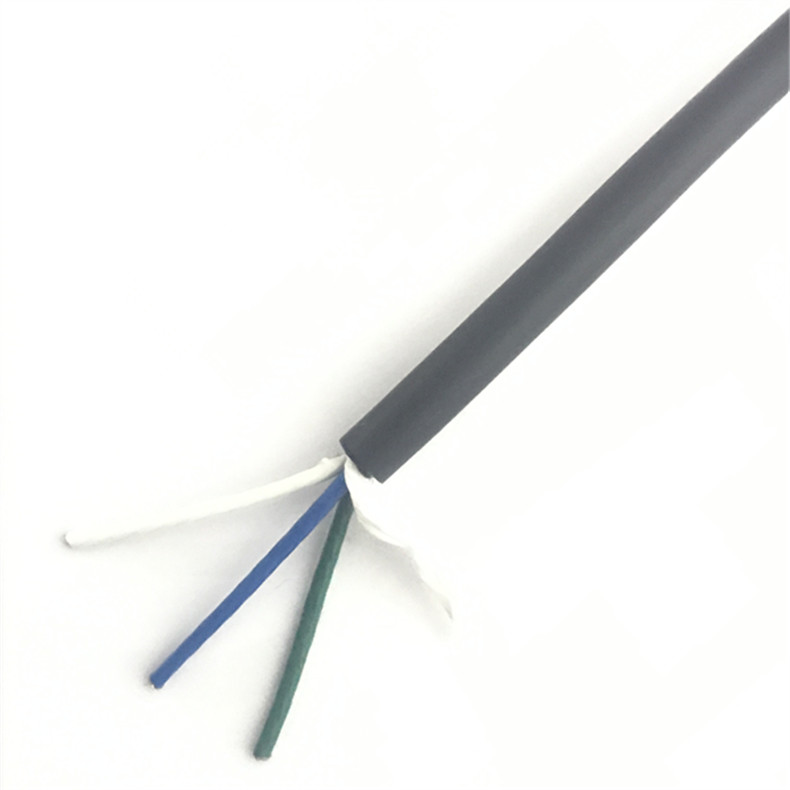
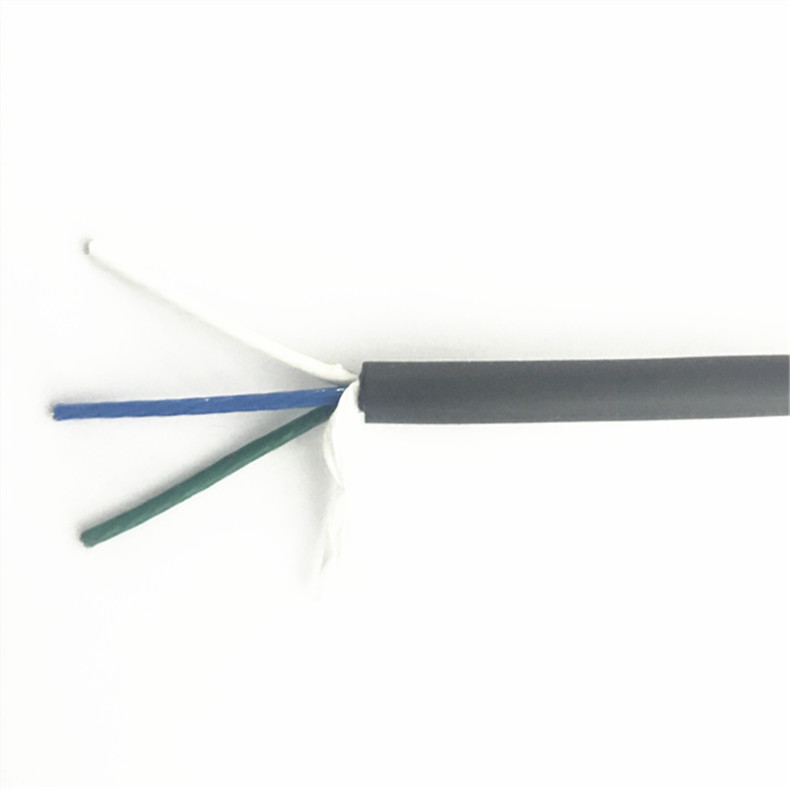
Heavy-Duty Underwater Thruster Cable | High Flexibility | ROV & Marine Propulsion Power Cable
Our heavy-duty underwater thruster cable is engineered for the most demanding requirements of ROV propulsion, autonomous underwater vehicle drive systems, and electric marine thruster pods. Every model is built from Class 6 ultra-fine-stranded tinned copper conductors delivering a flex life exceeding five million bend cycles at operational tether bend radii. Silicone-insulated variants operate from −60 °C to +180 °C; EPR-insulated models offer outstanding resistance to ozone and oil; CSPE-sheathed configurations withstand chemical exposure that degrades standard neoprene within months. The deep-water series is pressure-cycle tested to 650 bar. All models are produced in our ISO 9001:2015-certified facility with full SGS or TUV third-party test documentation, custom jacket colours, factory-fitted wet-mate connectors, and OEM assemblies from 300 metres minimum.
Heavy-Duty Underwater Thruster Cable | High Flexibility | ROV & Marine Propulsion Power Cable
ISO 9001:2015 Certified | OEM / ODM Available | IP68 Rated | Class 6 Flex
Our heavy-duty underwater thruster cable is purpose-built for the mechanical stress and chemical aggression of continuous underwater propulsion duty. Unlike general-purpose flexible cable adapted for aquatic use, every model in this line is engineered from Class 6 ultra-fine-stranded tinned copper conductors — the highest IEC 60228 flexibility classification — which distributes mechanical stress across thousands of individual wire filaments, delivering a flex life exceeding five million bend cycles at operational tether bend radii.
The cable is used in ROV propulsion systems, autonomous underwater vehicle (AUV) drive motors, electric ship thruster pods, and deep-sea observatory power feeds. Silicone-insulated variants operate from −60 °C to +180 °C, making them compatible with both Arctic-deployment ROVs and elevated-temperature subsea industrial environments. All models maintain structural integrity in continuous seawater, brackish water, and pressurised deep-ocean environments to a maximum rated depth of 6000 m.
Key product parameters at a glance: conductor is Class 6 tinned copper across all models; cross-sectional area ranges from 0.75 mm² to 50 mm²; insulation options include silicone (SiR), EPR, and XLPE; outer sheath options include CR Neoprene, CSPE (Hypalon), LSZH, and polyurethane; voltage ratings of 300 V, 500 V, and 1000 V (AC and DC); operating temperature from −60 °C to +180 °C; flex life exceeding 5,000,000 cycles; maximum depth rating of 6000 m; and certifications including UL, CE, RoHS, REACH, and ISO 9001:2015.
Product Model Overview
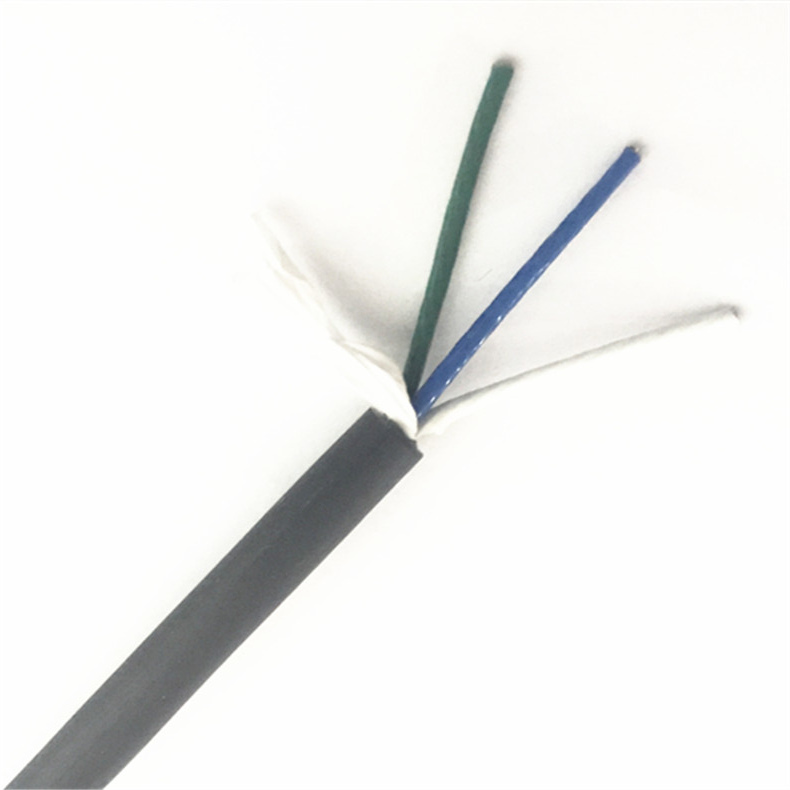
Six configurations are available to cover the full range of ROV propulsion, tether, and marine motor power-feed requirements. All models use Class 6 ultra-fine-stranded tinned copper conductors and are available with custom jacket colours, custom lengths, and factory-fitted waterproof connectors.
|
Model / Part No. |
Core Config. |
Section (mm²) |
Voltage |
Insulation |
Outer Sheath |
Max. Depth |
Primary Application |
|
UTC-2C-075 2-Core Standard |
2-core, Class 6 tinned Cu |
0.75 / 1.0 / 1.5 |
300 V AC/DC |
Silicone (SiR) |
CR Neoprene |
200 m |
Small ROV thrusters, AUV propulsion motors |
|
UTC-3C-25 3-Core Marine |
3-core + drain wire, Class 6 |
2.5 / 4.0 / 6.0 |
300 / 500 V |
EPR |
CSPE (Hypalon) |
1000 m |
Mid-class ROV motor power, underwater pump drives |
|
UTC-4C-10S 4-Core Armoured |
4-core + SS braid armour, Class 6 |
1.0 / 1.5 / 2.5 |
300 / 500 V |
XLPE |
LSZH + SS braid |
500 m |
Work-class ROV umbilicals, intervention tether |
|
UTC-HV-50 High-Voltage Propulsion |
1-core or 3-core, ultra-flex Class 6 |
16 / 25 / 35 / 50 |
600 / 1000 V |
EPR Heavy-wall |
CSPE + Polyurethane |
300 m |
Electric ship propulsion pods, large marine thrusters |
|
UTC-DW-6000 Deep-Water Series |
3-core + Kevlar strength member |
1.5 / 2.5 / 4.0 |
500 V |
Silicone + PE barrier |
Polyurethane (PU) |
6000 m |
Deep-sea ROV operations, subsea observatory systems |
|
UTC-HYB-CTL Hybrid Power + Signal |
3 pwr + 4 screened signal cores |
2.5 + 0.5×4 (sig) |
300 V / 24 V |
Silicone (dual) |
CR Neoprene |
500 m |
ROV thruster + sensor combined tether, manipulators |
Application Scenarios
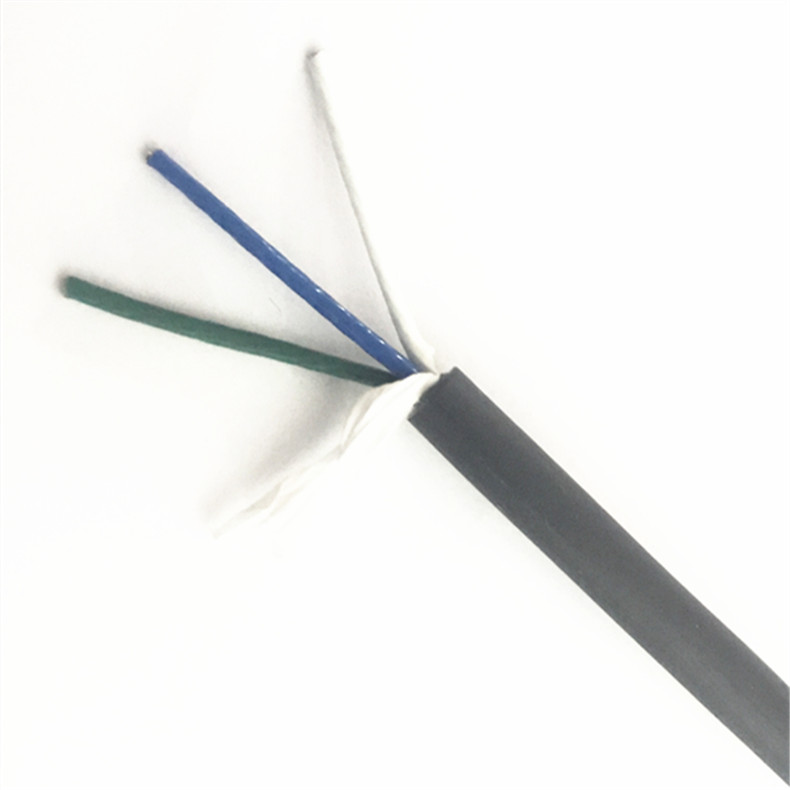
The underwater thruster cable series is designed for any environment where continuous underwater flexing and reliable power delivery must coexist — from shallow-water inspection ROVs to full-ocean-depth research systems.
In inspection and work-class ROV applications, the cable must flex continuously through tether management systems and around sheaves with every dive cycle. Class 6 stranding withstands millions of bend cycles at operational sheave radii without conductor fatigue, making it the standard choice among ROV integrators and operators worldwide.
For AUV and drone propulsion, the compact 2-core silicone variant (UTC-2C-075) delivers 300 V DC to brushless thruster motors with minimal weight and diameter penalty — a critical factor in autonomous vehicle designs where buoyancy and hydrodynamic drag must be carefully managed.
In electric ship thruster pods and dynamic positioning systems, the high-voltage UTC-HV-50 series provides 600 V or 1000 V power to azimuth thruster drives and emergency propulsion motors in offshore support vessels, ferries, and research ships. The EPR heavy-wall insulation resists the partial discharge effects generated by variable frequency drives (VFDs).
For subsea pump and actuator drives, CSPE-sheathed models withstand the oil, acid, and oxidising chemical exposure found near subsea wellhead installations and desalination plant outflows, where standard neoprene jacketing would degrade within months of installation.
The UTC-DW-6000 deep-water series serves oceanographic observatories, deep-sea research ROVs, and scientific instrument moorings at full ocean depth. Each production batch is pressure-cycle tested to 650 bar before dispatch, with full documentation included in the shipment. The UTC-HYB-CTL hybrid tether combines power and screened signal cores in a single cable, simplifying ROV umbilical design for vehicles requiring simultaneous motor power and sensor data transmission.
Cable Construction
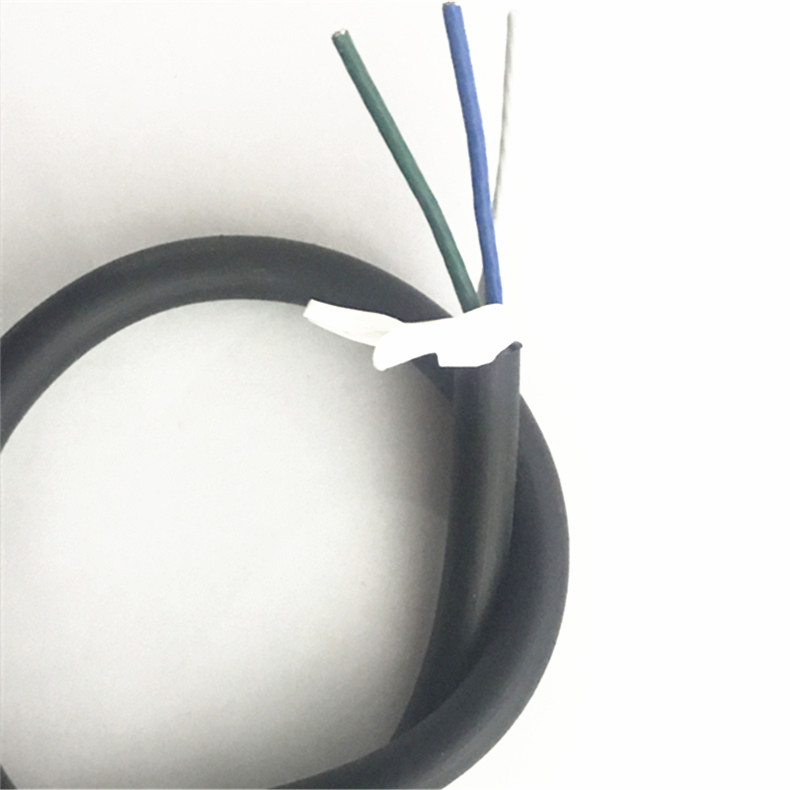
The underwater thruster cable is built in five functional layers, each selected to address a specific failure mode encountered in marine propulsion service rather than adapting a general-purpose design.
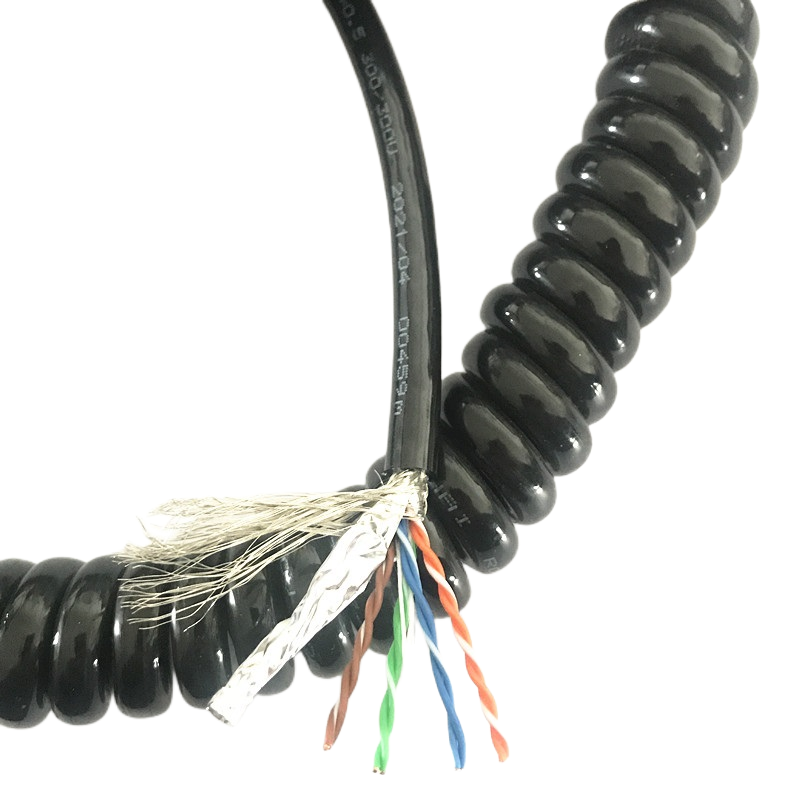
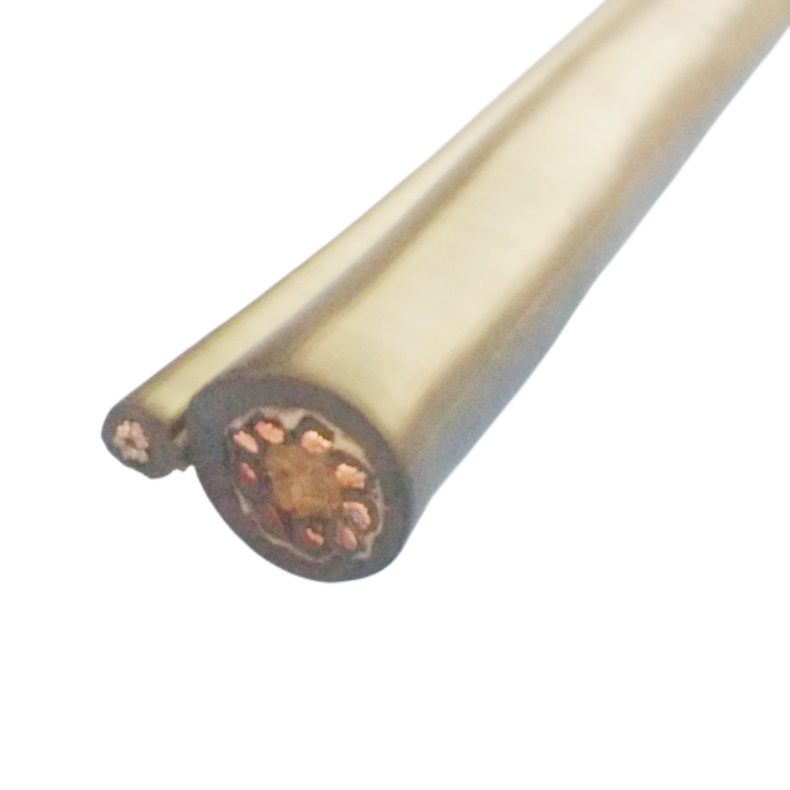
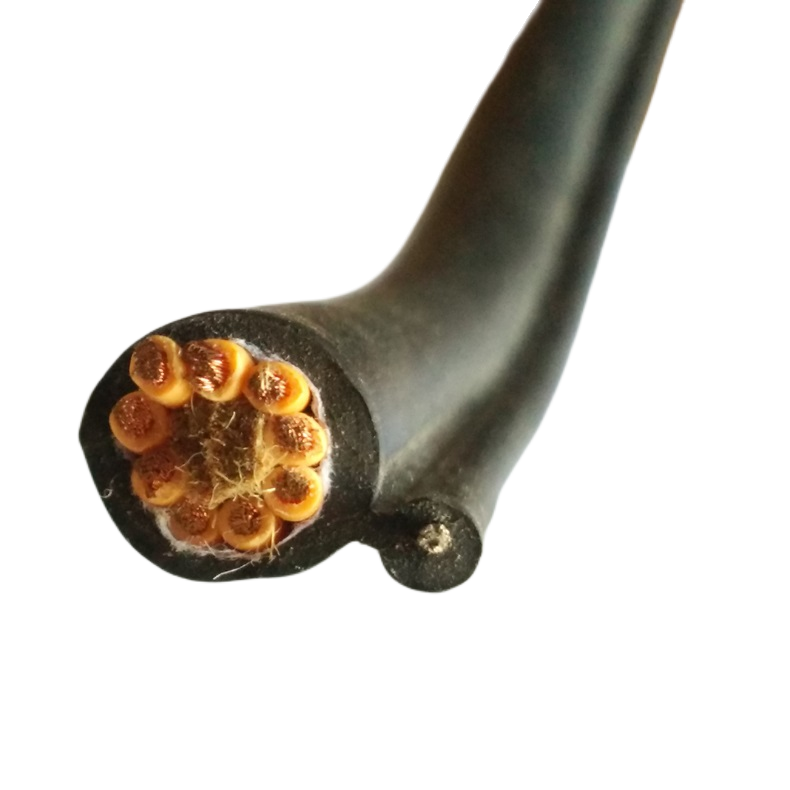
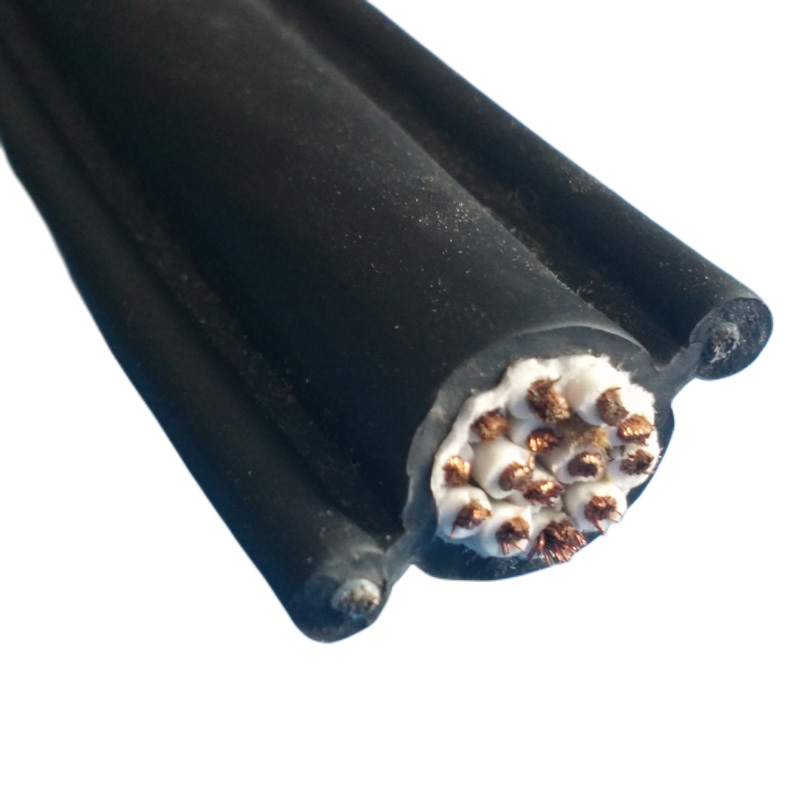
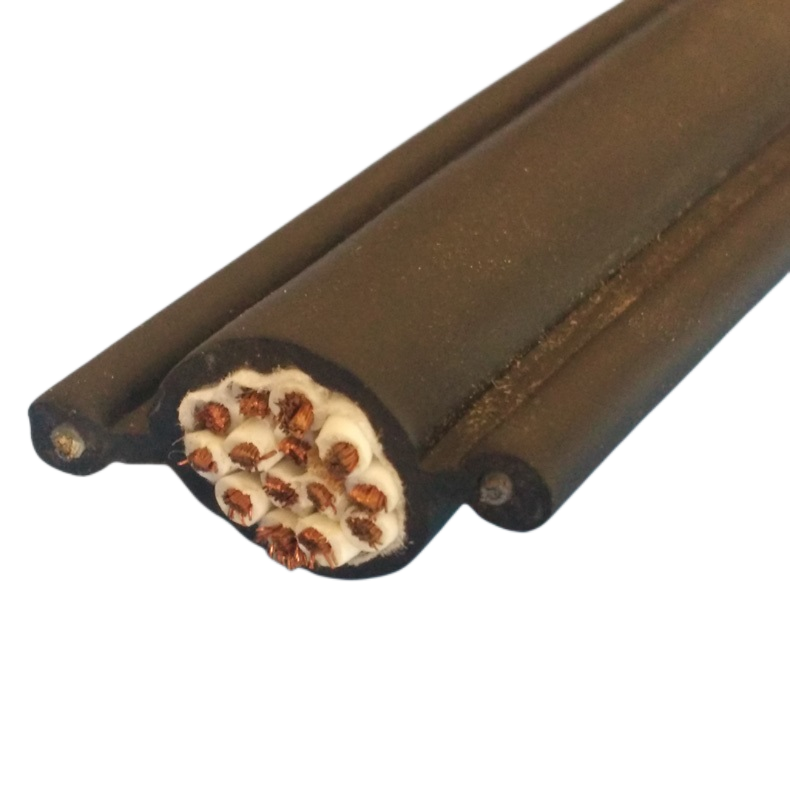
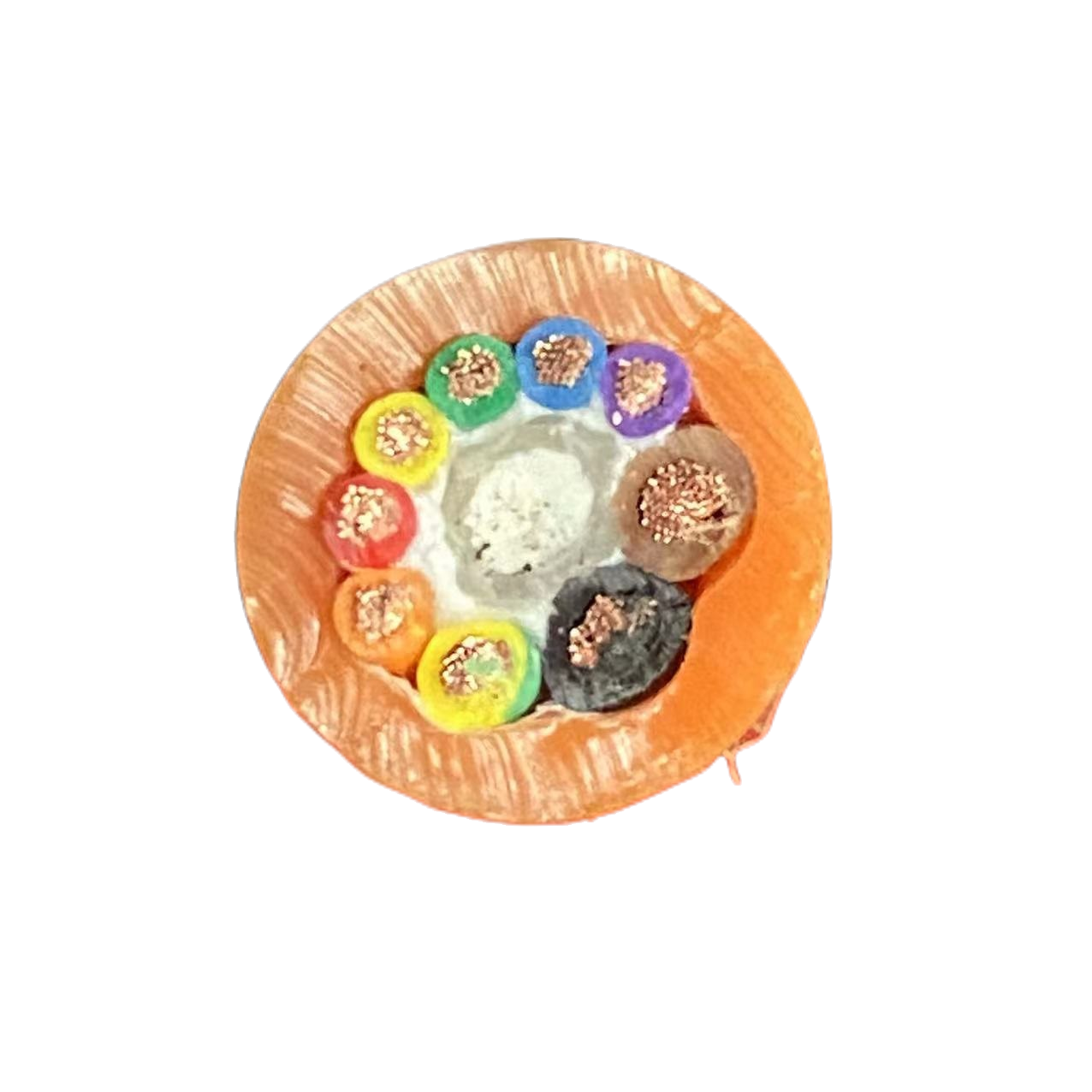
The innermost layer is a Class 6 tinned copper conductor, ultra-fine-stranded to IEC 60228 Class 6 — the highest flexibility classification in the standard. Tin plating on each individual filament prevents galvanic corrosion in both saline seawater and chlorinated pool or aquaculture water. Conductor cross-sections range from 0.75 mm² for low-voltage signal and sensor feeds up to 50 mm² for high-current propulsion motor circuits.
The second layer is a silicone (SiR) or EPR core insulation extruded directly onto each conductor. Silicone is selected where extreme temperature performance is required (−60 °C to +180 °C), particularly in Arctic ROV deployments or near subsea industrial heat sources. EPR (ethylene propylene rubber) is selected where oil resistance, ozone resistance, and long-term electrical stability in wet environments are the primary concerns.
The third layer is a water-blocking filler compound injected between the insulated cores. This longitudinal waterproofing prevents capillary water migration along the conductor bundle even when the cable end is cut or improperly terminated in the field — a common failure mode in standard marine cables exposed to pressure differentials.
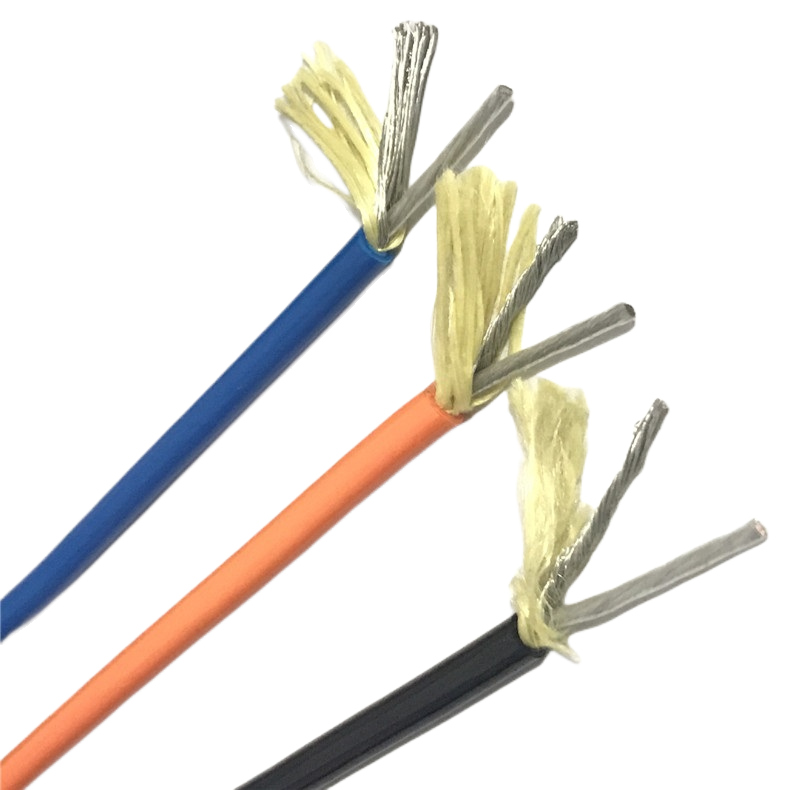
The fourth layer, present on selected models only, is either a Kevlar aramid strength member (UTC-DW-6000) or a stainless steel wire braid armour (UTC-4C-10S). The Kevlar member carries axial tension load from the tether system in deep-water operations, preventing conductor damage from the cable’s own weight at depth. The steel braid provides crush resistance of 3000 N per 10 cm in work-class ROV and dock environments.
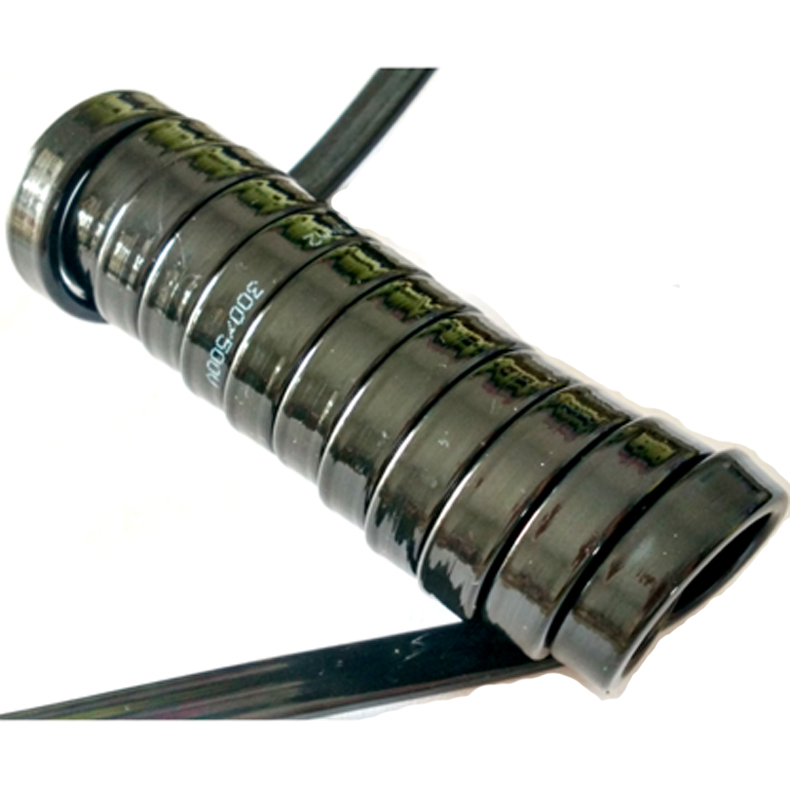
The outermost layer is the outer sheath, available in CR Neoprene for standard marine service, CSPE (Hypalon) for chemical-resistant applications, LSZH compound for enclosed spaces with fire safety requirements, or polyurethane for deep-water pressure and abrasion resistance. All sheath compounds are UV-stabilised and rated for a minimum 25-year service life in continuous outdoor aquatic environments.
Key Technical Specifications
The following parameters apply across the underwater thruster cable product range. All models share a common engineering baseline designed to exceed IEC 60245 and IEC 60228 requirements for continuous submerged flexible wiring. Model-specific values are noted where they differ from the range standard.
|
Parameter |
Value / Specification |
Test Standard |
Notes |
|
Conductor Material |
Tinned Copper, Class 6 |
IEC 60228 Class 6 |
Ultra-fine-stranded; tin coat resists galvanic corrosion in seawater and chlorinated water |
|
Cross-Section Range |
0.75 mm² – 50 mm² |
IEC 60228 |
Custom signal cores below 0.75 mm² available for hybrid tether configurations |
|
Insulation System |
Silicone / EPR / XLPE |
IEC 60245 / IEC 60227 |
Silicone: −60 °C to +180 °C; EPR: oil & ozone resistant; XLPE: high-voltage grade |
|
Outer Sheath Options |
CR / CSPE / LSZH / PU |
IEC 60245-4 |
CR: standard marine; CSPE: chemical-resistant; PU: deep-water abrasion & pressure |
|
Voltage Rating |
300 V / 500 V / 1000 V |
IEC 60332 / UL 62 |
DC rating available; 600/1000 V class for VFD-driven marine propulsion drives |
|
Operating Temperature |
−60 °C to +180 °C |
IEC 60216 |
Silicone variants; EPR models rated −40 °C to +90 °C |
|
Waterproof Rating |
IP68 (IEC 60529) |
IEC 60529 |
DW-6000 series pressure-tested to 650 bar — equivalent to 6500 m water column |
|
Flex Life |
> 5,000,000 cycles |
IEC 60811 / DIN VDE 0282 |
Tested at 6× OD bend radius; Class 6 stranding selected for continuous dynamic flexing |
|
Min. Bend Radius (dynamic) |
5× cable OD |
Manufacturer protocol |
4× OD for static installations; tighter radii available with custom stranding |
|
Crush Resistance |
1500 N / 10 cm |
IEC 60811-404 |
Armoured models (UTC-4C-10S): 3000 N / 10 cm with stainless steel braid layer |
|
Salt Spray Resistance |
2000 h |
ASTM B117 |
Tinned Cu + CSPE sheath; zero corrosion after extended marine immersion testing |
|
Flame Retardancy |
IEC 60332-1-2 / -3-22 |
IEC 60332 |
LSZH variants meet EN 50267-2-1 for low smoke emission in confined spaces |
|
Certifications |
UL / CE / RoHS / REACH |
Multiple agencies |
ISO 9001:2015 facility; SGS / TUV reports on request; DNV-GL marine cert. available |
Frequently Asked Questions
Why is Class 6 stranding essential for ROV thruster cable applications?
Class 6 is the highest IEC 60228 flexibility classification, using the finest individual wire filaments of any standard conductor grade. ROV thruster cables must flex continuously through tether management systems and around sheaves with every dive cycle. Coarser Class 2 or Class 5 conductors fatigue and fracture within tens of thousands of cycles under these conditions. Class 6 ultra-fine stranding distributes mechanical stress across thousands of individual filaments, achieving flex lives exceeding 5 million cycles at 6× OD bend radius under continuous dynamic use.
What is the difference between CR (Neoprene) and CSPE (Hypalon) outer sheaths?
CR (chloroprene rubber, trade name Neoprene) is the standard marine sheath — excellent UV and ozone resistance, good mechanical toughness, and a proven track record in saltwater service for decades. CSPE (chlorosulfonated polyethylene, trade name Hypalon) offers superior resistance to strong acids, oxidising chemicals, and high-concentration chlorine. It is the preferred choice near desalination plant outflows, industrial aquaculture with chemical dosing, or any environment with chemical contamination risk. CSPE also retains its flexibility and integrity at slightly higher sustained temperatures than standard CR.
Can you supply pre-terminated assemblies with underwater wet-mate connectors?
Yes. Factory-terminated assemblies with SubConn, Cobalt, and proprietary wet-mate connector systems are available. All terminations are potted, pressure-tested to the cable’s rated depth, and supplied with individual test certificates. Custom lengths from 1 metre to 5000-metre drum reels are available. For OEM programmes, private-label connector assemblies with customer-specific part numbers, packaging, and full traceability documentation per IPC/WHMA-A-620 are supported from a minimum run of 300 metres per configuration.
How does the UTC-DW-6000 series achieve its 6000 m depth rating?
At 6000 metres, hydrostatic pressure reaches approximately 600 bar. The UTC-DW-6000 addresses this through a fully void-filled cross-section with no air gaps between cores, a solid polyurethane outer jacket rated for pressure deformation resistance, a Kevlar aramid strength member that takes the full axial tension load of the tether system, and an internal silicone-plus-PE barrier that prevents water migration along conductors even if the outer jacket is breached. Each production batch is pressure-cycle tested at 650 bar before dispatch, with test records included in shipment documentation.