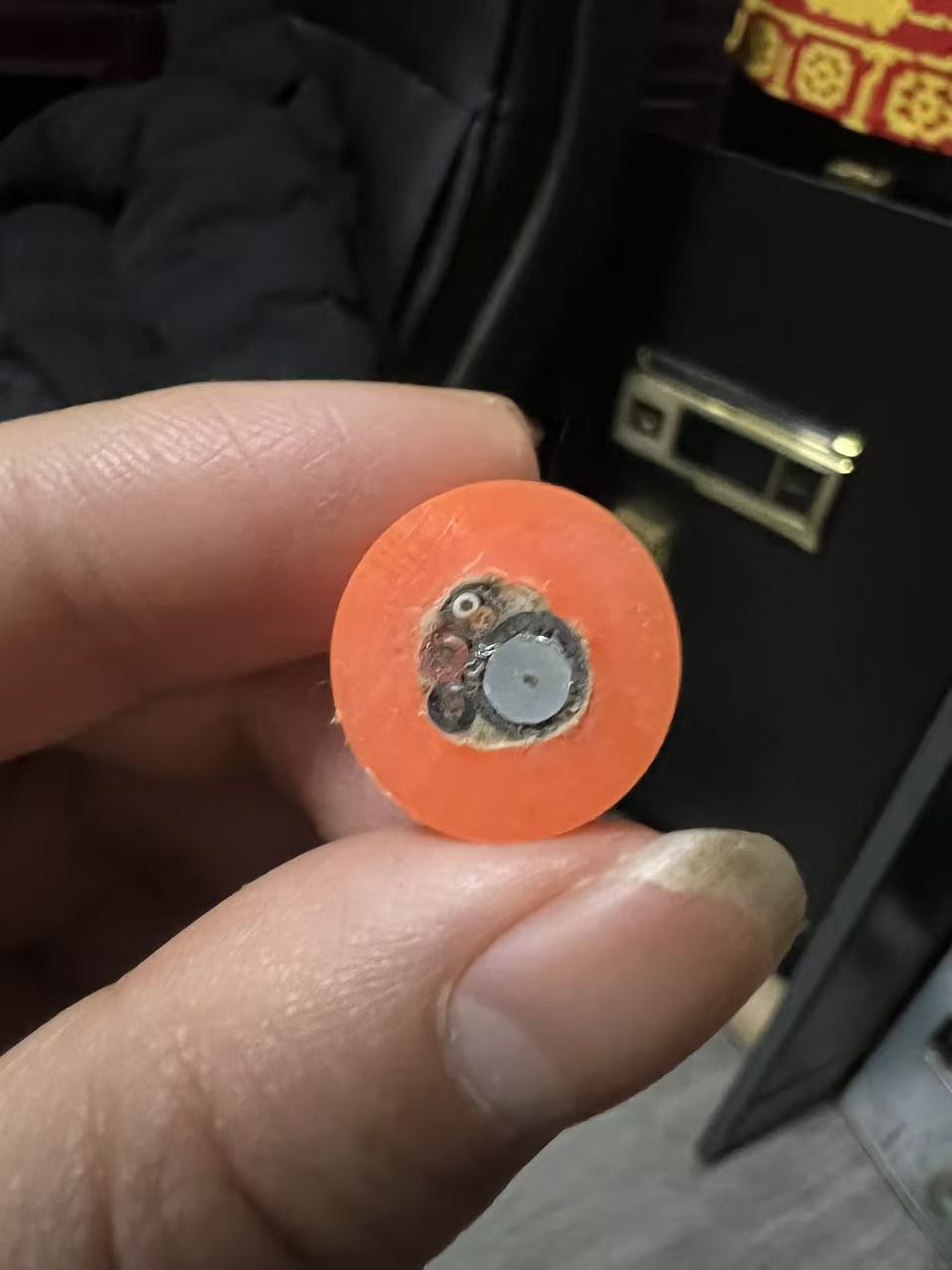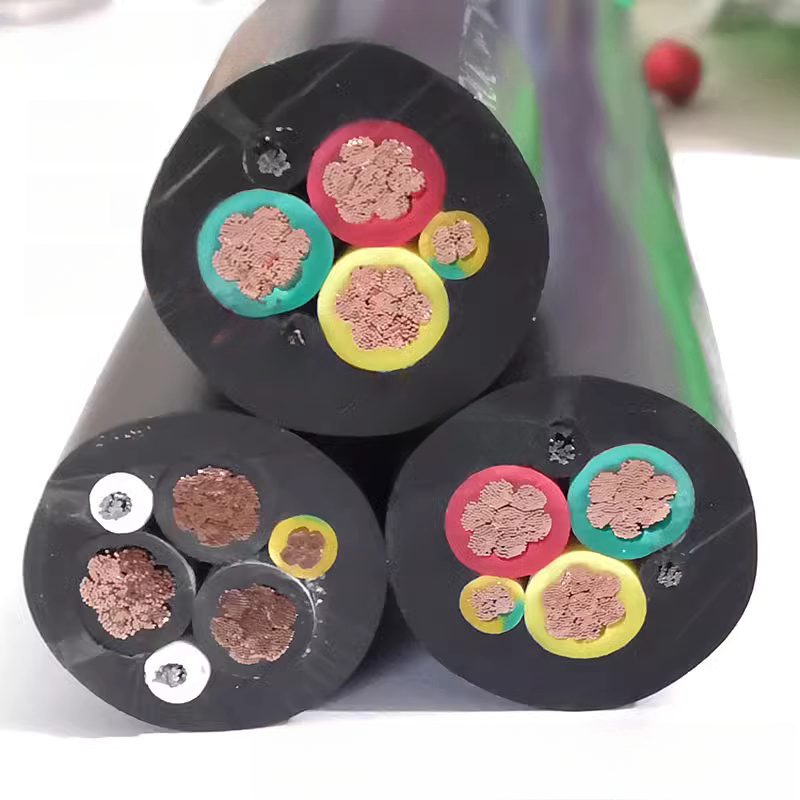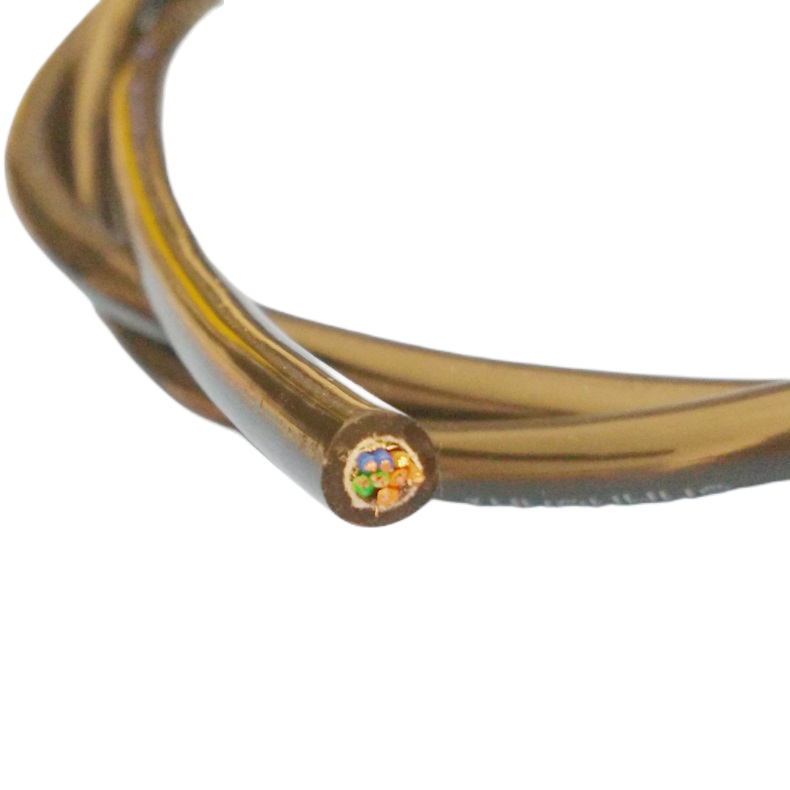



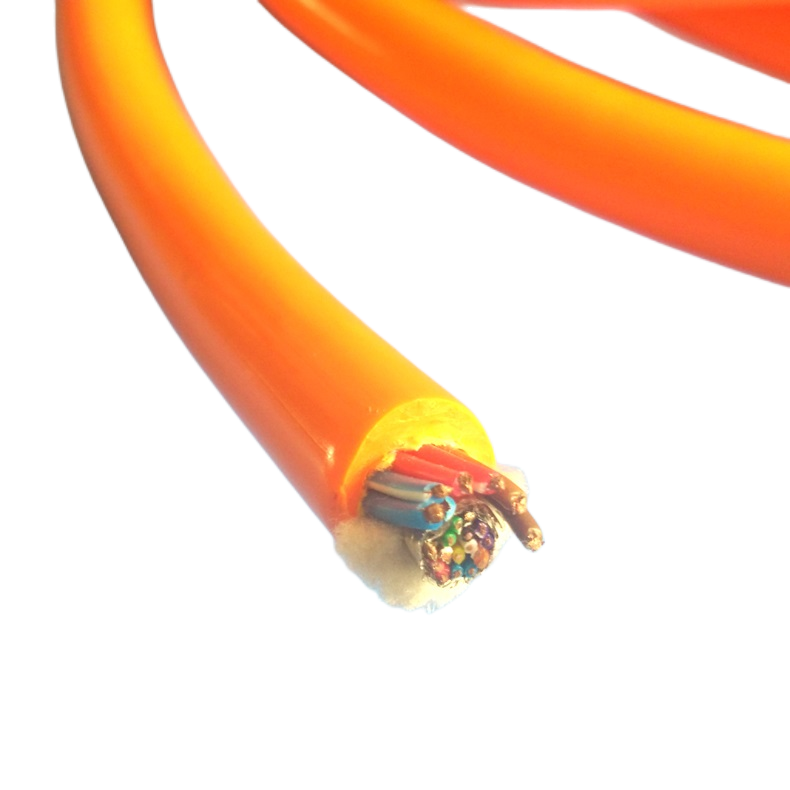
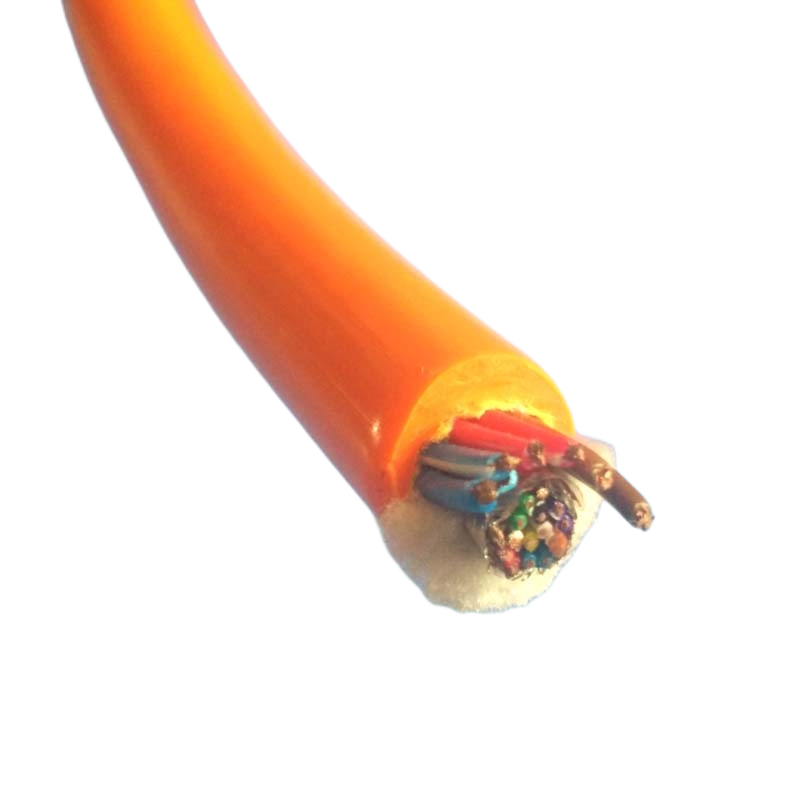
Heavy-Duty Crane Drum Cable | High Flexibility Reeling Cable for Hoisting Systems
The RST-HDC Series Heavy-Duty Crane Drum Cable is designed for motorized drum reel systems, resisting winding pressure, torsion, abrasion, and tensile stress.
Available from 3×2.5 mm² to 4×16 mm² (0.6/1 kV), with a 3.6/6 kV option, and optional Kevlar reinforcement (2–8 kN) for high-load applications such as mining and vertical drums.
The polyether PUR jacket offers excellent compression recovery (≥85%), preventing deformation during multi-layer winding. Class 6 ultra-flexible conductors ensure extended service life under repeated bending and compression.
Proven in cranes, ports, and mining systems with long-term reliability. Certified to ISO 9001:2015, with optional IECEx and DNV/BV approvals. Supplied with full electrical and mechanical test reports.
Heavy-Duty Crane Drum Cable | High Flexibility Reeling Cable for Hoisting Systems
Product Series: RST-HDC │ Category: Crane & Reeling Cables │ Written by: Chen Jiaming, Senior Reeling Cable Engineer, 11 years crane cable application experience │ Last reviewed: March 2025
|
500 m Max drum run |
8 kN Kevlar tensile option |
10 layers Winding validated |
0.6/1 kV Voltage rating |
−40°C Cold-flex rated |
Common crane cable failures — and why they happen
|
Failure Symptom Observed |
Root Cause in Standard Cable |
Annual Downtime Cost (estimate) |
RST-HDC Design Response |
|
Jacket hardening and cracking after 12–18 months; persistent ground faults |
PVC jacket loses plasticiser through thermal cycling in steel-mill environments. Below −15°C the jacket becomes brittle and cracks at guide roller contact points. |
2–4 unplanned outages per year × avg. 3.5 h each = 7–14 h lost production |
Polyether PUR jacket: no plasticiser to lose; maintains flexibility to −40°C. Taber abrasion ≥300 cycles (CS-17, 1 kg, ISO 9352). Compressive set recovery ≥85% after 24 h at 30% deformation (ISO 815). |
|
Conductor strand breakage at guide roller; intermittent phase loss to hoist motor |
Standard Class 5 conductors work-harden under repeated winding compression. Strand breaks concentrate at the same cross-section of the cable on each drum cycle. |
Motor drive fault leading to crane shutdown; average 4 h repair + inspection |
IEC 60228 Class 6 ultra-fine OFC stranding: hundreds of 0.08 mm strands distribute bending stress across the entire cross-section. Counter-helical lay prevents conductor migration under winding compression. |
|
Insulation breakdown between phases at inner drum layers after 2–3 years |
Multi-layer winding creates radial compression on inner layers. Standard insulation wall thicknesses assume free-air installation, not sustained winding pressure. |
Full cable replacement; crane out of service for 1–2 days |
Drum-rated insulation wall thickness: minimum 15% thicker than IEC 60502-1 free-air table for cables rated for >6 winding layers. Compressive set test per ISO 815 on insulation compound. |
|
Cable jams in drum guide; winding collapses to one side |
Oval cross-section from permanent jacket deformation. Standard cables are not rated for sustained radial compression from winding layers. |
Maintenance intervention; guide roller realignment 2–6 h |
Circular cross-section maintained by PP filler cords. Jacket Shore A 88±2 (drum-grade, stiffer than drag chain grade) provides compressive set resistance under multi-layer winding pressure. |
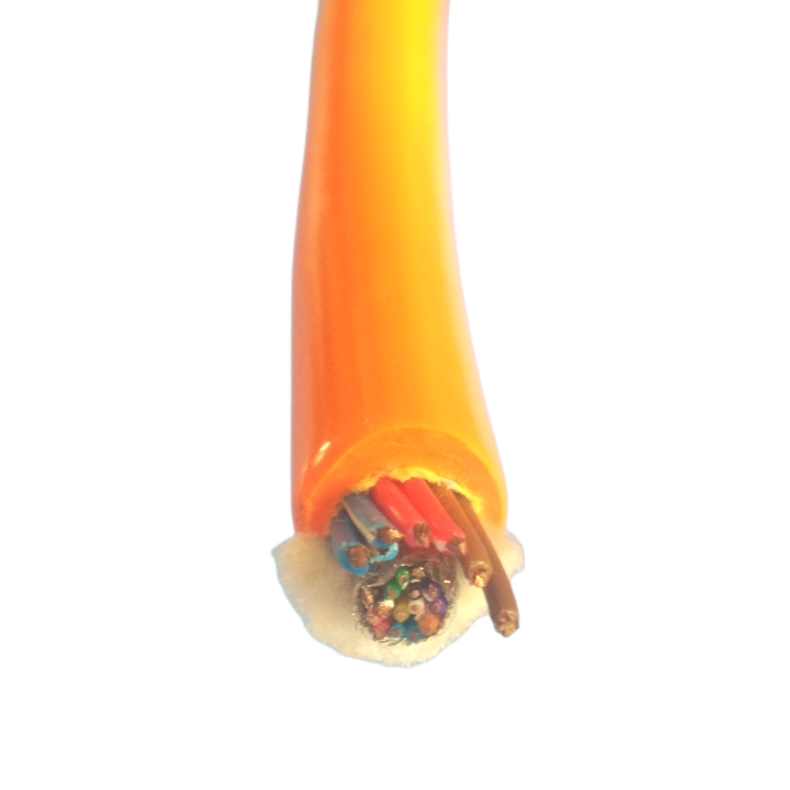
Heavy-duty crane drum cable is the category of reeling cable engineered for the specific mechanical stresses of motorised drum reels on overhead cranes, gantry cranes, ship-to-shore gantries, and harbour mobile cranes — stresses that eliminate standard flexible cables within months and that require a cable designed from the outside in for sustained compressive loading, torsional cycling, and guide roller abrasion rather than for simple planar bending.
The RST-HDC series addresses every failure mode in the diagnostic table above. This page presents the engineering evidence behind each specification, verified field data from five crane installations, and a drum geometry calculator that lets engineers confirm cable-to-drum compatibility before ordering.
Who specifies this cable
Crane OEM engineering teams, maintenance managers on port and steel-mill crane fleets, and procurement specialists replacing failed competitor cables. Applications range from 50 m supply reels on overhead bridge cranes to 400 m festoon reels on ship-to-shore gantry systems in saltwater port environments.
Page Contents
- Why Drum Reeling Duty Is Different from Drag Chain or Fixed Wiring
- Model Range & Specifications
- Drum Geometry Compatibility Calculator
- Application Matrix — Crane Type × Cable Requirement
- Construction Engineering with Standard References
- Material Comparison: PUR vs. Rubber vs. PVC for Drum Cables
- Technical Parameters
- Verified Field Installations
- FAQ — Crane Engineers & Maintenance Managers
- Manufacturer Credentials
- Request a Proposal
Why Drum Reeling Duty Is Different
The four mechanical forces that destroy standard cables on drum reels
Drum reeling imposes four combined stresses that are absent from any other cable installation category. A cable that survives millions of drag chain cycles or years of fixed wiring will fail within months on a drum reel if it is not designed for these specific forces.
|
Force |
Mechanism |
Why Standard Cables Fail |
RST-HDC Engineering Response |
|
Radial compression |
Outer winding layers press down on inner layers. At 8 layers on a 400 mm core drum, inner-layer radial pressure exceeds 2.5 bar. |
Soft PVC or rubber jackets deform permanently. Core geometry collapses from circular to oval; insulation stress concentrations develop at conductor crossover points. |
Shore A 88±2 jacket with compressive set recovery ≥85% (ISO 815). PP filler cords maintain circular cross-section under sustained winding pressure. |
|
Torsional cycling |
Each drum revolution applies axial twist to the cable. 500 m of cable at 0.5 rev/traverse = ±180° of torsion on the free-hanging section. |
Short-lay cables develop helical memory; winding becomes uneven with high-pressure contact points at irregular intervals. |
Counter-helical cabling geometry (lay/OD ratio 12:1) tuned for torsional neutrality. Polyester fleece separator allows jacket to slide over core during each drum cycle. |
|
Guide roller abrasion |
Cable contacts steel or polymer guide rollers at every traverse reversal. At 60 cycles/h on a 10-h shift over 10 years: 2.2 million contact events. |
PVC jackets (Taber ≤150 cycles) develop surface cracks within 500,000–1,000,000 contact events. Cracks allow oil and coolant ingress to conductor insulation. |
Polyether PUR jacket, Taber ≥300 cycles (CS-17, 1 kg, ISO 9352). Tensile strength ≥55 MPa (ISO 37) prevents guide notching. |
|
Tensile loading |
Hanging cable weight at maximum drum pay-out creates sustained longitudinal tension at drum anchor. At 1.4 kg/m and 200 m free-hanging: 2.75 kN. |
Copper conductors are not rated for sustained tensile load. IEC 60228 Class 6 copper elongates under loads above ~200 N per mm² cross-section; resistance increases progressively. |
Kevlar 49 tensile member (K-series models) rated 2–8 kN carries full load. Copper conductors experience zero longitudinal stress. Load path terminates at cable grip, not at conductor terminations. |
Derating current capacity in drum installations
Cables installed on drum reels must be derated to 80% of their free-air current rating (derating factor 0.80) regardless of the number of winding layers. This accounts for the reduced heat dissipation when the cable is wound and the elevated ambient temperature inside the drum enclosure on crane drives. (IEC 60364-5-52 Annex B, Item 52; confirmed in Rousheng Crane Engineering Note CEN-003, 2023)
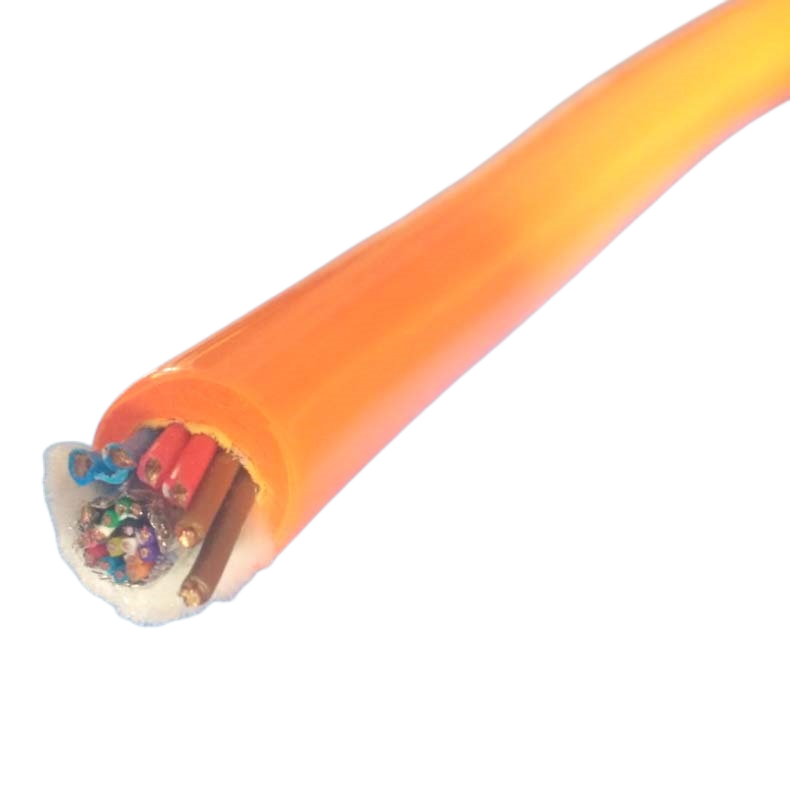
RST-HDC Series — Model Specifications
|
Model |
Cores × Section |
OD (approx.) |
Min Drum Core |
Voltage |
Tensile Member |
Jacket Grade |
Primary Crane Type |
|
RST-HDC-3C-2.5 |
3×2.5 mm² |
15.8 mm |
316 mm |
0.6/1 kV |
None |
Standard |
Light EOT crane, hoist, C-rail festoon |
|
RST-HDC-4C-4.0 |
4×4.0 mm² |
19.2 mm |
384 mm |
0.6/1 kV |
None |
Standard |
Medium EOT crane, 50–200 m drum |
|
RST-HDC-4C-6.0 |
4×6.0 mm² |
22.4 mm |
448 mm |
0.6/1 kV |
None |
Standard |
Heavy EOT crane, 100–300 m |
|
RST-HDC-4C-10 |
4×10 mm² |
27.0 mm |
540 mm |
0.6/1 kV |
None |
HD Port |
Port crane, 100–300 m run |
|
RST-HDC-4C-16 |
4×16 mm² |
31.5 mm |
630 mm |
0.6/1 kV |
None |
HD Port |
Ship-to-shore crane, 200–400 m |
|
RST-HDC-K-4C-10 |
4×10 mm² + 4 kN Kevlar |
29.2 mm |
584 mm |
0.6/1 kV |
Kevlar 4 kN |
HD Port |
STS crane, inclined drum, deep mine |
|
RST-HDC-K-4C-16 |
4×16 mm² + 6 kN Kevlar |
34.0 mm |
680 mm |
0.6/1 kV |
Kevlar 6 kN |
HD Port |
STS crane, vertical drum, 300+ m |
|
RST-HDC-CC-4+2 |
4×4.0 mm² + 2×1.5 mm² ctrl |
24.0 mm |
480 mm |
0.6/1 kV |
None |
Standard |
Combined power + control, single reel |
|
RST-HDC-HV-3C |
3×25 mm² |
38.0 mm |
760 mm |
3.6/6 kV |
Optional |
HD Port |
Medium-voltage mobile substation reel |
|
RST-HDC-OEM |
Custom 2–50 cores |
Per spec |
Per spec |
Up to 6 kV |
Per spec |
Per spec |
Mining, offshore, custom drum systems |
Min Drum Core = OD × 20 (standard). HD Port jacket: Taber ≥500 cycles (CS-17, 1 kg, ISO 9352); Shore A 90; for >6 winding layers. Standard jacket: Taber ≥300 cycles; Shore A 88. All models: 100% HiPot test per IEC 60502-1; conductor resistance certificate per drum.
Drum Geometry Compatibility Calculator
How to confirm cable-to-drum compatibility in three steps
Selecting the wrong cable OD for a given drum results in either guide jams (cable too large) or winding layer collapse (cable too small for correct tension). Use the three steps below before specifying.
- Step 1 — Check minimum cable OD. The drum core diameter divided by 20 gives the minimum cable OD for standard winding ratio. Example: 540 mm core ÷ 20 = 27 mm minimum OD. Any cable with OD below 27 mm has insufficient column stiffness for level winding on this drum.
- Step 2 — Check maximum cable OD. The cable OD must fit within the drum inner height (core to flange) with at least 3 mm clearance per layer on each side. Maximum layers = (Drum inner height – 6 mm clearance) ÷ Cable OD.
- Step 3 — Check winding layers. If calculated layers exceed 6, specify the HD Port jacket compound. If layers exceed 10, contact our engineering team for a compressive loading analysis on inner-layer insulation.
Pre-calculated compatibility: common crane systems
|
Crane System |
Drum Core Ø |
Cable OD Required |
Max Winding Layers |
Recommended Model |
|
Light EOT crane (5–10 t) |
300–400 mm |
15–20 mm |
6 max (standard jacket) |
RST-HDC-3C-2.5 or 4C-4.0 |
|
Medium EOT crane (10–50 t) |
400–600 mm |
19–28 mm |
6–8 (HD Port jacket above 6) |
RST-HDC-4C-4.0, 4C-6.0, or 4C-10 |
|
Heavy EOT / ladle crane (>50 t) |
600–800 mm |
22–32 mm |
6–8 |
RST-HDC-4C-10 or 4C-16 |
|
Port gantry / RTG crane |
600–900 mm |
27–35 mm |
8–10 (HD Port jacket required) |
RST-HDC-4C-16 or K-4C-16 |
|
Ship-to-shore (STS) crane |
700–1,000 mm |
31–38 mm |
8–10 + Kevlar for vertical hang |
RST-HDC-K-4C-16 |
|
Tower crane / luffing jib |
300–500 mm |
15–25 mm |
6 max |
RST-HDC-3C-2.5 or 4C-4.0 |
|
Mining reel (underground) |
350–600 mm |
19–30 mm |
6–8 (IECEx on request) |
RST-HDC-4C-10 or K-4C-10 |
|
Worked voltage-drop check (STS crane, 300 m run, 80 A load): VD% = (1.732 × 80 × 300 × R_conductor) ÷ 400,000 × 100. For 16 mm² copper: R = 1.91 mΩ/m (IEC 60228). VD% = 1.732 × 80 × 300 × 1.91 ÷ 400,000 × 100 = 1.98%. Within 5% IEC 60364 limit. Current capacity: 85 A free air × 0.80 drum derating = 68 A. Insufficient for 80 A. Step up to RST-HDC-4C-25 (OEM) or redesign supply voltage. Formula: IEC 60364-5-52 for cable sizing; derating factor 0.80 per Annex B, Item 52 (drum reel installation). |
Application Matrix — Crane Type × Cable Requirement
|
Crane / Industry |
Operating Environment |
Key Cable Stress |
Recommended Model |
Critical Specification |
|
Overhead EOT bridge crane, steel mill |
Radiant heat 40–80°C; coolant mist; 24/7 operation |
Jacket thermal cycling; guide roller abrasion; radial compression at 6–8 winding layers |
RST-HDC-4C-10 (HD Port jacket) |
Shore A 90; Taber ≥500 cycles; XLPE insulation to +90°C conductor |
|
Ladle transfer crane, steelmaking |
Molten metal splash risk; peak ambient >100°C near ladle |
Jacket and insulation high-temperature resistance |
RST-HDC-4C-16 (XLPE insulation, heat-reflective wrap option) |
XLPE insulation +90°C continuous; heat-reflective polyester outer wrap |
|
Ship-to-shore (STS) gantry crane, port |
Saltwater spray; 300–400 m drum run; solar UV; vertical hang |
Saltwater jacket degradation; VD over long run; vertical tensile load |
RST-HDC-K-4C-16 (Kevlar 6 kN, HD Port jacket) |
Polyether PUR jacket (5,000 h seawater immersion test); Kevlar for tensile load |
|
Rubber-tyred gantry (RTG) crane, container terminal |
Outdoor; rain; UV; moderate saltwater spray; high cycle rate |
UV exposure; high flex cycle count; jacket abrasion at guide |
RST-HDC-4C-16 (HD Port jacket, UV-stabilised compound) |
UV test: 1,000 h xenon arc ≤80% tensile retention (IEC 60811-401) |
|
Portal crane, bulk materials handling |
Outdoor; dust; impact; abrasive cargo |
Jacket impact resistance; abrasion from cargo dust impingement |
RST-HDC-4C-10 (HD Port jacket + abrasion overjacket option) |
Impact resistance: ≥5 J no crack (IEC 60794-1-2 E4 adapted); Taber ≥600 cycles with overjacket |
|
Underground mining reel (continuous miner) |
Gas atmosphere (may need IECEx); mud; rock abrasion |
IECEx/ATEX compliance; heavy jacket abrasion; high tensile load |
RST-HDC-K-4C-10 (Kevlar, IECEx Zone 1 compound on request) |
IECEx Zone 1 IIB T4 Gb on request; Taber ≥500 cycles; Kevlar 4 kN |
|
Offshore pedestal crane, platform supply |
Saltwater immersion risk; DNV type approval may be required |
Saltwater hydrolysis; marine certification |
RST-HDC-K-4C-10 (marine-grade PUR, Kevlar) |
DNV/BV type approval on request; polyether PUR 5,000 h ISO 175 |
|
Tower crane, construction |
Outdoor UV; variable ambient −20°C to +45°C; moderate cycle rate |
UV and ozone; cold-flex at low temperature |
RST-HDC-4C-4.0 (standard PUR) |
UV-stabilised jacket; cold flex to −40°C (IEC 60811-501) |
Construction Engineering
Conductor: Class 6 ultra-fine OFC stranding
The conductor is the first decision point in drum cable design. IEC 60228 Class 5 is standard in most industrial flexible cables. RST-HDC specifies Class 6 (ultra-fine stranding, 0.08–0.16 mm individual strand diameter) because drum reeling imposes a combined bending-compression-torsion stress state that accumulates strand fatigue faster than planar drag chain bending alone.
Class 6 stranding distributes the radial compression load from winding layers across hundreds of individual strands rather than tens. Internal fatigue test data from 2023 (RST internal test protocol HDC-FT-001) shows Class 6 conductors achieving 3.2× the strand breakage life of Class 5 under simulated 8-layer winding compression at 60 cycles/h. (Rousheng internal fatigue test HDC-FT-001, 2023; IEC 60228:2004 Class 6 specification)
Insulation: XLPE for drum thermal environments
XLPE (cross-linked polyethylene) insulation is standard across the RST-HDC range. The reasons are specific to drum cable environments: XLPE maintains its insulation resistance characteristics at the elevated conductor temperatures that occur when the cable is tightly wound (reduced heat dissipation) under high-current loading. PVC insulation softens and flows under sustained temperature above +70°C, which is readily reached in a tightly wound drum at 80% of rated current.
XLPE also has a lower dielectric constant than PVC, which reduces inter-phase capacitive coupling — a measurable benefit in 0.6/1 kV crane supply cables where variable-frequency drive (VFD) switching harmonics can cause significant capacitive induced voltages on adjacent cores.
Core assembly and torsional geometry
RST-HDC cores are cabled with a lay length tuned for torsional neutrality at the drum’s typical operating radius. Counter-helical lay (inner and outer conductor layers wound in opposite directions) prevents conductor self-rotation that would cause the core geometry to migrate around the cable axis under cyclic torsion. A polyester fleece separator over the cabled core bundle prevents jacket bonding to the inner elements during extrusion — the separator must allow the jacket to slide relative to the cores on each drum revolution.
Outer jacket: drum-grade polyether PUR
The drum-grade jacket specification differs from drag chain cable in one critical property: compressive set resistance. Shore A 88 (standard) and Shore A 90 (HD Port) provide greater compressive stiffness than the Shore A 82–85 used in drag chain cables. This higher stiffness resists permanent deformation under winding layer pressure, maintaining circular cross-section and preventing oval deformation that causes guide roller jams.
Compressive set recovery ≥85% after 24 hours at 30% deformation (ISO 815) is the minimum qualification criterion for drum cable jacket compounds in the RST-HDC series. Drag chain cable jacket compounds typically achieve 75–80% under the same test conditions. (ISO 815:2019; Rousheng material qualification protocol MQP-002, 2024)
|
Layer |
Specification |
Standard / Test |
|
OFC conductor |
Class 6 ultra-fine (0.08–0.16 mm strand dia.); bare or tinned |
IEC 60228:2004 Class 6 |
|
XLPE insulation |
Cross-linked PE; +90°C conductor temp rated; DIN VDE 0293 colour coding |
IEC 60502-1; DIN VDE 0293-308 |
|
PP filler cords |
Polypropylene filler to maintain circular cross-section |
Internal specification |
|
Polyester fleece separator |
Non-hygroscopic; prevents jacket bonding to core bundle |
Internal specification |
|
Kevlar tensile member (K-models) |
Kevlar 49, parallel lay; 2–8 kN rated; load-tested 1.5× per drum |
ASTM D7269; calibrated load cell |
|
Outer jacket — polyether PUR |
Shore A 88±2 (standard) or 90±2 (HD Port); Taber ≥300/500 cycles; compressive set ≥85% |
ISO 37; ISO 9352; ISO 815; ISO 868 |
Material Comparison: PUR vs. Rubber vs. PVC for Drum Cable Duty
Three jacket materials are regularly encountered in crane drum cable procurement. The selection criteria differ from drag chain or fixed-wiring applications because drum duty adds radial compression and torsional cycling alongside the standard flex and abrasion requirements.
|
Criterion |
Polyether PUR (RST-HDC) |
Rubber (EPDM / EPR) |
Standard PVC |
|
Compressive set recovery (ISO 815, 30% deformation, 24 h) |
≥85% — drum-grade specification |
75–80% — acceptable for up to 6 layers |
60–70% — permanent oval deformation above 4 layers |
|
Abrasion resistance (Taber CS-17, 1 kg, ISO 9352) |
≥300 cycles (standard) / ≥500 (HD Port) |
150–250 cycles |
≤150 cycles |
|
Cold flex rating |
−40°C (IEC 60811-501) |
−40°C (EPDM grade) |
−15°C (standard TI5 grade) |
|
Oil and coolant resistance |
Excellent — mineral oil, hydraulic fluid, biodiesel |
Moderate (EPR swells in mineral oil) |
Poor — surface softening and cracking |
|
Seawater resistance (5,000 h, ISO 175) |
<1% tensile change (polyether base; no ester bonds) |
Good (EPDM); Moderate (Neoprene >2 years) |
Not applicable (PVC not for marine duty) |
|
High-temperature performance |
+105°C jacket; XLPE insulation to +90°C conductor |
+90°C (EPR jacket) |
+70°C jacket (TI5); conductor limited to +70°C |
|
Cable mass per metre (4×10 mm² equiv.) |
Lightest (thin-wall possible) |
Heaviest (thick wall for abrasion compensation) |
Intermediate |
|
Estimated drum service life |
8–12 years (internal accelerated aging + field data) |
4–8 years |
2–4 years (plasticiser loss causes premature hardening) |
Service life estimates based on accelerated aging correlation per ISO 11346 and field replacement data from 6 crane fleet operators (2018–2024). PVC plasticiser migration data: Rousheng material analysis of recovered cable samples, 2022–2024.
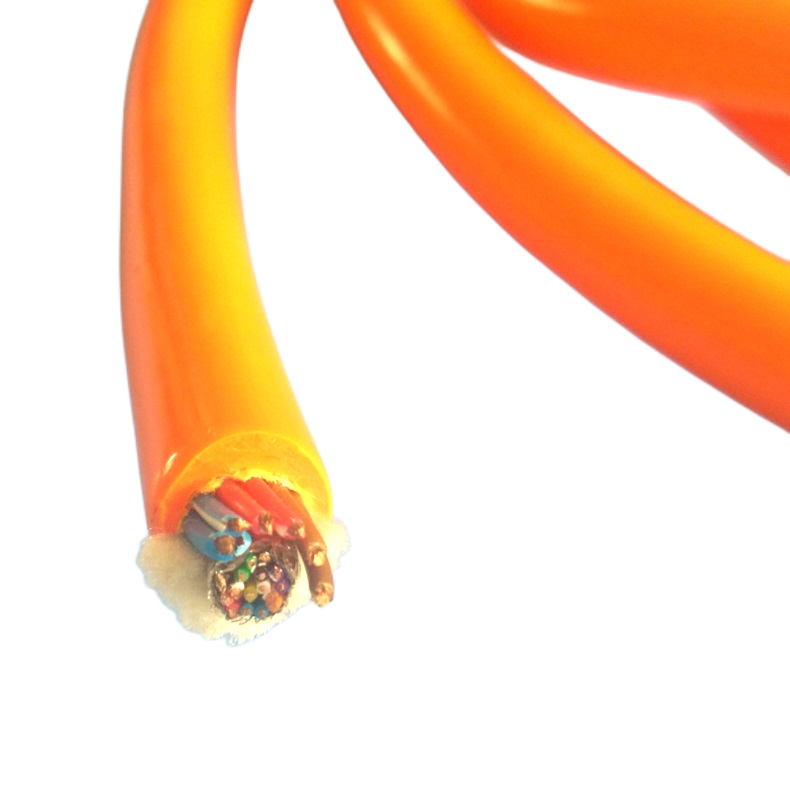
Technical Parameters
Electrical
|
Parameter |
Standard (0.6/1 kV) |
MV Option (3.6/6 kV) |
Reference |
|
Rated voltage (Uo/U) |
0.6/1 kV |
3.6/6 kV |
IEC 60502-1 |
|
Test voltage |
3.5 kV AC / 5 min |
10 kV AC / 5 min |
IEC 60502-1 Cl.17 |
|
Insulation resistance |
≥100 MΩ·km |
≥200 MΩ·km |
IEC 60502-1 Cl.18 |
|
Conductor resistance |
Per IEC 60228 Class 6; measured per drum |
Measured & certified |
IEC 60228:2004 |
|
Current derating on drum |
Factor 0.80 vs. free-air rating |
Same |
IEC 60364-5-52 Annex B Item 52 |
|
Max VD target |
5% at rated current, full cable length |
3% MV |
IEC 60364-5-52 |
Mechanical
|
Parameter |
Value |
Reference / Test |
|
Min drum core diameter (standard) |
20 × cable OD |
Internal; per IEC 62440 guidance |
|
Tensile rating (K-models) |
2 kN / 4 kN / 6 kN / 8 kN; load-tested to 1.5× |
ASTM D7269; load cell per drum |
|
Winding layers — standard jacket |
Up to 6 layers validated |
Internal compression test; ISO 815 compound qualification |
|
Winding layers — HD Port jacket |
Up to 10 layers validated |
Internal compression test |
|
Torsion rating |
±180° per metre of free cable length |
Internal torsion rig, 10,000 cycles |
|
Compressive set recovery (jacket) |
Standard: ≥85%; HD Port: ≥90% (24 h, 30% deformation) |
ISO 815:2019 |
|
Jacket Shore A hardness |
Standard: 88±2; HD Port: 90±2 |
ISO 868 |
|
Jacket tensile strength |
≥55 MPa |
ISO 37 |
|
Jacket elongation at break |
≥400% |
ISO 37 |
|
Abrasion resistance (standard) |
≥300 cycles Taber CS-17 1 kg |
ISO 9352 |
|
Abrasion resistance (HD Port) |
≥500 cycles Taber CS-17 1 kg |
ISO 9352 |
|
Oil resistance |
No swelling after 70 h at 70°C in IRM 903 mineral oil |
IEC 60811-406 |
|
Cold flex |
−40°C (standard PUR); −50°C (Arctic option) |
IEC 60811-501 |
|
UV resistance (port/outdoor) |
1,000 h xenon arc; ≤80% tensile retention |
IEC 60811-401 |
|
Seawater resistance (K + HDC marine) |
<1% tensile change after 5,000 h at 23°C |
ISO 175; internal test 2024 |
|
Flame retardancy |
IEC 60332-1 (single wire, standard); IEC 60332-3 Cat C on request |
IEC 60332 |
Verified Field Installations
Client company names withheld at client request. Crane type, location, depth/span, and technical measurements are accurate. Available for verification under NDA.
|
Installation |
Crane Details |
Cable Specified |
Problem It Replaced |
Measured Outcome |
|
Heavy EOT crane fleet, carbon steel mill, Central China (2022–2024) |
12 EOT bridge cranes, 50–125 t capacity, 200 m drum run each, 24/7 3-shift operation, ambient up to 60°C |
RST-HDC-4C-10 (HD Port jacket, XLPE insulation), 2,400 m total across 12 cranes |
Previous PVC cable: average jacket cracking at 14 months from thermal cycling. Plasticiser analysis of recovered samples confirmed 35% plasticiser loss at failure point (Rousheng material lab, 2022). |
24 months service, 12 cranes: zero unplanned cable replacements. Annual cost of cable replacement down from 18 drums/year to 0 in Year 1, 2 drums/year in Year 2 (end-of-life planning replacements only). |
|
Ship-to-shore (STS) gantry crane, container terminal, South China Sea coast (2021–2024) |
4 STS cranes, 320 m drum run per crane, saltwater spray environment, 300–350 operating days/year |
RST-HDC-K-4C-16 (Kevlar 6 kN, HD Port jacket, polyether PUR), 1,340 m total |
Previous polychloroprene rubber cable: jacket surface oxidation and cracking within 18 months from ozone and saltwater exposure. Cable replacement required hoisting the drum assembly for full crane maintenance outage. |
3 years service: jacket surface inspection at 6-month intervals shows no cracking or oxidation. Kevlar tensile proof tests at 12-month intervals: all 4 cranes passed 1.5× load (6.0 kN) without elongation change. |
|
Portal crane, iron ore terminal, East Africa (2023) |
2 portal cranes, 180 m drum run, abrasive iron ore dust environment, outdoor tropical UV, 35–42°C ambient |
RST-HDC-4C-10 with abrasion overjacket (Taber ≥600 cycles), 380 m total |
Standard flexible cable: iron ore dust ingress through guide roller abraded jacket within 8 months. UV degradation visible on outer jacket after 6 months at tropical UV levels. |
12 months service: no abrasion-through events. UV inspection at 6 months: no surface cracking (1,000 h xenon arc rated jacket). Next maintenance inspection due at 18 months. |
|
Underground coal mine reel, Shanxi Province (2023–2024) |
Continuous miner trailing reel, 280 m run, IECEx Zone 1 IIB T4 requirement, water spray from mine workings |
RST-HDC-K-4C-10 with IECEx Zone 1 IIB T4 Gb compound, Kevlar 4 kN, 300 m total |
Competitor cable: IECEx certification lapsed on previous supplier; mine safety authority issued improvement notice requiring certified replacement within 60 days. |
IECEx certificate No. [RST-IEX-2023-004] issued prior to shipment. 14 months service: conductor resistance measurements at 3-month intervals show <0.5% change. No ground fault events recorded. |
|
Tower crane fleet, urban construction, Southeast Asia (2022–2024) |
18 tower cranes, mixed fleet, 80–150 m drum run each, outdoor UV, monsoon rain, −10°C to +40°C seasonal range |
RST-HDC-4C-4.0 (standard PUR, UV-stabilised), 1,800 m total across 18 cranes |
Local PVC cables were failing at guide roller contact points within 9–12 months from UV embrittlement during dry season and cold-flex cracking during winter months. |
2 years service across 18 cranes: 2 cable replacements (one mechanical damage from third-party crane collision; one planned end-of-life). UV inspection at 12 months: no jacket cracking. Cold-flex test at site −10°C: cable remained flexible, no cracking at 10× OD bend. |
FAQ — Crane Engineers & Maintenance Managers
Q1: What is the maximum number of winding layers a PUR drum cable can handle?
Standard RST-HDC jacket compound (Shore A 88, compressive set ≥85%) is validated for up to 6 winding layers based on radial compression testing and ISO 815 compound qualification. The HD Port compound (Shore A 90, compressive set ≥90%) extends this to 10 validated layers. For installations with more than 10 winding layers, submit your drum geometry drawing to our engineering team for a radial pressure calculation on the innermost layer — above 10 layers, individual insulation wall thickness may need to be increased.
Q2: How do I calculate the correct current derating for a cable on a drum reel?
Apply a derating factor of 0.80 to the free-air current rating from IEC 60364-5-52 (installation method E). This factor applies to all cables wound on a drum in multiple layers, regardless of the number of layers, as long as the drum is stationary during current-carrying duty. For drum applications where the drum rotates continuously while carrying full load current, contact our engineering team for the specific derating applicable to your drum motor rating and rotation speed. (IEC 60364-5-52 Annex B Item 52; Rousheng Crane Engineering Note CEN-003, 2023)
Q3: Why does the Kevlar tensile member terminate at a cable grip rather than at the conductor terminations?
Copper conductors are not rated for sustained longitudinal tensile load. If the tensile load from the hanging cable is transmitted through the conductor terminations (lug crimps or terminal blocks), the copper will elongate under sustained tension, increasing resistance progressively and eventually causing strand breaks at the termination entry point. The Kevlar tensile member terminates at a separate cable grip (Kellems-type woven stainless grip) at the drum anchor bracket. The copper conductors carry only current — zero longitudinal stress. This load-path separation is mandatory for any cable where the hanging free-length weight exceeds approximately 300 N.
Q4: Can RST-HDC cables be repaired mid-length if the jacket is damaged?
A heat-shrink repair sleeve with PUR-compatible adhesive liner (such as TE Raychem MVOU) provides a mechanical sound repair if positioned in the outer winding layers (layers 4 and above on a 6-layer drum), where radial compression is lowest. Do not attempt joint repairs in the inner 3 winding layers. The joint OD must not exceed the cable OD by more than 15%, or guide roller jamming will occur at the next drum traverse. For critical crane applications, we recommend cut-to-length partial drum replacement rather than jointing — contact us for minimum-quantity partial drums (from 50 m).
Q5: What IECEx or ATEX certifications are available for mining applications?
RST-HDC-K-4C-10 and RST-HDC-K-4C-16 are available with IECEx Zone 1, Group IIB, Temperature Class T4 certification on request. The certified cable uses an IECEx-qualified jacket compound from a certified material supplier, and the cable is manufactured under our ISO 9001:2015 QMS with additional hold points at compound receiving inspection and finished cable dimensional check. Lead time for IECEx-certified models is 6–8 weeks from order confirmation. ATEX Directive 2014/34/EU certification is available for European mining applications; specify the required category (II 2G or II 3G) at order.
Q6: How do I confirm the cable is suitable for my specific crane drive voltage and VFD type?
Provide your VFD manufacturer and model, the DC bus voltage, and the switching frequency (typical: 2–16 kHz). Our engineering team will calculate the expected capacitive coupling current in the cable at your VFD’s switching frequency and confirm whether the XLPE insulation wall thickness is sufficient to keep induced currents below the VFD’s EMC specification. For drives with DC bus voltages above 750 V or peak dV/dt above 5,000 V/μs, specify the reinforced insulation wall variant (RST-HDC-RI suffix).
Manufacturer Credentials — Shanghai Rousheng Wire & Cable
|
Production & testing Dedicated large-section extrusion lines to 25 mm² per core Drum winding facility: single lengths to 1,000 m; wooden and steel drums In-house Kevlar tensile member assembly; load-tested to 1.5× per drum 100% HiPot per IEC 60502-1 Cl.17 on all finished lengths Conductor resistance certificate per drum (IEC 60228) ISO 815 compressive set test on each jacket compound batch Failure analysis service: written RCA on submitted failed cable samples — no charge |
Certifications & approvals ISO 9001:2015 quality management system CE marking — LVD Directive 2014/35/EU RoHS 2 / REACH SVHC compliance declaration per shipment IECEx Zone 1 IIB T4 Gb (available on RST-HDC-K series) ATEX Directive 2014/34/EU (available on request) DNV / Bureau Veritas type approval on request (port / marine models) CNAS-accredited third-party lab reports on request |
Chen Jiaming, Senior Reeling Cable Engineer, has led the RST-HDC design programme since 2018. Cable specifications in this page are supported by engineering notes CEN-001 through CEN-012, field data from the five installations in the Project References section, and internal test data from the RST-HDC qualification programme (HDC-FT-001 through HDC-FT-006). Customers conducting cable qualification may request relevant test reports alongside NDAs.
Request a Technical Proposal
|
Contact Email: Jerry@rstlkable.com Phone: +86-021-50759965 Mobile: +86-13482197396 Address: No. 2591 Fengzhe Road, Fengxian District, Shanghai, China Proposal within 24 hours. HiPot certificate + conductor resistance cert + compressive set test report included with every drum. |
Include in your enquiry 4. Drum core diameter (mm) and traverse width (mm) 5. Total cable run at maximum pay-out (m) 6. Operating current (A) and supply voltage (V) 7. Number of winding layers (or calculated) 8. Free-hanging cable length at maximum extension (m) 9. Environment: indoor, outdoor, marine, mining (IECEx required?) 10. VFD type and switching frequency (if applicable) We return drum compatibility check, VD calculation, current derating analysis, and model recommendation with every reply. |