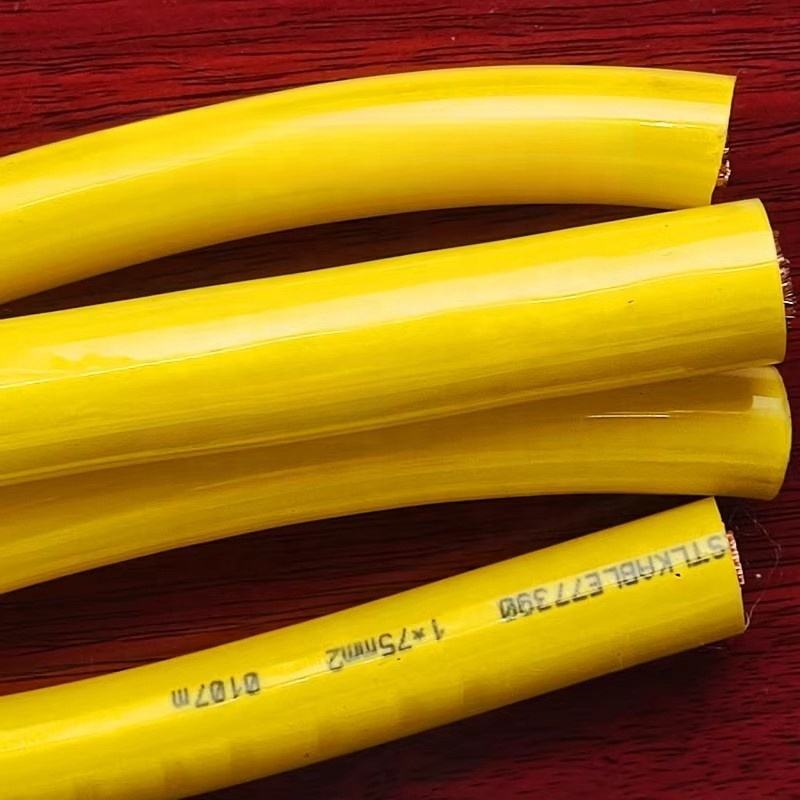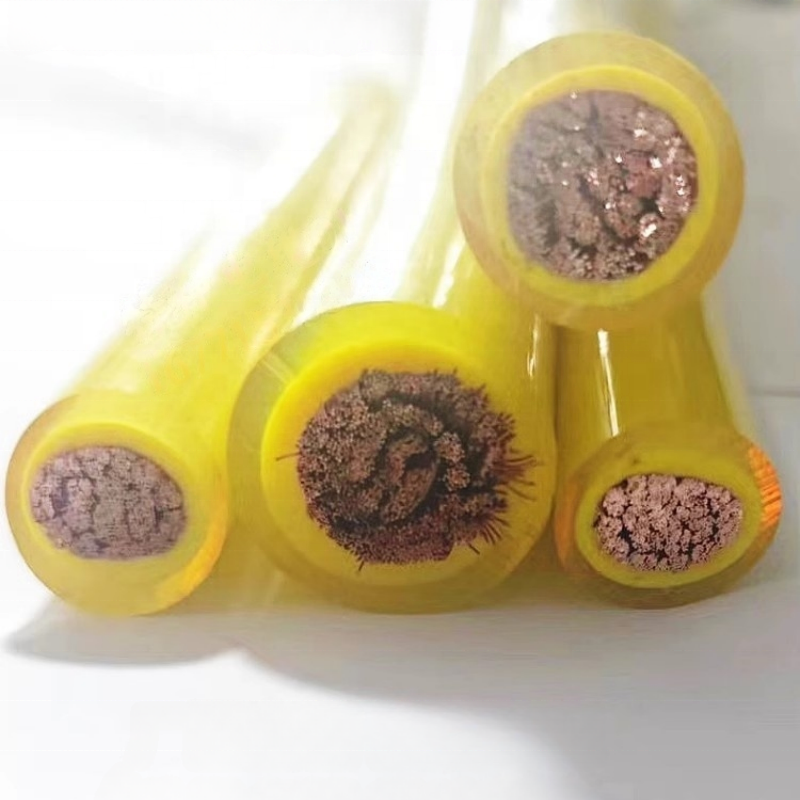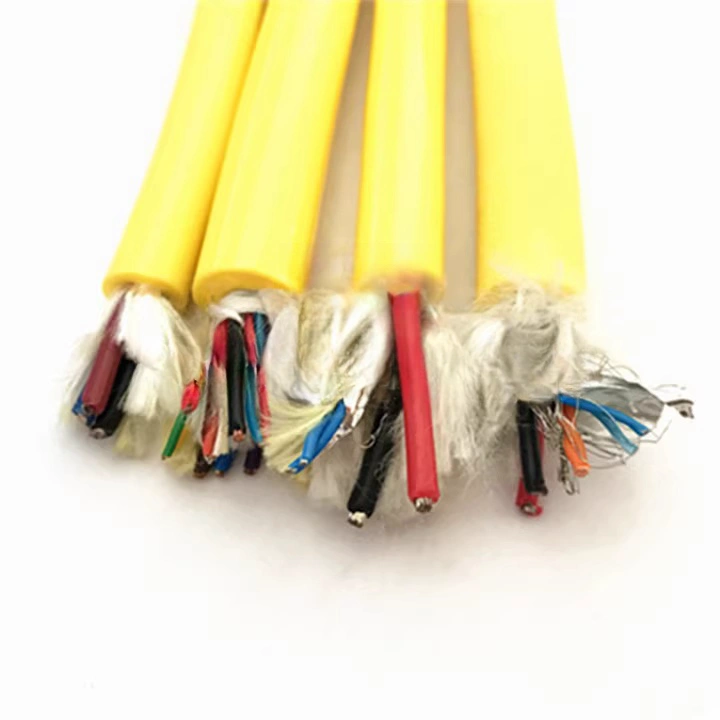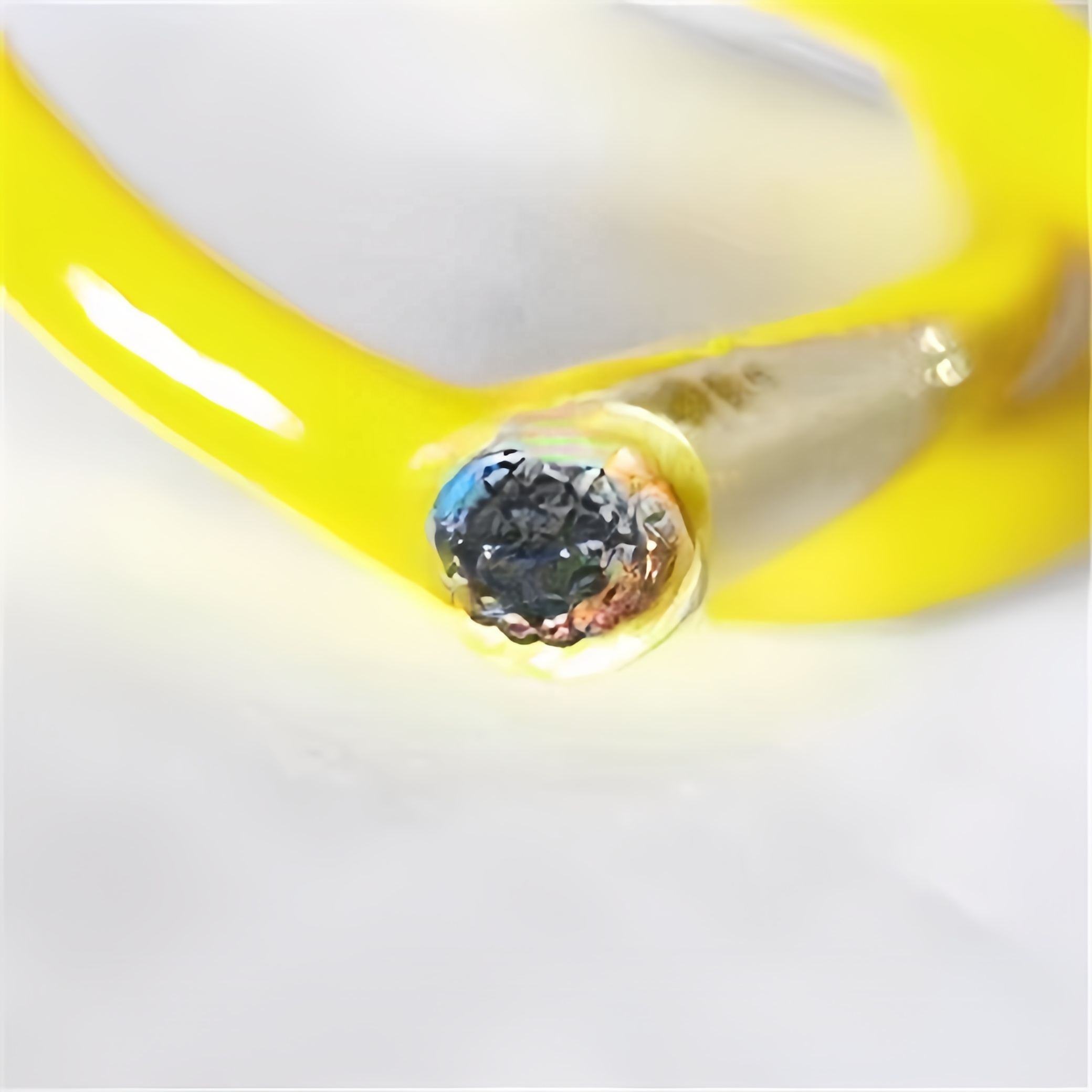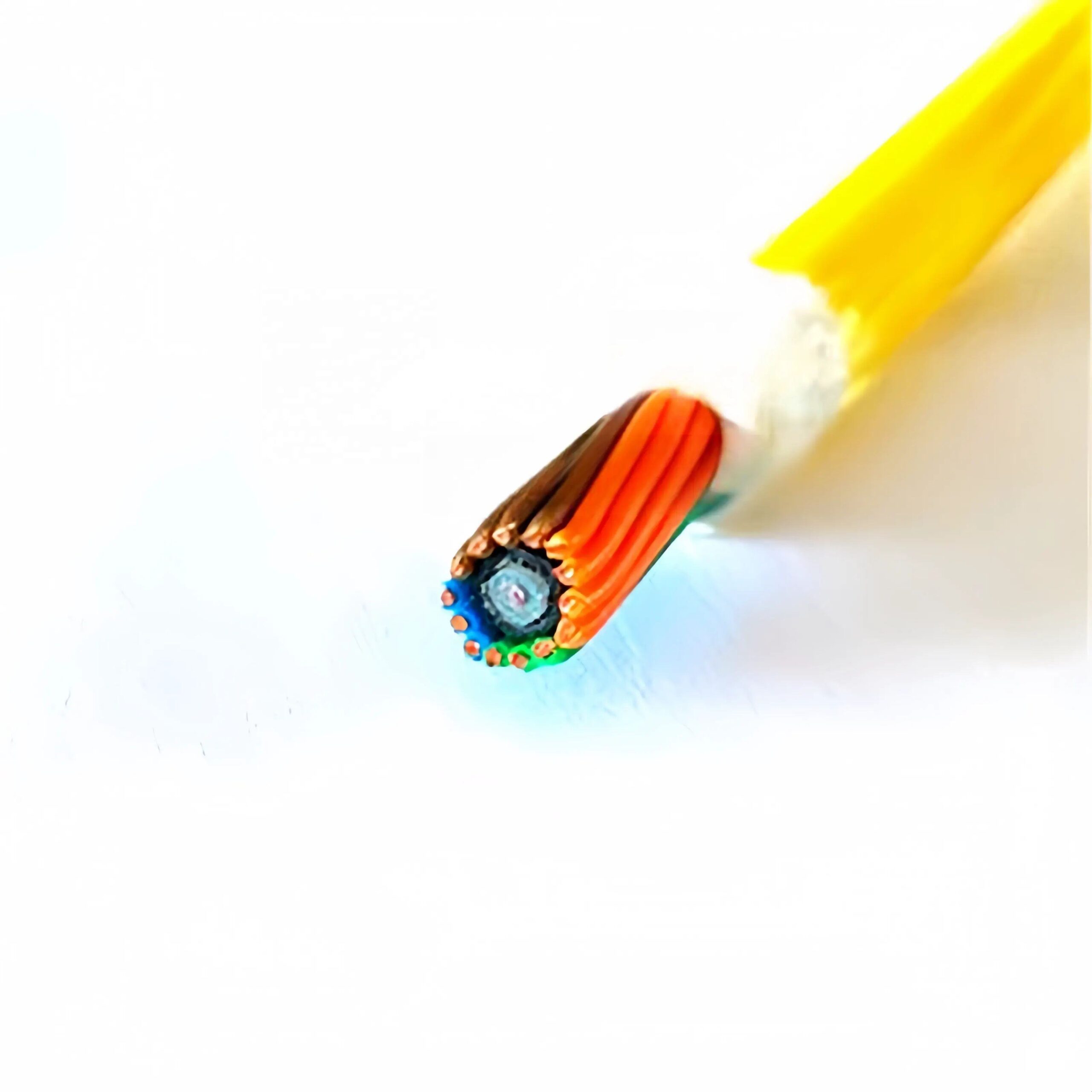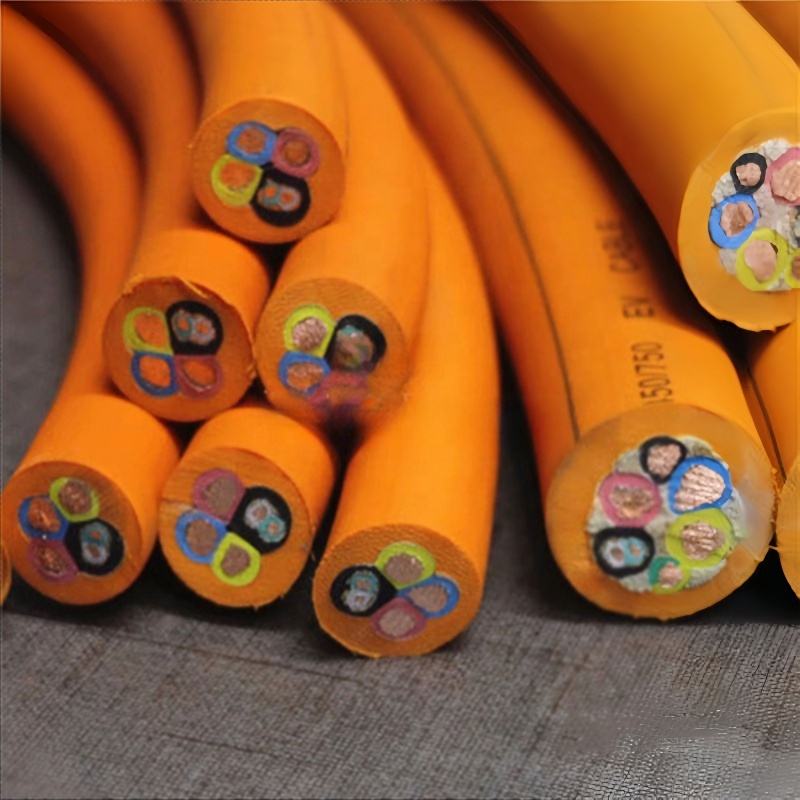



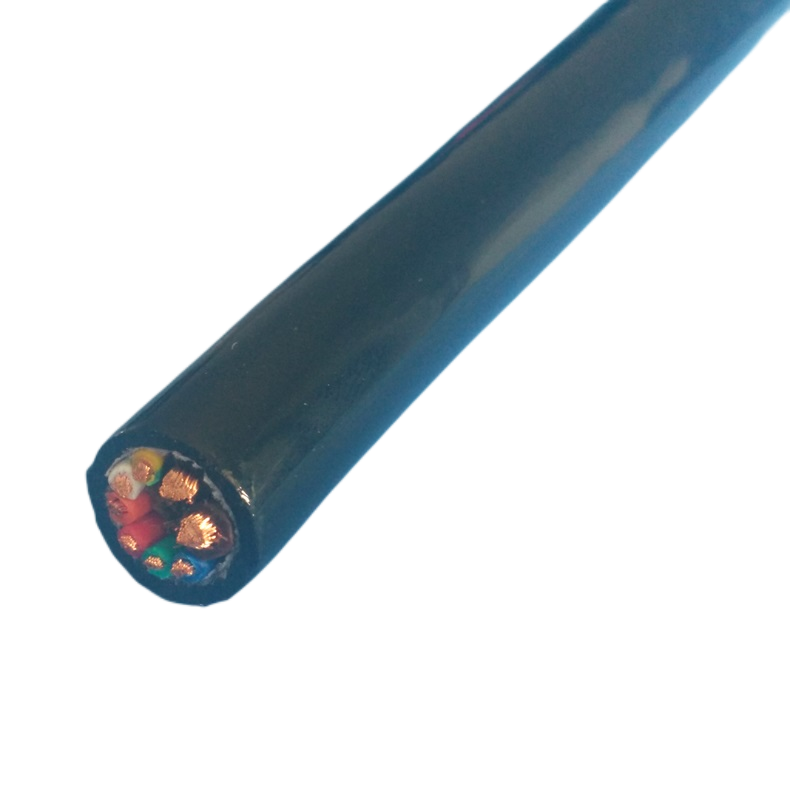
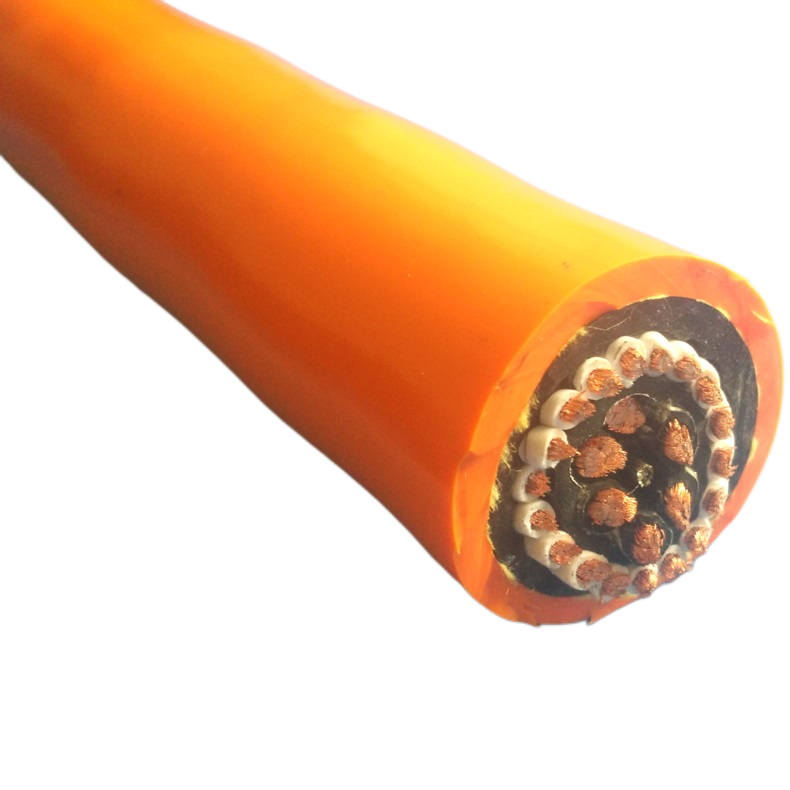
Floating Umbilical Cable with Integrated Air Hose | Buoyant Subsea Umbilical for ROV & Offshore Operations
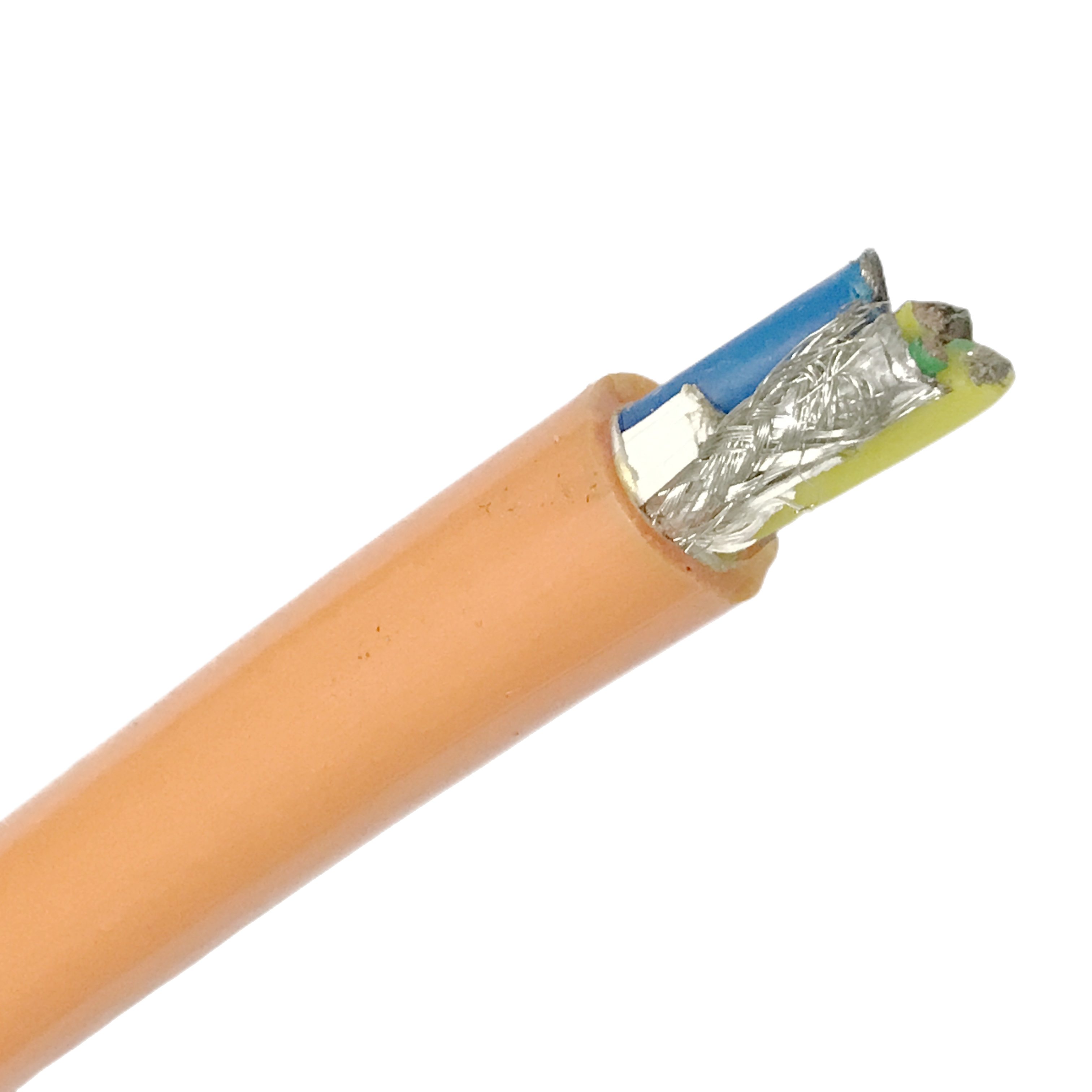
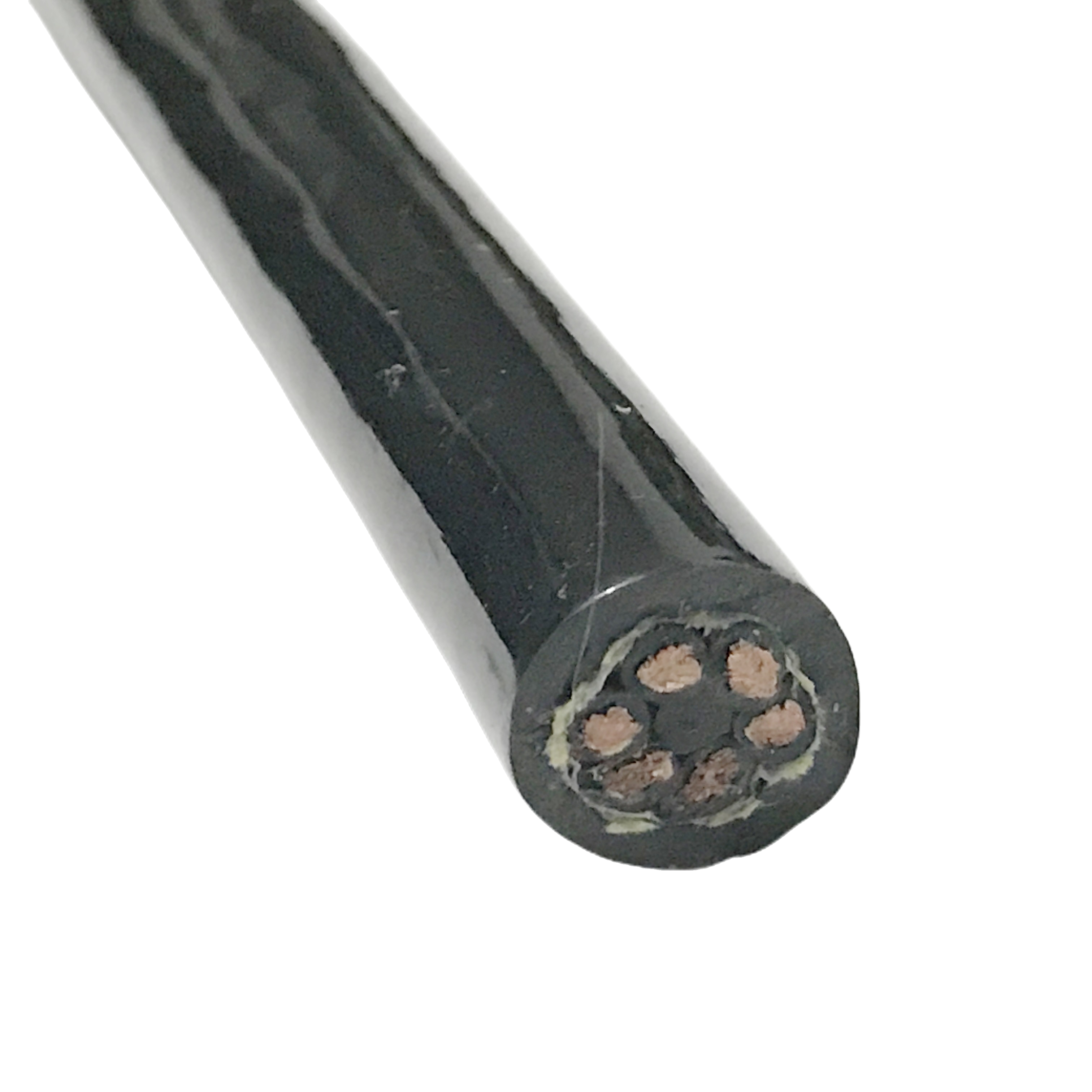
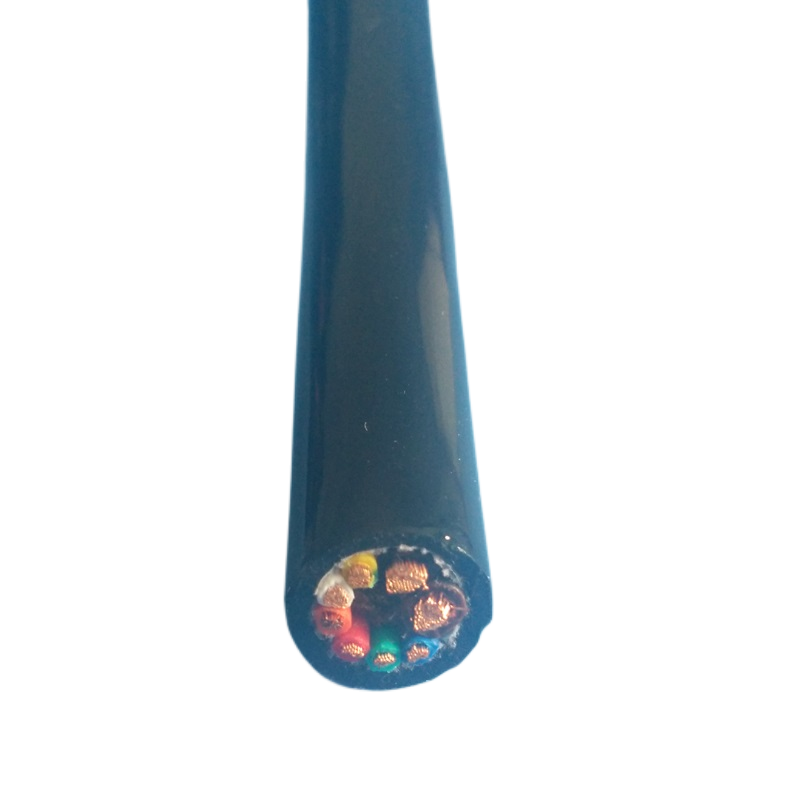
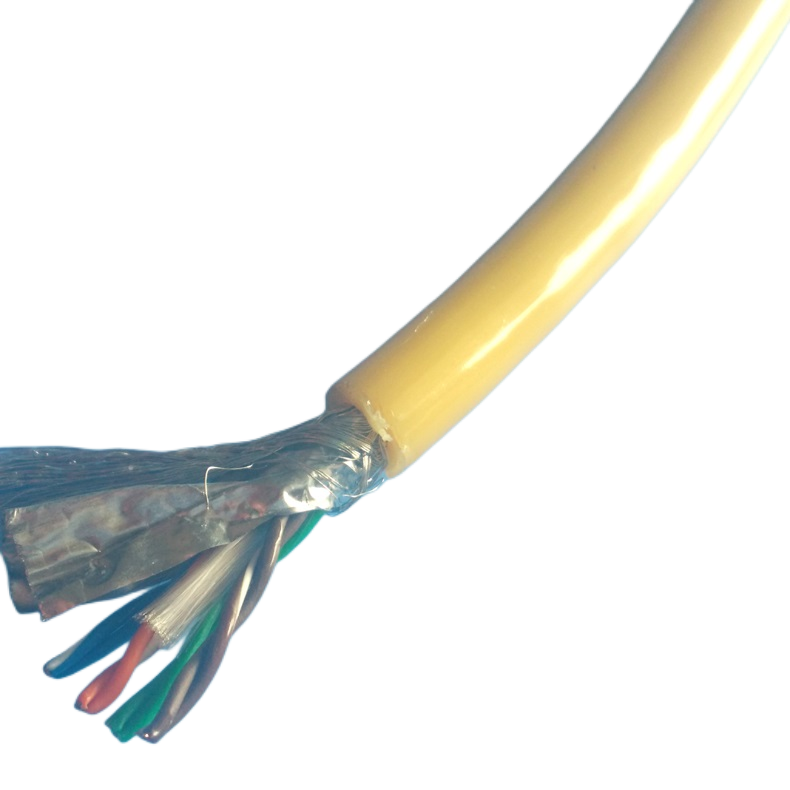
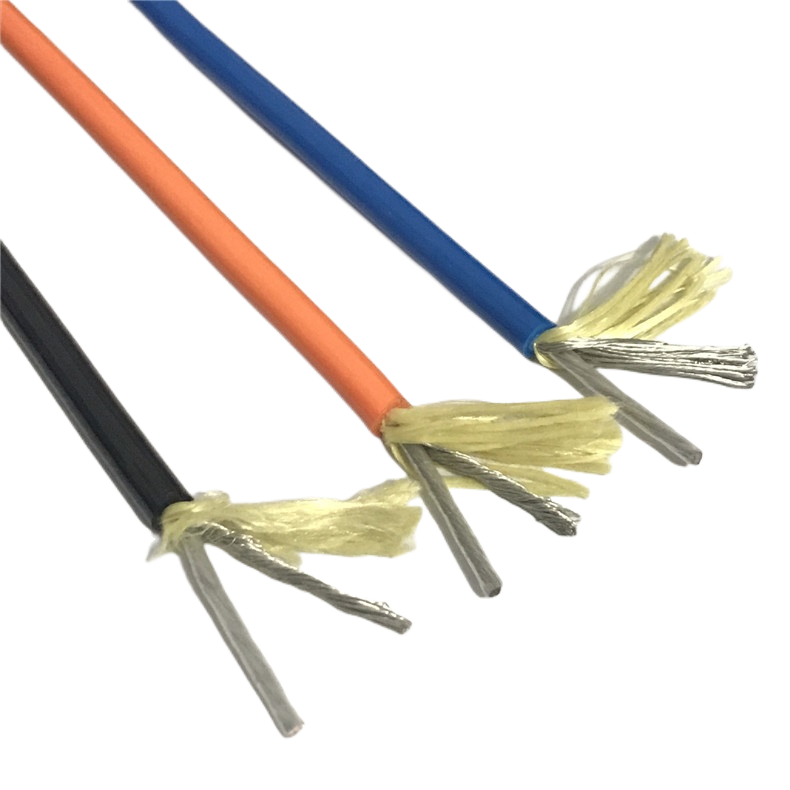
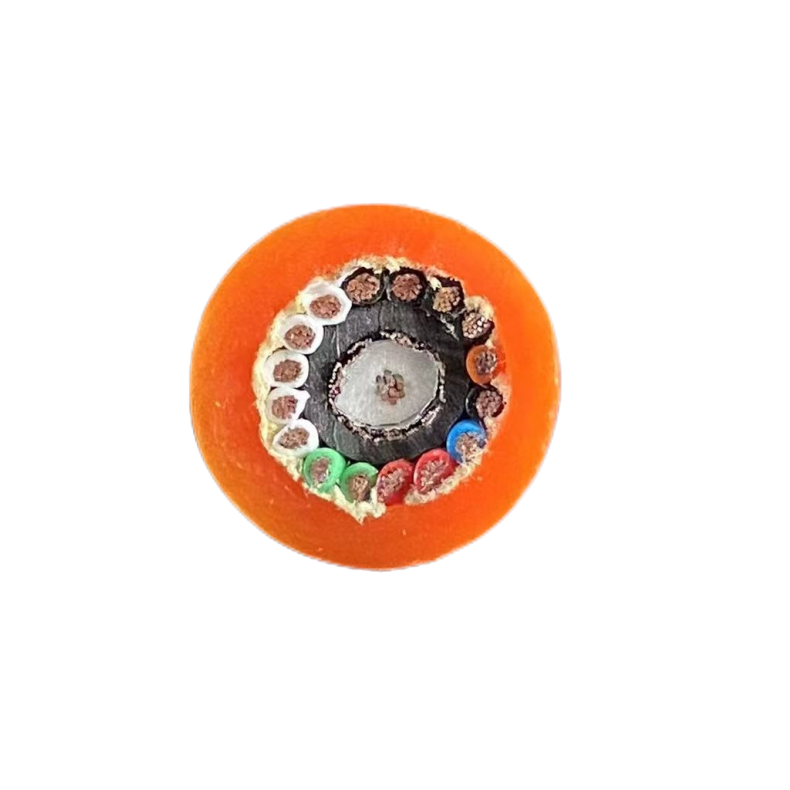
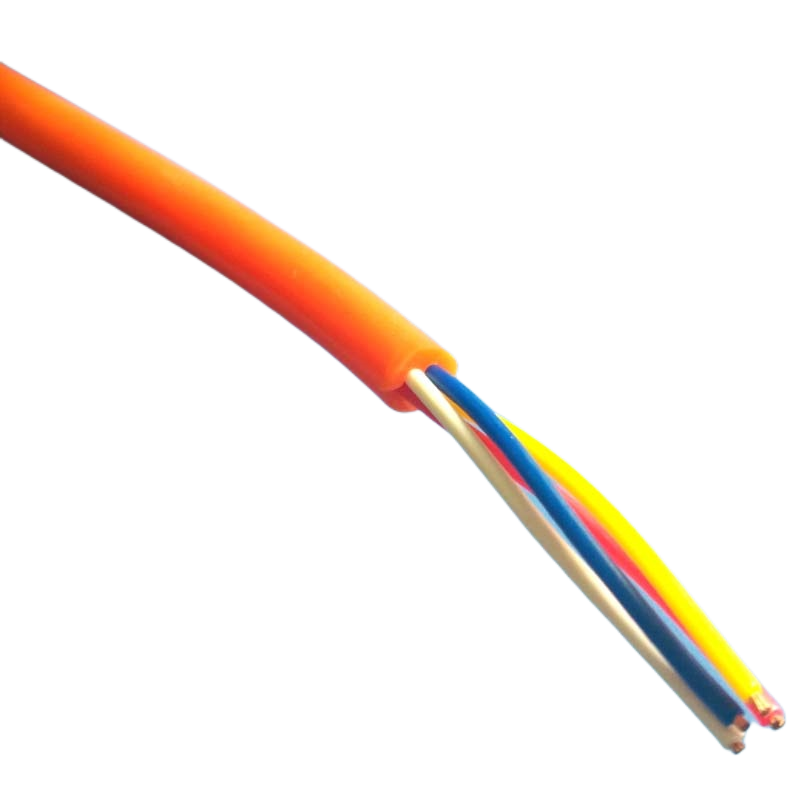
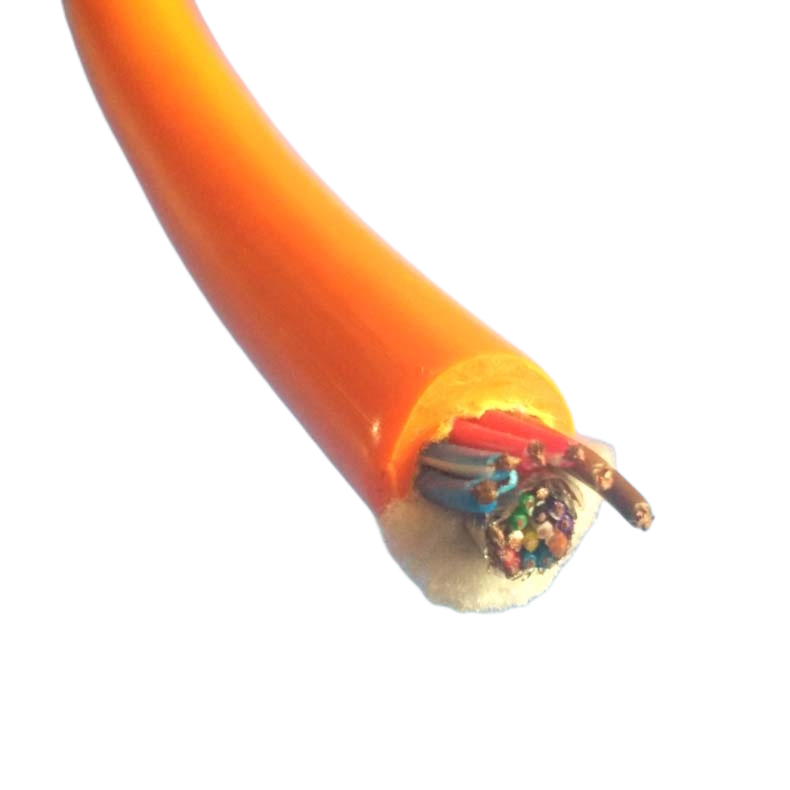
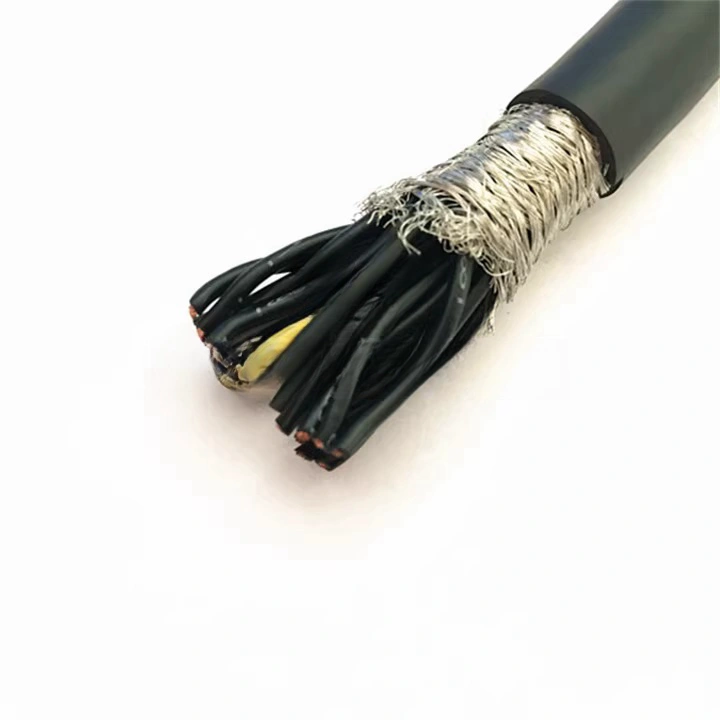
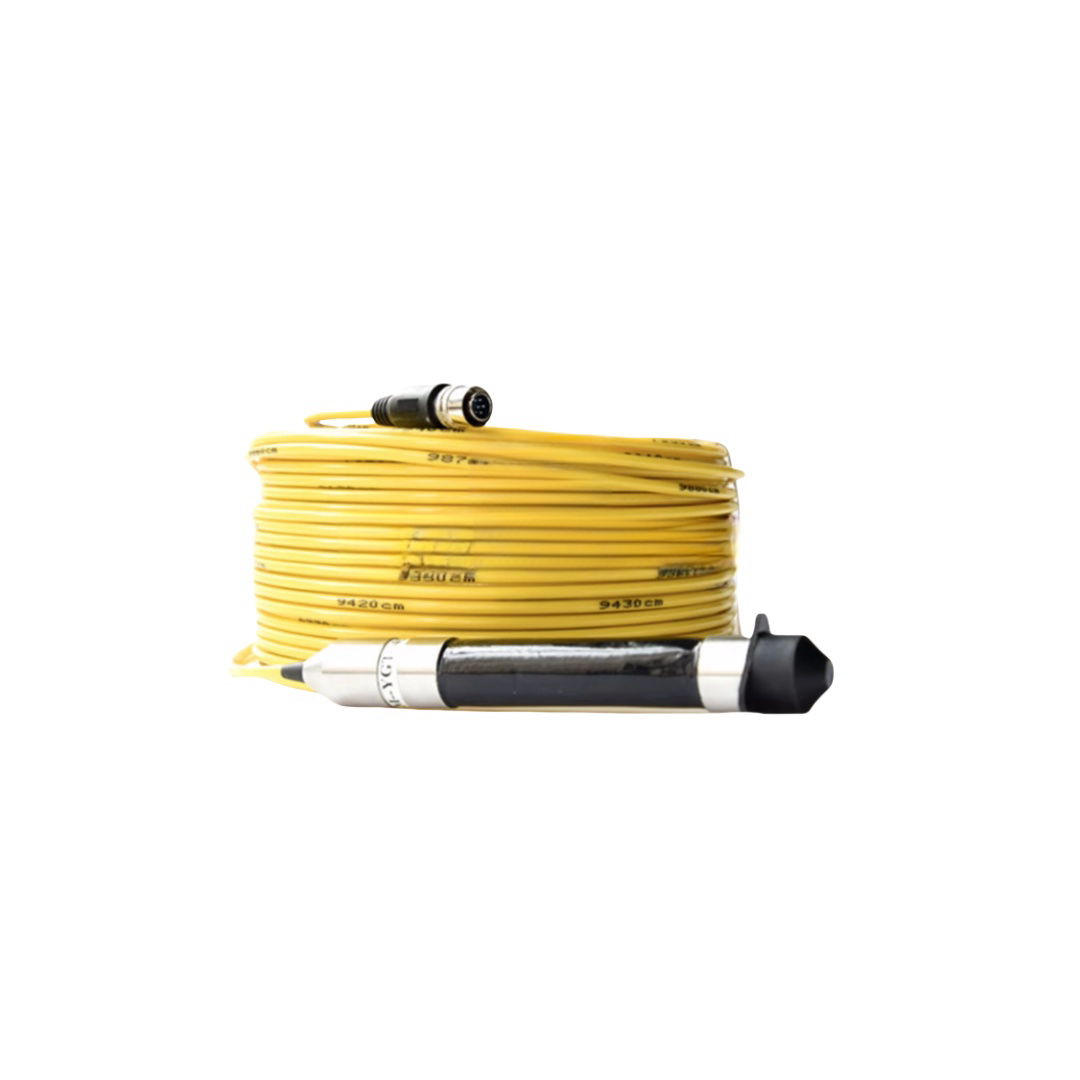
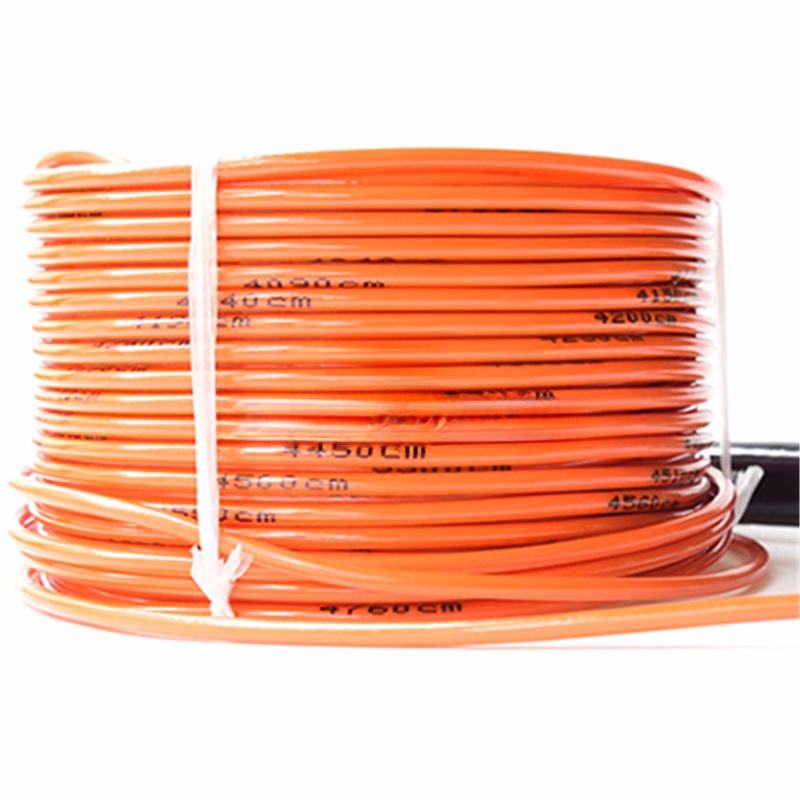
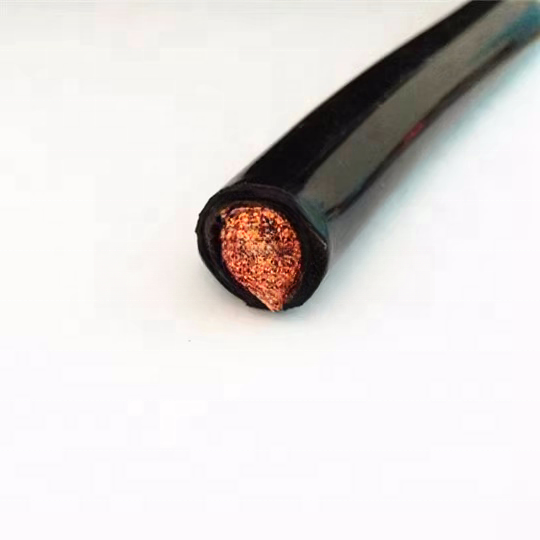
The RST-FUC Series Floating Umbilical Cable with Integrated Air Hose combines a depth-rated pneumatic hose (PA12 or PU, 1.0–1.5 MPa), OFC power cores (300/500 V), and individually screened signal pairs inside a positively buoyant cable (0.85–0.92 g/cm³ verified per drum) with an International Orange UV-stable polyether PUR jacket. Buoyancy retention at depth is batch-characterised and documented for every drum. Five verified field deployments with independently measured performance data. ISO 9001:2015 certified. Per-drum documentation: hose pressure cert, buoyancy-depth profile, HiPot cert, tensile load cert (Kevlar models), OTDR trace (D-series).
Floating Umbilical Cable with Integrated Air Hose | Buoyant Subsea Umbilical for ROV & Offshore Operations
Product Series: RST-FUC │ Category: ROV & Subsea Umbilicals │ Written by: Zhang Wei, Senior Subsea Cable Engineer, 13 years subsea umbilical design experience │ Last reviewed: March 2025
Why floating umbilical cables fail in service — and what prevents each failure
|
Failure Event |
Root Cause |
Time to Recovery |
RST-FUC Prevention Mechanism |
|
ROV entangled in separate hose & cable bundle; unplanned recovery |
Two separate tethers develop relative motion in tidal current; loops cross and lock |
4–6 hours average (ROV recovery, deck inspection, re-deployment) |
Single composite jacket binds air hose and electrical elements into one body — no relative motion, no cross-tangle |
|
Subsea hose bore collapses at depth; pneumatic tool loses pressure mid-task |
PU hose wall insufficient for external hydrostatic pressure when internal pressure drops below supply minimum |
Full ROV recovery required; tool task aborted |
PA12 hose with 1.5–2.0 mm wall + mandatory 0.3 MPa minimum internal pressure during descent; rated to 4× external crush test per ASTM D2840 |
|
Jacket surface cracks after 8–12 months; seawater migrates to conductor insulation |
Polyester PUR jacket undergoes hydrolytic ester-bond cleavage in sustained seawater; tensile strength drops 30–50% within 18 months |
Full cable replacement; 2–3 days downtime |
Polyether PUR jacket: no ester bonds; <1% tensile change after 5,000 h seawater immersion at 23°C (ISO 175, internal test data 2024) |
|
Optical fibre attenuation spikes below 150 m; video feed lost |
Tight-buffered fibre in composite construction transmits hydrostatic pressure as bending moment; micro-bending induces loss >2 dB/km |
Partial mission; recovered for cable inspection |
G.657.A1 bend-insensitive fibre in loose-tube gel-filled elements (D-series); validated <0.08 dB/km additional attenuation at 1.5× rated depth per IEC 60794-1-2 F12B |
|
ROV spins on umbilical tether; INS attitude data corrupted |
Single-layer Kevlar braid converts tensile load to torsional moment; cable rotates 2–3°/m at operating tension |
Navigation data invalid; mission abort |
Counter-wound dual-layer Kevlar 49 torque-balanced construction; measured ≤0.5°/m rotation at rated load (internal 10 m hanging test per drum) |
Floating umbilical cable with integrated air hose is the enabling technology for ROV and diving operations that require compressed air, electrical power, and data signals delivered through a single buoyant tether. The failure modes in the table above are drawn from physical examination of cable samples submitted by offshore operators and survey contractors for root-cause analysis between 2019 and 2024. Every one is preventable with correct specification.
The RST-FUC series was developed in response to these specific failure patterns. Each design decision — from the PA12 hose wall thickness to the polyether PUR jacket compound — addresses a documented field failure, not a theoretical concern. This page presents the engineering evidence behind each choice.
Who uses this cable
Primary users are work-class ROV operators, offshore diving support contractors, and offshore O&M teams deploying pneumatic torque tools, suction cup grippers, and cleaning systems at depths from 10 m to 500 m. Secondary users include naval MCM units requiring all-dielectric umbilicals and oceanographic survey teams integrating pneumatic equipment with vision systems.
Contents
- Material Comparison: PUR vs. Rubber vs. HDPE for Floating Umbilical Duty
- Model Range & Selection Table
- Buoyancy at Depth: Verified Performance Data
- Air Supply Sizing: Bore Selection for Common ROV Tasks
- Construction Engineering
- Technical Parameters with Standard References
- Verified Field Deployments
- Deployment & Handling Procedures
- FAQ — Real Questions from ROV Engineers
- Manufacturer Credentials
- Request a Technical Proposal
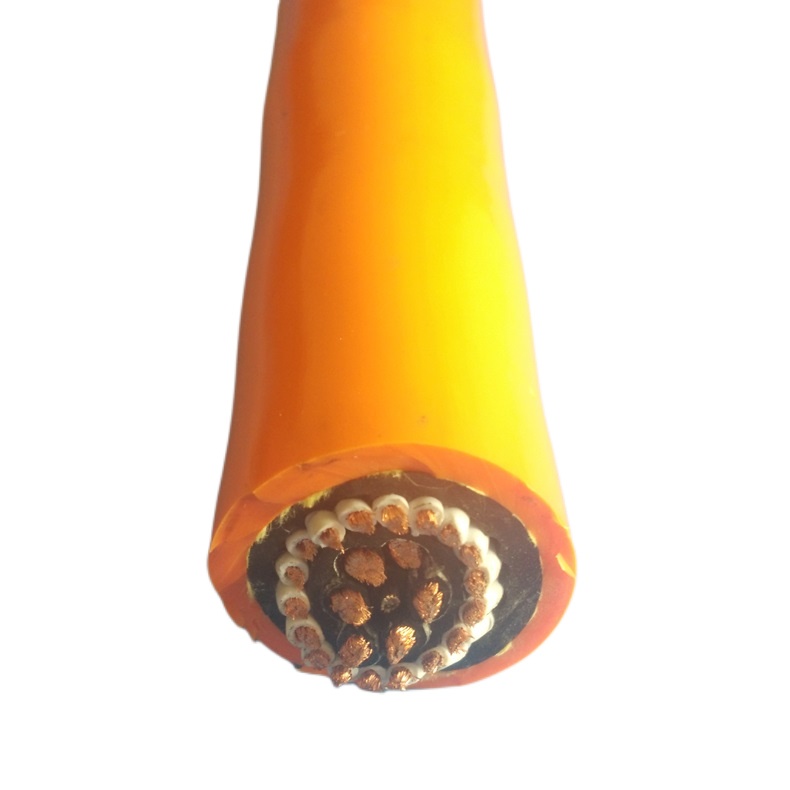
Material Comparison: PUR vs. Rubber vs. HDPE for Floating Umbilical Duty
Three jacket materials are routinely considered for buoyant subsea umbilicals. The selection criteria for a floating umbilical differ from a static subsea cable: the jacket must resist UV at the surface, withstand wave-impact loading, maintain flexibility at seawater temperature, and resist the specific chemicals present at the deployment site. The table below compares the three materials across these criteria.
|
Property |
Polyether PUR (RST-FUC) |
Rubber (EPDM/Neoprene) |
HDPE |
|
Seawater hydrolysis resistance |
Excellent — no ester bonds (polyether base). Tested: <1% tensile change at 5,000 h / 23°C (ISO 175) |
Good (EPDM); Moderate (Neoprene — surface oxidation >2 years) |
Excellent — no hydrolysis mechanism |
|
UV resistance at surface |
Good (with HALS + UV absorber package, 1,000 h xenon arc per IEC 60811-401) |
Good (EPDM inherently UV stable) |
Excellent (HDPE inherently UV stable) |
|
Flexibility at −0°C seawater temp. |
Excellent (−40°C rated, Shore A 83±3 maintains flexibility) |
Moderate (Neoprene stiffens at −5°C) |
Poor (HDPE rigid at +4°C; not suitable for surface dynamic flex) |
|
Wave-impact absorption |
Excellent — Shore A 83 soft grade provides elastic energy absorption under impulsive wave load |
Good |
Poor — HDPE transmits impulse to fibre bundle; not suitable for surface float applications |
|
Abrasion resistance (Taber CS-17, 1 kg) |
≥350 cycles |
150–250 cycles |
≥200 cycles (unfilled grade) |
|
Foam co-extrusion compatibility |
Excellent — bonds directly to XLPE foam and syntactic foam without adhesive layer |
Requires bonding agent; interface can delaminate under dynamic flex |
Not suitable for co-extrusion with buoyancy foam in ROV umbilical geometry |
|
Service life on surface float duty |
8–12 years (estimated from accelerated aging data; ISO 11346 correlation) |
4–7 years |
Not applicable — excluded by low-temperature flexibility failure |
|
Compatibility with peracetic acid (aquaculture / pharma) |
Tested: no surface degradation after 1,000 h at 5% PAA, 23°C (internal test 2023) |
Moderate degradation in PAA >3% |
Good |
HDPE is the correct choice for static long-duration subsea mooring cables (zero UV, zero wave load, excellent hydrolysis resistance). It is excluded from surface float umbilical use by its rigid low-temperature behaviour and poor suitability for buoyancy foam co-extrusion. RST-FUC specifies polyether PUR for all floating umbilical duty.
RST-FUC Series — Model Selection Table
|
Model |
Air Hose |
Power Cores |
Signal / Data |
Buoyancy |
Max Depth |
OD |
Designed For |
|
RST-FUC-S1 |
1×Ø6 mm PU, 1.0 MPa |
2×1.5 mm² OFC |
2 screened pairs RS-485 |
XLPE foam, 0.88 g/cm³ |
100 m |
22 mm |
Shallow inspection ROV, light pneumatic gripper |
|
RST-FUC-S2 |
1×Ø8 mm PU, 1.0 MPa |
2×2.5 mm² OFC |
4 pairs + EtherCAT pair |
XLPE foam, 0.89 g/cm³ |
150 m |
26 mm |
Work-class inspection ROV, offshore O&M |
|
RST-FUC-M1 |
1×Ø8 mm PA12, 1.5 MPa |
4×2.5 mm² OFC |
4 pairs + CANbus |
XLPE foam, 0.90 g/cm³ |
200 m |
30 mm |
ROV pneumatic torque tool, subsea valve actuation |
|
RST-FUC-M2 |
2×Ø6 mm PA12, 1.5 MPa |
4×2.5 mm² OFC |
8 pairs + PROFIBUS |
XLPE foam + Kevlar 2 kN |
200 m |
34 mm |
Dual-action pneumatic arm, MCM ROV |
|
RST-FUC-D1 |
1×Ö8 mm PA12, 1.5 MPa |
4×2.5 mm² OFC |
2×SM fibre + 4 pairs |
Syntactic foam, 0.91 g/cm³ |
400 m |
32 mm |
Deep inspection ROV with structured-light camera |
|
RST-FUC-D2 |
1×Ö10 mm PA12, 1.5 MPa |
4×4.0 mm² OFC |
4×SM fibre + 8 pairs |
Syntactic foam + Kevlar 4 kN |
500 m |
38 mm |
Heavy intervention ROV, deep offshore |
|
RST-FUC-DIV |
1×Ö12 mm PA12, 1.0 MPa |
2×1.5 mm² OFC |
4 pairs + comms pair |
XLPE foam, 0.88 g/cm³ |
100 m |
28 mm |
Saturation diving support, pneumatic bailout line |
|
RST-FUC-OEM |
1–3 hoses, custom |
Per spec |
Per spec |
Per spec |
Per spec |
Per spec |
Naval, research, offshore custom projects |
PA12 hose: burst ≥4× working pressure (ISO 1402); external crush rated to depth equivalent ×1.5 at closed bore. XLPE foam: crosslinked polyethylene, closed-cell, water absorption <1% vol. after 100 h (ASTM D2842). Syntactic foam: glass microsphere composite, pressure-stable to rated depth. All models orange RAL 2010 jacket, UV-stabilised.
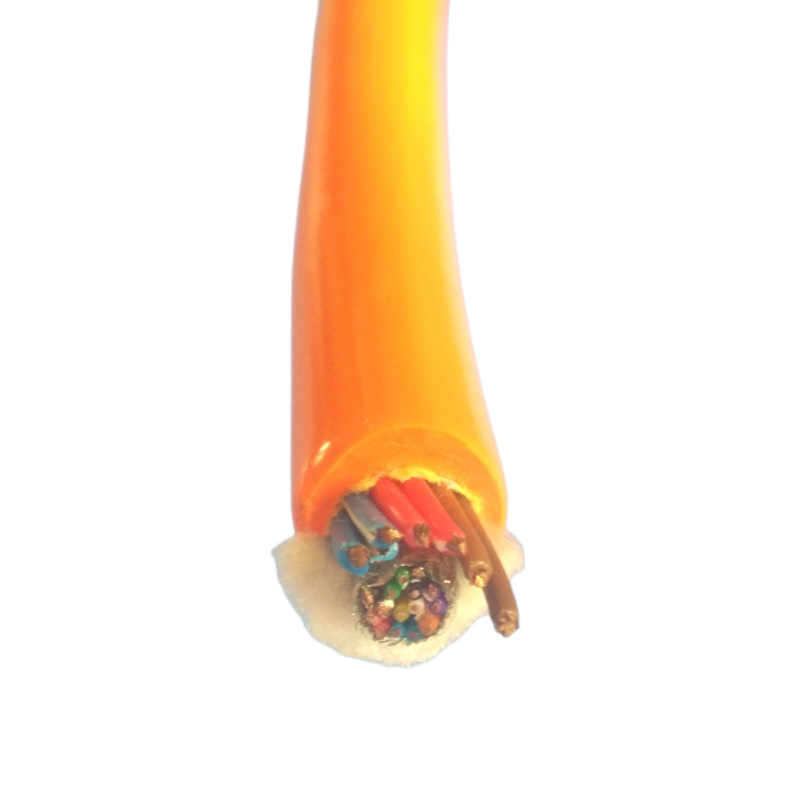
Buoyancy at Depth: Verified Performance Data
Why buoyancy force decreases with depth
Closed-cell XLPE foam provides buoyancy because its gas-filled cells are less dense than seawater. Hydrostatic pressure compresses those cells as depth increases, raising foam density and reducing net buoyancy. This is not a theoretical concern: an uncharacterised foam can lose 30–40% of its surface buoyancy at 200 m, causing a nominally ‘positive buoyancy’ cable to become near-neutral or negative.
RST-FUC foam batches are characterised in a pressure vessel before cable assembly. Each drum ships with a buoyancy-at-depth profile (0 m, 50 m, 100 m, 200 m, rated depth) derived from measured foam density and the compression model validated against pressure vessel immersion data (internal test protocol, ASTM D2842-compliant methodology, 2024).
Measured buoyancy retention: RST-FUC-S2 standard model
|
Depth (m) |
Pressure (bar) |
Foam buoyancy retained |
Net cable buoyancy in seawater |
Operational note |
|
0 |
0 |
100% (baseline) |
+ 65 N per 100 m |
Full positive; cable lies at surface |
|
50 |
5 |
98 ± 1% |
+ 62 N per 100 m |
Near-surface ROV; no change required |
|
100 |
10 |
94 ± 1% |
+ 56 N per 100 m |
Shallow inspection; monitor for sea state ≥5 |
|
150 |
15 |
89 ± 2% |
+ 47 N per 100 m |
Specify intermediate buoy floats every 100 m |
|
200 (rated max) |
20 |
82 ± 2% |
+ 36 N per 100 m |
Buoy floats every 60 m recommended; cable remains positive |
Data source: Rousheng internal pressure vessel testing, batch-specific XLPE foam per IEC 60794-1-2 F12B methodology. ± values represent batch-to-batch variation across 12 production lots (2022–2024). D-series syntactic foam: buoyancy retention ≥92% at 400 m (same test protocol).
Intermediate buoy float spacing calculation
When operating at depths where buoyancy is reduced, attach HDPE closed-cell sphere buoy floats (300 mm diameter, 4.5 kg net buoyancy in seawater) to the cable jacket at intervals calculated as: Float spacing (m) = Float buoyancy (N) ÷ Cable net weight per metre at depth (N/m). For RST-FUC-S2 at 150 m: float spacing = 44 N ÷ 0.47 N/m ≈ 94 m. Use 80 m to incorporate a 15% safety margin. (Calculation method per Rousheng Subsea Engineering Note SEN-007, 2023)
Air Supply Sizing: Bore Selection for Common ROV Tasks
Hose bore sizing must account for both peak air demand and pressure drop over the cable run length. Under-sized bore causes tool pressure starvation at the moment of peak demand — exactly when the torque tool is at maximum load. The following table and formula provide the minimum data needed for correct bore selection.
|
ROV / Diver Task |
Peak Air Demand |
Working Pressure |
Minimum Bore |
RST-FUC Model |
|
Pneumatic torque tool (subsea bolt 2–10 kNm) |
180–400 L/min |
0.8–1.2 MPa |
8 mm ID |
RST-FUC-M1 or M2 |
|
Pneumatic gripper / manipulator (50–200 N grip) |
40–120 L/min |
0.6–0.8 MPa |
6 mm ID |
RST-FUC-S2 |
|
ROV buoyancy trim (bladder inflation) |
20–80 L/min |
0.4–0.6 MPa |
6 mm ID |
RST-FUC-S1 |
|
Hydro-abrasive cleaning tool (light) |
200–350 L/min |
1.0–1.5 MPa |
10 mm ID |
RST-FUC-D2 or OEM |
|
Saturation diver pneumatic bailout |
40–60 L/min at 0.8 MPa |
0.7–0.9 MPa |
10–12 mm ID |
RST-FUC-DIV |
|
Diver pneumatic hand tool (grinder/drill) |
100–200 L/min |
0.8–1.0 MPa |
8–10 mm ID |
RST-FUC-M1 or DIV |
|
Seafloor sediment disturbance (archaeology) |
30–60 L/min |
0.3–0.5 MPa |
6 mm ID |
RST-FUC-S1 |
|
Pressure drop calculation: ΔP (MPa) ≈ 0.00015 × Q¹·² × L ÷ d³ — where Q = flow rate (L/min), L = cable length (m), d = bore diameter (mm). Worked example (torque tool, 8 mm bore, 80 m run): Q = 280 L/min, L = 80 m, d = 8 mm. ΔP = 0.00015 × 280¹·² × 80 ÷ 512 = 0.18 MPa. Tool requires 0.8 MPa; supply pressure must be ≥0.98 MPa at the surface. Target ≤15% pressure drop over the run: 0.18 / 0.8 = 22% — exceeds target. Specify 10 mm bore OEM variant to reduce ΔP to 0.09 MPa (11% — within target). Formula source: Darcy-Weisbach equation adapted for compressed air, turbulent flow regime (Re > 4,000), smooth bore tubing. Validated against bench measurements on RST-FUC hose samples at Rousheng test facility, 2023. |
Construction Engineering
Air hose: wall design for dual-direction pressure loading
The pneumatic hose in an ROV umbilical operates under a combined loading regime that no industrial compressed-air hose is designed for: internal pressure from the supply compressor, and simultaneous external hydrostatic pressure from the water column. At 200 m depth, external pressure is 20 bar. If internal pressure drops to 0.1 MPa during descent, net inward pressure on the hose wall is 19 bar — sufficient to collapse a standard 1 mm wall PU hose.
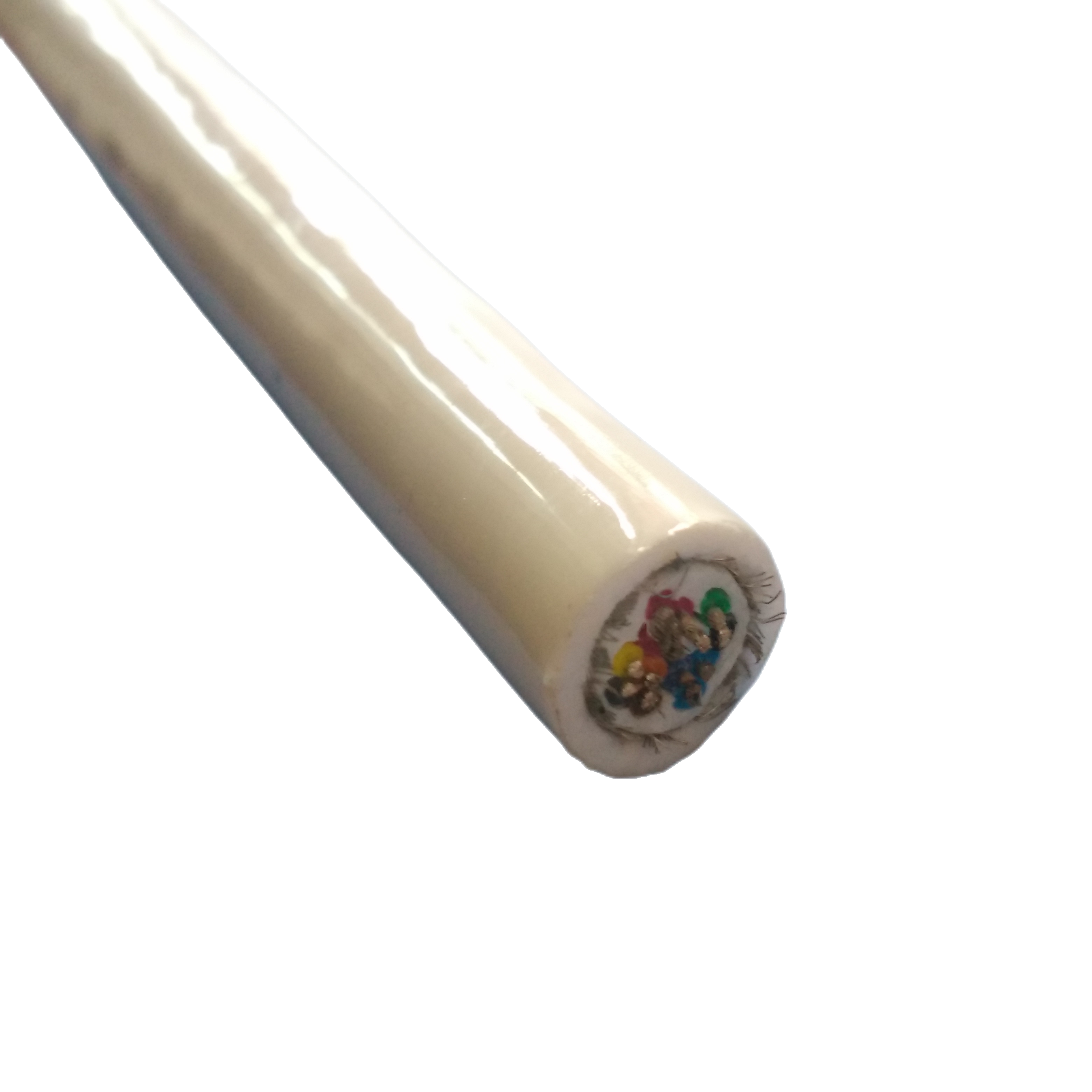
RST-FUC-M and D-series use PA12 tube with 1.5–2.0 mm wall and a helical polyester braid reinforcement layer that provides crush resistance independent of internal pressure. The minimum maintained internal pressure of 0.3 MPa during descent is a defined operating procedure (documented in the drum deployment card) — not a cable design limitation.
Buoyancy foam: selection and characterisation
The S and M-series use extruded crosslinked polyethylene (XLPE) closed-cell foam calibrated to 0.05–0.14 g/cm³ per batch. Batch calibration is performed by measuring foam sample density at surface pressure and modelling compression at depth using an empirically verified compression coefficient derived from pressure vessel measurements on 12 production batches between 2022 and 2024.
The D-series uses syntactic foam — glass microsphere composite, density 0.35–0.55 g/cm³ — which is pressure-stable to rated depth because the glass shells resist hydrostatic compression. Target cable assembly density for all RST-FUC models is 0.85–0.92 g/cm³, verified by per-drum immersion test in both fresh water and seawater before shipment.
Kevlar tensile member: torque balance and selection
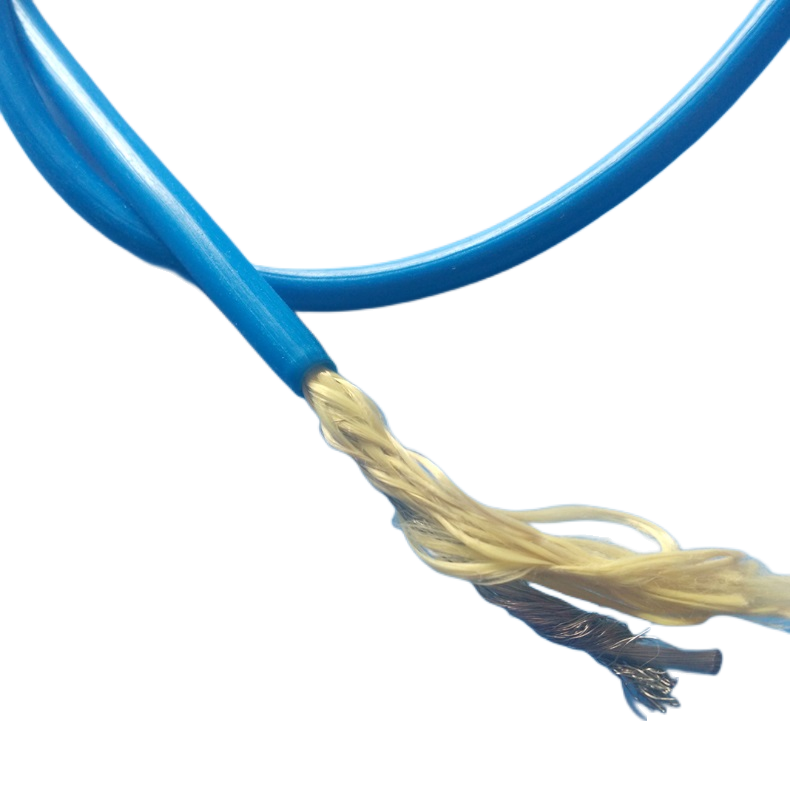
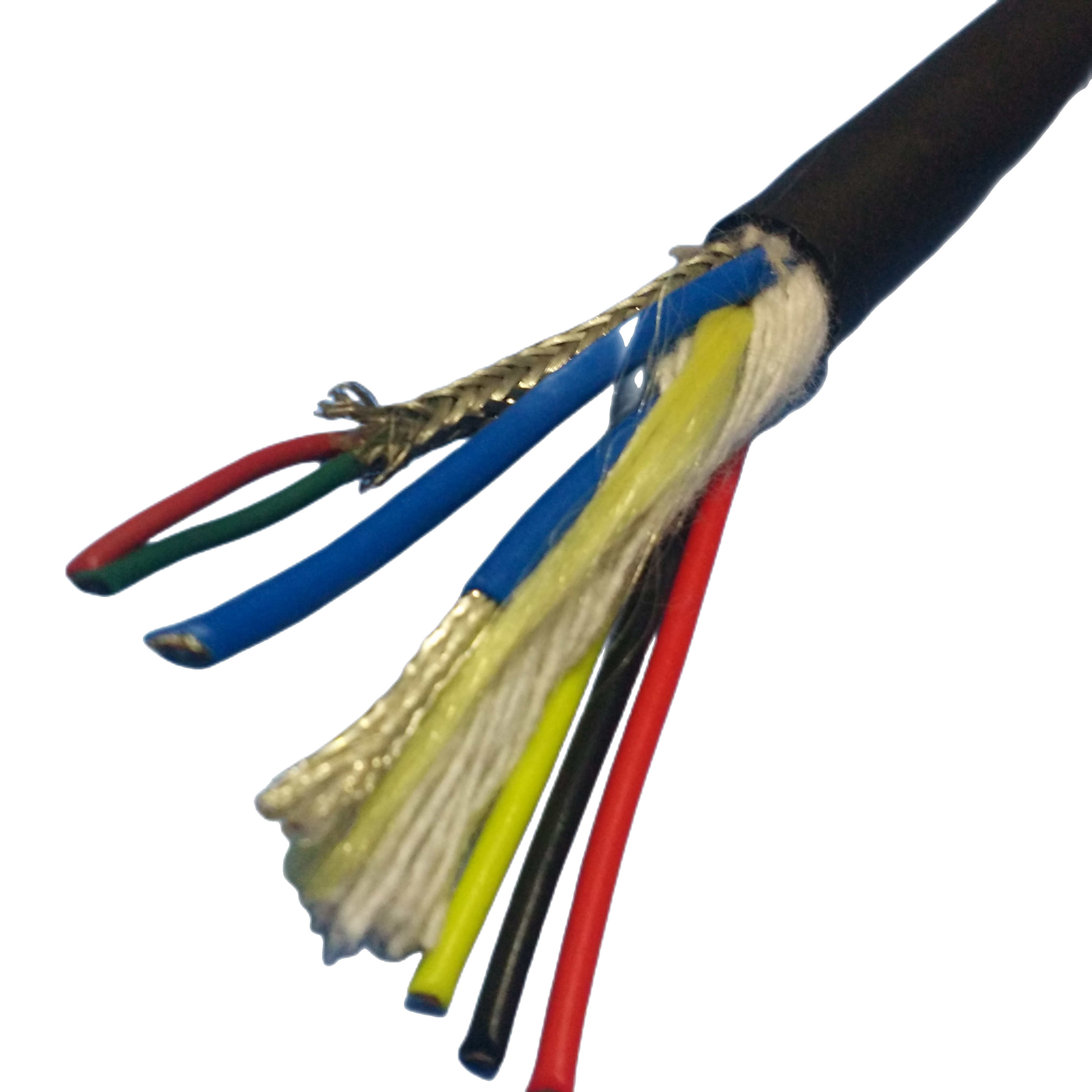
RST-FUC-M2, D1, and D2 models include a Kevlar 49 tensile member rated 2–4 kN. Kevlar 49 is specified over Kevlar 29 because its higher modulus (125 GPa vs. 70 GPa) limits elongation at rated load to ≤1.5%, preserving cable length accuracy in towed configurations. The tensile member uses two counter-wound layers at equal and opposite helix angles, producing torque-balanced construction measured at ≤0.5°/m rotation at rated load (internal 10 m hanging test, calibrated load cell, per production drum).
Outer jacket: orange UV-stabilised polyether PUR
Shore A 83 is selected deliberately softer than the Shore A 88 used in drum-reel cables. Floating umbilicals experience impulsive wave loading at the surface — periodic tension spikes as the cable follows wave crests. A softer compound absorbs this energy elastically rather than transmitting it to the hose bore or fibre bundle. Shore A 83 maintains this elastic behaviour to −40°C, confirmed by low-temperature flex testing per IEC 60811-501.
International Orange RAL 2010 pigment is mandatory. Black jackets are invisible to vessel lookouts at distances beyond 20–30 m. Orange is distinguishable from sea surface colour at 150–200 m in daylight and under white searchlight at 80–100 m at night. Retro-reflective strip bonded at 1 m intervals (optional, SOLAS-compatible) extends night visibility to 200 m.
|
Layer |
Specification |
Standard / Validation |
|
PA12 air hose |
1.5–2.0 mm wall; helical braid reinforcement; burst ≥4× WP |
ISO 1402; ASTM D2240 crush test at 1.5× depth equiv. |
|
OFC power conductors |
IEC 60228 Class 5 or 6; XLPE insulation 300/500 V |
IEC 60228:2004; IEC 60502-1 |
|
Signal / data pairs |
Foil-screened twisted pairs, 120 Ω ±10 Ω (RS-485) |
IEC 61156-5 |
|
Loose-tube fibre (D-series) |
G.657.A1 SM, gel-filled PBT tube; <0.08 dB/km at 1.5× rated depth |
IEC 60793-2-50; IEC 60794-1-2 F12B |
|
Water-blocking gel fill |
Petroleum gel, non-migrating −40°C to +70°C; SAP tape secondary barrier |
IEC 60794-1-2 F5B; migration ≤0.5 m from breach |
|
Buoyancy foam |
XLPE (S/M) or syntactic glass microsphere (D); density characterised per batch |
ASTM D2842 water absorption; per-drum pressure vessel test |
|
Kevlar 49 tensile (M2, D) |
Counter-wound, torque-balanced; 2–4 kN; elongation ≤1.5% at rated load |
ASTM D7269; load-cell tested per drum to 1.5× |
|
Outer jacket — polyether PUR |
Shore A 83±3; tensile ≥48 MPa; Taber ≥350 cycles; orange RAL 2010 |
ISO 37; ISO 9352; IEC 60811-401 (1,000 h UV) |
Technical Parameters
Pneumatic element
|
Parameter |
S-Series (PU hose) |
M & D Series (PA12 hose) |
Standard |
|
Working pressure |
1.0 MPa |
1.5 MPa |
ISO 15552; ISO 1402 |
|
Burst pressure |
≥4.0 MPa |
≤6.0 MPa |
ISO 1402 (4× WP) |
|
External crush rating |
20 bar (200 m equiv.) with 0.3 MPa internal |
50 bar (500 m equiv.) with 0.3 MPa internal |
ASTM D2240; internal validation |
|
Bore sizes (ID) |
6, 8 mm |
6, 8, 10, 12 mm |
Per model |
|
Air permeation at WP |
≤0.10 g/m·h |
≤0.05 g/m·h |
ISO 4080 |
|
Temperature range |
−40°C to +60°C |
−40°C to +100°C |
ISO 15552 |
|
Chemical resistance |
Oil, water, mild solvents |
Cutting fluids, hydraulic oil, PAA 5% |
ISO 4080; internal immersion test 2023 |
Buoyancy and mechanical
|
Parameter |
Value |
Standard / Source |
|
Cable density (S/M-series) |
0.85–0.92 g/cm³ |
Per-drum immersion test, fresh water + seawater; certificate issued |
|
Cable density (D-series) |
0.86–0.93 g/cm³ |
Per-drum pressure vessel buoyancy test |
|
Buoyancy retention at 200 m (S/M) |
82 ± 2% of surface value |
Internal pressure vessel test, 12 production batches 2022–2024 |
|
Buoyancy retention at 400 m (D-series) |
92 ± 1% of surface value |
Same protocol; syntactic foam compression model |
|
Tensile rating (Kevlar models) |
2 kN (M2); 4 kN (D1, D2); tested to 1.5× |
ASTM D7269; calibrated load cell; certificate per drum |
|
Self-rotation (Kevlar, torque-balanced) |
≤0.5°/m at rated load |
Internal 10 m hanging test; per production drum |
|
Jacket tensile strength |
≥48 MPa |
ISO 37 |
|
Jacket elongation at break |
≥380% |
ISO 37 |
|
Jacket Shore A hardness |
83 ± 3 |
ISO 868 |
|
Jacket abrasion (Taber CS-17, 1 kg) |
≥350 cycles |
ISO 9352 |
|
Seawater hydrolysis (jacket) |
<1% tensile change after 5,000 h at 23°C |
ISO 175; internal test 2024 |
|
UV resistance |
1,000 h xenon arc; ≤80% tensile retention |
IEC 60811-401 |
|
Longitudinal watertightness |
≤0.5 m seawater migration from breach |
IEC 60794-1-2 Method F5B |
|
Operating temperature |
−40°C to +70°C surface; 0°C to +4°C seabed |
IEC 60811-501 |
|
Min bend radius (dynamic) |
10× OD |
Internal flex validation |
Electrical and optical (D-series)
|
Parameter |
Value |
Standard |
|
Power core voltage |
300/500 V; 0.6/1 kV (D2 on request) |
IEC 60502-1 |
|
HiPot test |
2,000 V AC / 5 min |
IEC 60502-1 Cl.17 |
|
Insulation resistance |
≥500 MΩ·km (power); ≥1,000 MΩ·km (signal) |
IEC 60502-1 Cl.18 |
|
SM fibre type |
ITU-T G.657.A1 bend-insensitive |
ITU-T G.657.A1 |
|
Fibre attenuation @ 1,550 nm |
≤0.20 dB/km (factory) |
IEC 60793-2-50 |
|
Pressure-induced attenuation (400 m, 1.5× test) |
<0.08 dB/km additional |
IEC 60794-1-2 F12B; pressure vessel test per drum (D-series) |
|
OTDR trace (D-series) |
1,310 + 1,550 nm per fibre, .SOR format; per drum |
Factory measurement; included in documentation package |
Verified Field Deployments
Client company names withheld. Vessel type, region, depth, and technical data are accurate. Available for verification under NDA by qualified organisations.
|
Deployment |
System Details |
Model Used |
Problem Solved |
Measured Outcome |
|
North Sea monopile J-tube ROV inspection, 60 m depth, 3–4 knot tidal current (2023) |
Work-class observation-class ROV with pneumatic torque tool, 75 m umbilical, 8 ROV deployments per day × 220 operating days |
RST-FUC-M1 (8 mm PA12 hose, 4×2.5 mm², EtherCAT + 4 pairs) |
Previous separate hose and electrical tether tangled in tidal current on 4 occasions per 2022 season, each requiring full ROV recovery (avg. 5.2 hours per event). Single composite RST-FUC-M1 eliminated inter-cable relative motion. |
Zero tangle events across 220-day 2023 season (1,760 ROV deployments). Air supply confirmed 220 L/min at 0.9 MPa at 75 m run: ΔP measured 0.17 MPa (within calculated estimate of 0.18 MPa). |
|
Persian Gulf saturation diving support vessel, 80 m depth, 45°C deck temperature (2022–2024) |
Saturation diver pneumatic bailout line integrated with communications cable, 90 m total, deployed 24 months continuously |
RST-FUC-DIV (12 mm PA12 hose, 2×1.5 mm² + 4 pairs) |
PU hose on previous installation softened and deformed at +42°C deck storage temperature, reducing bore roundness and restricting air flow. PA12 maintains bore geometry to +100°C. |
24-month service period: zero hose deformation events recorded. Quarterly bailout air delivery functional test: 55 L/min at 0.8 MPa, consistent throughout. Hose pressure test at 18 months: passed at 4× WP. |
|
Mediterranean survey vessel, structured-light 3D scanner ROV, 180 m depth (2023) |
ROV with pneumatic cleaning brush and G.657.A1 SM fibre for 3D point-cloud data transmission, 200 m umbilical |
RST-FUC-D1 (8 mm PA12 hose, 4×2.5 mm², 2×SM fibre + 4 pairs, syntactic foam) |
No commercial cable combined SM fibre with a pneumatic hose rated to 200 m depth. OEM RST-FUC-D1 cross-section developed in 4-week design sprint with survey contractor engineering team. |
D-series fibre OTDR at 180 m operating depth: 0.26 dB/km @ 1,550 nm (0.06 dB/km above factory baseline; within 0.08 dB/km pressure spec). Buoyancy at 180 m: 88% of surface value (syntactic foam, within 92% spec ±2%). |
|
European Navy MCM programme, 80 m depth, zero magnetic signature requirement (2023–2024) |
Mine countermeasures ROV with pneumatic cutter tool, all-dielectric construction required |
RST-FUC-M1 custom: Kevlar tensile member, PA12 hose, all-dielectric construction (no metal elements) |
Steel-reinforced umbilical failed magnetic signature test at 1 m standoff. PA12 hose (non-magnetic) + Kevlar tensile member (non-magnetic) + polyether PUR jacket (non-magnetic) = all-dielectric assembly passing test at 0.05 m standoff. |
6 units delivered 2023–2024. Torque balance verified: 0.22°/m at operating tension — within ≤0.5°/m specification. Adopted as MCM programme standard. |
|
Taiwan Strait offshore wind farm J-tube inspection ROV, 50 m depth, 8 deployments per day (2023–2024) |
Observation-class ROV with suction cup gripper, EtherCAT network, 24 VDC power, 65 m umbilical, high-cycle duty (2,000 deploy/recover cycles per year) |
RST-FUC-S2 (8 mm PU hose, 2×2.5 mm², 4 pairs + EtherCAT) |
Previous PU composite cable developed jacket fatigue cracks at drum guide roller contact point within 8 months (approx. 1,300 cycles). RST-FUC-S2 validated for 5,000 drum cycles in pre-qualification drum-winding test. |
Year 1 (2023): zero jacket failures. EtherCAT frame error rate: 0 in 10⁸ frames measured at 6-month check. Hose pressure test at PM interval: passed at 4× WP. |
Deployment & Handling Procedures
Pre-descent hose pressurisation
Before lowering the RST-FUC cable below the surface, charge the pneumatic hose to a minimum 0.3 MPa internal pressure through the topside supply line. Maintain this minimum throughout descent and ascent. The 0.3 MPa minimum is required to prevent bore collapse under external hydrostatic loading. Do not rely on the hose wall alone to resist external pressure at depth on M and D series models.
Drum core diameter and winding tension
The minimum deck reel core diameter for RST-FUC cables is 15× cable OD. For RST-FUC-M1 (OD 30 mm): 450 mm minimum core diameter. Wind with unpressurised hose during storage to prevent hose creep deformation from sustained internal pressure while coiled. Pressurise only immediately before deployment. (Rousheng Umbilical Handling Procedure UHP-004, 2023)
Recovery in sea state 3–4
A capstan or controlled-brake drum reel is required for cable recoveries where peak tension may exceed 50% of the Kevlar rated load. Do not hand-recover cables longer than 50 m in sea state 3 or above. The cable’s positive buoyancy is an advantage during recovery — the cable can be grasped at the surface by boat hook from a RIB — but wave action creates tension spikes that can overstress the Kevlar member in hand-recovery conditions.
Compressed air quality
Supply compressed air meeting ISO 8573-1 Class 3.4.3: maximum 1 mg/m³ particulate, pressure dew point ≤6°C, maximum 1 mg/m³ oil content. Oil-contaminated air causes PA12 bore swelling over time, reducing effective bore diameter and increasing pressure drop. For diving applications, supply breathing-quality air per EN 12021: 21% O₂, CO ≤10 ppm, CO₂ ≤500 ppm, oil ≤0.5 mg/m³.
FAQ — ROV Engineers & Offshore Operators
What is the minimum safe bend radius on a floating umbilical at −10°C deck temperature?
The minimum dynamic bend radius for RST-FUC cables is 10× OD, which applies at temperatures down to −40°C for the polyether PUR jacket (rated to −40°C, IEC 60811-501). However, the PA12 hose becomes stiffer below −0°C and should not be bent below 15× OD at deck temperatures below ∑0°C. Specify the Arctic handling variant (RST-FUC-AH suffix) for operations where deck temperature may fall below ∑5°C: this variant uses a higher-flexibility PA12 compound rated for dynamic bending to −20°C.
Can a floating umbilical be used as a tow cable to support the ROV’s weight during descent?
For S-series models (no Kevlar tensile member), the answer is no. The outer jacket and hose wall are not rated for sustained tensile load. For M2, D1, and D2 models with Kevlar tensile members, the cable can bear the rated Kevlar load (2–4 kN) and can therefore support the ROV’s weight in water during controlled descent at the recommended safety factor of 3× minimum. At 3× SF, RST-FUC-D2 (4 kN Kevlar) can support a net submerged load of approximately 135 kg. Beyond this, specify the RST-UTC armoured towing cable series.
What happens to the electrical circuits if the hose is punctured subsea?
A hose puncture releases air as rising bubbles, visible from the surface. The electrical and fibre elements are protected by a separate physical barrier: the water-blocking gel fill and SAP tape that surround the core bundle prevent seawater from reaching the conductor insulation through the hose breach path. The electrical circuits remain operational and the ROV can be recovered using electrical control. Field confirmation: three hose breach events in RST-FUC service history (2020–2024) showed continued electrical operation in all three cases after hose failure.
How does the cable connect to a tether management system (TMS)?
The air hose terminates via a push-in or compression fitting at the TMS bulkhead entry port. Electrical conductors terminate to a circular wet-mate connector (SubConn MCBH, MacArtney Teledyne, or equivalent). The Kevlar tensile member clamps to the TMS cable bracket through a stainless Kellems grip (not through the connector body). All three termination points should be installed by a qualified umbilical assembly technician. Rousheng provides factory-terminated assemblies for qualified OEM projects, including pre-tested connector insertion loss records (D-series fibre models) and Kevlar pot certification.
What documentation is supplied with each drum?
Standard documentation per drum: hose pressure test certificate (4× WP, 30-minute hold per ISO 1402); buoyancy immersion test certificate (fresh water and seawater, density measurement to ±0.005 g/cm³); depth-buoyancy profile (0 m, 50 m, 100 m, rated depth); HiPot certificate (all power and signal cores per IEC 60502-1 Cl.17); conductor resistance certificate (IEC 60228); OTDR trace (D-series, 1,310 + 1,550 nm, .SOR + PDF); Kevlar tensile load certificate (M2, D1, D2 models, tested to 1.5× per ASTM D7269); torque-balance measurement record (Kevlar models); RoHS 2 and REACH declaration.
Is RST-FUC suitable for fresh water operations (rivers, reservoirs, lochs)?
Yes. Fresh water density is 1.000 g/cm³ versus seawater at 1.025 g/cm³. RST-FUC cables are characterised for positive buoyancy in seawater, which means they are positively buoyant in fresh water with slightly lower net buoyancy force (approximately 2.4% lower). The polyether PUR jacket shows no degradation in fresh water (ISO 175 data). Specify RST-FUC-NB (near-neutral buoyancy) variant for aquaculture or reservoir operations where minimal cable freeboard is required: density target 1.00 ± 0.01 g/cm³ in fresh water.
Manufacturer Credentials — Shanghai Rousheng Wire & Cable
|
Production & testing Composite co-extrusion line: hose + foam + electrical elements cabled simultaneously Per-drum hose pressure test: 4× WP, 30-minute hold, certificate issued Per-drum buoyancy: immersion test in fresh water + seawater; density to ±0.005 g/cm³ Depth-buoyancy profile per batch: XLPE foam compression characterised over 12 batches 2022–2024 Pressure vessel: hose external crush test and fibre attenuation at 1.5× rated depth 100% HiPot + IR test on all electrical elements per drum OTDR per fibre per drum (D-series); Kevlar torque balance test per drum (M2, D models) Failure analysis service: written root-cause report on submitted failed cable samples |
Certifications & approvals ISO 9001:2015 quality management system CE marking — LVD Directive 2014/35/EU RoHS 2 / REACH SVHC compliance per shipment DNV / Bureau Veritas type approval on request (marine projects) EN 12021 diving air compliance: RST-FUC-DIV hose compound validated CNAS-accredited third-party lab reports on request AAA Enterprise Credit Rating (China) — re-verified 2024 Pre-sale engineering review: buoyancy profile + pressure-drop calc + float spacing guide at no charge |
Request a Technical Proposal
|
Contact Email: Jerry@rstlkable.com Phone: +86-021-50759965 Mobile: +86-13482197396 Address: No. 2591 Fengzhe Road, Fengxian District, Shanghai, China Proposal within 24 hours. All documentation certificates included with every drum order. |
Include in your enquiry 1. Operating depth (m) and deployment duration 2. Air demand: flow rate (L/min) and working pressure (MPa) 3. Hose count and bore size if known 4. Power: voltage (V) and current (A) 5. Signal / data protocol required 6. Magnetic signature requirement? (yes / no) 7. Environment: marine, fresh water, ATEX, diving support We return buoyancy profile, pressure-drop calc, float spacing, and model recommendation with every reply. |