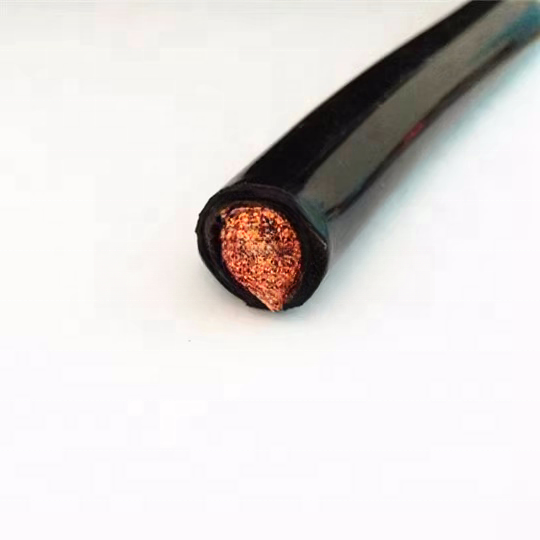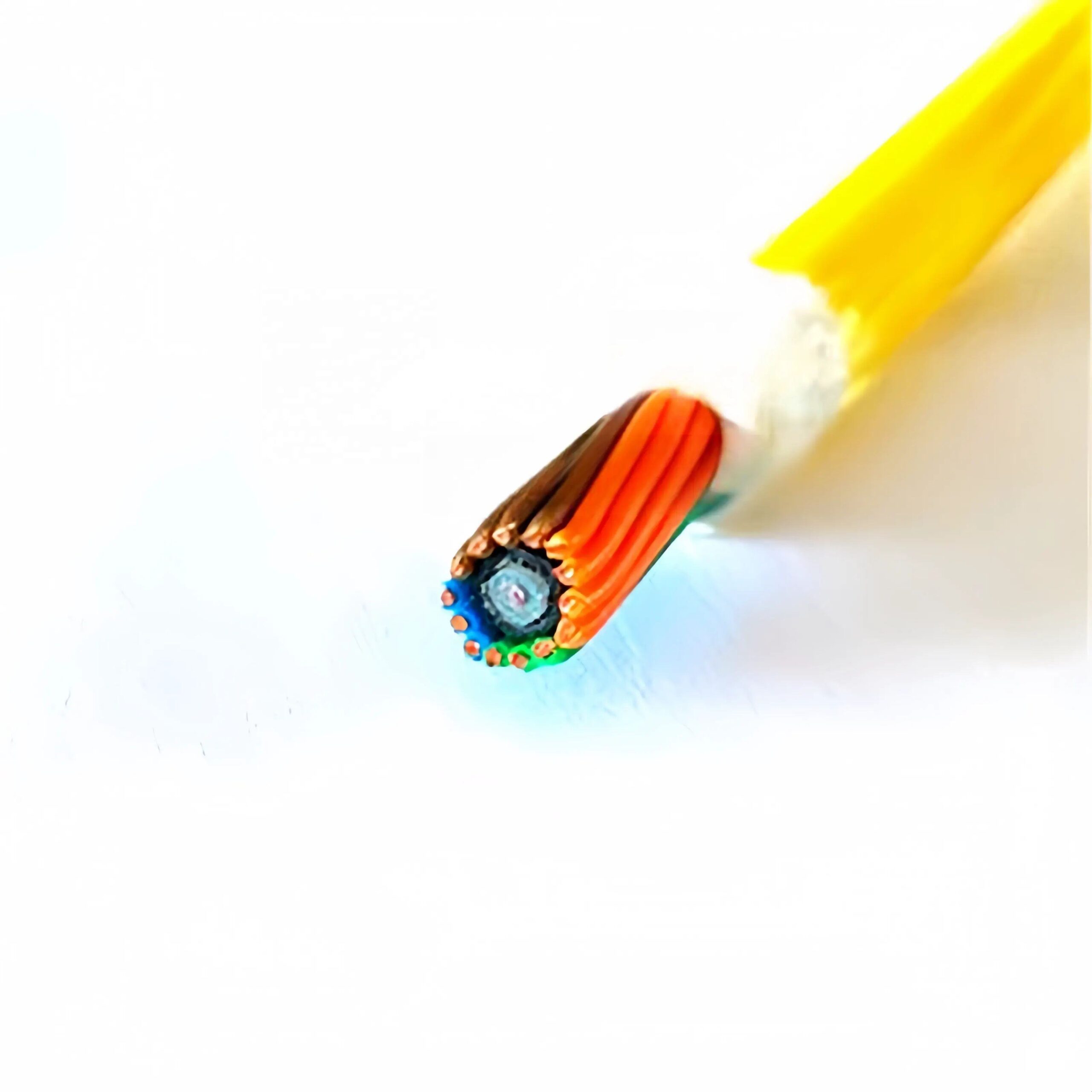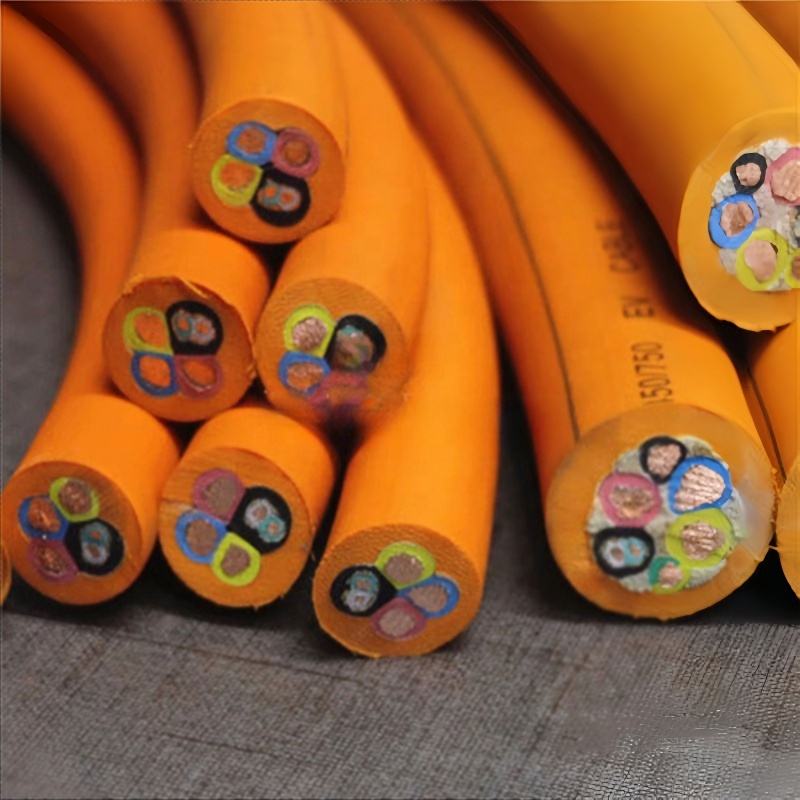



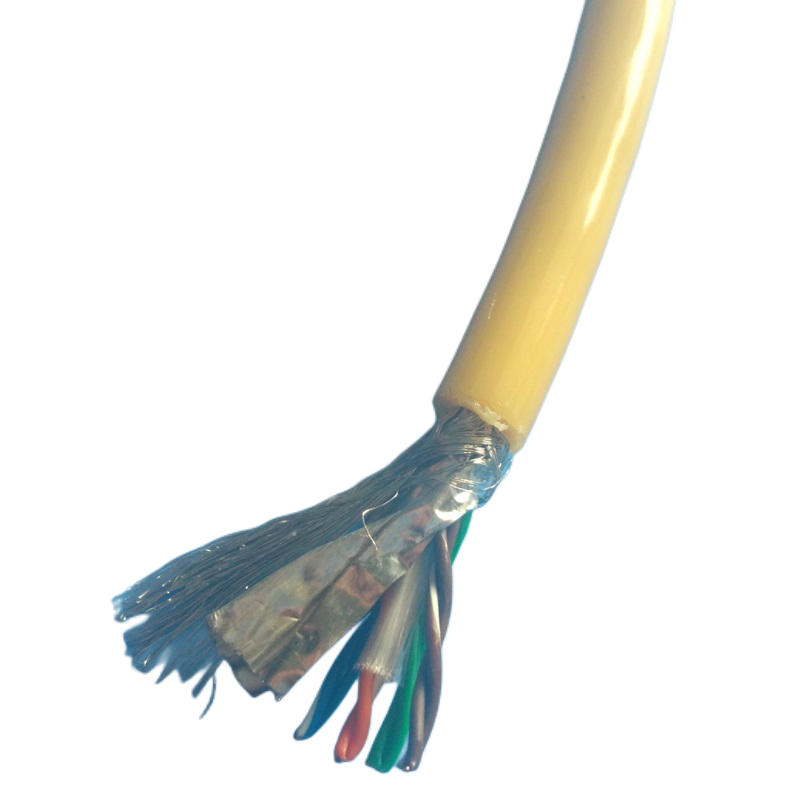
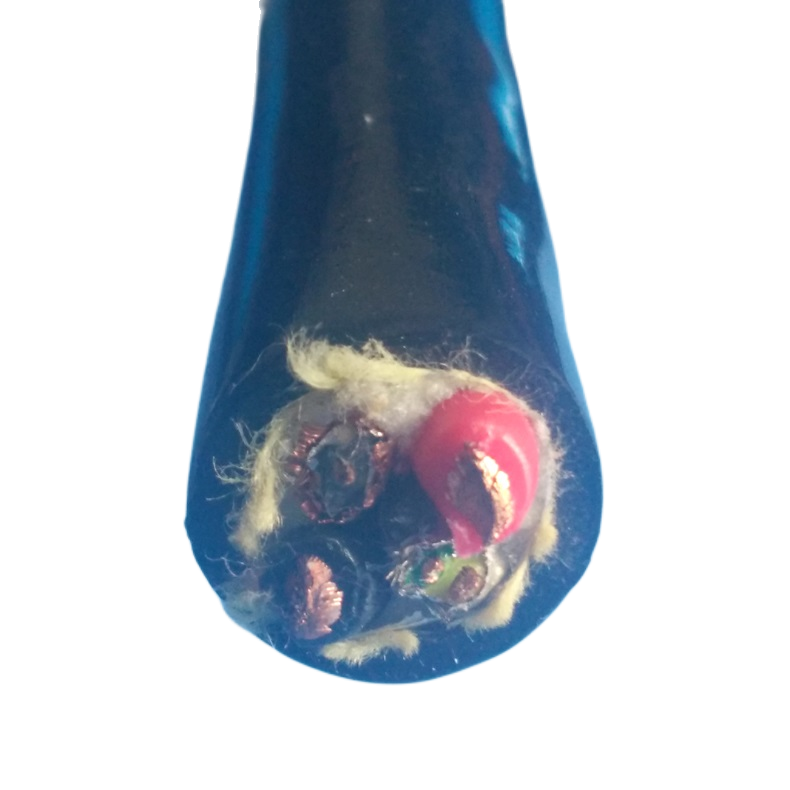
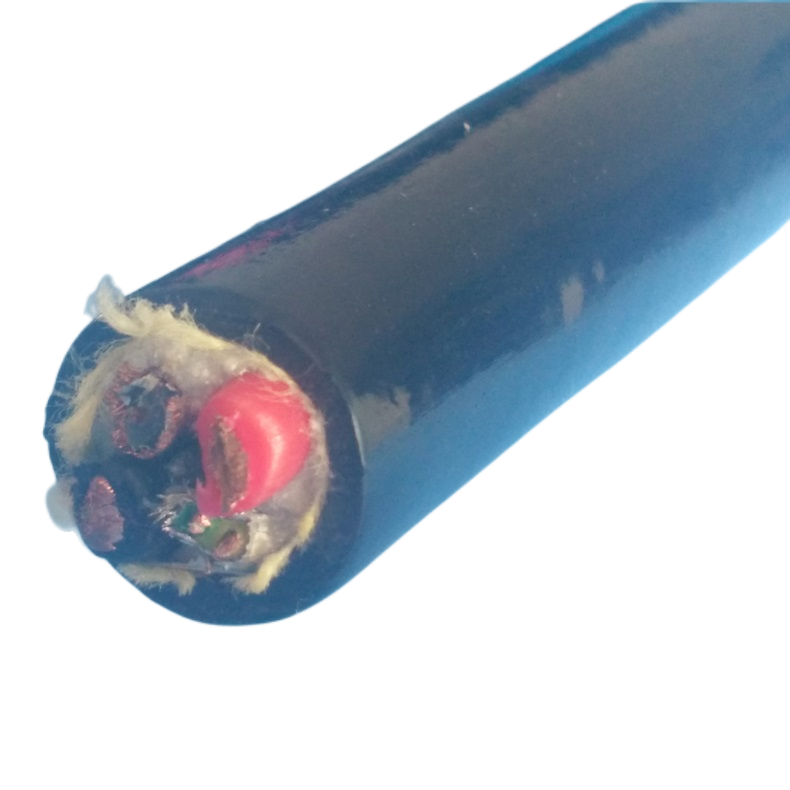
Drag Chain Composite Cable | Hybrid Power & Signal Cable | Continuous Flexing for Automation Systems
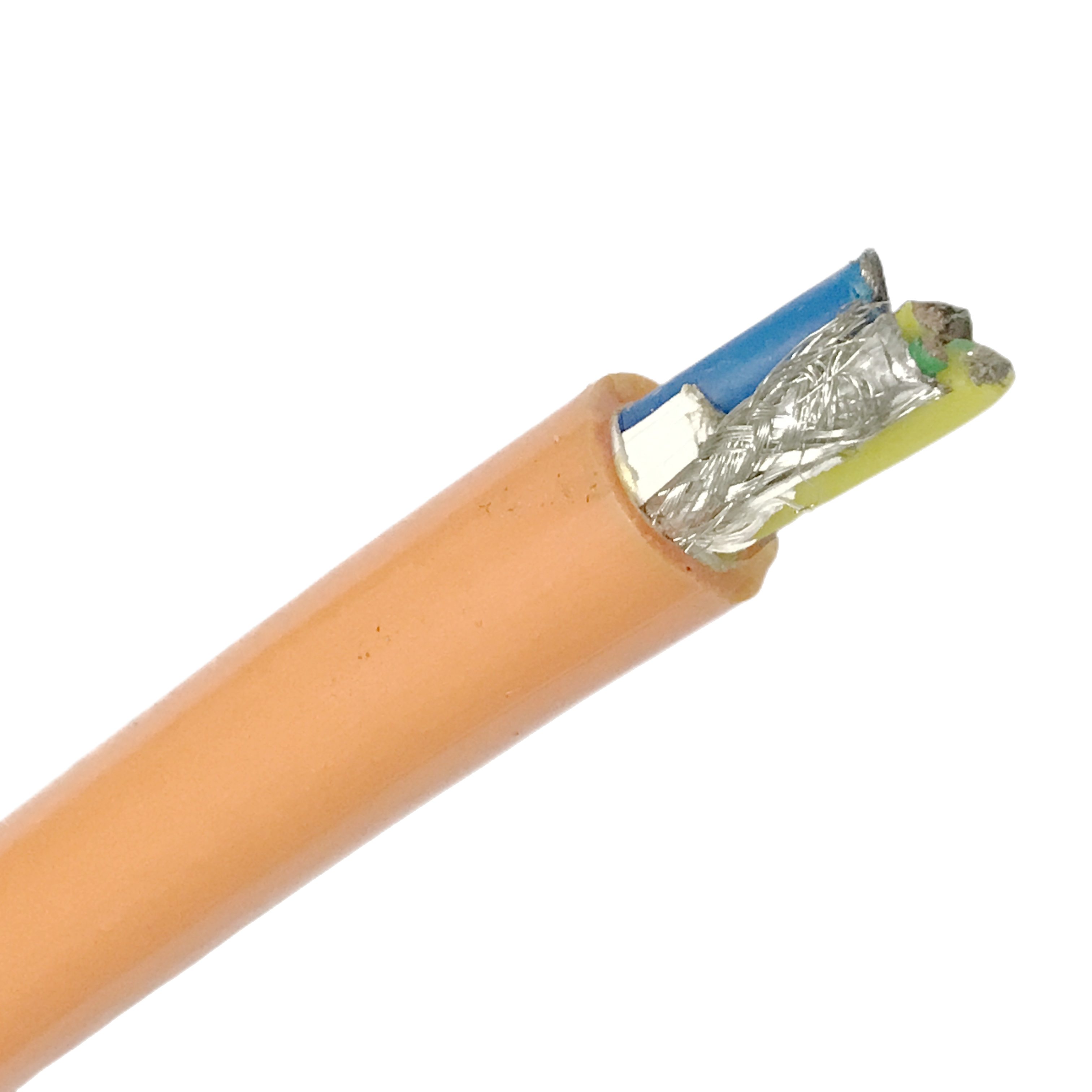
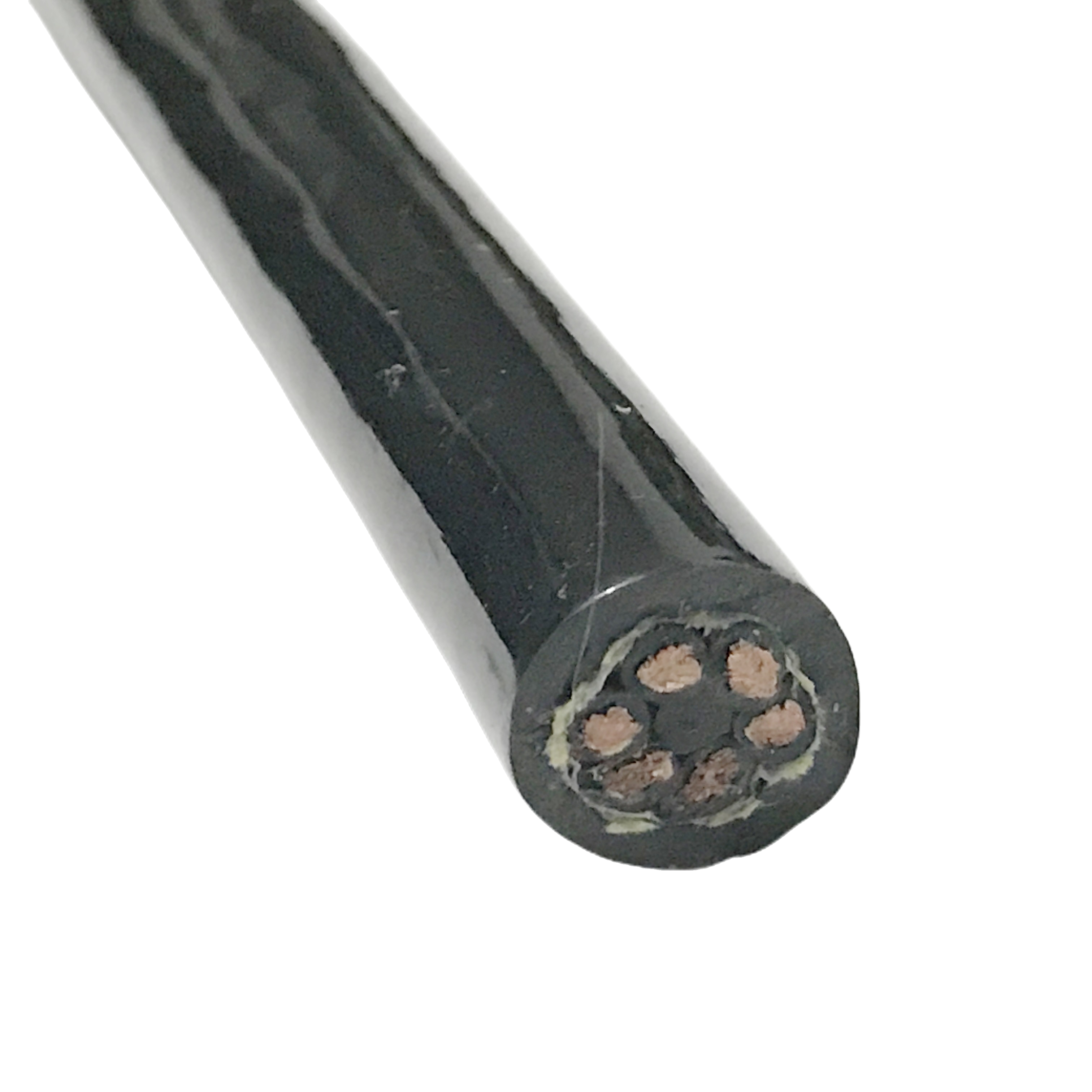
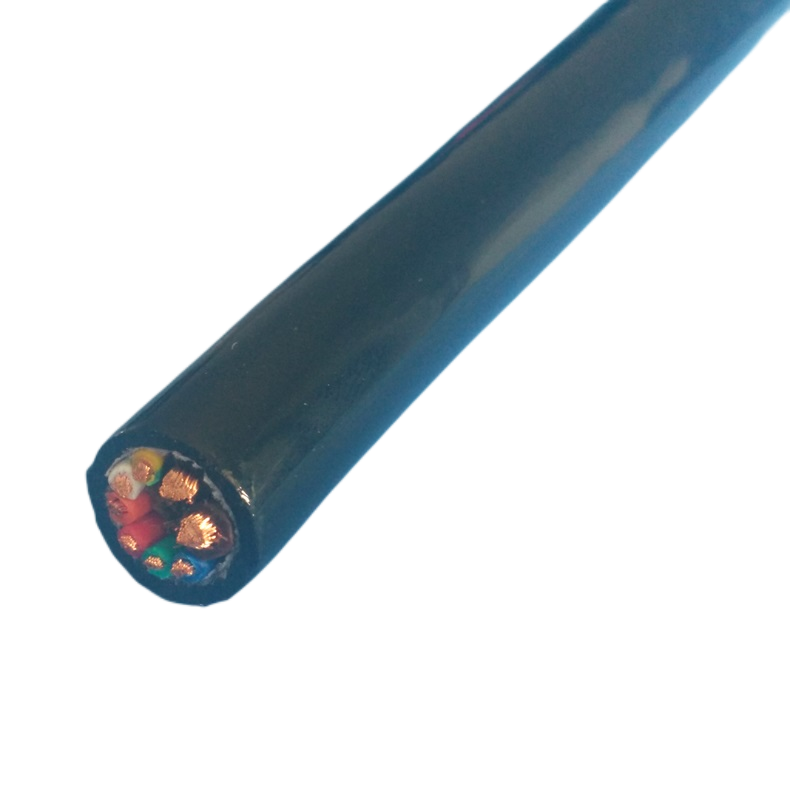
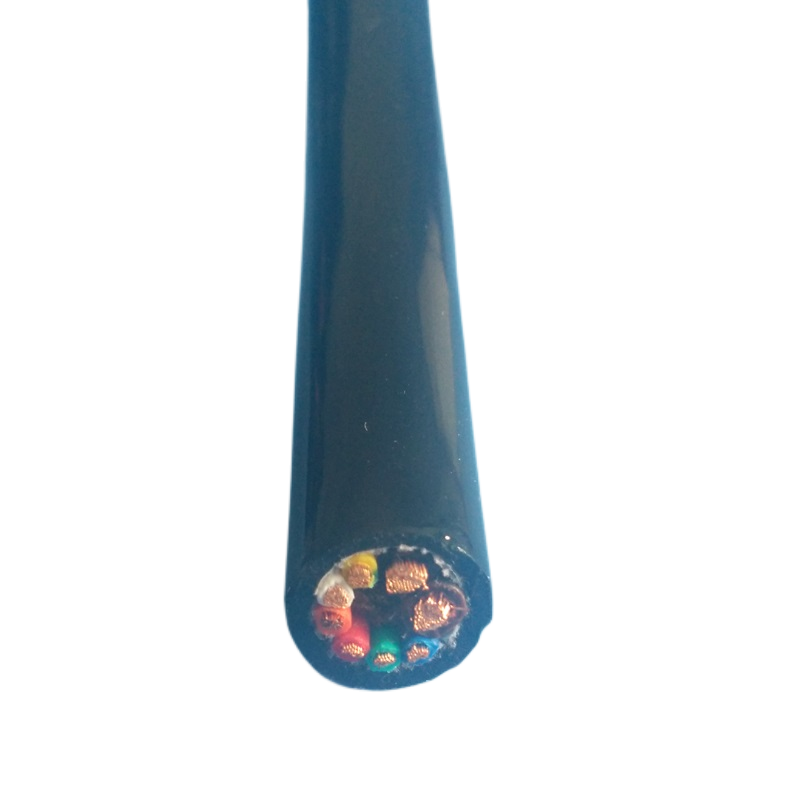
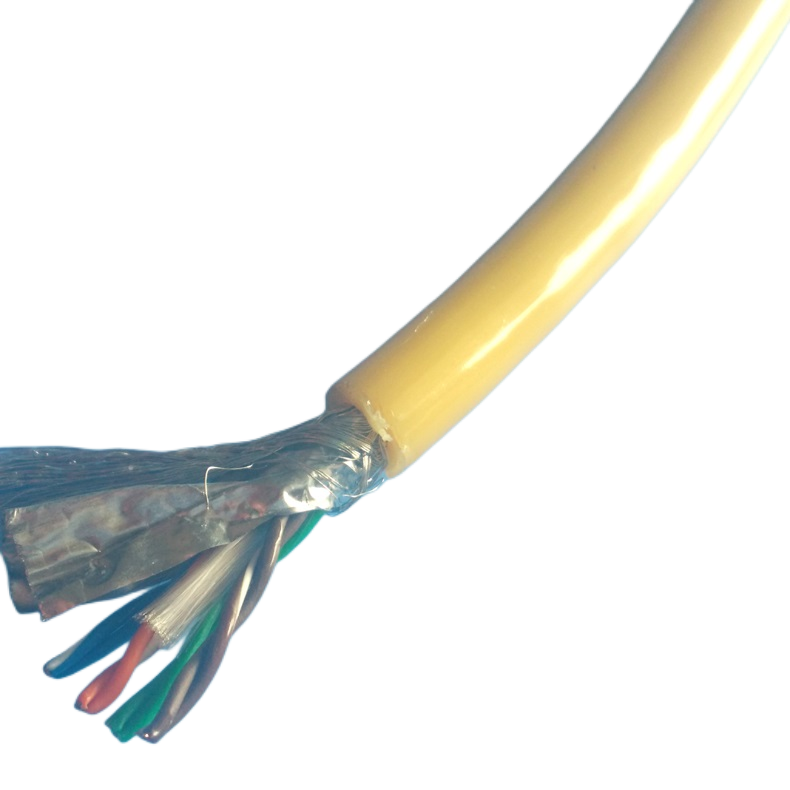
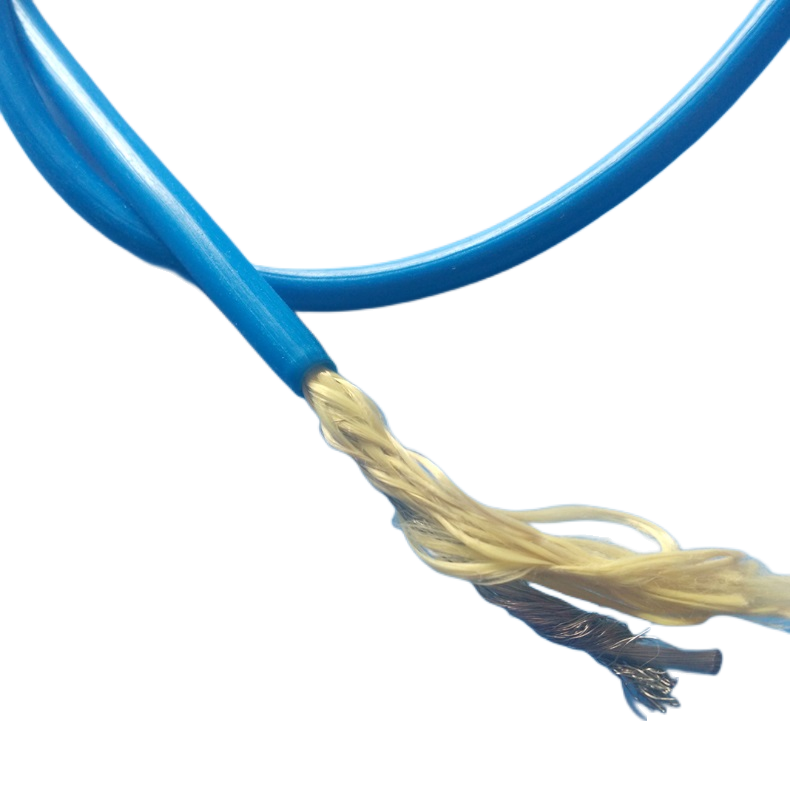
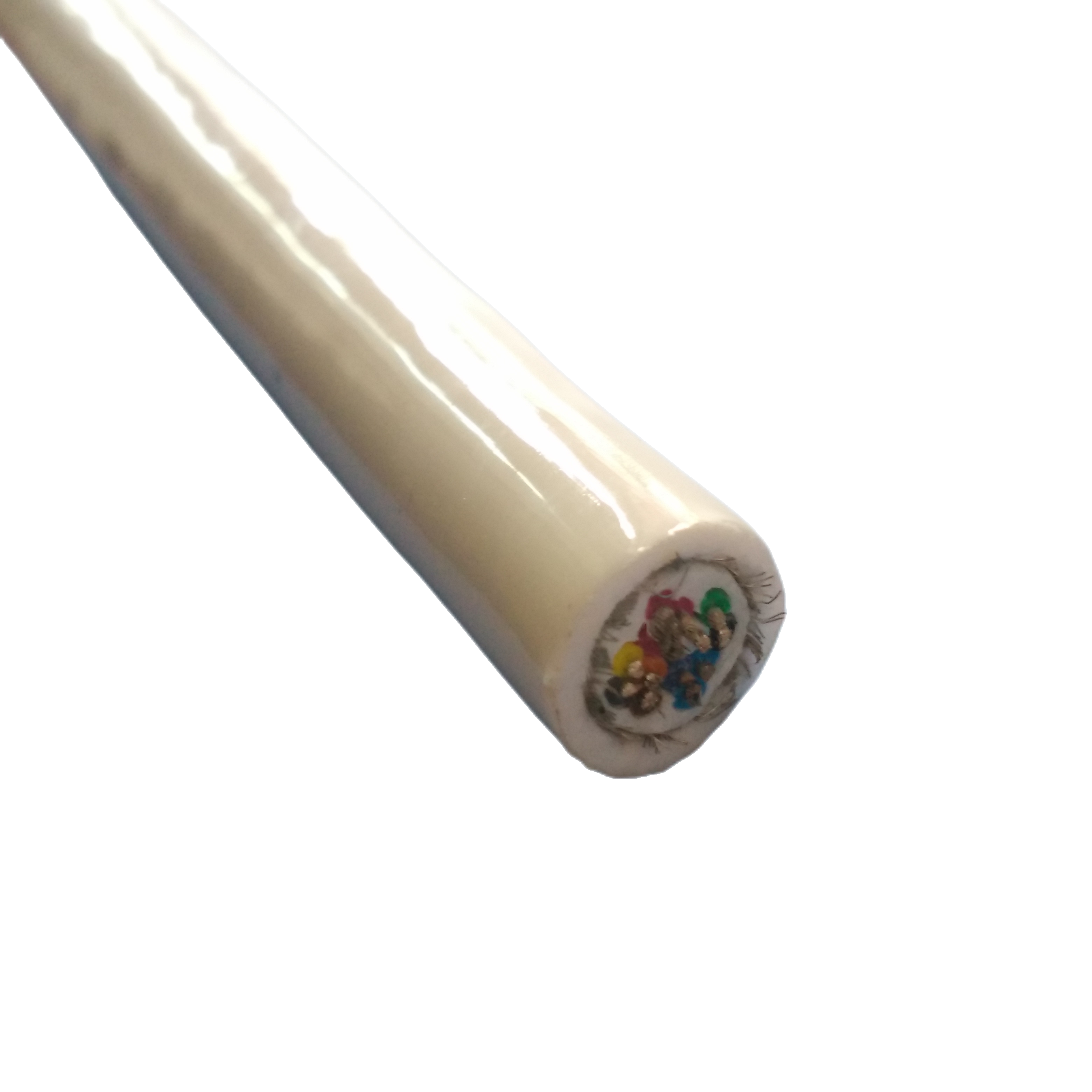
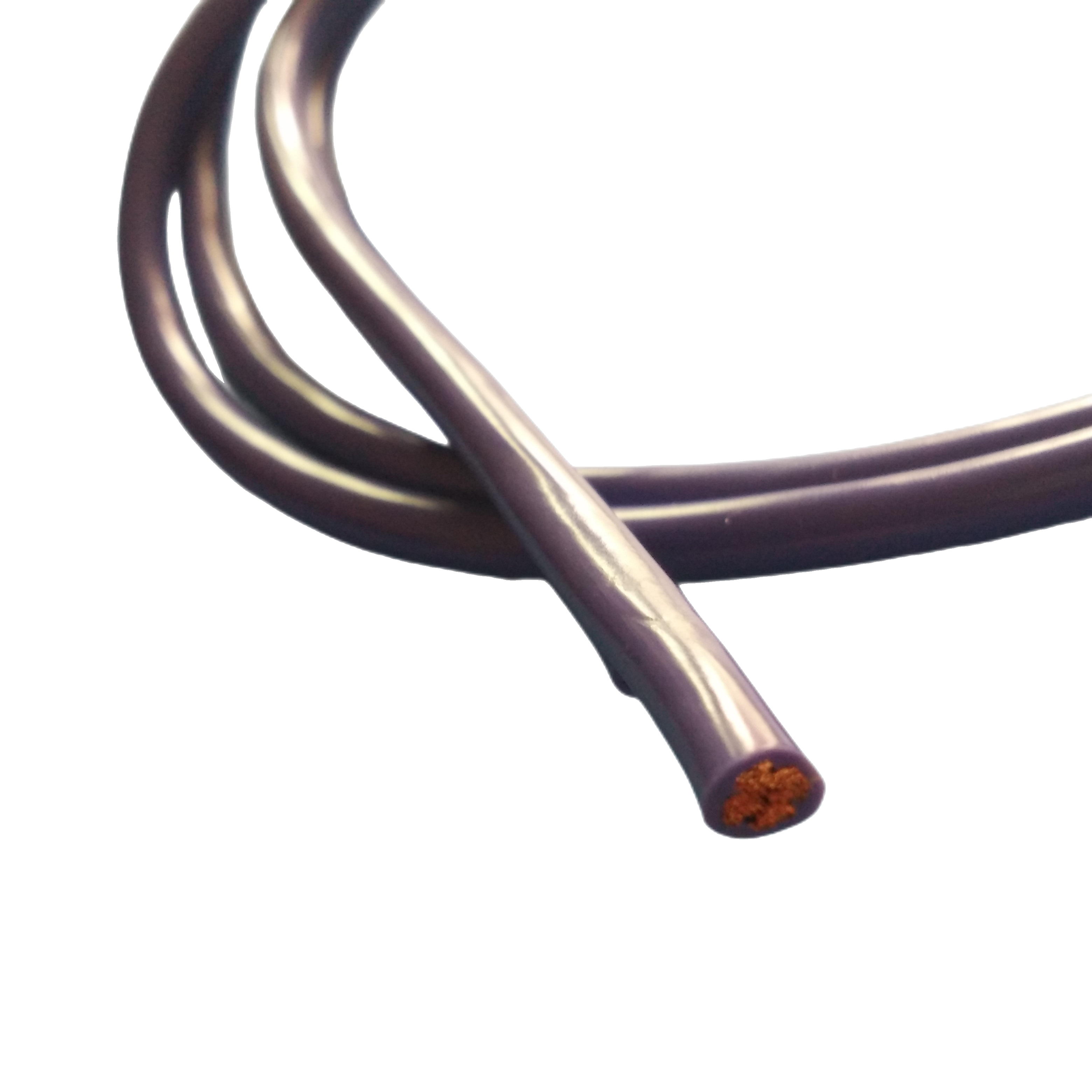
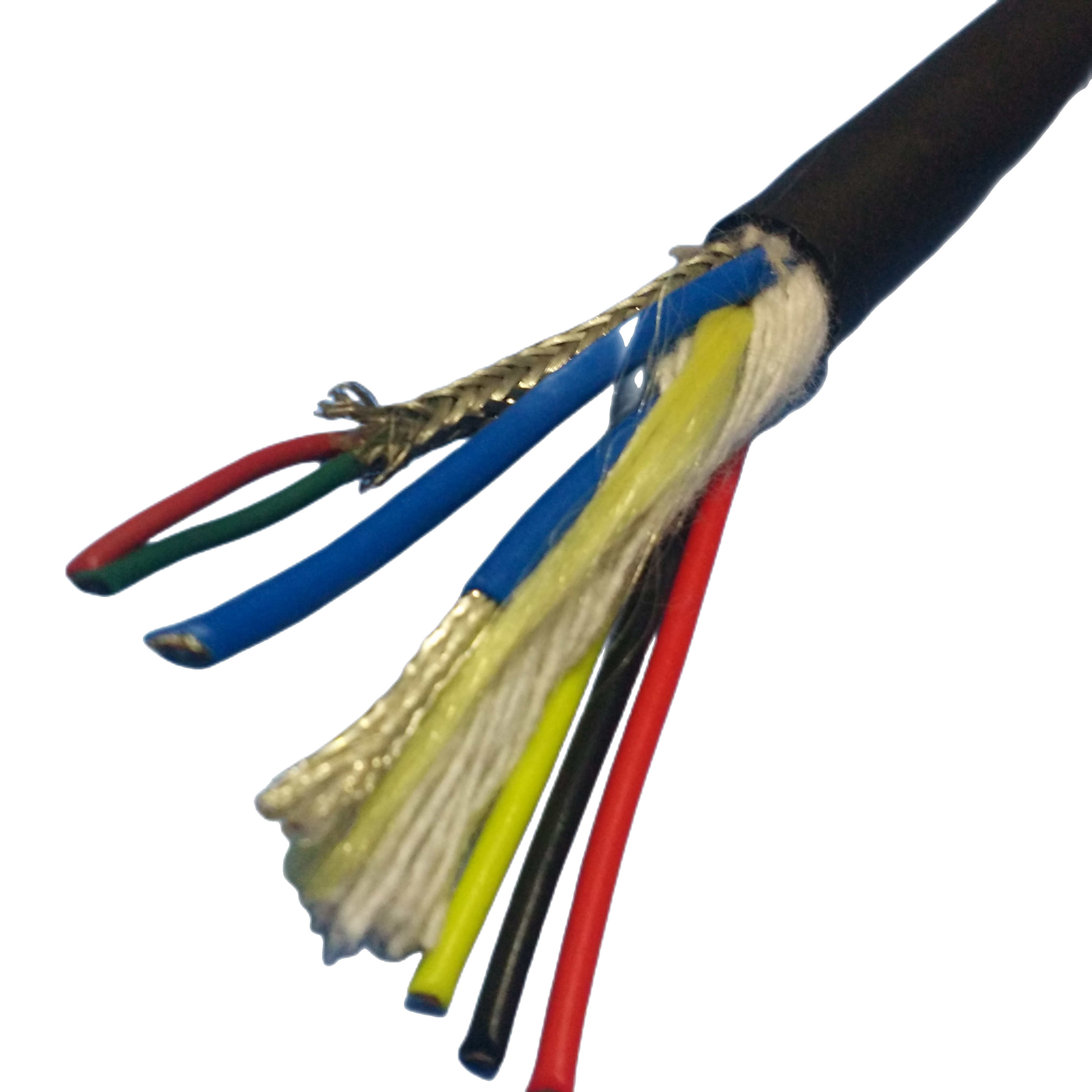
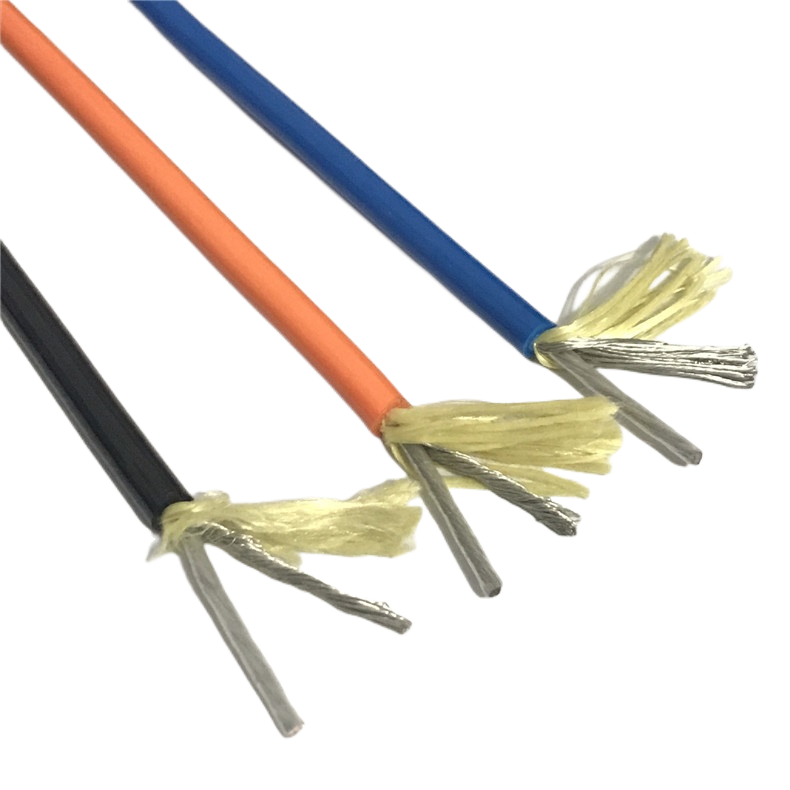
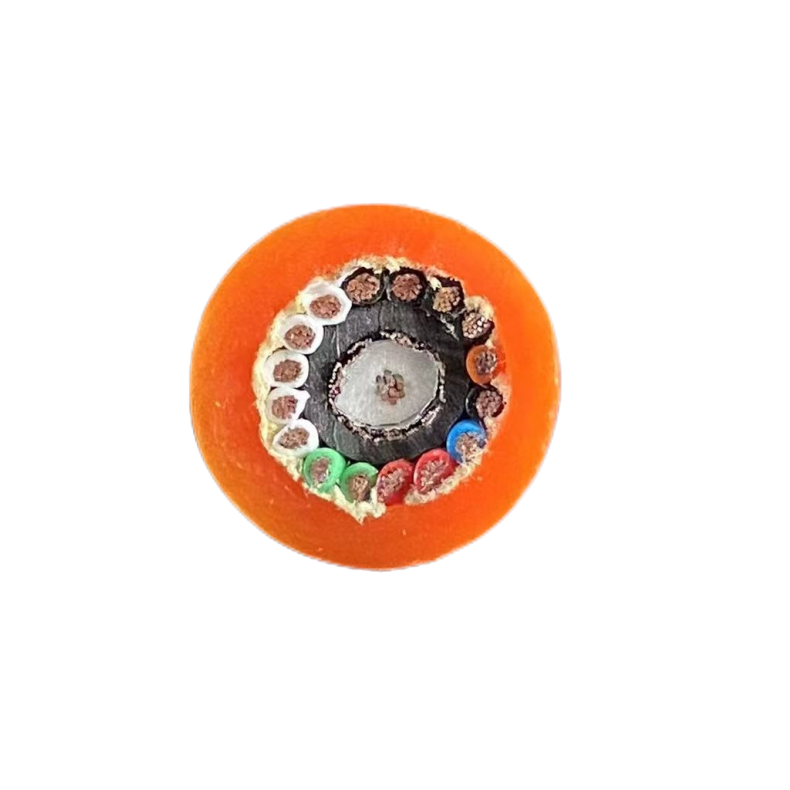
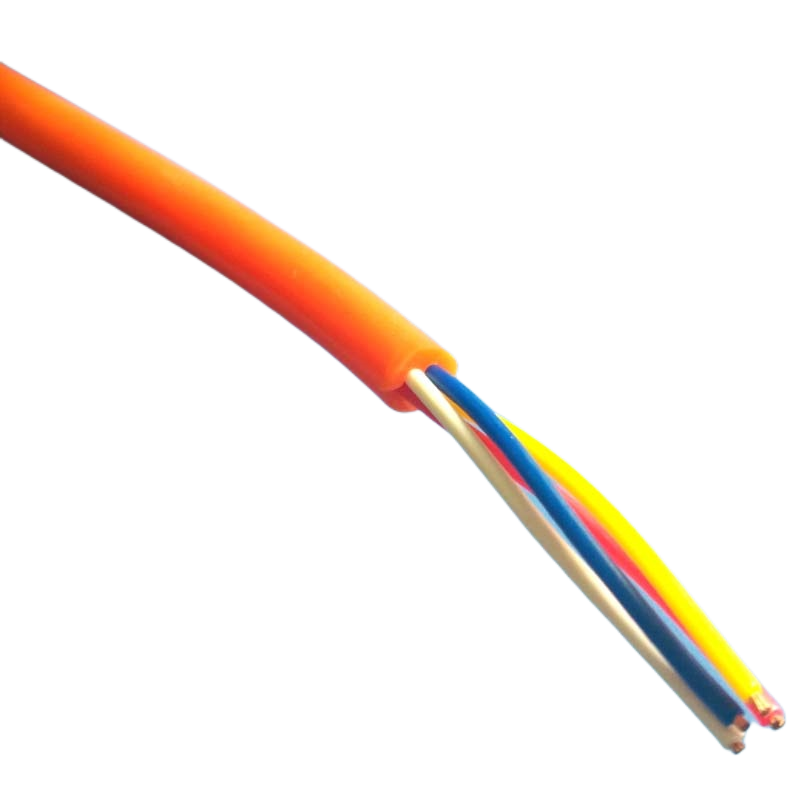
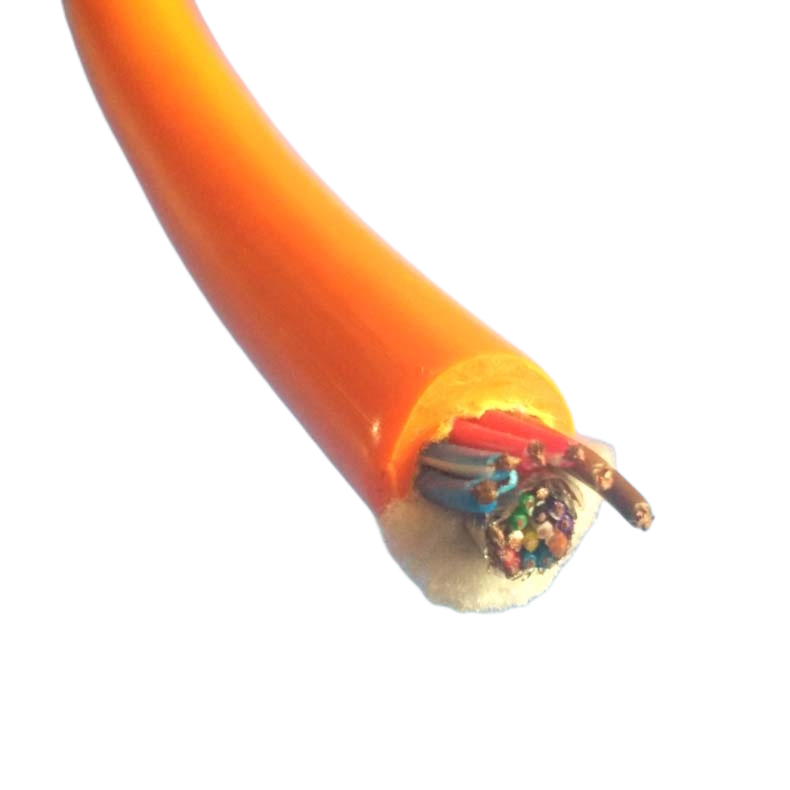
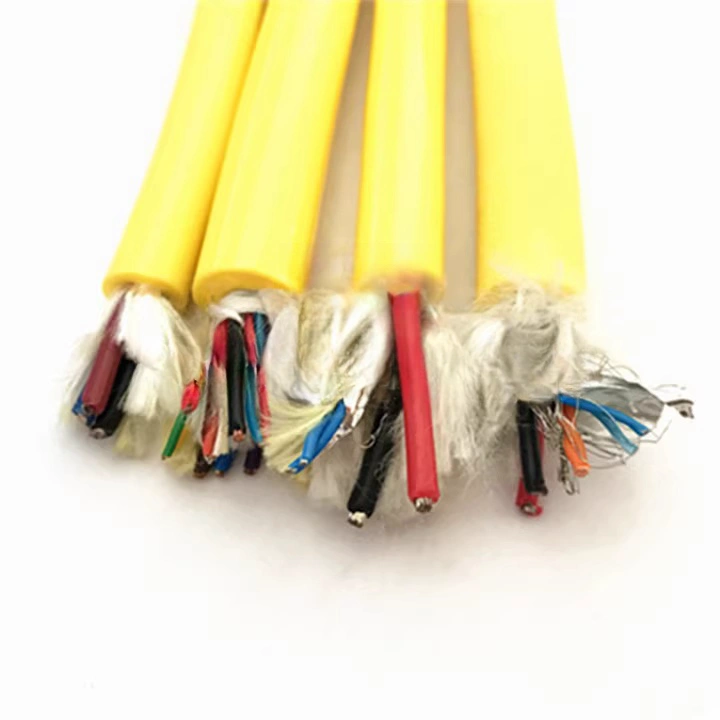
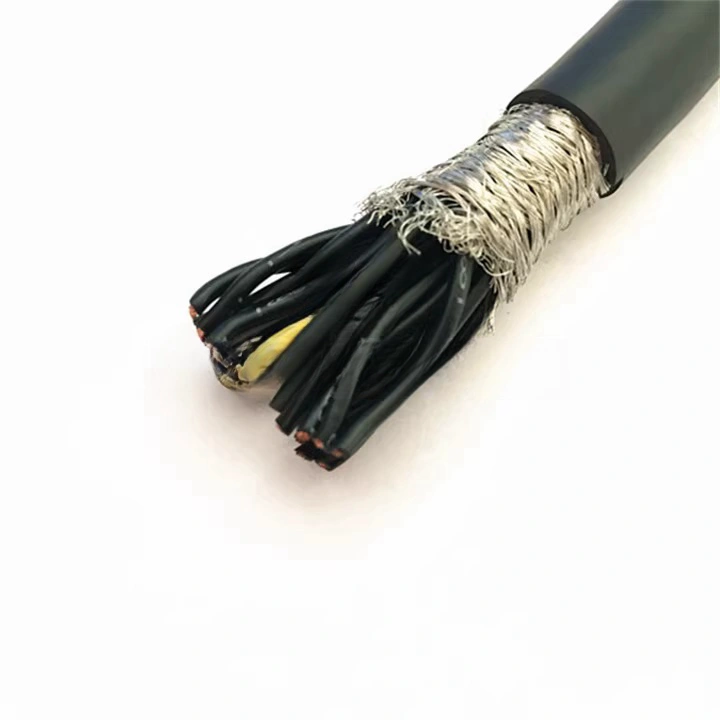
The RST-CC Series Drag Chain Composite Cable is a purpose-engineered hybrid wiring solution that integrates power cores, screened data pairs, and optional fieldbus elements into a single, continuous-flex cable assembly. Designed specifically for cable carrier and drag chain applications in industrial automation, machine tools, robotic systems, and crane installations, this hybrid power and signal cable eliminates the need for multiple parallel cable runs — reducing chain fill ratios, simplifying connector architecture, and delivering a measurable reduction in installation and maintenance labour costs. Built with IEC 60228 Class 6 ultra-fine oxygen-free copper conductors, individually screened signal pairs (aluminium foil + drain wire, optional overall tinned copper braid), and a polyether TPU outer jacket rated to −40 °C through +105 °C, the RST-CC series supports validated flex lives from 5 million to more than 10 million bending cycles at 7.5× OD dynamic bending radius. Standard models support PROFIBUS DP, CANbus, EtherCAT, and RS-485 data protocols alongside 300/500 V or 0.6/1 kV power circuits. For demanding applications including semiconductor wafer handling, automotive body shop robotics, high-bay AS/RS systems, and offshore crane gantries, the composite hybrid format ensures signal integrity is maintained under the vibration, acceleration, and continuous-flex loading that defeats conventional separate-cable solutions. Fully compliant with CE LVD, RoHS 2, REACH, and IEC 60228, with UL/cUL listing available for North American OEM projects. Custom cross-sections, jacket colours, special compounds, and torsion-rated variants are available with a 4–6 week lead time from Rousheng’s ISO 9001-certified facility in Shanghai
Drag Chain Composite Cable | Hybrid Power & Signal Cable | Continuous Flexing for Automation Systems
Drag Chain Composite Cable is the go-to hybrid wiring solution when a single cable run must simultaneously carry mains power, 24 V control voltage, and data signals through a moving cable carrier — all without cross-interference, jacket fatigue, or conductor breakage. By bundling power cores, screened signal pairs, and optional bus or fieldbus elements inside one compact, continuous-flex jacket, the hybrid design eliminates the multiple single-purpose cables that otherwise crowd a drag chain, cause tangling, and drive up installation time.
Engineers across machine-tool, automotive assembly, semiconductor handling, and intralogistics sectors choose composite hybrid cables because they reduce cable carrier fill ratio, simplify routing, and cut the number of connector breakout points — directly reducing system downtime risk. Rousheng’s RST-CC series is built from the ground up for these demands: Class 6 ultra-fine OFC conductors, individually screened data pairs, robust TPU outer jacket, and a verified flex life that exceeds the service intervals of the machines they are wired into.
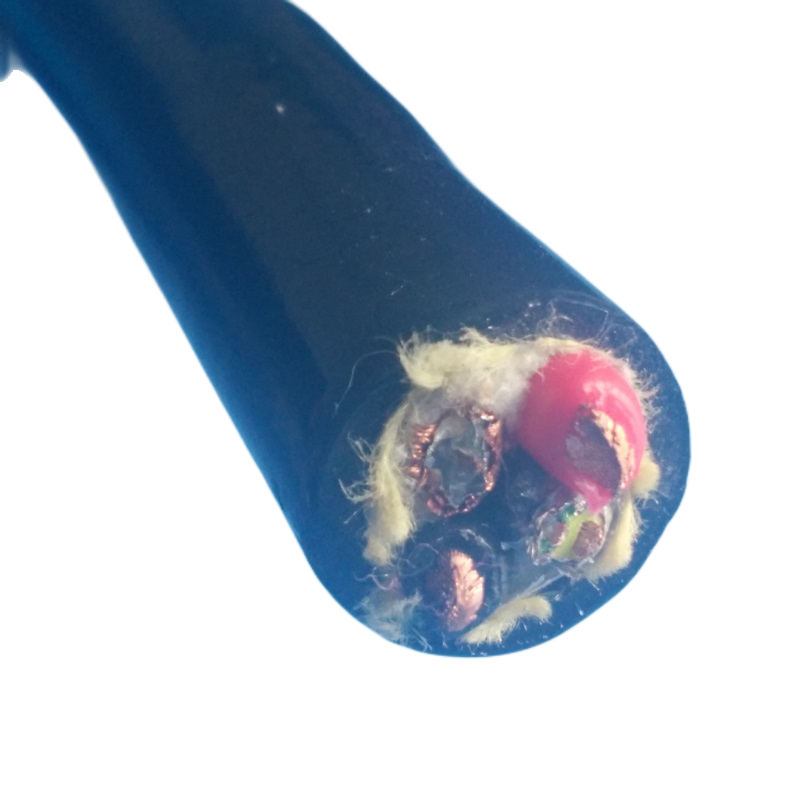
Model Range & Core Attributes
All RST-CC models are available cut-to-length or on 500 m / 1 000 m drums. Custom hybrid elements on request.
|
Model |
Power Element |
Signal / Data Element |
Overall OD |
Rated Voltage |
Flex Life |
Application Focus |
|
RST-CC-1 |
2 × 1.5 mm² (300/500 V) |
4 × 0.25 mm² (2 screened pairs) |
≈ 9.8 mm |
300/500 V |
≥ 5 M cycles |
General automation, PLC I/O wiring |
|
RST-CC-2 |
4 × 1.0 mm² (300/500 V) |
2 × 2 × 0.34 mm² + 1 drain wire |
≈ 11.4 mm |
300/500 V |
≥ 8 M cycles |
CNC axes, servo I/O, motion ctrl. |
|
RST-CC-3 |
3 × 2.5 mm² (450/750 V) |
4 × 0.25 mm² + CANbus pair |
≈ 13.2 mm |
450/750 V |
≥ 5 M cycles |
Heavy-duty linear drives |
|
RST-CC-4 |
2 × 0.75 mm² + PE |
EtherCAT pair + 4 × 0.14 mm² signal |
≈ 8.6 mm |
300/500 V |
≥ 10 M cycles |
Lightweight robot end-effectors |
|
RST-CC-5 |
4 × 1.5 mm² (300/500 V) |
PROFIBUS DP pair + 4 I/O cores |
≈ 14.0 mm |
300/500 V |
≥ 5 M cycles |
PROFIBUS-based machine cells |
|
RST-CC-6 |
3 × 4.0 mm² (0.6/1 kV) |
2 × Cat 5e twisted pairs |
≈ 16.8 mm |
0.6/1 kV |
≥ 3 M cycles |
High-power gantry cranes |
|
RST-CC-CY |
Configurable |
Configurable (shielded/unshielded) |
Per spec |
Up to 1 kV |
Per spec |
OEM / project-specific hybrid |
|
At a Glance — Power Side Conductor class: IEC 60228 Class 6 ultra-fine Voltage: 300/500 V — 0.6/1 kV Cross-section: 0.5 – 6 mm² per core PE / PVC / XLPE insulation options Current: per IEC 60364-5-52 |
At a Glance — Signal Side Pairs: individually screened (Al-foil + drain) Protocols: PROFIBUS, CANbus, EtherCAT, RS-485 Impedance: 100 Ω ±10 Ω (Cat 5e pairs) Crosstalk: ≥40 dB @ 10 MHz Braid OCP: ≥85% optical coverage |
Where Hybrid Composite Cables Are Specified
The decision to use a drag chain composite cable — rather than a set of separate power and data cables — is almost always driven by one of three engineering constraints: cable carrier fill ratio limits, connector real-estate on the end-device, or maintenance complexity in multi-axis systems. The following scenarios illustrate how Rousheng’s RST-CC series addresses each.
Scenario A — CNC Machining Centres & Rotary Axes
On a 5-axis CNC machine, each linear axis may run three or four cables: spindle power, servo feedback, coolant valve control, and a safety interlock pair. Routing these separately through a shared drag chain consumes fill capacity and creates a maintenance nightmare when one cable fails. A single RST-CC composite replaces all four runs, reduces the chain fill ratio from ~70% to under 40%, and provides a single cable identity for the maintenance log.
Typical specification: RST-CC-2 (4 × 1.0 mm² power + 2 screened pairs) with 11.4 mm OD — fits standard 14 mm drag chain inner height with 20% reserve.
Scenario B — Automotive Welding & Assembly Lines
Automotive body shop robots demand cables that tolerate heat, weld spatter, and tens of millions of flex cycles over a vehicle-model production run. The composite hybrid format means a single cable bracket, a single drag chain slot, and a single cable ID tag per robot — dramatically simplifying the thousands of cable connections across a body shop. RST-CC-4 with EtherCAT pair and lightweight power cores is commonly specified for collaborative and SCARA arms in final-assembly zones.
Scenario C — Semiconductor & Flat-Panel Display Handling
Clean-room wafer handling equipment requires outgassing-controlled, particle-free, lightweight cables. Composite hybrids in this segment often combine 24 VDC power with high-speed serial data (EtherCAT, LVDS) in a compact outer diameter. The reduced cable mass also lowers inertia loads on the end-effector, improving throughput.
Scenario D — Intralogistics: Automated Storage & Retrieval Systems (AS/RS)
High-bay racking systems run at speeds up to 8 m/s with acceleration cycles exceeding 2 m/s². A drag chain cable that cannot maintain signal integrity under these dynamic loads causes spurious encoder errors, e-stops, and lost pallets. The RST-CC series is validated for these acceleration profiles — the layered strand construction dampens vibration-induced conductor fatigue that kills standard cables within months.
Scenario E — Port Cranes & Outdoor Gantry Systems
For heavy lifters where crane power (up to 1 kV) and PLC data run together, RST-CC-6 provides the high-voltage power rating, Cat 5e data pairs, and a UV-stable TPU jacket that holds up against UV, ozone, and salt spray. The composite approach eliminates the cable management nightmare of running separate HV and data trays over a 60-metre crane span.
Construction & Technical Specifications
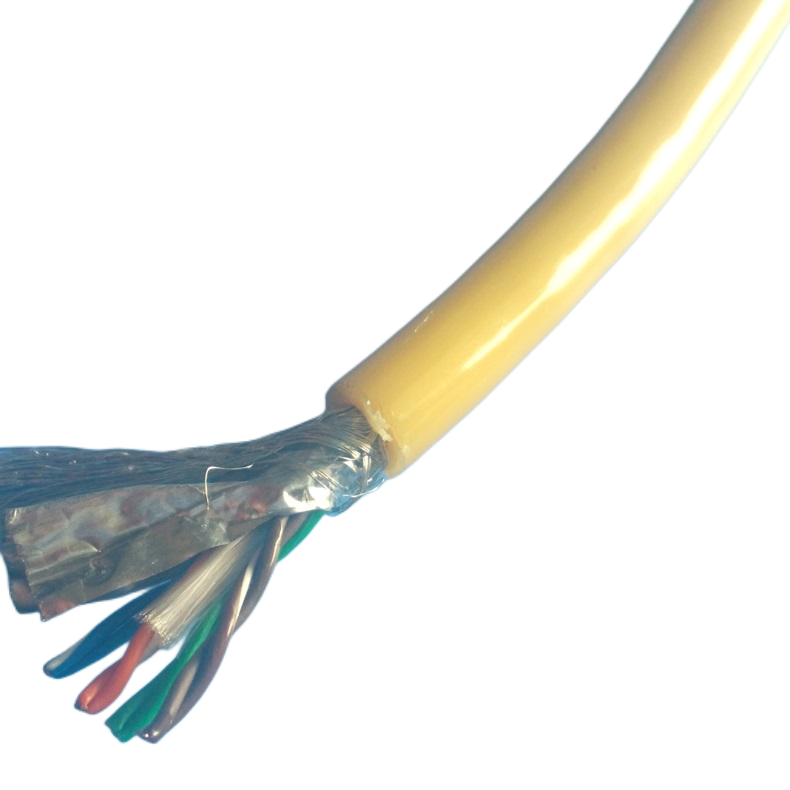
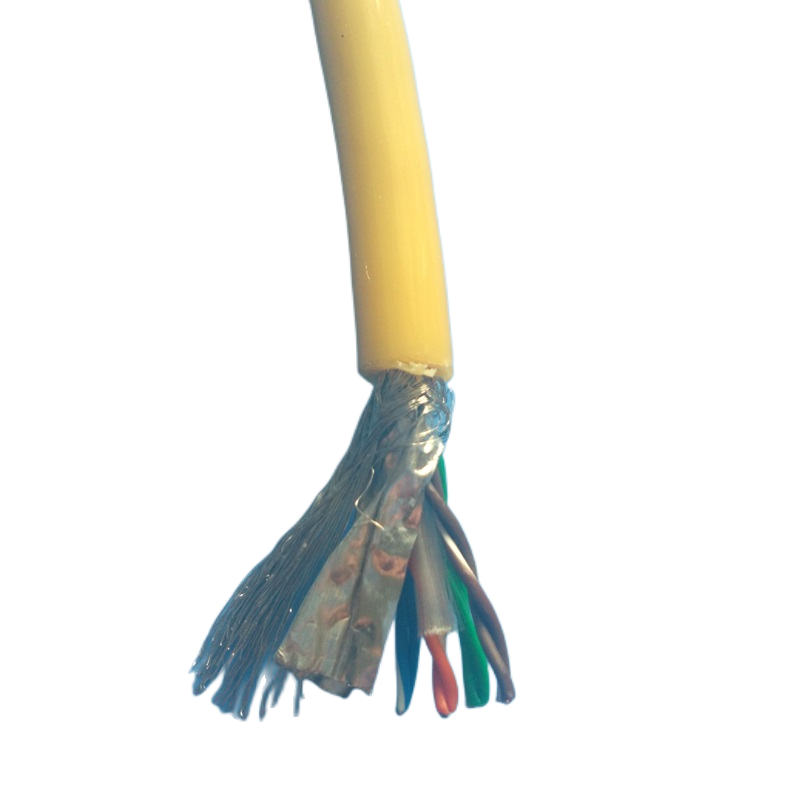
Layer-by-Layer Construction
|
Layer |
Component |
Material / Standard |
Function |
|
1 — Power conductors |
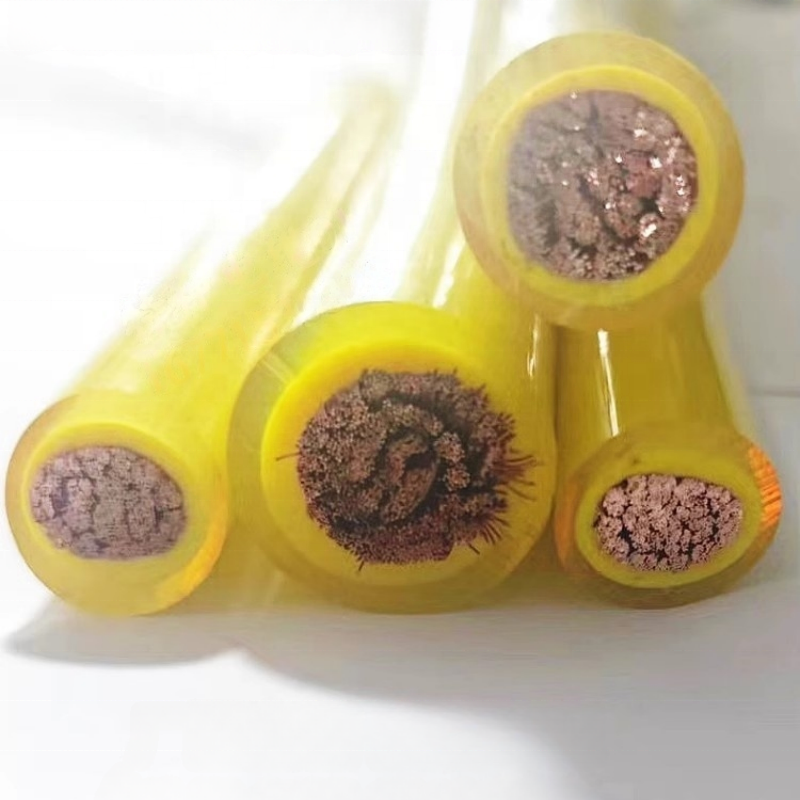
Stranded copper cores |
Bare OFC, IEC 60228 Class 6 |
Mains / drive power |
|
2 — Power insulation |
Core insulation |
Flexible PVC or XLPE, colour-coded DIN VDE 0293 |
Voltage isolation per core |
|
3 — Signal conductors |
Twisted pairs/quads |
Bare or tinned OFC, 0.14–0.5 mm² |
Data / control signal |
|
4 — Pair screen |
Individual Al-foil + drain wire |
Foil + tinned copper drain |
Inter-pair shielding (crosstalk < −40 dB @ 10 MHz) |
|
5 — Element bundle |
Helical cabling |
Power + signal elements cabled together, opposite lay |
Mechanical integration |
|
6 — Separator tape |
Non-hygroscopic tape |
Polyester fleece |
Prevents jacket bonding to elements |
|
7 — Overall screen |
Tinned Cu braid |
≥85% optical coverage |
Overall EMI shield (optional) |
|
8 — Outer jacket |
TPU / PUR |
Polyether TPU, Shore A 85±5 |
Abrasion, oil & flex protection |
Electrical Parameters
|
Parameter |
Power Cores |
Signal / Data Pairs |
|
Rated voltage (Uo/U) |
300/500 V or 0.6/1 kV |
≤ 60 V DC (PELV zone) |
|
Insulation resistance |
≥ 100 MΩ·km (IEC 60502) |
≥ 500 MΩ·km |
|
Capacitance (pair) |
N/A |
≤ 55 nF/km (Cat-grade pairs) |
|
Transfer impedance |
N/A |
≤ 150 mΩ/m @ 10 MHz (shielded) |
|
Propagation delay |
N/A |
≤ 5.7 ns/m (EtherCAT pair) |
|
Max. operating current |
Per IEC 60364-5-52 (derating in chain) |
Max. 3 A per signal core |
Mechanical & Environmental Performance
|
Property |
Value / Condition |
Test Method |
|
Minimum bending radius — dynamic |
7.5 × cable OD |
IEC 60228 / IGL drag chain spec |
|
Minimum bending radius — static |
4 × cable OD |
– |
|
Flex life — standard |
≥ 5 million cycles |
Internal test rig, 7.5× OD |
|
Flex life — high-cycle option |
≥ 10 million cycles |
Extended strand + lay optimisation |
|
Max. travel speed |
5 m/s (10 m/s on request) |
– |
|
Max. acceleration |
5 m/s² |
– |
|
Operating temperature — dynamic |
−40 °C to +105 °C |
IEC 60811-501 |
|
Operating temperature — static |
−50 °C to +125 °C |
– |
|
Oil resistance |
Excellent (mineral oil, hydraulic fluid) |
IEC 60811-406 |
|
Jacket flame retardancy |
IEC 60332-1 standard; IEC 60332-3 optional |
– |
|
Outer jacket Shore A hardness |
85 ± 5 |
ISO 868 |
|
Torsion resistance (option) |
±180°/m |
Specify RST-CC-T variant |
How to Select the Right Composite Cable
Use the four-step decision process below to identify your RST-CC model before requesting a quotation.
Step 1 — Define your power requirement
- Count the power cores needed and sum the current per axis (derating factor 0.7 applies for cables in a drag chain)
- Select conductor cross-section from IEC 60364-5-52 current tables, then round up one size for drag chain derating
Step 2 — Identify your signal / data protocol
- PROFIBUS DP: requires 150 Ω characteristic impedance twisted pair — specify RST-CC-5
- EtherCAT / Industrial Ethernet: Cat 5e pairs with ≤40 dB NEXT — specify RST-CC-4 or RST-CC-CY
- CANbus / RS-485: shielded twisted pair, 120 Ω termination — specify RST-CC-3 bus option
- Analogue I/O + discrete signals: standard screened pairs in RST-CC-1 or RST-CC-2
Step 3 — Check drag chain constraints
- Target cable fill ratio ≤ 60% of chain inner cross-section
- Confirm minimum bend radius: OD × 7.5 ≤ chain bend radius
- For travel speed > 5 m/s, specify RST-CC high-speed jacket compound
Step 4 — Specify environmental options
- Outdoor / UV exposure: UV-stabilised TPU jacket grade
- Food, pharma, or washdown: food-grade TPU, RAL 9003 white jacket
- High-temperature zone: XLPE insulation upgrade (up to +125 °C jacket)
- Torsional motion: RST-CC-T torsion variant (±180°/m)
Manufacturer Credentials & Quality Assurance
Shanghai Rousheng Wire & Cable Co., Ltd. designs and manufactures all RST-CC series cables in-house at our 8,000 m² Fengxian District facility. Our production capability relevant to composite hybrid cables includes:
|
Production & Engineering ISO 9001:2015 certified QMS Multi-element cabling machines (up to 48 elements) In-house extrusion: PVC, TPU, XLPE jackets 100% HiPot test on all manufactured lengths Full batch-level material traceability |
Test & Certification CE marking — LVD Directive 2014/35/EU RoHS 2 / REACH SVHCs compliance CNAS-accredited lab test reports on request UL / cUL listing available for North American OEMs AAA Enterprise Credit Rating (China) |
Our engineering team has 10+ years of specialised experience in composite and flex cable design. We work directly with OEM engineering departments to co-develop cable cross-sections that meet specific drag chain, robot-arm, or crane application profiles — not just standard catalogue items.
Frequently Asked Questions
Q1: Can power and signal run in the same cable without signal interference?
Yes — provided the composite cable is correctly constructed. In RST-CC cables, every signal pair or quad is individually screened with an aluminium-foil/drain-wire screen, and an overall tinned copper braid screen can be added over the complete bundle. This double-screen architecture keeps capacitive coupling between power cores and data pairs below the noise floor of the signal protocols supported (PROFIBUS, EtherCAT, CANbus, RS-485). Power cores are positioned in the cable centre or as a dedicated sub-bundle, separated from signal elements by a polyester separator tape.
Q2: How does a composite hybrid cable extend drag chain service life?
Fewer cables in the chain means lower fill ratio, which reduces the mechanical interaction (friction and compression) between adjacent cables during every flex cycle. Each cable in a chain experiences lateral forces from its neighbours; a single composite cable replacing three separate cables eliminates two of those friction interfaces. The result is less jacket abrasion, less internal conductor migration, and a demonstrably longer drag chain system service life.
Q3: What is the maximum travel length the cable can support?
Travel length is not a cable-only constraint — it is a system parameter involving the drag chain manufacturer’s guidelines, cable weight per metre, and the sag/tension profile of the hanging portion. As a general guide, RST-CC cables have been successfully deployed in crane applications with travel lengths up to 300 m using guided cable carriers. For runs beyond 100 m, please share the application drawing with our engineering team so we can recommend the appropriate conductor cross-section and jacket stiffness grade.
Q4: Are composite hybrid cables compatible with existing drag chains from Igus, Tsubaki, and similar brands?
Yes. RST-CC outer diameters are sized to standard drag chain inner heights (from 14 mm through to 56 mm series). We provide a cable OD tolerance of ±0.3 mm to ensure reliable seating in chain clips. For critical fits, request a certified OD measurement report and a pre-production sample before finalising your chain clip selection.
Q5: Can the data element be changed to support EtherNet/IP or SERCOS III?
Yes. EtherNet/IP and SERCOS III both use 100BASE-TX physical layer, meaning any Cat 5e-rated twisted pair with correct impedance and NEXT performance will carry them reliably. RST-CC-4 and the RST-CC-CY custom variant both accommodate these protocols. Specify the protocol at order time so we can confirm the pair twist rate and screening approach for your specific data-rate requirement.
Q6: What is your minimum order quantity and what documentation do you supply?
Standard models: MOQ 100 m cut-to-length. Drum quantities (500 m, 1 000 m): available ex-stock for the top four models. Custom composites: MOQ 500 m with 4–6 week production lead time. Each shipment is accompanied by a dimensional report, HiPot test certificate, conductor resistance certificate, and — on request — a full third-party laboratory test report from a CNAS-accredited facility. TDS, MSDS, and RoHS declarations are available for download or by email.
Request a Quote or Engineering Consultation
Tell us your application — we will recommend the right RST-CC model, confirm drag chain compatibility, and provide a formal quotation within 24 hours.
|
Email Us Directly Jerry@rstlkable.com +86-021-50759965 Mobile: +86-13482197396 |
Request a Free Sample Send us your model preference, length (1–3 m), and delivery address. Sample dispatched within 5 working days. |
Custom Design Enquiry Share your drag chain data sheet, speed, acceleration, and signal protocol. Engineering response in 48 hours. |