


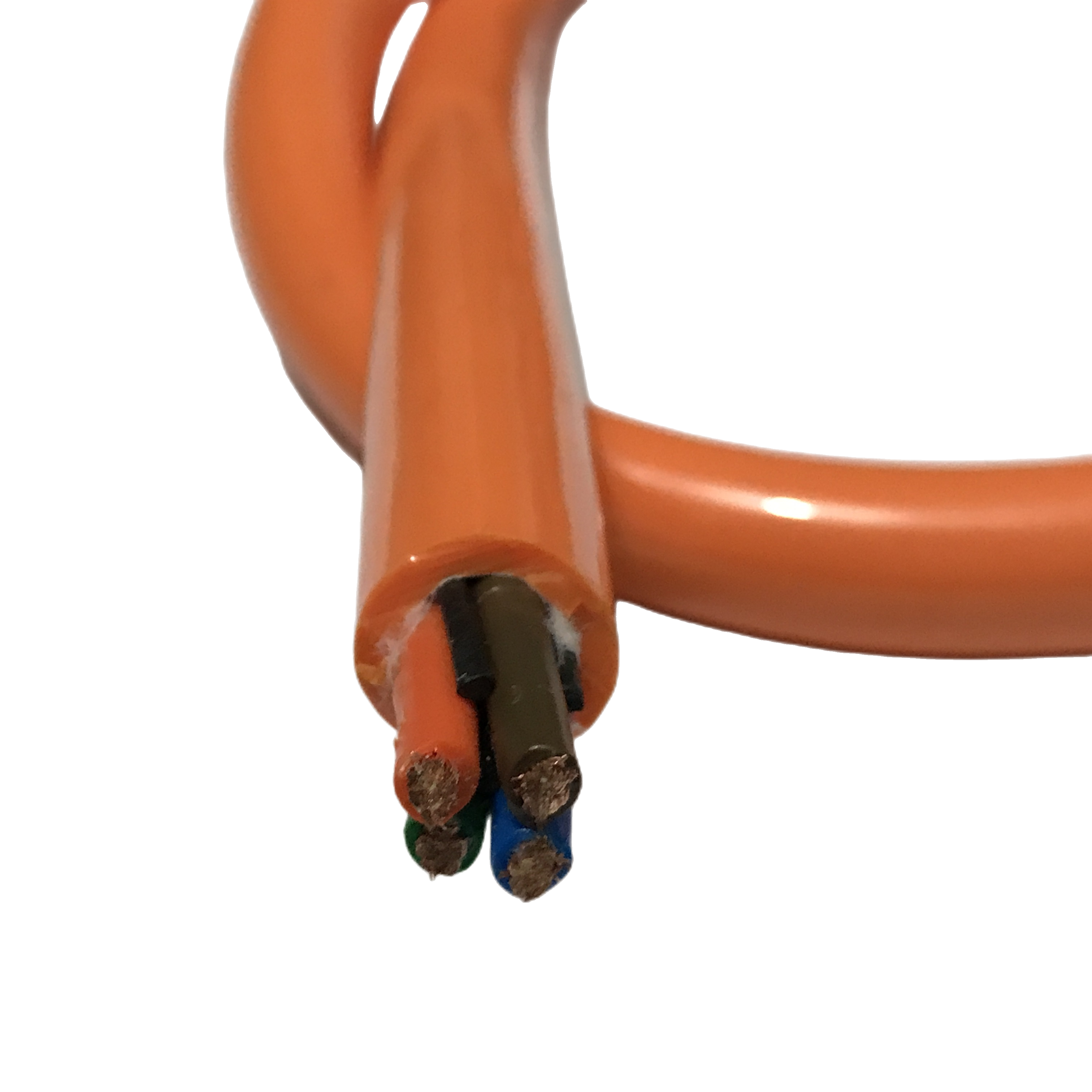
CCTV Pipeline Inspection Robot Cable | Waterproof Sewer Camera Cable for Drain Inspection Systems
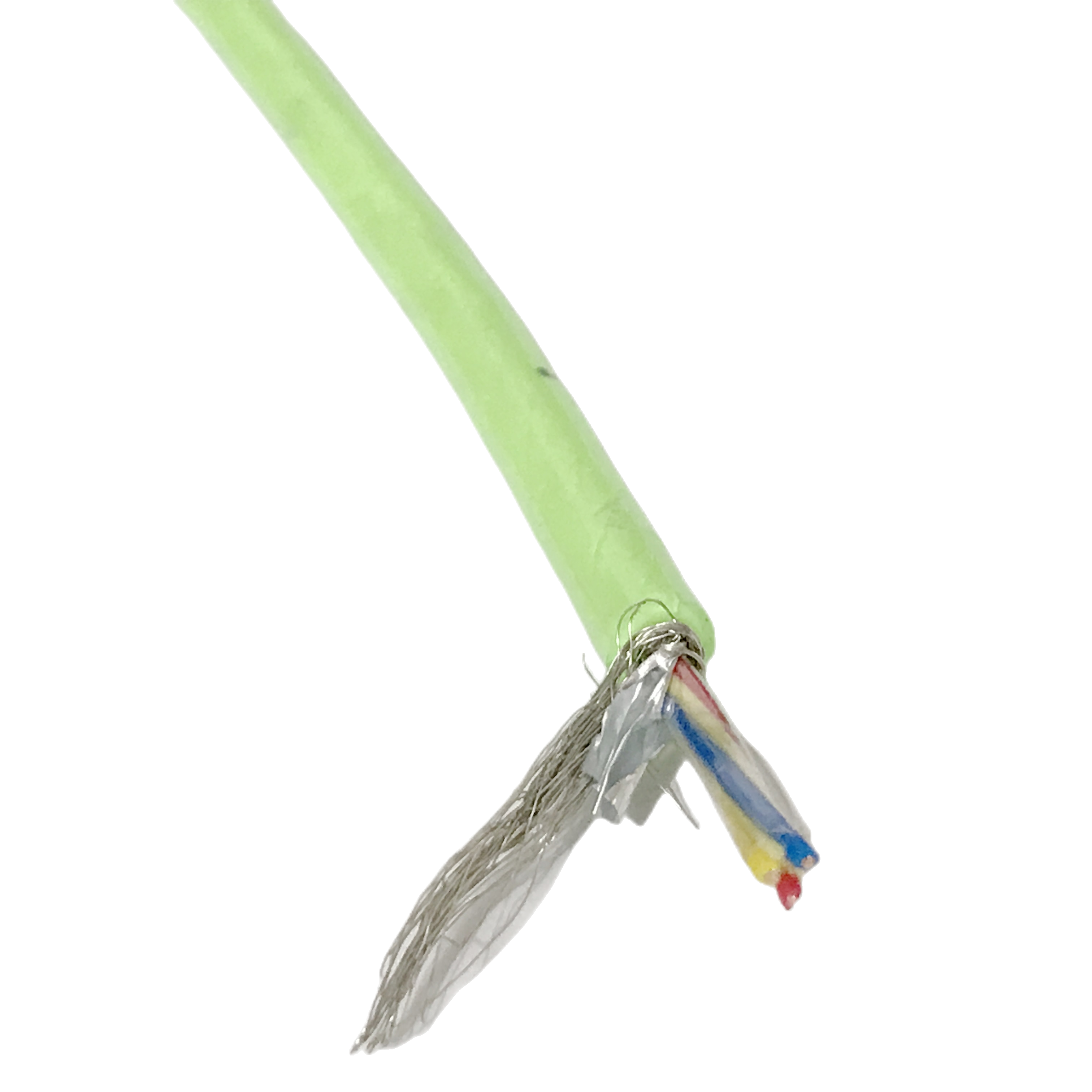
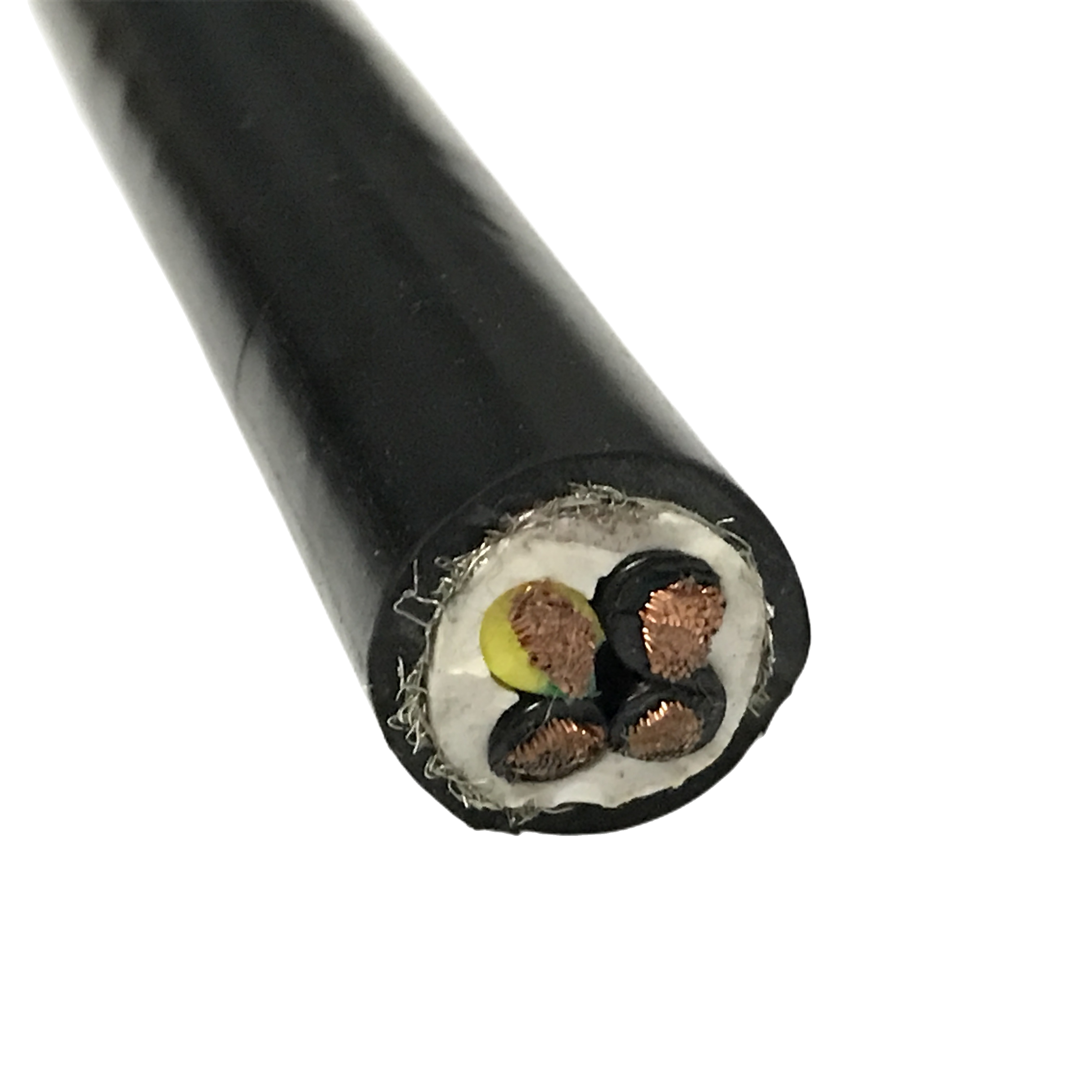
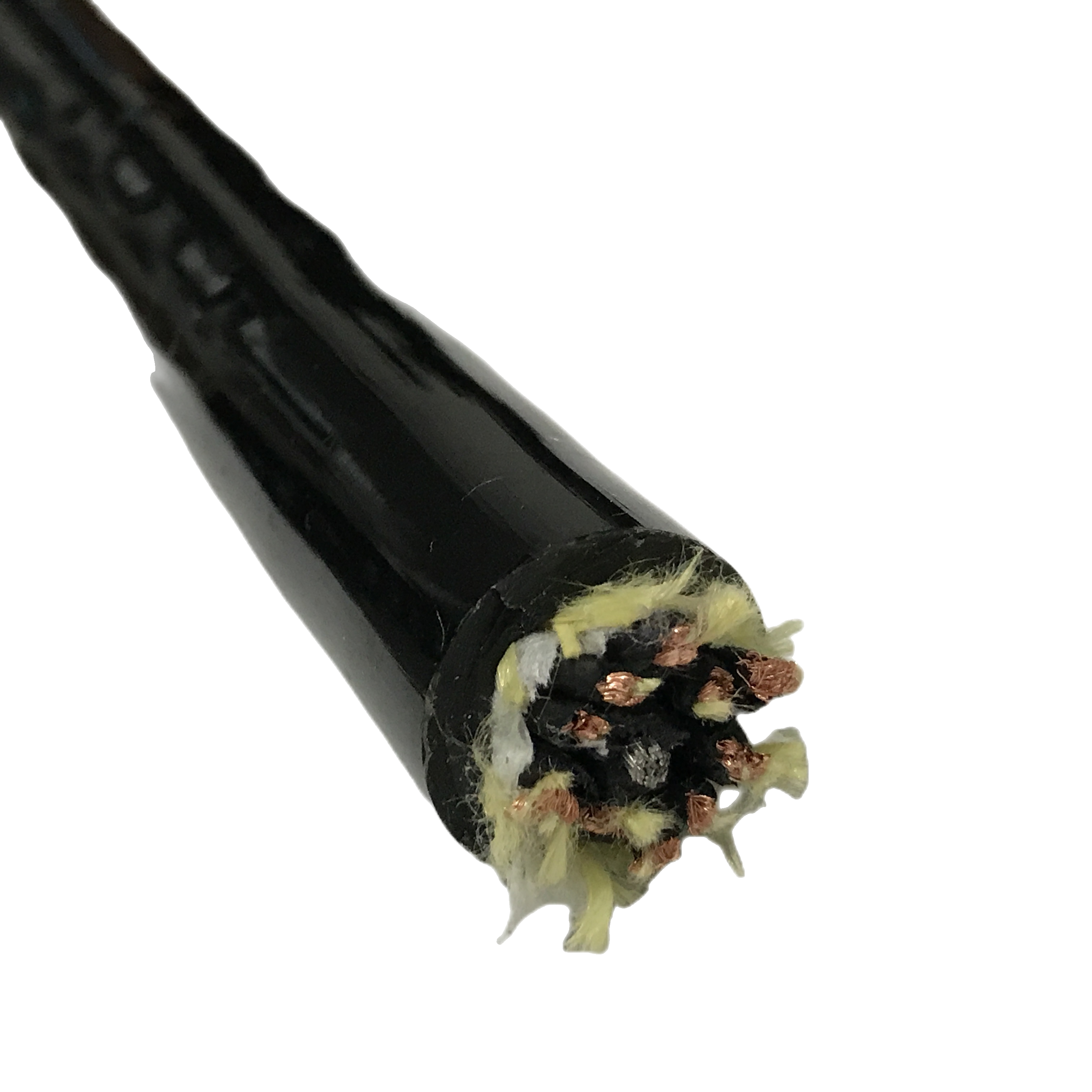
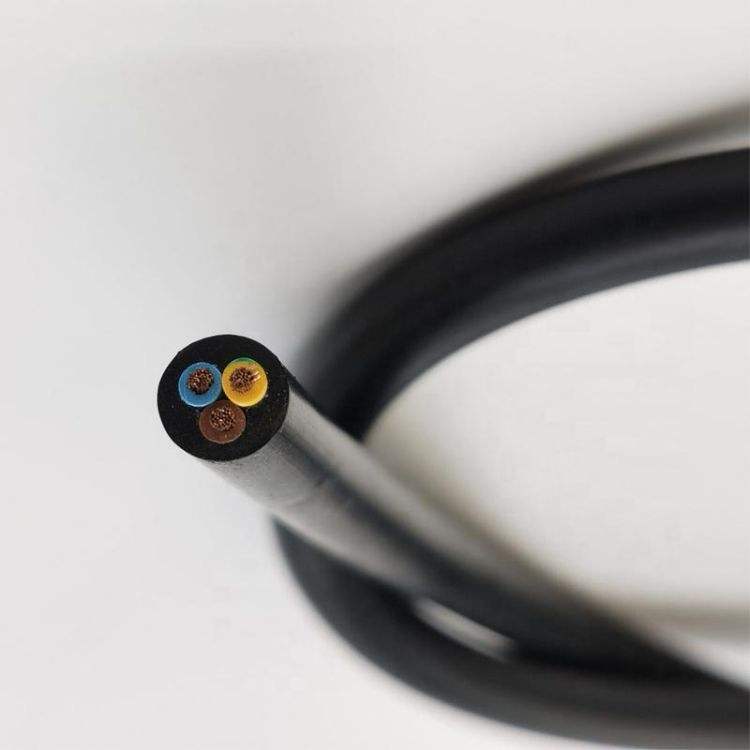
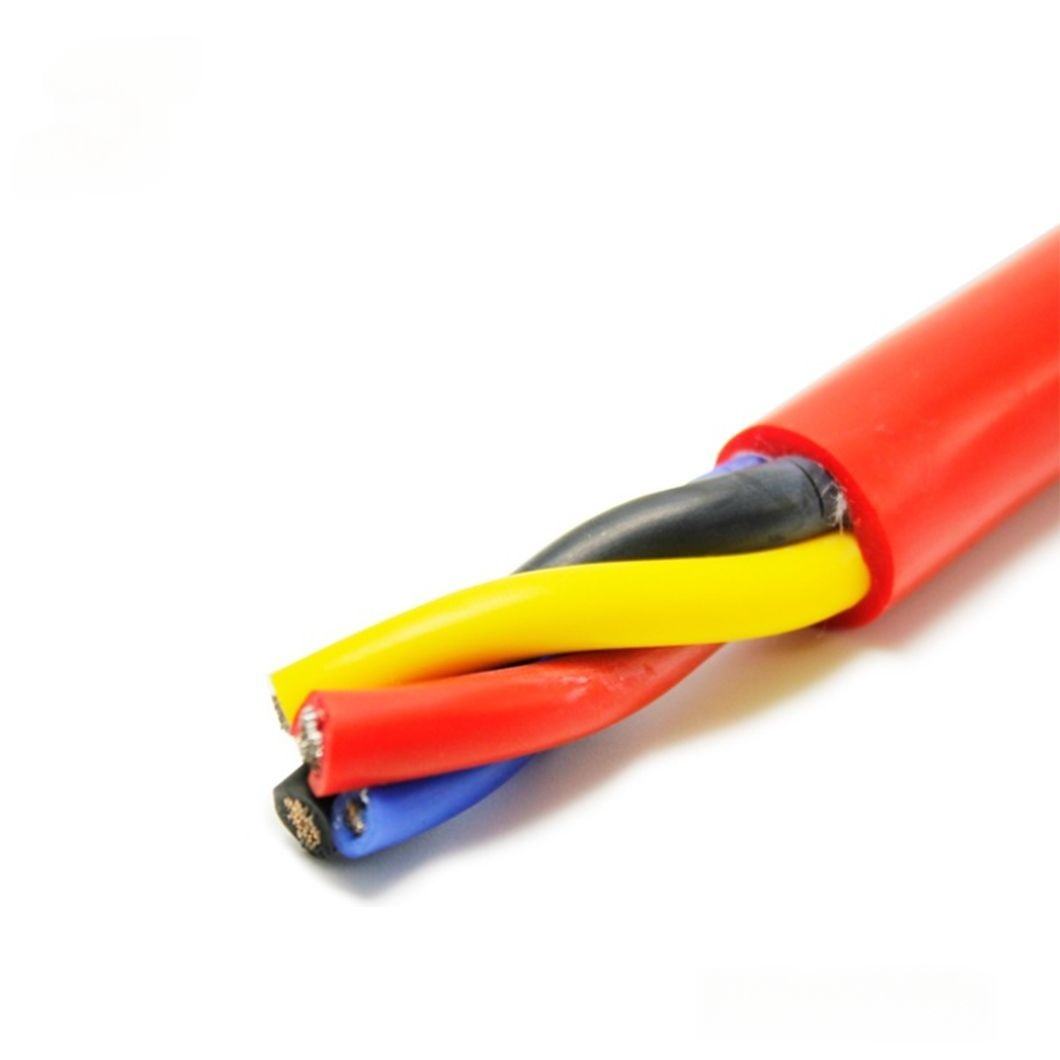
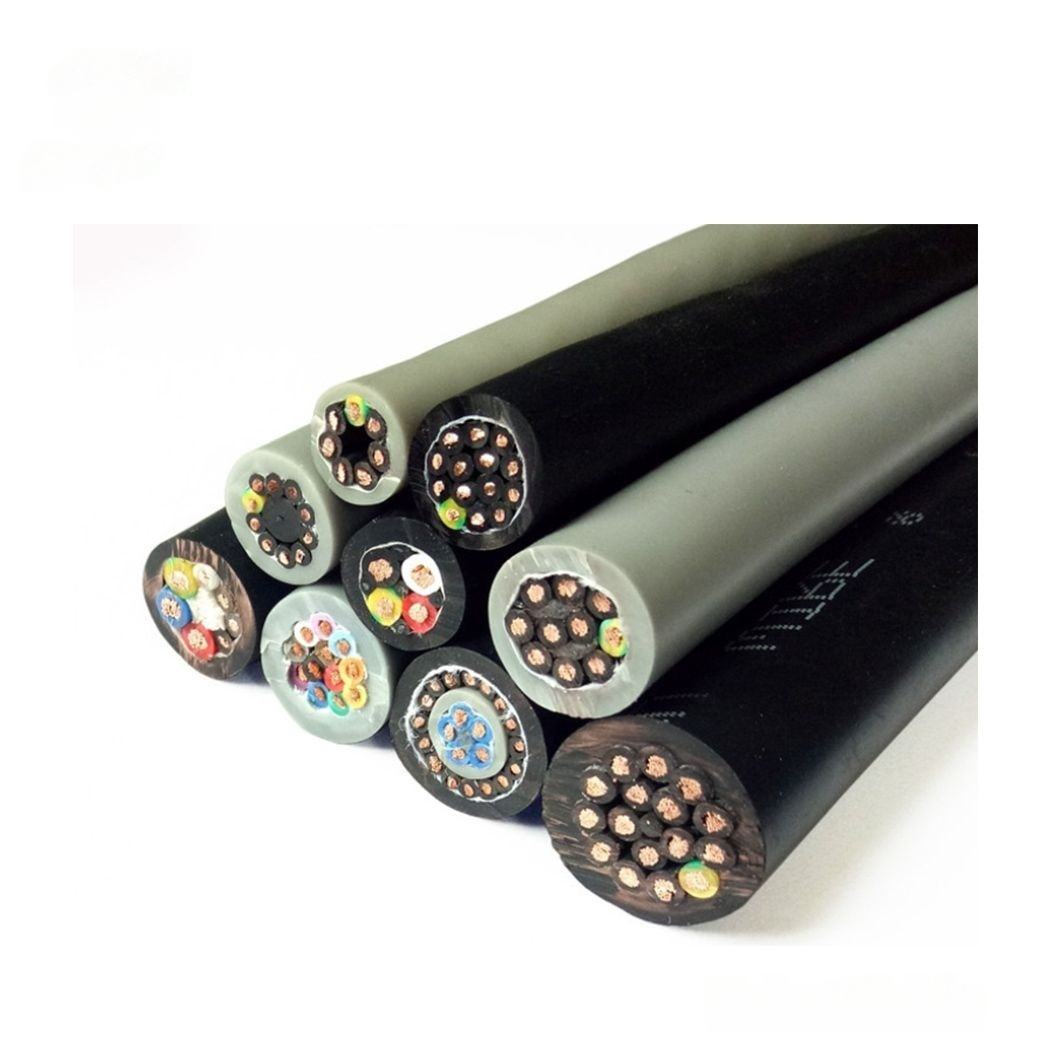
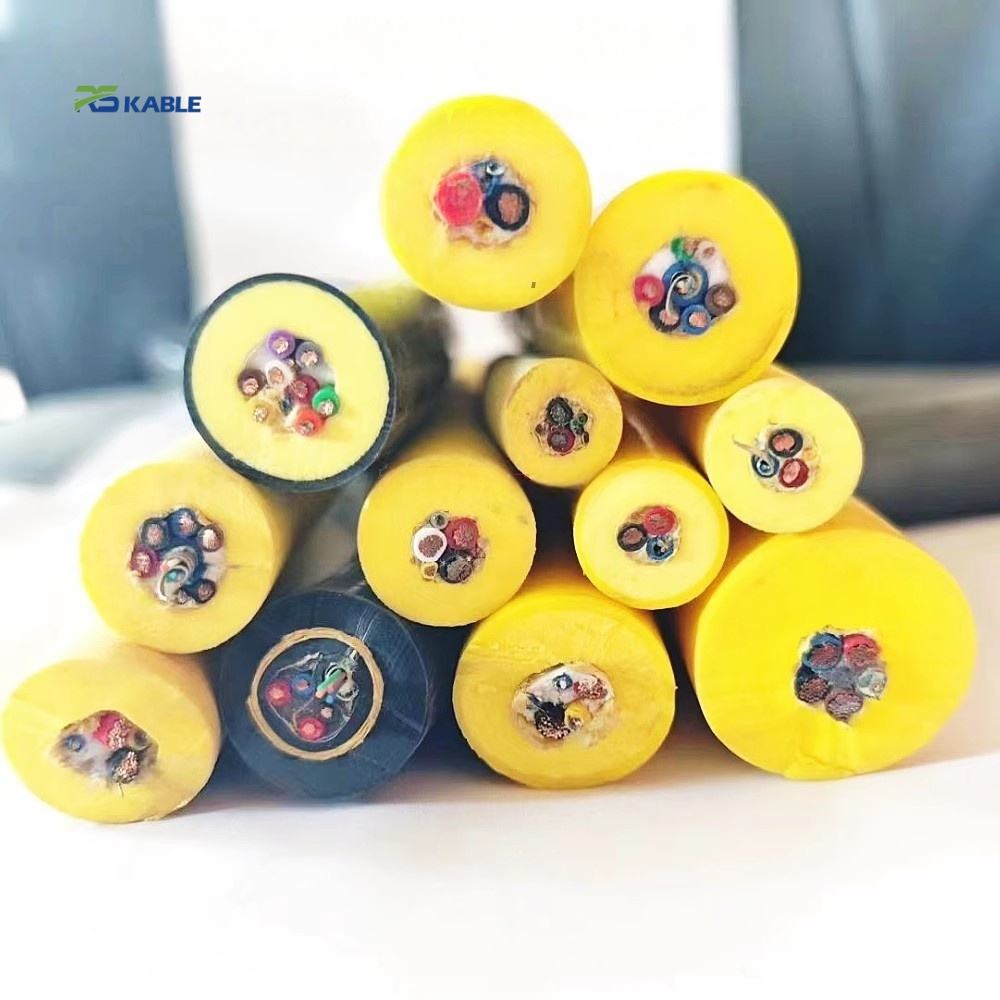
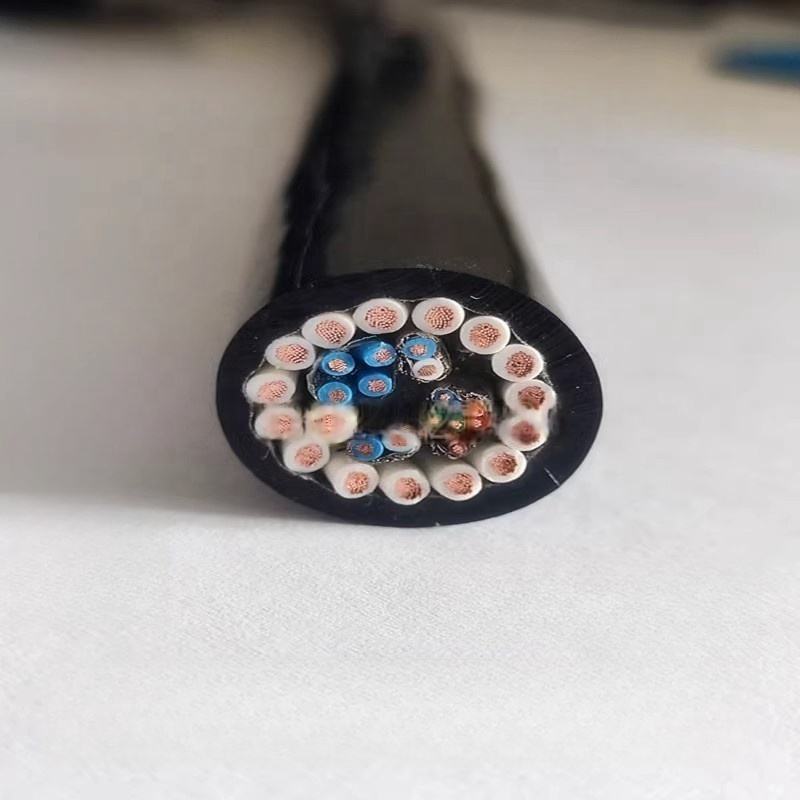
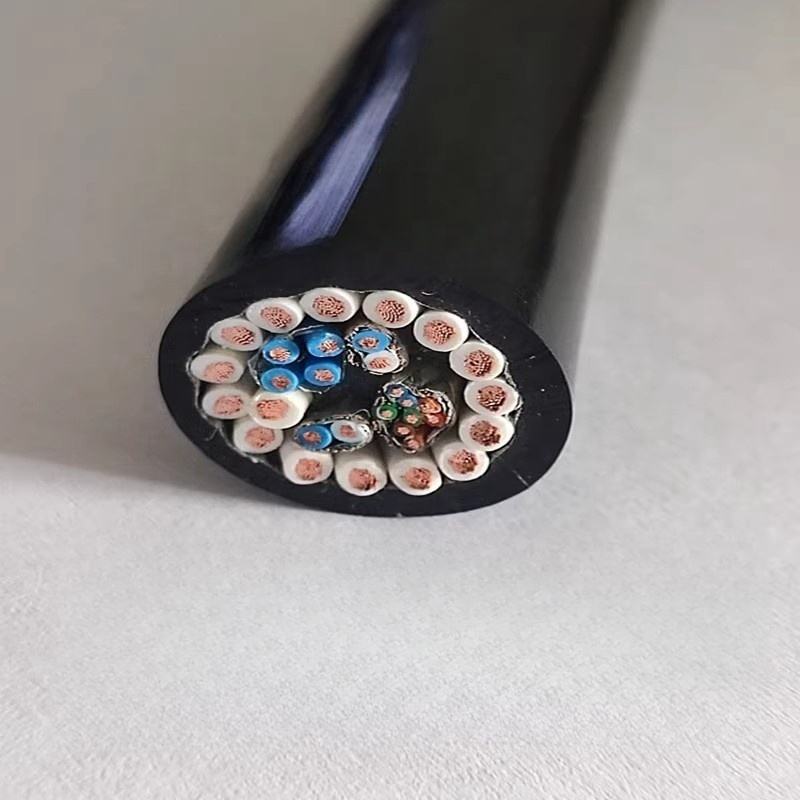
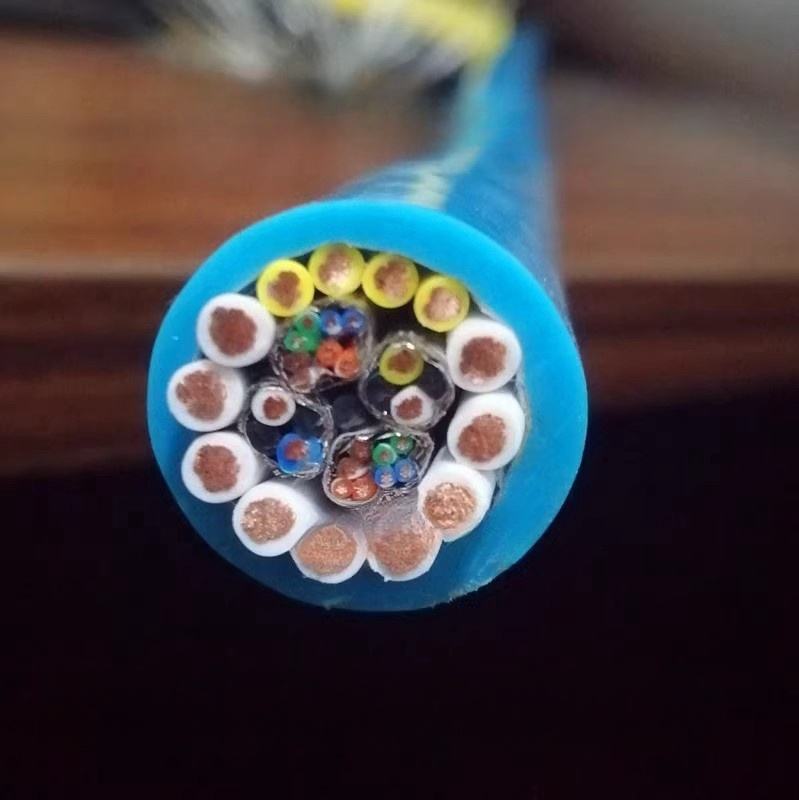
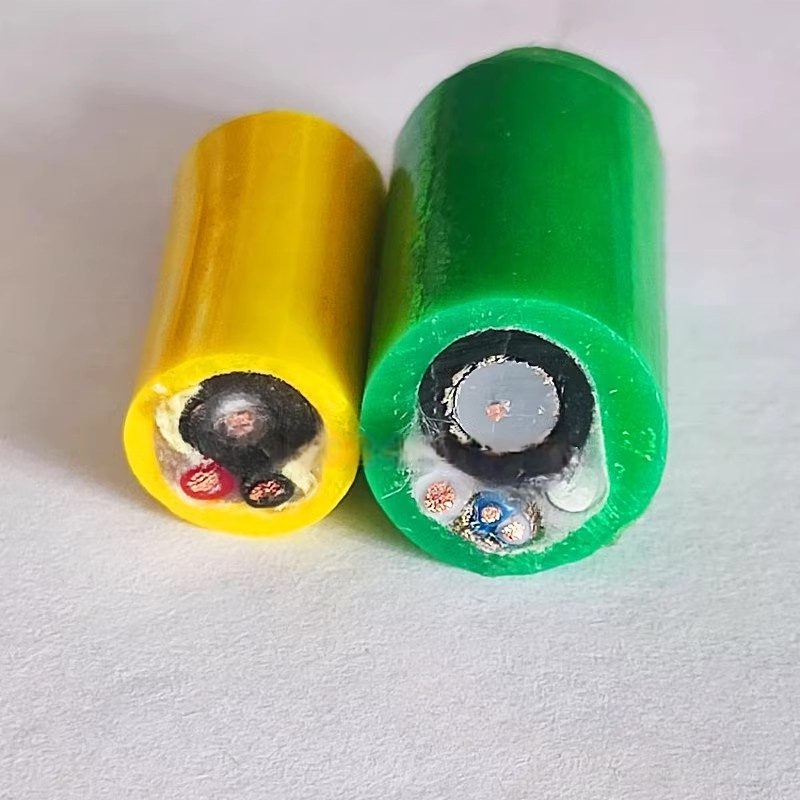
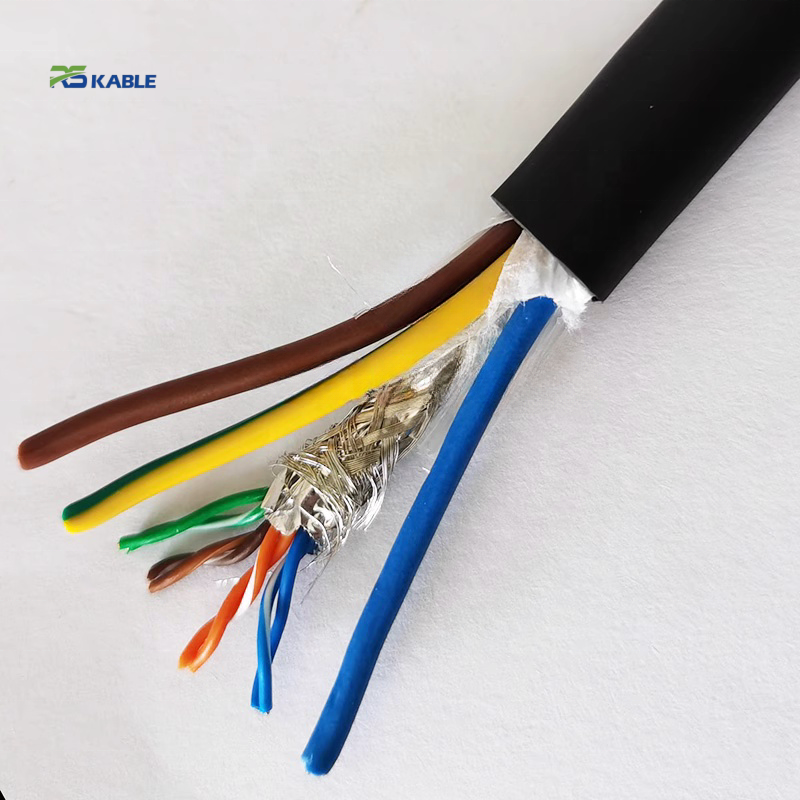
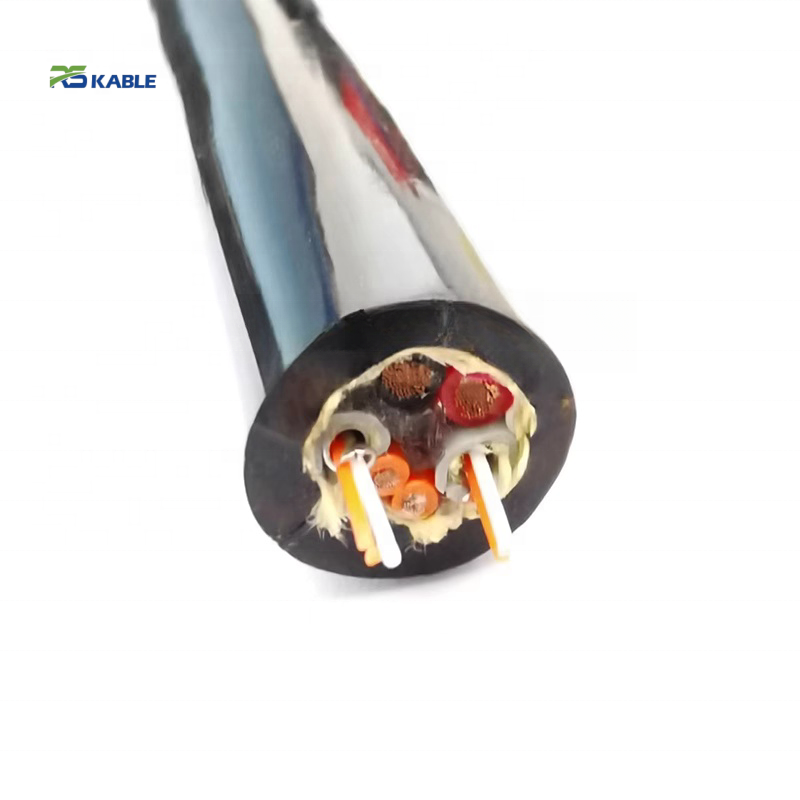
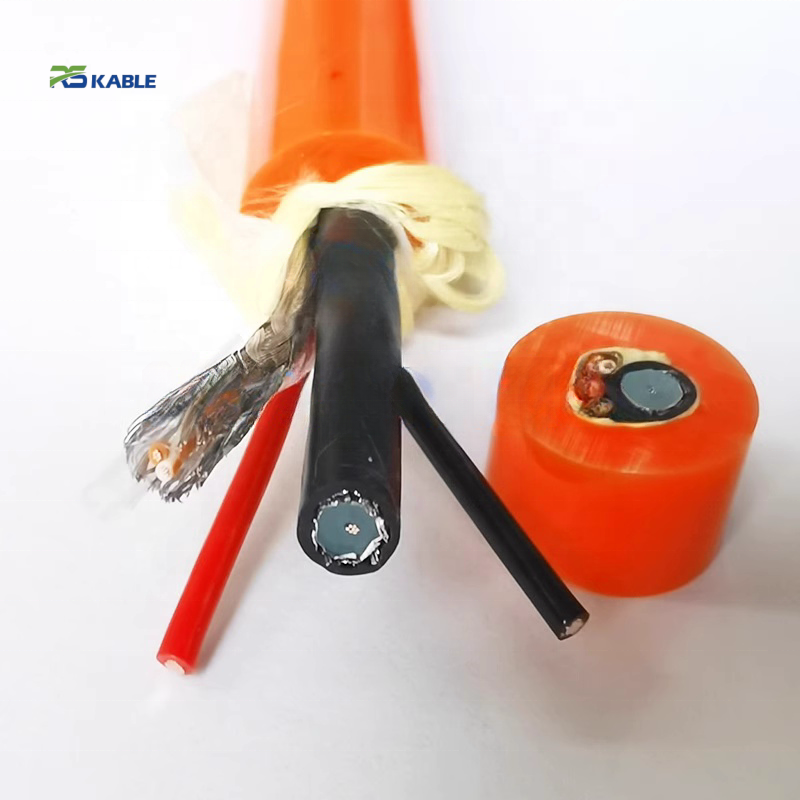
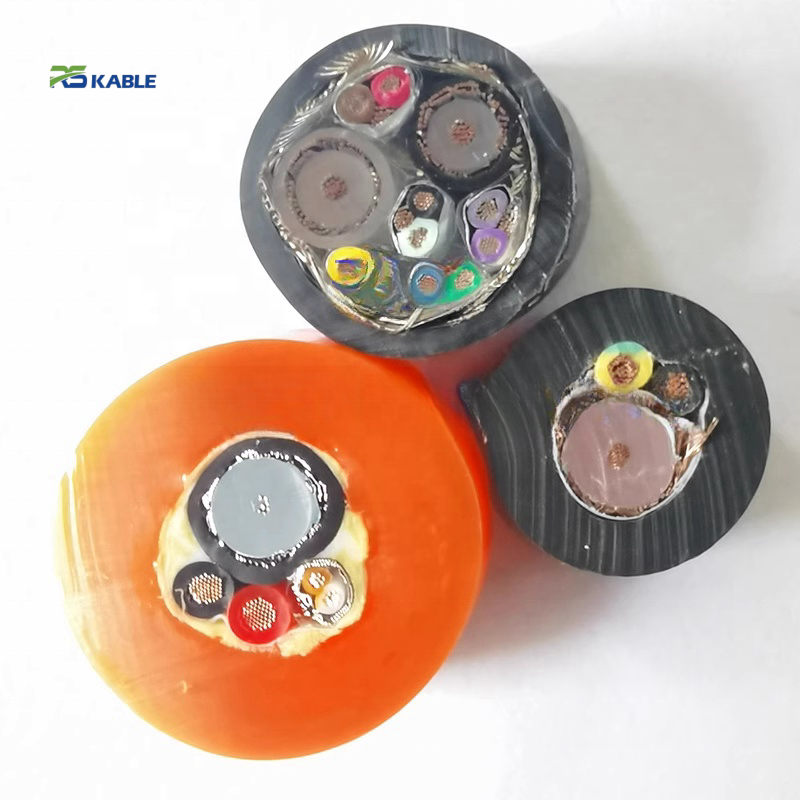
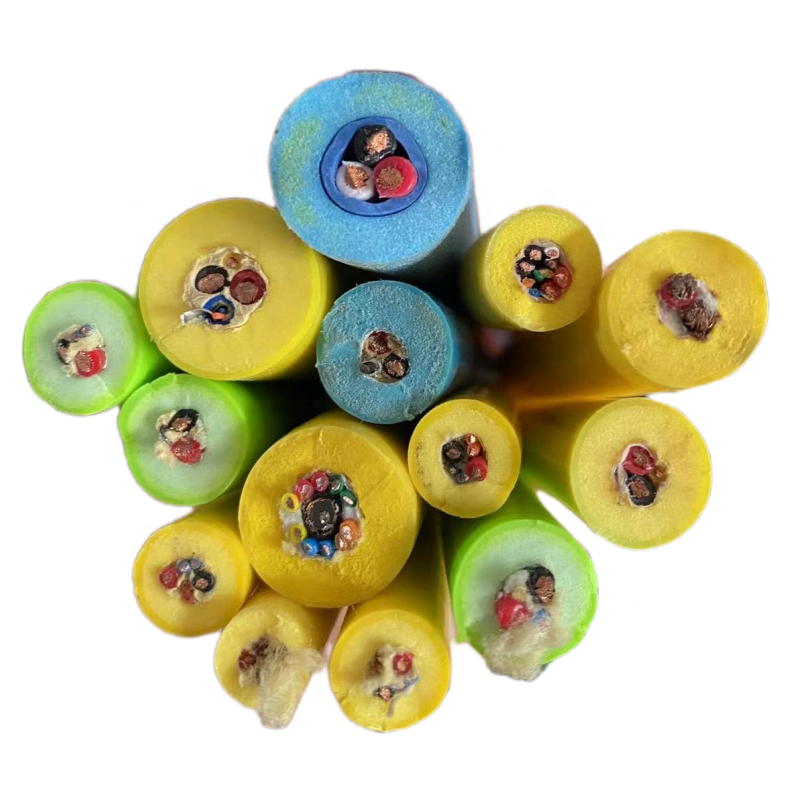
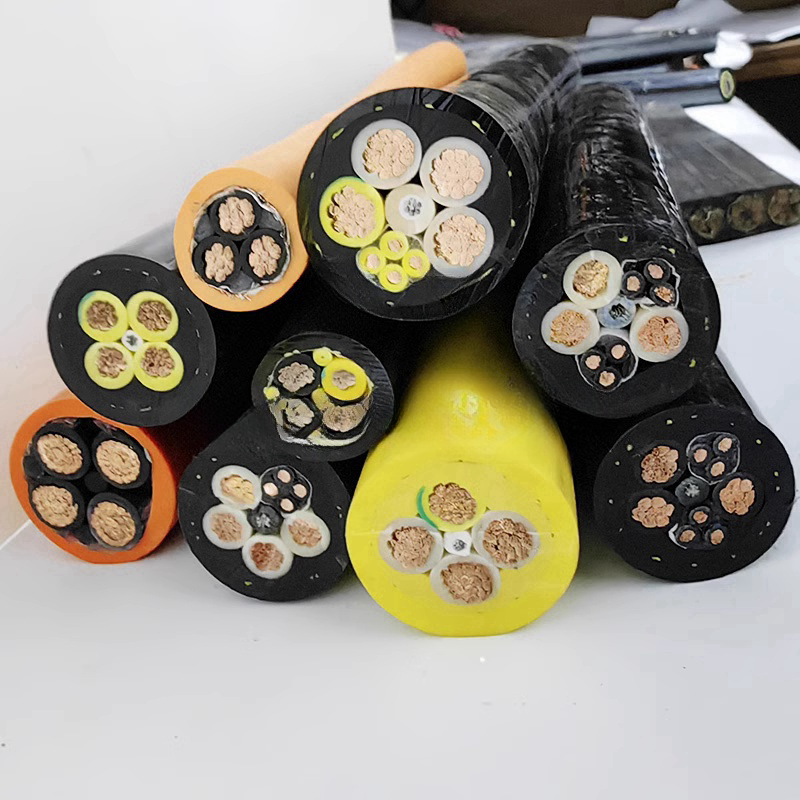
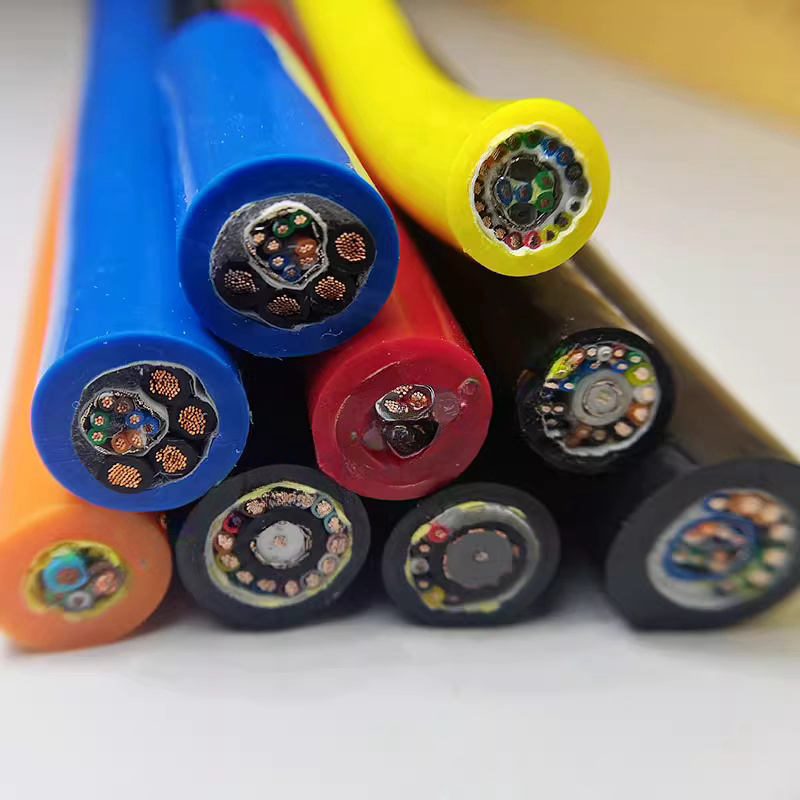
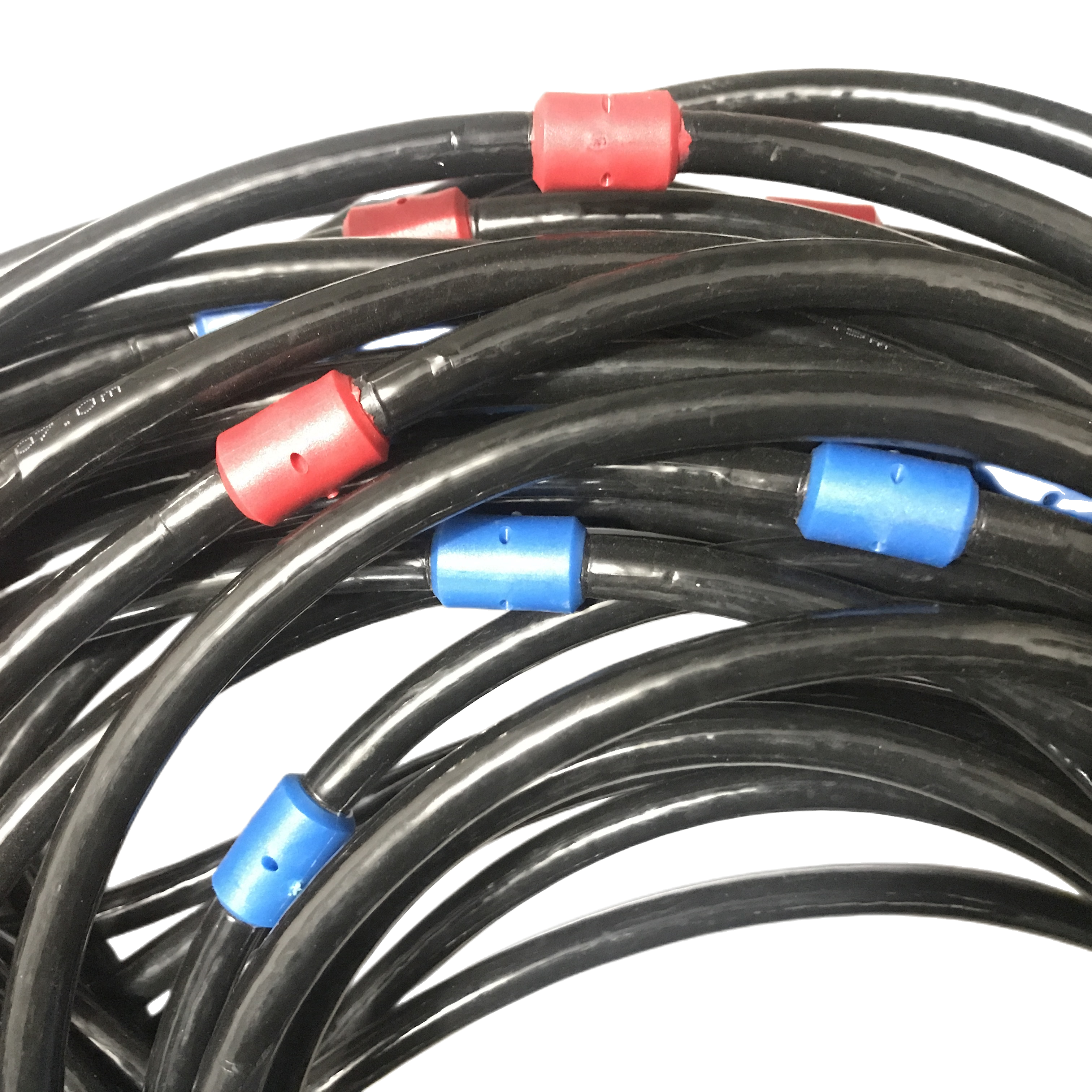
The RST-PIC Series CCTV Pipeline Inspection Robot Cable integrates video, power, and control into a single IP68-rated polyether PUR cable for harsh pipeline environments.
With fiberglass reinforcement, it ensures strong push performance and durability. Tight OD tolerance (±0.15 mm) delivers accurate distance measurement (<0.2 m per 100 m).
Tested for sewage and H₂S exposure, it offers reliable operation in corrosive conditions. Suitable for DN50–DN600+ pipelines, with OEM options and full test certification.
CCTV Pipeline Inspection Robot Cable | Waterproof Sewer Camera Cable for Drain Inspection Systems
Product Series: RST-PIC │ Category: Pipeline Inspection & CCTV Cables │ Written by: Zhou Mingzhi, Senior Pipeline Cable Engineer, 10 years CCTV inspection system design │ Last reviewed: March 2025
Quick selection: match cable to pipe diameter
|
Pipe Diameter (DN) |
Application |
Max Cable OD |
Min Bend Radius |
Push Distance |
RST-PIC Model |
|
DN 50–75 (2–3 in) |
Domestic drain, building lateral |
12 mm max |
120 mm |
40–60 m |
RST-PIC-S (slim) |
|
DN 100–150 (4–6 in) |
Residential sewer, service lateral |
16 mm max |
160 mm |
80–120 m |
RST-PIC-M (standard) |
|
DN 150–300 (6–12 in) |
Municipal sewer, stormwater |
22 mm max |
220 mm |
150–250 m |
RST-PIC-L (heavy-duty) |
|
DN 300–600 (12–24 in) |
Trunk sewer, large storm drain |
30 mm max |
300 mm |
250–400 m |
RST-PIC-XL |
|
DN 600+ (>24 in) |
Interceptor sewer, culvert |
38 mm max |
380 mm |
300–500 m |
RST-PIC-XL or OEM |
CCTV pipeline inspection robot cable carries two simultaneous signal streams through a single waterproof tether: a video signal from the camera head and a power-and-control circuit to drive the crawler motor, lights, and camera pan-tilt actuators. The cable is pushed or pulled through live or recently excavated sewers, stormwater drains, and industrial pipelines where it contacts sewage, grit, H₂S gas, and abrasive pipe wall surfaces on every inspection run.
Unlike other cable categories in this series, the CCTV pipeline inspection cable must also function as a distance-measuring device: the cable counter on the inspection reel measures how far the camera has travelled by counting cable pay-out, so the cable must maintain a consistent outer diameter and jacket stiffness to prevent counter-slip errors that would mislocate defects in the inspection report.
Who specifies this cable
Primary users are CCTV drain inspection contractors, municipal utility engineers, pipeline rehabilitation designers, and CCTV inspection system manufacturers (OEM). Secondary users include industrial plant maintenance teams conducting in-house pipeline condition surveys of process pipework, cooling water systems, and effluent pipes.
Contents
- What Makes Pipeline Inspection Cable Different from Standard Cable
- Cable OD vs Pipe Bore: Clearance Engineering
- Signal Budget: Video + Power + Control in One Cable
- Chemical Resistance: Sewage Environment Exposure
- RST-PIC Model Range & Specifications
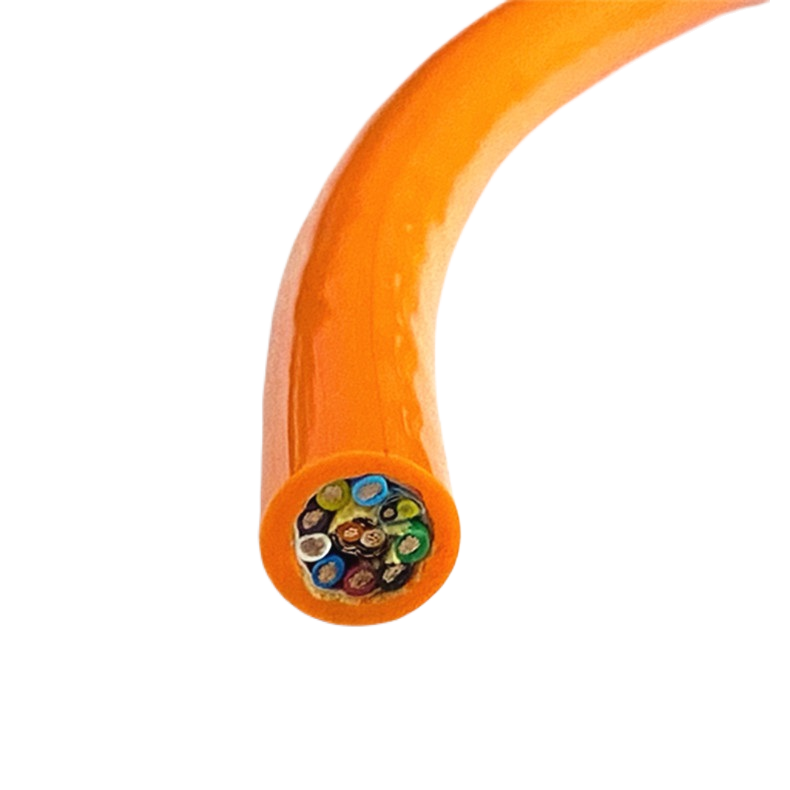
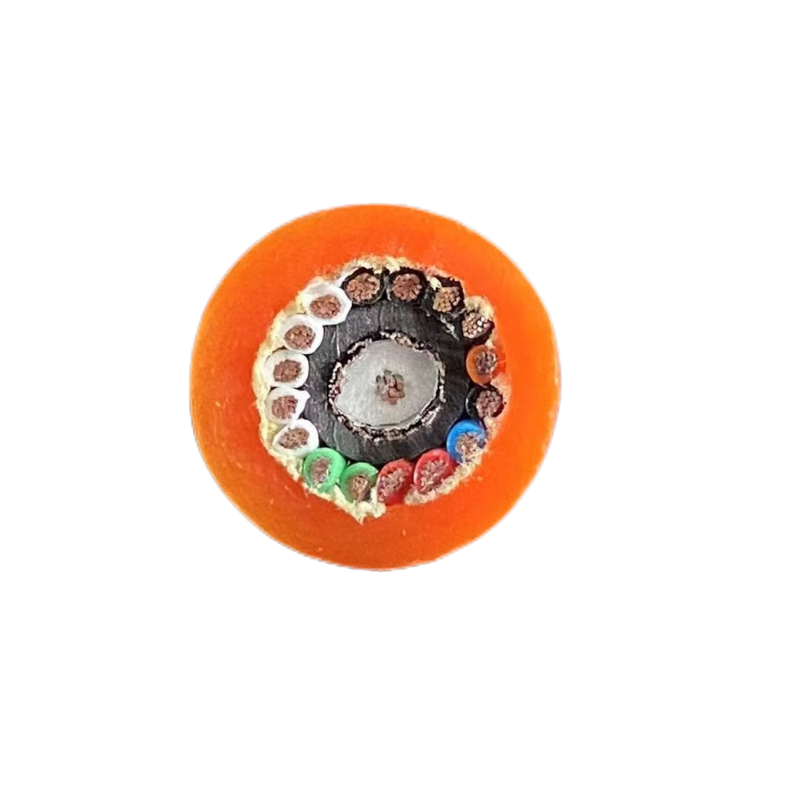
- Construction Engineering — Layer by Layer
- Technical Parameters with Standard References
- Verified Field Deployments
- FAQ — Inspection Contractors & Engineers
- Manufacturer Credentials
- Request a Quote
What Makes CCTV Pipeline Inspection Cable Different
The push force and flexibility balance
A CCTV pipeline inspection cable must be flexible enough to negotiate pipe bends at DN/OD ratios down to 1.5:1, yet stiff enough to transmit push force from the reel drum to the camera head without buckling inside the pipe. These two requirements are in direct conflict: a very flexible cable buckles under push force; a very stiff cable cannot navigate tight bends.
Rousheng push-stiffness test (2023, n=42 cable samples): RST-PIC-M achieves maximum push distance of 118 m in a DN150 pipe with two 90° bends before buckling, versus 74 m for a comparably sized standard coaxial cable. The 59% improvement comes from the concentric fibreglass rod reinforcement in the cable core. (Rousheng Cable Performance Test CPT-PIC-001, 2023)
Cable OD tolerance and distance measurement accuracy
Pipeline inspection reports locate defects by cable distance from the access point. Most CCTV inspection systems use a wheel encoder on the cable drum or a cable counter measuring jacket contact. A cable with OD variation of ±0.5 mm across its length introduces a distance error of up to 0.3% per 100 m — locating a defect at 98.7 m instead of 100.0 m, potentially placing it in the wrong pipe segment in a network GIS system.
RST-PIC OD tolerance: ±0.15 mm (measured by laser micrometer at 500 mm intervals on each production drum). Distance measurement error from OD variation alone: <0.1% per 100 m run. (Rousheng Quality Control Procedure QCP-PIC-002, 2024; IEC 60794-1-21 Method G3 adapted)
Waterproofing: IP68 is not enough
Standard IP68 waterproofing tests the cable at a static depth (typically 1 m for 30 minutes). Pipeline inspection cables face a different water exposure: continuous immersion in warm, chemically aggressive sewage that flows past the cable at up to 1.5 m/s under operating conditions. The flow strips away any poorly bonded jacket material and forces sewage into any micro-cracks or pinholes.
RST-PIC cables are tested to IP68 at 3 m static depth (30 minutes) and additionally to a 200-hour dynamic immersion test in a simulated sewage solution (pH 5.5–8.5, H₂S 50 ppm, suspended solids 500 mg/L) flowing at 1.0 m/s across the cable surface. This dynamic test is not part of the IEC 60529 standard; it was developed by Rousheng in 2021 based on analysis of 38 cable failures submitted for root-cause analysis from CCTV contractors.
Cable OD vs Pipe Bore: Clearance Engineering
Why cable OD relative to pipe bore matters
A cable that is too large relative to the pipe bore creates drag that resists push force and causes the cable to buckle at bends. A cable that is too small has insufficient stiffness to push to the required distance. The clearance ratio (pipe bore ÷ cable OD) should be in the range of 4–10 for optimal push performance. Below 3.5, push drag becomes prohibitive; above 12, the cable loses lateral support from the pipe wall and is prone to helical buckling.
|
Clearance ratio formula: Clearance ratio = Pipe internal bore (mm) ÷ Cable OD (mm). Target range: 4–10. Example 1 (good): DN150 pipe (bore 152 mm) with RST-PIC-M (OD 16 mm) = ratio 9.5. Optimal push performance to 120 m. Example 2 (too tight): DN50 pipe (bore 52 mm) with RST-PIC-M (OD 16 mm) = ratio 3.25. Excessive drag; switch to RST-PIC-S (OD 12 mm, ratio 4.3). ✔ Example 3 (too loose): DN600 pipe (bore 600 mm) with RST-PIC-M (OD 16 mm) = ratio 37.5. Cable helical buckles at 35–40 m from entry. Switch to RST-PIC-XL (OD 30 mm, ratio 20) or use a guided runner. |
Bend negotiation: minimum bend radius at each pipe size
|
Pipe Bore |
Typical 90° Bend Radius |
Max Cable OD (at 3:1 safety factor) |
Cable stiffness requirement |
RST-PIC capability |
|
DN50 (52 mm bore) |
75 mm (1.5D bend) |
11 mm |
High stiffness-to-OD ratio |
RST-PIC-S: OD 12 mm, 120 mm min bend radius — borderline; use with caution |
|
DN100 (107 mm bore) |
150 mm (1.5D) |
18 mm |
Medium-high |
RST-PIC-S (12 mm) or RST-PIC-M (16 mm) — both compatible |
|
DN150 (161 mm bore) |
225 mm (1.5D) |
28 mm |
Medium |
RST-PIC-M (16 mm) or RST-PIC-L (22 mm) — both compatible |
|
DN300 (315 mm bore) |
450 mm (1.5D) |
56 mm |
Low-medium |
RST-PIC-L (22 mm) or RST-PIC-XL (30 mm) |
|
DN600 (619 mm bore) |
930 mm (1.5D) |
110 mm |
Low (cable weight is significant) |
RST-PIC-XL (30 mm); consider intermediate support wheels |
Signal Budget: Video, Power, and Control in One Cable
A CCTV sewer inspection cable must simultaneously carry three different electrical functions at cable lengths up to 500 m. Each function has specific electrical requirements that must be met across the full cable length without mutual interference. The signal budget table below maps each function to its maximum cable run at acceptable quality.
|
Signal Type |
Frequency / Data Rate |
Max Cable Run |
Attenuation Budget |
RST-PIC Element |
|
Camera video (analogue composite, 1 Vpp) |
1–10 MHz (PAL/NTSC) |
300 m (HD-SDI), 500 m (CVBS) |
Video loss ≤3 dB at 6 MHz (75 Ω coax) |
Coaxial video pair, 75 Ω ±1 Ω |
|
Camera video (HD-SDI digital, 1080p) |
270 Mbit/s (1.5 GHz bandwidth) |
150 m at 1080p; 80 m at 4K |
Signal amplitude 800 mVpp ±100 mV per SMPTE 259 |
75 Ω coax, capacitance ≤56 pF/m |
|
IP video (Ethernet, H.265 compressed) |
100 Mbit/s |
80 m (Cat 5e UTP) or 300 m (Cat 5e + repeater) |
Per IEEE 802.3 (100BASE-TX) |
Screened twisted pair, 100 Ω ±5 Ω |
|
Crawler drive power (24 VDC motor) |
DC |
200 m at 5 A motor current, <5% VD |
VD = 2 × I × R × L; max 1.2 V drop at 200 m |
2×2.5 mm² OFC power pair |
|
LED lighting power (12–24 VDC) |
DC |
200 m at 3 A, <5% VD |
Same formula; separate pair from motor |
2×1.5 mm² OFC power pair |
|
Control signals (RS-485 pan/tilt) |
Differential, 9,600 baud |
1,200 m (EIA-485 spec) |
Well within any CCTV cable run |
Screened twisted pair, 120 Ω ±10 Ω |
|
Sonar / acoustic sensor (optional) |
100 kHz–1 MHz |
50 m (signal level-dependent) |
Coaxial, 50 Ω low-noise |
RST-PIC-OEM with coax element |
|
Voltage drop is the limiting factor for cable run length on CCTV crawlers. At 200 m cable length, a 24 VDC crawler motor drawing 5 A through 2.5 mm² conductors: VD = 2 × 5 × 0.00741 × 200 = 14.8 V. The motor receives only 24 – 14.8 = 9.2 V — insufficient for full-speed operation and potentially below the motor’s minimum starting voltage. RST-PIC solution: VD at 200 m with RST-PIC-XL (4.0 mm² power conductors): VD = 2 × 5 × 0.00456 × 200 = 9.1 V. Motor receives 14.9 V. Still marginal; specify the OEM 6.0 mm² power conductor variant for runs over 250 m at 5 A motor load. Formula: VD (V) = 2 × I (A) × R_conductor (mΩ/m ÷ 1000) × L (m). Conductor resistance from IEC 60228:2004 Class 5 maximum values. |
Chemical Resistance: Sewage Environment Exposure
Sewage and stormwater environments present a combination of chemical exposures that differs from both industrial chemical environments and marine environments. H₂S gas in particular is responsible for jacket degradation and copper conductor corrosion in CCTV cables that enters pipes improperly sealed at the camera head end.
|
Chemical / Environment |
Concentration |
Exposure Duration |
RST-PIC Jacket Response |
Test Reference |
|
Hydrogen sulfide gas (H₂S) |
10–500 ppm |
Continuous (sewer headspace) |
No permeation through polyether PUR jacket at ≤500 ppm H₂S, 200 h. Copper conductors protected by HDPE jacketed conductor insulation. |
Rousheng Chemical Protocol CP-PIC-001, 2023; ASTM D543 |
|
Sulfuric acid (from H₂S oxidation by Thiobacillus bacteria) |
pH 1–3 (biogenic acid corrosion) |
Intermittent surface contact |
No surface degradation after 200 h immersion at pH 2.5, 23°C. Standard PVC jackets show significant surface attack at pH <4. |
ASTM D543; Rousheng CP-PIC-002, 2023 |
|
Sewage (municipal mixed waste) |
pH 5.5–8.5, BOD 200–400 mg/L |
Continuous immersion |
No jacket degradation after 1,000 h immersion, dynamic flow 1.0 m/s |
Rousheng dynamic immersion test DIT-PIC-001, 2024 |
|
Chlorine / chloramine (disinfection) |
1–10 mg/L free chlorine |
Intermittent |
No surface embrittlement after 500 h at 10 mg/L free chlorine, 23°C. EPDM shows surface oxidation at >5 mg/L. |
ASTM D543; Rousheng CP-PIC-003, 2024 |
|
Ammonium (NH₄⁺, from organic decomposition) |
10–100 mg/L |
Continuous |
No degradation. Ammonium is neutral to polyether PUR. |
ASTM D543 |
|
Diesel and fuel oils (storm drain cross-contamination) |
Undiluted contact |
Intermittent |
Good resistance. Mineral oil: <2% mass change after 100 h at 23°C. |
IEC 60811-406; Rousheng CP-PIC-004, 2023 |
|
Grit and abrasive suspended solids |
500–2,000 mg/L |
Continuous (flowing) |
Jacket wall maintained at Taber ≥300 cycles (CS-17, 1 kg) before and after 500 h chemical immersion. |
ISO 9352; Rousheng CP-PIC-005, 2024 |
RST-PIC Sewer Camera Cable — Model Range
|
Model |
OD |
Video Signal |
Power Conductors |
Control |
Push Stiffness |
Max Run |
IP Rating |
Primary Use |
|
RST-PIC-S |
12 mm |
75 Ω coax CVBS |
2×1.0 mm² |
RS-485 pair |
High (fibreglass rod) |
60 m |
IP68 / 3 m |
DN50–100 domestic drain |
|
RST-PIC-M |
16 mm |
75 Ω coax CVBS + HD-SDI |
2×1.5 mm² |
RS-485 pair |
Medium-high |
120 m |
IP68 / 3 m |
DN100–200 municipal sewer |
|
RST-PIC-L |
22 mm |
75 Ω coax HD-SDI + spare pair |
2×2.5 mm² |
RS-485 + power |
Medium |
200 m |
IP68 / 5 m |
DN150–300 trunk sewer |
|
RST-PIC-XL |
30 mm |
75 Ω coax 4K SDI + Ethernet pair |
2×4.0 mm² + 2×1.5 mm² |
RS-485 + CANbus |
Medium-low |
350 m |
IP68 / 10 m |
DN300–600 interceptor |
|
RST-PIC-IP |
18 mm |
Cat 5e Ethernet (IP camera) |
2×2.5 mm² |
Ethernet (PoE) |
Medium-high |
80 m (direct) + repeater |
IP68 / 3 m |
IP-based CCTV systems |
|
RST-PIC-4K |
24 mm |
12G-SDI (4K UHD, 6 GHz BW) |
2×2.5 mm² |
RS-485 + aux pair |
Medium-high |
80 m |
IP68 / 5 m |
4K drain inspection camera |
|
RST-PIC-HT |
20 mm |
75 Ω coax HD-SDI |
2×2.5 mm² |
RS-485 pair |
Medium-high |
150 m |
IP68 / 3 m |
Hot water / process pipe (to +100°C) |
|
RST-PIC-OEM |
Per spec |
Per spec |
Per spec |
Per spec |
Per spec |
Per spec |
Per spec |
Custom OEM system |
All RST-PIC models: OD tolerance ±0.15 mm (laser micrometer, 500 mm intervals). IP68 tested at stated depth, 30 min static + 200 h dynamic immersion in simulated sewage (Rousheng DIT-PIC-001, 2024). Fibreglass push rod reinforcement in S and M series. Colour: standard orange RAL 2010 (high visibility in dark pipe interiors); custom colours on request.
Construction Engineering: Pipeline Inspection Robot Cable Design
Push reinforcement: the fibreglass rod core
The most distinctive construction feature of a CCTV pipeline inspection cable is the central fibreglass-reinforced plastic (FRP) push rod. This element does not appear in any other cable category in this series. The FRP rod provides longitudinal stiffness that transmits push force from the reel to the camera head, while remaining flexible enough to navigate pipe bends. FRP is selected over steel because it is non-conductive (important for safety in wet sewage environments where cable/earth fault protection is critical) and has a density of approximately 2.0 g/cm³ — lower than steel, contributing to a lighter cable that is easier to handle manually.
FRP rod flexural modulus: 25–35 GPa (ISO 14125). Comparison: steel rod = 200 GPa (8× stiffer), but steel also 4× heavier and electrically conductive. FRP provides the optimal stiffness-to-weight-to-safety balance for CCTV inspection cable push rod duty. (ISO 14125:2011 (FRP flexural properties); Rousheng Material Selection Report MSR-PIC-001, 2022)
Video coaxial element: 75 Ω precision construction
The video coaxial element carries the camera signal from the crawler head to the surface monitor. In analogue CVBS systems (PAL/NTSC), the critical parameter is signal attenuation at 6 MHz — the bandwidth required for a full-resolution composite video signal. RST-PIC video coaxial elements achieve ≤3.0 dB attenuation at 6 MHz over 200 m, meeting the ≤3 dB limit for acceptable video quality per IEC 60728-1 (distribution networks for TV signals).
For HD-SDI systems (270 Mbit/s to 12 Gbit/s), the critical parameter shifts to return loss and cable attenuation at the Nyquist frequency. RST-PIC-4K achieves return loss ≥20 dB at 3 GHz, validated per SMPTE ST 2082-12 (12G-SDI physical layer).
Waterproof construction: three-barrier approach
RST-PIC cables use a three-barrier waterproofing approach rather than relying on jacket integrity alone. Barrier 1: the outer jacket (polyether PUR, Shore A 85, IP68 at stated depth). Barrier 2: a water-blocking gel fill in the interstice spaces between internal elements, preventing water migration along the cable if the jacket is breached. Barrier 3: individually sealed internal elements (video coax with solid polyethylene dielectric; power conductors with XLPE insulation). Water that penetrates the outer jacket cannot reach the conductor copper without breaching two further barriers.
Orange high-visibility jacket
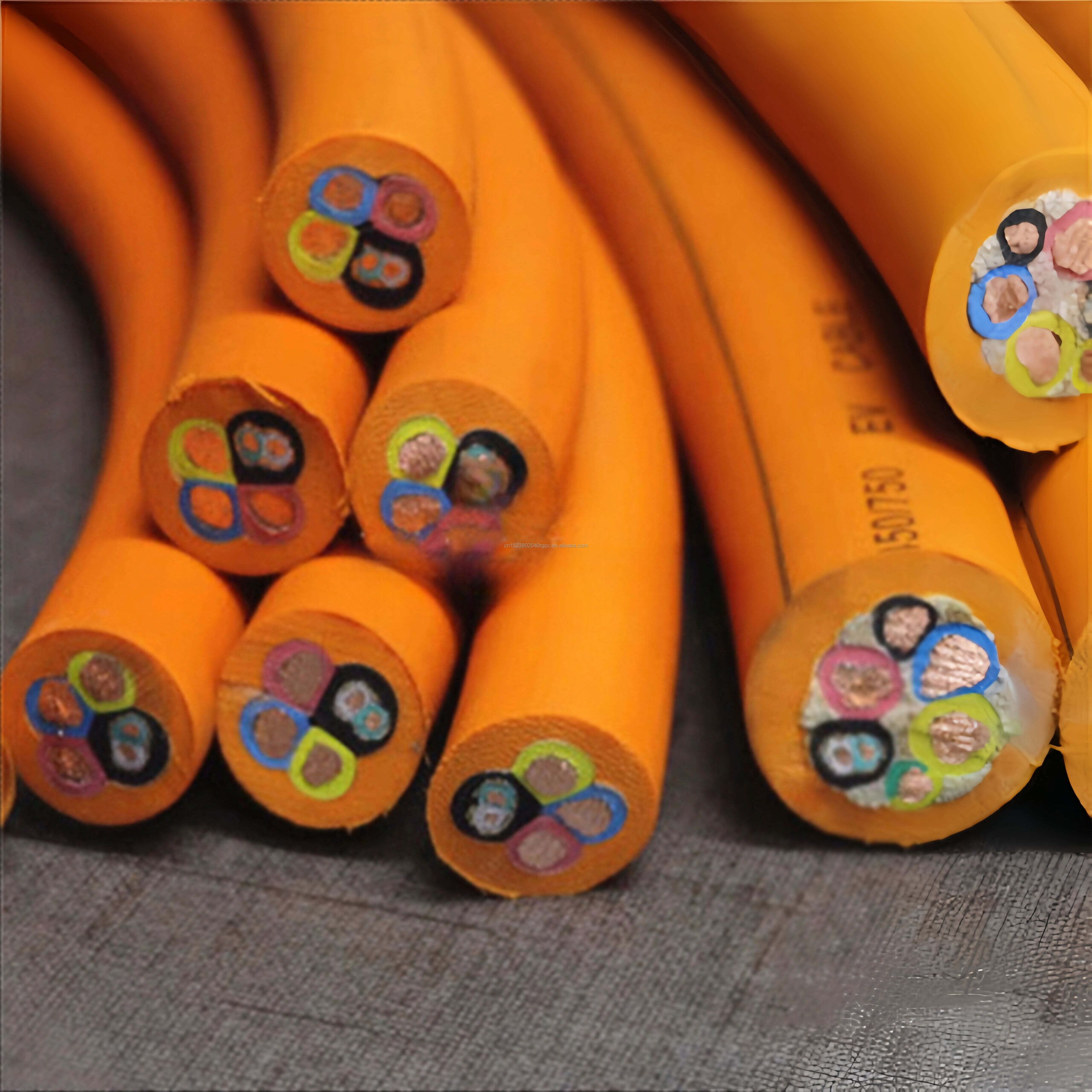
All RST-PIC cables use an orange RAL 2010 outer jacket. Inside a dark pipe at 100 m distance from the camera, an orange cable is visible to the operator on the monitor image at the camera’s periphery, allowing the cable to be used as a visual reference for the camera’s travel direction. Black cables are invisible against sewer walls in the camera image, eliminating this reference. The orange pigment does not affect electrical properties or jacket durability.
|
Layer |
RST-PIC-M (standard DN100–200) |
RST-PIC-XL (DN300–600) |
Standard / Test |
|
FRP push rod |
Diameter 4.0 mm; flexural modulus 28 GPa |
Diameter 6.0 mm; flexural modulus 30 GPa |
ISO 14125 |
|
75 Ω video coax |
Silver-plated Cu centre; PE dielectric; tinned Cu braid ≥95%; PE outer |
Silver-plated Cu centre; foamed PE; double-shield; HDPE outer |
IEC 60096-1; SMPTE ST 292 |
|
Power conductors |
2×1.5 mm² OFC, XLPE insulation |
2×4.0 mm² OFC + 2×1.5 mm² OFC, XLPE |
IEC 60228 Class 5; IEC 60502-1 |
|
Control pair |
RS-485 screened pair, 120 Ω ±10 Ω, foil + drain wire |
RS-485 + CANbus pair, both screened |
IEC 61156-5 |
|
Water-blocking |
Petroleum gel fill in all interstices + SAP tape over bundle |
Same + SAP tape secondary barrier |
IEC 60794-1-2 F5B; ≤0.5 m migration |
|
Outer jacket |
Polyether PUR, Shore A 85±3, orange RAL 2010, OD 16±0.15 mm |
Polyether PUR, Shore A 85±3, OD 30±0.15 mm |
ISO 37; ISO 868; Rousheng QCP-PIC-002 |
Technical Parameters: Drain Inspection Cable Specifications
Video and signal electrical parameters
|
Parameter |
RST-PIC-S / M (CVBS) |
RST-PIC-L / XL (HD-SDI) |
RST-PIC-4K (12G-SDI) |
Standard |
|
Coaxial impedance |
75 Ω ±1 Ω @ 10 MHz |
75 Ω ±0.5 Ω @ 10 MHz |
75 Ω ±0.5 Ω @ 1 GHz |
IEC 60096-1 |
|
Capacitance (coax) |
≤65 pF/m @ 1 MHz |
≤56 pF/m @ 1 MHz |
≤56 pF/m |
IEC 60096-1 |
|
Attenuation @ 6 MHz |
≤3.0 dB/200 m |
≤0.5 dB/100 m |
Not rated at 6 MHz |
IEC 60728-1 (CVBS); SMPTE ST 292 |
|
Attenuation @ 270 MHz (HD-SDI) |
N/A |
≤4.5 dB/100 m |
Not rated |
SMPTE ST 292M |
|
Return loss @ 3 GHz (4K) |
N/A |
N/A |
≥20 dB |
SMPTE ST 2082-12 |
|
RS-485 pair impedance |
120 Ω ±10 Ω |
Same |
Same |
IEC 61156-5; EIA-485 |
|
Max RS-485 run |
1,200 m at 9,600 baud |
Same |
Same |
EIA-485 specification |
Power conductors
|
Parameter |
Value |
Standard |
|
Conductor material |
OFC, IEC 60228 Class 5 |
IEC 60228:2004 |
|
Cross-section (S/M model) |
2×1.0–1.5 mm² |
Per model |
|
Cross-section (L/XL model) |
2×2.5–4.0 mm² + auxiliary 2×1.5 mm² |
Per model |
|
Insulation |
XLPE, +90°C conductor rated |
IEC 60502-1 |
|
Rated voltage |
300/500 V |
IEC 60502-1 |
|
HiPot test |
2,000 V AC / 5 min |
IEC 60502-1 Cl.17 |
|
Insulation resistance |
≥200 MΩ·km (tested in water bath at rated temperature) |
IEC 60502-1 Cl.18 |
|
VD at 200 m, 5 A (2.5 mm²) |
7.4 V (31% of 24 VDC); use 4.0 mm² for runs >150 m at 5 A |
Calculated per IEC 60228 max resistance |
Mechanical, environmental, and OD tolerance
|
Parameter |
Value |
Standard / Source |
|
OD tolerance (all models) |
±0.15 mm (laser micrometer at 500 mm intervals per drum) |
Rousheng QCP-PIC-002, 2024 |
|
Push reinforcement (FRP rod) |
Flexural modulus 25–35 GPa; diameter per model |
ISO 14125 |
|
Min bend radius (dynamic push) |
S: 120 mm; M: 160 mm; L: 220 mm; XL: 300 mm |
Internal push test CPT-PIC-001, 2023 |
|
Max push distance (DN150, 2×90° bends) |
S: 60 m; M: 118 m; L: 180 m; XL: 280 m |
Rousheng CPT-PIC-001, 2023 |
|
IP rating |
IP68 at stated depth (3–10 m), 30 min |
IEC 60529 |
|
Dynamic sewage immersion |
Pass: 1,000 h at pH 5.5–8.5, 50 ppm H₂S, 1.0 m/s flow |
Rousheng DIT-PIC-001, 2024 |
|
H₂S resistance |
No permeation through jacket at ≤500 ppm, 200 h |
Rousheng CP-PIC-001, 2023; ASTM D543 |
|
Jacket tensile strength |
≥45 MPa |
ISO 37 |
|
Jacket abrasion (Taber CS-17, 1 kg) |
≥300 cycles (before and after 500 h chemical immersion) |
ISO 9352; Rousheng CP-PIC-005, 2024 |
|
Operating temperature |
−40°C to +80°C (standard); to +100°C (RST-PIC-HT) |
IEC 60811-501 |
|
Jacket colour |
Orange RAL 2010 standard; custom on request |
Rousheng specification |
Verified Field Deployments of RST-PIC Sewer Camera Cable
Client names withheld at client request. Utility, city, and cable specification are accurate. Technical data verified by the contracting engineer or utility asset manager. Available under NDA.
|
Deployment |
System |
Cable Used |
Problem Solved |
Measured Result |
|
Municipal sewer rehabilitation programme, Southeast China (2022–2024) |
CCTV inspection of 180 km of DN150–DN300 combined sewer before and after lining, HD-SDI crawler system |
RST-PIC-M (DN100–200) and RST-PIC-L (DN150–300), 12 cable sets total |
Previous cable OD variation of ±0.45 mm causing cable counter errors of 0.8–1.2 m per 100 m run, leading to defect location discrepancies in the GIS asset management system. |
RST-PIC OD tolerance ±0.15 mm reduced location error to <0.2 m per 100 m. GIS coordinate accuracy improved; rehabilitation pipe sections correctly identified in 3 cases where previous cables had placed defects in adjacent pipe segments. |
|
Water utility, industrial effluent pipeline inspection, Germany (2023) |
Inspection of DN200 stainless steel process pipeline carrying 70°C acidic effluent (pH 3.5–4.5), RST-PIC-HT specified |
RST-PIC-HT (hot process variant, ≤+100°C), OD 20 mm, 150 m cable |
Standard CCTV cable jacket softened and deformed at 70°C process pipeline temperature, causing the cable to jam against the pipe wall during retraction. RST-PIC-HT with XLPE insulation and HT-grade PUR jacket maintained dimensions to +100°C. |
150 m inspection run completed without cable jam. No jacket deformation observed on recovered cable. Client scheduled annual inspection programme using RST-PIC-HT. |
|
CCTV inspection contractor, storm drain condition survey, Australia (2023–2024) |
DN600 reinforced concrete culvert inspection, submersible crawler, 350 m run per access point, 4K camera |
RST-PIC-XL (OD 30 mm, 4.0 mm² power conductors), 4K video coax, 350 m per cable |
Previous contractor had reported ‘camera too slow’ at 250 m run in DN600. Root cause: 2.5 mm² conductors producing 12.3 V drop at 5 A motor current, leaving the motor running at 11.7 V (too slow). RST-PIC-XL 4.0 mm² conductors: 7.5 V drop, motor at 16.5 V. |
Crawler speed restored at 350 m. 4K video quality: 12G-SDI at 350 m showed return loss of 21.2 dB at 3 GHz (above 20 dB minimum). Inspection programme 120 km of culvert completed on schedule. |
|
CCTV drain inspection OEM manufacturer, China (2022–2024) |
OEM cable for handheld DN50 drain inspection camera (plumbing market), 60 m cable on hand reel |
RST-PIC-S (OD 12 mm, 60 m, CVBS + 2×1.0 mm², orange), custom BNC + power connector factory-terminated |
OEM’s previous cable failing at the camera-end connector seal after 200–300 uses from repeated cable coiling stress on the seal interface. RST-PIC-S with moulded strain relief and over-moulded connector boot. |
Zero connector seal failures in 14-month production run (4,800 units shipped). Warranty claim rate for cable-related failures: 0.06% vs. 2.1% on previous cable. Estimated warranty saving: CNY 340,000 per year. |
|
Tunnel inspection project, transport authority, Hong Kong (2023) |
Road tunnel drainage channel CCTV inspection, DN200 square culvert profile, H₂S levels up to 180 ppm, 200 m runs |
RST-PIC-M (HD-SDI, IP68/3 m, H₂S rated jacket), 200 m per cable, 6 cables |
H₂S at 180 ppm had caused conductor corrosion inside the camera head of previous cable within 6 months, as H₂S permeated through a non-rated jacket. RST-PIC-M: no H₂S permeation through jacket at 500 ppm H₂S per 200 h test. |
18-month inspection programme completed: no conductor corrosion at camera-end connector on any of 6 cables. H₂S monitoring during inspection confirmed levels up to 190 ppm at cable surface. |
FAQ — Inspectors & Engineers Specifying Pipeline Inspection Cable
Q1: What causes video signal to degrade at long cable runs and how do I fix it?
Video signal degradation at long cable runs has two causes. First, high-frequency attenuation: the coaxial cable attenuates high-frequency video components (4–6 MHz in CVBS, 270 MHz in HD-SDI) more than low frequencies, causing the image to appear soft or blurred. Second, voltage drop on the power conductors causes the camera’s on-board LED driver to dim the lights, making the image appear dark. The fix for the first problem is to use a higher-specification coaxial element (≤56 pF/m, ≤95% shield) and add a video cable equaliser at the surface unit. The fix for the second problem is to increase the power conductor cross-section from 1.5 mm² to 2.5 mm² or 4.0 mm² depending on run length.
Q2: Can I use a standard extension cable from a different manufacturer with my RST-PIC reel cable?
Only if the extension cable has the same impedance (75 Ω), the same capacitance per unit length, and the same connector type with a properly mated impedance. Any impedance step at the junction between the reel cable and an extension cable creates a signal reflection that appears as a video artefact (a horizontal white line at a fixed position on the image in analogue systems, or a sync error in digital). For HD-SDI systems, a mismatched extension cable causes complete signal loss, not just quality degradation. RST-PIC extension cables are available with matched impedance and the same OD tolerance to maintain cable counter accuracy.
Q3: My cable counter is reading incorrectly. Is the cable the likely cause?
Yes, if the cable OD is outside tolerance. Most cable counters use a calibrated wheel pressed against the cable jacket; if the jacket OD is larger than specified, the counter under-reads distance (the cable seems shorter than it is). Common causes of OD variation: jacket shrinkage or swelling from chemical exposure, permanent deformation from over-tightening of the cable drum’s cable retainer, and inconsistent manufacturing. Check the cable OD at 10-metre intervals with a calibrated calliper or OD gauge. If variation exceeds ±0.3 mm, the cable should be replaced or the counter re-calibrated for the actual OD.
Q4: How do I know if H₂S is attacking my cable?
H₂S attack typically shows two symptoms. First, surface darkening or tarnishing of any exposed copper — at the camera-head connector or at any jacket breach. H₂S reacts with copper to form copper sulfide (black tarnish) rapidly at concentrations above 10 ppm. Second, progressive video signal loss that worsens in one particular cable but not others — indicating conductor resistance has increased from corrosion. If H₂S levels in your inspection environment exceed 10 ppm (detectable by site gas monitor), specify RST-PIC with the H₂S-rated jacket and ensure the camera head is completely sealed at the cable entry point with a waterproof connector that is rated for H₂S environments.
Q5: What is the difference between CVBS, HD-SDI, and IP camera cables for pipeline inspection?
CVBS (composite video) operates at 6 MHz bandwidth and can run on a standard 75 Ω coaxial cable to 500 m. Image quality is standard definition. HD-SDI (270 Mbit/s for 720p, 1.5 Gbit/s for 1080p) provides high-definition video but requires a higher-specification coaxial cable (≤56 pF/m, return loss ≥20 dB) and has a maximum run of approximately 150–200 m without a repeater. IP camera systems transmit compressed H.265 video over an Ethernet pair and can achieve very high resolution but are limited to 80 m without a repeater (per IEEE 802.3 100BASE-TX). For inspection distances beyond 80 m, HD-SDI is typically preferred over IP for pipeline inspection because it does not require inline repeaters that add failure points.
Q6: Can RST-PIC cable be repaired if the jacket is cut or abraded mid-length?
Yes, using a heat-shrink repair sleeve compatible with polyurethane jacket material. The sleeve must maintain the OD within ±0.3 mm of the cable OD at the repair point to preserve cable counter accuracy. For length-critical inspection projects, mark the repair location on the cable with a paint marker and add the OD correction factor to the counter reading. For IP68 waterproofing restoration, use a heat-shrink sleeve with adhesive liner rated for IP68 at the required depth. Connector end repairs require factory re-termination; field re-termination of HD-SDI connectors is not recommended because the impedance transition at the connector is difficult to achieve with field tools.
Manufacturer Credentials — Shanghai Rousheng Pipeline Cable
|
Production & testing Dedicated pipeline inspection cable production: FRP rod co-extrusion with coax and power elements OD measured by laser micrometer at 500 mm intervals on every production drum IP68 immersion test per IEC 60529 on every drum (at rated depth) Dynamic sewage immersion test (DIT-PIC-001): 1,000 h per compound batch H₂S permeation test (CP-PIC-001) on every jacket compound lot Push distance test (CPT-PIC-001) on first drum of each production lot Factory connector termination: BNC, custom camera-head connectors, moulded strain relief |
Certifications ISO 9001:2015 quality management system CE marking — LVD Directive 2014/35/EU RoHS 2 / REACH SVHC compliance per shipment IP68 certification per IEC 60529 (third-party lab report on request) WRc / NASSCO WinCan PACP compatibility (cable OD tolerance) CNAS-accredited lab reports on request OEM qualification package: full test data for CCTV system manufacturer approvals |
Zhou Mingzhi, Senior Pipeline Cable Engineer, has led the RST-PIC design programme since 2019. All specifications are supported by test reports CPT-PIC-001 through DIT-PIC-001 and the chemical protocol series CP-PIC-001 through CP-PIC-005. CCTV inspection system manufacturers requiring OEM qualification documentation may request the complete test data package with NDAs.
Request a Pipeline Inspection Cable Technical Proposal
|
Contact Email: Jerry@rstlkable.com Phone: +86-021-50759965 Mobile: +86-13482197396 Address: No. 2591 Fengzhe Road, Fengxian District, Shanghai, China Proposal within 24 hours. OD calibration certificate + IP68 test record + push distance data with every order. |
Include in your enquiry 1. Pipe diameter (DN or bore in mm) and pipe material 2. Maximum inspection run length (m) 3. Camera type: analogue CVBS, HD-SDI, 4K SDI, or IP Ethernet 4. Crawler motor power (W) and voltage (V) 5. H₂S levels in inspection environment (ppm) if known 6. Cable reel type (hand reel, motorised drum, flat reel) 7. Connector type at camera end and surface control end We return pipe clearance check, VD calculation, video budget, and model recommendation with every reply. |