

Marine Grab Cable vs Standard Crane Cable: Which One Is Better for Marine Use?
When buyers compare crane cables for ports, harbors, ship unloaders, and coastal lifting systems, one question comes up again and again: is a marine grab cable really necessary, or can a standard crane cable do the job? At first glance, the difference may not seem dramatic. Both are flexible cables used in moving crane systems. Both can transmit power and, in some applications, control signals. Both may look similar in diameter, voltage class, or outer appearance. But once the cable enters a real marine working environment, the difference becomes much more important.
In port terminals, bulk cargo yards, shipboard cranes, and coastal handling systems, the cable is exposed to more than motion. It also sees salt-laden air, humidity, UV, abrasive dust, grease, repeated reeling, hanging tension, and mechanical shock from grab operation. Under these conditions, a cable that performs well in a general industrial crane may wear much faster than expected. That is why a properly selected Marine Grab Cable often delivers better long-term reliability in true marine applications.
This article explains the real difference between marine grab cable and standard crane cable, where each type is suitable, and how to choose the better option for marine use. If you are sourcing cable for a port crane, harbor grab crane, ship unloader, marine deck crane, or coastal bulk handling system, this guide is built to answer the questions that matter most in practice, not just on paper.
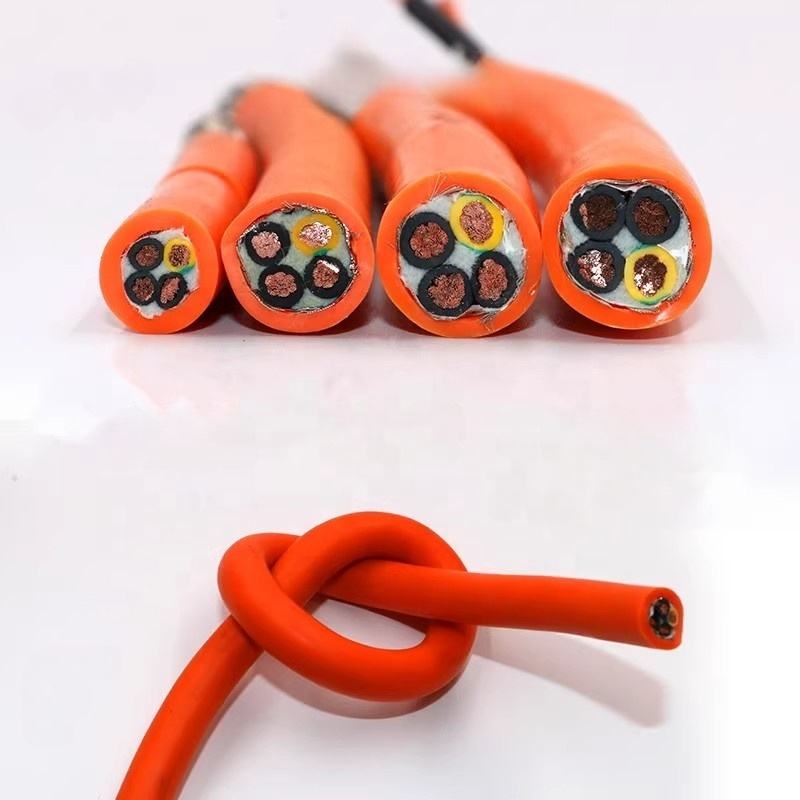
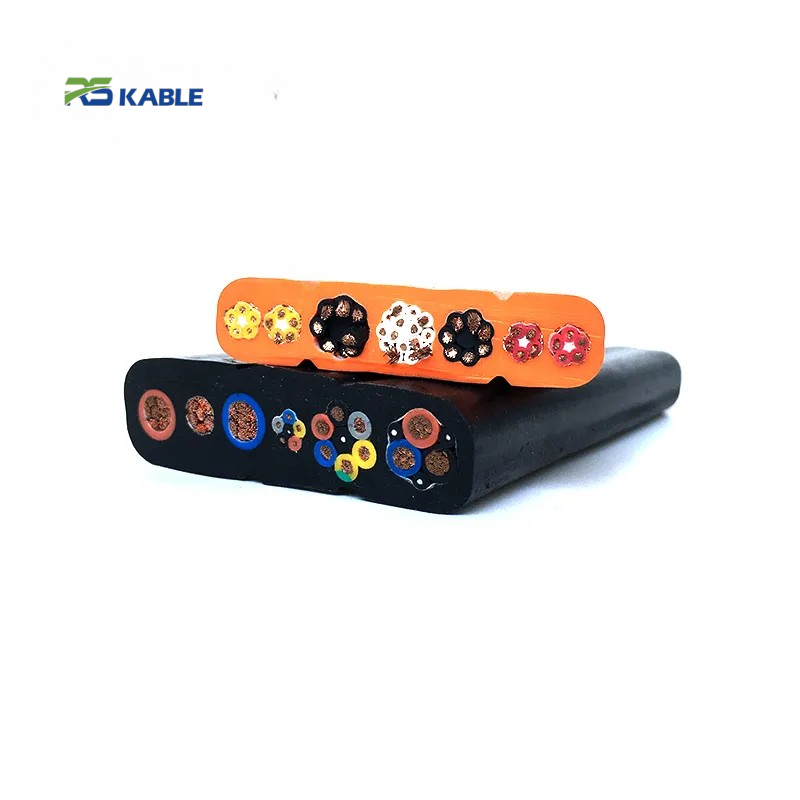
Servo Motor Power Cable Orange Double Jacket 4 x 2.5mm² Cable
This servo motor power cable features **high-flexibility Class 5/6 stranded copper conductors** and a **double-jacket construction** for enhanced mechanical protection, reliable power delivery, and long service life in dynamic drag chain and industrial automation applications.
Why This Comparison Matters in Real Crane Projects
A crane cable is not just an electrical accessory. In a moving crane system, it is part of the operating mechanism. If the cable twists, hardens, abrades, or fatigues too early, the result can be unstable movement, unplanned maintenance, reduced lifting efficiency, and costly downtime.
In many marine environments, the cable must survive all of the following at the same time:
-
repeated lifting and lowering cycles
-
constant bending over drums, pulleys, and guides
-
suspended hanging load over long vertical travel
-
outdoor exposure to sunlight, rain, and wind
-
high humidity and salt-rich air
-
dust from coal, ore, sand, grain, or scrap
-
oil, grease, and mechanical contact in port equipment
That means the real comparison is not just “marine vs standard.” The real comparison is: which cable is better matched to the actual duty cycle and environment?
What Is a Standard Crane Cable?
A standard crane cable is a general industrial cable designed for moving crane systems, reeling applications, festoon systems, and other lifting equipment in common industrial environments. It is often used in factories, warehouses, workshops, inland terminals, construction sites, and general material handling systems.
A typical standard crane cable may offer:
-
flexible conductors
-
basic mechanical strength
-
suitable bending performance for industrial reeling
-
standard outdoor resistance in some versions
-
power-only or power-plus-control constructions
In the right environment, these cables can perform well and economically. But “standard crane use” does not automatically mean “marine crane use.” That is where many selection mistakes begin.
What Is a Marine Grab Cable?
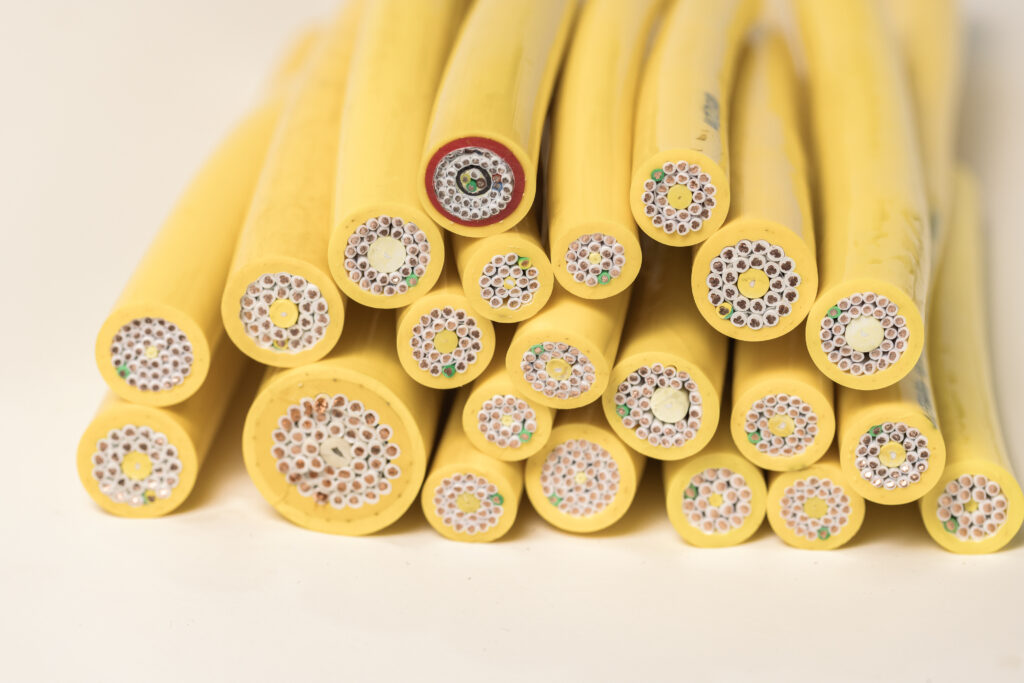
A Marine Grab Cable is a heavy-duty flexible cable designed specifically for grab bucket cranes, ship unloaders, harbor cranes, deck cranes, and bulk handling equipment working in marine or coastal environments. Its design focuses not only on electrical performance, but also on the mechanical and environmental demands of port and marine crane operation.
In practical terms, this means the cable is more likely to be selected or built for:
-
better resistance to salt and humidity
-
stronger outer sheath durability
-
improved suspended anti-twist stability
-
better performance under repeated reeling
-
stronger tolerance to abrasive cargo environments
-
higher confidence in outdoor heavy-duty use
This does not mean every marine grab cable is identical, or that every standard crane cable is weak. It means the marine-specific design philosophy is usually closer to what ports and marine terminals actually need.
The Core Difference: Environment and Motion Profile
If you want the simplest technical answer, it is this:
A standard crane cable is usually designed for general industrial moving duty. A marine grab cable is usually designed for harsher outdoor, coastal, suspended, and grab-crane-specific duty.
That difference affects several critical performance categories.
1. Weather and Salt Resistance
One of the biggest differences is environmental suitability. In a coastal or marine terminal, even if the cable never falls into seawater, it still operates in humid, salt-rich air. Over time, that affects the sheath, exposed metal parts, conductor ends, and terminations.
A standard crane cable may be suitable for normal outdoor use, but many standard designs are not optimized for long-term marine exposure. By contrast, a marine grab cable is more likely to be selected with salt air, moisture, UV, and outdoor aging in mind.
This matters most in:
-
ports and harbors
-
ship unloaders
-
dockside bulk terminals
-
vessel-mounted cranes
-
coastal scrap and waste facilities
If your crane works in these places every day, environmental resistance is not a bonus. It is a basic requirement.
2. Anti-Twist Performance in Hanging Applications
Grab cranes often involve long suspended cable sections. In these applications, anti-twist behavior becomes very important. If the cable rotates too easily, it may lead to unstable hanging, poor reeling, extra wear, or irregular crane operation.
This is where standard crane cable and marine grab cable often separate clearly. Many standard crane cables are designed mainly for flexing and movement, but not necessarily for long hanging suspended motion under repeated grab cycles. A marine-specific cable is more likely to be chosen for this type of motion pattern.
This is especially relevant for:
-
ship unloaders
-
harbor grab cranes
-
high-lift bulk handling cranes
-
marine deck cranes with long hanging cable travel
If twisting is already a known issue in your operation, this factor should move near the top of the selection checklist.
3. Outer Sheath Durability in Bulk Handling Environments
A cable used in port cargo handling rarely stays clean. Coal dust, iron ore fines, grain residue, sand, grease, and mechanical contact all contribute to wear. The outer jacket becomes the first sacrificial layer.
A standard crane cable may have a good industrial sheath, but some standard sheath materials are simply not optimized for marine bulk handling. In contrast, a marine grab cable is often specified with stronger attention to:
-
abrasion resistance
-
weather stability
-
oil and grease resistance
-
flexibility under temperature change
-
better durability in harsh outdoor handling
This is one of the easiest differences to underestimate during purchasing, because two cables can look similar when new but age very differently after months of port operation.
4. Mechanical Fatigue Under High Duty Cycles
Grab cranes do not just move. They move repeatedly, often under demanding cycles. The cable bends, hangs, recoils, and experiences dynamic load over and over again. A cable that is acceptable in moderate-duty use may fatigue early in a high-frequency cargo terminal.
A standard crane cable may be completely sufficient for lower-cycle industrial lifting. But if the crane works through long daily shifts loading coal, ore, or grain, then the fatigue life of the cable becomes more important than the basic flexibility claim in the brochure.
This is one reason high-duty marine applications tend to favor marine-specific grab cable designs.
5. Service Life and Lifecycle Cost
This is often where buyers notice the difference too late. The standard cable may come with a lower initial price, which looks attractive at purchasing stage. But if that cable wears out earlier, twists more during operation, or requires more frequent replacement, then the real cost becomes much higher.
Lifecycle cost usually includes:
-
replacement frequency
-
maintenance labor
-
downtime during cable change
-
production or cargo handling delays
-
lower crane availability
-
extra troubleshooting time
For busy terminals, the wrong cable often costs more through interruption than through purchase price.
When a Standard Crane Cable May Still Be Good Enough
To be practical and credible, it is important to say this clearly: a standard crane cable is not always the wrong choice.
In some situations, it may still perform adequately, especially when:
-
the environment is inland rather than marine
-
the crane operates at lower frequency
-
the hanging length is short
-
twisting risk is low
-
weather exposure is moderate
-
abrasive dust is limited
-
replacement is easy and downtime cost is manageable
In these situations, a well-made standard industrial crane cable can still be a reasonable choice.
So the better question is not “which cable is always better?” The better question is “which cable is better for this exact marine duty profile?”
When a Marine Grab Cable Is Clearly the Better Option
A Marine Grab Cable is usually the better choice when one or more of these conditions apply:
-
the crane works in a coastal or marine terminal
-
the application involves ship unloading or grab bucket handling
-
the cable operates outdoors all year
-
the hanging length is long
-
anti-twist stability matters
-
bulk cargo dust and abrasion are significant
-
the crane runs high daily cycles
-
lower downtime is a key operating priority
In other words, once the application moves from “general crane use” to “true marine or port grab crane duty,” the marine-specific option often becomes the safer and more economical decision over time.
Real-World Selection Logic: Not All Marine Use Is the Same
One of the most helpful ways to improve this comparison is to separate light outdoor crane use from real marine-duty crane use.
Light Outdoor Crane Use
This may include occasional outdoor operation, moderate weather exposure, lower-cycle use, and limited contact with marine air or abrasive material. In these cases, some standard crane cables may still be acceptable.
Real Marine-Duty Crane Use
This includes ports, dockside operations, ship unloaders, coastal bulk terminals, vessel-mounted cranes, and cargo systems exposed to salt-rich air, heavy dust, repeated reeling, and long daily operation. In this category, marine grab cable usually has a much clearer performance advantage.
This distinction matters because many buyers say “outdoor use” when they really mean “harsh marine bulk handling use.” Those are not the same thing.
Common Buyer Mistakes When Comparing the Two
Many early cable failures come from comparison mistakes rather than product defects.
Mistake 1: Choosing by Voltage and Core Count Only
A cable can meet the electrical requirement and still be mechanically wrong for a marine grab application.
Mistake 2: Assuming Outdoor Means Marine
A cable that resists normal weather may still age too quickly in salt-rich coastal environments.
Mistake 3: Ignoring Reeling and Hanging Behavior
If the cable must hang vertically or reel continuously, anti-twist and fatigue performance matter more than many buyers expect.
Mistake 4: Comparing Only Initial Price
The cheaper cable is not always the lower-cost cable once maintenance and downtime are included.
Mistake 5: Not Defining the Duty Cycle
A low-frequency crane and a high-frequency bulk terminal crane do not need the same cable.
How to Choose the Better Cable for Your Application
If you are deciding between marine grab cable and standard crane cable, use this checklist:
Choose standard crane cable when:
-
the site is not strongly marine
-
operating cycles are moderate
-
hanging length is short
-
abrasive cargo exposure is low
-
maintenance access is easy
-
budget pressure is high and service conditions are manageable
Choose marine grab cable when:
-
the crane works in ports, docks, or coastal terminals
-
the cable is exposed to salt-laden air
-
the crane handles bulk cargo under high cycle conditions
-
anti-twist stability is important
-
long-term reliability matters more than minimum purchase cost
-
the owner wants longer service intervals and fewer shutdowns
Questions to Ask a Supplier Before Ordering
A reliable cable supplier should ask more than just voltage and length. Before recommending one type over the other, they should ask:
-
What type of crane is this?
-
Is it a ship unloader, harbor grab crane, or marine deck crane?
-
What is the hanging length?
-
How is the cable reeled?
-
What material is being handled?
-
Is there salt-rich air or direct marine exposure?
-
How many cycles does the crane run per day?
-
Is anti-twist performance a concern?
If these questions are not being asked, the recommendation may be too generic to trust.
Final Verdict: Which One Is Better for Marine Use?
For true port, coastal, ship unloader, and bulk marine crane applications, the better choice is usually Marine Grab Cable. That is not because standard crane cable is always poor quality, but because marine environments place different and more severe demands on the cable system.
A marine-specific cable is generally better suited to:
-
salt and humidity exposure
-
repeated grab motion
-
long hanging suspended operation
-
abrasive bulk handling conditions
-
heavy-duty outdoor crane service
A standard crane cable may still be acceptable in lighter or less exposed conditions. But once the application becomes a real marine-duty use case, the more specialized cable usually provides better stability, better durability, and better lifecycle value.
FAQ
Can I use a standard crane cable in a port crane?
Yes, in some lighter-duty cases. But in true marine bulk handling or ship unloader applications, a marine-specific cable is usually the safer long-term choice.
Why does a grab crane cable twist during operation?
Twisting usually happens when the cable structure is not sufficiently stable for the hanging length and motion pattern of the crane.
What cable is better for ship unloaders?
In most cases, a marine grab cable is better because ship unloaders create long hanging movement, outdoor exposure, and demanding cargo-handling cycles.
Is polyurethane better than rubber for marine crane cables?
It depends on the application, but polyurethane is often preferred for strong abrasion resistance and durability in harsh handling environments.
How do I choose a cable for a bulk handling grab crane?
Look at crane type, duty cycle, hanging length, environment, reeling method, and whether anti-twist stability is important.