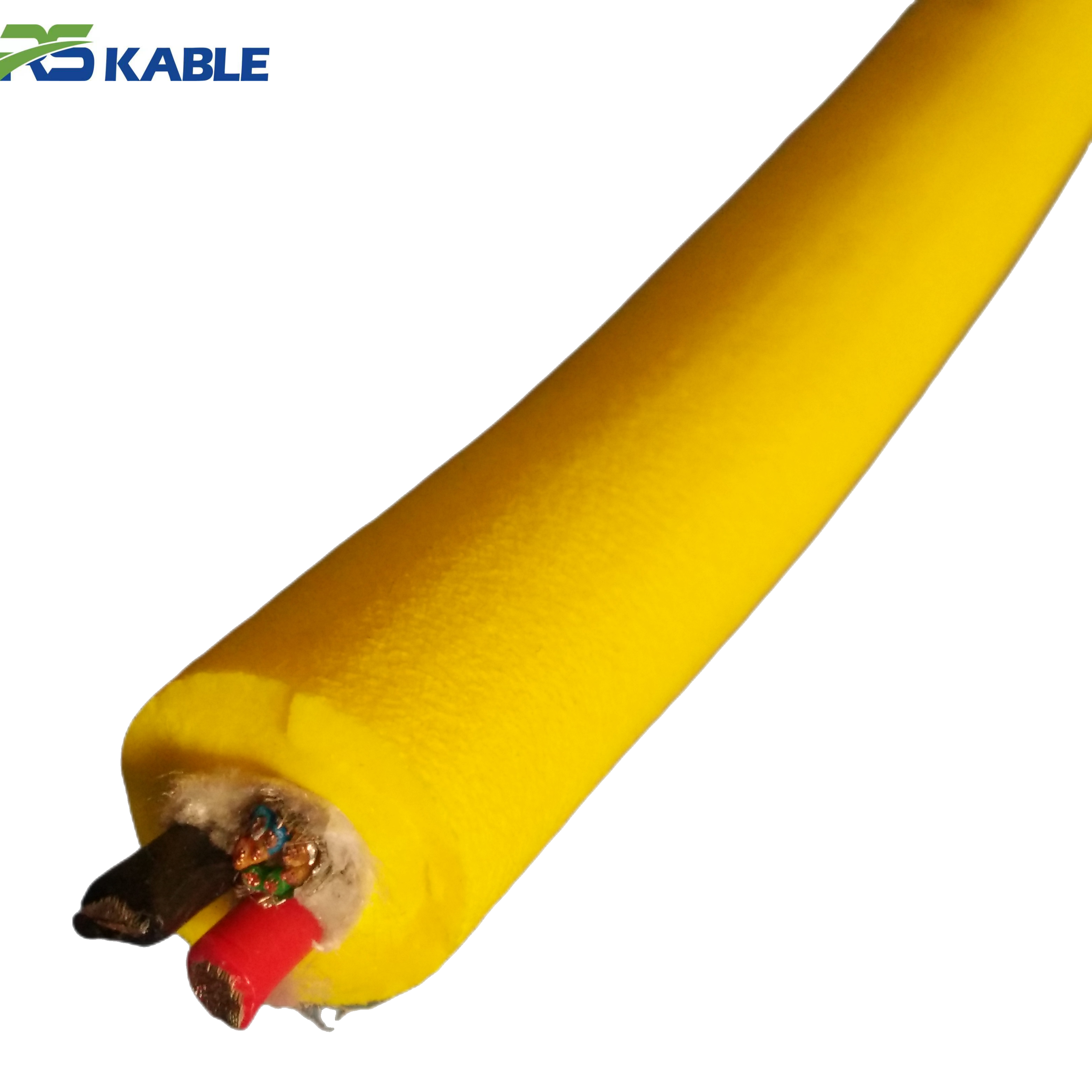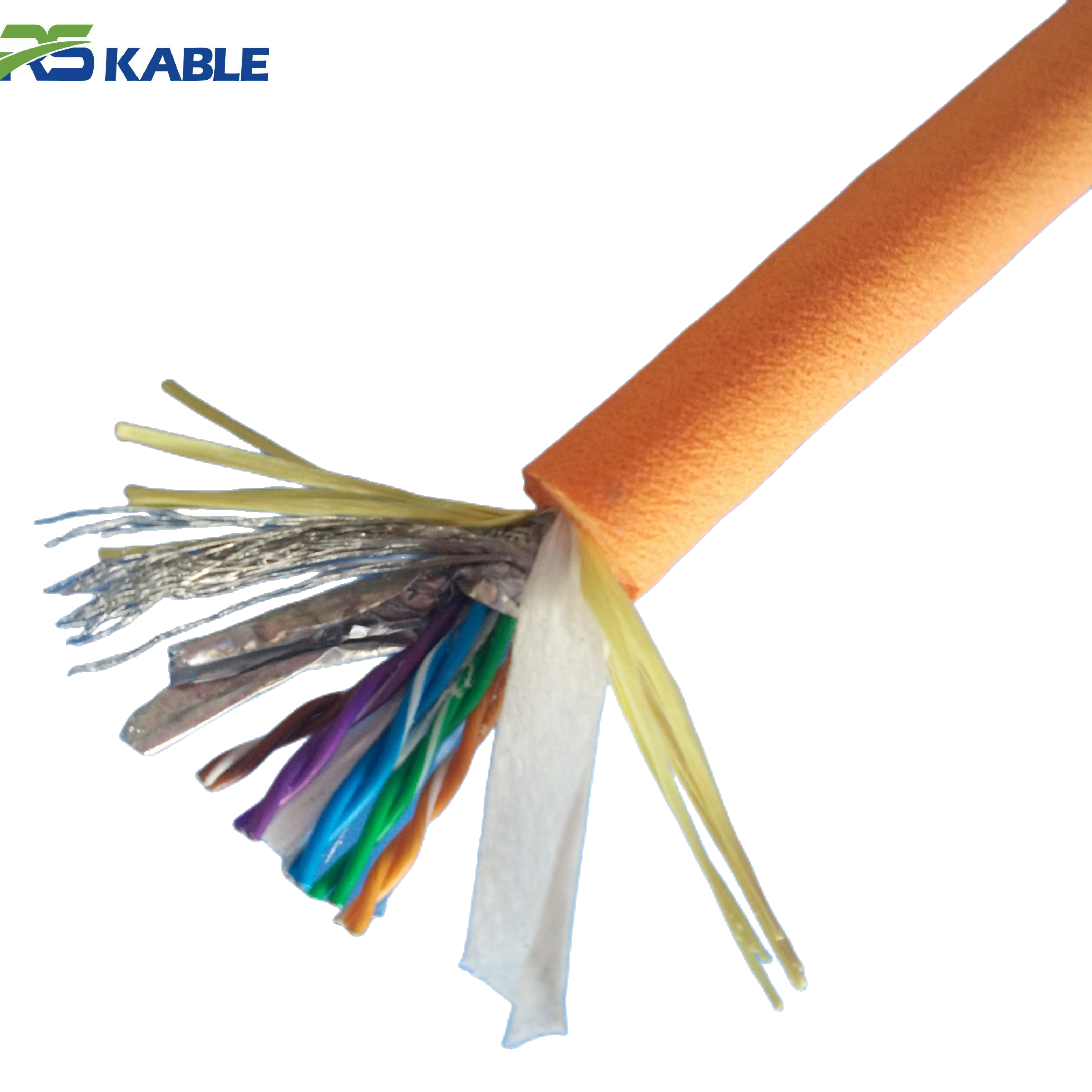


ROV Cable for Long Missions: Fatigue Life, Abrasion, and Reliability
An offshore wind inspection operator came to us after losing their third tether in 26 months. Each cable had lasted between 7 and 11 months. Each had been specified as a standard marine ROV tether, purchased at a competitive price. The program ran 520 dives per year. By the time we reviewed their replacement history, they had spent USD 62,000 on three tethers that a correctly specified long-duration ROV cable — costing USD 24,000 as a single purchase — would have covered for the full 26-month period with planned maintenance.
This is the characteristic cost pattern of under-specified tethers in extended programs. The cable saves money per metre. The program spends more overall. Understanding what separates a cable designed for long-duration ROV cable service from one designed to meet minimum acceptable performance is the difference between these two outcomes.
This guide draws on our IEC 60811-compliant fatigue test data, 89 post-mortem failure analyses, and field results from ROV cable long missions across offshore energy, aquaculture monitoring, and environmental survey programs. It is written for engineers and procurement managers who plan ROV programs longer than six months and want to make the cable selection decision on data rather than assumption.

1. What Makes a Program a Long-Duration Deployment
Three independent degradation clocks
Cable degradation in long programs accumulates along three independent dimensions, each requiring specific design attention. A cable can be correctly specified for two of the three and still fail prematurely because the third was ignored.
Calendar time drives UV jacket degradation, ozone attack on outdoor-stored cables, and corrosion of metallic armor wires in saline environments. These processes continue whether the cable is deployed or sitting on a storage drum. A cable stored on a tropical deck for 16 months without UV protection accumulates jacket damage equivalent to significantly more months of protected storage — this damage cannot be undone by subsequent careful handling.
Mechanical cycle count drives conductor bending fatigue and connector wear. Each deployment and recovery applies one bending cycle at the cable’s highest-stress locations. The strands that carry the most bending load accumulate micro-crack damage with each cycle, progressing toward the resistance increase that signals functional end-of-life.
Cumulative tensile load accumulates dynamic fatigue in the armor wires. The relevant parameter is not maximum tension but cyclic tension amplitude — the difference between peak and trough tension during a typical deployment. A wire that sustains 800 N static load indefinitely will fatigue at 400 N cyclic load over sufficient cycles. Long programs apply that cyclic load thousands of times.
The practical threshold
For cable specification purposes, a program becomes a long-duration ROV cable program when it crosses any of these thresholds: more than 200 deployment cycles per year, more than six calendar months duration, or continuous deck deployment with UV and chemical exposure. Standard-specification cables with routine maintenance manage below these thresholds without issue. Above them, the choices described in this guide determine whether the program completes on its original tether or requires mid-program replacement.
Case reference: The offshore wind operator described in this article’s opening crossed all three thresholds: 520 cycles/year, 26-month program duration, and continuous deck storage between dives. Their standard-specification cable was designed for two of these three stresses individually — not for all three simultaneously. A cable rated for any one condition is not rated for the combination.
2. Conductor Fatigue Life: What the Data Actually Shows
The Wöhler relationship in cable conductors
Conductor fatigue follows the Wöhler (S-N) relationship: as bending stress amplitude decreases, the number of cycles to failure increases in an inverse power relationship. The practical consequence is that reducing bending stress at the highest-stress location — through stranding class upgrade, drum geometry correction, or strain relief redesign — produces disproportionately large increases in fatigue life.
Our laboratory fatigue testing subjects conductor samples to cyclic bending at controlled bend radii, measuring cycles to 10% resistance increase as the functional end-of-life criterion. Tests are conducted per IEC 60811-2-1 dynamic bending test procedure, at controlled ambient temperature with standardized specimen preparation. The criterion of 10% resistance increase was selected because it represents the threshold at which voltage drop at operating depth first exceeds the vehicle manufacturer’s minimum input voltage specification in our most common tether length range (250–400 m at 48 VDC).
Stranding class: the dominant fatigue variable
The following four results are from tests on 2.5 mm² tinned copper conductors at a 10:1 OD bend radius, the geometry produced by a 200 mm core drum on a 20 mm OD tether. This is the most common bend condition in our customer fleet.
Class 5, 2.5 mm² — baseline condition
Result: 280,000 cycles to 10% resistance increase
Context: Equivalent to 22 months at 300 cycles/year. Confidence interval (90%): 240,000–330,000 cycles across 12 test specimens.
Test standard: IEC 60811-2-1 dynamic bending test
Class 6, 2.5 mm² — standard upgrade
Result: 870,000 cycles (3.1× Class 5 at 10:1 bend ratio)
Context: Equivalent to 69 months at 300 cycles/year. At 8:1 bend ratio the multiplier increases to 4.2× due to higher per-cycle stress in Class 5. Confidence interval (90%): 790,000–960,000 cycles.
Test standard: IEC 60811-2-1 dynamic bending test
Class 6, 2.5 mm² — thermal cycling applied
Result: 620,000 cycles (29% reduction vs isothermal)
Context: Temperature cycling −10°C to +60°C at 2-hour periods. Represents Arctic-to-tropics operating range. Service life still 49 months at 300 cycles/year.
Test standard: IEC 60811-2-1 with thermal conditioning per IEC 60811-4-1
Class 6, 2.5 mm² — 5% saline surface contamination
Result: 480,000 cycles (45% reduction vs clean condition)
Context: Saline contamination enters through jacket micro-cracks and accelerates fretting corrosion at strand interfaces. Confirms that jacket integrity is a fatigue issue, not only a dielectric issue.
Test standard: IEC 60811-2-1 with saline conditioning per IEC 60068-2-52
What the saline result means operationally
The 45% fatigue life reduction from saline contamination is the most operationally significant finding in our test program. A cable with a jacket breach — even one that passes visual inspection and has not yet caused an electrical fault — is accumulating conductor fatigue 45% faster than its specification predicts.
This is why jacket condition monitoring is a fatigue management activity, not just a dielectric protection activity. A tether with a known jacket score in the contact zone should be flagged for accelerated conductor resistance trending regardless of whether the score has reached the armor layer.
3. Abrasion Resistance: Where the Jacket Earns Its Specification
The contact point concentration problem
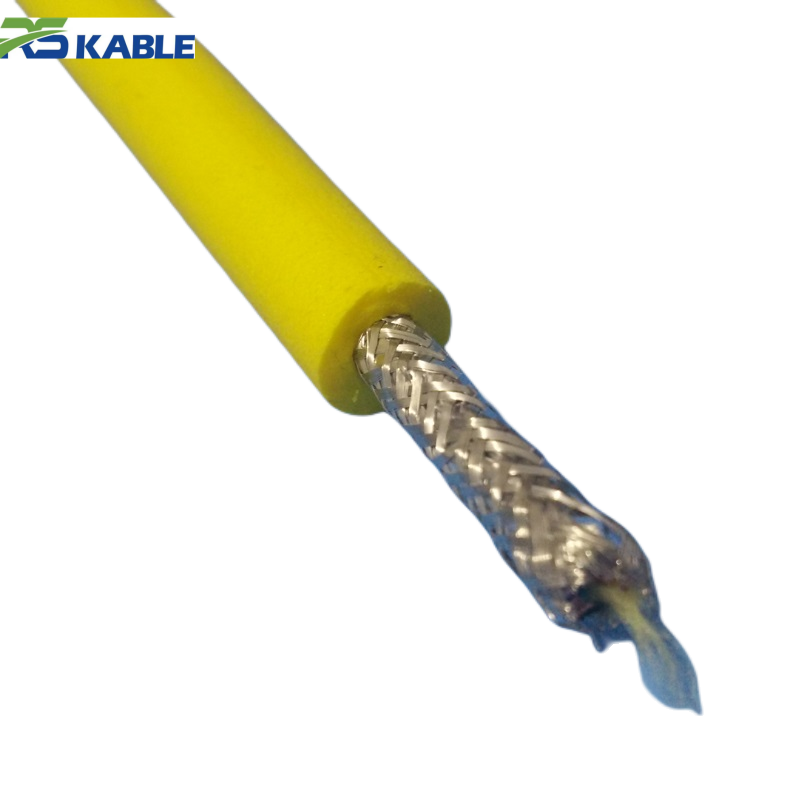
In a 50-dive program, abrasion damage is distributed and manageable. In a 600-dive annual program, abrasion concentrates at the same contact points on every dive. The fairlead groove, the last three metres near the vehicle umbilical entry, and any structural contact point along the deployed tether accumulate wear repetitively. What begins as surface gloss removal becomes scoring, then penetration, then armor exposure — a progression that is predictable once the contact geometry is characterized.
Jacket thickness loss at a fairlead contact point follows a consistent pattern in our field measurement data. Initial loss rate is approximately 0.06–0.10 mm per 100 dives for standard PUR jacket in typical steel fairlead contact. The rate accelerates slightly as the contact geometry improves (a scored groove conforms more closely to the cable surface, increasing contact area and friction force). A 2.0 mm jacket wall reaches 50% thickness — the point at which we recommend expedited replacement planning — in 280–370 dives at this rate.
PVC versus PUR: quantified difference
Standard marine PVC jackets have a Taber abrasion resistance of 25–40 mg loss per 1,000 cycles (CS-17 wheel, 1 kg load) per ASTM D4060. Offshore-grade PUR jackets measure 12–20 mg loss per 1,000 cycles under the same test conditions. PUR loses 40–50% less material per abrasion cycle than PVC in standardized testing.
In the contact geometry of a steel fairlead on a 20 mm cable at 600 dives per year, this translates to the PVC jacket reaching 50% wall loss in approximately 17–20 months, while the PUR jacket reaches the same threshold in 26–30 months. For a 24-month program, the PVC-jacketed tether requires jacket inspection and likely retermination planning by month 18. The PUR-jacketed tether completes the program within its normal maintenance window.
Positive case: the value of correct jacket specification
A Scottish offshore wind operator running turbine foundation inspections from a dedicated vessel upgraded from PVC to UV-stabilised offshore PUR jackets on their observation-class tether fleet in 2022. Their previous replacement interval at 500 dives per year had been 16–19 months. After the jacket upgrade, the replacement interval extended to 28–32 months across their fleet of six tethers.
Over the following 36 months, the operator recorded zero unplanned mid-program replacements versus two in the preceding 36 months. The total cable procurement spend over the 36 months dropped by approximately USD 28,000 across the fleet. The per-metre price of the PUR jackets was 12% higher than the PVC cables they replaced. The total cost of ownership was 31% lower.
4. Four Reliability Metrics for Long-Duration ROV Cable Management
Managing ROV cable long missions requires tracked metrics, not periodic snapshot testing. A single pre-deployment measurement tells you where the cable is. A trend across multiple measurements tells you how fast it is moving and when it will reach the rejection threshold. The four metrics below form a complete condition monitoring program for long-duration ROV cable service.
|
Metric |
Frequency |
Retirement trigger |
Early warning pattern |
|
Conductor DC resistance |
Monthly + post-incident |
> 15% above baseline at same temperature |
Consistent increase > 3% per 30-day cycle |
|
Insulation resistance |
Monthly + post-incident |
< 100 MΩ absolute (500 VDC, 60 s soak) |
Declining trend below 500 MΩ; any step-change > 40% |
|
Fiber attenuation |
Monthly |
> 0.4 dB/km at 1310 nm (IEC 60793-2-50) |
Any OTDR event > 0.5 dB — locates damage exactly |
|
Jacket wall thickness at contact points |
Every 100 dives |
< 50% of original wall at any marked location |
Loss rate > 0.05 mm per 100 dives at any point |
Table 1. Long-duration reliability tracking framework. The jacket thickness metric is the most commonly omitted — it provides the earliest visible warning of abrasion-driven failure, typically 12–18 months before electrical consequences appear. A digital micrometer at marked contact points, 10 minutes per monthly session, is the most cost-effective predictive maintenance tool available for ROV cable long missions.
Why jacket thickness monitoring changes the maintenance conversation
Conductor resistance and insulation resistance track electrical degradation. They detect faults that have already affected the cable’s internal structure. Jacket thickness tracking detects surface wear before it reaches the electrical structure at all.
Mark the three highest-wear locations on the tether at program start. Measure wall thickness with a digital micrometer at 100-dive intervals. A location losing 0.08 mm per 100 dives at a starting thickness of 2.0 mm will reach the armor layer in approximately 2,500 dives — visible in the trend data 1,200 dives before it happens. At 500 dives per year, that is five months of advance warning. No other metric provides this.
5. Six Specification Choices That Determine Service Life
These choices account for the majority of the service life difference between tethers that complete long programs and those that require premature replacement. The table below presents each choice as a threshold decision with its quantified impact on ROV tether service life.
|
Specification decision |
Quantified impact on long-program service life |
|
Conductor stranding class Threshold: Class 6 above 300 cycles/year |
Class 6 delivers 3.1× more bending cycles to failure than Class 5 at 10:1 bend ratio (IEC 60811-2-1). At 500 cycles/year, Class 5 reaches functional end-of-life at ~18 months; Class 6 at ~56 months. Cost premium: 4–6% of total cable cost. |
|
Armor material Threshold: 316L stainless above 12 months in seawater |
Galvanized armor shows measurable wire corrosion in continuous seawater at 10–14 months. 316L stainless maintains structural integrity for 36+ months. Incremental cost: USD 600–1,200 per 300 m reel — less than one connector retermination. |
|
Armor construction Threshold: Double armor for any abrasion-risk environment |
Post-breach analysis: 74% of single-armor tethers with jacket damage had reached insulation contact; only 25% of double-armor tethers with equivalent jacket damage had reached insulation contact. Double armor provides ~3× post-breach protection. |
|
Jacket compound Threshold: UV-stabilised offshore PUR for all programs |
PUR loses 40–50% less material per abrasion cycle than PVC (ASTM D4060 Taber test). UV-stabilised grades extend surface crazing onset from 12–18 months to 36–48 months in tropical deck exposure. Cost premium: 8–12% vs standard PVC. |
|
Fiber for data channels Threshold: Above 50 Mbps or 18+ month programs |
Fiber optic data elements do not accumulate conductor resistance increase. In 600-cycle/year programs, Class 6 copper data conductors show measurable resistance increase at 28–32 months. Fiber eliminates this degradation path for all data circuits. |
|
Drum core diameter Threshold: Minimum 10:1 OD ratio — verify before ordering |
A 7.5:1 bend ratio increases bending stress by ~33% and reduces fatigue life by 2.5–3× versus a 10:1 ratio. This is the leading cause in our 89-case failure analysis (35% of premature failures). The cable specification cannot compensate for inadequate drum geometry. |
Table 2. Specification decisions and their quantified impact. Threshold column shows the operating condition above which the specified upgrade becomes cost-justified. Impact column shows the service life consequence, with test standard references where applicable.
“The drum geometry finding is the one that consistently surprises operators. They specified the right cable. They installed it on the wrong drum. No conductor specification survives a 6:1 bend ratio for 600 cycles. The Wöhler curve is not negotiable. Verify drum core diameter before ordering, not after the cable arrives.”
6. The Maintenance Protocol That Keeps Long Programs on Schedule
Moving from reactive to predictive
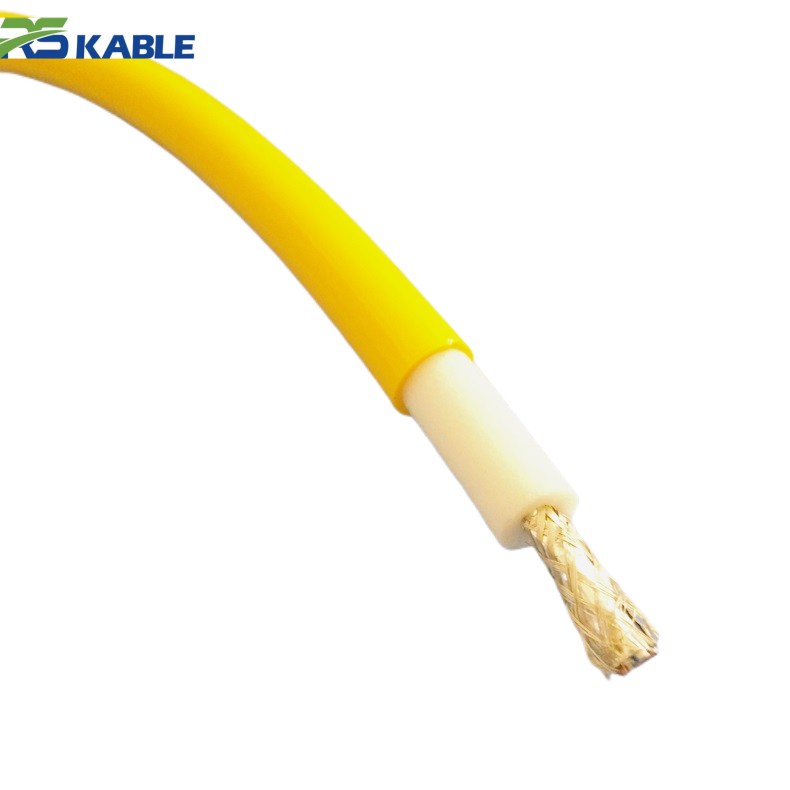
Standard maintenance for short programs — pre-deployment test, post-dive visual, replace when failed — is not adequate for ROV cable long missions. By the time a fault appears in pre-deployment testing on a long program, the degradation trend that produced it has typically been developing for 2–4 months. A predictive protocol catches the trend, not the threshold.
The protocol below applies specifically to programs running more than 300 cycles per year or more than 12 months duration. For shorter programs, the standard pre/post-dive protocol with 30-day electrical testing is adequate.
Predictive maintenance schedule
- After every dive: Run the tether through a lint-free cloth during recovery. Note any new catches or resistance points. Rinse with fresh water before spooling if seawater deployment. Fit all connector caps within 30 seconds of disconnection.
- Every 100 dives: Jacket thickness measurement at all marked contact points with a digital micrometer. Log date and cumulative cycle count with each reading.
- Monthly: Full four-test electrical sequence (insulation resistance, conductor DC resistance, HV withstand, fiber attenuation). Log all results with date, ambient temperature, and cumulative cycle count. Compare to previous session — flag any single-metric change > 10% for investigation.
- At 300 cycles or 6 months: Full physical inspection including tension test to 150% working load with continuity monitoring. Assess trend trajectory across all metrics and project remaining service life at current degradation rate. Confirm replacement cable is on order if the projection shows end-of-life within the next six months.
- At 6-month intervals: Rotate the tether’s orientation on the drum by 180 degrees. This moves the conductor section that has been at the peak bending stress location of the fairlead to a lower-stress position. In our field measurement data, programs using this rotation protocol show 22–28% longer conductor service life than identical programs without rotation.
Service life extension from drum rotation: The rotation protocol is described in our technical bulletin TB-2024-03, available on request. The 22–28% extension is from field comparison data across 14 tether pairs in matched operating conditions — not laboratory data. The mechanism is load distribution: a conductor that has been at the peak bending stress location for 6 months has accumulated more fatigue than the conductor at the same position 6 months earlier. Rotation distributes this unequal accumulation across a larger section of conductor length.
7. What 89 Failed Tethers Tell You About Long-Program Risk
The failure distribution
Our post-mortem analysis of 89 tethers returned by customers after premature failure in long-duration programs shows a distribution that is consistent across program types and geographies. The leading causes, in order:
- Drum geometry mismatch (35% of failures). Cable experiencing tighter bend radius than specification, due to undersized drum core or fairlead sheave. This is the single most preventable failure cause — it requires a measurement before cable purchase, not after.
- Galvanized armor corrosion in seawater programs > 18 months (28%). Galvanized coating fails in continuous seawater at a predictable rate. Every one of these failures was in a program that could have been identified at specification stage as requiring 316L stainless armor.
- UV jacket degradation without UV-stabilised compound (19%). All of these failures were in programs with continuous or near-continuous deck storage. UV stabilisation is a specification addition of less than USD 0.50 per metre. The cost of each replacement averaged USD 14,000 including downtime.
- Remaining causes (18%): Connector seal failures from non-standard cleaning products, mid-body splice points from previous field repairs deployed beyond their intended service life, and manufacturing defects — all detected and corrected in the two cases where first-article testing was performed before delivery.
The pattern across 89 failures is consistent: the vast majority are specification errors that were knowable at the time the cable was ordered. Not random failures, not material defects, not unpredictable environmental events. Specification decisions made without consulting a degradation rate model for the actual operating conditions.
8. The Calculation That Replaces Guesswork
Service life as a design output
Expected service life for a long-duration ROV cable program is calculable before the cable is ordered. The inputs are: conductor stranding class, drum core diameter (determines bend ratio), annual cycle count, and operating environment (seawater vs freshwater, UV exposure, temperature range). The output is a fatigue life projection per IEC 60811-2-1 calibrated test data, a jacket wear projection per contact geometry, and a maintenance interval schedule.
This calculation does not require specialized software. It requires the Wöhler relationship, our test data, and the program parameters. We perform this calculation as part of every long-program cable inquiry — and provide it as a written projection alongside the cable specification. Operators who have this projection before ordering know the expected replacement date within ±3 months at 24-month horizon. Operators who do not have it find out when the cable fails.
The return on correct specification
The offshore wind operator from this article’s opening — three replacements in 26 months at a total of USD 62,000 — was re-specified on their fourth tether purchase. The new specification used Class 6 conductors, 316L double armor, UV-stabilised PUR jacket, and a drum with a verified 10:1 OD ratio. Total cable cost: USD 24,000.
That cable is now 22 months into service. Current conductor resistance trend: +4% above commissioning baseline, well within the 15% retirement threshold. Jacket thickness at the fairlead contact point: 1.68 mm from a starting 2.0 mm — consistent with a projected 44-month service life at current wear rate. The operator is on track to complete their planned 36-month program on the original tether.
The specification premium over their previous cable was USD 6,400. The saving over their previous replacement pattern is USD 38,000 in the same 26-month period. Every correctly specified long-duration ROV cable program contains a version of this calculation. The outcome only changes when it is run before the order is placed.
Planning a long-duration ROV program? Send us your annual cycle count, program duration, drum core diameter, and operating environment. We will return a service life projection with conductor fatigue estimate (per IEC 60811-2-1 data), jacket wear projection, maintenance interval schedule, and a specification recommendation. No obligation — the projection is useful whether you buy from us or not.
Frequently Asked Questions
Q1: How do I calculate the expected service life of a tether for my program?
Service life estimation requires four inputs: conductor stranding class, minimum bend radius imposed by your drum and deployment system, annual deployment cycle count, and operating environment (water type, temperature range, UV exposure). With these inputs, we apply the Wöhler relationship calibrated to our IEC 60811-2-1 test data to produce a fatigue life projection, and our ASTM D4060 jacket wear data to produce an abrasion life projection. The result is expressed as expected months to functional end-of-life at the two binding constraints — conductor fatigue and jacket wear — with the earlier of the two governing the maintenance schedule. We provide this as a written projection with every long-program cable inquiry.
Q2: What cycle count should trigger a replacement order regardless of current test results?
Order the replacement cable when the trend data projects end-of-life within six months — not when the cable reaches the retirement threshold. For a conductor resistance trend showing +3% per month increase, and a threshold of +15% above baseline, order at +6% (six months from threshold at current trend rate). This gives adequate lead time for manufacture and delivery without deploying a cable beyond its projected service life. For programs where the annual cycle count is highly variable, recalculate the projection at each 6-month maintenance review using the actual cumulative cycle count rather than the planned annual rate.
Q3: My program operates in varying salinity — how does this affect the specification?
Specify for the highest salinity condition the cable will experience. Saline contamination accelerates conductor fatigue by 45% and armor corrosion at a rate that correlates with chloride concentration. A tether that spends 20% of its program in offshore seawater and 80% in brackish estuary still accumulates the saline-accelerated degradation during the offshore portion. For armor material selection, any program that includes seawater exposure above 12 months should use 316L stainless — partial-salinity exposure does not proportionally extend the service life of galvanized armor, because the corrosion mechanism at grain boundaries is not concentration-linear at the transition from brackish to marine salinity.
Q4: Is it cost-effective to specify a high-end tether for a program that might be cancelled early?
If there is a genuine possibility of early program cancellation, specify the cable that matches the minimum viable program length. A correctly specified 36-month cable that is retired at 12 months has cost USD 8,000–15,000 more than a cable specified for 12 months. If the cancellation probability is above 30%, the expected cost of over-specification exceeds the expected cost of mid-program replacement at the longer specification. The decision changes if early cancellation would allow the cable to be redeployed on another program — in which case the upgrade is effectively shared across programs and the economics shift in favour of the longer-life specification.
Q5: Should I budget for a replacement cable before the long program starts?
For programs longer than 18 months running above 400 cycles per year, yes — budget for one replacement and plan its delivery timing based on the service life projection. This is not pessimism about the cable’s quality; it is how asset-intensive offshore operations manage any piece of equipment with a finite service life. The replacement order should be placed at the 6-month maintenance review if the projection confirms mid-program end-of-life. Placing it at the 12-month review leaves insufficient lead time for manufacture and delivery if the projections are accurate. An unbudgeted mid-program replacement ordered on short notice typically costs 20–35% more than a planned replacement ordered at normal lead time — in cable price, air freight premium, and logistics coordination overhead.
Q6: What is the most common mistake operators make in specifying long-duration ROV cable?
Ordering the same cable that worked on a previous short program, without adjusting for the cycle count, duration, or environmental exposure of the new program. The cable that performed adequately for 150 cycles per year at 8 months does not necessarily perform adequately for 500 cycles per year at 24 months — even if both programs are described as “standard offshore ROV inspection.” The specification decisions that are inconsequential at low cycle counts become the primary determinants of service life at high cycle counts. Our 89-case failure analysis shows that 63% of premature failures were on cables that had previously served satisfactorily in shorter programs. The failure was not a quality change in the cable — it was a workload change in the program that the specification did not follow.