

How to Choose a Lift Traveling Cable for CCTV: Prevent Video Dropouts and Long-Term Wear
CCTV inside elevators is now a standard requirement in many residential towers, office buildings, hospitals, hotels, shopping centers, airports, and public facilities. Building owners want better passenger safety, incident recording, remote monitoring, and stronger integration with the overall security system. But adding a camera to a lift car is not the same as adding a camera to a hallway or lobby. The lift moves constantly, and that changes everything about cable performance.
That is why selecting the right cable matters so much. In a fixed CCTV installation, the cable stays mostly still after installation. In an elevator, the cable must travel vertically every day, bend repeatedly, hang under its own weight, tolerate vibration, and survive years of mechanical stress. A cable that looks electrically correct on paper may still fail too early if it is not designed for elevator movement.
This is where the right Elevator Traveling cable becomes essential. For lift CCTV systems, the cable must support stable video transmission while also handling real moving-duty conditions inside the shaft. If the cable is not matched correctly, the system may seem fine during initial testing but later develop video dropouts, intermittent faults, unstable signal quality, or premature jacket wear.
This guide explains how to choose a lift traveling cable for CCTV, what technical features matter most, what failure symptoms usually point to cable problems, when a standard solution may be enough, and when a more advanced design is the better choice. It is written for lift manufacturers, CCTV integrators, contractors, building engineers, and project buyers who need a practical selection framework rather than a generic product description.
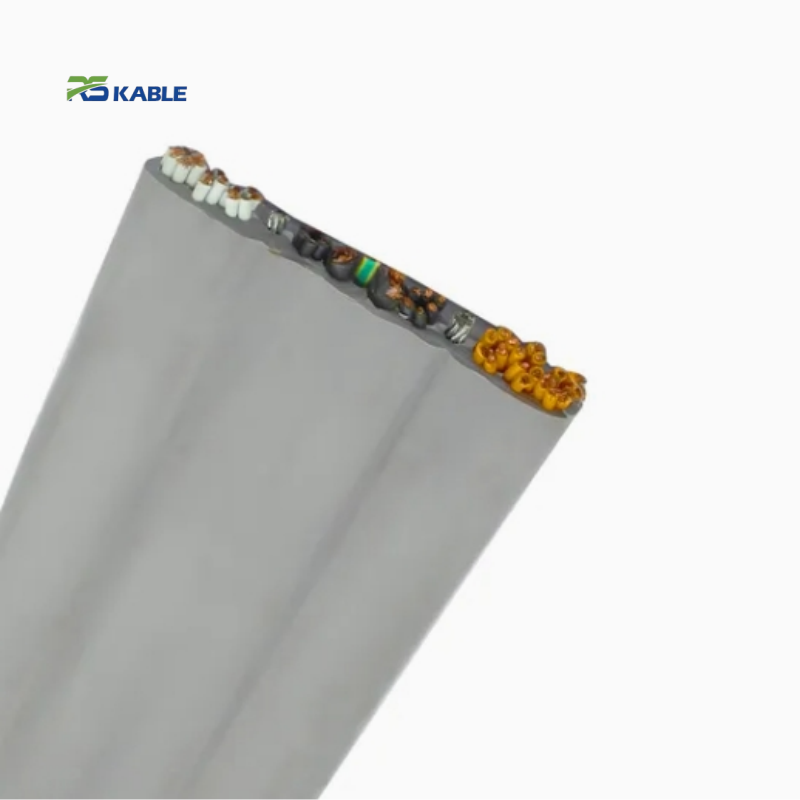
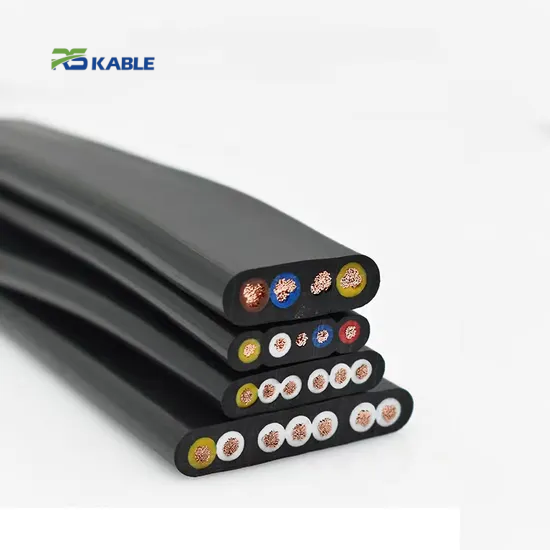
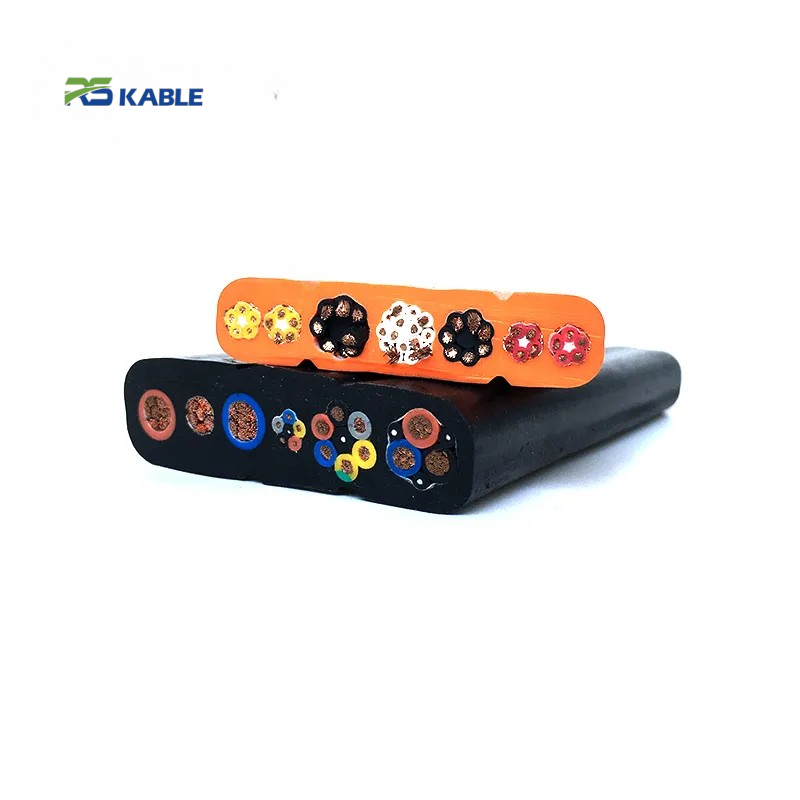
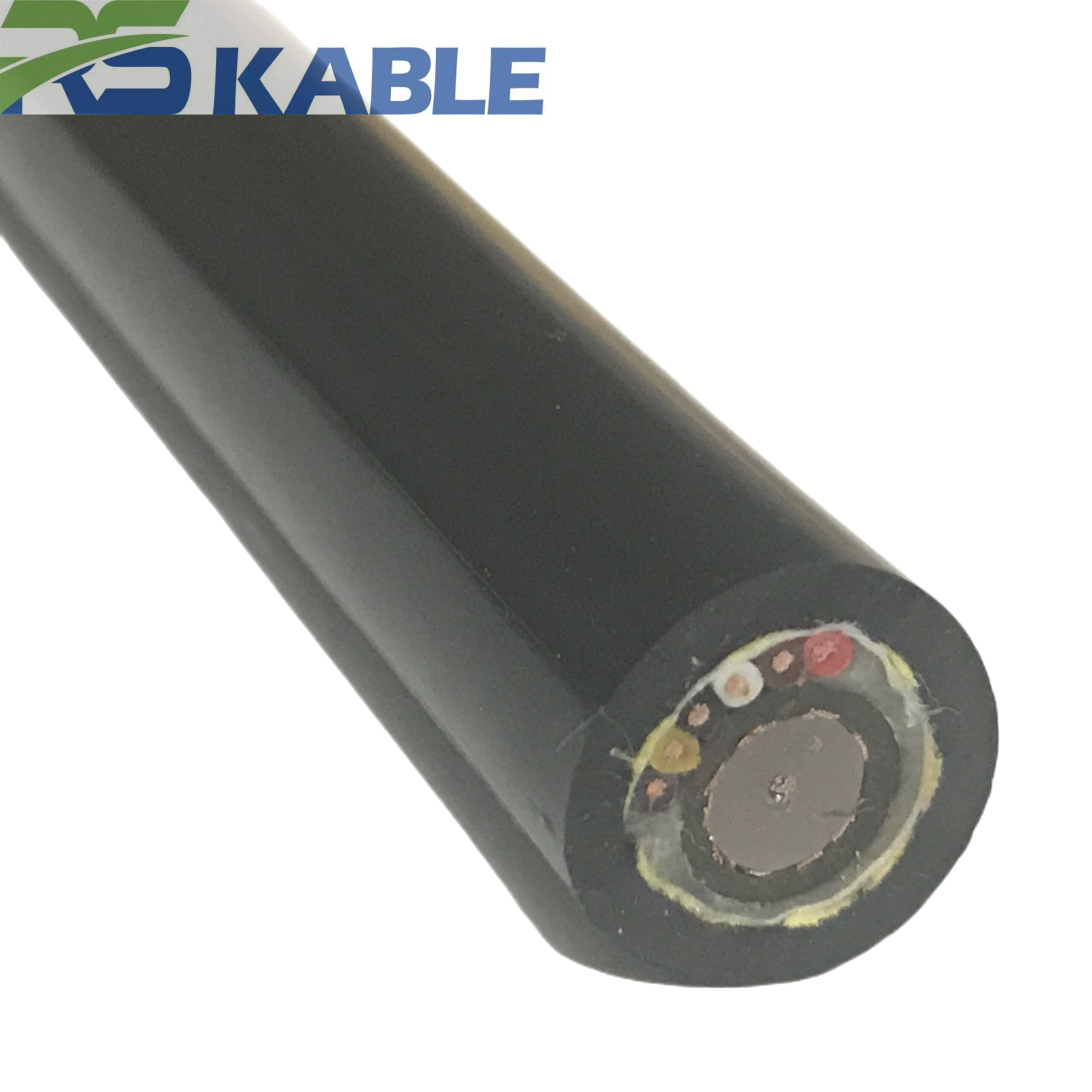
16-Pair 26AWG CAT6 S/FTP Shielded Bare Copper Elevator Flat Travel Cable | CCTV Compatible
This high-performance flat travelling cable is engineered for **elevator CCTV, IP cameras, and digital signage**, featuring a **CAT6 S/FTP (individual foil + overall braid) shielding structure** and **26AWG oxygen-free bare copper** conductors to maintain stable signal integrity in electrically noisy shafts. Built with a **high-flex, oil- and wear-resistant PVC jacket**, it supports long-term vertical motion and complies with **EN 50214 & CAT6 Class E**.
Why Lift CCTV Needs a Different Cable Strategy
An elevator camera operates in one of the most demanding cable environments found in a building. The cable does not only carry video. It also has to function as part of a constantly moving mechanical system.
In real operation, the cable may experience:
-
repeated vertical travel
-
continuous bending during every trip
-
vibration and acceleration
-
long hanging sections inside the shaft
-
stress concentration near suspension and fixing points
-
years of repeated motion cycles
That is why an ordinary CCTV cable is often not enough. Even if it can transmit video, it may not tolerate the long-term movement pattern of a lift system. A purpose-built Elevator Traveling cable is selected not just for electrical performance, but also for hanging stability, flex life, and reliability under motion.
The Real Problem Behind Most Elevator CCTV Failures
Many projects do not fail because the camera is bad. They fail because the wrong cable was selected, or because the right cable was installed with the wrong assumptions.
In the field, the most common complaint is not “the cable is broken.” It is something more confusing, such as:
-
the video drops only while the elevator is moving
-
the camera works for months, then becomes intermittent
-
the image is stable near certain floors but unstable elsewhere
-
the fault appears only occasionally and is hard to reproduce
-
replacing the camera does not fix the problem
These symptoms often point to cable-related stress, especially in the moving section or near fixing points.
Common Elevator CCTV Failure Symptoms, Causes, and Fixes
This is one of the most useful ways to understand what the cable really needs to do.
1. Video cuts out while the lift moves, but returns when the car stops
Likely cause: repeated bending fatigue, unstable conductor structure, or stress at termination points.
Why it happens: movement creates mechanical strain that only appears when the car is traveling.
What to check: cable quality, bend path, fixing method, and whether the installed cable is truly lift-rated.
2. CCTV works during early operation, then becomes unreliable months later
Likely cause: ordinary flexible cable used instead of a real traveling cable, or poor long-term mechanical endurance.
Why it happens: the cable survives initial commissioning but degrades under repeated travel cycles.
What to check: conductor construction, outer sheath wear, and fatigue near suspension points.
3. One lift works fine, but another identical lift has video faults
Likely cause: different routing stress, installation handling, or cable path issues.
Why it happens: even the same equipment can behave differently if one cable path creates more stress.
What to check: shaft routing, clamp pressure, hanging alignment, and local wear points.
4. Signal problems appear after modernization
Likely cause: old cable path reused without checking whether it suits the upgraded CCTV system.
Why it happens: new cameras often place different demands on transmission quality and stability.
What to check: whether the modernization kept a cable that was never designed for the new communication load.
5. Visible wear appears near the fixing or suspension area
Likely cause: poor strain relief, repeated localized stress, or unsuitable outer jacket.
Why it happens: mechanical stress in lifts is often concentrated at specific points, not spread evenly along the full cable.
What to check: support method, fixing quality, jacket suitability, and whether the hanging behavior is stable.
These failure patterns are one of the strongest reasons why elevator CCTV cable should be treated as a moving-system component, not as a generic security accessory.
What a Lift Traveling Cable for CCTV Must Actually Do
A lift traveling cable for CCTV usually needs to do more than just carry one video feed. Depending on the project, it may also need to support:
-
CCTV video transmission
-
power supply for the camera
-
intercom or emergency communication
-
alarm signals
-
access control links
-
remote monitoring or digital communication
That means the cable design must balance both electrical function and movement performance. In many projects, buyers focus on the signal requirement first, but the mechanical requirement is what determines whether the installation will still be working reliably years later.
Selection Matrix: How to Choose the Right Cable
To make this more practical, here is a simple decision framework based on the three factors that matter most.
1. Travel Height
Low- to mid-rise elevators
In many shorter-travel systems, the cable still needs good flex life, but hanging behavior is generally easier to manage. The focus is often on stable signal transmission, reliable conductor structure, and good installation practice.
Higher-travel elevators
As travel height increases, the cable’s hanging performance becomes much more important. Weight, suspension stability, and repeated stress over a longer vertical path all become more critical. This is where a true Elevator Traveling design matters even more.
2. Duty Cycle
Lower-use residential systems
The cable still needs to be lift-rated, but cycle intensity may be lower than in a busy commercial building.
High-use commercial or public lifts
Office buildings, hospitals, hotels, transport hubs, and mixed-use towers create much higher cycle counts. In these applications, long-term fatigue resistance and consistent movement behavior should be treated as top priorities.
3. Signal Type and System Complexity
Basic CCTV only
If the system is limited to a simple camera feed, the cable design can be optimized for that load.
CCTV plus additional functions
If the lift also uses intercom, alarms, monitoring, or future communication features, then the conductor design and cable architecture must reflect that broader function set.
The best buying decision usually comes from evaluating all three together: travel height + duty cycle + function mix.
When a Standard Solution May Be Enough
Not every project needs the most complex cable architecture. A more straightforward lift CCTV cable solution may still be suitable when:
-
the lift has moderate travel height
-
the traffic level is not especially high
-
the CCTV system is relatively simple
-
no major smart-building integration is planned
-
the project does not require extra communication margin
In these cases, a properly specified Elevator Traveling cable with the correct conductor arrangement may be fully adequate.
When a Higher-Specification Cable Makes More Sense
A stronger specification is usually worth considering when:
-
the lift has longer travel height
-
the site is high traffic
-
the project is part of a modernization upgrade
-
CCTV is integrated into a broader building security network
-
the system may later add more communication functions
-
long-term reliability matters more than minimizing initial cost
In these situations, the cable should be selected with future service life in mind, not just immediate installation convenience.
What Buyers Should Check Before Ordering
A good supplier should not only ask for the number of cores. They should also ask questions that reflect real application conditions.
Before ordering, confirm:
What is the exact function mix?
Does the cable only carry CCTV, or also power, intercom, alarms, or other signals?
What is the travel height?
This affects hanging behavior and mechanical stress.
How busy is the lift?
Usage intensity directly affects fatigue life.
Is this a new installation or a modernization?
Retrofits often bring routing and compatibility challenges.
Is future expansion likely?
Many buildings later add communication functions they did not include at the beginning.
Is the cable truly designed for lift travel?
This sounds obvious, but it is one of the most common mistakes in lower-budget projects.
The Difference Between Ordinary CCTV Cable and Elevator Traveling Cable
This distinction is where many projects go wrong.
An ordinary CCTV cable is usually designed for fixed installation. It may be fine in walls, ceilings, risers, or static routes. A true Elevator Traveling cable, by contrast, is chosen for:
-
repeated movement
-
long-term bending endurance
-
stable hanging in vertical travel
-
reduced mechanical fatigue under real lift operation
-
reliable performance near fixing points and suspension zones
That is why “flexible cable” and “lift traveling cable” are not the same thing.
Installation Quality Matters as Much as Cable Quality
Even a good cable can underperform if the installation method creates unnecessary stress. For long-term stability, installers should pay attention to:
-
correct suspension method
-
proper strain relief
-
avoiding sharp bends or edge contact
-
minimizing twist during installation
-
confirming stable routing throughout the travel path
-
testing CCTV performance during movement, not only while the car is stationary
This last point is especially important. Some systems pass bench tests or static checks, then fail during actual lift travel because the cable behavior under motion was never fully evaluated.
Long-Tail Reality: What Users Actually Want to Know
This topic often hides several more specific search intents. In practice, readers are frequently asking:
-
Why does elevator CCTV video cut out when the lift moves?
-
Can I use ordinary CCTV cable in a lift car?
-
What causes wear at elevator cable fixing points?
-
How do I choose cable for a lift camera modernization project?
-
What is the difference between traveling cable and normal security cable?
That is why a strong article on this subject should not stop at definition. It should help the reader solve those real-world questions.
FAQ
Why does elevator CCTV video cut out when the lift moves?
A common cause is that the cable is mechanically stressed during travel. The system may work while stationary but fail under movement because of fatigue, poor termination, or incorrect cable type.
Can I use ordinary CCTV cable in an elevator?
In most cases, that is not recommended. Standard CCTV cable is usually designed for fixed installation, not repeated elevator motion.
What is the difference between traveling cable and normal CCTV cable?
A traveling cable is designed for repeated movement, vertical hanging, and long-term mechanical stress. Ordinary CCTV cable is usually intended for static routing.
How do I prevent cable wear at fixing points in elevator shafts?
Use correct suspension, proper strain relief, suitable cable design, and installation methods that avoid concentrated stress.
What should I check before buying lift traveling cable for CCTV?
Check travel height, duty cycle, required functions, movement-rated construction, hanging behavior, and whether future upgrades may add more communication needs.