

Custom ROV Cable Manufacturer Guide: Materials, Armor Types, and Core Configuration Options
When engineers, integrators, and procurement teams look for a custom subsea cable supplier, they are usually not just comparing prices. They are trying to avoid failure. In underwater robotics, a cable is not a simple accessory. It is the line that carries power, transmits data, protects communication stability, affects vehicle handling, and often determines whether an operation runs smoothly or stops halfway through deployment.
That is why choosing the right custom ROV Cable manufacturer matters so much. A good supplier does more than offer standard specifications. They help match conductor materials, sheath compounds, reinforcement methods, shielding design, and core configuration to the real demands of your application. Those demands may include dynamic bending, neutral buoyancy, deep-water tensile loads, hybrid power-and-fiber transmission, or abrasion from repeated contact with subsea structures.
This guide explains how to evaluate a custom cable manufacturer from an engineering and buying perspective. It covers the material systems commonly used in subsea tether and umbilical design, the differences between major armor types, and the most practical core configuration options for inspection ROVs, work-class vehicles, and other underwater robotic systems. If you are sourcing a custom tether cable for inspection ROV use, building a hybrid power and fiber subsea line, or simply trying to understand what information a manufacturer needs before quoting, this article will give you a more useful framework.

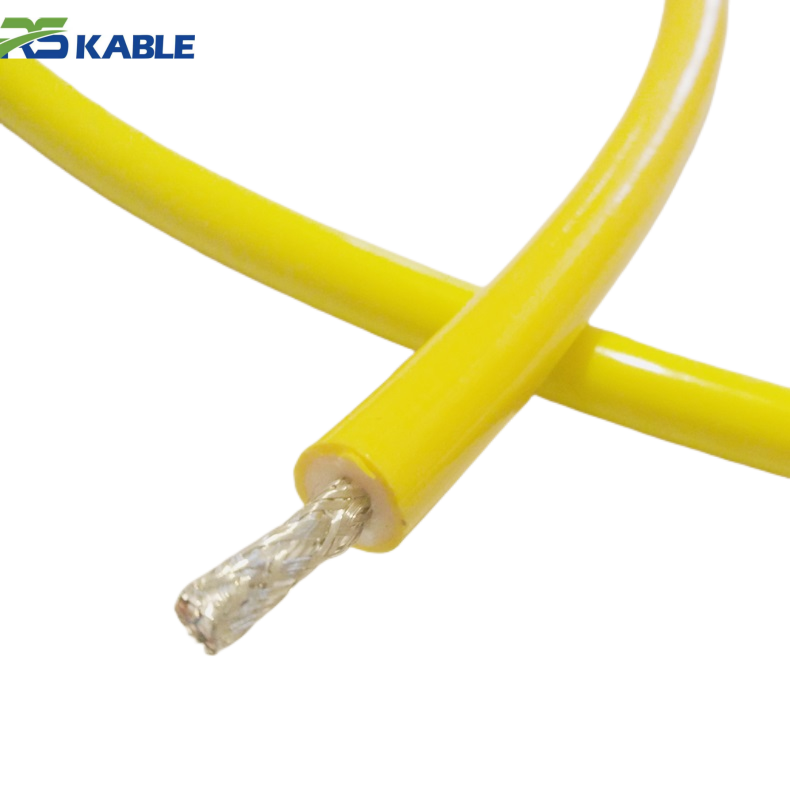
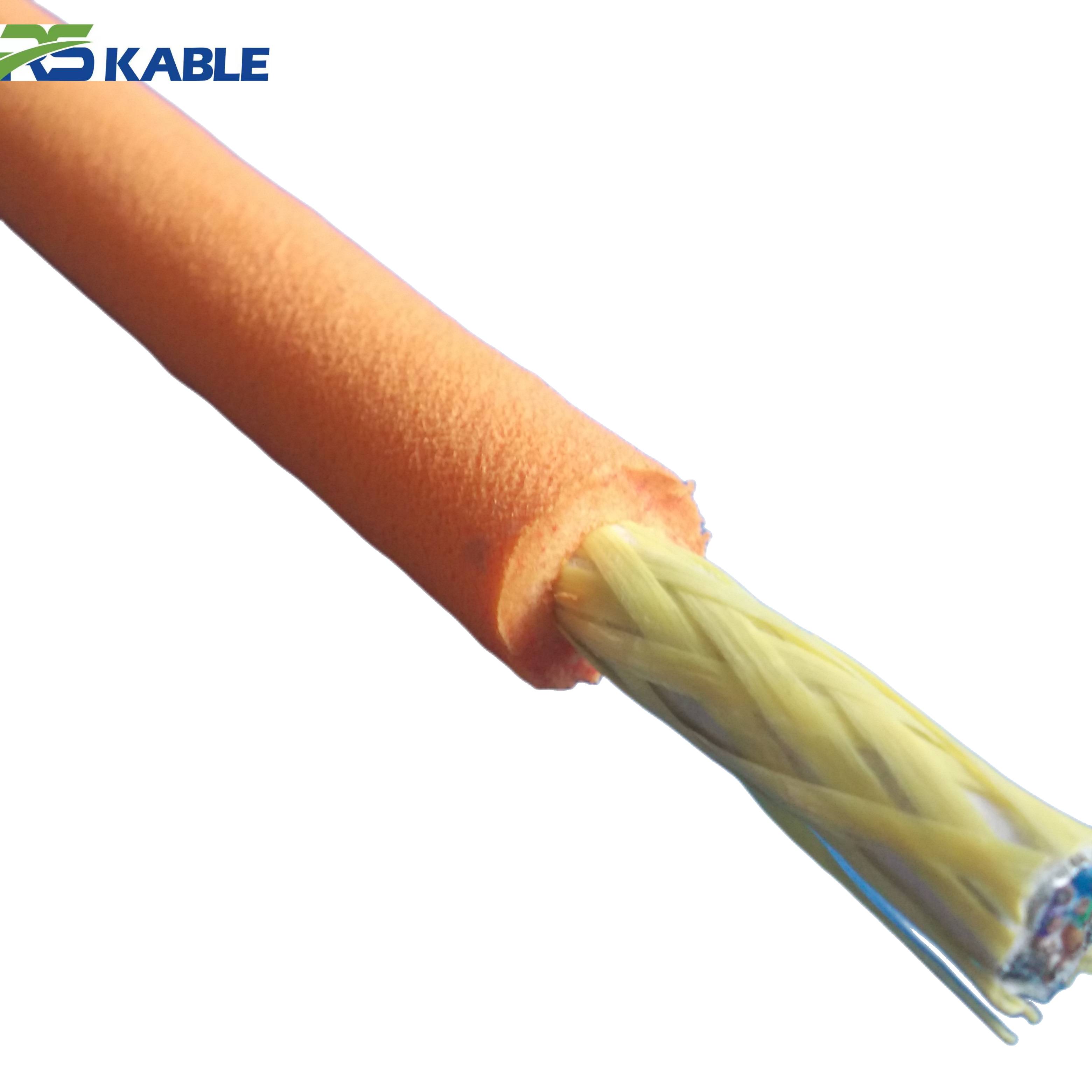
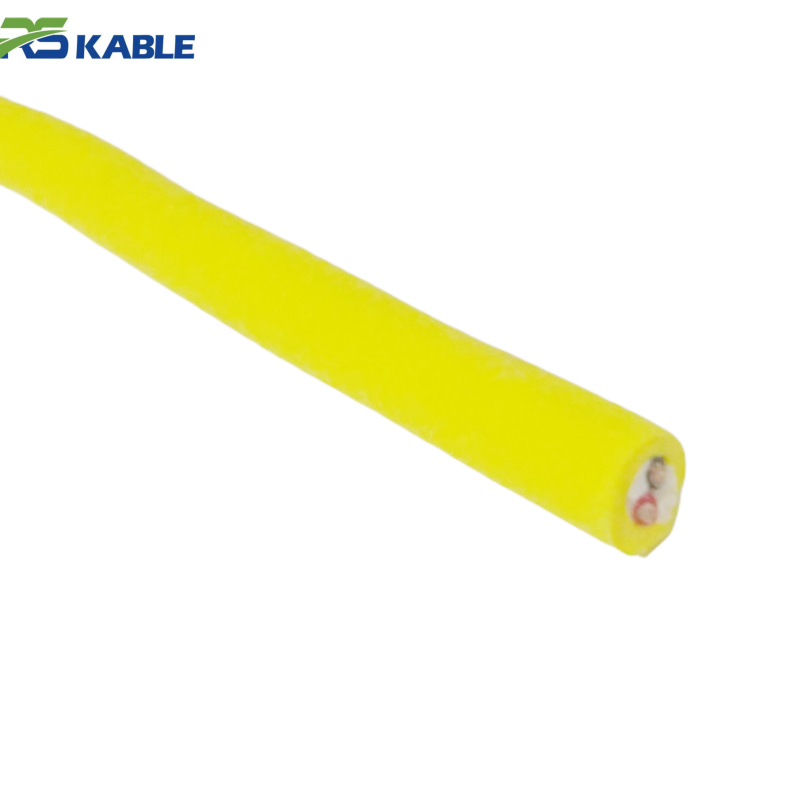
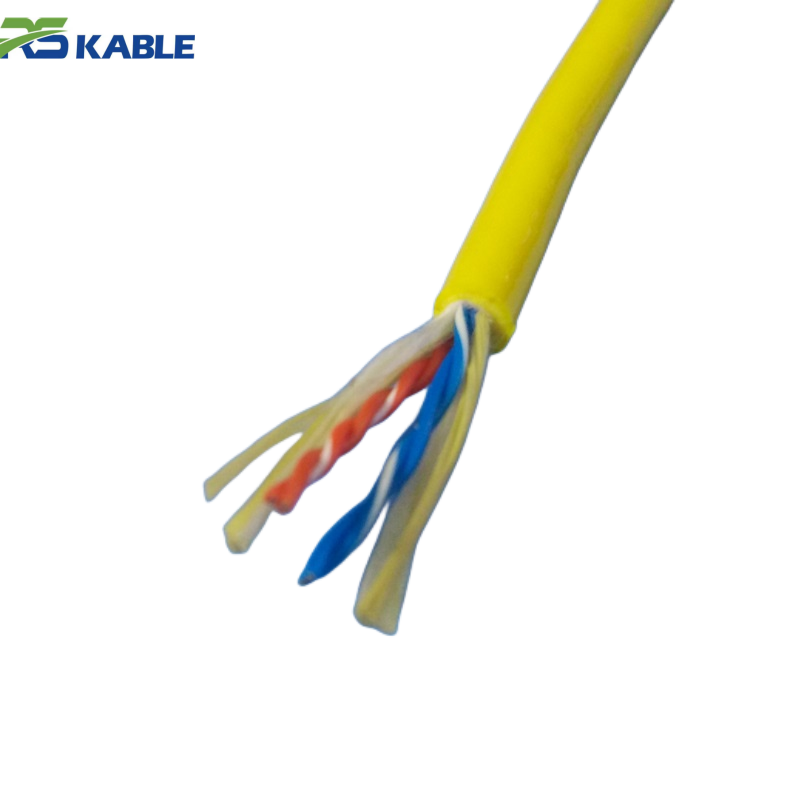
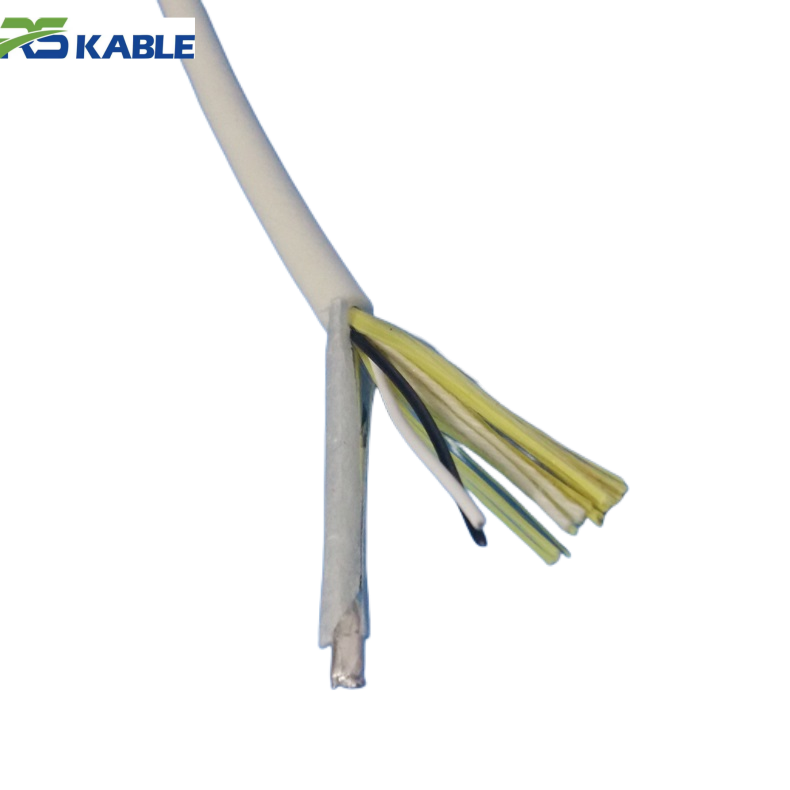
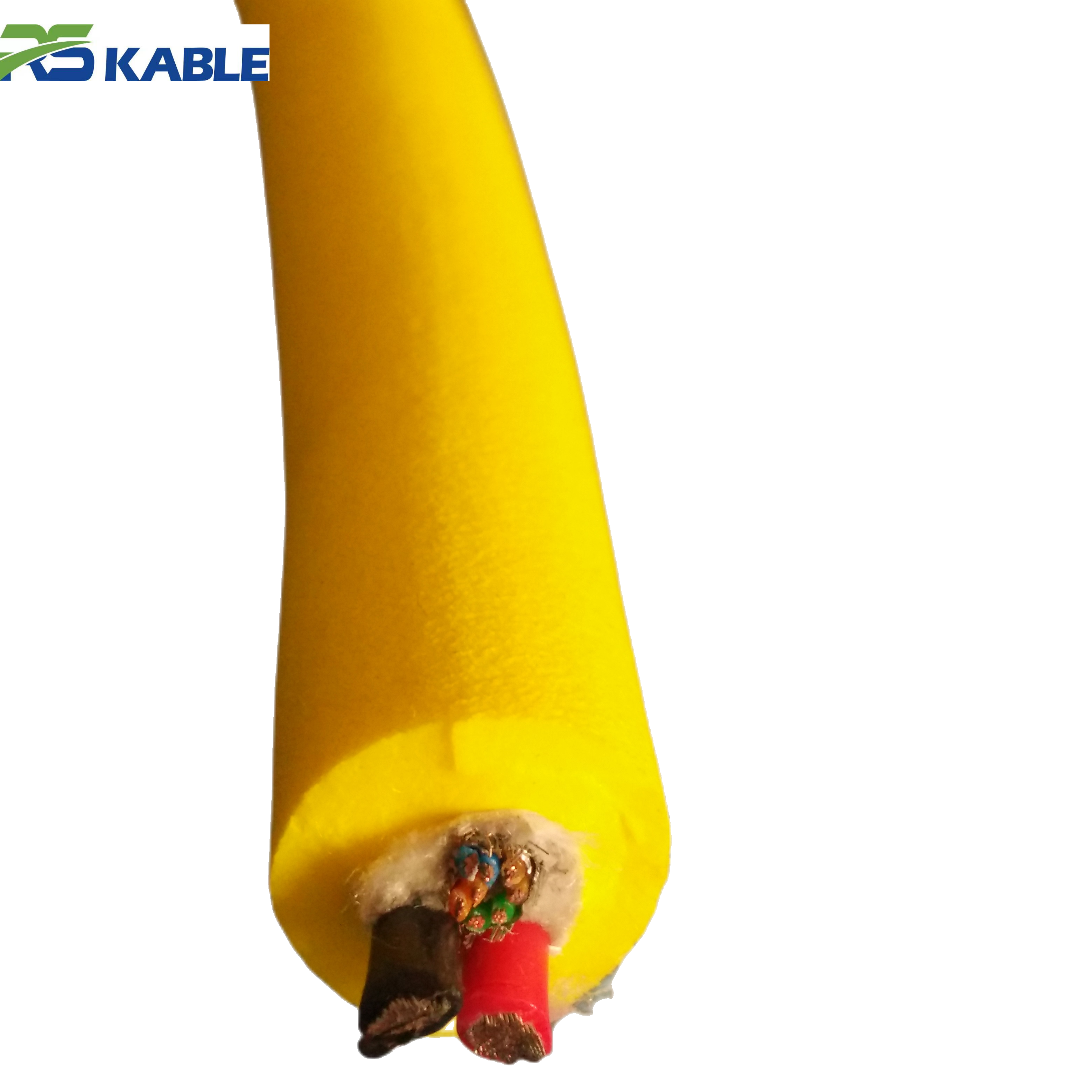
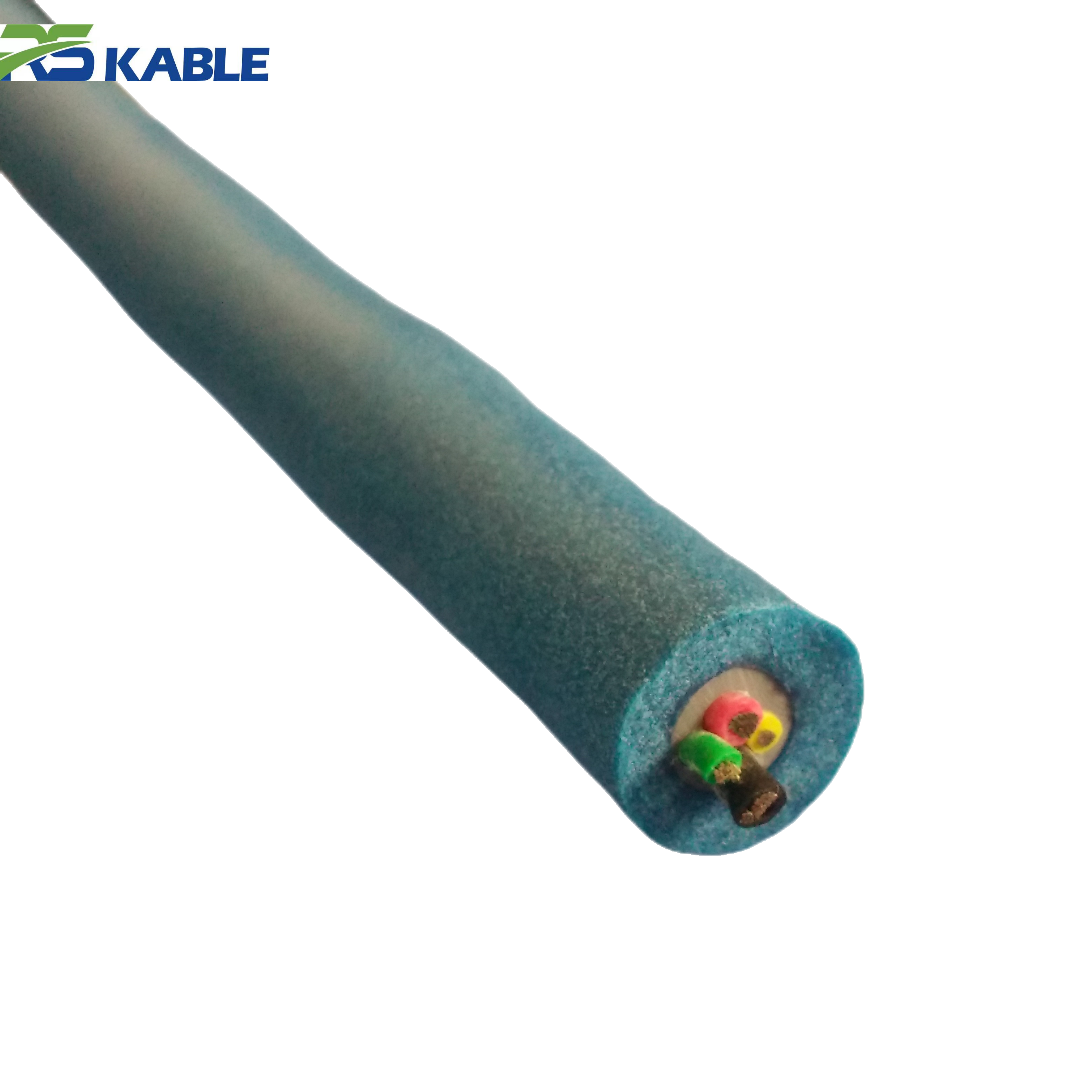
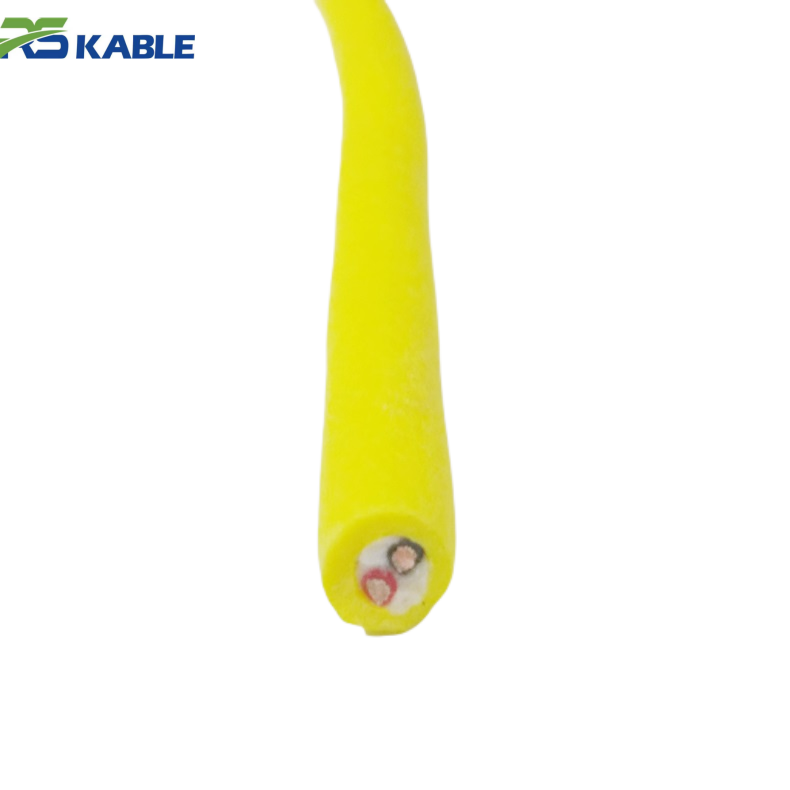
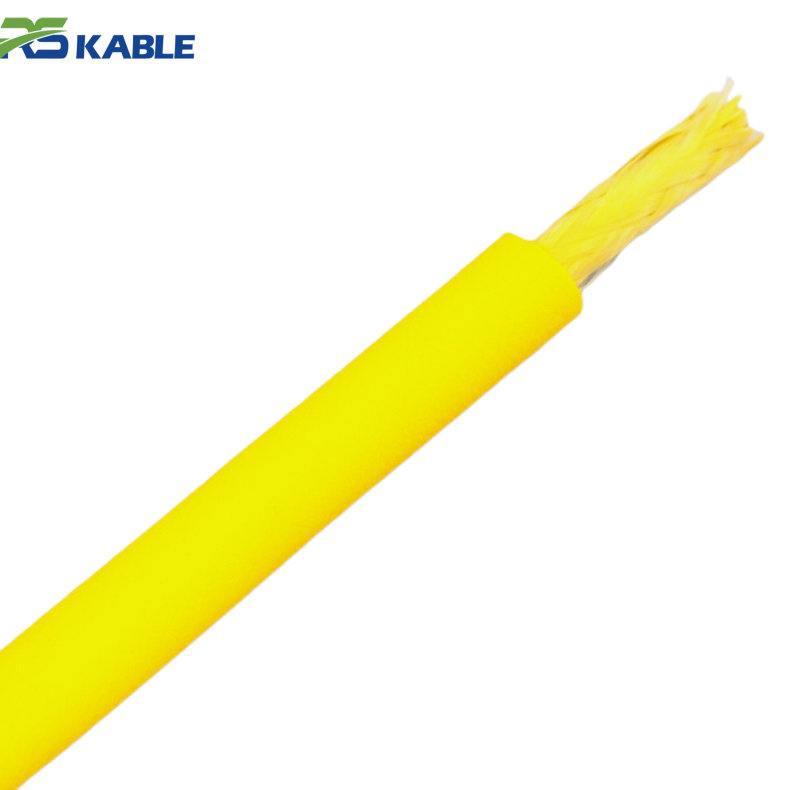
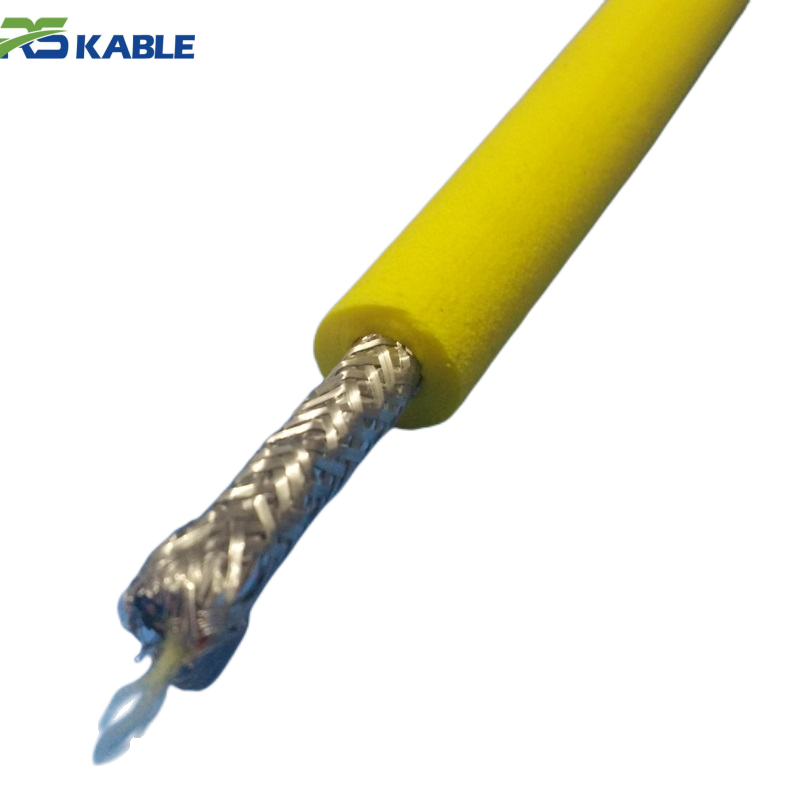
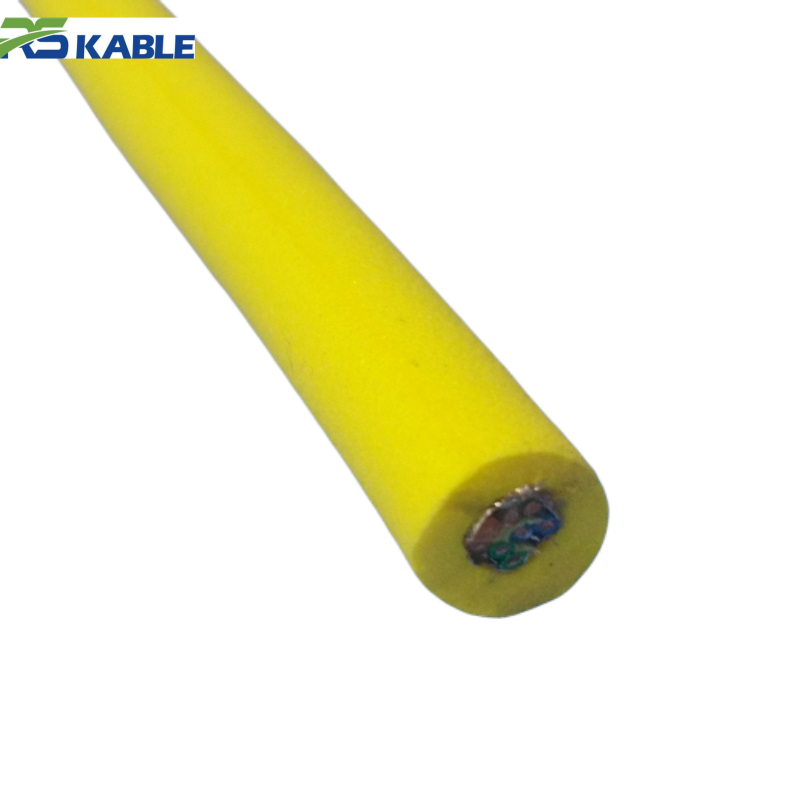
Underwater Inspection Robots ROV Cable – Low-Noise Signal, Shielded Interference Protection
This durable ROV cable is engineered for **underwater inspection robots**, featuring **low-noise shielded conductors**, an **abrasion-resistant TPU jacket**, and **neutral buoyancy** to ensure precise maneuvering, stable long-distance power, and reliable signal transmission in subsea environments.
Why Custom Cable Design Matters in Subsea Projects
Standard catalog products can work well in simple environments, but subsea applications are rarely simple. A cable that performs well in one project may fail in another because the operating conditions are different. The vehicle may be smaller, the winch may impose tighter bend cycles, the deployment depth may be greater, or the environment may involve oil, UV exposure, high salinity, or frequent abrasion.
In practice, custom design becomes important when one or more of the following conditions apply:
-
The system uses a dynamic tether rather than a static subsea cable
-
The vehicle requires both power and high-speed data in one line
-
The tether must remain lightweight or near neutral in water
-
The project involves high tensile load during launch and recovery
-
The cable must survive repeated flexing over a drum or sheave
-
Outer diameter is limited by compact vehicle design or connector size
-
The operating environment includes rocks, steel edges, mud, fuel, or chemicals
-
Signal integrity matters for fiber, Ethernet, video, sonar, or sensor feedback
This is where an experienced cable manufacturer adds value. They do not begin by asking only for voltage and length. They begin by asking how the cable will actually be used.
What a Reliable Manufacturer Should Ask Before Quoting
One of the easiest ways to judge a manufacturer is by the quality of their questions. A weak supplier may ask for basic dimensions and immediately send a price. A strong supplier will ask for application details because they know a subsea tether is a system-level product, not just a bundle of wires.
A serious custom cable manufacturer will usually want to know:
-
Maximum operating depth
-
Static or dynamic application
-
Working load and expected peak tensile load
-
Power type and voltage level
-
Number and type of signal circuits
-
Whether fiber optics are required
-
Expected bend radius during storage and deployment
-
Reel diameter or launch system constraints
-
Target outside diameter and total cable weight
-
Desired weight in water or buoyancy behavior
-
Jacket exposure to oil, UV, mud, saltwater, or deck abrasion
-
Connector type, termination method, and sealing requirements
If a supplier does not ask about these issues, there is a good chance they are not truly designing a custom subsea product. They may simply be adapting a generic industrial cable.
Material Selection: The Core of Long-Term Reliability
Cable performance starts with materials. In marine robotics, the wrong material choice can lead to stiffness, water ingress, corrosion, premature cracking, signal loss, or handling problems. The best designs select each layer according to its function rather than relying on one low-cost material family throughout the build.
1. Conductor Materials
For most underwater robotic systems, copper remains the preferred conductor because it offers strong electrical performance and proven manufacturing consistency. The more important question is which copper construction is best suited to the job.
Bare Copper
Bare copper is widely used and can be cost-effective, but long-term exposure in marine service may raise corrosion concerns, especially near terminations and connection points.
Tinned Copper
Tinned copper is often preferred in subsea cable design because it offers improved corrosion resistance and supports better long-term reliability in humid and salt-rich environments. For many custom underwater robot cable projects, this is the practical standard.
Strand Class and Flexibility
The strand structure matters as much as the metal itself. Fine-stranded conductors generally perform better in dynamic applications because they tolerate repeated bending more effectively. For inspection-class vehicles, launch-and-recovery systems, and smaller tethers that move continuously, higher flexibility is often more important than purely minimizing material cost.
2. Insulation Materials
Insulation influences dielectric performance, flexibility, temperature behavior, and mechanical life. Different core types may also require different insulation systems within the same cable.
Polyethylene (PE)
Often selected for signal circuits because of its strong electrical properties and relatively low dielectric loss.
Polypropylene (PP)
Useful where low weight and favorable electrical characteristics are needed.
Thermoplastic Elastomers (TPE)
Common in flexible cable designs that must balance handling and environmental resistance.
Cross-Linked Insulation Compounds
Chosen when higher thermal stability or stronger electrical performance is required, especially in more demanding power-core applications.
In a well-designed cable, the manufacturer explains why one insulation is used for power conductors while another is used for data pairs or fiber subunits.
3. Jacket and Sheath Materials
For marine robotics, the outer jacket has a major influence on service life. It is the layer most exposed to abrasion, deck handling, saltwater, oils, and subsea structures.
Polyurethane (PU / TPU)
This is one of the most widely preferred outer jacket materials for subsea tether cable applications because it offers:
-
Excellent abrasion resistance
-
Strong flexibility
-
Good hydrolysis resistance
-
Good behavior in harsh marine handling conditions
For many inspection ROV and work-class tether designs, polyurethane is the first material considered for the external sheath.
Other Jacket Compounds
Some projects may use alternative compounds for special chemical resistance, cost targets, or low-temperature handling, but for a general-purpose marine robotic system, polyurethane remains one of the strongest options.
4. Fillers, Binders, and Water-Blocking Elements
These are rarely highlighted in marketing pages, yet they affect cable roundness, crush resistance, internal stability, and water migration control. Good subsea manufacturers pay attention to fillers and separators because poor internal support can lead to deformation, inconsistent flex behavior, and long-term mechanical weakness.
Water-blocking materials may also be added where resistance to water migration is important, especially in longer hybrid constructions or cables used in demanding offshore environments.
Armor Types: Choosing the Right Reinforcement Strategy
Armor selection should not be reduced to “more armor is better.” The correct reinforcement depends on load, flexibility, crush exposure, weight targets, and whether the line is static or dynamic.
1. Aramid Armor
Aramid-reinforced designs are widely used in lightweight subsea tethers. This is often the preferred solution where high tensile strength is needed without making the cable excessively heavy.
Best for:
-
Lightweight inspection ROV systems
-
Neutral or near-neutral buoyancy designs
-
High-flex dynamic subsea cable applications
-
Smaller diameter tether constructions
Advantages:
-
High strength-to-weight ratio
-
Good flexibility
-
Lower weight in water than steel reinforcement
-
Useful for precise vehicle handling
Limitations:
-
Lower crush resistance than steel
-
Less suitable for very rugged mechanical abuse unless combined with a strong jacket design
For many custom tether cable for inspection ROV projects, aramid is often the most practical reinforcement choice.
2. Steel Wire Armor
Steel armor is commonly chosen for heavy-duty subsea systems that need stronger protection from crushing, dragging, and external impact.
Best for:
-
Work-class ROV systems
-
Harsh deck handling environments
-
Deep deployment with higher tensile loads
-
Rugged offshore jobs with stronger mechanical risk
Advantages:
-
Strong tensile capability
-
Better resistance to crush and impact
-
Good mechanical protection in rough service
Limitations:
-
Heavier cable construction
-
Reduced flexibility compared with aramid
-
Can negatively affect buoyancy and handling if not carefully engineered
Steel armored subsea cable designs are often selected when mechanical toughness matters more than light handling.
3. Double Armor or Hybrid Reinforcement
Some custom projects require more than one reinforcement layer. A double-armored design may improve tensile margin, torsional balance, and structural stability. Hybrid reinforcement strategies can also combine synthetic strength members with metallic protection layers.
These solutions are more common when the application involves:
-
Higher working loads
-
Deeper deployment
-
Severe handling conditions
-
Complex launch-and-recovery profiles
-
Mixed requirements for flexibility and protection
A capable manufacturer should explain why a double reinforcement design is needed rather than offering it only as an upsell.
Core Configuration Options: How Internal Layout Changes Performance
Core configuration is where the cable’s real functionality is defined. Two cables with similar outer diameter may behave very differently depending on how the internal conductors, shielding, fillers, and fiber elements are arranged.
A custom ROV Cable manufacturer should be able to recommend a core layout based on electrical load, signal type, EMI risk, flexibility, and future maintenance needs.
1. Power-Only Core Layouts
These are used in simpler systems where the cable mainly needs to deliver electrical energy. The main design priorities are conductor size, voltage drop, insulation, and heat management.
Power core sizing should never be based only on voltage. It should be based on:
-
Continuous current load
-
Peak load demand
-
Total cable length
-
Acceptable voltage drop
-
Ambient operating temperature
-
Thermal behavior within the cable build
2. Power + Control Pair Layouts
This is one of the most common structures in inspection and utility-class subsea systems. It combines power conductors with control, signal, or instrumentation pairs.
These designs require attention to:
-
Pair twisting
-
Shielding method
-
Core separation
-
Noise control from adjacent power circuits
If layout discipline is poor, communication quality may suffer even if the individual conductors are technically within spec.
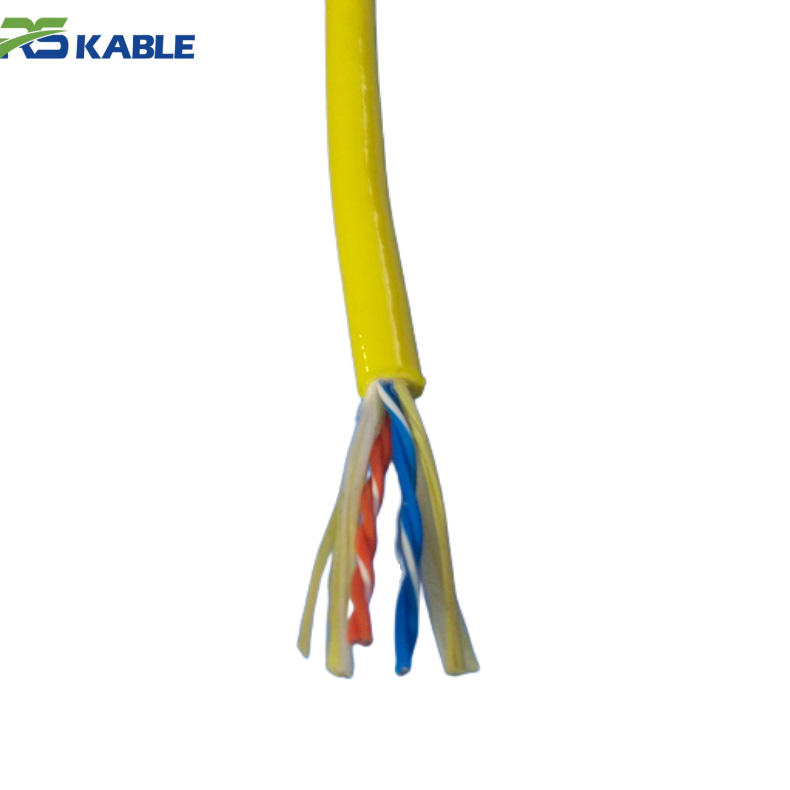
3. Hybrid Power and Fiber Configurations
Modern subsea vehicles increasingly require real-time video, sonar, telemetry, Ethernet, and other high-bandwidth communication. In these cases, hybrid power and fiber subsea cable design is often the most efficient choice.
A hybrid layout may include:
-
Power conductors
-
Shielded twisted pairs
-
Coaxial elements
-
Fiber optic units
-
Strength members
-
Fillers to control shape and buoyancy
This kind of construction is common in advanced underwater robot cable systems because it reduces the need for multiple external lines. However, it also makes internal design far more important. Fiber protection, crush control, and bend behavior all need careful engineering.
4. Fiber Count and Optical Subunit Choices
When fiber is included, the manufacturer should ask:
-
How many fibers are needed today?
-
Is spare capacity needed for future upgrades?
-
Is loose tube or tight-buffer design more appropriate?
-
What bend environment will the cable see?
-
Will the fiber terminate directly at the vehicle or through an intermediate junction?
These decisions affect not only performance, but also manufacturing complexity and maintenance ease.
How to Match Cable Design to Real Applications
The best custom cable is not the strongest or the most complex. It is the one that best fits the use case.
For Inspection-Class ROVs
Usually prioritize:
-
Low weight
-
Flexibility
-
Small outside diameter
-
Stable signal transmission
-
Optional neutral buoyancy support
Aramid reinforcement, polyurethane sheath, and hybrid power-plus-signal layouts are often a strong fit.
For Work-Class ROVs
Usually prioritize:
-
Higher tensile strength
-
Mechanical protection
-
Stronger outer jacket
-
Larger power cores
-
Robust shielding and heavy-duty terminations
Steel armor or double-armored designs may be more suitable.
For Deepwater or Long-Deployment Systems
Usually prioritize:
-
Voltage drop management
-
Working load margin
-
Water-blocking
-
Fiber reliability
-
Reinforced outer structure
Here, the manufacturer’s engineering input becomes especially important.
What to Prepare Before Contacting a Custom Manufacturer
If you want faster and more accurate quotations, prepare a short technical brief before contacting suppliers. This improves not only response quality, but also your chances of getting a design that actually works.
Your RFQ should ideally include:
-
Application type
-
Depth range
-
Static or dynamic use
-
Required overall length
-
Voltage and current
-
Number of power cores
-
Number of signal pairs
-
Fiber requirement and fiber count
-
Target outer diameter
-
Weight or buoyancy target
-
Expected tensile load
-
Minimum bend radius
-
Connector preferences
-
Operating environment notes
This is one of the most overlooked parts of the buying process. Many delays happen because the cable supplier is waiting for missing application details.
Common Failure Risks in Poorly Designed Subsea Cables
One of the best ways to assess a supplier is to ask what usually goes wrong in the field. Experienced manufacturers know that failures often come from design mismatch, not simply bad raw material.
Common field problems include:
Jacket Abrasion
The outer sheath wears too quickly because the material is not suited to rough deck handling or subsea friction.
Water Ingress Near Terminations
Even a strong cable can fail early if sealing and termination design are not aligned with the operating environment.
Excessive Stiffness
A cable may meet electrical requirements but still perform poorly because it is too stiff for the vehicle or reel system.
Poor EMI Control
Mixed power and communication elements may interfere with each other if shielding and separation are inadequate.
Incorrect Reinforcement Choice
A cable may be overbuilt and hard to handle, or underbuilt and mechanically unsafe.
These are exactly the kinds of practical details that make industrial blog content more useful and more rank-worthy.
Prototype, Testing, and Validation: What Good Manufacturers Provide
A manufacturer guide should not end at design. Validation matters just as much as structure.
Ask what testing is available during prototype or production stages. Depending on the project, common checks may include:
-
Conductor resistance
-
Insulation resistance
-
Continuity testing
-
Withstand voltage testing
-
Dimensional verification
-
Tensile validation
-
Flex or bend-cycle testing
-
Crush testing
-
Water ingress checks
-
Optical attenuation testing for fiber units
For higher-value subsea systems, prototype sampling and pre-production validation are often worth the extra time because they reduce field risk significantly.
Choosing a custom manufacturer is not simply about buying a cable with the right diameter. It is about finding a partner who understands subsea robotics, electrical design, mechanical protection, and real deployment conditions. The right supplier should be able to explain not only what materials are available, but why one armor type is better than another, why a certain jacket compound is recommended, and how the internal core layout supports the vehicle’s mission.
If you are sourcing a custom ROV Cable, focus first on your operating environment, load profile, communication architecture, and handling conditions. Then evaluate which material family, armor strategy, and core configuration best match those demands. A well-designed ROV Cable improves uptime, signal stability, and service life. It also reduces total ownership cost by avoiding preventable failures.
In subsea operations, that is what good manufacturing support really means.
FAQ
What information should I send to a custom ROV cable manufacturer before asking for a quote?
At minimum, send operating depth, length, voltage, current, number of conductors, signal or fiber requirements, bend radius, tensile load, and environmental conditions.
Which is better for an underwater robot cable: aramid armor or steel armor?
Aramid is usually better for lightweight, flexible, high-movement systems. Steel is better for rugged, high-load, mechanically harsh applications.
Can one custom cable combine power, fiber optics, and signal pairs?
Yes. Many hybrid subsea cables combine power, communication pairs, and fiber optics in one structure, but the internal layout must be carefully engineered.
What jacket material is commonly preferred for subsea tether cables?
Polyurethane is widely preferred because of its abrasion resistance, flexibility, and good durability in marine environments.
Why does core configuration affect performance so much?
Core layout affects voltage drop, signal isolation, bend behavior, termination complexity, and long-term reliability.